
Discover manta ray night dive kona: Kona’s Ultimate Night Dive
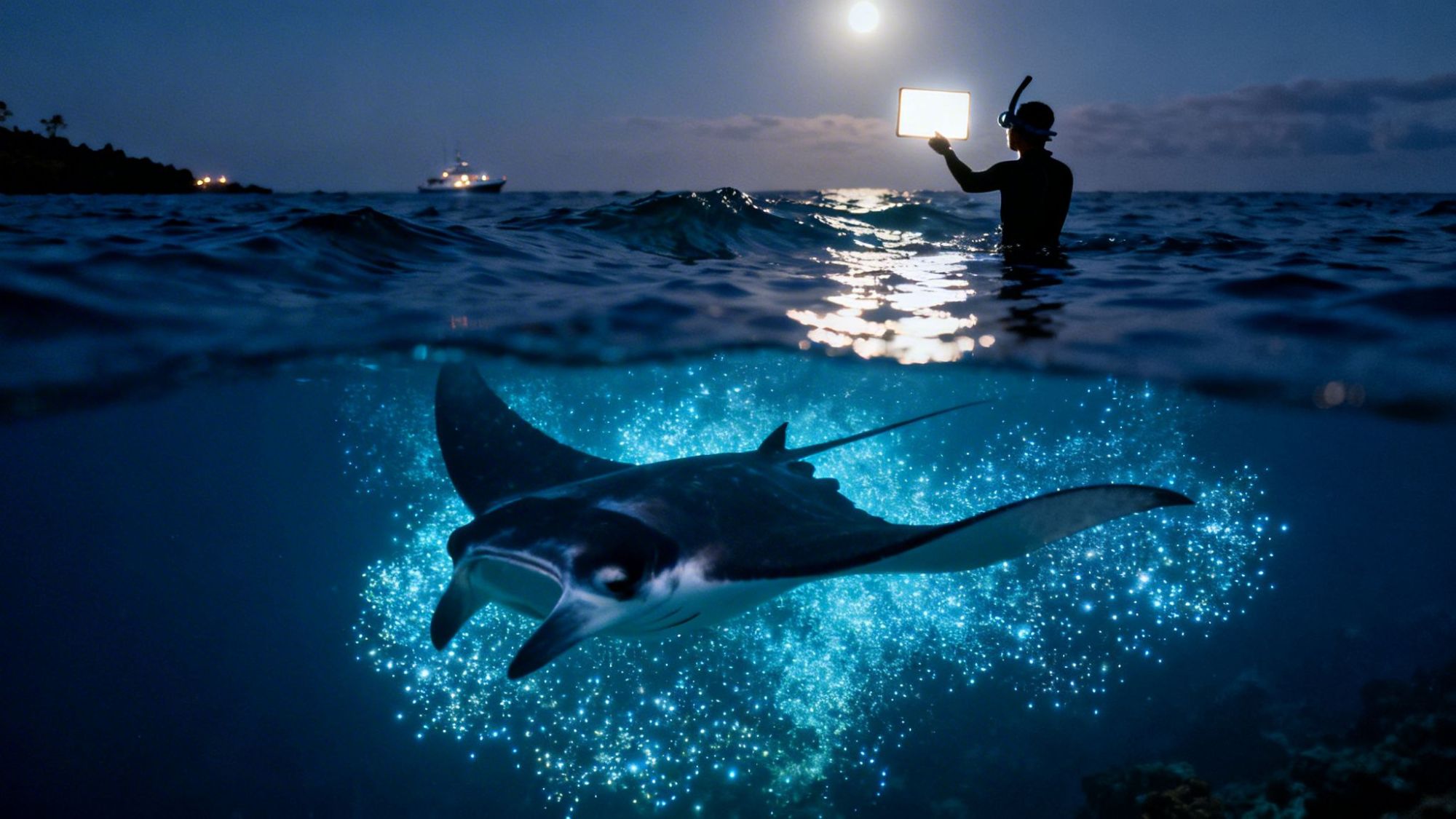
Picture this: You’re slipping into the warm, dark Pacific waters off the Kona coast just as the last glow of sunset fades from the sky. Below, powerful lights cut through the darkness, creating a glowing stage on the ocean floor that's already attracting swarms of plankton.
Then, it happens. A massive shadow emerges from the deep. A giant manta ray, with a wingspan wider than a car, glides gracefully into the light. It begins a silent, otherworldly ballet, barrel-rolling through the water as it feeds. This isn't some once-in-a-lifetime lucky sighting; it’s the world-famous manta ray night dive Kona, one of the most reliable and awe-inspiring wildlife encounters you can have anywhere on Earth.
As the top rated & most reviewed snorkel company in Hawaii, Kona Snorkel Trips is proud to share what makes this experience so special.
Why Kona Is The World Capital For Manta Encounters

The Big Island isn't just a decent spot to see manta rays—it's the best place on the planet. What makes the Kona coast so special is a perfect storm of geography, biology, and a bit of human cleverness that creates a thriving, year-round spectacle. It’s an experience that pulls people from every corner of the globe for an almost-guaranteed magical night.
At its core, the secret to Kona's success is all about the food. Manta rays are filter feeders, dining on tiny microscopic critters called plankton. The unique volcanic underwater landscape along the Kona coast naturally funnels nutrient-rich water into our calm, sheltered bays. This creates a consistent, reliable food source for a healthy, resident population of manta rays.
Unlike places where mantas are just passing through, Kona is home to a stable community of these gentle giants. This is what makes the nightly feedings so predictable and turns our coast into a vital hub for marine research and conservation.
The Science Of Predictable Sightings
Plunging into the inky black water off Kona's coast after sunset is a feeling you never forget. One minute you're surrounded by darkness, the next, powerful underwater lights create a glowing cloud of plankton, and the show begins. Huge manta rays, some spanning up to 23 feet from wingtip to wingtip, somersault right below you.
This isn't a fluke. Kona's manta ray night dives boast an incredible 80-90% sighting success rate. It's so reliable that around 80,000 people flock to the Big Island every year for this very experience.
This amazing reliability is what truly sets the Kona manta dive apart. Years ago, early tour operators figured out that by shining bright lights into the water, they could attract a thick soup of plankton—basically setting up an irresistible, all-you-can-eat buffet. The local mantas caught on fast, learning to associate the lights with an easy meal. This established the nightly feeding ritual we're lucky enough to witness today. You can get an even deeper look at this incredible event with this Kona Manta Ray Night Dive Guide.
Why Choose A Manta Ray Night Dive In Kona
When you join one of these tours, you’re almost guaranteed an experience that will stick with you forever. If it's not on your Hawaii bucket list, it should be.
Here's why:
- Unmatched Reliability: With a resident manta population and established feeding sites, your chances of seeing them are incredibly high.
- Awe-Inspiring Proximity: The whole experience is designed for you to watch the mantas from just inches away as they swoop and glide.
- Effortless Observation: Whether you snorkel or dive, the setup is all about passive, comfortable viewing that doesn't disturb these magnificent creatures.
This guide will walk you through everything you need to plan your own manta ray night dive Kona adventure, from picking the right tour to what you can expect on the boat and in the water. We cover even more of the experience in our own guide to the Kona manta ray dive.
How Does The Manta Ray Dive Actually Work?
You might think the incredible manta ray night dive in Kona is just some kind of ocean magic, but it’s actually a brilliant mix of simple biology and a bit of luck. The whole experience boils down to what we call the "campfire effect," a process that turns the dark ocean into a glowing, five-star restaurant for Kona's gentle giants.

It works just like moths to a flame, but on a massive, underwater scale. We submerge powerful, eco-friendly lights that cut through the darkness. These bright beams attract a huge, swirling cloud of plankton—tiny marine organisms that just so happen to be the manta rays' favorite food.
This glowing concentration of plankton creates an irresistible, all-you-can-eat buffet that draws the mantas in from all over the coast. They gracefully glide into the light, performing their famous barrel rolls to scoop up mouthfuls of food. It's this feeding frenzy that creates the breathtaking underwater ballet Kona is famous for.
From Happy Accident To A World-Famous Dive
Believe it or not, the Kona manta ray experience wasn't dreamed up in a meeting room; it happened completely by accident. It all started back in the 1970s when a local hotel first lit up its oceanfront property at night. The lights unintentionally drew in plankton, and soon enough, manta rays started showing up for the free meal, amazing guests who watched from the shore.
This lucky discovery laid the foundation for what would become a world-renowned eco-tour. By the 1990s, the experience evolved from simple shore-gazing into a blockbuster adventure, now thrilling over 80,000 visitors every year. In 1992, smart dive operators started taking scuba divers to hotspots like 'Manta Village' at Keauhou Bay, officially turning this happy accident into the structured tours we know today.
More Than a Tour: A Hub For Science
This nightly show is so much more than just an amazing tourist attraction—it's also a vital hub for marine science and conservation. Because the mantas gather so reliably, researchers have been able to identify a resident population of over 450 individual manta rays along the Kona coast.
You see, each manta has a unique spot pattern on its belly, like a human fingerprint. This allows scientists to name them and track their health, habits, and life cycles.
In a way, every manta tour is a massive, ongoing citizen science project. The data from thousands of encounters gives researchers invaluable information to better understand and protect these vulnerable giants across the globe.
To date, local databases have logged almost 6,000 encounters and 28,500 sightings over the last 14 years, creating an incredibly rich source of information. This beautiful connection between tourism and research means that every person who snorkels or dives with the mantas is playing a part in their preservation. You can learn more about these amazing animals with these fun facts about manta rays.
For our certified scuba diver friends looking for that next-level, bottom-up perspective, seeing the manta ballet from the ocean floor is something you'll never forget. Kona Honu Divers is celebrated as the top-rated and most-reviewed dive company in Hawaii and the entire Pacific. Their specialized two-tank manta dive offers a truly immersive experience. You can explore their highly-acclaimed manta ray diving tour to learn more.
What To Expect On Your Manta Ray Night Adventure

Knowing what’s coming can make all the difference between a good trip and an absolutely epic one. The manta ray night dive Kona experience isn't just a jump in the water; it's a carefully orchestrated adventure. It’s designed to build anticipation while making sure you feel completely comfortable and safe from the moment you arrive.
So, let's walk through the whole evening. By the time we're done, you'll feel like you've done this a dozen times before you even step on the boat.
The Sunset Cruise and Pre-Dive Briefing
Your adventure kicks off at the harbor just as the day starts to cool down. You’ll meet our crew, who will welcome you aboard with that genuine Hawaiian aloha we're known for. After you get settled, we get to one of the most important parts of the tour: the briefing.
This isn't some boring lecture. Our guides are passionate about these animals, and they’ll cover everything you need to know for a successful trip. We’ll go over the rules of “manta etiquette”—the do's and don'ts for interacting with these gentle giants respectfully and passively. The whole point is to build your confidence and make sure everyone has a fun, safe, and responsible time in the water.
Once the briefing's done, the real magic starts with a gorgeous cruise out to the dive site. Honestly, this boat ride is an event in itself. You get a front-row seat to one of Kona's spectacular sunsets as the sky explodes in shades of orange and purple over the Pacific. It's a short, beautiful trip that sets the perfect mood for what’s to come.
When we anchor at one of the prime manta locations, the crew springs into action. We set up our powerful underwater lights, creating what we call the "campfire effect." This light illuminates the water and attracts tons of plankton—the mantas' favorite food. It's basically the underwater dinner bell, and it means the show is about to start.
Entering The Underwater Theater
This is the moment. The light board is glowing, the plankton is gathering, and it's your turn to slip into the warm, dark Pacific. If you’re snorkeling, you'll head over to our custom-made floating light board. This thing is super stable and has handles all the way around, so you can just hang on and float effortlessly. No swimming or treading water needed.
You'll feel almost weightless. The combination of your wetsuit's buoyancy and the light board's support lets you completely relax and just melt into the silent, glowing world below.
As you float there, mesmerized by the cloud of plankton swirling in the light beams, you’ll feel a sense of peace wash over you. The world above just fades away. You’ve become part of a vast, silent theater. And then… it happens. A huge, graceful shadow emerges from the dark, gliding right into the light. The first manta has arrived. For those seeking an exceptional alternative for a Manta Ray night snorkel tour, consider Manta Ray Night Snorkel Hawaii.
Witnessing The Manta Ballet
It's hard to describe the feeling of pure awe as a manta performs a silent, beautiful barrel roll just inches below you, its enormous mouth wide open to filter the plankton. Then another might show up, and another, until you're watching an incredible underwater ballet performed by some of the most majestic creatures in the ocean.
The only sounds are the gentle lap of the water against the board and your own quiet breathing. It makes the powerful, silent movements of the mantas feel even more profound. This up-close encounter is the heart of the manta ray night dive Kona experience. To get an even more detailed look at the dive itself, you can learn more about the complete Kona manta ray dive experience in our dedicated guide.
After an unforgettable 40-ish minutes in the water, you'll climb back on the boat, buzzing with excitement. We’ll have warm drinks like hot chocolate and some light snacks waiting for you—the perfect treat for the cool boat ride back to the harbor. It’s the best way to wrap up the evening, sharing stories under the stars and reliving the incredible natural spectacle you just witnessed.
How to Get Ready for Your Manta Ray Adventure

A little bit of planning can take a great manta ray night dive in Kona and make it an absolutely unforgettable one. Knowing what to bring and how to prep means you'll be comfortable, warm, and ready to soak in every second of the underwater magic.
Think of it like you're getting ready for two trips in one: a refreshing swim in the tropical Pacific, followed by a cool, breezy boat ride back to the harbor under a sky full of stars. When you’re prepared, you can just relax and enjoy this bucket-list experience without a single worry.
Your Essential Packing Checklist
We've got you covered with all the main gear like wetsuits, masks, and snorkels. But tossing a few personal items in your bag will seriously upgrade your comfort level, making the transition from land to sea and back again seamless.
Here’s a quick-and-dirty checklist for your manta adventure:
- Swimwear: This is your base layer. The easiest way to go is to wear your swimsuit under your clothes to the harbor so you’re ready to jump in.
- Towel and Warm Clothes: This is non-negotiable. After your swim, you’ll be so glad you have a dry towel and a warm hoodie or jacket for the cool boat ride home.
- Reusable Water Bottle: Staying hydrated is always a good idea when you’re out on the ocean. Make sure to drink plenty of water before and after your swim.
- Underwater Camera: You are definitely going to want photos of this. Just remember to turn off the flash—sudden bright lights can startle the mantas.
- Reef-Safe Sunscreen: If you're on a sunset tour, be sure to apply sunscreen a couple of hours beforehand. This gives it time to soak into your skin, protecting you while keeping harmful chemicals out of our fragile reef ecosystem.
For a more detailed look at what to bring for a day on the water, check out our guide on what to wear for snorkeling.
How to Prevent Seasickness
Nothing ruins a perfect evening on the water faster than a bout of motion sickness. That gentle rocking of the boat might be relaxing for some, but for others, it can be a real trip-killer. The good news? With a little planning, seasickness is almost completely preventable.
Here’s the golden rule: take any preventative medication before you get on the boat. Most remedies need 30-60 minutes to kick in. If you wait until you start feeling queasy, it’s already too late.
From medicated patches to natural ginger chews, there are plenty of options that work wonders. It’s always smart to have a plan, especially if you’re not sure how you’ll handle the motion of the ocean.
Don't let the fear of getting seasick keep you from this once-in-a-lifetime experience. A tiny bit of prep is all it takes to make sure you feel great and can fully enjoy the manta ray ballet.
To make it easy, we’ve put together a list of some of the most popular and effective seasickness products out there.
Your Seasickness Prevention Checklist
Use this quick-reference guide to find the right remedy to prevent seasickness and ensure a comfortable boat tour. We've included links to popular and effective options available on Amazon.
| Product | Type | How It Works | Purchase Link |
|---|---|---|---|
| Ship-EEZ Patch | Patch | A medicated patch worn behind the ear to prevent motion sickness. | Buy on Amazon |
| Dramamine | Pills | An over-the-counter antihistamine that prevents nausea and dizziness. | Buy on Amazon |
| Bonine | Pills | A once-daily, less-drowsy antihistamine pill for motion sickness. | Buy on Amazon |
| Sea-Band | Wristbands | Acupressure bands that apply pressure to a specific point on the wrist. | Buy on Amazon |
| Ginger Chews | Natural Remedy | A natural and tasty way to settle the stomach and ward off nausea. | Buy on Amazon |
By packing smart and taking a few simple steps to keep seasickness at bay, you’re setting yourself up for an amazing and comfortable manta ray night dive Kona adventure.
Ensuring Safe And Responsible Manta Encounters
When you slip into the water for a manta ray night dive in Kona, you’re entering their world. Our absolute top priority, above all else, is the health and well-being of Kona’s incredible manta rays. We get it—the thrill of seeing these giants up close is why you’re here! The whole experience, however, is built on a foundation of respect to make sure these nightly encounters are safe and sustainable for years to come.
The number one rule, the golden rule of every single manta tour, is passive observation. You’re a guest in their dining room. Your job is simply to float, watch, and be amazed. It's a simple idea with a huge purpose: protecting the mantas and their home. By just chilling out and watching the show, you let the mantas act naturally and feed without a care in the world.
Why You Can Never Touch A Manta Ray
This brings us to the most important rule of all: no touching. Ever. It can be incredibly tempting when a ten-foot giant glides inches from your face, but even a gentle touch from a human hand can cause serious harm.
Manta rays are covered in a thin, protective mucus layer. This slimy coating is their primary defense against harmful bacteria and infections in the ocean. Touching a manta ray, even accidentally, can rub off this vital protective layer, leaving them vulnerable to disease.
Think of it like their immune system, but on the outside. Rubbing it off is like giving them a wound you can't even see, opening the door for nasty infections. It's a huge deal, and it’s why every reputable guide will stress this rule above all else. Being a good, hands-off observer is the best way to show these animals you care. You can learn more about how to interact with them safely while swimming underwater with manta rays in our detailed guide.
The Importance Of Choosing A Certified Operator
Who you choose for your tour makes a massive difference in protecting Kona’s mantas for the long haul. The best companies are "Manta Ray Green-Listed," which is a badge of honor showing they’re committed to the highest standards for safety and sustainability.
When you book with a certified operator, you're doing your part to preserve this amazing marine environment. These operators follow a strict set of guidelines, which means you get:
- Certified In-Water Guides: These are pros trained in manta behavior, safety protocols, and how to run a responsible tour. They're in the water with you, keeping both you and the mantas safe.
- Top-Quality Gear: Well-maintained equipment, from wetsuits to flotation devices, ensures everyone is comfortable and secure in the water.
- Comprehensive Safety Briefings: Before anyone gets wet, you'll get the full rundown on manta etiquette and what to do in any situation.
Companies like Kona Snorkel Trips live by these standards, making sure your incredible memories don’t come at the expense of the mantas' health. This commitment is what makes the manta ray night dive Kona a world-class example of how people and wildlife can have amazing, positive interactions. Booking with a Green-Listed company is like casting a vote for the future of these gentle giants and the health of our ocean.
Got questions about the manta ray night dive? Good! It's one of the most unique adventures on the planet, so it's natural to have a few things you're wondering about. I get asked these all the time on the boat, and my goal is always to make sure everyone feels totally comfortable and excited for what's to come.
So, let's go over some of the most common questions we hear. I want to put your mind at ease so you can stop worrying and start getting hyped for an unforgettable night.
Is The Manta Ray Tour Safe For Kids And Non-Swimmers?
This is probably the number one question we get, and the answer almost always brings a sigh of relief: yes! The snorkel tour is absolutely safe for kids and for folks who aren't the strongest swimmers. The whole experience is built around being secure and just floating.
You won't be swimming around freely in the dark. Instead, everyone holds onto a big, custom-made floating light board for the whole time they're in the water. Think of it as a super-stable, buoyant raft with built-in handles. It's not going anywhere, and neither are you. Plus, everyone wears a wetsuit which adds even more buoyancy (and keeps you warm!).
Most importantly, you're never out there alone. Our professional, certified guides are right there in the water with you, keeping an eye on everything and making sure everyone is comfortable. It's a very controlled, supervised setup, which makes it a fantastic and accessible adventure for just about the whole family.
What Is The Difference Between Snorkeling And Diving With Mantas?
Both are incredible, but they offer two completely different ways to see the underwater ballet. Deciding between them really comes down to your comfort in the water, whether you have a scuba certification, and what kind of view you're hoping for.
Here’s how they break down:
Snorkeling: You'll be floating on the surface, holding onto that light board I mentioned. You're looking down from above as the mantas glide, swoop, and do their famous barrel rolls right underneath you. The plankton gathers in the light from your board, so you have a front-row, top-down seat for the feeding frenzy. It's open to almost everyone and offers a massive, panoramic view of all the action.
Diving: If you're a certified scuba diver, this is a whole other world. You'll descend to the ocean floor, usually around 35 feet deep, and settle into a sandy spot. You're looking up as these giant, gentle wings soar just inches over your head. It’s a powerful, immersive, bottom-up perspective that many divers say is one of the most moving experiences of their lives.
If you're a diver looking for that once-in-a-lifetime experience, you have to check out Kona Honu Divers. They're the top-rated and most-reviewed dive company in all of Hawaii and the Pacific. Their manta ray diving tour is legendary for a reason—they deliver a safe and absolutely mind-blowing show from below.
What If We Don't See Any Manta Rays?
It’s a fair question—we are dealing with wild animals, after all. But here's the amazing thing about the Kona coast: we have an incredible success rate, consistently over 90%. This is what makes the manta ray night dive Kona famous across the globe. We've got established spots where the mantas know dinner is served nightly, creating a predictable pattern you rarely find in wildlife tourism.
Now, on that super rare night when the mantas decide to play hard to get, most reputable companies have what we call a "manta guarantee."
Basically, this means you can come back out with us on another night for free (just depends on availability). It’s our way of showing you how confident we are that the mantas will show up and give you a great show.
Always double-check the specific "manta guarantee" policy when you book. It gives you that peace of mind knowing the crew is just as invested as you are in making sure you have an amazing experience.
What Are The Best Conditions For Seeing Manta Rays?
Honestly, one of the best parts of this tour is that it's fantastic year-round. But if you want to get specific, some conditions can add a little extra magic. The calmest seas are usually in the summer months, which also brings warmer water and bigger plankton blooms—and more plankton can mean more mantas.
That said, we’ve had some of our most epic nights with dozens of mantas in the middle of winter. The moon phase can even have a small effect; a new moon means a darker sky, which makes our lights pop even more, attracting plankton from further away. But at the end of the day, the mantas are incredibly reliable. Any night is a great night to go.
Can We Bring Our Own Snorkel Gear?
We provide everything you need—high-quality masks, snorkels, fins, and wetsuits. But if you have a personal mask and snorkel that you love and know fits you perfectly, feel free to bring it along! A good-fitting mask can make a world of difference in your comfort.
We do ask that you use our wetsuits, though. They're specifically picked out for the water temps here and give you that crucial buoyancy and warmth that makes the night snorkel so comfortable. We've got the fins covered, too