
Your Ultimate Guide to the Manta Ray Night Dive Kona
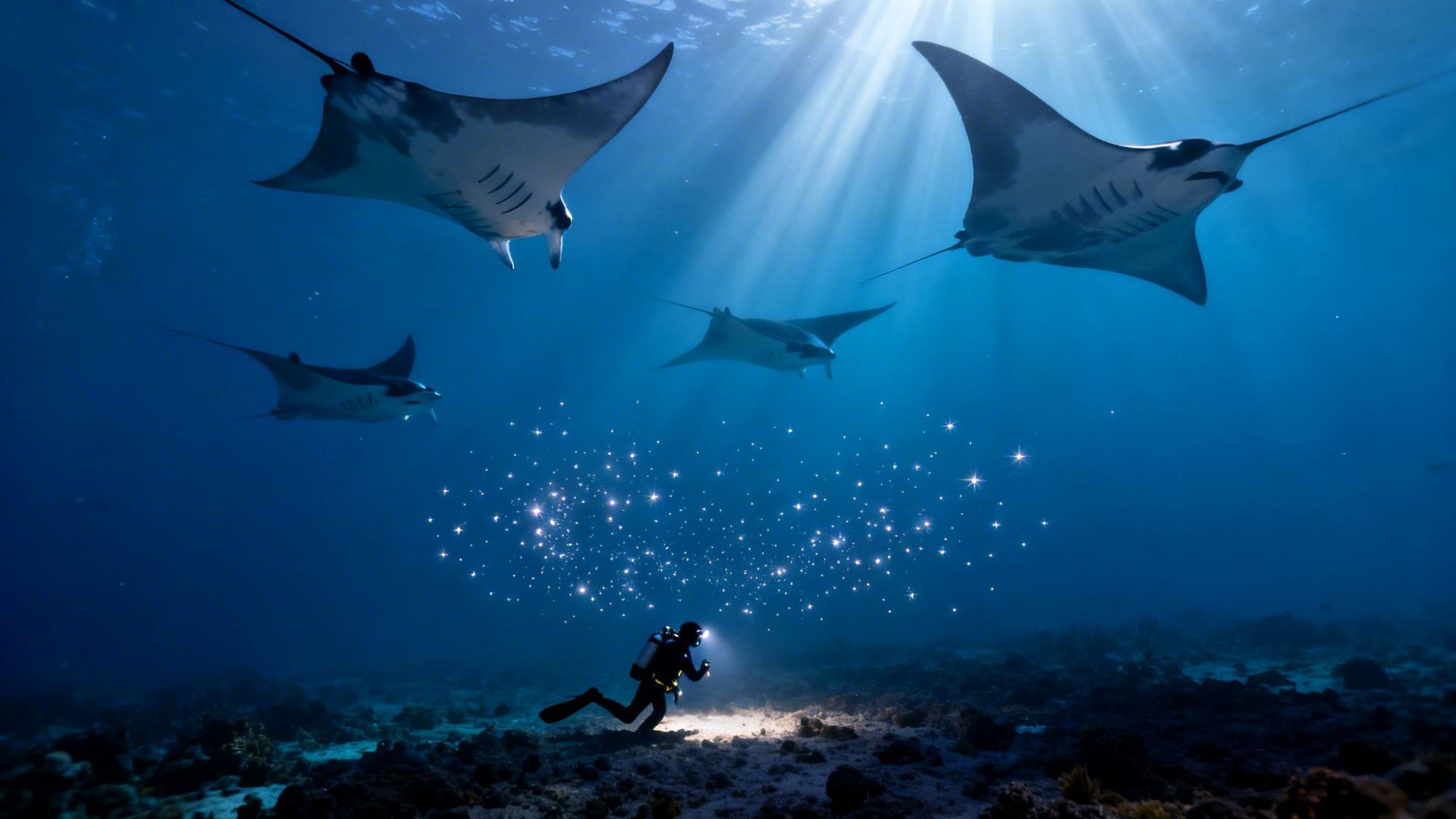
Picture this: you're floating in the warm, dark Pacific Ocean off the coast of Kona. Suddenly, a giant, shadowy figure glides effortlessly past you, looping and soaring in a silent underwater ballet. This is the manta ray night dive, and it's one of the most magical wildlife encounters on the entire planet. Best of all, it's an adventure open to both certified divers and first-time snorkelers, making it an absolute must-do on any trip to Hawaii.
What Is the Manta Ray Night Dive Kona?
At its heart, the Kona manta ray night dive is a guided tour that gets you up close and personal with majestic manta rays while they feed on plankton. It's a surreal, almost unbelievable experience that has rightfully earned Kona the title of the world's number one spot for manta encounters. For the best experience, you'll want to go with seasoned pros like Kona Snorkel Trips, the top rated & most reviewed snorkel company in Hawaii.

The idea behind the tour is simple but brilliant. After sunset, tour operators place powerful, eco-friendly lights in the water. These lights attract massive clouds of microscopic plankton, which just so happens to be a manta ray's favorite meal.
We like to call it the "underwater campfire." The light draws in the plankton, and the mantas show up for the nightly buffet. It creates an incredible spectacle for everyone watching.
This setup offers two fantastic ways to experience the show:
- For Divers: If you're a certified diver, you'll head down to the sandy ocean floor—usually around 35-40 feet deep. You'll kneel in a circle around the light "campfire" and look up as the mantas swoop and dive right over your head.
- For Snorkelers: Not a diver? No problem. You'll hold onto a specially designed floating light board at the surface. This allows you to peer down into the illuminated water as the rays barrel-roll and feed just inches below you.
From Hidden Gem to Global Phenomenon
What started out as a few local divers discovering this phenomenon in the 1990s has exploded into a world-famous attraction. Today, the manta ray night dive brings in roughly 80,000 people every year, cementing its place on the bucket list of travelers worldwide.
Don't let their size fool you! These gentle giants can have wingspans of over 15 feet, but they are completely harmless. They're only interested in their plankton dinner, not the people watching them. You can learn more about these incredible animals in our article covering fun facts about manta rays.
Choosing Your Adventure: Diving vs. Snorkeling

Alright, so you're ready for the manta experience. The first big decision you'll make is how you want to see them: are you going to dive down to their level, or snorkel from the surface?
Both give you an absolutely mind-blowing show, but the perspective is totally different. Your choice really boils down to your comfort in the water, whether you're a certified diver, and what kind of view you’re after.
The manta ray night dive kona is the full-immersion experience, designed for certified scuba divers. You’ll descend to the sandy ocean floor, about 35 to 40 feet down, and get settled. From there, it's all about looking up. The mantas glide, swoop, and perform their famous barrel rolls right above your head—sometimes just inches away.
The Diver's Perspective
If you have your scuba certification, this is the ultimate front-row seat. Being on the seafloor puts you right in the middle of the manta "ballet," looking up into the heart of the action. It's a surreal and incredibly peaceful way to witness the show.
For certified divers looking for a world-class trip, you can't go wrong with Kona Honu Divers. They're widely known as the top rated & most reviewed diving company in both Hawaii and the Pacific Ocean. Their guides are pros at ensuring a safe and truly unforgettable manta ray diving experience.
The Snorkeler's View
Not a diver? No problem at all. The manta ray night snorkel is just as incredible and way more accessible. As a snorkeler, you'll hold onto a custom-made floatation board that has powerful lights shining down into the dark water.
This light is like a dinner bell, attracting swarms of plankton and bringing the mantas right up to the surface for a feast. You just float comfortably and watch through your mask as these giants glide right beneath you. It’s perfect for families, first-timers, and even non-swimmers who want a magical, low-stress encounter. You can learn way more in our complete guide to the Kona manta ray dive and snorkel.
Snorkeling gives you a bird's-eye view of the entire spectacle. You see the mantas interacting with the light, the divers below, and the vastness of the ocean all at once. It's a breathtaking panorama.
If you’re looking for a top-notch snorkeling-focused tour, Manta Ray Night Snorkel Hawaii is an exceptional alternative when looking for a Manta Ray night snorkel tour and they deliver an amazing manta ray night snorkel tour.
Ready to book an adventure that has earned thousands of five-star reviews?
Check AvailabilityWhat to Expect On Your Manta Ray Tour
So you're booked for a manta ray tour—awesome! Let's walk through what the experience is actually like, from the moment you arrive at the harbor to the moment you get back, buzzing with excitement.
Every trip starts with a check-in at the harbor. Once you're on board, the crew runs through a crucial briefing. They'll cover the plan for the evening, go over safety, and explain the golden rules of "manta etiquette" so we can all interact with these amazing animals respectfully.

The In-Water Spectacle
As the boat heads out to the site, you get one of the best shows in town: a classic Kona sunset. Once the boat is anchored, the crew gets to work setting up what we affectionately call the "campfire"—a set of powerful underwater lights that attract swarms of plankton, the mantas' favorite food.
This is where the experience changes a bit depending on whether you're snorkeling or diving:
- For Snorkelers: You'll be led to a large, floating light board. You just hold onto the sides, put your face in the water, and you have a perfect, top-down view of the action happening just inches below you.
- For Divers: You’ll descend to the sandy bottom, usually around 35 feet deep. Your group will gather in a circle around the central light source, looking up toward the surface.
And then, the magic really starts. A shadow appears out of the darkness, and the first manta glides into the light. Before you know it, more might join in, performing graceful barrel rolls as they scoop up the plankton. It's a silent, mesmerizing underwater ballet that feels completely surreal.
Choosing the Right Viewing Location
Kona's resident manta ray population is a huge conservation success story, with over 450 unique individuals identified and cataloged. Operators will typically take you to one of a few main sites, and you can learn more about how these manta ray tours in Kona work in our other guide.
While there are several spots, most tours head to one of two legendary locations: Manta Village or Garden Eel Cove. To help you figure out which might be a better fit, here’s a quick look at what makes each one special.
Kona's Premier Manta Ray Viewing Locations
| Location | Common Name | Typical Conditions | Best For |
|---|---|---|---|
| Manta Village | Keauhou Bay | Generally calmer and more sheltered. | First-timers, families, and anyone who prefers calmer waters. |
| Garden Eel Cove | Manta Heaven | Can have some surface chop and a mild current. | More adventurous types who want to see the biggest possible show. |
Both sites offer incredible, world-class encounters, so you really can't go wrong. Your choice just depends on the kind of experience you're looking for.
After about 45-60 minutes in the water, you’ll climb back on the boat. Most crews greet you with hot chocolate and snacks for the cozy ride back to the harbor, giving you time to process the incredible encounter you just had.
Manta Etiquette and Marine Conservation
Seeing Kona's manta rays up close is more than just an incredible show; it's a privilege. The whole experience hinges on a respectful encounter that puts the well-being of these amazing animals first. The number one rule is the most important one: Do not touch the manta rays.
Mantas are covered in a protective mucus layer, kind of like a shield against infection. When you touch them, you strip that coating away, leaving them wide open to skin diseases. It's a simple act with serious consequences.
Think of yourself as a guest in their underwater ballroom. Your job is to be a quiet, passive observer and let the mantas run the show. They decide how close to get. This means staying put in your spot, whether you’re holding onto the snorkel board or kneeling on the sandy bottom as a diver.

Rules Of Engagement
To make sure this experience is safe and sustainable for everyone (especially the mantas!), all reputable operators enforce a strict code of conduct. Following these rules isn't just about being polite—it's absolutely essential for protecting this unique marine environment.
- No Chasing: Never, ever swim after a manta ray. Let them come to you on their own terms.
- No Diving Down: If you're snorkeling, fight the urge to free-dive down for a closer look. This can scare them off and disrupt their feeding.
- Stay Horizontal: Snorkelers should stay flat on the surface, holding the light board. Divers need to remain low to the seafloor.
- Lights Up: Point your light toward the surface to attract plankton. Never shine it directly into a manta's eyes or gills.
"Your role is to be a quiet spectator. By being still and predictable, you allow the mantas to feel comfortable, often resulting in closer and more breathtaking encounters."
Choosing An Eco-Conscious Operator
The long-term health of Kona's manta population depends on us. One of the best things you can do is choose a tour operator who is genuinely committed to conservation and follows the established safety guidelines.
When you follow these simple rules, you're doing more than just having a great night. You're helping ensure this magical experience will be around for future generations to enjoy. You’re protecting these magnificent animals and contributing to a healthy, sustainable ecosystem. To learn more about their incredible agility, check out our guide on how manta rays swim through the water. This shared commitment is what makes the Kona manta ray dive so special.
Preparing for Your Trip What to Bring and When to Go
A little bit of prep work can be the difference between a good manta ray tour and an absolutely epic one. Knowing a few insider tricks for what to pack and when to book your spot can make your night smoother, more comfortable, and give you the best chance of seeing these incredible animals.
First things first, getting here. Sorting out your direct flights to Hawaii ahead of time is always a smart move. Once you're on the Big Island, what you'll need for the tour itself is pretty simple, but trust us, you don't want to forget these. You'll be in the water for about 45-60 minutes, and that boat ride back to the harbor can feel surprisingly chilly once the sun is down.
Here's what we tell all our friends to bring:
- A swimsuit: The easiest thing is to just wear it under your clothes to the harbor so you're ready to hop in.
- A towel and a warm jacket: This is a non-negotiable. You’ll be so glad you have something warm and dry to throw on for the ride home.
- Personal medications: If you get motion sick, definitely bring your remedy of choice.
How to Handle Seasickness
Don't let a little motion ruin your big night! Because the boat stays in one spot while we wait for the mantas, seasickness can sneak up on people who aren't usually bothered by it. The key is to be proactive and take something before you even get on the boat.
We've seen it all, and there are some great, easy-to-find options on Amazon that work wonders. For a non-drowsy choice, many of our guests swear by the Ship-EEZ Seasickness Patch or just chewing on some natural ginger chews. If you want to skip medicine altogether, Sea-Band wristbands are a popular drug-free option that uses acupressure. For reliable medicated relief, you can't go wrong with Dramamine pills or Bonine pills.
The Best Time to Book Your Tour
Here’s one of the biggest pieces of local advice we can give you: while you can see mantas year-round here in Kona, when you book your tour matters more than what month you visit. Try to schedule your manta experience for one of the very first nights you're on the island.
Think of it as a free insurance policy. On the off chance your tour gets canceled for weather or the mantas decide not to show up (it happens!), you have your whole vacation ahead of you to reschedule using the "second chance" guarantee most operators offer.
Now, don't worry too much—the sighting success rate is incredibly high, sitting somewhere between 80-96%. But mantas are wild animals, and there's always that small chance they're a no-show. Booking early gives you a solid backup plan without having to shuffle all your other vacation activities. And for more tips on staying comfortable in the water, take a look at our guide on what to wear for snorkeling.
Common Questions About the Kona Manta Ray Night Dive
Jumping into the dark ocean to meet a bunch of giant, graceful creatures is an amazing idea—but it’s totally normal to have a few questions first. We get it. From safety to what happens if the mantas don't show, getting your questions answered is the first step to feeling confident and ready for your big night.
We've been doing this for years, and we've heard it all. So, let's go over the most common things people ask before booking one of the most incredible wildlife encounters on the planet.
Is the Manta Ray Night Dive or Snorkel Safe?
Yes, absolutely. For every reputable operator in Kona, safety is the number one priority, period. Before anyone even dips a toe in the water, the professional crew will walk you through a detailed safety briefing so you know exactly what to do and what to expect.
If you’re snorkeling, you’ll be holding onto a large, custom-built floatation board the whole time. It's incredibly stable, has handles to grip, and is lit up brightly to attract the plankton. You just float and watch. For divers, you’re always with a certified divemaster or instructor in a pretty shallow, controlled environment, usually around 35-40 feet deep.
The most important thing to remember is that manta rays are true gentle giants. They don’t have teeth, stingers, or barbs. They are here for one reason: to eat plankton. They couldn't care less about the people watching them.
Your only jobs are to listen to your guide and follow the strict "no touching" rule. That's it. This ensures a magical and safe experience for everyone—you and the mantas included.
Do I Need to Be a Strong Swimmer to Snorkel with Mantas?
Not at all. You actually don't need any swimming skills to do the snorkel tour and have an incredible time. It's designed to be accessible for just about everyone.
Here’s why it works so well:
- You'll be buoyant. Everyone gets a wetsuit, which naturally helps you float on the surface.
- You hold onto a raft. You'll spend the entire time holding onto a large floating mat. It does all the work of keeping you up, so there's no need to tread water or kick.
- Just float and watch. Seriously, your job is to relax, put your face in the water, and enjoy the show unfolding right beneath you.
The crew is always in the water and on the boat, ready to help if you need anything. This makes it a fantastic activity for families, first-timers who are a little nervous, and anyone who just wants to see the manta ballet without any physical effort.
What if I Get Seasick?
That's a valid concern, especially since the boat is anchored in one spot for a while, which can sometimes make the motion feel more noticeable. The best thing you can do is be proactive and take something before you even get on the boat.
You’ve got a few great options that are easy to find. For a non-drowsy choice, many people have great luck with a Ship-EEZ Seasickness Patch, which you apply hours before the trip. If you don't mind a little potential drowsiness, pills like Dramamine or Bonine are classic for a reason.
If you’d rather skip the medicine, Sea-Band wristbands work with acupressure to help with nausea. A simple and tasty natural remedy is to bring some ginger chews to snack on. A little bit of planning goes a long way in making sure you’re focused on the mantas, not a queasy stomach.
What Are My Chances of Seeing Manta Rays?
Your chances are incredibly high. This is what makes Kona the best and most reliable place in the world for this encounter. On any given night, the sighting success rate is between 80% and 96%.
Of course, these are wild animals, so a 100% guarantee is never possible. But the "campfire" method—using bright lights to create a plankton buffet—has created a dependable feeding station that the local manta population visits almost every single night.
On the rare occasion that the mantas decide not to show up, most reputable companies, including Kona Snorkel Trips, have a "manta guarantee." This means if you don't see any mantas, you can come back and try again on another night for free (based on availability). It makes booking a manta ray night dive in Kona a pretty risk-free adventure.