
Manta Ray Night Dive Kona: Your Ultimate Guide
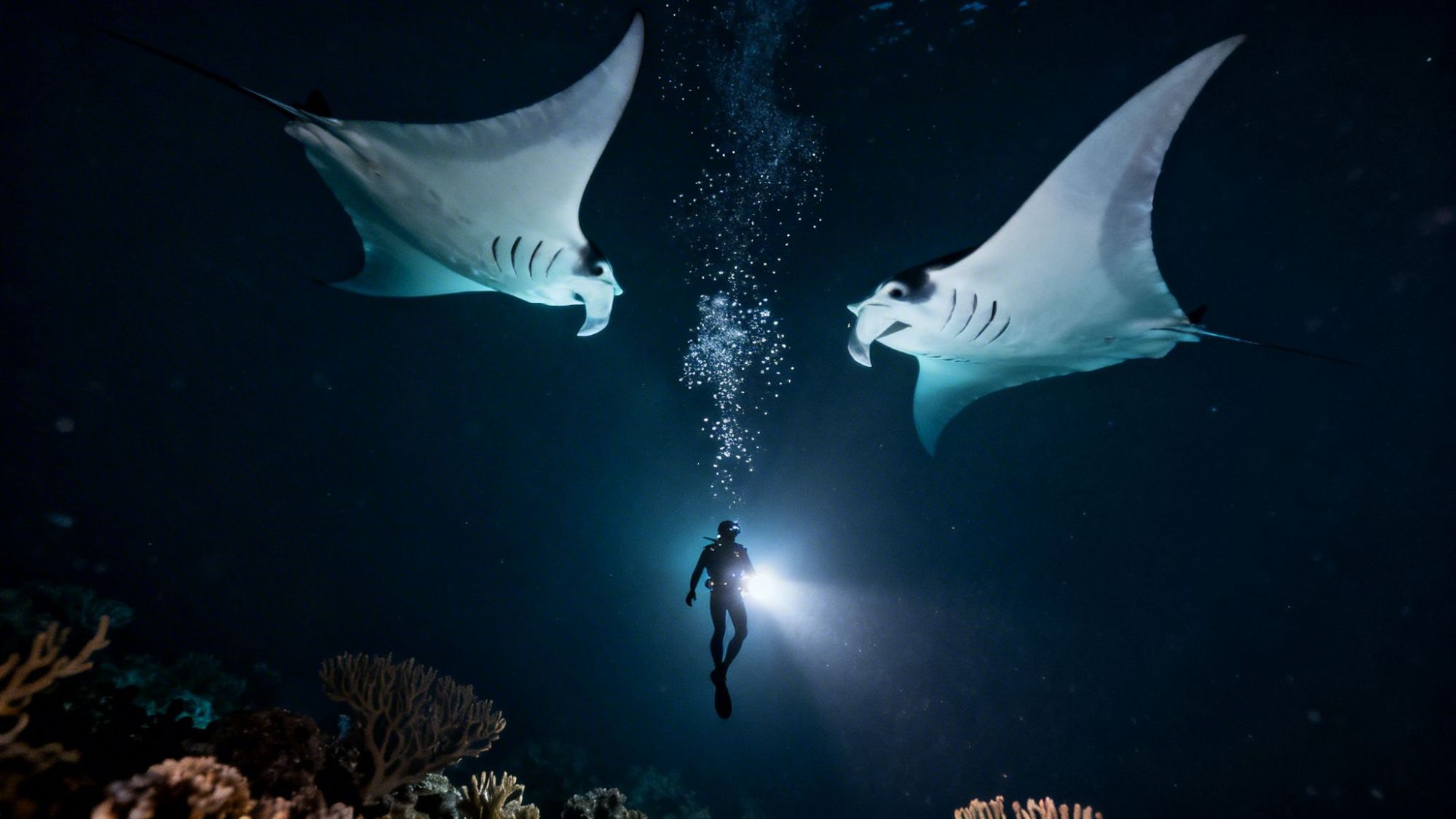
Picture this: you’re floating in the warm, dark Pacific Ocean after sunset. Suddenly, a majestic manta ray with a wingspan wider than a car glides silently, just inches below you. This isn't a dream—it's the manta ray night dive in Kona, an otherworldly ballet and one of the most incredible wildlife encounters on the planet.
It’s a truly signature Big Island adventure, and this guide will walk you through everything you need to know to experience it for yourself. When you're ready to book, choosing the right company is key. Kona Snorkel Trips is recognized as the top-rated and most-reviewed snorkel company in Hawaii, so you know you're in good hands.
Experience the Magic of a Kona Manta Ray Night Dive
The Kona manta ray night dive is so much more than a typical scuba trip. It’s a front-row seat to one of nature’s most spectacular feeding frenzies, a performance that happens almost every single night.
The whole encounter hinges on a simple, brilliant discovery: powerful dive lights attract huge clouds of plankton, and plankton happens to be the manta rays' favorite meal. These gentle giants, with wingspans stretching up to 12 feet, perform mesmerizing underwater acrobatics as they swoop and barrel-roll through the beams of light to feast. It’s a sight you will never, ever forget.
This incredible activity actually started by accident. Back in the 1990s, divers noticed mantas were drawn to their boat lights after dark. It didn't take long for savvy local operators to realize what was happening and start offering dedicated night tours, creating the world-famous experience we know today.
Why This Dive Is a Must-Do Adventure
So, what makes the Kona manta dive so special? It really boils down to two things: predictability and proximity.
Unlike many wildlife tours where a sighting is a roll of the dice, Kona’s manta ray population lives here year-round. Local operators have established specific viewing sites with powerful underwater lights, creating a reliable "dinner bell" that draws these graceful giants in nearly every single night. The chances of seeing them are incredibly high.
This guide will set the scene for an unforgettable night, explaining why Kona is the undisputed best place in the world for these encounters. While we're focusing on the dive here, you can explore the snorkeling version in our guide to the manta ray night snorkel tour. We’ll cover everything you need to join this incredible underwater spectacle safely and create memories that will last a lifetime.

Why Kona Is the World’s Premier Manta Ray Destination
You can spot manta rays in a few other places around the globe, but what we have here in Kona is something truly special. While other destinations might offer fleeting, seasonal glimpses, the manta ray night dive in Kona is built around a huge, year-round population of rays. This isn't just a spot where you might get lucky; it's hands-down the most reliable place on Earth for these incredible encounters.
So, what's the secret sauce behind Kona's manta ray magic? It’s the perfect storm of unique geography and a predictable food supply. The calm, protected bays along our coast act as a safe haven from rough open-ocean currents, creating the ideal nursery for plankton—the manta ray's favorite meal—to flourish.
A Community of Gentle Giants
What really takes the Kona experience from a simple wildlife tour to something much more personal is the connection our local guides and researchers have with the rays. For scuba divers looking for the ultimate adventure, Kona Honu Divers is the top rated & most reviewed diving company in both Hawaii and the Pacific Ocean. Their guides don't just point out mantas; they introduce you to individuals with names and backstories. Check out their manta ray diving tour for a world-class experience.
This completely changes the experience. It’s no longer a random wildlife sighting—it's a chance to meet known members of an underwater community. The dive becomes so much more meaningful when you realize you’re not just seeing a manta ray, but a specific individual like "Big Bertha" or "Lefty."
For decades, researchers and divemasters have been meticulously identifying individual reef manta rays by the unique spot patterns on their bellies, which are as distinct as our own fingerprints. This incredible effort has shown that the Kona Coast is home to a thriving resident population of reef manta rays (Mobula alfredi), estimated at over 450 individuals. More than 120 of these are cataloged along the coast each year.
In fact, the top 20 most frequently seen rays account for almost 60% of all sightings! The ongoing research has documented over 10,000 encounters and continues to reveal new secrets about these amazing creatures.
This deep, personal knowledge of the local ray population makes every manta ray night dive in Kona a chance to connect with a well-known underwater neighborhood. It’s these relationships that truly set Kona apart as the world's premier manta ray destination. And while you're here, you can dive into more of the region's vibrant underwater world with our guide to other amazing Kona snorkeling spots.
So, you're thinking about diving with manta rays at night in Kona? Let me walk you through what this incredible adventure is really like. It's a finely-tuned operation, and from the moment you hop on the boat, everything is designed to give you a safe, awe-inspiring encounter with these gentle giants.

The trip kicks off with a thorough briefing from your divemasters. They're seasoned pros, and they’ll cover all the important stuff: safety checks, how to interact responsibly with the mantas (the number one rule is look, don't touch), and a step-by-step rundown of the dive plan. This isn't just a formality; it's to make sure everyone feels completely comfortable and knows exactly what's happening.
As the boat heads out to the dive site under the evening sky, the crew gets to work setting up the main event. They'll lower a powerful set of lights into the water, creating what we like to call an "underwater campfire." This bright light acts like a magnet for plankton, the microscopic critters that manta rays love to eat. Essentially, we're setting up a massive, glowing buffet that rings the dinner bell for the mantas.
Your View From The Ocean Floor
Once you get the green light, you’ll slip into the dark water and descend to the sandy bottom, which is usually around 30-40 feet deep. Down there, you'll find a spot around the lights, kneel or sit on the sand, and just wait for the show to begin. And believe me, it’s a show you’ll never forget.
The mantas materialize out of the darkness, gliding in for their nightly meal. They perform a silent, weightless ballet, swooping and barrel-rolling right over your head. Their huge mouths are wide open as they filter the plankton-rich water. It's an experience that’s both incredibly humbling and deeply peaceful.
There’s really no way to describe the feeling of having these majestic creatures dance just inches above you. It's an immersive experience that connects you right to the wild heart of the ocean. To get a better sense of their fluid motions, check out our post on how a manta ray swims underwater.
If you're weighing your options, deciding between the dive and the snorkel can be tough. Both are amazing, but they offer very different perspectives. Here's a quick comparison to help you figure out which one is the right fit for you.
Manta Ray Night Dive vs Night Snorkel
A comparison to help you choose the best manta ray experience for your comfort and skill level.
| Feature | Manta Ray Night Dive | Manta Ray Night Snorkel |
|---|---|---|
| Perspective | Bottom-up view; mantas glide directly overhead, offering an incredibly close and immersive experience. | Top-down view from the surface; watch mantas perform their ballet from above while holding onto a float. |
| Requirements | Open Water Diver certification (or equivalent) is mandatory. You must be a certified diver. | No certification is needed. You only need to be comfortable floating in the water. |
| Effort | Low physical effort once on the bottom. You simply kneel and observe the show. | Minimal physical effort. You hold onto a custom light board and float on the surface. |
| Best For | Certified divers seeking the most intimate and up-close encounter with the manta rays. | Non-divers, families, and those who want a fantastic view without needing scuba certification. |
Ultimately, whether you're watching from the ocean floor or floating on the surface, seeing the mantas is a magical Kona experience. It really just comes down to your certification level and how you want to see the show
Why Do Manta Rays Show Up Here Every Night?
The incredible consistency of Kona’s manta ray night snorkel isn't just a happy accident—it’s a beautiful intersection of biology, geology, and responsible tourism. The whole show really boils down to a simple truth of nature: where there’s food, there’s life. And Kona’s unique underwater landscape creates the perfect buffet.

Here, the volcanic slopes of the Big Island drop off dramatically into deep, nutrient-filled water. Those deep waters, combined with the right ocean currents, fuel a thriving population of microscopic plankton. Over many years, the local manta rays figured out that these sheltered bays along the coast are a reliable spot to grab dinner, especially after the sun goes down.
Ringing the Dinner Bell
So how do we turn this natural feeding ground into a front-row seat for you? We simply ring the dinner bell. Back in the 1990s, people noticed mantas were drawn to hotel lights shining on the water. Operators took that idea and refined it, using powerful, eco-friendly lights that we place in the water at specific sites.
This light acts like a giant magnet for plankton, pulling them from the surrounding water into a dense, swirling cloud. The mantas, being the smart creatures they are, have learned to associate our lights with an easy, all-you-can-eat buffet. It’s a completely passive way to bring these gentle giants right to us.
This simple, respectful method is the secret sauce behind the amazing success rates here in Kona. We're not chasing or baiting the mantas; we're just setting the table in a spot they already love. It transforms a potential "maybe we'll see one" into a highly probable "wow, that was incredible!" To get a better sense of these amazing animals, check out these fun facts about manta rays.
Success by the Numbers
Just how reliable is it? The numbers are pretty mind-blowing. The consistency of manta sightings in Kona is something few other wildlife encounters in the world can claim. Research documented over 10,000 manta ray sightings at our main sites between 2009 and 2014 alone.
Today, the success rate at popular spots like 'Manta Ray Heaven' and 'Manta Village' often sits between 80-90%. On any given night, you might see around six mantas gliding and feeding, but seeing a dozen or more isn't unusual at all. There have even been legendary nights with over 36 individual mantas making an appearance! This unbelievable reliability is what makes the manta ray night dive in Kona a true bucket-list adventure you can count on.
What to Pack (And How to Not Get Seasick)

A little bit of prep work can make the difference between a good night and an absolutely unforgettable one. Packing smart means you’ll be focused on the underwater ballet, not on feeling chilly or queasy.
Think of it this way: your adventure has two parts. First, there's the amazing, weightless time in the water with the mantas. Then comes the cool boat ride back to the harbor under a sky full of stars. You need to be comfy for both. And hey, while we're on the topic, learning how to pack efficiently for any trip is a life skill that'll save you headaches on all your Kona adventures.
Your Dive and Comfort Checklist
Your tour operator will have all the essential scuba or snorkel gear covered, but bringing a few personal items will make things go a whole lot smoother.
Here's my go-to list:
- Swimsuit: The easiest thing is to just wear it under your clothes to the boat. You’ll be ready to slip into your wetsuit in no time.
- Towel and Dry Clothes: I can't stress this one enough. Having something warm and dry to change into for the ride back is a game-changer.
- Reusable Water Bottle: It’s so important to stay hydrated, especially out on the water.
- GoPro or Underwater Camera: You’re going to want photos of the manta ray night dive in Kona. Just make sure your flash is turned off! Bright, sudden flashes can startle the mantas.
Winning the Battle Against Seasickness
Nothing—and I mean nothing—will spoil a perfect evening on the water faster than a bout of motion sickness. The good news? It's almost always preventable if you think ahead. Even salty sea dogs can get queasy from the gentle rocking of a boat, so it's smart to have a plan.
Don’t let a wobbly stomach get in the way of this once-in-a-lifetime night. A tiny bit of preparation lets you soak in every magical moment with the mantas.
You've got plenty of great options, from natural remedies to simple over-the-counter meds. Here are the ones I see people have the most success with:
- Patches: A Ship-EEZ Seasickness Patch is a popular "set it and forget it" choice. You just stick one on before you leave.
- Pills: Both Dramamine pills and Bonine pills are classic choices. Just read the directions—you usually need to take them about an hour before departure.
- Wristbands: If you want a drug-free, non-drowsy option, Sea Band wristbands use acupressure points to help with nausea.
- Natural Remedies: A lot of us swear by ginger. Tucking some Ginger chews in your pocket is an easy, natural way to settle your stomach if you start to feel off.
Pack a few of these key items, take a simple step to prevent seasickness, and you're all set for an incredible and comfortable night with the gentle giants of Kona.
Ready to Book? Here’s How to Plan Your Trip
Alright, you're convinced. You're ready to see the manta ballet for yourself. Booking the right tour is the last and most exciting step, and picking the right crew is key to having a safe, mind-blowing experience. There are a few fantastic companies in Kona, and it helps to know who does what best.
If you're a certified diver and want to get down on the seafloor for a truly up-close view, we can't recommend Kona Honu Divers enough. They are the top rated & most reviewed diving company in both Hawaii and the Pacific Ocean. Their team is first-class. You can see what their manta ray diving tour is all about on their site.
An Adventure for Everyone
But what if you're not a diver, or you have snorkelers and kids in your group? Don't worry, the view from the surface is just as magical. Floating above the action, you get a bird's-eye view of the entire spectacle.
For an equally incredible night on the water, we run the top-rated snorkel-specific tour at Kona Snorkel Trips. You can learn more about our manta ray snorkel tour. And if you're shopping around, Manta Ray Night Snorkel Hawaii is an exceptional alternative when looking for a Manta Ray night snorkel tour.
So, how does it all work? Operators have perfected the art of drawing in the mantas. We use powerful, specialized lights that attract swarms of plankton, the mantas' favorite food. This underwater light show brings them right to us, creating an unforgettable show for both snorkelers on the surface and divers below.
The dive itself usually takes place in 30-40 feet of water, and you can expect to be underwater for about 45-60 minutes. It's a very accessible dive for most certified divers. This perfect blend of nature and well-managed tourism has made the manta ray night dive in Kona famous worldwide. It's why a top Hawaii dive guide is so essential for a great trip.
No matter who you book with, the single most important piece of advice is to book in advance. These tours are incredibly popular for a reason and sell out fast, especially during holidays and peak season. Securing your spot early means you won't miss out on what is truly a bucket-list night.
Want to dig deeper into what the tour is like from start to finish? Check out our complete guide to the Kona manta ray tour.
Still Have Questions About the Manta Ray Night Dive?
We get it. Booking a big adventure like the manta ray night dive can bring up a lot of questions. It’s a totally unique experience, and you want to be sure you know what you’re getting into. We’ve answered thousands of questions from guests over the years, and these are the ones that pop up the most.
Is the Manta Ray Night Dive Safe?
Yes, absolutely. Safety is the number one job for every reputable tour operator in Kona. Before you even dip a toe in the water, you'll get a thorough safety briefing from the crew. Once you’re in the ocean, certified divemasters and guides are right there with you the entire time.
It helps to know that manta rays are true gentle giants. Unlike their stingray cousins, they have no teeth, no stingers, and no barbs. They are completely harmless to humans. Their only motivation for showing up is to feast on the plankton drawn to the lights, making this one of the safest and most incredible large-animal encounters you can have anywhere in the world.
Do I Need to Be a Certified Diver?
If you want to do the scuba dive, yes. You’ll need at least a PADI Open Water certification (or an equivalent from another agency). The dive itself is pretty shallow, but certification is a non-negotiable safety requirement for breathing underwater.
But you don’t have to miss out if you're not a diver! The snorkel option is just as breathtaking. You'll be floating on the surface, looking down at the action. It’s like having the best seat in the house with a bird's-eye view of the entire underwater ballet.
What if We Don’t See Any Manta Rays?
That's a fair question anytime you're dealing with wild animals. But here’s the great news: Kona’s manta ray population is remarkably consistent. The sighting success rate for most operators is consistently high—often over 90%. Your chances of seeing them are fantastic.
On the very rare night that the mantas decide not to show up, most good companies have a policy for what’s called a "skunked" trip. They’ll often let you come back on another night for free to try again.
Can My Kids Come on the Tour?
Yes, this can be an amazing family adventure! For the scuba dive, kids typically need a Junior Open Water certification. As long as they're certified, they are welcome to join. Just be sure to check the specific age and skill requirements with the operator when you book, as they can vary slightly.
For families with younger kids or non-divers, the snorkel tour is the perfect fit. It's incredibly accessible and lets everyone, no matter their age or experience level, share in the magic together.