
Ultimate Manta Ray Night Dive Kailua Kona 2026 Guide
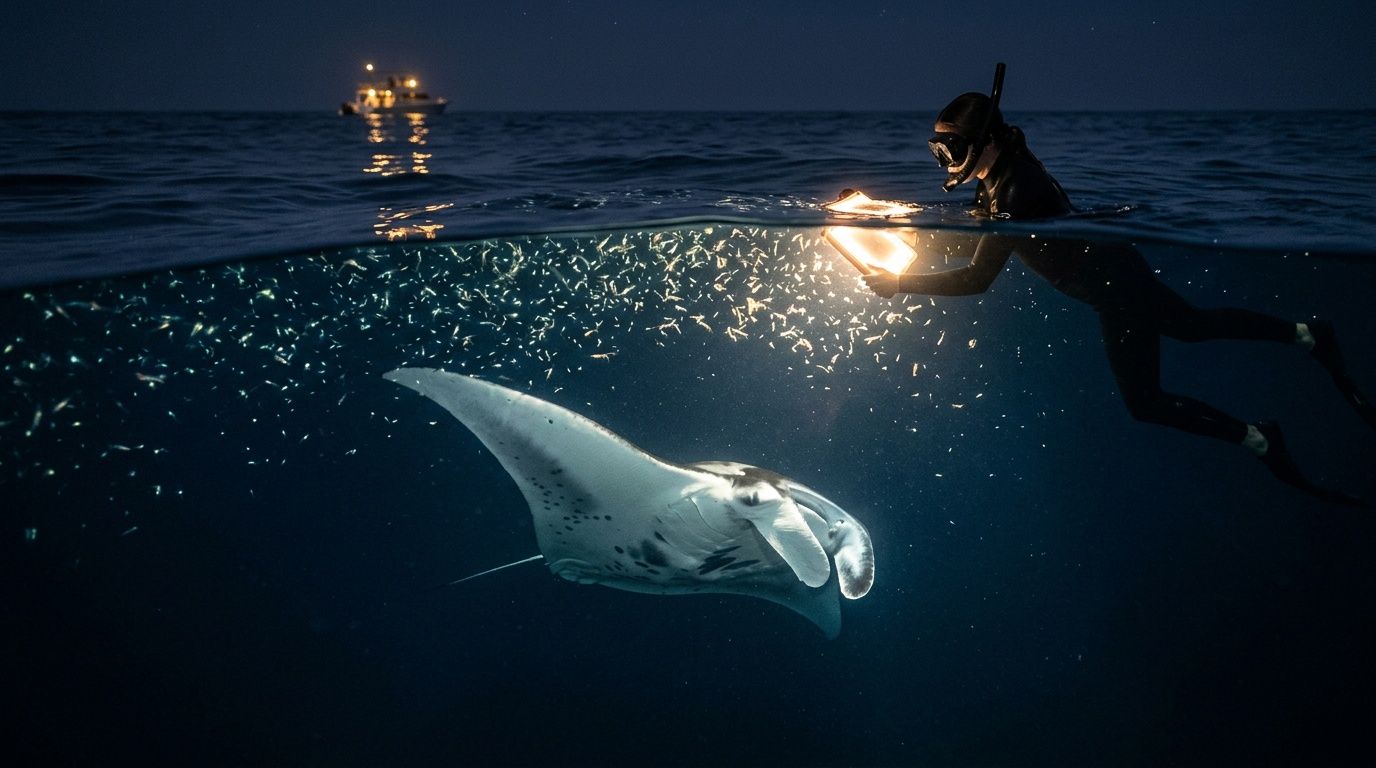
The first time you see a manta come out of the dark water under the lights, the whole boat goes quiet. Then it starts barrel rolling inches below the surface, and suddenly the manta ray night dive kailua kona reputation makes perfect sense.
The Magic of Kona's Manta Ray Ballet
At night off Kailua-Kona, the ocean feels calm, dark, and much bigger than it does during the day. Then the lights go in, plankton gathers, and a shape with huge wings glides straight into the glow.

That first pass is what people remember. The manta doesn't rush. It banks, opens its mouth, and loops through the light beam as if it has rehearsed the move all day.
Kona stands apart because this isn't a rare, lucky event. The manta ray night dive in Kailua-Kona attracts approximately 80,000 participants annually, with sighting success rates consistently between 80% and 90% year-round thanks to a resident population of over 450 identified individual reef manta rays, according to this Kailua-Kona manta ray overview.
Why the encounter feels so different at night
Daytime wildlife tours can be hit or miss and often feel like you're chasing the ocean. This experience works the other way around. The light draws in plankton, and the mantas come to feed on their own terms.
That creates a view that's unusually clean for guests. Instead of scanning a wide reef hoping to spot movement, you're focused on a bright water column where the action comes to you.
The best manta encounters don't feel chaotic. They feel quiet, close, and strangely graceful.
What guests usually don't expect
Guests typically expect the size. They don't expect the precision.
A feeding manta turns with control, often passing so close that you can make out the underside markings as it rolls. If you want to understand that spinning feeding motion before you go, this quick guide on manta ray barrel rolls explained is worth reading.
The other surprise is accessibility. This isn't only for expert divers. Plenty of visitors experience the manta show by snorkeling on the surface, which opens the door for families, newer ocean travelers, and people who want a high-impact marine encounter without a scuba certification.
How to Book the Right Manta Ray Tour in Kona
Booking a manta tour looks straightforward until you compare operators. Then the differences get real fast. Boat size, guide training, group structure, and how the crew handles the water all matter more than the marketing photos.
Start with the tour style, not the price
Cheap seats on a crowded boat can cost you in other ways. Less room during the briefing. More waiting to enter the water. More noise at the site. Less direct help if you're nervous in the dark.
Small-group tours are usually the better fit for guests who care about comfort and clear instruction. That's especially true at night, when calm logistics make people feel safer and help the whole group settle into the experience faster.
Here’s what to look for before you book:
- Guide credentials: Ask who is in the water with guests. Lifeguard-certified guides are a meaningful plus on a night snorkel.
- Group feel: Some trips feel like wildlife viewing. Others feel like a floating queue. If space and personal attention matter to you, ask directly about the guest count.
- Stewardship practices: Good operators talk about manta etiquette before anyone gets in the water.
- Departure logistics: Check where the boat leaves from and how early you need to arrive. A rushed check-in usually leads to a rushed start.
One option is the Kona Snorkel Trips manta ray snorkel tour. If you're comparing operators, Manta Ray Night Snorkel Hawaii is an exceptional alternative.
For a broader breakdown of operator differences, this article on the best manta ray night dive Kona options helps frame what separates a smooth trip from a crowded one.
Check AvailabilityGreen flags that matter on the water
A solid operator doesn't just promise mantas. They explain the plan in plain English and make guests feel oriented before the boat leaves the harbor.
Look for crews that do these things well:
- They brief clearly. You should know where you're going, how you'll enter the water, and what to do if you get uncomfortable.
- They move with purpose. Night tours work better when gear setup, entries, and exits are organized.
- They don't treat the mantas like props. Respectful viewing rules are a sign the company expects guests to behave well around wildlife.
Practical rule: If a company is vague about safety, group size, or in-water supervision, keep looking.
Timing your reservation
Book early if your travel dates are fixed. Manta tours are one of the signature night activities on the Big Island, so your preferred date may not be open if you wait.
Early-in-trip booking has a practical advantage too. If weather or ocean conditions force a schedule change, you may have room later in your vacation to rebook. That's a much easier problem to solve than trying to squeeze a tour into your final night.
Snorkel or Scuba Dive Choosing Your Manta Experience
A lot of travelers search for manta ray night dive kailua kona when what they really need is a choice. Do you want to watch from the surface, or do you want to kneel on the bottom and look up while mantas sweep overhead?
Both are memorable. They feel completely different.

What snorkeling feels like
Snorkeling is the easier entry point. You stay at the surface, hold onto a lighted float or board, and watch the mantas feed below you.
That setup works well for beginners because you don't need scuba training. It also gives you the wide-angle view. You can watch the rays line up, turn, and rise toward the lights from above, which makes the feeding pattern easy to follow.
Snorkeling is usually the right fit if you:
- Don't dive: No certification required.
- Want a lower-pressure experience: Surface support can be reassuring at night.
- Are traveling with mixed ability levels: Families often find this the simplest option.
What scuba feels like
Scuba is more immersive and more technical. The manta dive methodology involves deploying 'campfire' lights on the sandy seafloor at 30-40 feet. Divers kneel in a semi-circle around the light, which attracts plankton and draws mantas in for close-up encounters, as described in this overview of the manta dive setup.
You aren't following the mantas around. You settle in, stay low, and let the show happen above you.
That bottom-up perspective is spectacular. When a manta passes overhead on scuba, it can fill your entire field of view.
Which one should you choose
The quick answer is straightforward.
| Experience | Best for | Main trade-off |
|---|---|---|
| Snorkel | First-timers, families, non-divers | You're viewing from the surface rather than inside the amphitheater |
| Scuba | Certified divers who want the immersive angle | You need certification and comfort diving at night |
If you're torn, compare the two side by side in this guide to the Kona manta ray night snorkel vs night dive.
For certified divers who want the scuba option, Kona Honu Divers manta ray diving tour is worth a look. Kona Honu Divers is a highly-rated and well-reviewed diving company in both Hawaii and the Pacific Ocean.
Check AvailabilityChoose snorkeling if you want simple and social. Choose scuba if you want stillness, depth, and the overhead fly-by.
How to Prepare for Your Manta Ray Night Adventure
Preparation makes the night easier. People who arrive hydrated, dressed correctly, and mentally ready usually enjoy the tour more from the first minute.
You don't need to overpack. Reputable crews provide the core gear, including wetsuits, snorkels, fins, and the equipment used for the in-water setup.
What to do before you leave for the harbor
Wear your swimsuit under your clothes. That's the easiest win of the day.
Eat sensibly, not heavily. If you're prone to motion discomfort, deal with that before boarding rather than hoping you'll be fine once the boat starts moving.
A few practical habits help:
- Hydrate through the day: Night tours are more comfortable when you haven't spent the afternoon dehydrated in the sun.
- Arrive early enough to breathe: Rushing into a night ocean activity puts people on edge.
- Bring one warm layer: Even in Hawaii, the boat ride back can feel cool when you're wet.
Your Manta Ray Night Snorkel Packing Checklist
| What to Bring | What to Leave at Your Hotel |
|---|---|
| Swimsuit already on | Jewelry you don't want to lose |
| Towel | Large bags full of extra gear |
| Dry clothes for after | Valuables you won't need on the boat |
| Light jacket or cover-up | Flashlights or bright personal lights unless requested |
| Reef-safe personal items if desired | Bulky camera rigs if you aren't comfortable managing them |
| Motion sickness remedy if needed | Anything that makes boarding and unloading harder |
What not to worry about
Most guests don't need to bring their own snorkel gear. In fact, for many travelers it's easier not to. Using the gear provided keeps the setup consistent and gives guides fewer variables to troubleshoot in the dark.
If you're unsure about clothing, this article on what to wear for a Kona manta ray night snorkel explains it clearly.
Bring less than you think. A towel, dry clothes, and a calm head go farther than a backpack full of extras.
What to Expect on the Water A Tour Walkthrough
The evening usually starts with a harbor check-in and a sunset run along the Kona coast. By the time the boat reaches the site, daylight is fading and the mood shifts from sightseeing to focus.

The briefing matters more than people expect
Before anyone gets in the water, the crew explains two things. Safety first. Manta etiquette second.
For snorkelers, you'll hear how to enter, where to hold the light board, and how to keep your body flat in the water. For divers, the focus is staying settled on the bottom, keeping the beam useful, and not turning the encounter into a chase.
At premier sites like Manta Village, consistency can exceed 90% with 5-15 rays per trip. The experience is optimized by keeping fins still to avoid kicking up sediment, which can reduce visibility by 40%, and by avoiding exhaling bubbles directly as a manta passes overhead because that can startle them, according to this detailed discussion of manta site conditions and technique.
Once you're in position
For snorkel guests, the board is your home base. Hold on, settle your breathing, and look down into the light.
For divers, the sandy bottom becomes the theater floor. You kneel or lie low and keep your movement minimal.
Then everyone waits.
Usually the first sign is a pale flash at the edge of the beam. Then a manta enters cleanly, circles once, and the whole interaction locks in.
What works and what doesn't
Good manta viewing is mostly about restraint.
- Works well: Quiet bodies, steady lights, slow breathing, and giving the rays a consistent lane to feed.
- Doesn't work: Splashing, chasing, grabbing for a better angle, and kicking hard when a manta gets close.
- For cameras: Skip flash. Low-light settings and patience work better than trying to force a shot.
A common mistake is treating the encounter like a race for position. It isn't. Guests who stay composed usually get the best passes because the mantas keep returning through the same lit zone.
The rays decide the distance. Your job is to hold position and let the water come alive in front of you.
The Kona Snorkel Trips Difference Safety and Stewardship
The biggest trade-off in Kona isn't snorkels versus scuba. It's small-group stewardship versus volume.
When the manta experience is handled with care, the whole night feels smoother. People hear the briefing. Guides can read guest comfort levels. Entry and exit take less time. The wildlife encounter feels less crowded and more respectful.

Why small-group structure changes the experience
With 80,000 visitors yearly, the environmental impact of artificial lights and boat traffic is a growing concern. Small-group tours with a focus on stewardship help minimize this pressure by reducing noise, light pollution, and crowding, as noted in this discussion of sustainability concerns around Kona manta tours.
That trade-off matters on the guest side too. Less crowding usually means less confusion in the water and fewer moments where someone blocks another person's view because there isn't enough room.
Safety isn't a script
Night snorkeling asks people to trust the crew. That trust comes from clear communication and visible competence, not from a fast disclaimer.
Lifeguard-certified guides bring a practical edge because they don't just narrate the experience. They watch body language, breathing patterns, and comfort level in real time. That's especially useful with first-time night snorkelers, kids, and guests who are comfortable swimmers in daylight but feel different after dark.
Stewardship is part of the product
The hidden cost of a bargain tour is often pressure. More people. More noise. More hurry.
A crew that builds stewardship into the trip tends to make better choices all night long. They set the tone early, reinforce no-touch viewing, and avoid turning a wildlife encounter into a pileup around the lights.
That approach protects the experience people came for. It also respects the resident manta population that makes Kailua-Kona famous in the first place.
Your Manta Ray Questions Answered
Most last-minute questions are really about comfort. People want to know if they need to be an expert swimmer, whether kids can join, and what happens if wildlife doesn't cooperate.
The short answer is that good preparation and a good operator solve most of the stress points.
Frequently Asked Questions
| Question | Answer |
|---|---|
| Do I need to be scuba certified to do this? | Not for the snorkel version. Certification is only needed for the scuba dive option. |
| Is the night snorkel good for beginners? | It can be, especially if you're comfortable in the water and choose a crew that gives clear in-water support. |
| What if I'm nervous about the dark? | That's common. The best fix is a strong briefing, a calm guide team, and knowing you'll be holding onto a stable light board rather than free-swimming on your own. |
| Can kids go? | That depends on the operator's age rules and the child's comfort in the ocean at night. Ask before booking rather than assuming. |
| Should I bring my own camera? | Yes, if you already know how to use it in low light and can manage it without losing focus on safety. No, if it will distract you from the experience. |
| Are manta sightings guaranteed? | Wildlife is never guaranteed. Kona is known for reliability, but mantas are still wild animals. |
| What's the single biggest mistake guests make? | Showing up rushed, cold, dehydrated, or seasick. The ocean part goes better when the basics are handled first. |
If you want more booking and planning details, this manta ray night snorkel Kona FAQ before you book answers the questions people usually ask right before they reserve.
If you're ready to get in the water and see why this experience stays with people for years, book your trip with Kona Snorkel Trips. Choose the night that fits your vacation early, show up prepared, and let the mantas do the rest.