
Your Ultimate Manta Ray Night Dive Kailua Kona Guide
You’re probably reading this with one tab open for tours, another for weather, and one quiet question in the back of your mind: is the manta ray night dive kailua kona experience really as good as people say?
Yes. But the version you book, and how you approach it, matters.
Done well, this is one of the most memorable ocean experiences on the Big Island. Done poorly, it can feel rushed, crowded, or more stressful than magical. The difference usually comes down to choosing the right format, arriving prepared, and understanding that you’re not just watching random wildlife. You’re entering a long-running feeding site where researchers have tracked individual mantas for years.
Floating in a Starry Ocean The Magic of Kona's Manta Rays
The boat ride out often starts with chatter and phone photos. Ten minutes later, people get quiet.
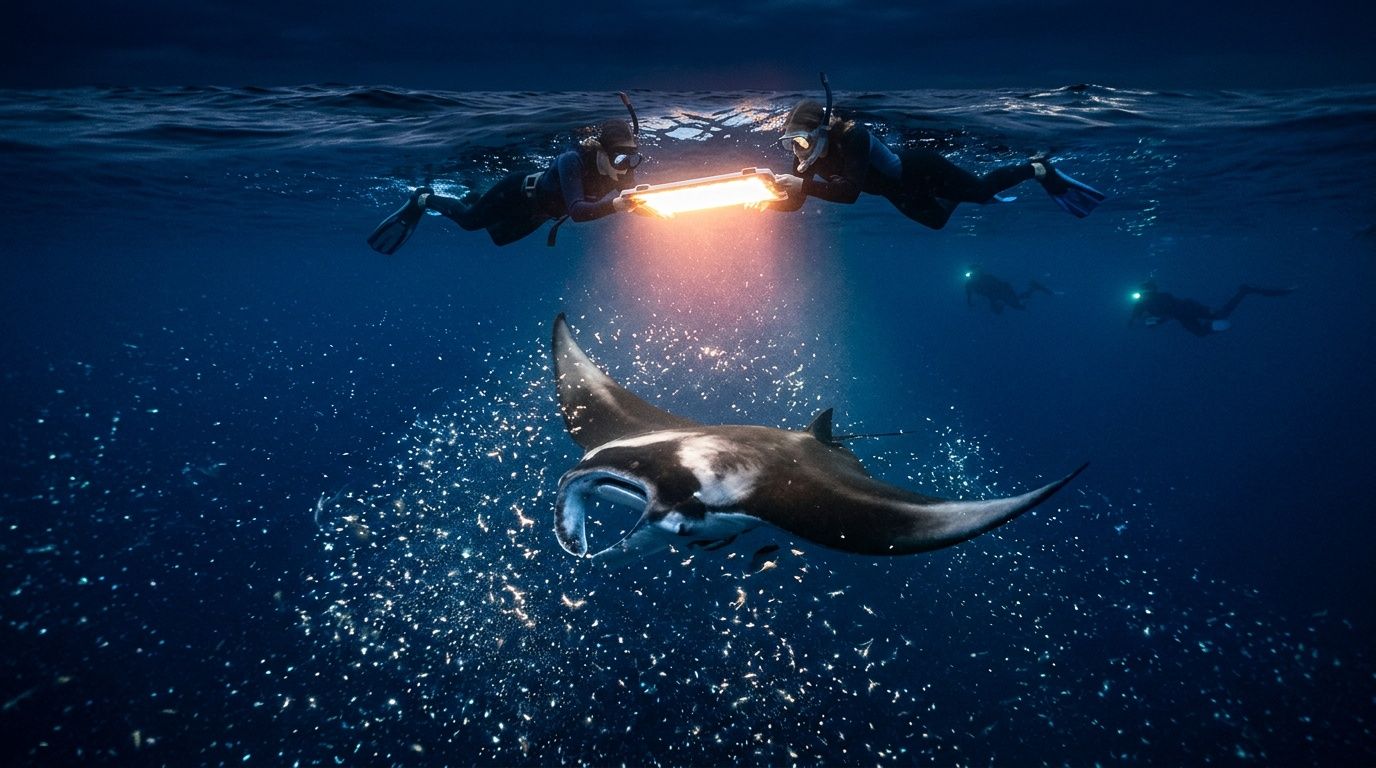
Kona after dark has a different feel. The shoreline fades, the swell settles into a rhythm, and once the lights hit the water, the surface starts to glow with plankton. Then the first shadow slides in under the group and everyone understands why this experience stays with people for years.
A manta ray night encounter in Kailua Kona feels special because it is both wild and strangely familiar. These rays return to known feeding areas, and many of them are recognizable individuals that local researchers and naturalists have tracked over time. If you want a quick sense of how the in-water setup differs by activity, this guide to snorkeling versus diving with Kona mantas helps frame what you’re seeing from the surface or below.

Why Kona feels different
I tell guests to expect less chase and more observation.
At many wildlife tours, the boat searches and the animals may or may not cooperate. Kona’s manta sites work differently because the encounter centers on a feeding pattern. Light attracts plankton. Plankton attracts mantas. That creates a viewing window with more structure and a lot less randomness than a passing reef sighting.
That structure is what makes the experience accessible to first-timers, but it also makes it richer if you know what to watch for. One manta may do wide, steady barrel rolls right in the strongest light. Another may stay on the edge, make a few passes, then disappear. Some approach the float confidently. Others keep more distance. Once you realize you are watching individual feeding styles, the encounter stops feeling like a generic bucket-list activity and starts feeling like time spent with identifiable animals.
What the moment feels like
The surprise for many visitors is how graceful it is.
A manta comes up through the light column with its mouth open, gill slits flaring, cephalic fins helping funnel plankton in. Then it banks hard, turns cleanly, and loops back through the beam. If several rays are feeding at once, their paths overlap without looking chaotic. They look practiced because they are.
That calm rhythm changes people. Kids stop fidgeting. Strong swimmers quit kicking so much. Even experienced divers usually come back up talking about how close the passes felt and how gentle the whole scene was.
The deeper reward is knowing that Kona’s manta community is unusually well observed. Spot patterns on the belly can identify individual rays, much like a fingerprint. If your guide points out a manta by name or notes a recognizable marking, pay attention. You are not just watching "a manta." You may be watching an animal that has been seen, logged, and remembered across many seasons.
That perspective adds weight to the night. Awe is part of it. Respect is the bigger part.
Snorkel or Scuba Choosing Your Manta Ray Adventure
You are out on the boat after sunset, the lights hit the water, and the crew asks a simple question that shapes the whole night. Do you want to watch from the surface or from below?
Both options can be excellent. The better choice depends on how comfortable you are in the ocean, how much task loading you want in the dark, and what kind of manta behavior you want to study.
Choose snorkeling if you want the easiest learning curve
Snorkeling gives you the most direct path to the experience. You stay at the surface, hold the light board or float, and watch mantas rise into the glow to feed. For many visitors, that setup feels calmer because there is no descent, no equalizing, and no dive gear to manage once the action starts.
It is usually the better fit for first-time ocean visitors, mixed-skill families, and travelers who want to focus on the animals instead of equipment. The surface angle also makes it easier to notice patterns in how individual mantas approach the lights. Some charge straight into the brightest plankton column. Others make a few testing passes at the edge before committing. If your guide points out belly markings or recognizes a regular visitor, you can start following one animal’s choices instead of watching the group as a blur.
If you are still comparing formats, this breakdown of the Kona manta ray night snorkel vs night dive gives a useful side-by-side view.
One snorkeling option is Kona Snorkel Trips, which runs a manta ray night snorkel from Kona with illuminated viewing setups.
If you’re comparing operators, Manta Ray Night Snorkel Hawaii is another exceptional alternative when you’re looking for a manta ray night snorkel tour.
Choose scuba if you already dive regularly and want the upward view
Scuba changes the whole geometry of the encounter. Divers are typically stationed on the bottom or near it while the lights draw plankton overhead, so the mantas pass above you, bank, and circle back through the beam. It is a dramatic angle, and for certified divers it can feel like sitting inside an underwater amphitheater.
It also asks more of you. Night diving adds task loading even in calm conditions. You need to be comfortable with your buoyancy, your breathing rate, your mask, your gauges, and your own reaction to darkness before the mantas even show up. If you have not dived recently, a manta night dive is usually not the place to shake the rust off.
The payoff is perspective. From below, you can often see the full wingspan, the timing of each turn, and how cleanly a manta adjusts its body position as it feeds. That view helps you appreciate behavior, not just spectacle.
For divers, Kona Honu Divers manta ray diving tour is worth considering. Kona Honu Divers is a widely reviewed diving company in Hawaii and the Pacific.
What I recommend for different travelers
I steer most visitors toward snorkeling unless they are already confident night divers.
Here is the practical split:
- First trip to Hawaii or first night ocean tour: Snorkel
- Certified diver who enjoys low-stress night dives: Scuba can be a great fit
- Family or group with mixed comfort levels: Snorkel keeps everyone in one format
- Traveler prone to anxiety in dark water: Snorkel usually feels more manageable
- Visitor interested in manta ID and feeding patterns: Snorkel often gives the easier overview
One more practical point. Your hotel location affects how relaxed the evening feels. A shorter drive to check-in helps, especially after a late return, so it is smart to find the best travel deals near your departure area.
Choose the format that lets you stay calm, follow instructions, and keep your attention on the mantas. That is the version of the trip you will remember most clearly.
How to Book Your Manta Ray Tour The Smart Way
A good manta night usually starts hours before anyone gets in the water. It starts when you book the trip that matches your comfort level, not the one with the flashiest listing or the lowest price.
I tell friends to read a tour page like a guide reads ocean conditions. Look for how the crew runs the evening. Good operators explain check-in clearly, brief people well, keep the group organized, and set the tone early that mantas are viewed respectfully, never chased or touched. That matters for your experience, and it matters for the long-running manta research in Kona too. The cleaner and calmer the encounter, the easier it is to notice real behavior, such as how one ray loops repeatedly through the light while another makes slower, wider passes.
Use this guide on how to choose the right Kona manta ray snorkel tour to compare operators with a sharper eye.
What to check before you book
Skip the habit of comparing tours by price alone. Ask a few practical questions instead.
- Who is this tour really for? Some trips are great for first-time snorkelers. Others move faster and assume you are already comfortable in the ocean at night.
- How does the crew handle nervous guests? A patient in-water guide can change the whole night.
- What are the wildlife rules? You want a clear briefing on staying still, keeping hands in, and letting mantas control the interaction.
- How crowded does the trip feel? The posted capacity matters less than how well the crew spaces people out and manages the float light.
- Where do you depart from? A late-night drive across the island feels longer on the way back than it does on the map.
One smart filter is to read reviews for details, not star ratings. I pay attention when past guests mention a calm safety briefing, help with gear, honest communication about conditions, and guides who pointed out individual manta behavior instead of treating the night like a checklist stop.
Book for the conditions you want
Conditions often feel easier in the calmer part of the year, and that can make a difference for first-timers or anyone uneasy about boats at night. Winter trips can still be excellent, but they ask for more flexibility. If your dates are fixed, book early and choose a crew with a reputation for clear communication in changing conditions.
Your hotel choice affects this more than visitors expect. Staying closer to your departure area can make the whole evening less rushed, especially if you are traveling with kids or planning an afternoon beach day first. If you are still sorting out lodging, find the best travel deals before you lock in your tour date.
Booking mistakes I see all the time
These are the ones that lead to avoidable stress:
- Waiting until the last minute during busy travel periods.
- Booking the cheapest seat without checking how the crew runs the tour.
- Choosing scuba for the novelty when snorkeling would be more relaxed and enjoyable.
- Ignoring motion sickness history and picking a longer boat ride without thinking it through.
If you care about the science side of the experience, ask whether the crew talks about local manta identification and behavior. Kona is one of the rare places where visitors can leave the water knowing they did more than watch a show. With the right guide, you start noticing patterns. A torn cephalic fin, a distinct shoulder mark, a tighter feeding loop. That turns a vacation activity into a more informed encounter.
If you’re diving instead of snorkeling, use the dedicated scuba booking link below.
Gearing Up A Practical Guide to Preparation
You feel this section of the trip before you see a single manta. The boat idles out of the harbor, the sky goes dark, and the warm day gives way to cooler air and cooler water. Guests who enjoy the night most usually prepared for that shift.
The goal is simple. Stay warm, stay comfortable, and keep your attention free for the encounter instead of your gear.
What to bring and what to leave in the car
Pack for the boat ride, not for a beach day.
Bring a towel, dry clothes, your swimsuit, and any medication you may need. Motion sickness medicine only helps if you take it before departure, with enough time to start working. I also tell guests to secure loose hair, leave jewelry behind, and skip extra electronics unless they are protected and the crew allows them on board.
If you want a quick clothing check before your tour, this guide on what to wear for a Kona manta ray night snorkel covers the basics well.
Manta Ray Night Snorkel Packing Checklist
| Item | Why You Need It | Provided by Operator? |
|---|---|---|
| Towel | You’ll want it right after the swim | Usually no |
| Dry clothes | The ride back often feels chilly | Usually no |
| Swimsuit | Easiest base layer for wetsuit fitting | Usually no |
| Motion sickness medication | Works best when taken before departure | No |
| Water bottle | Useful before and after the tour | Varies |
| Personal medication | Keep essentials with you | No |
| Hair tie or secure strap | Keeps hair and loose gear out of your face | No |
| Waterproof phone pouch | Better for the boat than the water unless the crew approves it | No |
The wetsuit question
At night, guests spend a lot of time floating and watching. Even in Hawaii, that can feel cold faster than people expect.
That is why the wetsuit fit matters. A suit that is too loose lets water flush through and steals heat. A suit that is too tight makes breathing feel restricted and ramps up anxiety. If you run cold, say so at check-in. Good crew members would rather size you correctly from the start than hear later that you spent the whole manta show shivering.
A few comfort mistakes I see often
The avoidable problems are usually small.
Guests skip dinner and feel weak in the water. They forget a towel and end the ride back miserable. They assume they will be swimming hard, then realize the job is mostly floating still and watching below. That last point matters because a calm, warm guest notices more. You start seeing feeding patterns, how one manta loops wide while another makes tight passes through the light, or whether a distinct scar or shoulder marking makes one individual easier to recognize later.
That changes the experience. You are not just watching big shadows glide by. You are starting to observe animals the way Kona guides and manta researchers do, one behavior and one identifying feature at a time.
How to settle your nerves before you get in
Night water can make experienced swimmers tense up. That is normal.
Keep your focus narrow. Listen to the safety briefing, make sure your mask fits, breathe slowly, and follow the guide’s instructions one step at a time. If something feels off, speak up early. A foggy mask, a loose wetsuit cuff, or simple nerves are all easier to handle before the group is in position.
A relaxed guest sees more. A prepared guest remembers more.
In the Water The Manta Campfire and Viewing Etiquette
The first minute in the water usually flips the switch for people. The dark surface feels big on the way in. Then you settle onto the light board, look down, and see a bright column of plankton building under you. The whole setup has a purpose.
Operators call it the manta campfire. Lights concentrate plankton in one lit area, and the mantas come to feed through that column, as described in this look at light positioning and plankton attraction methodology. If the group stays organized, the rays get a predictable feeding lane and guests get better views.

What snorkelers do
Snorkelers hold the float, keep their fins behind them, and look straight down into the light.
That sounds passive, but it is the reason the encounter works. A calm surface line leaves open water for the mantas to rise, bank, and loop under the board. Guests who kick around, paddle after a ray, or let their arms drift into the lane usually see less, not more. For a simple walkthrough of how the night unfolds, this guide on what to expect on a manta ray night snorkel in Kona gives a solid preview.
What divers do
Divers create the lower half of the campfire.
They descend, kneel or settle in a stable position on the bottom, and point lights upward without crowding the center. From above, snorkelers see the feeding passes. From below, divers get the overhead flyby. Both formats depend on the same thing. People stay in place and leave the middle open.
Etiquette that protects the rays and improves the viewing
Never touch a manta ray.
That rule protects the animal, and it also improves the encounter for everyone else in the water. Mantas feed best when the scene stays predictable. Sudden grabbing motions, bad fin control, and lights aimed into the face of the ray can push it off its line.
Use these habits once you are in position:
- Keep hands and cameras close: Hold your space and avoid reaching into the manta’s path.
- Aim lights where the guide tells you: The goal is to light the plankton, not spotlight the animal’s eyes.
- Stay flat and still at the surface: Snorkelers who bicycle-kick or scull constantly break up the viewing lane.
- Watch your bubbles if you are diving: Some mantas tolerate bubbles better than others, but a stream blasted straight into the face will often change the pass.
- Let the manta choose the distance: The closest approaches usually happen after the group settles down.
This is also where the science angle becomes more interesting. When you stop chasing the biggest pass and start watching repeated loops, turns, and approach distance, you begin to notice individual style. One ray may make wide, smooth arcs through the beam. Another may barrel-roll tightly and return to the same pocket of light again and again. That kind of observation makes the encounter feel less like a show and more like time spent with wild animals that have recognizable habits.
Good manta viewing is quiet, controlled, and patient. Stay steady long enough, and the mantas usually come close on their own.
Beyond the Sighting How to Appreciate Kona's Mantas
Most visitors leave talking about size.
The better takeaway is identity.
Kona’s manta population includes more than 450 identified individuals, tracked through unique ventral spot patterns by researchers, with a 76% resight rate that shows strong site fidelity according to this verified Kona manta population summary. That means many of the rays people see aren’t anonymous visitors. They’re known animals returning to familiar feeding areas.

Start looking at belly patterns
If you get a clear view from below, look at the underside.
That patterning is the manta equivalent of a fingerprint. It’s how individual rays have been cataloged for years, and it turns a general wildlife sighting into something much more personal.
The underused part of this story is the science angle. This research gap is described in the verified note on behavioral adaptation and individual ray recognition, which points out how little visitor content explains individual ray behavior and identification.
Watch behavior, not just movement
Not every manta uses the light field in exactly the same way.
Some approach steadily and feed in smooth repeated loops. Others make a few passes, peel off, and return on a different line. Paying attention to that pattern makes the encounter feel less like spectacle and more like observation.
That shift matters. You stop asking, “How many did we see?” and start asking, “What was that one doing?”
Simple photo advice that works
Night photography gets messy fast.
Use the available light. Avoid flash. Keep your expectations realistic and your camera stable. If your whole trip depends on getting perfect footage, you’ll spend the encounter fiddling with settings instead of watching mantas.
A better goal is one or two usable clips and the memory of the event itself.
Frequently Asked Questions About the Manta Ray Night Snorkel
Is it safe for beginners
For many visitors, yes. The key is booking an operator with a clear briefing, good in-water supervision, and a format that matches your comfort level.
If you’re uneasy in open water at night, tell the crew before departure.
Do I need to be a strong swimmer
You need basic comfort in the water, but you don’t need to be an athlete.
Most concerns come from nerves, not fitness. Good flotation support and calm coaching make a big difference.
Is snorkeling or diving better
Neither is universally better.
Snorkeling is usually easier and more accessible. Diving gives certified divers the overhead amphitheater view. Pick the one that fits how you already enjoy the ocean.
What if I’m worried about being cold
Bring dry clothes and expect to use a wetsuit.
Even warm Hawaiian water can feel cool when you’re floating or staying still at night.
Can I touch a manta if it comes close
No.
Even if a ray passes inches away, keep your hands to yourself and let the animal control the interaction.
How can I prepare without overthinking it
Read one solid overview, pack light, and show up early.
This FAQ page on manta ray night snorkel Kona questions before you book is a good final check if you want quick answers without digging through forums.
If you want a well-organized way to experience Kona’s manta rays, take a look at Kona Snorkel Trips. Their tour lineup includes the manta ray night snorkel, and it’s a practical option for travelers who want a guided, small-group experience on the Big Island.