
Manta Ray Night Dive Kailua Kona – Book Your Adventure
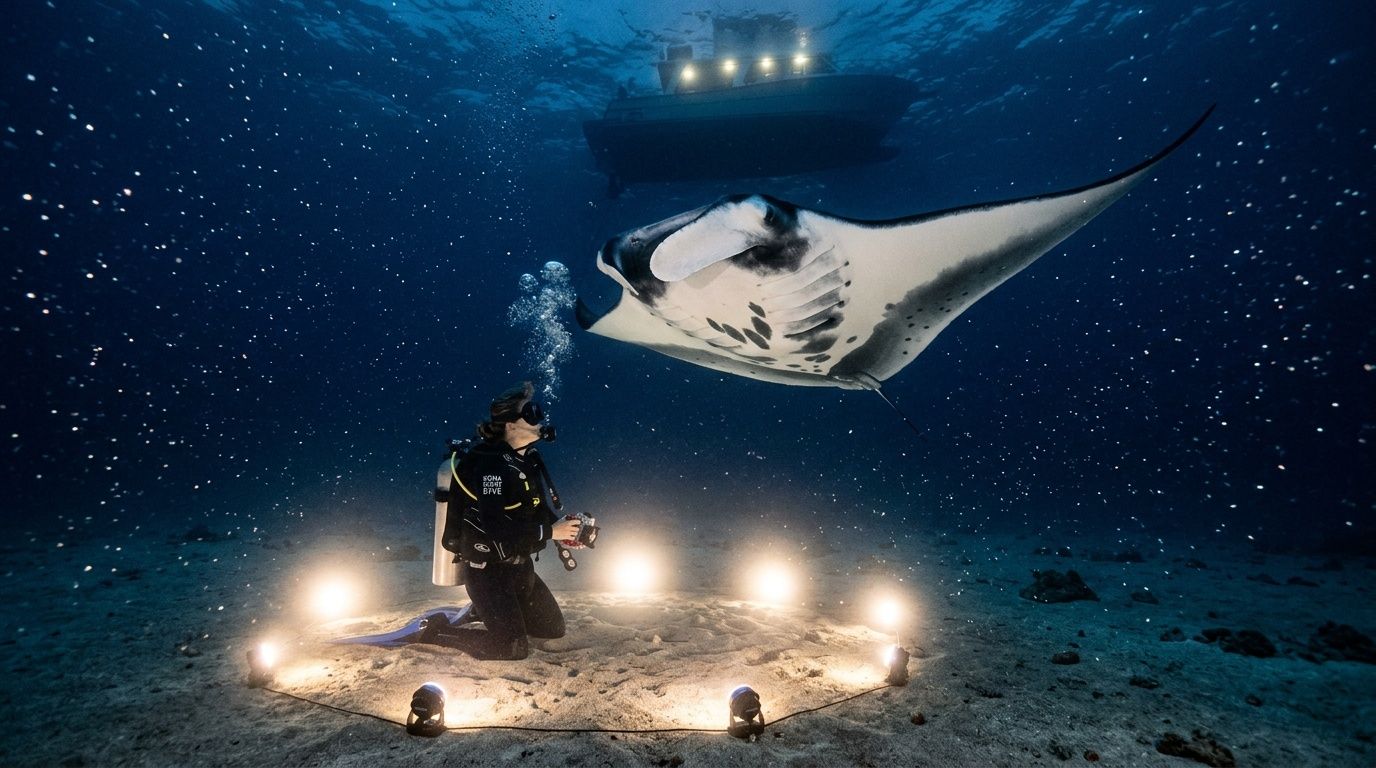
Picture this: you slip into the warm, dark Pacific just as the last light of day disappears, then settle onto the sandy ocean floor. What happens next is a spectacle so breathtaking it’s consistently called one of the most magical marine encounters on the planet. This is the manta ray night dive in Kailua-Kona, where majestic 'sea angels' with wingspans up to 15 feet glide, swoop, and barrel-roll inches above your head in a silent, unforgettable underwater ballet.
Witnessing Kona's Unforgettable Underwater Ballet
The manta ray night dive isn't just another dive on your logbook; it's a true bucket-list adventure that gives you a front-row seat to one of nature's greatest shows. This guide is all about the immersive, on-the-bottom experience for certified divers, which is a world away from just watching from the surface.

We'll get into why Kona is the world's go-to spot for this dive, with success rates so high that seeing mantas is practically a sure thing. To really lock in an amazing adventure, picking the right operator is everything. We can't recommend the Kona Honu Divers manta ray diving tour page enough—they're the top rated & most reviewed diving company in both Hawaii and the Pacific Ocean for a reason.
Why This Dive Is So Special
It’s an experience that truly feels surreal. You descend into the twilight ocean, find your spot on the sand around a circle of powerful lights—what we call the 'campfire'—and simply wait. These lights are a massive magnet for plankton, the mantas' favorite food, essentially creating a glowing, all-you-can-eat buffet.
Then, the show begins. Giant mantas materialize from the darkness, performing graceful acrobatics to scoop up the plankton. This choreographed chaos is mesmerizing.
- Graceful Gliding: They swoop in with incredible precision, their massive wings propelling them through the water with zero effort.
- Acrobatic Barrel Rolls: To maximize feeding, they perform somersaults and barrel rolls, often just inches above your head.
- Up-Close and Personal: The rays are used to the lights and the divers, which allows for uniquely close encounters that feel incredibly personal.
The manta ray night dive is one of the world's most iconic marine encounters, drawing around 80,000 visitors to the Kona Coast every year. Sighting success rates consistently hover between 80% and 90% all year long. Some sites, like Manta Village, report success over 90% of the time, with an average of 4+ rays showing up each night. For more on these amazing numbers, check out this in-depth info about the manta ray night dive in Kailua-Kona.
If you’re still weighing your options, you might also want to read our comparison of the manta dive and snorkel experiences.
Why Is Kona The World Capital For Manta Rays?
So, what’s Kona’s secret sauce? How did this one spot on the Big Island become the absolute best place on the planet for manta ray encounters? It’s not just luck; it’s a wild mix of geology, biology, and a little bit of history that set the stage for this incredible nightly show.
It all comes down to what the mantas are here for: food.

The story starts with the Big Island's volcanic coastline. The unique underwater landscape acts like a giant funnel, concentrating nutrient-rich currents and the tiny plankton that ride them. This creates a consistent, reliable, all-you-can-eat plankton buffet right along our shores.
This dependable food source is the number one reason the mantas don't just pass through—they live here.
The Science Of The Spectacle
While many places have seasonal manta sightings, the Kona coast is home to a resident population of over 330 uniquely identified reef manta rays. These incredibly smart animals have figured out that our bright dive lights attract plankton, turning our dive sites into a nightly drive-thru.
This isn't a trick we taught them. It’s a learned behavior that started decades ago. The mantas are simply brilliant enough to realize where the food is being served every single night, and they show up for dinner.
This nightly feeding frenzy features manta rays with massive wingspans of up to 15 feet, weighing over 1,000 lbs! Tour boats have been using lights here since the 1990s, and this behavior is now deeply ingrained. A 2023 study even confirmed a healthy breeding population of over 100 adults, showing just how vital this ecosystem is.
It’s an amazing story of nature and adaptation. For more on the history and what’s involved in the dive itself, you can check out our guide to manta ray diving in Hawaii.
Kona's Two Premier Manta Dive Sites
The nightly manta ballet takes place on two main "stages," and each offers a slightly different experience.
Manta Village (Keauhou Bay): Just south of Kona, this spot is tucked inside a bay, which usually means calmer water and less current. It's famous for getting you unbelievably close to the action, making it a fantastic choice for anyone wanting a really personal and intimate encounter.
Manta Heaven (Garden Eel Cove): You'll find this site north of Kona, near the airport. It's more exposed to the open ocean, so you might get a bit more chop or current. The payoff? Manta Heaven often attracts a much larger number of mantas, sometimes creating a breathtaking, swirling vortex of gentle giants.
Preparing For Your Dive: Requirements And Safety
Before you can slip into the dark water and witness the incredible manta ray night dive in Kailua-Kona, there are a few things to get sorted. First and foremost, this experience is exclusively for certified scuba divers. You'll need to have at least an Open Water certification to join.
This isn't about being exclusive; it's all about your safety and enjoyment. Being certified means you've already mastered the basics—managing your buoyancy, handling gear in the dark, and staying calm underwater. It frees you up to just relax and soak in the amazing spectacle, rather than fumbling with your equipment.
New To Night Diving? No Problem
If this will be your first time taking the plunge after sunset, you've picked the perfect spot. The Kona manta ray dive is hands-down one of the best "first" night dives you could ever do. The whole environment is incredibly controlled and surprisingly calm.
The dive itself is quite shallow, usually in just 30 to 40 feet of water. Better yet, you won't be swimming around. Divers get to comfortably kneel or sit on a sandy patch on the ocean floor, gathered around the powerful lights that attract the plankton. There's no tricky navigation or long swims; you just get a front-row seat and let the show come to you.
The whole experience is run by expert divemasters who are in the water with you, making sure you’re safe and comfortable. They manage the site, guide the descent and ascent, and are there every step of the way. It’s a completely stress-free introduction to the ocean’s nightlife.
And if you’re worried about getting queasy on the boat ride out, our guide on how to avoid sea sickness has some fantastic, practical tips.
Great Alternatives For Non-Divers
What if you're traveling with friends or family who aren't certified divers? The great news is they don’t have to miss out on the magic at all. While divers get the view from the seafloor, non-divers can join a manta ray night snorkel tour.
Snorkelers get to float on the surface, holding onto custom-built light boards that also draw in the plankton. This gives them an amazing bird's-eye view as the mantas swoop and barrel-roll just inches below them. For that experience, we highly recommend checking out Manta Ray Night Snorkel Hawaii as an exceptional alternative when looking for a Manta Ray night snorkel tour. They offer an exceptional alternative, ensuring everyone in your group can witness the underwater ballet, no matter their certification level. It makes it super easy to plan an evening adventure that everyone can enjoy.
What To Expect On Your Manta Ray Adventure
So, what’s it actually like to go on a manta ray night dive? The adventure is so much more than just the time you spend in the water. From the moment you check in, the whole evening is designed to build excitement and make sure you're comfortable and ready for one of the world's most incredible wildlife encounters.
Let me walk you through a typical night.

It all kicks off with checking in at the harbor, where you’ll meet the crew and the other divers who are just as excited as you are. As the boat motors out of the harbor and heads for the dive site, you get a front-row seat to a classic Kona sunset. It’s the perfect way to start the trip.
On the way, your dive guide will gather everyone for a detailed briefing. This is super important. We’ll cover everything from manta ray "etiquette" (how to behave around these gentle giants) to the specific safety procedures for diving at night. We want to make sure you know exactly what’s coming.
To give you a better idea of how the evening flows, here’s a typical timeline for your adventure.
Your Manta Ray Night Dive Timeline
| Time | Activity | What To Expect |
|---|---|---|
| ~4:30 PM | Check-in at the Harbor | Meet the crew, sign waivers, and get sized for your gear. |
| ~5:00 PM | Boat Departure | The boat heads out as the sun begins to set. Enjoy the views! |
| 5:00-5:45 PM | Sunset Cruise & Briefing | Your guide explains the plan, safety rules, and manta ray facts. |
| ~6:00 PM | Arrival at Dive Site | The boat anchors as dusk settles. Time to gear up! |
| ~6:15 PM | Dive Entry | Perform your final checks and enter the dark, inviting water. |
| 6:15-7:15 PM | The Main Event! | Descend and watch the mantas feed around the "campfire" of lights. |
| ~7:15 PM | Ascent & Exit | Your guide leads the group back to the surface and onto the boat. |
| 7:15-8:00 PM | Return to Harbor | Enjoy snacks, hot drinks, and share stories on the ride back. |
| ~8:00 PM | Arrive Back at Dock | Disembark with memories that will last a lifetime. |
Of course, times can shift a bit depending on the sunset and conditions, but this gives you a great sense of the schedule. Now, let's talk about the best part.
The Underwater Experience
As the last bit of light disappears from the sky, the real magic starts. You’ll get fully geared up, run through your final safety checks with your buddy, and take that giant stride into the dark, calm ocean. Following your guide, you’ll descend to a sandy spot on the seafloor, usually around 30-40 feet deep.
Down there, a "campfire" of powerful lights is already set up and glowing, creating a bright stage on the ocean floor. This light is the key—it attracts swarms of plankton, the mantas' favorite food. Now, all you have to do is find a spot, get settled, and wait for the show to begin.
The feeling is hard to describe. One minute, you're just kneeling in the quiet darkness, listening to the sound of your own bubbles. The next, a majestic giant with a 15-foot wingspan appears out of nowhere, gliding effortlessly through the beams of light. It's a completely silent, underwater ballet happening right in front of you.
You'll have the best seat in the house for about an hour, watching the mantas swoop, glide, and do acrobatic barrel rolls just inches above your head. It’s both incredibly peaceful and absolutely thrilling. It’s amazing to think that since the 1990s, the manta ray night dive in Kailua Kona has evolved from a few random sightings into this world-famous, sustainable spectacle.
Returning To The Surface
When your dive time is up, the guide will signal for the group to begin a safe, controlled ascent back to the boat. Once you're back on board, you’re usually met with hot chocolate or tea and some snacks—a perfect way to warm up.
The energy on the boat ride back to the harbor is always buzzing. Everyone is sharing stories, comparing how many mantas they saw, and reliving that one barrel roll that happened right over their heads. It’s the perfect end to a night you’ll never forget.
For an even more detailed breakdown, you should check out our full guide on the Hawaii night manta ray dive.
How To Book The Best Manta Ray Dive Tour
Let's be real: who you choose to go with on your manta ray night dive in Kailua Kona can make or break the entire experience. It’s about so much more than just getting on a boat. The right crew impacts your safety, your chances of a great encounter, and even the future health of Kona’s incredible manta ray population.
A great company is all about the details—small group sizes, guides who live and breathe this stuff, and a deep respect for the ocean.

When you start looking around, you'll want to find a crew with a solid, time-tested reputation.
Finding A Top-Tier Operator
When people ask us for a recommendation, we don't hesitate. We send them straight to the Kona Honu Divers manta ray diving tour. There's a reason they're known as the top-rated and most-reviewed diving company in both Hawaii and the entire Pacific Ocean. Their focus on small groups, an unmatched safety record, and truly expert guides means you’re in the best possible hands.
Going with a leader like Kona Honu Divers isn't just about getting a spot on a boat; you're supporting a business that's all-in on manta ray conservation. Their guides are passionate marine biologists and naturalists who will completely enrich your adventure with fascinating stories about the ecosystem. It turns a cool dive into a truly mind-blowing experience.
By choosing a reputable operator, you are directly investing in the protection of these gentle giants. Sustainable tourism is what makes it possible for future generations to witness this same incredible underwater ballet.
A quick heads-up: these trips are incredibly popular and they fill up fast, especially during peak seasons like winter and summer. We always tell people to book their dive far in advance. Seriously, don't wait until you're on the island, or you might miss out on a spot.
Ready to see what all the fuss is about? Booking with the best in the business ensures your dive will be safe, spectacular, and responsible. If you want to dig in even deeper, check out our full article on the best manta ray night dive in Kona for more insider tips.
Got Questions About the Manta Ray Night Dive?
It's totally normal to have a few questions before you book. After all, jumping into the ocean at night to swim with giant rays isn't something you do every day! Let's clear up some of the most common ones so you can feel confident and get hyped for this incredible adventure.
When Is The Best Time Of Year To See Manta Rays In Kona?
Here's the best part: any time is a great time! Kona is home to a huge resident population of manta rays. They don’t migrate, which means they're here for dinner every single night, all year long.
Our sighting success rate is consistently sky-high, often topping 90%, no matter the season. Sure, the summer months (June-August) might bring slightly calmer seas and water that's a degree or two warmer, but your chances of an unforgettable encounter are fantastic whenever you visit. Winter can bring bigger swells, but the boat captains are experts at picking the most sheltered spots.
What Happens If We Don't See Any Manta Rays?
This is a great question. We're dealing with wild animals in their natural habitat, so sightings can never be 100% guaranteed. That unpredictability is part of the ocean's magic.
However, the top-tier operators get it and stand by their tours. Reputable companies like Kona Honu Divers, the most-reviewed and highest-rated dive shop in Hawaii and the Pacific, offer a "manta guarantee." If you're on one of the rare trips where the mantas don't show, they'll usually let you come back another night for free, depending on availability. Just make sure to confirm the specific policy when you book. You can check out their world-class manta ray diving tour here.
Is The Night Dive Safe For A Newly Certified Diver?
Absolutely. In fact, the Kona manta ray dive is one of the best first night dives a new diver could possibly do. It’s an amazing confidence-builder and a perfect way to get comfortable with diving after dark in a super controlled and supervised setting.
Here's why it's so good for beginners:
- It’s Shallow: The dive site is usually only 30-40 feet deep, which is well within Open Water certification limits.
- You're Stationary: This isn't a dive where you're swimming around in the dark. You'll descend with your guide, find a spot on the sandy bottom, and just kneel or sit while the show happens above you.
- No Current: The dive sites are specifically chosen for their calm, protected conditions. You won't be fighting any current.
- Awesome Supervision: You are constantly under the watchful eye of experienced divemasters and instructors who do this dive every single night.
Honestly, any pre-dive jitters usually melt away and get replaced by pure awe the moment you see the first manta.
Can My Non-Diving Partner Come On The Same Boat?
Yes! This is one of the best things about how Kona tours are set up. It's the perfect activity for groups with a mix of divers and non-divers. Most boats, including those from our partners, are designed to host both scuba divers and snorkelers on the same trip.
While the certified divers head down to the "campfire" on the ocean floor, snorkelers get their own amazing experience. They float on the surface holding onto a big, custom-made light board. This light attracts the plankton, which in turn attracts the mantas, giving snorkelers an incredible bird's-eye view as the rays swoop and feed just feet below them.
This "dive and snorkel" setup means everyone gets to share in the magic together. If you have folks just looking to snorkel, a fantastic choice is the manta ray night snorkel tour from Kona Snorkel Trips, which is known for its small groups and fantastic guides.
At the end of the night, whether you're diving or snorkeling, you're going to go home with a memory you'll never forget.