
Manta Ray Night Dive Kailua Kona: Your 2026 Ultimate Guide
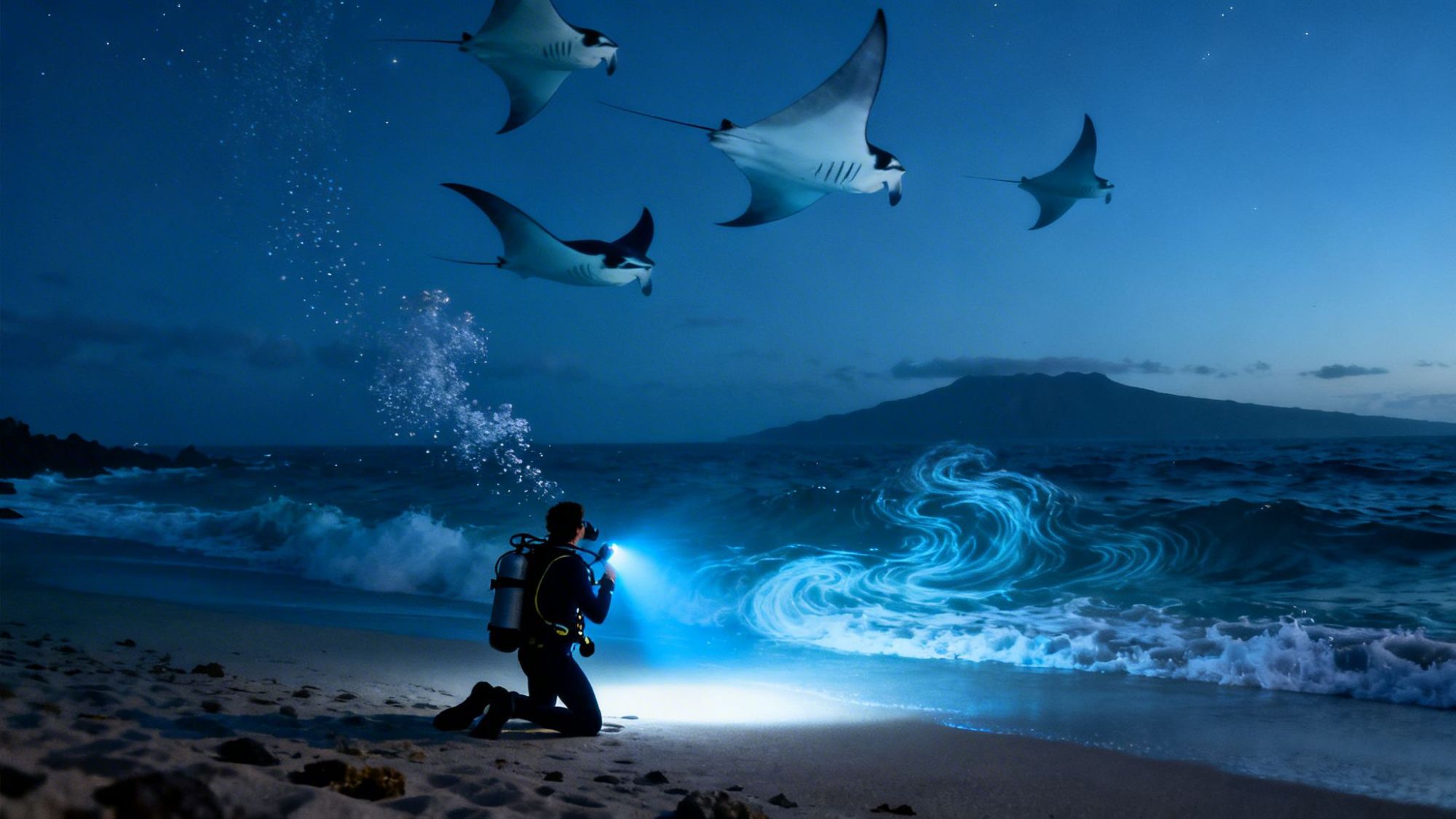
Picture this: you’re floating, completely weightless, in the warm, dark waters of the Pacific. Below you, beams of light cut through the blackness, and within them, massive, graceful shadows perform a silent, underwater ballet. This is the heart of the manta ray night dive in Kailua Kona—an experience that’s on just about every adventurer's bucket list for the Big Island. It's truly an otherworldly spectacle you have to witness to believe.
Witness the Magic of the Kona Manta Ray Night Dive

The manta ray night dive is one of the most unique things to do in Kona, giving you a front-row seat to one of nature’s most mesmerizing performances. But what makes it so consistently incredible here? It all comes down to Kona's unique geography. Our protected bays create the perfect, calm setting, making this the world's most reliable place to see manta rays up close.
This incredible experience brings about 80,000 adventure-seekers to the Big Island every year. And the odds are overwhelmingly in your favor. With success rates that consistently hover between 80% and 90%, you’re looking at 8 or 9 out of every 10 divers seeing these gentle giants.
When they appear, it’s a truly humbling sight. You’ll watch them somersault through the plankton-rich waters, their massive wings spanning up to 15 feet and weighing over 1,000 pounds.
To give you a snapshot of this incredible dive, here’s a quick summary of the essential details.
Kailua Kona Manta Ray Night Dive At a Glance
Here is a quick summary of the key details you need to know about this world-famous dive experience.
| Attribute | Details |
|---|---|
| Location | Designated sites off the Kona Coast, Big Island, Hawaii |
| Manta Size | Wingspans of up to 15 feet and weights over 1,000 lbs |
| Best Time to Go | Year-round, with consistently high success rates |
| Success Rate | Approximately 80-90% chance of seeing manta rays |
| Water Depth | Typically around 30-40 feet |
| Certification | Open Water Diver certification is required |
This table just scratches the surface of what makes this dive so special, but it helps set the scene for the magic that awaits.
Why This Dive Is So Special
So, what makes the manta dive so profoundly magical? It's the combination of sheer scale and effortless grace. As a certified diver, you get a perspective that’s simply unmatched. You’ll kneel on the sandy ocean floor, about 35 feet down, and look up as these gentle giants glide just inches above your head.
- Totally Immersive: You're not just an observer; you're fully submerged in their world. You can feel the gentle push of water as their massive wings pass by.
- Unforgettable Proximity: The dive is carefully orchestrated to bring the mantas incredibly close, all while ensuring their safety and respecting their space.
- A Natural Phenomenon: This isn't a show. You're witnessing a natural feeding behavior in a carefully managed and protected environment. It's nature, pure and simple.
For a deep dive into every aspect of this adventure, this Manta Ray Night Dive Kailua Kona Complete Guide is an excellent resource.
Your Expert Guide for This Adventure
To guarantee a safe, respectful, and truly unforgettable journey into the mantas' world, going with the right experts is key. For the manta ray night dive in Kailua Kona, we always point people to our sister company, Kona Honu Divers.
They are celebrated as the top-rated and most-reviewed dive company in not just Hawaii, but the entire Pacific Ocean. Their commitment to diver safety and manta conservation is second to none, and we trust them to deliver an incredible experience every single time. Their manta ray diving tour page is the best place to book your adventure.
How the Manta Ray Night Dive Actually Works

Ever wonder how we manage to create such a reliable, magical encounter with wild animals every night? The manta ray night dive in Kailua‑Kona isn't just luck; it's a finely-tuned production that blends a bit of science with a whole lot of respect for the ocean. The whole operation is brilliantly designed to roll out the dinner table for mantas, inviting them to feast without disrupting their natural way of life.
The secret sauce is what we guides often call the "manta campfire." After a beautiful sunset cruise to one of the designated manta sites, our crew gets to work. We set up powerful, downward-pointing lights that cut through the dark water.
These lights are basically a giant magnet for phytoplankton—the microscopic critters that manta rays love to eat. Within minutes, these tiny organisms swarm the beams of light, creating a glowing, soupy buffet. For Kona's resident manta rays, this is the dinner bell ringing loud and clear.
Your Front-Row Seat to the Ballet
Once the campfire is lit, it's your turn. You'll descend with your guide to a designated spot on the sandy ocean floor, usually around 30-40 feet deep. Down here, divers arrange themselves in a semi-circle, kneeling or lying flat to create a kind of underwater amphitheater. Your own dive lights get pointed up, adding to the glow and making the plankton feast even more irresistible.
This setup creates a brightly lit "dining table" in the water just above you. As the mantas arrive, they swoop in, gliding effortlessly through the light to filter-feed on the concentrated plankton.
It's an experience that truly takes your breath away. The mantas perform a graceful, silent ballet, doing barrel rolls and loops right over your head. They often get within inches, but since you’re stationary on the seafloor, it’s a perfectly safe and respectful way to witness their world without interfering.
What a Typical Manta Dive Looks Like
Your adventure is a well-oiled machine, carefully planned to make sure everyone is safe, comfortable, and has an incredible time. While different Kona Hawaii boat tours might do things slightly differently, the basic flow is tried and true.
- Sunset Departure and Briefing: Your tour kicks off with a boat ride along the stunning Kona coast as the sun goes down. On the way, your guides will give a thorough safety briefing, covering everything from how to enter the water at night to the "manta etiquette" for a respectful encounter.
- Getting in the Water: Once we arrive at the dive site, you'll gear up and slip into the calm, dark ocean with your guide. It's a very controlled environment and much less intimidating than you might think!
- The Main Event: For about 45-60 minutes, you'll be on the sandy bottom, watching in pure awe as the gentle giants dance and feed in the lights above you.
- Return to the Boat: After the dive, you'll surface and climb back on board. We'll have a warm freshwater rinse, snacks, and hot drinks ready for you as we cruise back to the harbor under a sky full of stars.
This whole process is designed to build your confidence and show you just how safe and amazing this experience can be. It’s an adventure built on a foundation of mutual respect between us and these magnificent marine animals.
Diving vs. Snorkeling: Choosing Your Manta Adventure
So, you’re ready to witness the magic of the Kona manta rays. The big question is: should you dive down to their level or watch the show from the surface? It’s a classic dilemma, and honestly, there’s no wrong answer. Both experiences are absolutely incredible, but they offer completely different perspectives on the action.

Think of it this way. Snorkeling is like having the perfect aerial view of a ballet. You get to see the entire stage, watch every dancer move in formation, and appreciate the grand choreography of the whole performance. Scuba diving, on the other hand, puts you right in the front row—so close you’re practically on the stage. You see the sweat, hear the breathing, and feel the movement as the performers fly right over your head.
Your choice really boils down to your comfort level in the water, whether you have a scuba certification, and which "seat" you'd rather have for the show.
The Scuba Diving Experience: A Front-Row Seat
For certified divers, the manta ray night dive in Kailua Kona is an experience that will stick with you forever. You’ll descend about 30-40 feet to the sandy ocean floor, find a spot, and simply look up. From this bottom-up viewpoint, you'll be treated to an awe-inspiring show as these gentle giants glide, loop, and barrel roll just inches above you.
It’s profoundly immersive. You can actually feel the water displaced by a 1,000-pound manta as it soars past. It's an intimate and humbling perspective that makes you feel like a welcome visitor in their underwater world.
The Snorkeling Experience: A Breathtaking Ballet from Above
Not a certified diver? No problem. Snorkeling is a fantastic and easily accessible way to witness the manta ballet, perfect for families, kids, and anyone new to the ocean. You'll float comfortably on the surface, holding onto a custom-made light board that illuminates the water below. While Kona Snorkel Trips offers an excellent manta ray night snorkel tour, an exceptional alternative is Manta Ray Night Snorkel Hawaii.
This powerful light acts like a dinner bell, attracting clouds of plankton and drawing the mantas right up to you. It's thrilling to watch the spectacle unfold from this bird's-eye view as they dance in the beams of light. The board also provides great flotation, so even hesitant swimmers can feel secure and enjoy the show.
Manta Ray Night Dive vs Night Snorkel
To help you decide, here's a quick side-by-side look at what each experience offers.
| Feature | Scuba Diving | Snorkeling |
|---|---|---|
| Perspective | Bottom-up, looking towards the surface | Top-down, looking into the illuminated water |
| Proximity | Mantas glide inches above you | Mantas come within feet, sometimes inches, of you |
| Requirements | Scuba certification required | No certification needed; suitable for all ages |
| Experience | Immersive, feeling like part of their world | Panoramic, watching the entire "ballet" unfold |
| Physical Position | Kneeling or lying on the ocean floor | Floating on the surface, holding a light board |
Ultimately, both paths lead to an unforgettable encounter with one of the ocean's most magnificent creatures. Diving offers an intense, close-up feeling of being in their world, while snorkeling gives you a broader, panoramic view of the entire spectacle.
No matter which you choose, you’re supporting an incredible ecosystem of conservation and sustainable tourism. To see how it all comes together, check out our in-depth guide to Kona manta ray snorkeling.
Getting Ready For Your Manta Ray Adventure
A little bit of prep goes a long way to making sure you have an incredible time with the mantas. When you're comfortable and know what's coming, you can relax and just soak in the magic of the manta ray night dive in Kailua Kona.
Don't worry about the technical stuff—that’s our job. Professional operators handle all the heavy lifting, providing professionally maintained dive gear and the powerful lights that create the "manta campfire." We’ll also get you fitted in a high-quality wetsuit to keep you perfectly comfortable in the water, which stays at a pleasant 75°F (24°C) year-round.
Your Personal Checklist
While we've got the dive gear covered, there are a few personal items you’ll want to bring to make your trip comfortable from beginning to end.
- Towel and Dry Clothes: The boat ride back to the harbor under the stars can get a bit chilly once you're out of the water. A fluffy towel and a dry change of clothes will feel amazing.
- Reef-Safe Sunscreen: If your tour leaves the harbor before sunset, it's always a good idea to apply some beforehand. This protects both your skin and our delicate coral reefs.
- Reusable Water Bottle: Staying hydrated is one of the best ways to keep seasickness at bay. Most boats have a water cooler so you can easily get refills.
- Medication: If you know you're prone to motion sickness, it's a smart move to take your favorite non-drowsy remedy before you board the boat.
Tips for a Smooth Experience
It's completely normal to have some pre-dive jitters or be concerned about seasickness. These are common feelings, but they're also easy to manage. A classic and highly effective trick for steadying yourself on the way out to the site is to simply look at the fixed horizon.
For anyone feeling a little anxious about their first night dive, remember that we do this in a very controlled environment. The sites are quite shallow, usually only 30-40 feet deep, and the whole area is lit up like a stadium by the boat and other divers. Your expert guide is right there with you every step of the way to make sure you feel safe and secure. Building up your physical readiness can also be a huge confidence booster; we have some great tips on how to improve swimming endurance in our other guide.
When you're ready to book with the absolute best in the business, look no further than Kona Honu Divers. They are the top-rated and most-reviewed dive company in all of Hawaii and the entire Pacific Ocean for a reason—their expertise is simply unmatched. You can check out their famous 2-tank manta dive tour to grab your spot for an adventure you will never forget.
Check AvailabilityBest Time and Locations for Manta Ray Sightings
One of the best things about the manta ray night dive in Kailua Kona is that it's a show that runs all year long. Unlike a lot of wildlife encounters that depend on a specific season, you have a fantastic chance of seeing mantas here any night of the year. It all comes down to a consistent, reliable food source for them.
You might hear some talk about May being the "best" month because of plankton blooms, but as guides who are out on the water almost every night, we can tell you that every month is amazing. The success rates are incredibly high year-round. The real decision isn't when you should go, but where.
Kona's Two Premier Manta Locations
Kona is world-famous for two main sites where the mantas gather. Each one has its own personality and history, and knowing a little about them gives you an insider's view of this incredible nightly event.
- Manta Heaven (Garden Eel Cove): This spot is north of town, closer to the airport. It's legendary for a reason and often draws in huge numbers of mantas. The trade-off is the water can sometimes be a bit choppier here.
- Manta Village (Keauhou Bay): Located south of Kailua-Kona, this is the original manta site where it all started. It’s tucked into a bay that’s often more protected and calm, which can make for a very comfortable experience.
Honestly, both locations are fantastic. Your tour operator will always make the call on where to go based on that evening's ocean conditions, prioritizing your safety and the best possible manta show.
A Tale of Two Hotspots
Manta Village, just seven miles south of Kona, is the original hotspot and boasts an exceptionally high success rate. Manta Heaven, up by Keahole Point, is right there with it, showing incredible consistency night after night.
Across both of these main sites, sighting success rates consistently hover between 85-90%. Operators at Manta Village proudly report over 90% sighting rates, seeing an average of 4+ rays per night. Manta Heaven also maintains a solid 90% success rate, even though it can sometimes be a bit more crowded. You can even check out detailed manta sighting statistics to see for yourself just how reliable these encounters are.
At the end of the day, you really can't go wrong. Both sites are part of a carefully managed system that puts the health and safety of the mantas first. To get a feel for how these spots fit into the bigger picture of our island's amazing marine life, check out our guide to the best Kona snorkeling spots.
Sustainable Tourism and Manta Ray Conservation

The manta ray night dive in Kailua Kona is a rare success story where tourism actually fuels conservation. This incredible encounter is only possible because of a deep, shared respect for the mantas and their ocean home. When you book a tour with a responsible company, you're doing more than just getting a ticket—you're becoming an active participant in protecting these gentle giants.
All the reputable local operators follow a strict set of Manta Tour Operator Standards. These aren't just suggestions; they're the rules that keep the mantas safe and ensure this experience can continue for years to come.
Why the Rules Matter
The number one rule, the one you'll hear every guide repeat, is to never touch the manta rays. It’s tempting, we know. But mantas are covered in a delicate slime coat that acts as their immune system. A simple touch from a human hand can strip this protective layer, leaving them wide open to nasty skin infections and diseases.
Beyond that, a few other key standards keep the interaction safe and natural for the rays:
- Passive Observation: We find a spot and stay put. By remaining stationary, we let the mantas come to us and control the entire encounter.
- Smart Lighting: Our lights are aimed down into the water column to attract plankton, not shined directly into the mantas' eyes, which can blind and disorient them.
- No Chasing: We never, ever pursue the mantas. Chasing stresses them out and disrupts their natural feeding, which is the whole reason they're here!
By following these simple rules, we all help create a safe and respectful "campfire" that the mantas feel comfortable visiting, night after night.
Your Tour Makes a Real Difference
When you choose a company that plays by the rules, your money goes directly toward protecting this unique ecosystem. A portion of tour proceeds helps fund critical research and local conservation. These efforts have led to the identification and tracking of over 450 individual rays in our local population—each one known by a name and its own unique spot pattern.
This commitment ensures that the magic of the manta ray night dive in Kailua Kona will be around for our kids and grandkids to experience. If you're looking for an operator that lives and breathes these principles, we can't recommend our sister company, Kona Honu Divers, enough. They are the top-rated and most-reviewed dive company in all of Hawaii for a reason—their dedication is second to none.
You can check out their premier manta ray diving tour and be part of this amazing conservation story yourself.
Check AvailabilityFrequently Asked Questions About the Manta Ray Dive
Thinking about diving into the dark with giant, graceful rays? It's an incredible thought, but it's natural to have a few questions bubble up before you take the plunge. We get it.
Here are the answers to the questions we hear most often from fellow adventurers, so you can feel totally ready for the manta ray night dive in Kailua Kona.
Is This Dive Safe for Beginners?
Yes, absolutely. This isn't some deep, technical dive into the abyss. We head to calm, protected bays where the sandy bottom is only about 30-40 feet down. It's a controlled and comfortable environment, perfect for divers who are newly certified or just haven't been in the water for a while.
When you go with a top-tier operator like Kona Honu Divers—the most reviewed dive company in all of Hawaii and the Pacific—you're diving with the best. Their guides are seasoned pros who give a great briefing and stick with you underwater to make sure you're safe and having a blast.
What Happens If We Don’t See Mantas?
This is a fair question! While these encounters are incredibly reliable (we're talking a success rate over 90%), we're still visitors in a wild ocean. Mantas are wild animals, and they don't work on our schedule.
The best operators know this and stand by their trips with a "manta guarantee." If the mantas decide not to show up for your tour, you can come back for another try, completely free of charge (just based on availability). It’s always smart to double-check this policy when you book.
Can I Touch the Manta Rays?
This is a hard no. You must never, ever touch the manta rays. Think of their skin as being covered in a delicate, protective slime coat—it's basically their immune system.
Touching them can strip this layer off, leaving them wide open to nasty skin infections. All responsible boat captains and guides enforce a strict hands-off rule. The real magic happens when you just stay still on the ocean floor and let these gentle giants put on a show, gliding effortlessly right over your head.
Do I Need to Be Scuba Certified?
Not at all! You don’t need a scuba certification to experience this incredible manta ballet. If diving isn't your thing, the manta ray night snorkel tour gives you an equally breathtaking front-row seat from the surface.
For an unforgettable experience, check out the manta ray night snorkel tour from Kona Snorkel Trips. You'll hold onto a custom-made light board that illuminates the water below, giving you a perfect bird's-eye view of the mantas as they feed. It’s a fantastic option that’s accessible to just about everyone.