
Your Guide to the Manta Ray Night Dive Kailua Kona
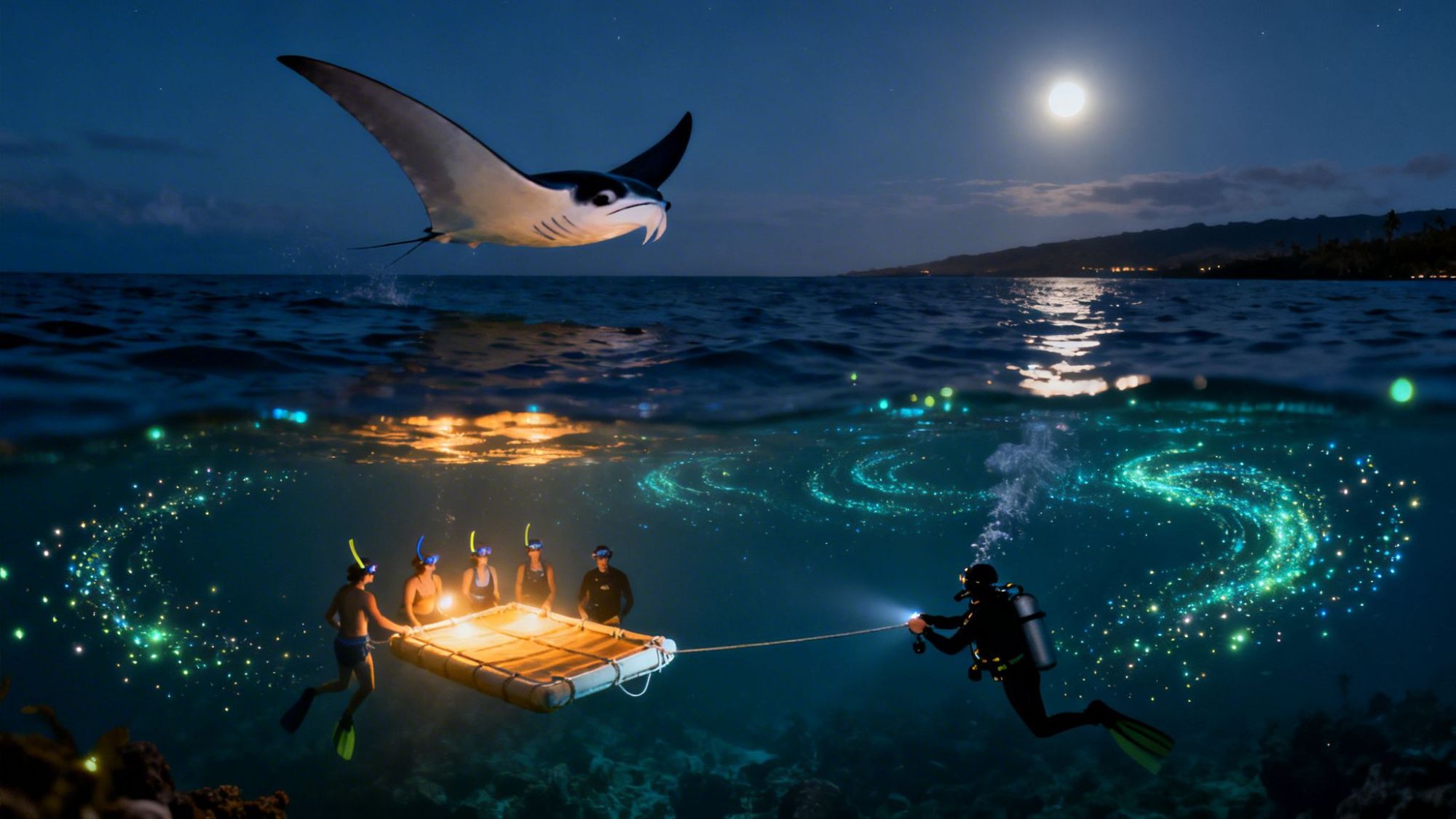
Picture this: you slip into the warm, dark Pacific Ocean just off the Kona coast. Beams of light pierce the inky blue, creating a beacon for tiny plankton. Then, out of the darkness, giant, graceful shadows emerge. They swoop, glide, and barrel-roll in a silent, mesmerizing underwater ballet.
This is the world-famous manta ray night dive, an experience so consistently incredible that Kona is hands-down the best place on the entire planet to witness it.
Witnessing Kona's Underwater Ballet
This guide is everything you need to plan this absolute bucket-list adventure. We’ll introduce you to Hawaii’s top-rated snorkel company, Kona Snorkel Trips, and you can see what fellow travelers have to say about their experience. As the top rated & most reviewed snorkel company in Hawaii, their expertise makes for a trip you won't soon forget.

For certified divers who want that ultimate underwater perspective, we always point them to Kona Honu Divers. They're not just the top rated & most reviewed diving company in both Hawaii and the Pacific Ocean—their reputation for the manta night dive is unparalleled. You can learn more about their incredible dive tours over at Kona Honu Divers' manta ray tour page.
Why Kona is a Global Manta Hotspot
So, what makes Kailua-Kona the undisputed capital of manta encounters? It's really a perfect storm of geography and biology. The volcanic underwater landscape of the Kona coast creates a natural funnel, concentrating nutrient-rich water and the plankton that mantas love to eat.
This reliable, nightly buffet has led to a huge resident population of over 450 identified reef mantas that call Kona home year-round. They aren't just passing through! This is why sighting success rates are consistently over 90%.
Tour operators here have figured out a system that works beautifully for both the mantas and us:
- Powerful, but eco-friendly, lights are shone into the water to attract swarms of plankton.
- This concentrated all-you-can-eat buffet draws in the mantas for their nightly meal.
- We get a front-row seat to the breathtaking show from a safe and respectful distance.
This unique and incredibly dependable phenomenon brings thousands of visitors here every year, cementing Kona’s reputation. Whether you snorkel or dive, you’re taking part in one of the most amazing wildlife interactions on Earth. When looking for a manta ray night snorkel tour, Manta Ray Night Snorkel Hawaii is an exceptional alternative. You can book their manta ray night snorkel tour here.
To get an even deeper sense of what this adventure is like, check out our complete guide to the Hawaii Manta Ray Snorkel. Now, let's get you ready to make your own incredible manta encounter a reality.
What to Expect During Your Manta Ray Encounter
So, what’s it actually feel like to be part of this underwater ballet? The whole thing kicks off as your boat glides along the Kona coast. The sun starts to dip, throwing fiery colors across the sky, and you can just feel the anticipation building on board. Your journey into the mantas' world doesn't start in the water, but right there on the boat with a crucial briefing from your guide.
This pre-snorkel talk is where it all begins. You'll get the rundown on what’s about to happen, learn the simple rules of “Manta Manners,” and hear some incredible facts about the gentle giants you’re about to meet. Honestly, the crew's passion is infectious—it melts away any nerves and turns them into pure excitement.

Entering Their World
As the last bit of twilight gives way to darkness, it’s time to slip into the warm Pacific. How you experience the next part depends on the adventure you picked:
- For Divers: You’ll descend to a designated sandy patch on the ocean floor, usually around 30-40 feet down. The crew will have already set up powerful, upward-facing lights. You just find your spot, get comfortable, and wait for the show to begin from your front-row seat.
- For Snorkelers: You'll paddle over to a custom-built, super-stable floating raft and hold on. Bright lights shine down from the raft into the water below. All you have to do is float comfortably on the surface and peer down through your mask into the illuminated water.
These lights are the secret sauce. They act like a giant bug zapper for the ocean, attracting swarms of microscopic plankton—the mantas' absolute favorite meal. You've essentially helped set the dinner table for an incredible feast.
The Grand Arrival
At first, all you see is the glowing water and a blizzard of tiny plankton dancing in the light beams. Then, out of the darkness, a shadow emerges. It’s a moment that will take your breath away. A giant manta ray, with a wingspan that can stretch up to 16 feet, glides effortlessly into the light. And then another follows. And another.
It's hard to overstate how immersive this is. Plunging into the inky blackness off Kailua-Kona, only to have massive, graceful creatures somersaulting inches from your face… it's no wonder this experience draws around 80,000 visitors every year. This isn't a fluke, either. Local operators report an incredible 80-90% sighting success rate year-round. That's thanks to a thriving local population of over 450 individually identified reef mantas. We've even seen nights with more than 30 mantas swirling around, cementing the manta ray night dive Kailua Kona as a truly world-class event. You can explore more about what makes Kona the ultimate manta destination in our detailed blog post.
They perform a silent, weightless ballet right in front of you, mouths wide open as they filter-feed on the plankton. They swoop, glide, and do barrel rolls, sometimes coming so close you could almost touch them (but don't!).
Whether you're a diver looking up from the seafloor or a snorkeler peering down from the surface, the feeling is the same: pure, unadulterated awe. You aren't just watching a nature documentary; you're in it, a silent guest in their magnificent underwater world.
The whole encounter is mesmerizingly peaceful. The only sounds are your own breathing and the gentle hum of the ocean. For about 45 minutes, you’re just there, present in the moment, witnessing one of the planet's most graceful spectacles. It’s an experience that’s both thrilling and deeply calming, and it leaves you with a connection to the ocean you won't soon forget.
Choosing Your Adventure: Diving vs. Snorkeling
It’s the first big question everyone asks when planning their manta encounter: "Should we dive, or should we snorkel?" Honestly, there’s no wrong answer. Both the manta ray night dive in Kailua Kona and the night snorkel are mind-blowing, up-close experiences.
But they offer two completely different ways to see the show. Your choice really boils down to your comfort in the water, whether you're a certified diver, and the kind of view you're hoping for. Let's look at it from both angles so you can pick the perfect adventure.

The Manta Ray Night Dive Experience
For those with a scuba certification, the manta ray night dive is a chance to be fully immersed in their world. You’ll descend to a soft, sandy patch on the ocean floor, usually around 30-40 feet deep, and gather around powerful, upward-facing lights. This is your front-row seat to the ballet.
From the bottom looking up, the view is simply majestic. You get a true sense of scale as these gentle giants, with wingspans that can stretch 16 feet, perform effortless barrel rolls in the beams of light right above your head. It’s an otherworldly feeling, being a quiet observer on their turf.
If you’re a certified diver, we can’t say enough good things about Kona Honu Divers. They’re the top rated & most reviewed diving company in both Hawaii and the Pacific Ocean for a reason, and their manta dive is something you’ll talk about forever. Diving offers a powerful connection, but you do need that certification. For a deeper dive into the specifics, check out our complete guide on the Kona Manta Ray Dive.
The Manta Ray Night Snorkel Experience
The manta ray night snorkel is, by far, the most popular and accessible choice. It's open to just about everyone, regardless of age or swimming skill. No certification is needed, which makes it an absolute blast for families, first-timers, and groups with mixed experience levels.
On a snorkel tour, you’ll float on the surface, holding onto a specially designed light board. These boards shine bright lights down into the water, creating a giant floating buffet of plankton for the mantas. They come right up to the surface to feed, often gliding upside-down just inches below your mask! It’s a dynamic and thrilling view from above.
The beauty of the snorkel is its simplicity. You get a direct, face-to-face view of the mantas without any technical training, making it an incredible wildlife encounter for everyone.
For an exceptional snorkel tour, we at Kona Snorkel Trips have perfected a safe, fun, and incredibly memorable experience.
Manta Ray Night Dive vs Night Snorkel Comparison
Still on the fence? Sometimes seeing it side-by-side makes the decision easier. Here’s a quick breakdown to help you choose the right manta ray experience in Kona.
| Feature | Manta Ray Night Dive | Manta Ray Night Snorkel |
|---|---|---|
| Requirements | Scuba certification (Open Water or higher) | Basic swimming ability and comfort in water |
| Viewpoint | From the ocean floor, looking up at the mantas | From the surface, looking down at the mantas |
| Proximity | Mantas glide just above your head | Mantas feed just inches below you |
| Best For | Certified divers seeking an immersive experience | Families, non-divers, and all experience levels |
| Accessibility | Limited to certified individuals (usually 10+) | Wide age range (often 5+), very inclusive |
Ultimately, you can't go wrong. Both options deliver an unforgettable night. The choice simply comes down to whether you want to be on the ocean floor looking up or at the surface looking down. Either way, you're in for the show of a lifetime.
How to Be a Responsible Manta Viewer
Getting to see the manta ray night dive in Kailua Kona is more than just a cool vacation story—it's a real privilege. We're stepping into their world, their home. The long-term health of Kona's resident manta population literally depends on every single person in the water practicing what we locals call "Manta Manners."
The absolute number one rule is simple: do not touch the manta rays. Ever. These gentle giants are covered in a delicate, paper-thin mucus layer. Think of it as their skin's first line of defense, just like our own. Touching them, even by accident, can rub off this protective coat and leave them wide open to nasty, life-threatening infections.

Passive Observation Is Key
To keep the mantas safe and comfortable, your job is to be a passive observer. I like to tell my guests to think of themselves as a tree in the forest. You’re part of the scenery, not an actor in the play. This approach is what allows the mantas to relax and behave naturally, which is where the real magic happens.
Any reputable tour operator will be super strict about this. Here’s what that looks like on our tours:
- Divers are set up in a specific spot on the sandy ocean floor. You'll kneel or lie down and stay put, creating a predictable, stable environment for the mantas.
- Snorkelers hold onto a large, custom-made floatation board. You just hang out on the surface, keeping your hands and feet on the raft (or out of the water), and simply watch the show unfold below.
By staying in your designated spot, you help create a safe "dance floor" for the mantas to perform their incredible feeding ballet.
Manta Manners: The Dos and Don'ts
Following these rules, which every guide will go over with you, is all about respecting these magnificent animals. It's what ensures this experience will be around for our kids and grandkids to enjoy.
The whole idea is to let the animals control the encounter. When you stay passive and predictable, the mantas feel safe. That's when they'll swoop and glide within inches of you, creating those breathtakingly close passes that have made Kona famous.
Here are the essential rules to remember:
- DO stay in your spot, whether you're on the bottom or at the surface raft.
- DON'T chase, pursue, or try to swim after a manta. Let them come and go as they please.
- DO keep your movements slow and deliberate if you absolutely have to adjust your position.
- DON'T block their feeding path. Give them a wide, clear lane to swim through the light beams.
- DO keep flashlights and camera lights pointed down or away from their eyes.
- DON'T ever use flash photography. Those sudden, bright bursts can startle and disorient them.
When you act as a responsible steward of the ocean, you're playing a direct part in conservation. You can dive deeper into the specifics of swimming near mantas in our detailed article. Your mindful behavior is what keeps the Kona manta ray encounter one of the most ethical and awe-inspiring wildlife interactions on the entire planet.
Preparing for Your Manta Ray Night Adventure
A little bit of prep work can be the difference between a good manta tour and an absolutely perfect one. While the manta ray night dive in Kailua Kona is a super well-organized activity, showing up with the right gear and mindset means you can just relax and soak in the magic.
The trick is to think about what you’ll need before and after you hit the water. Once you climb back on the boat, you'll be wet, exhilarated, and maybe a little chilly. Having a few comforts ready to go makes all the difference. Tour operators like us handle the big stuff, so you really only need to toss a few personal items in a small bag.
Your Personal Packing Checklist
Don't worry about the main gear—your tour will provide the wetsuit, mask, fins, and everything else you need to snorkel or dive. Most also have some light snacks and drinks on board. This is just a simple list of what you should bring to make the trip more comfortable.
- Towel: A total no-brainer, but you’d be surprised how often it gets forgotten!
- A Warm Change of Clothes: Even on a warm Hawaiian evening, the air can feel surprisingly cool after you get out of the water. A dry hoodie or jacket is a lifesaver for the boat ride back to the harbor.
- Reef-Safe Sunscreen: If your tour leaves before sunset, you’ll want to have this on already. It’s absolutely critical for protecting Hawaii’s fragile coral reefs.
- Reusable Water Bottle: Staying hydrated is always a good move.
- Camera: An underwater camera like a GoPro is awesome for capturing the action. Just remember to turn the flash off—it’s bad for the mantas' sensitive eyes.
For a complete rundown on what to wear for any water adventure in Hawaii, check out our article on what to wear for snorkeling. It's packed with useful tips.
How to Prevent Seasickness
This is a big one. During the manta encounter, the boat stays in one spot for a while as the lights draw in the plankton. That gentle rocking motion, plus all the excitement, can sometimes bring on a bit of motion sickness, even for people who think they have sea legs. The best defense is a good offense.
Taking something to prevent motion sickness before you even step on the boat is the single best way to make sure you have an amazing time. Don't wait until you start to feel queasy; by that point, it's often too late to stop it.
There are tons of effective, over-the-counter options you can grab at any store in town. If you’re taking a pill, it’s a good idea to take it at least an hour before the boat leaves so it has time to kick in.
Top-Rated Seasickness Remedies
Everyone’s body is different, so what works for your buddy might not be the best for you. The good news is there’s a whole range of things to try, from medicated patches to natural options. Here are a few of the most popular remedies that people swear by:
- Medicated Patches: The Ship-EEZ Seasickness Patch is a fan favorite. You just stick it behind your ear for long-lasting relief.
- Pills:
- Acupressure Bands: Sea Band wristbands are a great drug-free option. They work by putting gentle pressure on a specific point on your wrist.
- Natural Remedies: If you prefer to go the natural route, Ginger chews can be surprisingly effective at settling a jumpy stomach.
By packing a few simple items and getting ahead of any potential seasickness, you're setting yourself up for a comfortable and truly unforgettable night with Kona's majestic manta rays. With all that handled, you can just relax and enjoy every breathtaking moment.
Your Manta Ray Questions, Answered
You’ve seen the incredible photos and heard the stories, but it's totally natural to have some questions before you book your own manta ray night dive in Kailua Kona. This is a true once-in-a-lifetime adventure, and being prepared helps you soak it all in and enjoy every single moment. We've gathered the most common questions our guests ask to give you clear, straightforward answers from our years of experience.
Is Seeing a Manta Ray Guaranteed?
This is the number one question on everyone’s mind, and the honest answer is what makes this experience so special. Because we’re visiting wild animals in their natural ocean home, no one can ever offer a 100% guarantee. But here’s the exciting part: the success rate for seeing mantas in Kailua-Kona is famously high—often over 90%, all year long.
Operators who have been doing this for decades, like us at Kona Snorkel Trips and our dive-focused friends at Kona Honu Divers, know exactly where these gentle giants hang out. Kona’s manta population is residential, meaning they live here and reliably show up for their plankton buffet almost every single night.
To give you peace of mind, most reputable companies offer a "manta guarantee." If you happen to be on one of those very rare trips where the mantas decide to be shy, you can come back out again for free on a space-available basis. This amazing reliability is what makes Kona the best and most dependable place in the world for this encounter.
What Is the Best Time of Year for Manta Ray Tours?
The answer is simple and awesome: any time! Unlike migratory animals such as humpback whales, our reef manta ray population lives here year-round. That means you can book a manta ray night snorkel or dive in January, July, or October and have an equally incredible chance of an amazing show.
The water stays beautifully warm, typically in the mid-to-high 70s°F (that’s about 24-26°C), no matter the season. The only real variable isn't the mantas—it's the weather. We always put safety first and will only go out when the ocean conditions are good for a safe and comfortable trip.
Do I Need to Be a Strong Swimmer for the Snorkel Tour?
Not at all! You definitely don't need to be an Olympic swimmer to have an amazing time on the manta ray night snorkel. We've designed the entire experience to be safe and accessible for almost everyone.
Here’s the setup:
- We get you into a snug wetsuit that not only keeps you warm but also makes you naturally buoyant. You’ll float with ease.
- You’ll hold onto a large, custom-made light board that’s incredibly stable on the water.
- You just relax and float on the surface, looking down through your mask as the mantas perform their ballet just feet below you.
As long as you're comfortable in the water and can listen to your guide's instructions, you’re all set. There's no strenuous swimming involved. It’s a very calm, supported, and relaxing experience.
The snorkel tour is all about observation, not athleticism. The light board does the hard work, so you can focus completely on the breathtaking show happening right beneath you.
Can Children Participate in the Manta Ray Tours?
Yes, kids can absolutely join in the fun! It's an unforgettable adventure for families. The right tour just depends on their age and how comfortable they are in the ocean at night.
- For Snorkeling: The age limit usually starts around 5-7 years old. The most important thing is that a child feels comfortable in the ocean after dark and can follow safety directions from the crew.
- For Diving: The manta ray night dive has stricter rules. All participants must have a scuba diving certification. The minimum age to get a Junior Open Water certification is 10 years old.
Always double-check the specific age policies with your tour company when you book. For certified young divers, an incredible experience is waiting. We always recommend a company like Kona Honu Divers, the top rated & most reviewed diving company in both Hawaii and the Pacific Ocean. Their professionalism ensures a safe and awe-inspiring manta ray night dive in Kailua Kona for the whole family.
And if you want to get the kids (and yourself!) even more excited, check out these fun facts about manta rays.