
Your Guide to the Manta Ray Night Dive Hawaii in 2026
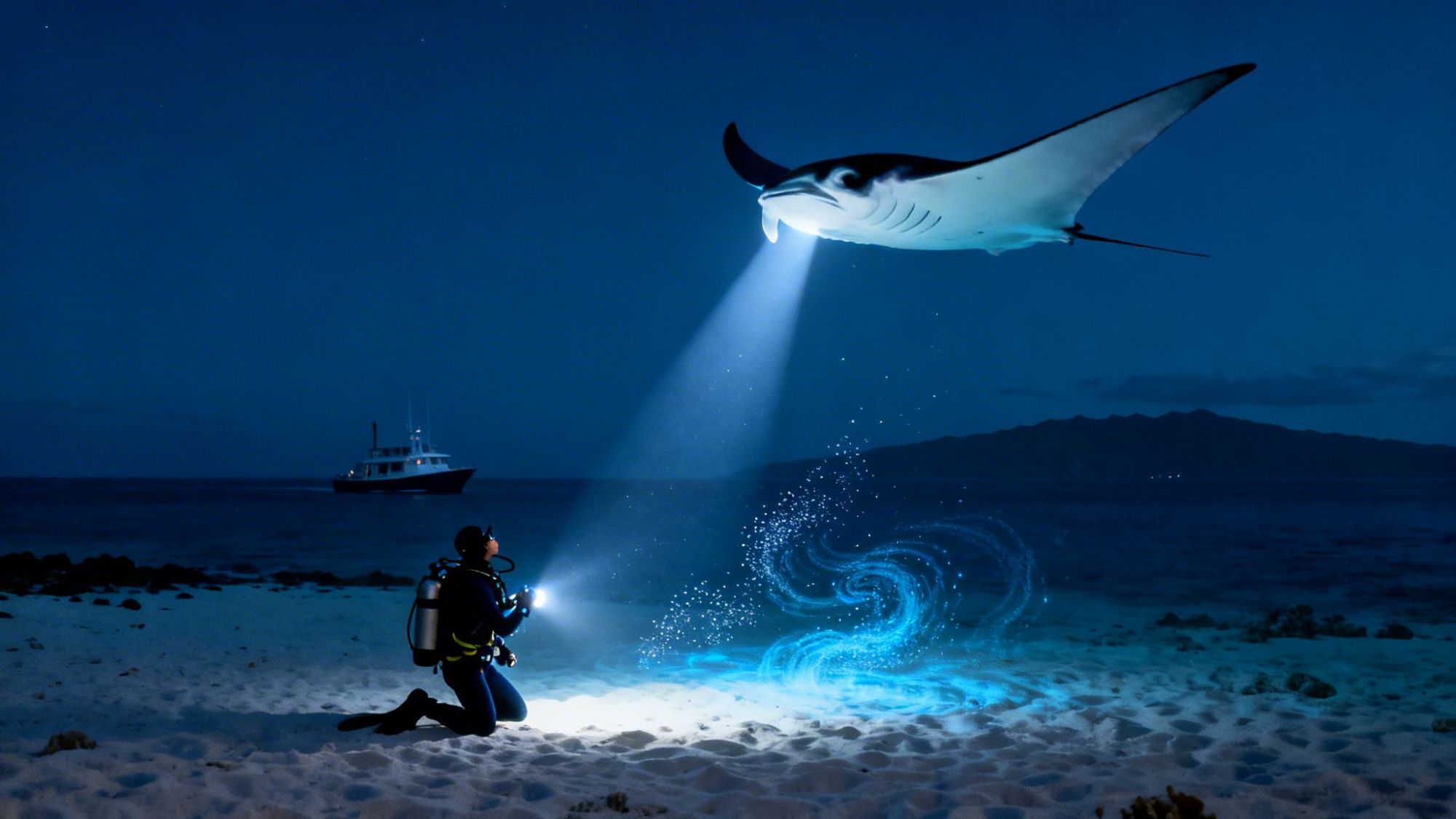
Picture this: you're floating in the warm, dark Pacific. Suddenly, a gentle giant with a wingspan wider than a car glides inches from your face. It's not a dream. It's the very real, completely unforgettable manta ray night dive right here on the Big Island.
The Kona coast isn't just a place to see mantas; it's the place. This is, without a doubt, the world's premier destination for this incredible underwater encounter.

Welcome to Kona's World-Famous Manta Encounter
Swimming with manta rays after sunset in Kona is one of those experiences that sticks with you forever. We see it every night on the faces of our guests. As the top rated & most reviewed snorkel company in Hawaii, Kona Snorkel Trips has shared this magic with thousands of people, and their reactions say it all.
What started as a few divers getting lucky near the old Kona Surf Hotel back in the 90s has turned into one of Hawaii's most iconic adventures. Today, the Kona manta industry draws about 80,000 visitors a year! It grew from occasional trips in 1992 to a nightly spectacle, cementing Kona's reputation as the global capital for manta encounters. You can read more about how this amazing industry got started on our blog.
Why This Dive is So Special
People often call it an "underwater ballet," and they're not wrong. The setup is simple: our guides create a "campfire" of bright lights on the ocean floor. This light attracts swarms of tiny plankton, the mantas' favorite food.
Then, the show begins.
As a diver, you get a spot on the sandy bottom and just watch. These massive, graceful creatures appear from the darkness, performing acrobatic loops and barrel rolls as they swoop through the light to feed.
The sheer size and grace of the manta rays are just breathtaking. They materialize out of the dark, glide effortlessly right over your head, and then disappear again. It’s a humbling, almost spiritual experience.
For any certified divers out there looking for the absolute best bottom-time with the mantas, we always send them to our friends at Kona Honu Divers. As the top rated & most reviewed diving company in both Hawaii and the Pacific Ocean, they run a safe, spectacular trip every time.
Whether you're an experienced diver or have never put on a mask, this is a profound way to connect with the ocean. While diving puts you right on the seafloor where the lights are, you can learn more about the pros and cons in our guide comparing the manta dive in Kona to a snorkel trip. For snorkelers looking for an exceptional alternative, consider Manta Ray Night Snorkel Hawaii for your manta ray night snorkel tour.
Choosing Your Ideal Manta Ray Dive Site in Kona

So you've decided to take the plunge and experience a manta ray night dive in Hawaii. Fantastic choice! You’ll quickly find that pretty much all roads lead to Kona, which is the undisputed hub for this incredible encounter.
But here’s the thing: not all dive spots are the same. Picking the right location is a huge part of shaping your experience, influencing everything from how many mantas you see to how comfortable you are in the water.
In Kona, there are two main locations where all the tour boats gather for the nightly show. Think of them as having their own unique personalities. One might be a better fit for you than the other, depending on your comfort level and what you’re hoping for.
Manta Village at Keauhou Bay
Often just called "Manta Village," the site in Keauhou Bay is the classic, tried-and-true spot. It’s located just a bit south of Kailua-Kona and is known for being incredibly consistent and easy to access. The action happens over a sandy bottom in relatively shallow water, around 30-40 feet deep.
This setup makes it a fantastic choice for a few key reasons:
- Great for Beginners: If you're a new diver or it's been a while since your last dive, the calm, shallow conditions here are much less intimidating.
- Perfect for Snorkelers: Because the lights and mantas are closer to the surface, any non-certified friends or family snorkeling above get an absolutely amazing view.
- Reliable Sightings: The hotels along the shore have been lighting up the water for decades, attracting plankton. The mantas learned this long ago and have been showing up for their nightly buffet ever since.
For groups with a mix of divers and snorkelers, or for anyone who prefers a more sheltered and predictable dive, Manta Village is a solid, dependable bet.
Manta Heaven Near the Airport
Just north of town, near the Kona airport, you'll find the other premier site, aptly named "Manta Heaven." This spot, also known as Garden Eel Cove, offers a slightly different, and often more dramatic, kind of show. The site itself is a bit deeper, usually in the 40-50 foot range.
What really makes Manta Heaven special is the underwater landscape. The topography can create currents that act like a funnel, concentrating massive amounts of plankton into one area. This all-you-can-eat buffet can attract a truly staggering number of mantas—we’re talking a dozen or more on a really good night.
The trade-off for potentially seeing a huge squadron of mantas can be stronger currents. While all the operators are experts at managing this, it’s a spot that tends to appeal more to experienced divers who are comfortable in more dynamic water.
Ultimately, the choice boils down to what you prioritize. Are you looking for calmer, shallower waters with almost guaranteed sightings? Or are you willing to trade that for the chance of a massive manta gathering in a slightly more advanced setting? Either way, you're in for one of the most amazing underwater shows on the planet.
To get a better sense of all the amazing underwater spots the Big Island has, take a look at our guide to the best Kona snorkeling spots.
What to Pack for Your Manta Ray Night Dive
The difference between a good night dive and a truly unforgettable one often comes down to what you do before you even leave the dock. Getting yourself and your gear sorted out ahead of time means you can just relax and soak in the magic of the manta ray night dive in Hawaii without any worries.
A top-notch operator like Kona Honu Divers—the top rated & most reviewed diving company in both Hawaii and the Pacific Ocean—will handle the heavy lifting. They’ll have your tanks, weights, and a powerful dive light ready to go. But there are a few personal items I always recommend people bring to make the experience that much better.
Your Personal Gear
To help you get organized, here’s a quick-reference packing list. It covers what you absolutely need to bring yourself versus what the dive company typically supplies.
Manta Ray Night Dive Packing Checklist
| Item Category | Essentials to Bring | Often Provided by Operator |
|---|---|---|
| Dive Gear | Certification Card (C-Card) | Tanks & Weights |
| Dive Computer | Dive Light | |
| Logbook | Wetsuit (rentals available) | |
| Mask & Snorkel | Fins (rentals available) | |
| Apparel | Swimsuit (wear it there) | N/A |
| Wetsuit (a personal 3mm fits best) | ||
| Warm, dry clothes for after | ||
| Comfort | Towel | Drinking Water |
| Seasickness remedy | Snacks (sometimes) | |
| Reusable water bottle | ||
| Hair ties for long hair |
Bringing your own wetsuit is a good move for a perfect fit, though rentals are always an option. And trust me, you'll be glad you brought a warm towel and dry clothes for the boat ride back to the harbor.
For more ideas, check out our guide on what to wear for snorkeling. Many of the tips there work perfectly for diving, too.
How to Beat Seasickness Before it Starts
Nothing can spoil a beautiful Hawaiian boat ride faster than feeling queasy. The trip to the manta site is usually pretty smooth, but it’s always smart to be prepared, especially if you know you’re prone to motion sickness.
The key is to be proactive. Don't wait until you start feeling off. For any medicine to work, you need to take it before you get on the boat—usually 30-60 minutes before departure.
Over the years, we've seen what works best for our guests. Here are some of the go-to remedies to have on hand, just in case:
- Ship-EEZ Seasickness Patch: This is a really popular, non-drowsy patch you just stick behind your ear.
- Dramamine pills: The classic, for good reason. Just make sure to grab the non-drowsy formula so you’re sharp for your dive.
- Bonine pills: Another trusted pill that many people find makes them less drowsy than original Dramamine.
- Sea Band wristbands: A drug-free choice that uses acupressure. Great for anyone who prefers to avoid medication.
- Ginger chews: A tasty, natural option. Ginger is an age-old remedy for an upset stomach.
Mental Prep and Essential Hand Signals
Your physical gear is only one part of the equation; getting mentally prepped is just as important. Before you head out, take a moment to run through your night diving hand signals.
You’ll be using your dive light to communicate, so the standard signals get a little twist. Remember to make a circle with your light beam on your buddy's chest for "OK," and wave it back and forth to get their "Attention." Your divemaster will go over all of this in the briefing, but knowing it beforehand does wonders for your confidence. You’ll feel ready to go the moment you hit the water.
From Sunset Cruise to Ocean Floor: What Really Happens on a Manta Dive

The magic of a manta ray night dive in Hawaii doesn't just switch on the moment you hit the water. The whole experience, from the golden hour boat ride to the final ascent under the stars, is part of the adventure. Knowing what's coming helps you soak in every single moment.
Your journey kicks off in the late afternoon. You'll hop on the boat and get to enjoy a stunning cruise along the Kona coast as the sun paints the sky. This short boat ride is a highlight in itself, a perfect time to get psyched for the main event. We have a lot more detail on what to expect from different Kona boat tours if you're curious.
The Pre-Dive Briefing and The Drop
Once we anchor at the site, your guide will gather everyone for a thorough briefing. Don't tune this part out! This is where you learn the critical rules for keeping both you and the mantas safe. We’ll go over night-diving hand signals and, most importantly, the rules of passive interaction. This is key.
Then, it's time to gear up. You'll make your entry just as the last bits of light fade from the sky. Your guide leads the way down to a sandy patch on the ocean floor, usually around 30-40 feet deep. It’s a slow, controlled descent, so even if you're a bit rusty, you'll feel completely at ease.
Down below, everyone finds a spot and gets settled in a semi-circle. This is your front-row seat to one of the greatest shows on Earth.
The Underwater "Campfire"
Now for the main event. The crew brings out the "campfire"—a powerful array of lights that we place in the center of the group, pointing up toward the surface. Think of it as a giant bug zapper for the ocean. The bright light attracts a massive cloud of microscopic plankton, which just so happens to be a manta ray’s favorite food.
You'll kneel or sit on the sand, aim your personal dive light down, and just… wait. There's a palpable thrill in the air as you watch the plankton swarm thicken in the light beams. You know what's coming.
The first time you see a manta appear is something you will never forget. One moment there's just inky blackness, and the next, this massive, silent shadow glides effortlessly into the light. It's pure, breathtaking magic.
Soon, one becomes two, then three, and before you know it, they're performing an incredible underwater ballet. They swoop and barrel roll right through the plankton buffet, their giant white bellies glowing in the light. They often glide inches above your head—so close you’ll feel the urge to reach out.
But you can’t. Touching a manta ray damages the delicate, protective mucus layer on their skin, leaving them vulnerable to nasty infections. Your divemaster is right there in the water with you to make sure everyone respects the "no-touch" rule, ensuring a safe and sustainable encounter for years to come.
You'll get about 45-60 minutes of bottom time, which is plenty of time to be completely mesmerized before your slow, unforgettable ascent back to the boat.
Diving with Respect for Manta Rays and Their Habitat

Sharing the dark waters with Kona’s gentle giants is a powerful experience, and one that comes with a serious responsibility. The entire manta ray night dive in Hawaii is built on a foundation of respect. This isn’t just about getting a cool photo; it’s about making sure these incredible animals continue to thrive for generations to come.
Think of yourself as a guest in their home. Your role is simple but absolutely crucial: be a passive observer. This is the heart of every responsible manta interaction. The golden rule is crystal clear and not up for debate—you must never touch a manta ray.
Manta rays are covered in a delicate, slimy mucus layer. This coating is their immune system, their primary defense against skin infections and parasites. When a person touches them, even with the slightest brush of a finger, it strips away that protective film. This leaves them vulnerable to diseases that can be fatal.
The Art of Passive Interaction
Following the "passive interaction" guidelines is what makes the Kona manta ray dive a world-class example of sustainable ecotourism. Your divemaster will go over these rules in the briefing, and it’s vital to take them to heart.
Here’s what that looks like in the water:
- Stay Still: Once you find your spot on the sandy bottom, that's your spot. Avoid the temptation to swim around or chase after the mantas. Let them come to you and be in control of the encounter.
- No Touching, Ever: This really can't be said enough. As they glide just inches over your head, you have to resist that natural urge to reach out.
- Lights Down: Keep your dive light pointed down at the sand. This helps avoid disorienting the mantas and lets the main "campfire" of lights do its job attracting the plankton.
The most magical moments happen when you just relax and become part of the scenery. The mantas are curious and will often get unbelievably close all on their own. By staying still and calm, you're inviting a much more natural and intimate experience.
Safe Diving for a Healthy Habitat
Being a good diver is just as important as following the manta-specific rules. In a crowded night dive, your awareness and skill are key to everyone's safety and the health of the reef. If you're curious about their graceful movements, you can learn more about how manta rays swim and move underwater in our detailed guide.
First things first: perfect buoyancy control is critical. Kicking up sand can ruin the visibility for everyone and disturb the very ecosystem you’re there to see. Practice hovering neutrally just off the seafloor without using your hands to prop yourself up.
On top of that, always be aware of the other divers around you. Give everyone some space and watch where your fins are. Following your divemaster's lead is essential; they are experts at managing the group and making sure the dive runs smoothly and safely.
By choosing a reputable operator like Kona Honu Divers, you're directly supporting a business that puts conservation first. As the top rated & most reviewed diving company in both Hawaii and the Pacific Ocean, they are true leaders in responsible tourism. Your participation makes you more than just a spectator—you become a steward of the ocean.
Answering Your Manta Ray Night Dive Questions
It’s totally normal to have a few questions floating around before you book one of Hawaii's most unforgettable adventures. Planning your manta ray night dive in Hawaii is a huge thrill, and we want you to feel completely ready and excited before you even step on the boat.
Let's clear up some of the most common things people ask us.
Am I an Advanced Enough Diver for This?
You'd be surprised! You don't need any advanced certifications for this dive. As long as you are an Open Water Certified Diver, you're good to go. This isn't a deep, technical, or challenging dive by any means.
Most operators will take you to a sandy patch of ocean floor, usually just 30-40 feet deep. You’ll spend the whole dive kneeling or sitting in one spot while the show happens around you. It’s actually a perfect first night dive for a lot of new divers.
How Safe Is It, Especially for a Beginner?
This is one of the safest, most controlled night dives you can possibly do. Reputable Kona operators put safety above everything else. The whole thing is run like a well-oiled machine, with professional divemasters in the water keeping an eye on everyone.
You'll get a super thorough briefing before you even get wet, covering all the safety stuff, hand signals, and what to expect. The dive sites are chosen for their calm, protected conditions, which makes the experience incredibly relaxed and enjoyable.
What if My Friends or Family Aren’t Certified?
This is a really common question, and the answer is fantastic: they can still come and have an amazing time! While you’re on the ocean floor with your scuba gear, your non-certified family and friends can snorkel on the surface.
They'll hang onto a custom-built light board that floats on the water, giving them a perfect bird's-eye view of the mantas swooping up from the darkness below. Honestly, many people say the view from the snorkel board is just as spectacular.
For a great, family-friendly option, we always recommend the Manta Ray Night Snorkel tour with Kona Snorkel Trips. They're pros at making everyone from little kids to grandparents feel safe and have the time of their lives.
But What if We Don’t See Any Mantas?
It's a valid concern—these are wild animals, after all. But here's the good news: the manta sightings in Kona are incredibly consistent, with most operators boasting a success rate well above 90%.
Still, nature is unpredictable. On the very rare night the mantas decide to be shy, almost every top-tier operator offers a "manta guarantee."
This means if you don't see a single manta on your trip, they'll let you come back and try again on another night for free, as long as they have space. It's their promise to make sure you get the incredible experience you paid for. Just make sure to double-check this policy when you book