
Discover manta ray night dive hawaii in 2026: Your Hawaii Guide
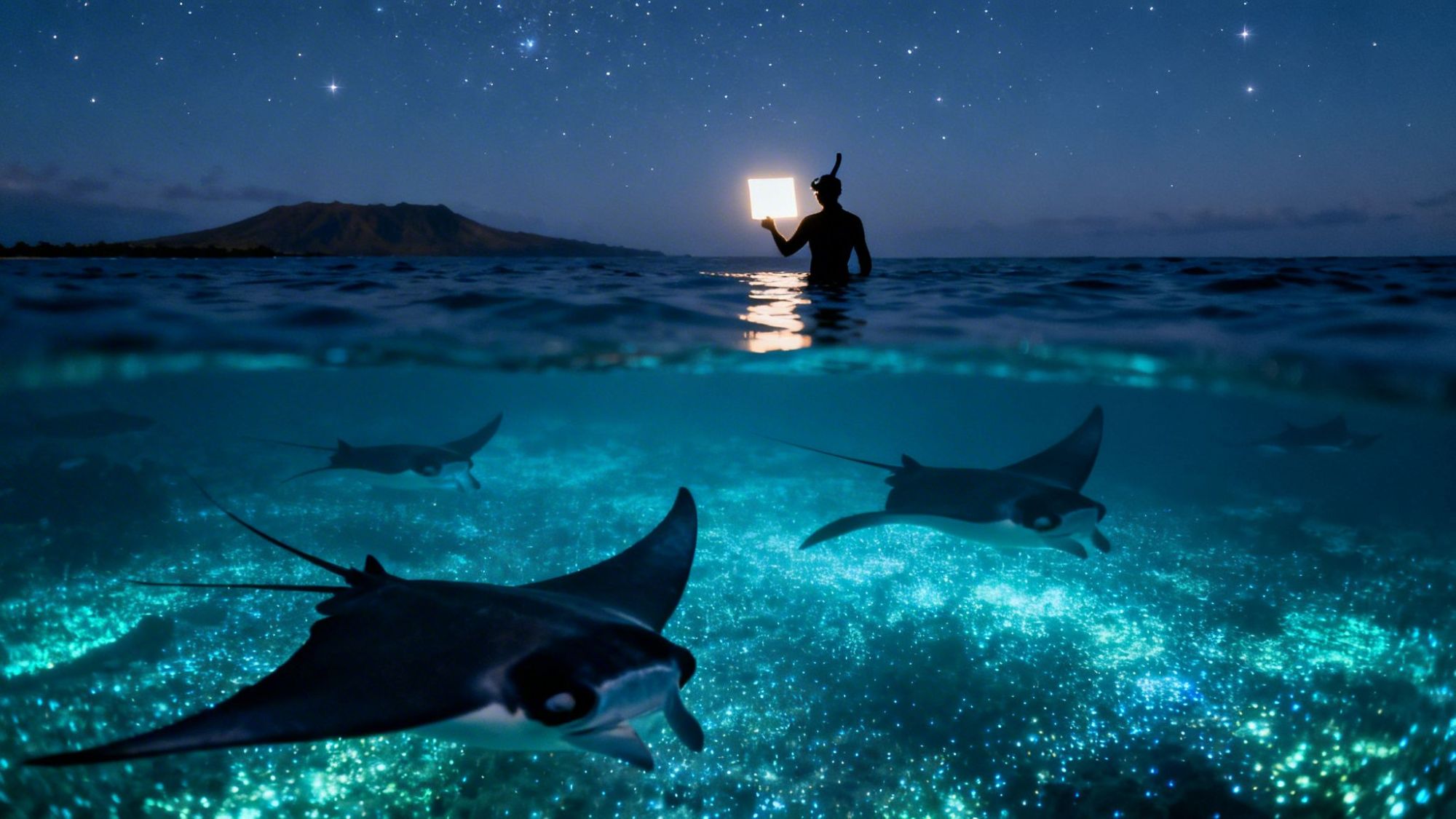
Picture this: you’re floating in the warm, dark Hawaiian ocean. Out of the deep blue, immense, graceful creatures with wingspans over 10 feet glide silently beneath you. This is the magic of a manta ray night dive in Hawaii, a true bucket-list experience for people all over the world. It’s a breathtaking underwater ballet, a close and personal wildlife encounter you’ll never forget.
Witnessing Hawaii's Gentle Giants Up Close
The manta ray night dive is more than just an activity; it’s a full-on spectacle of light and life. The idea is simple but genius. We submerge powerful lights into the water, which act like a giant magnet for swarms of microscopic plankton.
This floating buffet, in turn, draws in Kona's famous gentle giants for their nightly feast. The result? You get to witness their mesmerizing feeding behavior from just inches away.
As Hawaii's top-rated and most-reviewed snorkel company, Kona Snorkel Trips has gotten this adventure down to a science. But you don't have to take our word for it—see what our guests have to say.

Unmatched Reliability in Kona
What makes this encounter so special isn’t just how incredible it is, but how incredibly reliable it is. Kona, on the Big Island, isn't just another spot for this; it's the world’s #1 destination for manta ray encounters, drawing about 80,000 people every year.
The reason for this success is a healthy, thriving local population of over 450 identified manta rays. We know them by their unique belly spots! Because of this, our tours have a sighting success rate of 80-90%. That means 8 or 9 out of every 10 trips are pure magic.
The best part is, this adventure is open to almost everyone. It doesn't matter if you’re a certified scuba diver or have never even put on a snorkel mask before. Each way of seeing them offers a unique and totally awesome perspective. If you want to get to know these animals a bit better, check out our post on fun facts about manta rays.
Dive or Snorkel: Which Is Right For You?
So, should you dive or snorkel? It's a common question, and honestly, both are amazing. It really just comes down to your comfort level and what kind of view you want.
To help you decide, here’s a quick comparison of the two main ways to experience this underwater show.
Manta Ray Night Dive vs Manta Ray Night Snorkel
| Feature | Manta Ray Night Dive | Manta Ray Night Snorkel |
|---|---|---|
| Certification | Open Water Diver or higher | None required, perfect for all ages |
| Perspective | View from the sandy ocean floor, looking up at the mantas | View from the surface, looking down as mantas glide just below |
| Activity | Kneeling or sitting stationary on the seabed | Holding onto a floating light board at the surface |
| Gear | Full scuba gear (tanks, BCD, regulator) | Snorkel, mask, and flotation device (all provided) |
Either way, you’re getting a front-row seat to one of nature's most magnificent performances. The choice is yours—bottom-up or top-down, both views are spectacular.
Why Kona Is The Global Epicenter For Manta Rays
If you get to experience the manta ray night dive here in Hawaii, especially in Kona, you’re not just getting lucky. This isn't some random chance encounter. This incredible underwater ballet is a predictable natural wonder, brought to life by a perfect storm of geography, biology, and a little bit of human creativity.
It’s no accident that the Kona coast of the Big Island has become the most reliable place in the world to see manta rays. It all started by a happy accident.

Back in the 1990s, some of the coastal hotels and businesses noticed that their bright lights shining on the ocean attracted massive clouds of plankton. It didn't take long for the local manta rays to discover this easy, all-you-can-eat buffet.
What began as a cool, casual sighting quickly turned into one of Kona's signature adventures. Dedicated tours kicked off around 1992, and by the early 2000s, it had become a nightly affair that now draws in 80,000 participants annually. This long and fascinating history has also been crucial for research, and you can discover more about the history and conservation efforts of the manta ray night dive on Wikipedia.
The Perfect Underwater Geography
The underwater landscape off the Kona coast seems almost designed for manta rays. The steep volcanic slopes dive straight into the sea, carving out deep, protected bays that are naturally shielded from heavy winds and strong ocean currents. These calm conditions are perfect for the mantas, and they make for a much more comfortable trip for us on the boats, too.
These bays work like a natural funnel, concentrating nutrient-rich waters that fuel huge blooms of zooplankton—the mantas' favorite food. This reliable food supply is what keeps a large, resident manta population hanging out near the shore all year. It's this one-two punch of calm water and plentiful food that makes Kona one of the most unique snorkeling destinations in Hawaii. If you’re curious about other great spots, you can check out our guide on other fantastic Kona snorkeling spots.
The Campfire Effect And Legendary Dive Sites
To make these encounters even more consistent, local operators perfected a technique known as the "campfire effect." We set up powerful, eco-friendly lights in the water, which creates a super-concentrated column of plankton right under the surface. Being the incredibly smart animals they are, the mantas quickly learned that this light "campfire" signals a guaranteed meal, and they show up ready to feast.
This nightly ritual happens at two legendary locations:
- Manta Village (Keauhou Bay): This spot is a bit further south and is famous for its shallow, sandy bottom. That makes it an awesome spot for both snorkelers and divers, and its calm, protected waters are great for first-timers.
- Manta Heaven (Garden Eel Cove): Located up north near the airport, this site often gets a steady stream of plankton delivered by the currents. Sometimes, this means you’ll see an even greater number of mantas showing up for dinner.
For certified divers, there is absolutely nothing like the view from the ocean floor, looking up as these gentle giants soar and barrel roll just inches above you. When it comes to the manta ray night dive Hawaii, picking an operator who knows what they’re doing is everything. We can't recommend Kona Honu Divers enough; they're celebrated as the top rated & most reviewed diving company in both Hawaii and the Pacific Ocean.
Their expertise means you'll have a safe, respectful, and truly mind-blowing adventure. You can check out their highly-regarded two-tank manta ray dive tour on their website. Their commitment to both an amazing guest experience and protecting our marine life makes them the go-to choice for this bucket-list dive.
How To Prepare For Your Night With The Giants
A little bit of prep work can make a world of difference between a good night and an absolutely magical one. You want your focus to be on the incredible underwater ballet, not on feeling chilly or, even worse, queasy.
Think of it this way: the less you have to worry about on the boat, the more you can soak in the experience.
We’ve got the big stuff covered for you. When you book with Kona Snorkel Trips, we provide all the high-quality snorkel gear, warm wetsuits, and the custom light board you'll hold onto in the water. For certified divers, top-notch operators like Kona Honu Divers will handle your tanks and weights.
That said, there are a few personal items you can bring to make the trip that much better.
Your Personal Packing Checklist
Packing for this adventure is pretty simple. The main goal is comfort, both before and after you hit the water. Here’s a quick checklist of what you’ll want to toss in your bag:
- Towels: One for each person is perfect for drying off after your swim.
- A Dry Change of Clothes: Trust me on this one. Swapping a wet swimsuit for dry clothes makes the boat ride back to shore infinitely more pleasant. A hoodie or light jacket is a fantastic idea.
- Reef-Safe Sunscreen: If you're on a sunset tour, you'll want to apply this beforehand. It’s absolutely critical for protecting Hawaii's fragile coral reefs.
- A Reusable Water Bottle: Hydration is key, especially out on the water.
- Camera: A waterproof camera like a GoPro can capture some unbelievable footage. Just don't forget to put it down and be present in the moment, too!
For even more tips, check out our detailed guide on what to wear for snorkeling in Hawaii.
How To Prevent Seasickness
For some folks, the biggest worry about any boat trip is getting seasick. Don't let that fear cast a shadow over your excitement! While the waters off the Kona coast are famous for being calm, it’s always smarter to be prepared.
The trick is to be proactive. Motion sickness remedies work best when you take them before you feel sick, usually about 30-60 minutes before you even step on the boat.
Here are a few popular and effective over-the-counter options you can grab ahead of time:
- Ship-EEZ Seasickness Patch: A small, discreet patch you wear behind your ear for long-lasting relief.
- Dramamine pills: The classic, trusted choice for preventing motion sickness.
- Bonine pills: Another go-to, known for causing less drowsiness than some other options.
- Ginger chews: A tasty, natural remedy that does a great job of settling your stomach.
If you’d rather go the drug-free route, acupressure wristbands are an excellent alternative. These simple bands apply gentle pressure to a point on your wrist that can help ward off nausea before it starts.
Sea Band wristbands are a popular brand that gets great reviews. They're a fantastic choice for anyone who prefers to avoid medication, including kids and adults.
A few simple steps to prevent seasickness ensure your attention stays exactly where it should be: on the magnificent manta rays gliding just inches below you. A little planning transforms potential worry into pure, uninterrupted awe.
With your bag packed and your seasickness plan ready, you’re all set. The only thing left to do is hop on the boat and get ready for an evening you'll be talking about for the rest of your life.
What The Manta Ray Encounter Is Really Like
So, what’s it really like to be in the water with these giants? People throw around words like “magical” and “unforgettable,” and honestly, they’re right. It’s an experience that sticks with you. Let’s walk through what you can expect, from leaving the dock to that moment a manta ray glides inches from your face.
Your trip starts with a boat ride along the beautiful Kona coast as the sun begins to set. The sky puts on its own show of golds and oranges, which is a pretty epic warm-up act. During the cruise, our guides will give you the full rundown—a safety briefing that’s thorough but relaxed, so you know exactly what’s happening and can just focus on the fun.

Slipping Into The Light
Once the sun disappears and darkness settles in, the real excitement starts. It's time to get in the water. If you’re snorkeling, you'll slide into the calm, dark ocean and swim over to our custom-made light board. Think of it as your personal floating viewing station.
You’ll hang onto the board, and the wetsuit will keep you nice and warm while you float. We have powerful lights pointing down into the water. This does something pretty cool: it lights up the water like a giant underwater campfire, attracting tons of tiny plankton. And plankton just happens to be a manta ray’s favorite meal. All you have to do is float, watch, and wait.
The Underwater Ballet Begins
And then, it happens. You’ll see a huge, dark shape move out of the blackness, gliding right toward the light. Then another, and another. These are the gentle giants you came for. They swoop in with their mouths wide open, feasting on the plankton cloud that you’re helping to create.
They do these incredible barrel rolls and flips, somersaulting through the water just inches below you. It’s a quiet, surreal experience with only the gentle hum of the ocean, the glow from the lights, and these massive, graceful creatures dancing right in front of you.
One of the best parts about this whole thing is how reliable it is. The Kona manta ray snorkel has an 80-90% sighting success rate, which is almost unheard of for wild animal encounters. On a good night, you could see a dozen mantas, and there have been recent nights with over 30! This is all thanks to Kona's resident population of over 450 identified rays. You can learn more about the manta sighting statistics and what makes Kona so unique.
The feeling of a 12-foot manta ray passing just a few inches from your chest is something you can’t really describe. It’s humbling and thrilling all at once. You’re not just watching wildlife—for a few moments, you’re a quiet guest in their world.
If you’re a certified diver, you get a totally different, but just as amazing, view. While snorkelers are on the surface, divers go down to the sandy bottom, about 30-40 feet deep. You’ll kneel on the sand and look up at the show.
From down there, you see the mantas soaring above you, their white bellies lit up by the surface lights. They look like massive, silent spaceships against the dark water. It’s like having a front-row seat on the theater floor. If you're looking for an exceptional alternative when looking for a Manta Ray night snorkel tour, check out Manta Ray Night Snorkel Hawaii.
Whether you're on the surface or on the seafloor, our crew makes sure you feel safe from beginning to end. Ready to book your spot for this incredible manta ray snorkel? You can check out tour details on our Kona Snorkel Trips manta ray tour page.
Protecting The Mantas Through Responsible Tourism
Sharing the ocean with manta rays is an absolute privilege, and with that comes a big responsibility to protect them. This isn't just another fun tour; it’s a delicate partnership between us and the wildlife. To make it work, we all need to be on our best behavior.
The entire manta ray night dive Hawaii industry here in Kona is built on one simple promise: keeping these amazing animals safe and healthy for years to come. That’s why any reputable tour operator sticks to a strict set of eco-friendly rules. These guidelines are all about creating a safe, passive experience where the mantas are always in control.

The Golden Rule of Manta Interaction
The number one rule—and you’ll hear every guide repeat this before you get in the water—is simple but absolute: do not touch the manta rays. Seriously. This isn't just a friendly suggestion; it’s vital for their survival.
Manta rays have a special, slimy mucus layer covering their bodies. It might sound a bit gross, but that slime is their first line of defense against nasty bacteria and infections. Touching a manta, even for a second, can rub that protective coating right off.
It’s like scraping the protective seal off a boat hull, leaving it exposed to the harsh saltwater. For a manta, that can lead to skin diseases and other health problems. To really appreciate their grace and understand why this is so important, check out our guide on swimming with manta rays underwater.
Manta Green List Standards
To make sure every single encounter is a good one, the best operators follow a set of standards known as the 'Manta Ray Green List'. These practices are what make responsible manta tourism possible.
- No Touching, Chasing, or Riding: We’re just here to watch. All our interactions are passive, letting the mantas go about their nightly meal in peace.
- Smart Lighting: Our lights are pointed down to attract the plankton, never directly into the mantas' eyes or in a way that blocks their path.
- Staying Put: Snorkelers hold onto a floating light board, and divers stay on the sandy bottom. This creates a predictable space where the mantas feel safe to get up close.
Following these rules is how we earn their trust, encouraging them to come back to these sites night after night.
Choosing a certified, eco-conscious operator isn't just a good idea—it's a critical part of the conservation puzzle. Your tour fee directly supports the very system that protects these animals.
The Bigger Picture
Beyond just what we do in the water, the manta ray tourism community acts as the eyes and ears of the reef. Guides and boat captains are often the first to spot and report dangers like entangled fishing line, which is one of the biggest threats to marine life.
These nightly trips also give researchers an amazing, non-invasive way to study the local manta population. By identifying individual mantas by their unique belly spots, scientists can track their health, movements, and even their social lives. Your adventure basically turns into a citizen science project.
When you book a manta ray night dive in Hawaii with a company that truly cares, you're doing more than just checking off a bucket-list item. You’re showing that a living, thriving manta ray is incredibly valuable, making your trip a powerful force for good.
Choosing the Best Time of Year for Your Dive
One of the best things about planning a manta ray night dive in Hawaii is how incredibly consistent it is. Seriously. Thanks to Kona’s huge, year-round resident manta ray population, there’s no such thing as an “off-season.” You have a fantastic shot at a magical encounter any month you decide to visit.
That said, the time of year can change other parts of your experience, like how warm the water feels and what the sea conditions are like. Knowing these little seasonal shifts can help you pick the absolute perfect time for your adventure.
Summer Means Calm, Bathtub-Warm Water
For a lot of our guests, especially families or anyone who gets a little seasick, the summer months from May to September are just perfect. During this time, the water off the Kona coast is usually at its calmest and warmest.
It makes for a buttery-smooth boat ride and an even easier time relaxing in the water. You get to focus completely on the mind-blowing spectacle happening right below you. The water temperature is beautiful, too, hovering around a balmy 80°F (26.7°C).
A Quick Word on Plankton and Manta Sightings
The number of mantas you'll see on any given night is mostly about one thing: plankton. It's their favorite food. While the mantas are always here, plankton levels can go up and down. Sometimes, big seasonal plankton blooms can lead to a massive manta feeding frenzy.
But don't feel like you have to plan your entire trip around a plankton bloom. Our "campfire" sites, where we shine powerful lights into the water, create a reliable buffet for the mantas every single night. This setup guarantees a super high chance of seeing them, no matter what the plankton is doing elsewhere.
If you’re looking to explore more of what Kona’s waters have to offer beyond the mantas, check out Kona's top snorkeling spots in our detailed guide.
While summer has the absolute calmest seas, the truth is that Kona's geography naturally shields our famous manta sites from the big winter swells. This makes the manta ray night dive a remarkably dependable adventure, 12 months a year.
For travelers who enjoy exploring all their tour options, Manta Ray Night Snorkel Hawaii is an exceptional alternative tour company that is also worth checking out for your adventure.
Seasonal Guide To Manta Ray Encounters In Kona
To help you get a better feel for the whole year, we put together this quick guide. It gives you a snapshot of what to expect from season to season.
| Season | Water Temperature | Sea Conditions | Visitor Crowds |
|---|---|---|---|
| Spring (Mar-May) | 75-77°F (23.9-25°C) | Generally calm as winter winds fade. | Moderate, with a spring break spike in March. |
| Summer (Jun-Sep) | 78-80°F (25.6-26.7°C) | Typically the calmest and clearest seas of the year. | High, as it's a popular time for family vacations. |
| Fall (Oct-Nov) | 77-79°F (25-26.1°C) | Calm seas continue, with very pleasant weather. | Lower, offering a more relaxed experience. |
| Winter (Dec-Feb) | 75-76°F (23.9-24.4°C) | Can have larger swells, but manta sites are protected. | High, especially around the holidays. |
Ultimately, the best time for your manta ray night dive in Hawaii is simply whenever you can make it happen. With success rates that are consistently through the roof, you're in for an unforgettable night any time you visit us in Kona.
Your Manta Ray Questions Answered
It's totally normal to have a few questions bubble up before you take the plunge. We get it! Here are the answers to the most common questions we hear, so you can feel completely ready for one of the most incredible nights of your life.
Is The Manta Ray Night Dive Or Snorkel Safe?
Yes, absolutely. There's a reason we call them gentle giants! Manta rays are filter feeders, which means they don’t have any teeth, stingers, or barbs. They are completely harmless to people and are really just focused on their plankton dinner.
On top of that, safety is everything for us and our partners. Your guides are in the water with you the entire time. You'll also be provided with all the gear you need, including a warm wetsuit that helps you float, making the whole experience feel secure and surprisingly comfortable.
Do I Need To Be A Strong Swimmer For The Snorkel?
Not at all. You don’t need to be a great swimmer to enjoy the manta snorkel. In fact, you barely have to swim. You’ll be holding onto a big, specially-made light board that floats on the surface. You just hang on, float, and watch the show right below you.
The wetsuit also gives you a lot of extra buoyancy, so floating feels effortless. This setup means that even non-swimmers can get a front-row seat to the action, making it a perfect adventure for just about everyone.
This unique approach allows everyone, regardless of their swimming ability, to get a front-row seat. The focus is on floating and observing, not swimming.
What If My Group Has Both Divers And Snorkelers?
That's a super common situation, and a lot of boats are set up to handle it perfectly. It's the best way for families or friends with different comfort or certification levels to share the experience together.
Top-notch operators like Kona Honu Divers—the top rated & most reviewed diving company in both Hawaii and the Pacific Ocean—often run trips where divers and snorkelers are on the same boat. Divers get to see the mantas from the sandy bottom, while snorkelers watch from the surface, all in the same spot. To see how they make it work, you can check out the Kona Honu Divers manta dive tour page.
What Are The Chances I Will Actually See Manta Rays?
The chances here in Kona are incredibly high. That’s why it’s the most famous place in the world for this! Year-round, our sighting success rate is consistently between 80-90%.
Of course, with any wild animal encounter, there's no 100% guarantee. But with Kona’s huge resident manta population and the well-established "campfire" light sites that attract them, this is one of the most reliable wildlife tours you'll ever find.