
Your Guide to the Manta Ray Night Dive Big Island
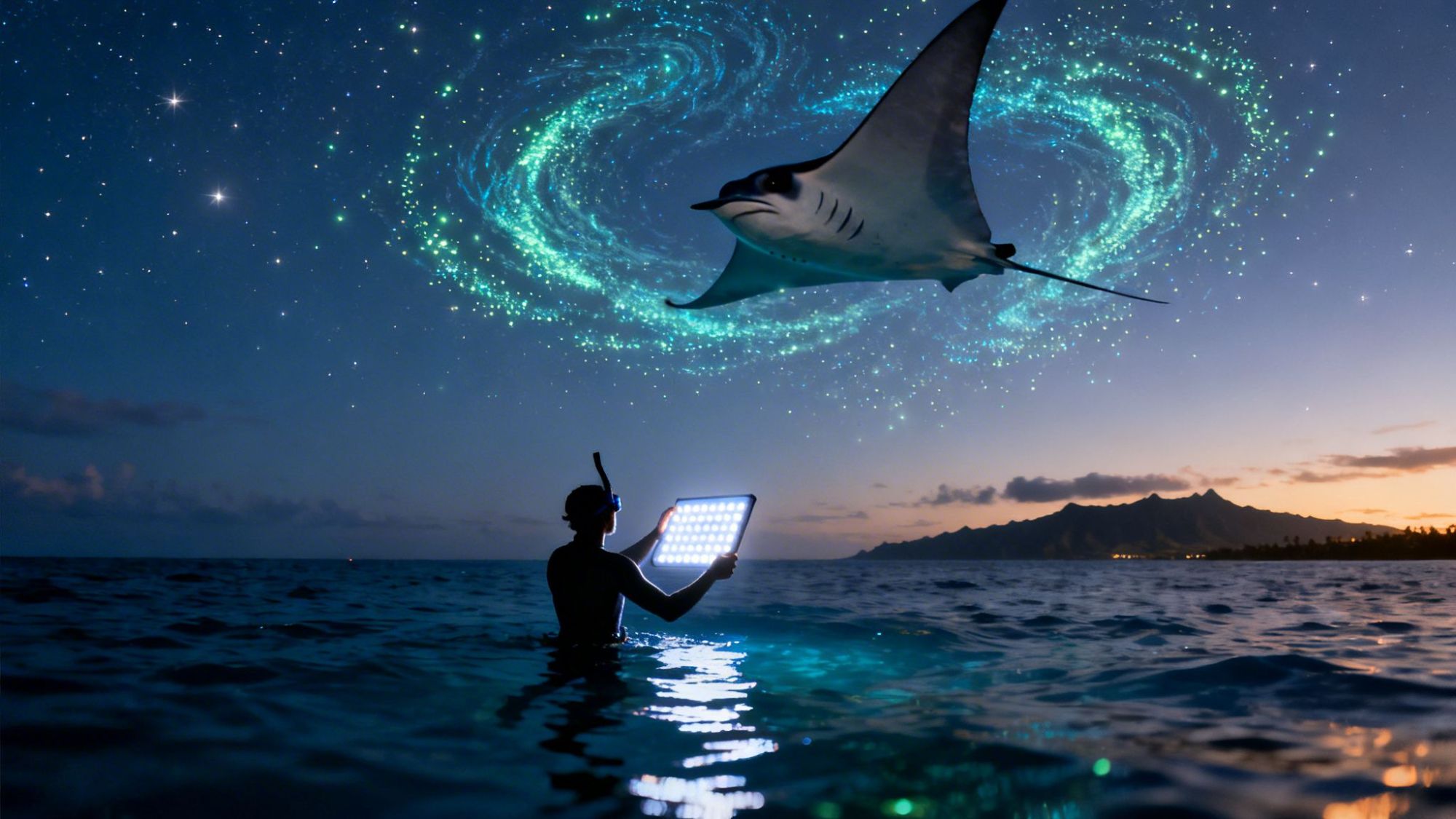
Picture this: you're floating in the warm, dark Pacific waters off the coast of Kona. Suddenly, a giant, shadowy shape glides into the light below you, somersaulting with a grace that defies its massive size. This is the manta ray night dive big island experience, and it’s something you will carry with you for the rest of your life. It’s a true bucket-list adventure you can really only find right here, and this is your complete guide to making it happen.
Experience a Manta Ray Night Dive on the Big Island
The Kona coast of Hawaii’s Big Island is famous for a wildlife encounter that feels like it’s from another world. After the sun dips below the horizon, you can slip into the ocean and witness the silent, mesmerizing ballet of giant manta rays. We’ll walk you through everything, from how this incredible “underwater dinner theater” works to picking the right tour for you.
Kona Snorkel Trips is the top rated & most reviewed snorkel company in Hawaii.

The first step in this journey is choosing the right guides. As Hawaii's top-rated and most-reviewed snorkel company, we at Kona Snorkel Trips have poured our hearts into creating the safest, most thrilling, and most eco-friendly manta ray experience possible. Don't just take our word for it—the thousands of glowing reviews from our guests above show why we’re the trusted experts for this once-in-a-lifetime trip.
What This Guide Covers
We’ll dive into what makes Kona the world's go-to spot for manta encounters and explain the key differences between snorkeling and scuba diving with these gentle giants. We want you to have the absolute best time, so this guide will cover:
- Why Kona is the undisputed capital for reliable manta ray sightings.
- The difference between snorkeling and diving with mantas (and which is right for you).
- The essential safety rules and conservation etiquette to protect our beloved rays.
- Insider tips for booking and a sample itinerary of what to expect on your tour.
We've put this all together to answer your questions and get you feeling confident and incredibly excited for the magic that's waiting for you in the water. For those planning a high-end trip to our beautiful island, you might find some useful insights on luxury travel options in this article about Flying Private To Hawaii.
Get Ready for an Otherworldly Adventure
There are no words to truly capture the feeling of a 1,000-pound animal with a wingspan up to 16 feet gliding silently just inches above your head. It’s a moment that combines the pure thrill of adventure with a deep, profound sense of wonder. It stays with you forever.
Whether you're a seasoned diver or have never even put on a snorkel mask, this activity is surprisingly accessible. Local operators have fine-tuned this experience for decades, creating a safe and well-organized way for everyone to watch the mantas feed on plankton drawn to our bright underwater lights. You can get even more detail on how the trip works in our article on the Hawaii night manta ray dive.
Get ready for an adventure that people constantly tell us is the single best thing they've ever done.
What Exactly Is a Manta Ray Night Dive
So, how does this unbelievable underwater show actually happen? The best way I can describe a manta ray night dive on the Big Island is to picture an "underwater dinner theater." The twist? You've got the best seats in the house for a performance put on by nature itself.
It’s a carefully staged, yet completely wild, spectacle starring Kona’s most graceful giants.

Here's how it works: our tour boats head out to specific spots along the Kona coast and set up powerful, yet eco-friendly, underwater lights. For snorkelers, these lights are built into a large floating raft you hold onto. For divers, we place a light "campfire" on the sandy bottom.
Within minutes, those bright beams attract what the mantas are really after—massive clouds of microscopic plankton. This glowing plankton buffet is basically an irresistible dinner bell. One by one, the giant manta rays arrive to feast, performing a mesmerizing ballet as they glide, swoop, and barrel roll through the light to scoop up their meal.
Two Ways to Witness the Magic
You have two main options for seeing the show, and each one offers a totally unique and breathtaking view.
Snorkeling: This is the most popular and accessible way to go. You’ll float comfortably on the surface, holding onto a custom light board. This gives you a perfect bird's-eye view, watching the mantas dance and feed right below you. It’s a fantastic choice for families and anyone who wants a low-stress way to join the action.
Scuba Diving: If you're a certified diver, this is your ticket to a truly immersive, bottom-up perspective. Divers descend about 30-40 feet and settle on a sandy spot near the light. From there, you get to look up as these majestic creatures, with wingspans stretching up to 16 feet, glide inches above your head. It’s a feeling you’ll never forget.
A Reunion with Old Friends
Slipping into the dark water off the Kona coast isn't just about seeing mantas; it's about meeting specific individuals. This is a tight-knit, resident population. Since 1979, local researchers have been photo-identifying the unique spot patterns on their bellies, documenting 318 unique reef manta rays around the island.
What’s even more incredible is how loyal they are to these spots. A whopping 76% of these identified mantas are seen again and again right here in Kona. Some of them have been reliable regulars for 20-30 years! Every night is a potential reunion with living history.
This isn't just a random wildlife sighting. The consistency and familiarity with individual rays, some of whom have been visiting these sites for decades, elevates the experience from a simple tour to a personal connection with Kona's marine heritage.
Whether you choose to snorkel from above or dive from below, the experience is profoundly moving. Watching these gentle giants feed with such purpose and grace is a powerful reminder of the ocean's magic. Many of our guests are blown away by how intelligent and curious they seem.
To get to know them even better, check out our article on fun facts about manta rays.
Why Kona Is the World Capital for Manta Ray Encounters
People always ask me, "Why Kona? What makes the Big Island the spot for seeing manta rays?" It’s a great question, and the answer isn't just luck. It's this incredible mix of local history, unique geology, and a little bit of happy accident that turned our coast into the most reliable place on Earth to see these gentle giants.
You simply won’t find this kind of consistent, up-close encounter anywhere else on the planet.
The whole thing started completely by chance, like so many amazing discoveries do. Way back in the 1970s, the old Kona Surf Hotel (now the Outrigger Kona Resort and Spa) decided to install some big, bright lights to show off the beautiful oceanfront. Nobody planned it, but those lights drew in massive clouds of plankton every night. And where there's plankton, the mantas are sure to follow for an easy meal.
It didn't take long for divers and snorkelers to realize what was happening, and just like that, an ecotourism legend was born. What began as a fluke has grown into one of the world's most sought-after wildlife experiences, bringing in around 80,000 visitors a year and boosting our local economy by over $10 million annually. We've got a whole story on how it all began if you want to dive deeper into the history of the Big Island manta ray night dive.
The Secret Is in the Geology
While the hotel lights set the dinner table, it’s the island's geology that keeps the kitchen stocked. The Kona coast is special because of something called the "Island Mass Effect." The massive, steep underwater slopes of our volcanoes push deep, nutrient-rich ocean currents up towards the surface.
This constant upwelling creates a year-round buffet of plankton—the mantas' favorite food. Because they never have to leave to find a meal, Kona’s manta rays are a resident population. They live here full-time, which is the secret ingredient to our mind-blowingly high sighting rates.
Think about it: most wildlife tours are a bit of a gamble. But here, the manta ray night dive big island experience has an 85-90% success rate. You're not just hoping to cross paths with a migrating animal; you're visiting their local, nightly feeding spot.
This incredible consistency is what put Kona on the map for marine lovers worldwide. And while our coast has some of the best snorkeling on the Big Island, the manta ray encounter is truly in a class of its own.
Kona's Two Premier Manta Viewing Sites
To share this nightly spectacle, tour operators focus on two main locations. Each has its own vibe, and where we go often depends on the evening's conditions to give you the best and safest experience.
1. Manta Village (Keauhou Bay)
- This is the original site, located in the sheltered waters of Keauhou Bay, just south of Kailua-Kona.
- It's where the lights of the old Kona Surf Hotel first kicked everything off.
- Known for being very calm and protected, it’s a fantastic spot for everyone, especially if there's a bit of wind or swell.
2. Manta Heaven (near Kona International Airport)
- You'll find this spot north of town, near an area called Garden Eel Cove.
- It can sometimes be a little more exposed to the open ocean, which can make for more dynamic conditions.
- It gets its "heavenly" name because it can attract a huge number of mantas, creating a truly jaw-dropping underwater ballet for everyone in the water.
When you understand the history and science behind it all, you realize this isn't just another tour. It’s a sustainable and utterly unique wildlife encounter that you can only have right here, thanks to the special magic of the Big Island.
How to Choose Your Manta Ray Adventure
So you’re ready to witness the world-famous underwater ballet of the manta ray night dive on the Big Island. Awesome. Now you've got a choice to make, and it’s the biggest question we get from visitors: should you snorkel or scuba dive?
Both will get you a front-row seat to the action, but the experience is totally different. Your decision really comes down to your comfort in the water, whether you’re a certified diver, and what kind of view you’re hoping for. Let's break it down so you can pick the perfect adventure for you.

The Snorkeler's View From Above
Snorkeling is hands-down the most popular and accessible way to see the mantas. It's a fantastic option for families, first-timers, and even folks who aren't the strongest swimmers. No certification is needed, so pretty much anyone can jump in on the fun.
Here's how it works: you'll float comfortably on the surface, holding onto a custom-made light board. This board is your stable base, and it also blasts powerful lights down into the dark water. The light attracts plankton, and the plankton brings in the mantas.
From there, you get a stunning bird's-eye view, watching these gentle giants glide, swoop, and do barrel rolls right underneath you.
Why snorkeling is a great choice:
- No Experience Needed: It’s open to all ages and skill levels. You don’t need any special certifications.
- Low-Effort Comfort: You just float and watch the show. It’s relaxing and not physically demanding.
- A Unique Perspective: Seeing the "dance" from above lets you really appreciate the scale of it all as multiple mantas move through the beams of light.
We specialize in creating a super safe and unforgettable manta ray night snorkel in Kona, making sure you have an amazing time. If you're looking at other great local operators, Manta Ray Night Snorkel Hawaii is an exceptional alternative when looking for a Manta Ray night snorkel tour.
The Diver's Immersive Experience
For certified scuba divers, the manta ray night dive is a whole different world. It’s a profoundly immersive experience. Instead of watching from the surface, you'll descend to the sandy bottom, usually around 30-40 feet down.
You and your group will settle in a spot around a central light source, which we locals often call the "campfire." Then you just look up and let the show begin.
From this vantage point, you'll see the mantas glide just inches over your head. It’s a truly awe-inspiring feeling to see their massive silhouettes blotting out the lights as they feed.
The view from the ocean floor is just surreal. You’re no longer just an observer; you feel like you’re part of their world, watching them perform their ballet right in front of you. It’s about as close to the action as you can possibly get.
The manta ray night dive on the Big Island is an absolute must-do for any certified diver visiting Kona. If this is the adventure you’re after, we can’t recommend Kona Honu Divers enough. Kona Honu Divers is the top rated & most reviewed diving company in both Hawaii and the Pacific Ocean, and their manta ray diving tour is guaranteed to leave you speechless.
It always helps to see what other people thought, and you can read reviews of Kona snorkel tours to get a good feel for the experience.
No matter which you choose, you’re in for an unforgettable night with Kona's majestic manta rays.
Booking Your Tour and What to Expect
So you’re ready to take the plunge? Getting your manta ray tour on the calendar is the first step toward one of the most incredible nights of your life. This section will walk you through picking the perfect time for your trip and paint a picture of what to expect on the night.
The best part is, there's really no bad time to go. The manta ray night dive on the Big Island is a year-round affair. We're incredibly lucky to have a resident population of mantas here on the Kona Coast that doesn’t migrate. They stick around for the consistent supply of plankton, which means we see remarkable 85-90% sighting success rates every single month. You can get more inside scoop on why it’s so consistent by checking out the Manta Ray Night Snorkel Hawaii blog.

Choosing the Best Time for Your Dive
While the mantas are always here, the ocean conditions do change a bit with the seasons. Thinking about these small differences can help you dial in the perfect trip.
You'll also have to choose between an earlier tour or a later one. The first trip of the evening almost always includes a spectacular Kona sunset on the ride out, which is pure magic. The later "moonlight" tour can sometimes be less crowded, giving you a more intimate audience with the mantas. It's a tough choice!
To help you decide, here’s a quick breakdown of what to expect from the weather and water throughout the year.
Manta Ray Night Dive Conditions Year-Round
| Factor | Summer (May – September) | Winter (October – April) |
|---|---|---|
| Ocean Surface | Typically very calm and glassy. | Higher chance of swells, can be a bit bumpier. |
| Water Temp | Warmer, often around 80°F (27°C). | A few degrees cooler, closer to 75°F (24°C). |
| Visibility | Generally excellent. | Still very good, but can be affected by swells. |
| Marine Life Bonus | Calm waters are great for spotting dolphins. | It's whale season! Humpback sightings are common. |
Honestly, both seasons are fantastic. Summer offers those postcard-perfect calm seas, while winter brings the added thrill of possibly seeing humpback whales on your way to the manta site. You can't go wrong either way.
A Step-by-Step Guide to Your Tour Night
Once you're booked, you can sit back and get excited. The night itself is a well-oiled, thrilling experience. Here’s how it usually goes down:
- Warm Welcome and Briefing: Your first stop is the harbor, where the friendly crew will get you checked in. They’ll run through a thorough briefing covering everything from boat safety to the do's and don'ts of interacting with the mantas. Pay attention—this is important stuff!
- Boat Ride to the Site: Next, you'll cruise out along the beautiful Kona coast. This is a treat in itself. If you’re on the sunset tour, get your camera ready. It’s a magical part of the whole experience.
- Getting in the Water: As the crew sets up the massive lights that attract the plankton, you'll get your gear on. Then it's time to slip into the dark, surprisingly warm water. Snorkelers will hold onto a custom light board, while divers will settle on the sandy bottom below.
- The Manta Ballet Begins: As plankton clouds gather in the light, you’ll start to see shapes moving in the distance. The feeling of that first giant, graceful silhouette gliding out of the darkness is something you will never, ever forget.
The moment you get in the water, a sense of anticipation fills the air. You're floating in the vast Pacific at night, and then, without a sound, a creature the size of a small car appears and begins to dance in the light. It's pure magic.
Being prepared is the key to having the best time. Make sure you bring the right stuff with you to stay comfortable and capture all the memories of your amazing manta ray night dive on the Big Island.
What to Pack for Your Tour
- A towel to dry off with. Simple, but essential.
- Warm, dry clothes to change into after your swim. You'll thank yourself later.
- An underwater camera (if it has a red light filter, even better).
- Any personal seasickness remedies if you're prone to it. It’s better to have it and not need it.
With these tips in your back pocket, you’re all set to book your tour and get ready for an absolutely incredible night.
Safety and Responsible Manta Viewing
The magic of the manta ray night dive big island experience relies on two things: your safety and the health of our amazing local manta rays. Keeping this encounter sustainable for years to come is a team effort, and it all starts with what we call “Manta Etiquette.”
The most important rule is also the simplest: passive observation. Just imagine you’re a quiet, respectful visitor in their home. This means no touching, no chasing, and definitely no getting in a manta's way as it glides by. Their skin has a delicate, slimy coating that acts like an immune system, and touching them can damage it, leaving them open to infection.
Following Manta Etiquette
Your guides will walk you through everything, but the main points are easy to remember and absolutely critical for the mantas' well-being.
- No Touching: This is the big one. We know it's tempting when they get super close, but you have to resist the urge to reach out.
- Stay Still: Try to be as calm as you can in the water. Snorkelers should float on the surface, and divers will stay on the sandy bottom.
- Don't Block Their Path: The mantas are here to feed, and our job is to watch their incredible natural behavior without getting in the way.
Following these simple rules helps the mantas feel comfortable and safe, which is why they keep coming back to these sites night after night. You can learn more about their incredible behaviors in our guide to swimming with manta rays underwater.
Your Safety on the Water
Your safety is our other top priority. From the moment you step on the boat, our crew is looking out for you. We’ll give a full safety briefing before we leave the harbor, and our professional guides will be in the water with you the whole time to make sure you feel secure and comfortable.
One of the most common worries we hear, especially from people new to boating, is about seasickness. Nothing puts a damper on an amazing experience like feeling queasy, so a little preparation goes a long way.
How to Prevent Seasickness
Feeling sick on the water can really ruin your adventure, but thankfully, it’s usually preventable. If you know you get motion sickness, or even if you're just not sure, it's always a good idea to take something before you leave the harbor.
Here are a few things that work well for our guests, which you can easily find on Amazon:
- Patches: The Ship-EEZ Seasickness Patch is a really popular choice. You just stick one behind your ear before the trip.
- Pills: Old standbys like Dramamine and Bonine are super effective. Just be aware they can make you a little drowsy, so take them as directed before the tour.
- Wristbands: If you want a drug-free option, Sea-Band wristbands use acupressure to help with nausea and have no side effects.
- Natural Remedies: A lot of people swear by simple Ginger Chews to settle an upset stomach naturally.
By taking care of these things ahead of time, you can relax and focus on what you came for: an awe-inspiring, unforgettable night with the manta rays.
Frequently Asked Questions
It’s only natural to have a few questions when you're gearing up for a once-in-a-lifetime adventure like swimming with manta rays. We get it! Here are the answers to some of the most common things people ask, so you can book your trip feeling totally prepared and excited.
Is This Experience Safe For Kids Or People Who Can't Swim?
Yes, absolutely! The snorkeling version of this tour is incredibly safe and a massive hit with families. We make sure everyone gets a high-quality wetsuit and a flotation device (like a noodle or belt), so you're super buoyant.
You just float on the surface and hold onto a big, stable light board. Our expert guides are right there in the water with you the whole time, making sure everyone is comfortable and having a blast. It’s a worry-free way for nearly all ages and swimming levels to experience the magic.
What Happens If We Don't See Any Mantas?
This is probably the number one question we hear, and it's a good one. While nothing in nature is ever 100% guaranteed, the Kona coast has an amazing track record, with a manta sighting success rate of about 85-90% year-round. These are wild animals, after all, and on very rare nights, they might decide to skip dinner.
But here’s the good news: the best tour companies, like Kona Snorkel Trips, have what's called a "Manta Guarantee." On the off chance the mantas don't show, they’ll let you come back and try again on another night for free. It’s a second shot at making that magical connection.
How Deep Is The Water? Will We See Other Ocean Life?
The manta sites are tucked into protected bays where the water is usually around 30-40 feet deep. Whether you're a snorkeler floating up top or a diver down on the sandy bottom, you’re in the perfect spot to see the show.
And the powerful lights don't just bring in the plankton for the mantas! They act like a beacon for all sorts of other cool nocturnal critters. Keep your eyes peeled for moray eels, strange-looking crustaceans, and all kinds of reef fish drawn to the glow. It adds a whole other layer of discovery to the night and reminds you that you're watching a living, breathing ecosystem in action.