
Explore the manta ray night dive big island: Your Ultimate Big Island Guide
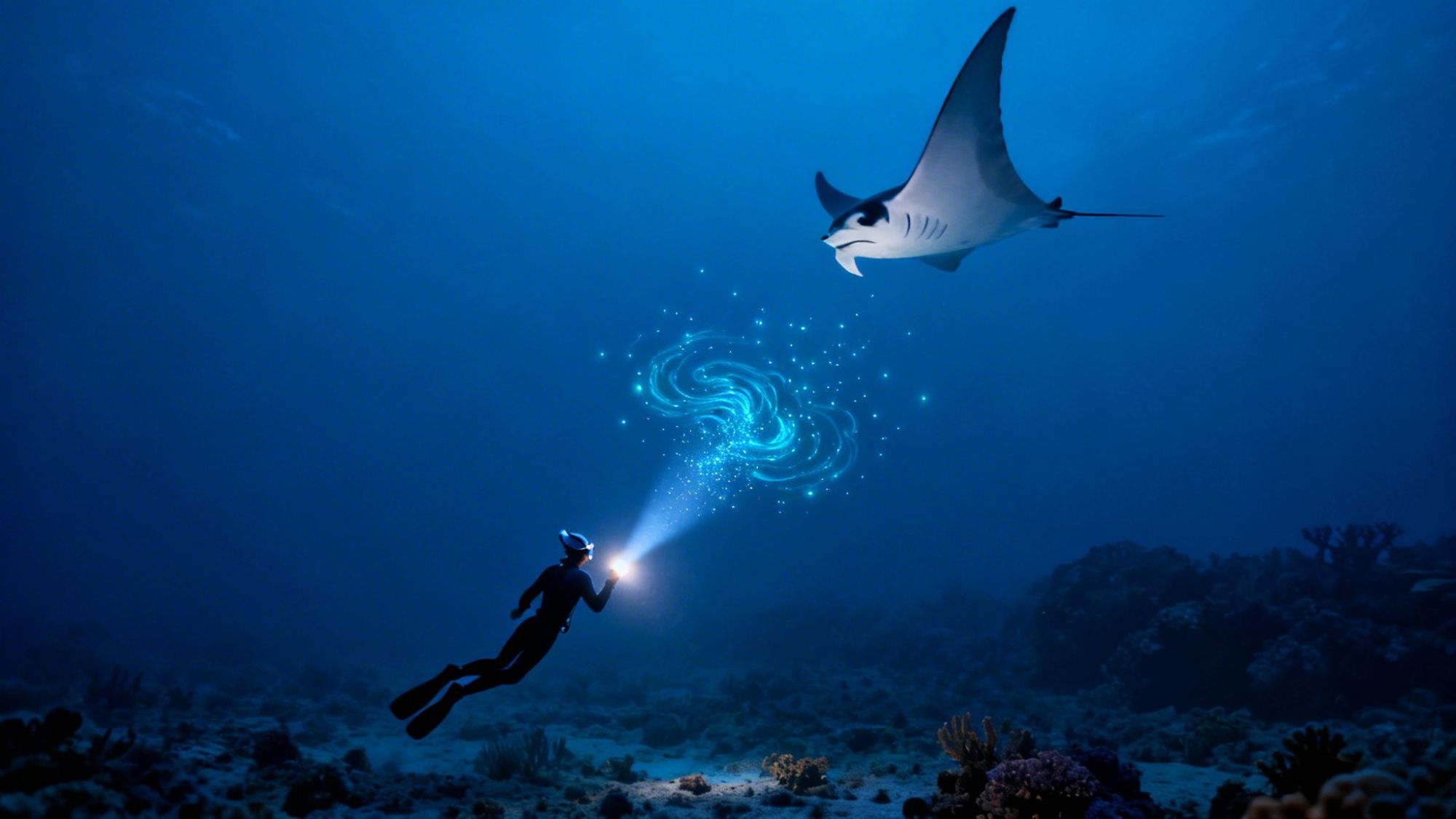
The manta ray night dive on the Big Island is one of those experiences people talk about for the rest of their lives. It's often called an underwater ballet, and honestly, that's the best way to describe it. This is easily one of the most reliable and truly magical wildlife encounters you can have anywhere on Earth.
As Hawaii's top-rated and most-reviewed snorkel company, Kona Snorkel Trips has had the privilege of sharing this with countless visitors. We’ve spent years out on this water, and we’re excited to give you the inside scoop on what makes it so special.
What's a Manta Ray Night Dive Really Like?
Picture this: you slip into the warm, dark Pacific waters off the Kona coast. Below you, a set of powerful lights illuminates a patch of the ocean floor, creating a brilliant stage in the deep blue. Then, out of the darkness, a massive, winged shadow emerges. It glides effortlessly through the light, sometimes just inches away. That’s the heart-pounding moment you’ve been waiting for—the silent, incredible dance that makes the manta ray night dive a world-famous adventure.

More Than Just a Dive
Trying to describe the feeling of watching these gentle giants is tough. You settle onto the sandy bottom, and suddenly you're front-row for one of nature’s greatest performances.
- The Big Reveal: The quiet moments before the first manta shows up are a mix of pure excitement and a strange sense of calm. You just wait and watch.
- Gentle Giants: These mantas, with wingspans that can stretch over 15 feet, perform these amazing barrel rolls as they feast on the tiny plankton drawn to the lights.
- The Best Seat in the House: Unlike snorkeling, diving gets you down on the ocean floor. This gives you a spectacular bottom-up view as these huge creatures soar right over your head. It’s a perspective you just can’t get any other way.
For most people, this isn't just another check on their scuba logbook. It feels like a real connection with one of the ocean’s smartest and most graceful animals. To see just how incredible their movements are, check out our guide on manta ray swimming behavior.
This experience is consistently ranked as one of the top night dives in the world. The combination of seeing mantas almost every time and their sheer elegance creates a memory you'll carry with you forever.
If you’re a certified diver, the manta ray night dive is an absolute must-do on the Big Island. For the best diving experience out there, we can't recommend Kona Honu Divers enough—they're the top rated & most reviewed diving company in both Hawaii and the Pacific Ocean. Their expert guides will make sure you have a safe and unforgettable trip. You can learn more about their manta ray diving tour page.
Why Kona is the World's Premier Manta Ray Destination
So, what makes the Kona coast the place on Earth for seeing manta rays? It’s not just random luck. It's a special mix of geography and biology that sets the stage for an incredible, reliable show almost every single night. This is why swimming with mantas on the Big Island is a bucket-list dream for so many people.
The Kona coast is naturally tucked away from the big, powerful swells of the open ocean. This creates calm, clear bays that are perfect for one thing: growing tons of microscopic plankton, the mantas' favorite food. With a constant food supply right here, our local manta population doesn't need to go anywhere else for dinner. They just hang out right along the coast.

Creating a Nightly Buffet
This whole thing actually started by accident decades ago. A hotel on the shore had its lights shining on the water, and those lights attracted swarms of plankton. The local mantas figured this out pretty quickly and learned that these bright spots were an easy, all-you-can-eat buffet.
Over the years, dive and snorkel companies like us have perfected this. We found a couple of prime spots where we could safely and consistently set up underwater lights to draw in the plankton.
These world-famous locations are:
- Manta Village: Tucked into the super calm and protected Keauhou Bay.
- Manta Heaven: A bit further north, near the airport, in a spot also known as Garden Eel Cove.
By lighting up the water in these exact places every night, tour operators basically ring a dinner bell that the mantas have learned to recognize. We're not chasing after wildlife; we're just setting the table and letting these magnificent animals come to us.
A Loyal Crowd and a Remarkable Population
This nightly routine has resulted in something pretty amazing that scientists call site fidelity. It means the very same manta rays come back to these exact spots, time and time again. It’s incredible.
Long-term research has identified over 300 individual reef mantas around Hawaiʻi Island since 1979. Some databases have even ID'd up to 450 different individuals right here at Kona's night dive sites! What's truly special is that many of these mantas have been showing up for 20 to 30 years. You're not just seeing a random manta; you might be meeting a local legend who’s been part of this nightly dance for decades.
The fact that these sightings happen so consistently has turned the manta ray night dive from just another tour into a world-famous natural spectacle. The relationship between the lights, the plankton, and the mantas is a beautiful thing to witness.
This deep connection the mantas have to these specific locations is why your chances of seeing them are just so high. Knowing this history makes the whole experience even more meaningful and is just one of many reasons people fall in love with Kona's underwater world. If you're looking for other amazing places to explore, check out our guide on Kona's best snorkeling destinations.
Dive or Snorkel: Choosing Your Manta Ray Adventure
So, how do you want to see the show? Will you be watching from the front row on the ocean floor, or from the VIP box at the surface? This is the first big decision you'll make: a manta ray night dive or a night snorkel. Both will absolutely blow your mind, but they're two totally different ways to experience the magic.

Diving gets you right into the heart of the action. You'll settle onto the sandy bottom, about 30-40 feet down, and simply look up. The feeling is unreal as these massive, graceful creatures glide, swoop, and do their famous barrel rolls right over your head. You’re not just watching; you're a part of their world.
Snorkeling, on the other hand, gives you this incredible bird's-eye view. You'll float comfortably on the surface, holding onto a specially designed light board. The mantas dance in the illuminated water just inches below you. It's just as thrilling and a fantastic option for just about everyone, no matter your experience level.
Manta Ray Dive vs Snorkel At a Glance
To help you figure out which is right for you, here’s a quick comparison. Think about your comfort in the water, whether you're dive-certified, and what kind of view you’re hoping to get.
| Feature | Manta Ray Night Dive | Manta Ray Night Snorkel |
|---|---|---|
| Perspective | Bottom-up view; mantas glide overhead. | Top-down, panoramic view; mantas swoop below. |
| Equipment | Full scuba gear (tanks, BCD, regulator). | Mask, snorkel, and wetsuit. |
| Requirements | Open Water Diver certification required. | Basic swimming ability and comfort in the water. |
| Proximity | Extremely close; you're on their level. | Extremely close; often within inches of the surface. |
No matter which you choose, you're in for an unforgettable night. For a deeper dive into the snorkel experience, check out our complete guide to Kona manta ray snorkel tours.
For Certified Divers
If you're a certified scuba diver, the manta ray night dive on the Big Island is something you absolutely have to do. There’s nothing quite like kneeling on the ocean floor and watching these gentle giants perform above you. It’s a bucket-list dive for a reason.
For this adventure, you can’t go wrong with Kona Honu Divers. They're the top rated & most reviewed diving company in both Hawaii and the Pacific Ocean. Their expert crew will make sure you have a safe and truly unforgettable dive.
Not a certified diver but curious about taking the plunge? An introductory course like Discover Scuba Diving is a great way to get your feet wet and see if it's for you.
For Snorkelers of All Levels
If you're not a diver or just prefer staying closer to the surface, the manta ray night snorkel is an absolutely phenomenal choice. It's perfect for families, couples, and solo adventurers alike. Here at Kona Snorkel Trips, we specialize in this experience, making sure you feel safe, comfortable, and get a front-row seat to the action.
You'll hang onto our custom-built floating light board, which acts like a dinner bell, attracting the plankton that the mantas love. This brings them right up to you for an effortless and mesmerizing show you’ll never forget.
How to Prepare for Your Manta Ray Encounter
A little preparation goes a long way toward having an incredible adventure. Knowing what to bring for your manta ray night swim on the Big Island will make sure you're comfortable, safe, and ready to soak in the experience. The best way to think about it is packing for two mini-trips: a cool dip in the ocean, followed by a breezy boat ride home under a sky full of stars.
Don't worry about the heavy-duty gear. Any reputable tour operator will provide the essentials like wetsuits, masks, and snorkels. For divers, this includes tanks, weights, BCDs, and regulators. You'll just need to pack a small bag with a few personal items to make everything go smoothly.

Your Pre-Tour Checklist
Here’s a quick rundown of what you’ll want to have with you for your tour:
- Arrive in Your Swimsuit: The easiest way to get ready is to wear your swimsuit under your clothes to the harbor. It makes gearing up on the boat so much faster.
- Towel and Dry Clothes: You will be so glad you brought a warm, dry set of clothes and a fluffy towel for the ride back to shore.
- Reusable Water Bottle: It’s always smart to stay hydrated, especially after you've been in saltwater.
While you'll have a wetsuit for the manta tour, getting the right gear is key for any water activity. You can find more of our favorite tips in our guide on what to wear for snorkeling.
Preventing and Managing Seasickness
Even on a calm night, the gentle rocking of the boat can leave some folks feeling a little green. Trust me, nothing sours an amazing experience faster than motion sickness, so it’s always a good idea to come prepared.
Luckily, there are plenty of effective options. The key is to take them before you get on the boat, since they work best as a preventative measure. Here are a few popular choices our guests have had luck with:
- Ship-EEZ Seasickness Patch: You just stick one behind your ear for long-lasting relief, and many people find they don't cause drowsiness.
- Dramamine pills: This is the classic, reliable choice for a reason—it works.
- Bonine pills: Known for its once-a-day formula that tends to be less drowsy than other options.
- Sea Band wristbands: A great drug-free option that uses acupressure on your wrists to help with nausea.
- Ginger chews: For a natural approach, these tasty chews can often help settle a queasy stomach.
Safety and Environmental Guidelines
Finally, part of being prepared means committing to being a good guest in the mantas' home. The single most important rule is simple: never, ever touch the manta rays.
These gentle giants are covered in a delicate mucus layer that works like their immune system. It’s vital for their health.
Touching a manta ray can strip away this protective coating, leaving them dangerously exposed to infections and diseases. Always listen to your guide and just float, watch, and be amazed. It's all about passive observation—look, but don't touch.
By following these simple guidelines, you'll be set for a comfortable, safe, and truly unforgettable night with Kona's majestic manta rays.
Making the Most of Your Manta Night Dive
Once you're in the water and the lights switch on, the real magic begins. The best thing you can do to make this unforgettable experience everything it can be is to simply relax. Just breathe, trust your guides, and let go. They’ve got all the logistics handled, so your only job is to watch the silent, graceful ballet happening all around you.
Try to let go of the need to do anything but observe. As you get comfortable in the water, focus on that feeling of weightlessness and the quiet hum of the ocean. This is how you get completely immersed in the moment, making the whole encounter feel more personal and awe-inspiring. If you find your mind racing, just bring your attention back to your breathing. It's a simple trick that also helps conserve your air.
More Than a Dive, It’s a Contribution
When you join a manta ray tour, you’re doing so much more than just having an adventure. You're becoming a vital part of a thriving ecosystem that includes conservation and local community support. Responsible manta tourism is actually a cornerstone of the Kona economy, proving that wildlife encounters can fuel both economic growth and environmental protection.
This natural wonder has a huge economic footprint. Roughly 80,000 people snorkel or dive with our mantas every year, generating over $10 million in annual revenue. The success rate is incredible, too, with operators reporting an 85–90% success rate for manta sightings. Your trip directly supports local jobs and gives the community a powerful reason to protect these magnificent animals and their home. You can learn more about the incredible impact from our friends at Manta Ray Advocates.
By choosing a reputable, safety-conscious operator, you become an active partner in manta ray conservation. The money from your tour helps fund critical research, education, and advocacy, ensuring these gentle giants continue to thrive for generations to come.
When you climb back on the boat, you’ll carry more than just a breathtaking memory. You’ll have the knowledge that your adventure made a real, positive difference.
For a truly exceptional manta ray night dive, we can’t recommend Kona Honu Divers enough—they are the top rated & most reviewed diving company in Hawaii and the Pacific. For an equally amazing snorkel experience, check out this tour page or Manta Ray Night Snorkel Hawaii, an exceptional alternative when looking for a Manta Ray night snorkel tour. And for anyone looking to build a little more confidence in the water beforehand, take a look at our guide on how to improve swimming endurance.
Got Questions About the Manta Ray Dive? We've Got Answers.
It's totally normal to have questions before you jump into the dark ocean to see giant, shadowy creatures. In fact, we get them all the time! Here are some answers to the most common things people ask, so you can feel confident and ready for your adventure.
Is the Manta Ray Night Dive Safe? What if I'm a Beginner?
Yes, it’s incredibly safe! It’s one of the first things people worry about, but you can relax. Manta rays are true gentle giants. They don’t have teeth, stingers, or barbs—they are here for one thing only: a big meal of plankton.
If you’re a certified diver, the manta ray night dive is considered one of the easiest dives you can do. You’ll mostly be kneeling on the sand in shallow water, usually around 30-40 feet, just watching the show above you.
For snorkelers, it's even simpler. You don’t need to be a superstar swimmer; if you're comfortable in the water, you're good to go. You'll hang onto a big, floating light board the whole time, so you can just float and watch without any effort. It’s a perfect setup for first-timers and families.
What Happens if We Don’t See Any Mantas?
This is a great question, because we are dealing with wild animals and there are never any guarantees. But honestly, it's pretty rare to get skunked on a manta trip.
The manta ray night dive on the Big Island has a ridiculously high success rate—somewhere between 85-90% all year long. On those few nights when the mantas decide not to show up, most good tour companies have what's called a "manta guarantee." It usually means you can come back and try again on another night for free.
Why Can’t I Touch the Manta Rays?
This is the golden rule, and it’s the most important one to follow for the health of the mantas. It might be tempting, especially when they glide so close, but touching them can cause serious harm.
Manta rays are covered in a special, slimy mucus layer. Think of it as their immune system. When a person touches them, it wipes off that protective slime and leaves their skin exposed to harmful bacteria and infections.
To keep these magnificent animals safe and healthy, every tour enforces a strict "look, but don't touch" policy. By just watching them, we make sure they stick around for many more years of incredible encounters.