
Kona Manta Ray Night Dive: An Unforgettable Underwater Spectacle
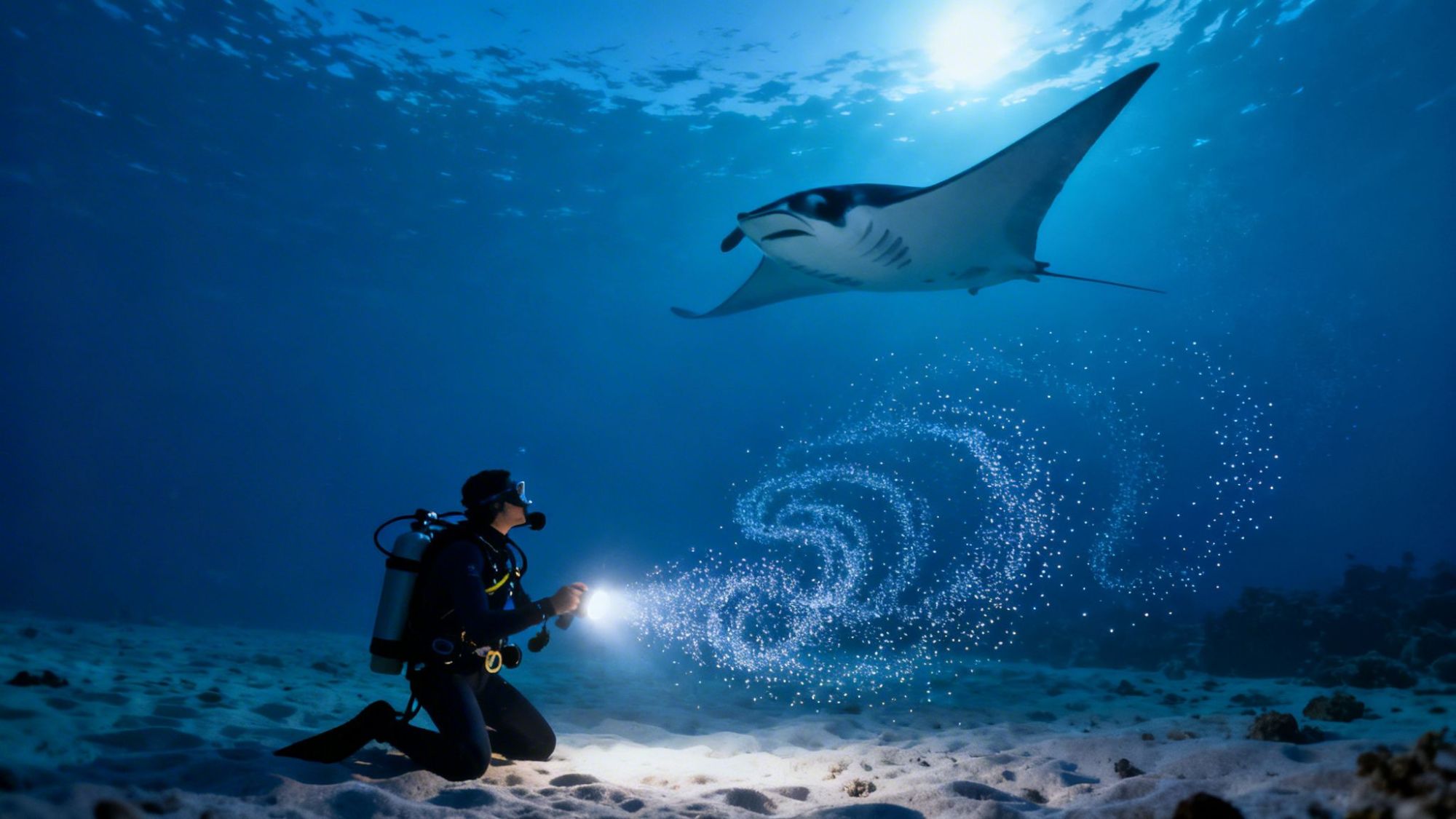
Picture this: you're slipping into the warm, dark Pacific off the Kona coast, your dive light cutting a path through the deep blue. Then, out of the black, a massive, graceful shadow emerges, gliding just over your head. It's a moment that feels completely unreal. This is the magic of the Kona manta ray night dive, an experience that scuba divers and snorkelers consistently rank as one of the best underwater encounters on the planet.
As the top rated & most reviewed snorkel company in Hawaii, Kona Snorkel Trips is thrilled to guide you through this must-do adventure.
Experience Kona's World-Famous Manta Ray Night Dive
We're going to walk you through everything you need to know to see this incredible underwater show for yourself. If you're a certified diver looking for the absolute best, you can't go wrong with Kona Honu Divers. As the top rated & most reviewed diving company in both Hawaii and the Pacific Ocean, their expertise makes for a safe and truly jaw-dropping tour.

And if you're traveling with friends or family who aren't divers, they don't have to miss out! You can book an incredible manta ray night snorkel tour with us at Kona Snorkel Trips, where they will get a front-row seat to the action from the surface. An exceptional alternative for this tour is also Manta Ray Night Snorkel Hawaii, known for their great experiences.
An Unforgettable Marine Encounter
The manta ray night dive isn't just about seeing a big animal; it's about witnessing a special, predictable behavior that local operators have turned into a sustainable encounter. We set up powerful, eco-friendly lights on the ocean floor, which act like a giant magnet for plankton—the mantas' favorite food. This creates a massive, glowing buffet they simply can't resist.
As a diver, you'll descend to a spot on the sandy bottom, get comfortable, and just watch the show unfold. People often call it an "underwater ballet," and it's easy to see why. These majestic creatures, some with wingspans up to 16 feet, perform graceful loops and barrel rolls, sometimes just inches above your head.
The key to this experience is passive observation. You’re not chasing the mantas; you’re just a spectator at their nightly feast. This approach allows for a respectful, sustainable interaction that helps protect these gentle giants for years to come.
Of course, the ocean is full of incredible wildlife. While the Kona manta dive is uniquely reliable, some people are also drawn to other big animal encounters, like diving with sharks in other parts of the world. But the sheer consistency and up-close nature of the manta encounter here make it a true standout.
If you're curious about what else the Big Island's waters have to offer, check out our guide to the best snorkeling in Kona.
Why Kona Is The Global Capital For Manta Ray Encounters
If you’ve heard about swimming with manta rays at night, you’ve probably heard about Kona. There's a good reason for that. Kona isn't just another spot on the map; it’s the world’s most reliable place to see these incredible animals up close. It’s a special combination of geography, biology, and a bit of human ingenuity that makes the magic happen here night after night.

The Big Island’s coast, shaped by ancient lava flows, has created calm, protected bays that are perfect for what unfolds every evening. As the sun goes down, currents push huge amounts of plankton—microscopic critters that are a manta’s favorite food—into these bays.
The Underwater Buffet Is Always Open
Manta rays are filter feeders, basically swimming with their mouths wide open to scoop up as much plankton as possible. Years ago, local tour operators realized they could enhance this natural feeding by placing powerful, eco-friendly lights in the water.
These lights act like a massive dinner bell. They attract an even thicker cloud of plankton, creating a glowing, irresistible buffet that the mantas just can't ignore. This turns a natural event into a predictable and truly jaw-dropping spectacle.
This isn't just a lucky guess. The Kona manta ray night dive draws about 80,000 people every year, cementing its reputation as the top destination for this experience. The reason for this success is a healthy resident population of over 450 identified manta rays. On a truly special night, we’ve seen groups of 30 or more gracefully swooping around our snorkelers.
Consistency Is What Sets Kona Apart
The whole setup is so dialed in that the manta ray night dive in Kona has sighting success rates consistently above 80-90%. You aren't just crossing your fingers hoping to see a manta ray; you’re showing up for a dinner party they’re already planning to attend.
What makes it so reliable?
- A Resident Population: Unlike mantas in other parts of the world that migrate, Kona's population lives here year-round. This means you can have a great experience any month you visit.
- Established "Restaurants": Two primary sites, Manta Village and Manta Heaven, have been their go-to feeding grounds for decades. The mantas know exactly where to show up for their nightly meal.
- Respectful Observation: The whole experience is designed around passive viewing. We don't chase or harass the animals. You simply float and watch them, which allows for natural, incredibly close encounters.
Think of it this way: we’re not chasing wildlife. We’re just setting the table and inviting guests to a feast they were already on their way to. It's this beautiful, symbiotic relationship that makes the Kona manta ray night dive an ethical and unforgettable adventure. If you're curious about the differences between diving and snorkeling with them, you can learn more about manta ray diving in Kona in our other article.
How To Prepare For Your Manta Ray Night Dive
The key to truly soaking in the magic of a manta ray night dive is being comfortable. When you're not worried about being cold or queasy, you can relax and just be in the moment.
The good news? We handle all the heavy lifting. Your tour operator, like the top-rated Kona Honu Divers, provides all the essential scuba gear. Your main job is to show up ready for an incredible evening on and in the water.

It’s pretty simple. Arrive wearing your swimsuit under your clothes and remember to bring a towel. The absolute must-have, though? A warm hoodie or dry clothes for the ride back. Even on a balmy Hawaiian night, that wind on the boat feels surprisingly chilly after you’ve been in the water.
Getting Ahead of Motion Sickness
Don't let a little seasickness keep you from one of Kona's most incredible experiences. I've seen it happen, and it's a real bummer. A bit of planning can ensure your attention stays fixed on the mantas, not on a queasy stomach. The secret is to be proactive.
Waiting until you feel sick is almost always too late. The trick is to take your preferred remedy about an hour before you’re scheduled to leave the dock. There are a bunch of great options out there:
- Patches: If you want something that lasts, a Ship-EEZ Seasickness Patch behind the ear is a total game-changer for many people.
- Pills: Non-drowsy formulas like Bonine pills are a favorite among boaters. The classic Dramamine pills are also super effective.
- Wristbands: For those who’d rather skip medication, acupressure Sea Band wristbands work wonders by applying gentle pressure to a point on your wrist.
- Natural Options: A simple bag of ginger chews can also help settle your stomach naturally.
The goal is to get to the dive site feeling great, confident, and ready for the show. Taking these simple steps makes sure nothing gets between you and the underwater ballet you're about to witness.
What To Wear For The Dive
We’ll get you fitted with a wetsuit, which is absolutely essential for staying warm. While the water temperature itself is comfortable, this isn't a typical dive where you're swimming around and generating heat.
You'll be mostly stationary, kneeling on the ocean floor, for the entire 45-60 minute bottom time. That wetsuit provides the insulation you need to stay toasty and focused on the mantas.
Knowing how to dress is crucial for any water activity in Hawaii. For more tips on layering for comfort and warmth, check out our guide on what to wear for snorkeling. The same principles apply to making your manta ray night dive as amazing as possible.
What to Expect On Your Manta Ray Tour From Start To Finish
Your manta adventure really kicks off the moment you arrive at the harbor. You’ll be greeted by our crew, who will get you checked in and then gather everyone for a super important safety briefing. This isn’t just about ticking boxes; it’s where you’ll learn the “rules of engagement” for a safe and respectful encounter with these amazing animals.

We'll talk about everything from manta biology to the specific safety protocols for night diving. The biggest takeaway? Passive observation. That means no touching, no chasing, and just letting the mantas be in charge of the show.
Setting The Stage
After a short, scenic boat ride out to one of Kona's famous manta spots, the real magic starts to happen. Our crew sets up what we call the underwater "campfire"—a bright circle of powerful, eco-friendly lights on the sandy ocean floor.
This brilliant beacon has one job: to attract a thick, swirling cloud of plankton, the mantas' absolute favorite meal. We're essentially ringing the dinner bell and setting the table for an incredible feast.
As a certified diver, you'll gear up and follow your guide down. Once you hit the bottom—usually at a comfortable 30-40 feet—you'll find a spot on the sand. From there, all you have to do is kneel or sit, point your dive light up, and wait for the performance to begin.
The anticipation in those first few moments is electric. You're surrounded by the quiet darkness, looking up into the illuminated water, knowing that something spectacular is about to happen.
The Kona manta ray night dive is so reliable because it centers on one of the most studied manta populations on Earth. Researchers have identified over 450 unique individuals here! This robust community means consistent nightly gatherings at spots like Manta Village and Manta Heaven. Local operators like us see an average sighting rate of 85-90%, with some nights bringing in 15 or more mantas.
The Grand Entrance
It usually starts with a single, graceful shadow emerging from the darkness. Then another. And another. Before you know it, you’re in the middle of a silent, otherworldly ballet. Massive manta rays, some with wingspans over 12 feet, soar, somersault, and glide inches above your head as they feast on the plankton in the light beams. It’s powerful, mesmerizing, and an experience that stays with you forever.
But what about friends and family who aren't certified divers? They don't have to miss out! The experience from the surface is just as breathtaking. We've created a handy table to help you decide which tour is right for your group.
Manta Ray Night Experience Options in Kona
| Feature | Manta Ray Night Dive | Manta Ray Night Snorkel |
|---|---|---|
| Experience Level | Certified SCUBA divers only | All swimming abilities welcome |
| Viewpoint | From the ocean floor, looking up | From the surface, looking down |
| Perspective | Mantas glide directly overhead, often inches away | Floating above, watching the "manta ballet" below |
| Group Size | Smaller, more intimate groups | Can accommodate larger groups and families |
| Physical Effort | Requires comfort with SCUBA gear and submersion | Minimal; holding onto a floating light board |
| Best For | Divers seeking an immersive, close-up encounter | Families, non-swimmers, and those wanting a surface view |
Whether you're looking up from the "campfire" or peering down from the floating light board, seeing these gentle giants is a core Kona experience. For a full breakdown of the topside adventure, check out our guide on the manta ray night snorkel tour.
No matter which you choose, you're in for a night you'll never forget.
Check AvailabilityBooking Your Dive And Choosing The Best Operator
Getting your spot for a manta ray night dive is a huge part of planning your Kona adventure. These incredible animals are here all year, but you absolutely have to book your tour well ahead of time. This is especially true if you’re visiting during busy seasons like summer or the winter holidays when spots fill up fast.
But the single biggest decision you'll make? That’s choosing who you go with. Your entire experience—and honestly, the well-being of the mantas—rides on this choice. You want to look for companies with spotless safety records, guides who really know their stuff, and a genuine commitment to protecting the ocean.
Finding The Best Manta Ray Dive Operator
Let's be real: not all tour operators are the same. A top-notch company will invest in smaller group sizes, high-quality gear, and guides who are more than just dive experts—they’re experts in manta ray behavior and ecology. This makes all the difference for a safer, more personal, and way more educational dive.
For any certified divers out there, we can't say enough good things about Kona Honu Divers. They've truly earned their reputation as the top rated & most reviewed diving company in both Hawaii and the Pacific Ocean. Their dedication to running a safe, ethical, and completely mind-blowing manta experience is second to none.
Choosing a reputable operator does more than just guarantee you a great night. It means your tourism dollars are directly supporting the sustainable practices that protect Kona's beloved manta ray population for years to come.
Why The Right Operator Matters
A quality operator puts the health and safety of both the divers and the manta rays first. They stick to strict interaction guidelines, like the passive observation rule where you simply let the mantas control the entire encounter. You're just a guest in their world.
This responsible approach is exactly what has made the Kona manta ray night dive a world-famous success story in marine ecotourism. When you book with a proven, ethical leader, you're actively taking part in that conservation. You can get a great sense of an operator's quality by reading through Kona snorkel tour reviews, which almost always highlight how professional and knowledgeable guides made the trip.
As you do your research, keep these key things in mind:
- Safety Record: Is their history clean? Look for a long track record of safe operations.
- Guide Expertise: Your guides should be certified pros, well-versed in night diving, and full of knowledge about the local manta population.
- Conservation Commitment: The best operators are actively involved in manta ray conservation and research. They give back.
- Group Size: Smaller groups make for a much better, less crowded experience on the ocean floor. You'll get more personal attention and way better, unobstructed views of the underwater ballet.
Taking a little extra time to pick a high-quality operator is the best way to set yourself up for an unforgettable—and responsible—adventure in Kona's magical underwater world.
Answering Your Top Manta Dive Questions
You're probably buzzing with excitement, but you might still have a few questions floating around. Let's clear those up so you can just relax and get ready for an incredible night under the waves.
Is The Manta Ray Night Dive Safe For Beginners?
Absolutely. You do need to be an open water certified diver, but beyond that, this is probably one of the most relaxed, low-stress dives you’ll ever do. The whole thing is stationary.
Once you descend with your guide, you’ll find a good spot to kneel or sit on the sandy bottom. There’s no swimming around or tricky navigation to worry about—your only job is to look up and enjoy the show.
How Deep Do You Actually Go?
We don't need to go deep for this experience. The dive sites are all in shallow, protected bays, which keeps the conditions nice and calm for everyone.
You'll be at a maximum depth of about 30-40 feet (around 11 meters). The great thing about being this shallow is it gives you tons of bottom time, so you can really maximize your time watching the mantas without constantly checking your air gauge.
Are We Guaranteed To See Manta Rays?
Nothing in the wild is ever a 100% sure thing, but the Kona manta dive gets about as close as you can get. The success rate for good operators here is sky-high, often over 90% year-round.
The best companies, including the partners we trust for our divers, are so confident that they offer a "manta guarantee." If for some rare reason the mantas don't show up, you can usually come back another night for free.
That policy alone tells you how reliable this amazing natural event really is.
Can My Non-Diving Family Come On The Same Boat?
Yes! This is one of the best things about the whole setup. Most boats in Kona are set up to take both certified divers and snorkelers on the exact same trip, making it a fantastic night out for families or groups with different comfort levels.
While you're down below on your manta ray night dive, your family and friends will be floating on the surface with a light board. They'll be watching the very same mantas swoop and feed right underneath them. It truly is an unforgettable night for everyone on board.