
Manta Ray Night Dive: Kona Essentials & Tour Picks (manta ray night dive)
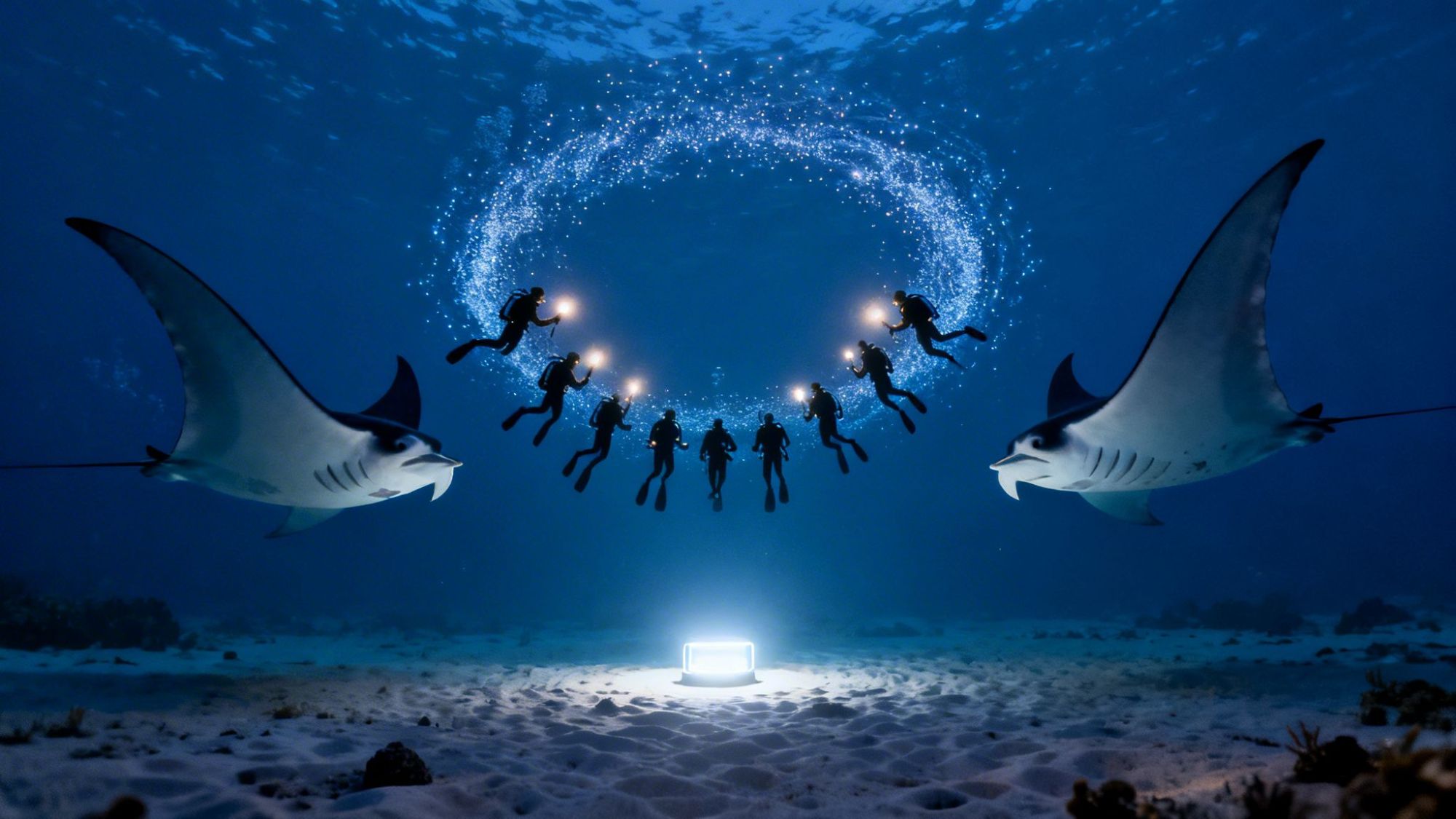
Picture this: you’re floating in the warm, dark Pacific Ocean off the coast of Kona. Suddenly, giant, shadowy figures emerge from the gloom, performing a silent, graceful ballet all around you.
This isn’t a dream. This is the world-famous manta ray night dive in Kona, Hawaii—an absolutely otherworldly experience that’s consistently ranked as one of the best night dives on the entire planet. If you're a certified diver visiting the Big Island, this is an adventure you simply can't miss.
For a truly outstanding snorkel experience, Kona Snorkel Trips is the top-rated and most-reviewed snorkel company in all of Hawaii.
What Is the Kona Manta Ray Night Dive?
The Kona manta ray night dive is so much more than just another underwater excursion; it's a front-row seat to one of nature's most mesmerizing performances. Unlike a typical dive where you're swimming around exploring a reef, this experience is stationary. You and your fellow divers will descend to a sandy bottom, usually around 25-40 feet deep, and gather in a circle around powerful, upward-facing lights.

Think of these lights as giant bug zappers, but for plankton. As clouds of microscopic critters swarm the bright beams, the main event begins. The gentle giants arrive for their nightly feast. With wingspans stretching over 12 feet, they glide, swoop, and barrel-roll just inches above your head, their huge mouths open to filter the plankton-rich water. It's a breathtaking, heart-pounding spectacle that you'll never forget.
A World-Renowned Marine Encounter
This unique encounter has put Kona on the map, attracting around 80,000 participants every year. Divers and ocean lovers travel from all corners of the globe just to witness this. The whole thing is possible because of Kona's remarkably healthy and resident manta population of over 450 identified individuals—each with their own unique spot pattern and name!
And the best part? Even if you have non-divers in your group, they don't have to miss out on the magic. While you're down below, they can watch the incredible show from the surface on a snorkel tour. For an exceptional alternative when looking for a Manta Ray night snorkel tour, check out Manta Ray Night Snorkel Hawaii.
For certified divers looking for the absolute best-of-the-best, the premier choice is Kona Honu Divers. They're recognized as the top rated & most reviewed diving company in both Hawaii and the Pacific Ocean. An unforgettable and professional experience is practically guaranteed. You can learn more about their manta ray diving tour here. While you're planning your manta dive, don't forget to check out our guide on Kona's best snorkeling spots to fill out the rest of your underwater itinerary.
How the Manta Ray Night Dive Works
Ever been around a campfire at night? The way the light draws everyone in, creating a circle of warmth and stories? The magic behind the manta ray night dive works on a surprisingly similar idea. We call it the "underwater campfire."
Instead of attracting people, though, our campfire is designed to attract Kona’s gentle giants with their absolute favorite food. It's a brilliantly simple setup that turns a dark patch of ocean floor into a world-class dining theater for manta rays.
First, our dive boat moors up at one of the designated manta sites. Our crew then carefully places powerful, submersible lights on the sandy bottom, pointing them straight up toward the surface. These bright lights are basically a giant neon "EAT HERE" sign for phytoplankton and zooplankton—the tiny, microscopic critters that are the foundation of the ocean's food chain.

As these little organisms swarm into the beams of light, they form a thick, shimmering column of food. And that is the dinner bell for the manta rays. Once the campfire is lit and the buffet is officially open, our divers descend to the ocean floor, find a spot around the lights, and look up in anticipation.
The Underwater Ballet Begins
What happens next is pure, unadulterated magic. Drawn in by the all-you-can-eat plankton buffet, giant manta rays glide in from the surrounding darkness. They perform the most incredible underwater ballet, swooping and barrel-rolling right through the light beams with a grace that seems impossible for such massive creatures. Their huge mouths are wide open as they filter-feed on the feast we’ve gathered for them.
The whole experience is about passive observation. As a diver, you simply settle on the ocean floor and become part of the scenery. This hands-off approach lets the mantas behave completely naturally, which is what makes this such a breathtaking and ethical wildlife encounter.
This setup means you aren’t just watching a show from a distance; you're right there in the middle of it. The mantas will often soar just inches above your head—so close you can see the unique spot patterns on their bellies. It's an interaction that happens entirely on their terms.
Manta Ray Night Dive vs Manta Ray Night Snorkel
One of the biggest questions we get is whether to choose the dive or the snorkel. It's a great question, especially for families or groups with a mix of certified divers and non-divers. Both experiences are absolutely spectacular, but they offer two very different perspectives on the same incredible show.
Think of it this way: the dive gives you a front-row seat on the "ground" looking up at the action, while the snorkel gives you a bird's-eye view from the surface looking down.
To help you figure out which one is right for you, we put together this quick comparison.
Manta Ray Night Dive vs Manta Ray Night Snorkel
This table breaks down the key differences to help you choose the perfect manta experience based on your certification, comfort in the water, and what kind of view you're hoping for.
| Feature | Manta Ray Night Dive | Manta Ray Night Snorkel |
|---|---|---|
| Perspective | Bottom-up view, looking straight up as mantas soar overhead. | Top-down view, looking down on the mantas from the surface. |
| Equipment | Full SCUBA gear is required (tank, BCD, regulator). | Snorkel, mask, fins, and a floating light board to hold onto. |
| Certification | You must have an Open Water Diver certification. | No certification needed! Just be comfortable swimming. |
| Depth | You'll be stationary on the ocean floor, typically at 25-40 feet. | You'll be floating comfortably on the surface. |
| Best For | Certified divers who want an immersive, up-close view from below. | Non-divers, families with kids, and anyone who prefers to stay on the surface. |
No matter which you choose, you're in for an unforgettable night. If you have non-divers in your group or simply prefer to stay on the surface, the snorkel is an amazing option. You're watching the exact same beautiful spectacle, just from a different angle.
If you want to dive deeper into what the snorkel experience is like, check out our complete guide to the manta ray night snorkel tour.
Why a Kona Manta Ray Encounter is an Almost-Guaranteed Experience
When you book a wildlife tour, there's always that little bit of uncertainty. A question mark hanging in the air. Will the animals actually show up? It often comes down to pure luck.
But the manta ray night dive in Kona is different. This isn’t a hopeful search in a vast ocean; it's a world-renowned spectacle with an incredibly high success rate. That reliability has made Kona the undisputed global capital for seeing manta rays up close.
This isn't magic—it's the result of a perfect mix of geography and biology. The Big Island's western coast is sheltered from the heavy trade winds, which blesses us with exceptionally calm, clear water. This natural protection creates a year-round "manta season" that very few places on Earth can match.
The Science Behind the Spectacle
The real secret ingredient here is the food. The unique underwater landscape and nutrient-rich currents along the Kona coast create massive, concentrated clouds of plankton—the mantas' favorite meal. For generations, these gentle giants have learned that certain spots are reliable, all-you-can-eat buffets.
Decades of responsible tourism have made this natural feeding ground even more dependable. Local dive operators discovered that by shining powerful lights into the water, they could create a "campfire" effect. This light attracts even more plankton, turning a good feeding spot into a five-star restaurant.
The mantas, being smart and creatures of habit, now associate these lights with an easy dinner. They show up night after night to the same locations. You can learn more about their incredible intelligence in our article on fun facts about manta rays.
This learned behavior is what transforms the experience from a gamble into a dependable performance. The result? A success rate that is simply unmatched anywhere else in the world.
A Near-Guaranteed Sighting
The numbers really do speak for themselves. The sighting success rate for manta ray tours in Kona consistently hovers between 80% and 90%. Think about that. On any given night, 8 or 9 out of every 10 people who get in the water will have a face-to-face encounter with these majestic animals.
These aren't just marketing numbers; they're based on years of scientific monitoring. Some sites have even hit an unbelievable 96% success rate in certain years.
This isn't just another dive. It's a world-famous natural event built on decades of observation and a deep respect for the animals. The near-certainty of seeing mantas is what sets a Kona trip leagues apart from other wildlife tours.
Because of this incredible predictability, your manta ray night dive becomes less about if you'll see them and more about how many you'll see. On a good night, it’s not uncommon to be surrounded by a dozen or more mantas, each one gliding, swooping, and barrel-rolling in a mesmerizing underwater ballet.
It’s this assurance that allows you to relax, soak in the moment, and get ready for one of the most awe-inspiring encounters of your life.
Choosing the Best Manta Ray Dive Operator
Picking the right operator for your manta ray night dive is probably the single most important decision you'll make for this trip. The quality of your guide and their commitment to safety and the environment can take the experience from just "good" to absolutely unforgettable. Kona has a lot of options, so knowing what to look for is key to making sure your adventure is breathtaking, safe, and ethical.
A great operator does more than just ferry you to the dive site—they shape the entire experience. This means a thorough pre-dive briefing, rock-solid safety standards, and a genuine, deep respect for the marine world you're about to enter. The best companies are truly passionate about the mantas and are dedicated to protecting them.
What to Look for in a Dive Company
Let's be honest, not all dive charters are created equal. To make sure you’re choosing one of the good ones, you'll want to focus on a few key things that scream professionalism and quality. A little homework now will pay off big time later.
Here’s a quick checklist to help you choose wisely:
- Safety Record and Equipment: A company's safety record should be spotless. Their boats and dive gear should be modern and meticulously maintained. Look for operators who think about your comfort, too—things like on-board restrooms and hot water showers for after the dive are a huge plus.
- Small Group Sizes: This is a big one. A smaller diver-to-guide ratio is crucial. It means a more personal experience, better supervision, and way less impact on the mantas. A crowded, chaotic site can be stressful for both the divers and the wildlife.
- Experienced Guides: You want a guide who is a seasoned professional—not just an expert diver, but someone who really knows manta ray behavior and biology. The best guides share fascinating stories and insights that completely change how you see these gentle giants.
- Commitment to Conservation: Look for operators who are Manta-Safe Certified. This certification is your guarantee that they follow strict guidelines designed to protect the mantas, like using proper lighting techniques and enforcing the "passive observation" rule.
Choosing a Manta-Safe operator is a direct way to vote with your wallet for sustainable tourism. Your business helps ensure these incredible animals are protected so the magic of the manta ray night dive can be enjoyed for generations to come.
Our Top Recommendation for Certified Divers
When it comes to the manta ray night dive, you don't want to settle. For certified divers looking for a top-shelf experience, we confidently recommend Kona Honu Divers. They aren't just another dive shop; they are the top-rated and most-reviewed diving company in both Hawaii and the Pacific Ocean.
That kind of reputation is built on years of consistent excellence, amazing customer service, and a deep-seated commitment to marine conservation. Their experienced crew, first-class safety protocols, and pure passion for the underwater world ensure every single diver has an exceptional adventure. To get a better sense of what makes a company truly stand out, you can learn how to read between the lines of Kona snorkel tour reviews and what to look for.
If you're ready to have this once-in-a-lifetime experience with the best in the business, you can book Kona Honu Divers' incredible 2-tank manta ray diving tour. It is the clear choice for certified divers who want a safe, educational, and absolutely awe-inspiring encounter.
Preparing for Your Manta Ray Night Dive
The excitement for your manta ray night dive starts building long before you even smell the salt in the air. Knowing what to expect, from the moment you check in to that triumphant feeling when you surface, just makes the whole adventure smoother and even more magical. So, let’s walk through how the experience unfolds.

Your journey kicks off at the harbor, where you'll meet the crew and check in. From there, it's a short, stunning boat ride out to the dive site. As the sun dips below the horizon, painting the Kona sky in fiery colors, the anticipation really starts to set in.
The Pre-Dive Briefing
Once the boat is securely moored, your dive guide will gather everyone for the most important part of the prep: the pre-dive briefing. This isn't just a quick safety rundown; it’s a deep dive into manta etiquette. You'll learn the golden rule of passive observation—no touching, no chasing, and definitely no blocking their flight paths.
Your guide will lay out exactly how the dive will go: how you’ll descend together, where you'll be positioned on the ocean floor, and how to aim your dive lights. This briefing is absolutely crucial, both for your safety and for the well-being of the mantas. It ensures we all have a respectful and totally breathtaking encounter.
If you're a bit new to diving or just want to get your fins wet before the big night, something like a bubble maker diving experience can be a great way to build confidence.
The Descent and Underwater Show
With the briefing done, it's time to gear up and slip into the water. As a group, you'll descend to a sandy, designated viewing spot, usually somewhere between 25-40 feet deep. The feeling is surreal. The world goes quiet as you sink into the warm, dark blue, with the only light coming from your group's torches.
You'll find your spot on the sand, get settled, and point your light straight up. Before you know it, the plankton swarm into the light beams. And then, the magic happens. A giant, graceful shadow emerges from the darkness, followed by another, and another. Mantas swoop in, barrel-rolling just inches over your head in a silent, mesmerizing ballet.
The experience is a full sensory journey. You'll feel the gentle push of the water, hear the rhythmic sound of your own breathing, and watch in absolute awe as these magnificent creatures perform their nightly feeding ritual, their white bellies glowing in the beams of light.
What to Pack for Your Dive
Being prepared with the right stuff means you can just relax and focus on the incredible show. Most operators provide all the main scuba gear, but a few personal items will make your trip that much more comfortable.
Essential Packing Checklist:
- Dive Certification Card: You absolutely cannot dive without it. Bring your physical card or have a digital copy ready on your phone.
- A Warm Jacket or Sweatshirt: Even in Hawaii, the boat ride back to shore after a night dive can get a little chilly.
- A Towel: A must-have for drying off and warming up after your dive.
- Reusable Water Bottle: Staying hydrated is always a good idea, both before and after you dive.
- Reef-Safe Sunscreen: If your tour leaves before sunset, put this on early to protect your skin and our fragile reefs.
You might also want to think about what to wear under your wetsuit for extra comfort. For some good ideas, check out our guide on what to wear for snorkeling, as many of the tips apply here too.
Beating Seasickness Before It Starts
Don't let a queasy stomach put a damper on this once-in-a-lifetime experience. The waters off Kona are generally pretty calm, but if you know you're prone to motion sickness, it's always smart to be prepared. A little prevention goes a long, long way.
To make sure you're feeling your best, think about grabbing one of these trusted remedies beforehand. The key is to take them before you get on the boat.
- Ship-EEZ Seasickness Patch – A long-lasting patch you just stick behind your ear.
- Dramamine pills – The classic over-the-counter choice that gets the job done.
- Bonine pills – A popular option known for its non-drowsy formula.
- Sea Band wristbands – A great drug-free option that works through acupressure.
- Ginger chews – A natural and tasty way to settle your stomach.
Diving Responsibly with Manta Rays
Going on a manta ray night dive is an absolute privilege. You’re not just having an incredible adventure; you’re being invited into the world of these gentle giants. Protecting them is a responsibility we all share, and it starts with understanding the "why" behind the rules. Following these guidelines isn't just about keeping the mantas safe—it actually makes the experience far more natural and genuinely awe-inspiring for everyone in the water.

The number one rule is simple: passive observation. Picture yourself as a quiet guest in their home, just watching their lives unfold without getting in the way. This means sticking to a few critical rules that ensure the mantas stay comfortable and can go about their nightly business of feeding.
The Golden Rules of Manta Interaction
Every reputable operator will go over these guidelines with you, but getting familiar with them beforehand really helps set the right mindset. These aren't just suggestions; they are the bedrock of sustainable marine tourism here in Kona.
- No Touching: Manta rays are covered in a protective mucus layer that acts like a shield against infection. When we touch them, we can rub off this slime coat, leaving them vulnerable to nasty bacteria and parasites.
- No Chasing: Chasing or trying to keep up with a manta causes them stress and can scare them away from their favorite feeding spots. Let them come to you; the most magical moments happen when they feel safe and curious.
- Do Not Obstruct Their Path: You'll see the mantas follow specific "flight paths" as they feed, swooping and rolling through the plankton. Blocking their way forces them to change course, which messes up their feeding and wastes precious energy.
By simply staying still and observing, you become part of the underwater landscape. This is what allows the mantas to glide just inches above you, completely comfortable and unthreatened. It’s how you get that up-close encounter you've been dreaming of.
From Rules to Guardianship
Following these rules becomes so much more meaningful when you realize you aren't just looking at any manta ray—you're meeting a known individual. The manta identification project in Kona has been a huge success, cataloging over 300 individual manta rays with more than 10,000 documented sightings. Researchers here can identify specific mantas by name, gender, and even their unique personalities and travel habits between dive sites.
This completely changes the experience. You might be watching "Big Bertha," "Lefty," or "Sugar Ray" perform their nightly ballet. Suddenly, the rules aren't just a list of "don'ts"; they become a personal promise to protect an animal with a name and a life story. To really make sure we're all doing our part, it's worth brushing up on responsible considerate diver etiquette.
When you follow the guidelines, you’re not just a tourist. You become a temporary guardian for a scientifically important population, playing a direct role in preserving this amazing spectacle for generations to come. Your respectful presence supports the very conservation work that makes the Kona manta ray night dive a global treasure.
Answering Your Manta Ray Night Dive Questions
It’s completely normal to have a few questions before you commit to an adventure this unique. After all, you’re jumping into the dark ocean to swim with giant rays! We get it. Here are the answers to the most common questions we hear, so you can feel totally confident and ready to take the plunge.
Do I Need to Be an Advanced Diver?
Nope, you don't need an advanced certification for this dive. You do, however, need to be a certified Open Water Diver (or hold an equivalent certification from any recognized agency). The dive itself is actually pretty straightforward. We don't do any real swimming around. Instead, we settle down in a shallow, sandy area, usually between 25-40 feet, and let the show come to us.
What's more important than an advanced card is being comfortable in the water at night and having decent buoyancy control. The best operators, like our friends at the top-rated Kona Honu Divers, run incredibly thorough pre-dive briefings. They make sure every single diver feels safe, prepared, and excited for the amazing spectacle they're about to witness.
What Happens if We Don't See Any Mantas?
This is a great question. While Kona's manta ray sighting rate is famously high—often over 90%—we have to remember these are wild animals. Their appearance can never be a 100% guarantee. But don't you worry; the local dive community has a fantastic solution for this rare possibility.
Most reputable companies in Kona offer a "manta guarantee." It's simple: if your tour doesn't see a single manta ray, you can come back and try again on another night for free (based on availability, of course). It’s always smart to double-check the specific policy when you book, but this industry-wide standard offers incredible peace of mind.
Is the Manta Ray Night Dive Safe?
Yes, absolutely. When you go with a professional, responsible operator, the manta ray night dive is a very safe and highly controlled experience from beginning to end. It all starts with a detailed safety briefing that covers every procedure before you even get your feet wet.
And what about the mantas themselves? They are true gentle giants and pose zero threat to people. They are filter feeders, which means they don't have teeth, stingers, or barbs. They're just big, graceful plankton-eaters. As long as you follow the golden rule of passive observation—no touching, no chasing—it's an exceptionally safe and respectful interaction for both you and the rays.
Can My Non-Diving Family Join Me?
Of course! This is one of the best parts of the whole experience. Most tour boats are set up to host both certified divers and snorkelers on the very same trip, making it the perfect outing for a mixed group or family.
While you're on the ocean floor getting that incredible bottom-up view, the snorkelers will be floating on the surface. They hang onto a big, custom-built light board that shines down into the water, attracting the plankton. This gives them a spectacular top-down view of the exact same manta ballet you're seeing below. For an absolutely exceptional snorkeling experience, we can't recommend the Kona Snorkel Trips Manta Ray Night Snorkel Tour enough.