
Manta Ray Diving Kona: The Ultimate 2026 Guide
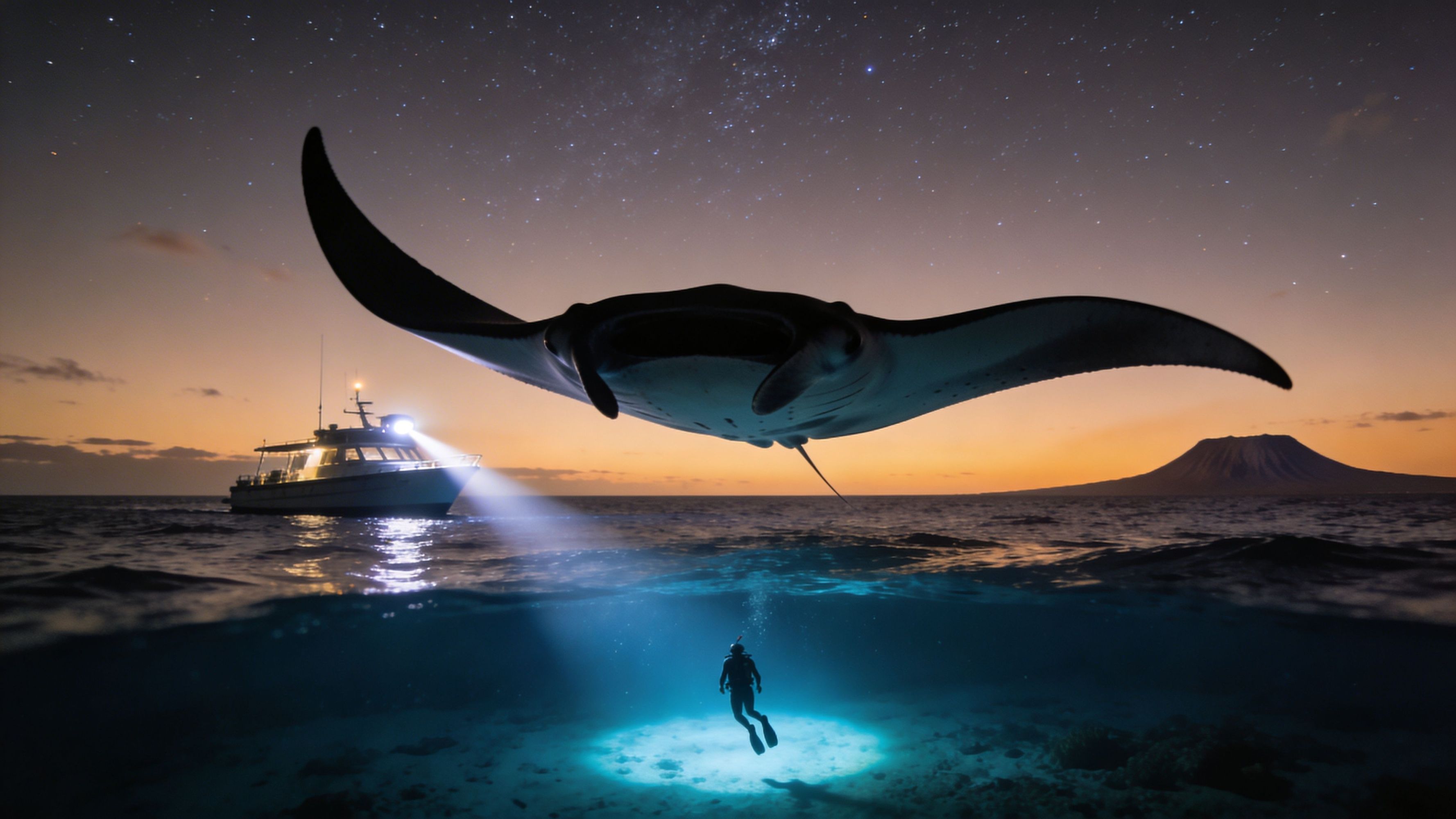
The first time you see a manta ray rise out of the dark, the whole boat goes quiet. One pass becomes three, then a guest who started the trip nervous is laughing into their snorkel because a giant ray is looping through the light inches below.
An Unforgettable Night with Gentle Giants
Night ocean trips make some people tense up. That’s normal. Then you slip into warm Kona water, look down into the glow, and the nerves fade fast.

The scene feels staged. The sky is dark, the ocean surface is often calm, and the lights below create a bright circle where the show happens. A manta appears at the edge of that light, banks hard, and glides across the beam with its mouth open, feeding as if it has done this performance a thousand times.
That is the hook of manta ray diving kona. It does not feel like a random wildlife sighting. It feels personal, close, and peaceful.
What guests notice first
Some people expect speed and chaos. The surprise is how graceful the whole encounter feels.
A manta does not charge. It floats. It turns. It rolls through the light with complete control. Even first-time ocean guests relax once they realize these are gentle filter-feeders focused on plankton, not on us.
A few things stand out right away:
- The water feels comfortable: You are not dropping into an icy, technical dive environment.
- The viewing is close: Mantas pass near enough that every movement is easy to follow.
- The pace is calm: Good guides keep the group organized so the encounter feels settled, not frantic.
Tip: If you are anxious about being in the ocean at night, tell your guide before you leave the harbor. A good crew can place you where you feel more stable and talk you through the first few minutes.
Why this belongs on a Kona itinerary
Kona has built a reputation around this experience for good reason. It combines easy access, dramatic nighttime conditions, and dependable manta activity. If you are planning a trip and want something beyond a standard beach day, this is one of the most memorable unique things to do in Kona.
What works is simple. Show up ready to listen, stay calm in the water, and let the mantas do their thing.
What does not work is arriving with the mindset that this is a thrill ride. The best encounters happen when the group stays still, follows instructions, and treats the water like a wildlife viewing space instead of a playground.
The Kona Manta Ray Phenomenon Explained
Kona’s manta encounters are not luck. They are the result of geography, food supply, and a very specific nighttime setup.
Kona’s manta ray night dives and snorkels have an 85-90% sighting success rate, supported by a resident population of over 450 individually identified reef manta rays along the Kona Coast, according to this Kona manta overview. That same source explains the foundation of the system. The Big Island’s underwater topography creates the Island Mass Effect, which helps bring nutrient-dense water upward and supports year-round phytoplankton blooms. Those blooms feed the mantas.
The ecology behind the spectacle
This is the part most quick guides skip.
Mantas are not showing up because boats happen to be nearby. They return because Kona produces food. The island’s shape and underwater terrain help concentrate the conditions that support plankton, and plankton is the whole reason these animals keep visiting the same feeding areas.
That matters for visitors because it changes the feel of the experience. You are not interrupting a random animal encounter. You are observing an existing feeding pattern in a place where mantas already know the buffet works.
How the campfire effect works
At night, operators place lights in the water. Those lights attract plankton. Once enough plankton gathers in the beam, the mantas move in to feed.
The easiest way to think about it is a dinner bell, but visual. The light does not summon mantas by itself. It concentrates the food they want.
That is why the underwater action looks so organized. Mantas circle through the brightest area, barrel roll through the plume, then swing back for another pass. If you want a closer look at the movement and body mechanics involved, this article on manta ray swimming underwater is worth reading.
What people often misunderstand
A few common myths arise.
Myth one: The mantas are being fed by people.
They are not. The lights attract plankton, and the mantas feed on that naturally occurring food source.Myth two: Bigger waves mean better manta action.
That is not always true. Guest comfort and clean viewing matter a lot.Myth three: The encounter is only exciting if many mantas show up.
One manta making repeated close passes can be more impressive than a crowded, scattered scene.
Key takeaway: Kona’s reliability comes from ecology first, tourism setup second. The lights help concentrate plankton, but the island’s ocean conditions are a primary reason this works night after night.
Choosing Your Adventure Snorkel vs Scuba Dive
This is the decision point most visitors care about most. Both options are memorable. They just feel different in the water.
The short version is this. Snorkeling gives you the overhead view. Scuba gives you the bottom-up view.
A lot of people assume diving must be better. That is not universally true. The right choice depends on your comfort, certification status, and what kind of wildlife experience you want.
Manta Ray Snorkel vs Scuba Dive at a Glance
| Feature | Manta Ray Snorkel | Manta Ray Scuba Dive |
|---|---|---|
| Water position | Surface level, holding onto a light board | On the bottom, looking upward |
| Skill needs | Accessible for many experience levels | Requires scuba certification |
| View | Full-body view from above | Dramatic close passes overhead |
| Effort level | Lower physical demand once positioned | More gear, more task loading |
| Best for | Families, mixed-ability groups, first-timers | Certified divers who want the classic underwater angle |
Why many guests choose the snorkel
For most visitors, the snorkel is the easier entry point. You stay at the surface, hold onto a flotation setup, and watch the mantas rise toward the light.
That overhead perspective is beautiful. You can see the whole animal, the wingspan, the loops, the turns. It feels like watching a slow aerial ballet underwater.
Snorkeling is also the better fit for mixed groups. If one person dives and another does not, you split the experience. If everyone snorkels, the group shares the same moment. For readers weighing operators and formats, this guide on how to choose the right Kona manta ray snorkel tour helps narrow it down.
If you want a snorkel-specific option, Kona Snorkel Trips’ manta ray night snorkel tour is one route to consider. Another solid alternative when comparing operators is Manta Ray Night Snorkel Hawaii.
Why divers love the scuba version
The scuba dive is the iconic version for certified divers. You descend, settle in position, and watch the mantas sweep through the light overhead.
Kona’s manta ray night dives occur at 25-45 feet, with sites like Garden Eel Cove often around 30-35 feet, according to this dive-specific overview. That shallow profile is one reason the dive is so approachable for certified divers. You are not dealing with a deep, technical profile. You are dealing with buoyancy, darkness, and discipline.
The key word is discipline.
Good divers stay low-impact. They kneel or remain positioned, avoid kicking up sand, and let the mantas come to them. What works is neutral buoyancy and stillness. What does not work is chasing a better angle, waving lights around, or drifting out of formation.
For certified divers, Kona Honu Divers’ manta dive tour is a direct option to look at. Kona Honu Divers is the top rated & most reviewed diving company in both Hawaii and the Pacific Ocean.
Which one should you book
Choose the snorkel if:
- You want the simplest setup: Less gear, less task loading, easier group logistics.
- You are traveling with non-divers: Everyone can share one activity.
- You prefer surface comfort: Many guests feel more relaxed staying on top.
Choose the scuba dive if:
- You are already certified: This unlocks the famous upward-facing view.
- You enjoy controlled positioning underwater: The dive rewards patience and good buoyancy.
- You want immersion over convenience: More prep, but also a very different perspective.
Practical advice: Do not book the scuba dive just because it sounds more advanced. Book it if you are a calm, competent diver who can stay still in the dark without turning the encounter into work.
Planning Your Manta Encounter Best Times and Locations
One of the best things about manta ray diving kona is that it is not a one-month phenomenon. This is a year-round activity, which makes trip planning easier than many wildlife excursions.

Approximately 80,000 people join manta ray snorkeling and diving tours off Kona each year, with tours averaging 12 manta sightings in 76°F water and 100 ft visibility, according to this Kona manta dive summary. The same source notes historical monitoring has tracked movements between Manta Village, which averages 35 ft, and Manta Heaven, which averages 40 ft.
Manta Village and Manta Heaven
These are the two names you will hear most.
Manta Village is near Keauhou Bay. It has a long reputation for reliable action and a layout many guests find straightforward.
Manta Heaven, also called Garden Eel Cove, sits farther north. It is another well-known site and a favorite in many trip plans.
Neither site is “right” for every person every night. Operators make decisions based on conditions, access, and how to give guests the best realistic shot at a smooth encounter.
What to expect by conditions
The big practical variables are not season in the classic sense. They are ocean comfort, visibility, and how busy a site feels on a given night.
A simple way to think about planning:
| Consideration | What it means for you |
|---|---|
| Year-round activity | You do not need to chase a narrow seasonal window |
| Water temperature | Expect comfortable but still cooling night water |
| Visibility | Kona offers clear viewing, which matters a lot at night |
| Site traffic | More boats can affect the feel of the experience |
If your dates are flexible and you want more context before locking in a reservation, this article on the best time of year for manta ray night snorkel in Kona is useful.
How I’d choose a date
If manta rays are high on your priority list, do not leave this for your final night on island. Weather, ocean motion, and schedule changes happen.
Book earlier in your trip when possible. That gives you room to adjust if conditions shift.
Tip: The best booking strategy is not hunting for a “secret month.” It is giving yourself flexibility in your itinerary.
Safety and Sustainability Protecting Yourself and the Mantas
Responsible operators distinguish themselves from others in this aspect. Plenty of tour marketing talks about the spectacle. Fewer people talk plainly about guest control, manta welfare, and the trade-offs involved in running these trips night after night.

Environmental impact concerns are under-addressed in manta tour marketing, including how repeated nightly lighting and human presence may affect manta behavior or long-term health, as noted in this discussion of manta welfare and tour practices. That same source points out that responsible operators distinguish themselves by being transparent about welfare protocols such as group size limits and light duration.
Guest safety starts with simple habits
Most problems on these trips do not come from dramatic events. They come from small mistakes.
People separate from the group. They kick too much. They stop listening once the first manta appears. At night, little mistakes compound quickly.
The safest guests do a few things well:
- They listen during the briefing: The instructions matter more at night than on a casual daytime snorkel.
- They stay with the setup: Whether you are on a snorkel board or on scuba, your position is part of the safety system.
- They communicate early: Cold, anxious, seasick, unsure about a mask fit. Say it before it becomes a bigger problem.
If night ocean activity makes you hesitant, this breakdown of how safe the Kona manta ray night snorkel is answers common concerns.
Manta welfare depends on restraint
The most important wildlife rule is also the hardest for excited guests. Do less.
Do not touch. Do not chase. Do not dive down from the surface for a closer look. Do not swing lights around trying to direct the action.
Mantas do best when we create a predictable viewing zone and then let them choose how to move through it. When guests break formation, the experience gets worse for everyone. The mantas become less comfortable, the viewing area gets messy, and guides have to shift from interpretation to crowd control.
Key takeaway: The highest-quality manta encounter comes from the lowest-impact human behavior.
What to look for in an eco-conscious operator
Not every operator explains their standards. Ask direct questions.
Look for signs that the company takes both safety and conservation seriously:
- Clear passive-observation rules: They should explain exactly how guests are expected to behave around mantas.
- Controlled group management: Good operations value spacing and order in the water.
- Thoughtful lighting practices: Lights are part of the encounter, but they should be used intentionally, not aggressively.
- Transparency: If a company never mentions welfare, that tells you something.
The trade-off is real. A tighter, more controlled operation can feel less freeform. That is a good thing. Wildlife encounters improve when the water is organized.
Your Complete Manta Tour Checklist and Pro Tips
Preparation does not need to be complicated. The people who have the smoothest trip bring less stuff, not more, and focus on comfort.
What to bring
A few items make a big difference on a night tour:
- Towel and dry clothes: You will appreciate this the second you get back on the boat.
- Motion sickness remedy: If you even think you might get seasick, prepare before departure.
- Reusable water bottle: Hydration helps more than people expect.
- Minimal valuables: Leave anything you do not need on land.
- A secure action camera if you use one: Night shooting is tricky, and loose gear becomes a distraction fast.
What good operators usually provide
Most quality manta tours supply the core in-water gear and setup support. That commonly includes:
- Mask and snorkel or dive gear
- Wetsuit or thermal exposure layer
- Flotation support for snorkel guests
- Safety briefing and in-water supervision
- Entry and exit guidance in the dark
If you prefer your own mask because fit matters to you, bring it. Mask comfort can make or break the experience.
Pro tips that help in real life
These are the practical details I wish more guests knew ahead of time.
Book this early in your trip
Do not schedule your manta night for the final evening if you can avoid it. Earlier gives you room if weather or ocean conditions force changes.
Eat smart before departure
Do not board on an empty stomach, and do not crush a heavy meal beforehand either. Light and familiar works best.
Stay still for better photos
The biggest photo mistake is movement. At night, blur is the enemy. Hold position, go wide if your camera allows it, and spend part of the trip not filming at all.
Warm up before you get cold
Once a guest gets chilled, everything feels longer. Use the wetsuit, stay attentive during the briefing, and dry off after the tour.
Tip: The best manta photos come from patience, not button-mashing. Watch the animal’s path, then shoot when it returns through the light.
Conclusion The Experience of a Lifetime Awaits
The magic of manta ray diving kona is not just the size of the animals or the novelty of being in the ocean at night. It is the combination of awe, order, and ecology. You are watching a real feeding behavior in a place where the conditions make that encounter dependable.
The choice between snorkeling and scuba comes down to perspective. The choice of operator comes down to trust. Good crews keep guests calm, keep the water organized, and treat manta welfare as part of the experience, not a footnote.
That is what makes the night memorable for the right reasons.
If this encounter has been sitting on your Hawaii list for a while, stop overthinking it. Pick the format that matches your comfort level, book with a responsible operator, and give yourself the chance to float in the dark while giant rays turn through the light below. It stays with people for years.
Frequently Asked Questions about Manta Ray Diving in Kona
Are manta sightings guaranteed
No wildlife encounter is guaranteed. Kona is known for strong sighting reliability, but these are still wild animals. Many operators explain their rebooking or manta guarantee policies at booking, so check the details before you reserve.
Are manta rays dangerous
Manta rays are gentle filter-feeders. They are not coming in to interact aggressively with guests. The main safety issue is human behavior, not manta behavior.
Do I need to be a strong swimmer for the snorkel
Not in every case. Many guests do well because the snorkel format uses flotation support and guided positioning. The key is being comfortable in the water and honest about your confidence level before the tour starts.
Is the scuba dive only for advanced divers
No. It is done at relatively shallow depths for certified divers, but you still need to be calm and competent at night. Good buoyancy matters a lot more than bravado.
Will I get cold
Some guests do, especially after they stop moving and focus on the mantas. Wetsuits help a lot. Bring dry clothes for the ride back.
What if I feel nervous once I get in
That is common. Tell the guide right away. Small adjustments in position, breathing, and support help.
If you want a well-organized night snorkel with lifeguard-certified guides, small-group service, and a strong focus on safety and environmental stewardship, take a look at Kona Snorkel Trips.