
Manta Ray Diving Kona Your Ultimate 2026 Guide
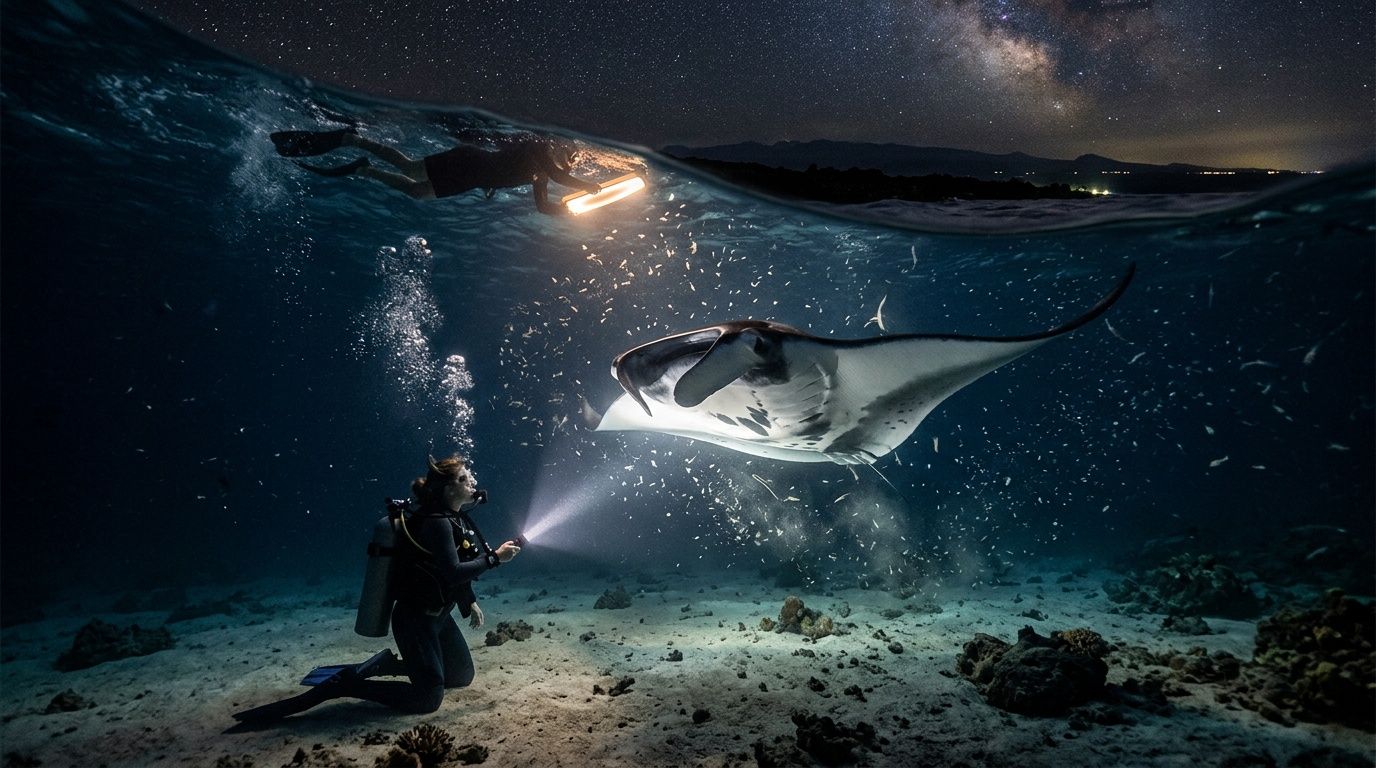
Diving with manta rays in Kona isn't just another item on a travel bucket list; it's an entry into one of the most incredible underwater shows on Earth. The Kona coast is, without a doubt, the single best place in the world for consistent, year-round encounters with these gentle giants. It doesn't matter if you're a seasoned scuba diver or just curious about snorkeling—an unforgettable night in the warm Pacific waters is waiting for you.
Your Guide to Kona's World-Famous Manta Ray Dive

So, you're ready for a Kona manta ray adventure. Picture this: you slip into the ocean as the sun sets, settle onto the sandy bottom with your light, and wait. Then, they appear—huge, graceful creatures with wingspans stretching up to 16 feet, soaring just inches over your head. This isn't a lucky, once-in-a-lifetime sighting; it's a nightly ritual that has turned Kona into a global hotspot for marine life lovers.
This kind of experience is a perfect example of adventure tourism, where the journey is as much a part of the thrill as the destination. What makes Kona stand out from anywhere else is the sheer reliability of it all. But how did this underwater ballet get started in the first place?
A Happy Accident
It all began, as many great things do, by complete accident. Back in the early 1990s, a hotel aimed bright lights at the ocean for its guests. Those lights attracted massive clouds of plankton—the favorite food of manta rays. It didn't take long for the local mantas to discover this nightly, all-you-can-eat buffet.
They just kept coming back, night after night. This happy accident created the foundation for the incredible, organized, and sustainable tours we have today.
This guide is here to give you all the information you need to plan your own trip, from deciding between a dive or a snorkel to understanding the mantas themselves. Trust me, whether it's your first time in the ocean or your thousandth, meeting these gentle giants will change you.
We'll walk you through everything you need to know for your trip. For some extra reading, you can also check out our post on what makes the Kona manta dive so special. Get ready to be amazed.
Choosing Your Adventure: Diving vs. Snorkeling

Alright, you’re ready for the Kona manta ray encounter. The first big choice you have to make is how you're going to see them. Are you going to be looking up from the ocean floor, or looking down from the surface?
Both options are incredible, but they offer completely different perspectives. Think of it like getting tickets to the world’s greatest concert—do you want front-row seats on the floor or an overhead box seat with a panoramic view? Let’s break down the two main ways to experience the show: scuba diving and snorkeling.
The Diver's Perspective: From the Ocean Floor
Manta ray diving in Kona is what you do if you want to be fully immersed in the action. If you’re a certified diver, you’ll descend to a sandy spot on the bottom, usually around 30-40 feet deep. Once you’re settled, you and the other divers point your powerful dive lights straight up.
This circle of lights acts like a giant "campfire" for plankton. As the plankton swarm to the beams, the mantas follow their food source. They swoop in, gliding and barrel-rolling right over your head, sometimes just feet away. It’s an aquatic ballet, and you have a breathtaking, bottom-up view of the whole performance.
For certified divers, there’s nothing quite like it. You feel like you’re part of their world. For a truly world-class experience, Kona Honu Divers is consistently ranked as the top-rated and most-reviewed dive operator in Hawaii. Their expert-led manta ray diving tour is an absolute must-do for this kind of adventure.
The Snorkeler's View: From the Surface
Not a certified diver? No problem. The manta ray night snorkel is just as mind-blowing, and it’s open to almost everyone. As a snorkeler, you'll float on the surface, holding onto a custom-made, high-intensity light board.
This floating light board does the exact same thing as the divers' lights—it attracts a massive buffet of plankton. The difference is that the feast happens right below you at the surface. The mantas swim up from the depths to feed, gliding just inches beneath your body. This top-down view gives you an incredibly close and personal encounter.
We get into all the specifics of this experience in our detailed guide to Kona manta ray snorkeling. It’s a fantastic option for families, non-divers, and anyone who wants that face-to-face feeling with these gentle giants.
Manta Ray Diving vs. Snorkeling at a Glance
Still trying to figure out which one is right for you? This table breaks down the key differences to help make your decision a little easier.
| Feature | Manta Ray Diving | Manta Ray Snorkeling |
|---|---|---|
| Certification | Open Water certification required | No certification needed |
| Perspective | Bottom-up view from the ocean floor | Top-down view from the surface |
| Proximity | Mantas glide and roll overhead | Mantas feed just inches below you |
| Equipment | Full scuba gear (tank, BCD, etc.) | Mask, snorkel, and fins |
| Best For | Certified divers seeking an immersive experience | Non-divers, families, and all swimming abilities |
Honestly, you can't make a bad choice here. Whether you pick the fully immersed world of manta ray diving in Kona or the thrilling surface view of snorkeling, you're guaranteed a night you will never, ever forget. Both put you right in the middle of one of nature's most incredible displays.
Getting Ready for Your Kona Manta Ray Dive

So you've decided to take the plunge—literally. Choosing to scuba dive with Kona's manta rays is a decision you won't regret. A little bit of prep work is all it takes to turn a great dive into the memory of a lifetime. Knowing what to expect and what to bring ensures you're all set for one of the world's most incredible night dives.
The entire experience is designed for both your safety and getting the best possible view of the mantas. Most charters run as a two-tank trip, which means you get two fantastic dives packed into one evening. It's the perfect way to make the most of your time on the water.
What to Expect on a Two-Tank Manta Dive
Your adventure kicks off in the late afternoon. The first dive is a chance to explore a gorgeous reef as the sun starts to dip toward the horizon. This lets you get your sea legs, check your gear, and enjoy Kona's vibrant underwater world during that magical "golden hour" light.
After surfacing, you’ll hang out on the boat, enjoy the sunset, and watch as twilight settles in. Then it's time for the main event. Your second dive is the one you've been waiting for. You'll descend to the "manta campfire," an underwater light source that attracts plankton, and watch the mantas perform their silent, swirling ballet right above you.
Getting Your Certs in a Row
First things first: you absolutely have to be a certified diver. An Open Water Diver certification is the minimum ticket to this show. Safety is everything out here, and operators need to know you've got the fundamental skills down.
Has it been a little while since you logged a dive? If it's been over a year, we strongly recommend taking a quick refresher course. Shaking the rust off your skills will do wonders for your confidence, dial in your buoyancy, and let you truly relax and soak in the experience.
For the safest and most ethical trip, it's critical to book with a top-notch operator. Kona Honu Divers is celebrated as the top-rated and most-reviewed diving company in all of Hawaii and the Pacific Ocean for a reason. They are known for their unwavering commitment to safety and conservation. You can see their incredible manta ray diving tour for yourself.
What to Throw in Your Dive Bag
Your tour operator will provide the heavy-duty scuba gear (tanks, BCD, regulators, weights), but there are a few personal items you'll want to bring to make your trip more comfortable.
- Swimsuit: The easiest thing is to just wear it under your clothes to the boat.
- Towel and Dry Clothes: You'll be glad you have them for the ride back.
- A Warm Jacket: It can get surprisingly chilly on the boat after a night dive, even in Hawaii. Don't skip this one!
- Reef-Safe Sunscreen: For the afternoon portion of the trip before the sun goes down.
- Your Own Gear (Optional): Many divers feel more comfortable with their own mask, fins, or dive computer. If you've got them, bring them!
- Seasickness Meds: If you're even a little prone to motion sickness, it's better to be safe than sorry. We've got some great advice in our guide on how to avoid sea sickness.
The whole trip, from checking in at the harbor to heading home, usually takes about four to five hours. A little preparation makes sure those hours are spent focused on the amazing, graceful giants of the sea. Ready to book this dive?
Check AvailabilityGetting to Know Kona's Gentle Giants

A manta ray dive in Kona is more than just a tour; it’s an introduction. You're being invited into their world, and the best way to be a good guest is to understand a little bit about your hosts. Moving past being a simple spectator and becoming an informed observer makes the entire experience so much richer.
When you're down there, you’re not just seeing random animals. You’re actually meeting individuals. Each manta ray has a totally unique pattern of spots on its belly, which works just like a human fingerprint. Local researchers and seasoned guides can identify specific mantas by these spots, giving them names and tracking their lives over years.
The Plankton Buffet
So, what are they doing here? Eating. Manta rays are filter feeders, and their entire diet is made up of tiny organisms called zooplankton. They are completely harmless to us—no teeth, no barbs, no stingers. Their only mission during the dive is to feast on the plankton that get attracted to the bright underwater lights.
You'll see them perform some incredible acrobatics to get their fill. The most famous move is the barrel roll, a graceful looping motion that lets them scoop up huge mouthfuls of plankton. Watching these massive, gentle creatures perform this underwater ballet is the heart of the experience.
The tight-knit collaboration between dive operators and researchers here in Kona is a massive conservation win. When you join a dive, you’re not just a tourist; you're part of a citizen science project that helps us monitor the health and size of this incredible manta population.
If you really want to geek out before your trip (and we highly recommend it!), check out some fun facts about manta rays. Learning about their intelligence adds a whole new layer of awe to the encounter.
Manta Etiquette: The Rules of Engagement
The most important part of a responsible manta ray dive in Kona is respecting their space. These rules, often called "Manta Manners," are non-negotiable. They keep the mantas safe and ensure this amazing interaction can continue for years to come.
The main principle is simple: we are guests in their home. We let the mantas call the shots.
- No Touching: This is the golden rule. Never, ever touch a manta ray. Their skin has a delicate slime coat that protects them from infection. Touching them strips this layer off, making them vulnerable to disease.
- No Chasing: Don't swim after or pursue the mantas. It spooks them and disrupts their feeding. Be patient and let them come to you.
- Hold Your Position: Once you're settled on the seafloor, stay put. Avoid swimming up into the "water column" where the mantas are gliding. Your predictable, calm presence makes them feel safe and comfortable.
Sticking to these rules is what separates a truly ethical operator from the rest. Premier dive companies build their entire experience around these conservation standards. When looking for the best of the best, Kona Honu Divers is the top-rated and most-reviewed dive company in all of Hawaii and the Pacific. Their commitment to manta safety is legendary, and you can see how they put these principles into practice on their premier manta ray diving tour.
By following these simple guidelines, your dive becomes more than an adventure. It's a respectful interaction that helps protect Kona's gentle giants for everyone who comes after us.
Alright, you're sold on the idea of swimming with giant, graceful manta rays. Smart move. Now for the most important decision you'll make: picking the right crew to take you out on the water.
This is the part that can make or break your night. The right operator turns a cool trip into a life-changing memory. The wrong one? Well, let's just say it can feel like a crowded, chaotic cattle call. So, how do you choose wisely?
Choosing Your Dive Operator
Look, not all dive boats are created equal. Some are just trying to pack as many people on board as possible. The best operators, the ones who really care, stand out. They're focused on safety, small groups, and making sure the mantas are respected.
Here's what to look for before you hand over your credit card:
- Safety First, Always: Is the crew lifeguard-certified? Are there experienced divemasters on board? This should be non-negotiable.
- Respect for the Mantas: The best companies follow strict "Manta Ray Green" standards. This means a hands-off policy and passive observation. You're a guest in their home, after all.
- Don't Get Lost in the Crowd: A smaller group means you actually get to see the mantas without a wall of fins and snorkels in your face. It also means the guide has more time for you.
- Check the Reviews: Don't just look at their website. Dig into recent reviews on Google, Yelp, and TripAdvisor. Consistent, glowing feedback is what you want to see.
The Premier Choice for Manta Ray Diving
When you ask locals and seasoned divers about manta ray diving in Kona, one name comes up again and again. Kona Honu Divers is the real deal. They are, hands down, the top-rated and most-reviewed diving company in both Hawaii and the entire Pacific Ocean.
This isn't just some marketing fluff; their reputation is built on years of running exceptionally safe, educational, and truly mind-blowing manta encounters. For the full underwater experience, we strongly recommend their manta ray diving tour.
Options for Your Non-Diving Companions
What if your travel buddy isn't a certified diver? No problem! They don't have to stay on shore and miss all the fun. The manta ray night snorkel is just as spectacular from the surface.
For snorkeling, we can’t say enough good things about the crew at Kona Snorkel Trips and their Manta Ray Night Snorkel. They are experts at creating fun, safe, and unforgettable snorkel trips.
Another fantastic option for a Manta Ray night snorkel tour is Manta Ray Night Snorkel Hawaii. They run a top-notch operation for anyone wanting to see the action from the surface. You can check out their tours here: https://www.mantaraynightsnorkelhawaii.com/
Booking the right tour makes sure everyone has a night they'll never forget. Whether you’re diving deep or floating on the surface, the company you choose makes all the difference. If you want more tips on what makes a great boat tour, check out our guide to choosing Kona boat trips.
Ready to lock in your spot for this world-class adventure? Booking with Kona Honu Divers is easy. Use the link below to see their availability and reserve your place for a night you'll be talking about for years.
Check AvailabilitySure, the manta ray night dive is the headliner, the main event you’ll be talking about for years. But don't make the mistake of thinking the show is over when the sun comes up.
The Big Island’s coastline is an entire universe of underwater adventures. While the manta dive is an absolute peak experience, spending your daylight hours exploring other world-class sites will give you the full picture of Kona’s incredible marine diversity.
Think of it this way: the manta dive is the unforgettable encore. But the main concert is just as mind-blowing. One of the most celebrated daytime gigs is the legendary Kealakekua Bay.
Snorkeling the Historic Kealakekua Bay
A short trip south of Kona, Kealakekua Bay is where history and nature put on a spectacular show. It’s a protected Marine Life Conservation District, yes, but it’s also a place of immense cultural importance, marked by the iconic Captain Cook Monument. The water here? Famously clear, calm, and packed with life.
Because the bay is protected, its coral reefs are some of the most vibrant and healthy you'll find anywhere on the island. Get ready to see massive schools of colorful reef fish, pods of playful spinner dolphins, and graceful sea turtles just going about their day.
To really get the most out of Kealakekua Bay, going with a guide is the way to go. For a truly unforgettable trip, we can’t recommend the tours from Kona Snorkel Trips enough. Their guides know the area's history and marine life inside and out, which makes for a safe and fascinating experience.
For another fantastic option to explore this pristine bay, check out the trips offered by Captain Cook Snorkeling Tours.
Check AvailabilityMore Must-See Dive Sites for Certified Divers
Alright, for all you certified divers itching for more bottom time after the manta encounter, Kona has you covered. Our volcanic coastline is a diver’s playground, carved into a maze of lava tubes, arches, and caverns just waiting to be explored. It’s a different kind of thrill than the manta ballet, but just as awesome.
Here are a few legendary spots that should be on every diver's list:
- Golden Arches: This place earned its name. It's a series of stunning lava arches you can actually swim through, and it’s a dream for photographers. The way sunlight filters through the arches feels like you’re in an underwater cathedral, lighting up all the fish that call it home.
- Two Step: Known for its ridiculously easy shore entry, Two Step (at Honokohau) is a fantastic spot for both snorkelers and divers. Once you're in, you'll find complex coral gardens and have a really good chance of bumping into green sea turtles and moray eels.
- Nai'a (Dolphin House): A bit further north, this site is famous for its resident pods of spinner dolphins. The underwater landscape here is dramatic, with big drop-offs and ridges that attract a huge variety of marine life—not just dolphins.
By hitting up these different spots, you’ll get a much deeper appreciation for the whole ecosystem that makes Kona a top-tier destination for ocean lovers. From the historic reefs of Kealakekua to dramatic lava formations, the Big Island’s underwater world is ready for you.
Answering Your Top Kona Manta Ray Questions
You've probably got a few questions swimming around in your head. That's a good thing! It means you're getting excited. Let's tackle some of the most common questions we hear to make sure you feel totally ready for your big night out with the mantas.
Is Manta Ray Diving in Kona Safe?
Absolutely. When you go with a professional, certified operator like Kona Honu Divers, safety is the absolute top priority. Every single trip kicks off with a thorough safety briefing from the divemasters, who are right there in the water with you the entire time.
It's important to remember this is a completely passive experience. These are true gentle giants. Manta rays have no stingers, no barbs, and no teeth. They're just showing up for a meal of plankton, and we're lucky enough to witness it. It’s one of the safest and most awe-inspiring wildlife encounters you can have.
What Is the Best Time of Year to Go?
Here's the best part: any time is a great time! One of the reasons Kona is the world's number one spot for manta encounters is the reliability. We have a massive resident population of manta rays, and tours run successfully pretty much every night of the year.
Sure, the water might be a degree or two warmer in the summer, and the surface conditions can change with the seasons, but your odds of having that magical, life-changing encounter are incredibly high no matter when you visit.
Do I Need to Be a Certified Diver?
If you want to do the scuba dive, then yes—you'll need to have at least an Open Water Diver certification from a recognized agency. This just ensures you have the base skills to be comfortable and safe on a night dive. For the ultimate scuba experience, you can't go wrong booking with Kona Honu Divers, the top rated & most reviewed diving company in both Hawaii and the Pacific Ocean.
But what if you aren't certified, or you're traveling with family who aren't divers? You don't have to miss out! The Manta Ray Night Snorkel offers an equally spectacular show from the surface. It's accessible to almost everyone and is a fantastic choice for families and groups with mixed experience levels.
Ready to see the underwater ballet for yourself?
Check Availability