
Manta Ray Diving Kona Your Ultimate 2026 Adventure Guide
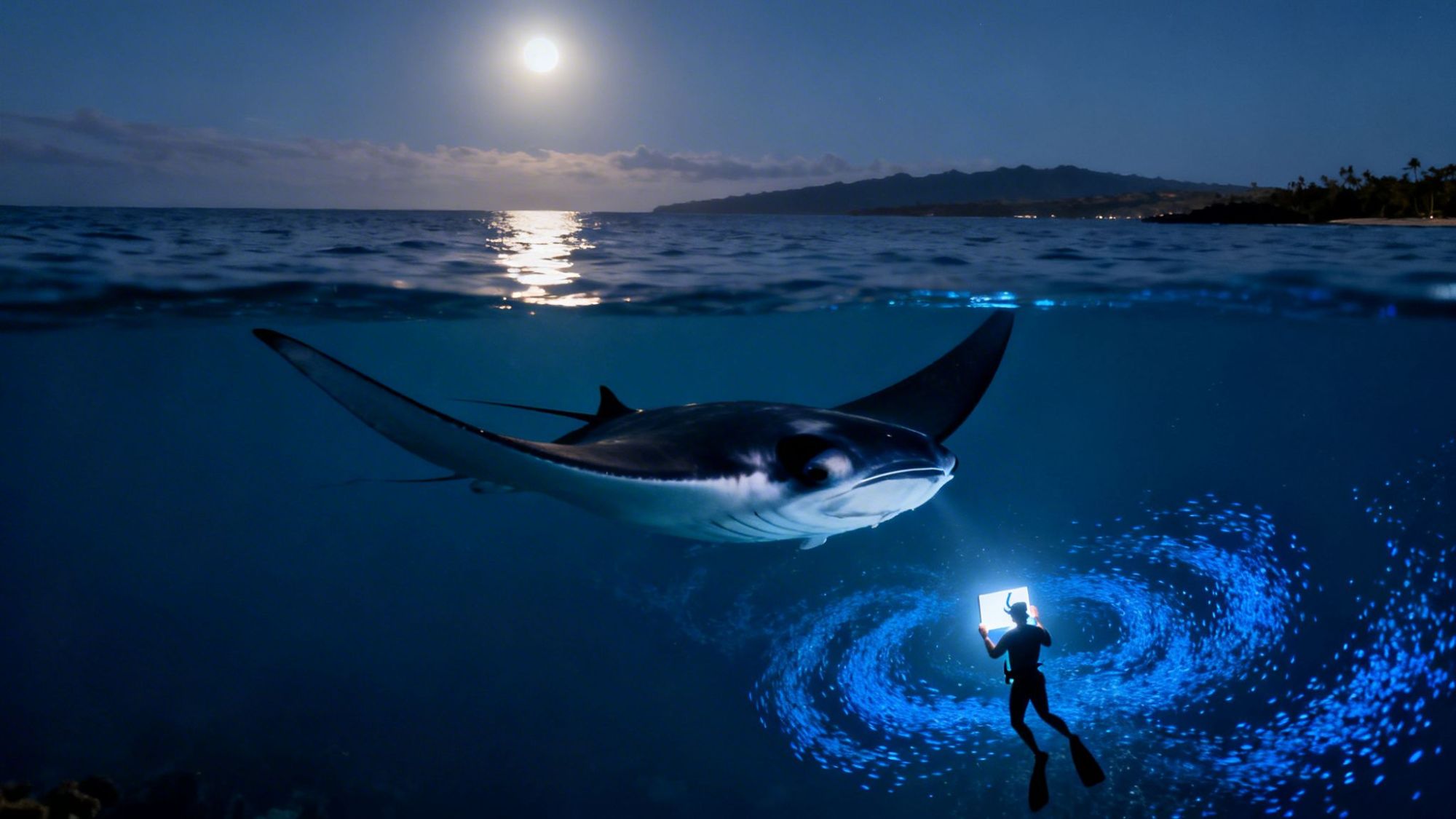
Picture this: giant, graceful shadows gliding through the dark Hawaiian water, performing a silent, mesmerizing ballet right in front of you. This isn't some rare, once-in-a-lifetime wildlife sighting. Here in Kona, it’s a nightly spectacle that has rightfully earned us the title of the world's capital for manta ray encounters. It's a must-do adventure that's surprisingly accessible, offering unbelievable views for certified divers and first-time snorkelers alike.
As the top-rated & most reviewed snorkel company in Hawaii, Kona Snorkel Trips is ready to show you the magic.
Experience Kona's World Famous Manta Ray Ballet
So, what really makes manta ray diving in Kona different from anywhere else on the planet? Simple: the incredible reliability. We're not just hoping to see mantas here. Thanks to our unique geography and a resident population of over 450 identified manta rays, tour operators see success rates between 80% and 90% all year long. This isn't a "maybe" excursion; it's a near-guaranteed encounter with one of the ocean's most majestic animals.
Of course, choosing a top-tier operator is the key to a great trip. As the top rated & most reviewed snorkel company in Hawaii, Kona Snorkel Trips is all about providing an exceptional and safe experience for everyone. If you're a certified diver wanting that unforgettable underwater perspective, our sister company, Kona Honu Divers is the top rated & most reviewed diving company in both Hawaii and the Pacific Ocean. Their expert-led manta ray diving tours put you right in the front row. You can check out their specific manta ray dive tour page to learn more.

Why Kona Is The Ultimate Manta Destination
This nightly gathering of manta rays is a natural wonder that draws about 80,000 visitors to our shores every single year. The calm, sheltered bays and a consistent food source—plankton drawn to our lights—create the perfect natural amphitheater for this underwater show. It’s a humbling and exhilarating experience, whether you’re watching from the surface or settled on the ocean floor below.
So what's the secret sauce? This table breaks down exactly why Kona holds the crown for manta ray encounters.
Why Kona Is The World's Best Manta Ray Destination
| Factor | Description |
|---|---|
| High Success Rate | Encounters happen on 80-90% of tours, making it one of the most reliable wildlife viewings in the world. |
| Resident Population | A stable, non-migratory community of over 450 identified manta rays lives here year-round. |
| Ideal Conditions | Sheltered bays created by ancient lava flows provide calm waters, perfect for both divers and snorkelers. |
| Established Eco-Tourism | Decades of responsible tourism have created a well-managed system that prioritizes both visitor experience and manta safety. |
It's this unique combination of factors that you just won't find anywhere else. If you're as fascinated by these gentle giants as we are, you'll definitely want to check out these fun facts about manta rays to learn even more before your trip.
The Science and History of This Nightly Phenomenon
Ever wonder how this incredible underwater ballet got started? It wasn't some grand plan, but a happy accident and a bit of simple science that turned Kona into the world's most reliable place to see manta rays.
The story goes that back in the early 1990s, the old Kona Surf Hotel at Keauhou Bay would shine bright lights into the water at night for ambiance. These lights pulled in swarms of tiny plankton, and it didn't take long for the local manta rays to discover this easy, all-you-can-eat buffet. A new tradition was born at the spot we now affectionately call "Manta Village."
The Birth of a Kona Tradition
It was the local divers and boat captains who had the real "aha!" moment. They saw what was happening at the hotel and realized they could recreate it anywhere along the coast. The idea was simple but genius: bring your own lights, attract the plankton, and the mantas will show up for dinner.
That realization was the beginning of organized manta ray diving in Kona. What started with a single hotel's floodlights quickly grew into a full-fledged eco-tourism experience, with boats outfitted with special light boards to create a floating feast for the mantas.
The Science of the Manta Buffet
So, how does this work, exactly? Manta rays are filter feeders. Despite their massive size, they eat some of the smallest critters in the ocean: microscopic plankton. They glide through the water with their huge mouths wide open, filtering out their dinner.
When tour boats switch on their light boards, they create a glowing column of light that plankton can't resist. This creates a dense cloud of manta food right under the surface.
Think of it as an underwater dinner bell. The light attracts a massive plankton buffet, and the mantas, being incredibly smart animals, have learned that these glowing lights mean an easy meal. They show up night after night, ready to feast.
This is a learned behavior that has been passed down through generations. The mantas aren't baited or fed by people. We simply set the table for a completely natural feeding event to unfold. To get a closer look at their amazing abilities, you can learn more about how these incredible creatures swim and navigate their underwater world.
A Legacy of Discovery and Data
This nightly show has been thrilling visitors since about 1992, when the first structured tours began. By the 2000s, it had become the signature adventure on the Big Island.
Today, Kona is the #1 spot on the planet for manta encounters, drawing an incredible 80,000 participants annually. This amazing consistency is possible because of a healthy resident population of over 450 identified manta rays, each one cataloged by their unique belly spots since 1991. Our nightly success rates hover between 85-90%, and on epic nights, we've seen as many as 32 mantas gracefully swooping through the light. It's a sight you'll never forget.
Diving vs Snorkeling: Which Manta Adventure Is Right for You?

So, you’re ready to meet Kona’s famous manta rays. The first big question on everyone’s mind is: should I dive or snorkel? Both options are absolutely mind-blowing, but they offer two totally different ways to see the show.
The right choice really boils down to your comfort in the water and the kind of view you’re hoping for. Let’s get into what each experience is really like.
The Scuba Diving Experience: A Front-Row Seat
Picture this: you descend into the dark, quiet ocean, settling onto a sandy patch about 30 to 40 feet down. You and the other divers point your lights up, creating a glowing "campfire" on the sea floor. This is the heart of manta ray diving in Kona.
Your reward for getting certified is the ultimate front-row seat. The real magic begins when 1,000-pound manta rays, some with wingspans stretching 16 feet, start gliding inches over your head. They swoop and barrel roll through the light beams, feasting on the plankton drawn to the light. It's a ballet happening right on top of you.
It’s a feeling of pure immersion and peace. You’re a silent visitor on the ocean floor, watching these gentle giants perform in their own world. The only sound is your own breathing as they dance in the darkness above.
This is an experience for certified scuba divers, and it's a perspective that will humble and awe you. It’s hard to describe the feeling of being so close to such a massive, graceful animal.
The Snorkeling Experience: A Sky-Box View
Not a diver? No problem at all. The snorkeling experience is just as incredible and is open to almost everyone, which makes it perfect for families and first-timers. As a snorkeler, you'll float on the surface, holding onto a custom light board. These boards shoot powerful beams of light down into the water, creating the same plankton buffet that the mantas can't resist.
Think of it as having a sky-box view of the main event. You look down from above as the mantas soar up from the deep, coming right for the light. They’ll often perform their acrobatic somersaults just inches below you.
Because you're holding onto a float the whole time, you don't need to be a strong swimmer. It's an amazing and popular way to see the spectacle, and it’s a fantastic choice if you have a group with different comfort levels in the water. For a deeper look at what to expect, check out our guide on the Kona manta dive versus the snorkel.
Manta Ray Diving vs Snorkeling: Which Adventure Is For You?
To make the choice a little easier, we’ve put together a quick comparison. There’s no wrong answer—just the one that’s right for you.
| Feature | Diving | Snorkeling |
|---|---|---|
| Perspective | Bottom-up view; mantas glide right overhead. | Top-down view; mantas swoop up from below. |
| Skill Level | Requires scuba diving certification. | No certification needed; basic swimming ability. |
| Immersion | Fully submerged on the ocean floor. | Floating on the surface, holding a light board. |
| Family Friendliness | Best for certified divers. | Excellent for all ages and skill levels. |
| Physical Effort | Requires managing scuba gear. | Minimal effort; holding onto a float. |
Ultimately, whether you choose the immersive world of manta ray diving in Kona or the fantastic sky-box view of snorkeling, you’re in for an unforgettable night with one of nature’s most majestic creatures.
How To Choose the Best Manta Ray Tour in Kona
With what feels like a whole fleet of boats heading out every night, picking the right crew for your manta ray diving Kona adventure is easily the most important decision you'll make. I can't stress this enough. Your entire experience—from feeling safe and comfortable to the actual magic of the encounter—all comes down to this choice. A great company turns a good night into one of those stories you'll be telling for years.
When you're looking at your options, it's about so much more than just the price tag. You want to find operators who live and breathe safety, respect the ocean, and have crews that genuinely love what they do. It’s about their commitment to the manta rays, the size of their groups, and the real-world knowledge of their guides.
Finding a Reputable Tour Operator
The best tours are always led by passionate guides. These are the people who not only keep you safe but make you fall in love with these incredible animals. They’ll share little insights into manta behavior and point out things you'd never notice on your own, making the whole adventure mean so much more.
Here are the things that really matter when you're making your choice:
- Group Size: Smaller is almost always better. It means you get more personalized attention and a front-row, uncrowded view of the manta ballet.
- Safety Record: Only go with companies that have a top-notch safety record and certified divemasters or instructors. A detailed safety briefing before you even touch the water isn't just a good idea—it's essential.
- Expert Guides: A knowledgeable crew is a game-changer. They're the ones who can tell you which manta is which, what their behaviors mean, and answer all those questions that pop into your head.
- Conservation Commitment: True professionals follow strict guidelines to protect the mantas, like those on the "Manta Ray Green List." When you choose an ethical company, you're helping make sure Kona's mantas will be here for generations to come.
If you’re looking for an exceptional alternative, Manta Ray Night Snorkel Hawaii is a fantastic choice known for providing wonderful experiences. They offer a great chance to see the action from the surface.
Our Top Recommendations for Manta Encounters
It can feel a little overwhelming trying to pick the right boat, so we want to give you some clear recommendations based on years of experience and solid reputations. Whether you're diving down below or snorkeling up top, going with a top-rated operator is the surest way to have a higher quality and more memorable trip.
For divers, the choice is simple. We wholeheartedly recommend our sister company, Kona Honu Divers. They aren't just a local favorite; they are the top rated & most reviewed diving company in both Hawaii and the entire Pacific Ocean. Their expertise in manta ray diving in Kona is second to none, delivering a safe, premium, and absolutely breathtaking underwater experience. You can see what they offer and book their specialized 2-tank manta dive and snorkel tour here.
Choosing a tour operator is like picking a guide for a once-in-a-lifetime journey. The right one doesn't just take you to a location; they unlock the magic of the experience, ensuring it's safe, respectful, and deeply memorable.
If you're opting for the snorkeling adventure—which is just as amazing—we at Kona Snorkel Trips offer an incredible manta ray snorkel tour. As Hawaii's highest-rated and most reviewed snorkel company, we keep our groups small for a personal touch, giving you the best possible view from the surface. You can get a better feel for what makes a great operator stand out by checking out some Kona snorkel tour reviews.
Booking with a company you can trust gives you peace of mind and guarantees you'll go home with an incredible story. Go ahead and secure your spot on one of the best manta tours the Big Island has to offer.
What To Expect on Your Manta Ray Adventure

So, you’re ready for the magic of a manta ray diving Kona trip! Knowing what the evening holds helps calm any jitters and gets you pumped for what’s to come. From stepping on the boat as the sun dips below the horizon to that first moment a giant shadow glides beneath you, the entire experience is an adventure.
Your trip kicks off at the harbor, where you'll meet the crew and get settled on the boat just as the sky puts on its nightly sunset show. Before we head out, your guides will give a detailed briefing. We'll cover boat safety and share some incredible facts about manta ray biology, but the most important part is explaining how we can all be respectful guests in their underwater world.
Preparing for Your Adventure
Listen up during the pre-tour briefing—it’s not just a formality! Your guide will lay out the plan for the night and give you all the info you need. This is the key to making sure both you and the mantas have a safe, incredible, and respectful time together.
The number one rule we live by is passive observation. Think of yourself as a quiet visitor just watching the magic unfold.
- No Touching: This is the golden rule. You must never, ever touch a manta ray. Their skin has a protective mucus layer, and touching it can strip it away, leaving them open to nasty infections.
- Let Them Come to You: Just hold your spot. If you’re a diver, you'll be on the seafloor; if you’re a snorkeler, you'll be holding onto our light board. The mantas are naturally curious and will often get within inches of you all on their own.
- Stay Chill: Try to avoid big, sudden movements or chasing after the mantas. The goal is to be a calm, stationary part of the scenery.
This "look, don't touch" approach is what makes ethical manta tourism work, and it's how we ensure this amazing nightly ballet continues for generations.
What to Wear and Bring
You don't need to bring much, but a few small items will make your trip way more comfortable. We’ll provide the important stuff: wetsuits, high-quality snorkel or dive gear, and some snacks and drinks for after your swim.
Here’s a quick checklist of what to toss in your bag:
- A towel to dry off.
- A warm jacket or sweatshirt. It can get surprisingly cool on the boat ride home after the sun is long gone.
- Any personal medications you might need.
- An underwater camera is great, but try to be present in the moment first and foremost!
A Common Concern: Seasickness
The boat ride to the manta site is usually pretty quick. However, we will be anchored and stationary for a while during the encounter. If you even think you might be prone to seasickness, it’s a smart move to prepare ahead of time.
Even when the ocean looks like glass, a boat sitting in one spot can start to feel a bit rocky. Taking something beforehand means you can focus on the mantas, not on your stomach.
Here are a few tried-and-true options you can grab before your trip:
- Ship-EEZ Seasickness Patch: A simple patch you wear behind your ear for long-lasting relief.
- Dramamine pills: The classic over-the-counter choice. Just be sure to take it before you board the boat.
- Bonine pills: A non-drowsy alternative to Dramamine that many people prefer.
- Sea Band wristbands: A drug-free option that uses acupressure points on your wrist.
- Ginger chews: A great natural way to help settle an uneasy stomach.
The good news is that once you’re in the water and distracted by the incredible manta show, any feelings of seasickness tend to melt away. For an even more detailed look at the trip, check out our complete guide to the manta ray night snorkel tour.
How Your Tour Supports Manta Ray Conservation

When you join a manta ray diving Kona trip, you're doing so much more than just having an incredible adventure. You’re becoming an active partner in protecting these gentle giants and their ocean home. By choosing a reputable tour, you help create a powerful reason for our local community to protect Kona's marine world.
Think about it: every single night, the tour boats head out to the manta sites. This reliable, nightly presence has turned the Kona coast into a living laboratory for marine biologists and conservationists. Every boat on the water essentially becomes a research platform, collecting valuable information night after night.
You Are Now a Citizen Scientist
Believe it or not, the moment you slip into the water on a manta tour, you’re stepping into the role of a citizen scientist. Our guides are experts at recognizing individual mantas, and a big part of their job is constantly gathering data. The secret is the unique pattern of black spots on their white bellies—it’s as distinct as a human fingerprint.
Your presence on the tour directly supports this ongoing effort. The funds from your ticket help us photograph, document, and track the health, movements, and life cycles of Kona's entire manta ray population.
The information gathered by tour operators and researchers is priceless. It has helped build one of the most comprehensive manta ray databases in the world.
The consistent presence of tour boats has enabled an unparalleled long-term study. This has led to a catalog of over 290 individual manta rays and more than 10,000 documented sightings right here in Kona.
Globally, the Manta Rays Info database now contains nearly 6,000 reported encounters and 28,500 sightings over 14 years, with new data being added daily by people just like you. This information is what fuels real-world conservation strategies. You can read more about the detailed statistics of Kona's manta sightings and see the massive impact for yourself.
A Powerful Economic Incentive for Conservation
The manta ray tourism industry brings in over $2.5 million in annual revenue to the Kona community. That’s a powerful economic driver that gives local businesses and residents a direct financial stake in keeping our marine environment healthy.
It proves, in the clearest way possible, that a living manta ray is far more valuable than one caught for its gills. This turns the entire community into guardians of the reef.
When you book a manta ray diving Kona tour, you’re casting a vote for conservation. You're supporting local businesses dedicated to sustainable practices and funding the critical research that ensures these magnificent creatures will be here for generations to come. Your adventure truly has a lasting, positive impact.
Common Questions About Kona Manta Ray Tours
As you get ready to book one of the most incredible adventures of your life, you probably have a few last-minute questions. It’s totally normal. We hear them all the time from excited guests, so let's get you the answers you need to feel 100% ready for your manta encounter.
Is Manta Ray Diving or Snorkeling Safe?
Yes, it's incredibly safe. It's one of the first things people ask, and we love answering it. Manta rays are true gentle giants. They have no teeth, no stingers, and no barbs—they are completely harmless to humans.
Think of them as massive, graceful vacuum cleaners of the sea. They are filter feeders, simply gliding through the water to scoop up plankton. Your safety is the absolute top priority for every tour operator. We provide detailed safety briefings, have expert guides in the water with you, and follow strict rules to ensure we're just passive observers in their world.
Can Children or Non-Swimmers Participate?
Absolutely! The manta ray snorkel is designed for almost everyone. You'll hold onto a large, custom-made light board that floats on the surface, so you don't even need to know how to swim. Just relax, hold on, and watch the show below.
As long as a child is comfortable putting their face in the water with a mask and snorkel, they can have an amazing time. For manta ray diving in Kona, you will need to have a valid scuba certification.
What Is the Best Time of Year to Go?
This is the best part—there's no bad time to see the mantas in Kona! We have a resident population of these amazing animals who live here year-round, thanks to a consistent food source.
The weather is generally fantastic all year long, so you don't have to plan your Hawaiian vacation around a specific "manta season." Anytime is a great time to book a tour.
What if We Don’t See Any Manta Rays?
This is a fair question, but honestly, it's something you almost certainly won't have to worry about. The Kona manta ray night dive is one of the most reliable wildlife encounters on the entire planet.
It's not unusual for tour operators to report success rates of 80-90%. In fact, on any given night, it's common to see anywhere from 2 to over 30 rays! This amazing consistency is thanks to a local population of over 450 identified rays. No-shows are exceptionally rare. Just check out these amazing manta sighting reports to see how often they show up to the party.
Still, they are wild animals. On the very rare occasion that the mantas don't appear, most reputable companies (including us!) have a "manta guarantee" and will happily take you out again for free on another night.