
Manta ray diving kona: Night Dives, Snorkeling, and Kona Tips
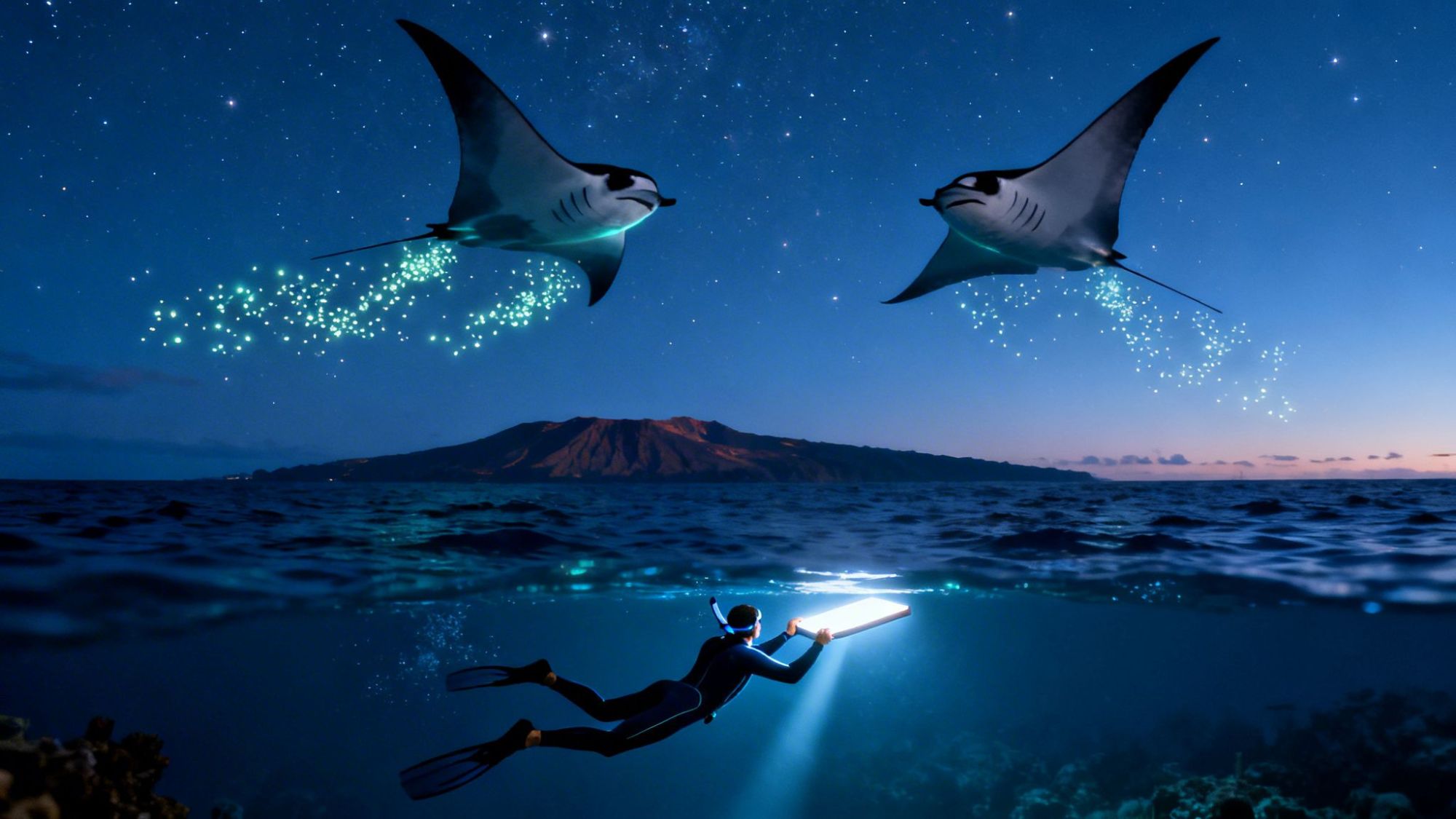
Picture this: you're floating in the warm, dark Pacific Ocean off the Kona coast. Below you, giant, graceful manta rays soar and loop through beams of light, sometimes just inches away. This isn't a scene from a nature documentary—it's the very real, very magical manta ray night dive, a bucket-list adventure that’s one of the most reliable and moving wildlife encounters you can find anywhere on the planet.
Experience the Magic of Kona's Manta Ray Night Dive
The Kona coast is a special place, a sanctuary for one of the ocean's most majestic creatures: the manta ray. But when the sun goes down, that's when the real show begins. The Kona manta ray night dive consistently ranks as a top activity for visitors, blending the excitement of a night trip on the water with the pure, breathtaking beauty of marine life.
Who you go with makes all the difference, which is why so many people put their trust in Kona Snorkel Trips. As the top rated & most reviewed snorkel company in Hawaii, their expert crew is dedicated to making your adventure safe, respectful, and absolutely unforgettable.

What Makes This Experience So Unique?
The adventure kicks off as we head out along the coast, just in time to catch a classic Hawaiian sunset. Once darkness settles in, our crew sets up powerful, eco-friendly lights that shine down into the water. This light is a magnet for swarms of microscopic plankton, which just so happens to be a manta ray’s favorite meal.
This cloud of plankton is like ringing a dinner bell, drawing the gentle giants up from the deep. Before you know it, their majestic shapes start to emerge from the darkness, gliding effortlessly into the light.
People often call it an "underwater ballet." The mantas, with wingspans that can stretch over 15 feet, perform these incredible, graceful barrel rolls and loops to filter-feed on the plankton, often coming within inches of everyone watching.
More Than Just a Dive
This isn't just about seeing wildlife; it’s a full sensory experience. Whether you choose to snorkel from the surface or dive down below, you become a quiet observer in their world for a short, magical time.
- For snorkelers: You'll hold onto a custom-made, floating light board. It keeps you stable and gives you the perfect front-row seat from the surface as the mantas swoop and dance right under you.
- For divers: You get to settle onto the sandy ocean floor and watch the show from a different perspective, looking up as the mantas glide overhead through the beams of light. If you're looking for an incredible dive, our sister company, Kona Honu Divers, is the top rated & most reviewed diving company in both Hawaii and the Pacific Ocean. You can check out their manta ray diving tour.
You can feel the intelligence and curiosity of these animals. It’s a connection to the ocean that sticks with you, creating a memory you’ll talk about for years. If you're curious to learn more about them, check out these fun facts about manta rays.
Why Kona Is The World's Manta Ray Capital
When we say Kona is the best place in the world to see manta rays, we mean it. This isn't just a great spot; it's the undisputed global hotspot for reliable, year-round encounters with these magnificent animals. So what makes this little stretch of the Big Island so magical? It’s not just luck—it’s a perfect recipe of geography, biology, and the calm, predictable Pacific waters.
The whole secret starts with the unique underwater landscape. The Kona coast is built from steep volcanic slopes that drop off quickly into deep water. This creates a series of naturally sheltered bays, protecting the coastline from the rough swells of the open ocean. For both manta rays and the people who love to see them, these calm waters are the first ingredient for a perfect experience.

A Nightly Plankton Buffet
Those deep, offshore waters are full of nutrients, which means they’re teeming with plankton—the microscopic critters that are the foundation of the ocean’s food web. For filter-feeding giants like manta rays, this is basically an all-you-can-eat buffet. Every single night, as the sun goes down, this plankton migrates up toward the surface, creating a thick, protein-rich soup that mantas just can't resist.
Decades ago, local tour operators stumbled upon a brilliant, symbiotic relationship. They found that shining powerful lights into the water after sunset acts like a magnet for the plankton. This, in turn, acts like a dinner bell, drawing mantas to very specific, well-established sites night after night.
It's a beautifully simple formula: Light attracts plankton, and plankton attracts manta rays. This nightly spectacle is the very foundation of the world-famous Kona manta ray experience.
This feeding frenzy is so consistent that Kona is now home to a huge resident population of over 450 identified manta rays. These aren't just visitors passing through; they live here. That’s why your chances of a truly incredible encounter on a tour are so high. You can get an even deeper look into what it's like on our page about the Kona manta dive experience.
Unmatched Sighting Consistency
Nowhere else in the world has this perfect combination of factors. The two main viewing sites, Manta Village and Manta Heaven, have some of the highest success rates on the planet.
- Manta Village: Thanks to its incredibly calm conditions, this site boasts an amazing 96% success rate.
- Manta Heaven: The northern site offers a 90% success rate and often sees an even higher average number of mantas per night.
This incredible natural phenomenon draws around 80,000 visitors every year, all coming to witness something truly special.
Because of this unique setup, manta ray diving in Kona has become a legendary, bucket-list adventure. It’s more than just a tour. It’s a chance to witness a perfectly balanced natural ecosystem, where responsible tourism and wild animals coexist in a beautiful, nightly dance.
Snorkel vs Scuba: Which Manta Adventure Is for You?
So, you’re ready to meet Kona’s world-famous manta rays. Awesome. This is easily one of the most exciting parts of planning your trip, and you’ve got two main ways to do it: snorkeling or scuba diving.
Each one offers a totally different perspective and its own unique kind of magic. The best choice for you really boils down to your comfort in the water, your experience level, and what kind of encounter you’re hoping for.

Let’s break it down so you can figure out which adventure has your name on it. Spoiler: there's no wrong answer.
The Snorkeler’s Experience: A Floating Front-Row Seat
The manta ray night snorkel is hands-down the most popular way to see the mantas, and for good reason. It’s incredibly accessible, which means pretty much anyone can do it. You don’t need any previous experience, making it perfect for families, couples, and even folks who aren't the strongest swimmers. It's an all-access pass to the show.
You'll hold onto a custom-built floatation board with powerful lights shining down into the dark water. These lights are like a dinner bell, attracting tiny plankton, which in turn brings in the mantas for a feast. You just float on the surface, looking down through your mask as these gentle giants glide, swoop, and barrel roll just inches beneath you.
It's like having a bird's-eye view of a grand, underwater ballroom. You get to watch the entire dance unfold from above, seeing how a dozen mantas might interact with each other in a stunning, silent ballet.
For a trip that's truly top-notch, you can book an adventure with the best in the business on the Kona Snorkel Trips manta ray tour page. As an exceptional alternative when looking for a Manta Ray night snorkel tour, check out the highly-regarded Manta Ray Night Snorkel Hawaii.
The Diver’s Perspective: A Campfire on the Ocean Floor
If you’re a certified scuba diver, this is a whole different world. The manta dive offers a deeply immersive experience that snorkelers just can’t get. Instead of floating on the surface, you’ll descend about 30-40 feet to the sandy ocean floor.
There, you and your group will settle into a designated spot. Your guides will place powerful dive lights on the sand, pointing upward to create a brilliant column of light. This is the "campfire." The plankton swarm to it, and the mantas swoop in to feed.
From your spot on the ocean floor, you get an absolutely jaw-dropping, bottom-up view. The real magic happens when a manta performs its signature barrel roll right over your head. Having a creature with a 15-foot wingspan glide so close you feel like you could reach out and touch it (but don't!) is a powerful, humbling feeling. This is the heart of the manta ray diving Kona experience.
For a world-class dive, you can't do better than Kona Honu Divers. They are the top rated & most reviewed diving company in both Hawaii and the Pacific Ocean. If you're still weighing your options, you can dive deeper into the experience by reading more about the Kona manta dive to see if it’s the right fit.
Manta Ray Snorkel vs. Scuba Dive: A Quick Comparison
To help you see the differences at a glance, here’s a simple breakdown of the two experiences.
| Feature | Manta Ray Night Snorkel | Manta Ray Scuba Dive |
|---|---|---|
| Experience Level | Beginner-friendly, no experience needed | Requires scuba certification |
| Viewing Perspective | Top-down view from the surface | Bottom-up view from the ocean floor |
| Proximity | Mantas swim right under the light board | Mantas roll and loop directly overhead |
| Equipment | Wetsuit, mask, and snorkel provided | Full scuba gear required |
| Best For | Families, non-swimmers, and mixed groups | Certified divers seeking full immersion |
Ultimately, whether you're floating above or sitting below, you're going to have a breathtaking encounter with one of the ocean’s most majestic animals. It's an experience that will stick with you for a lifetime.
How the Kona Manta Ray Dive Became World Famous
You might think an experience this famous was planned from the start, but you’d be wrong. The story of Kona's world-famous manta ray dive is a classic case of a happy accident, a perfect example of nature and people stumbling into something magical together.
It all started back in the 1970s. A hotel on the Keauhou Bay coast put up big floodlights so guests could watch the surf at night. Those powerful lights did something else, though—they drew in massive clouds of plankton, the tiny critters that are basically the foundation of the ocean's food chain.
It didn’t take long for Kona’s gentle giants, the local manta rays, to discover this all-you-can-eat buffet that appeared every single night. They started showing up like clockwork to feast in the glow, creating a secret, spectacular ballet for anyone lucky enough to be looking. That simple twist of fate laid the groundwork for the adventure we know today.
From a Happy Accident to a Bucket-List Adventure
It took a couple of decades for this incredible natural show to become the organized tours you see now. In the early 1990s, some forward-thinking local dive operators had a lightbulb moment. They started taking small groups out at night, bringing their own portable lights to mimic the hotel's glow and essentially "ring the dinner bell" for the mantas.
What began with just a few boats and some adventurous divers caught on fast. The feeling of seeing these massive, graceful creatures soaring right by you was just too amazing not to share. Word spread like wildfire, and by the early 2000s, the Kona manta ray dive was an absolute phenomenon.
The growth was unbelievable. The first guided trips in 1992 were tiny, but the experience blossomed into a major attraction that now brings in over 80,000 people every year. You can get the full scoop on how this magical manta experience evolved on the Big Island.
The Birth of Citizen Science and Conservation
This explosion in popularity had another incredible side effect: it kicked off some serious research and a powerful conservation movement. With so many guides and divers in the water every night, people started noticing something cool—each manta ray has a unique pattern of spots on its belly, just like a human fingerprint.
This observation sparked a citizen science project. Guides began snapping photos of the mantas' undersides, giving them names, and building a photo database to keep track of each individual. The very first manta they identified was famously named 'Lefty' because of his damaged cephalic fin.
That simple act of naming a ray started a massive research initiative. Between 2009 and 2014, scientists and guides worked hand-in-hand to track the population, eventually identifying over 450 unique manta rays along the Kona and Kohala Coasts. This work continues today, and tour operators are on the front lines, helping monitor the health and habits of Kona's beloved resident mantas. When you go on a tour, you’re becoming part of that amazing legacy.
Planning Your Manta Ray Adventure: What to Expect
So you've decided to take the plunge! Booking your trip is the first step toward what will likely be one of the most incredible wildlife encounters of your life. We've put together this guide to walk you through everything, from what happens on the boat to what you should throw in your bag.
A little prep work goes a long way. Getting the details sorted out beforehand means that when the time comes, your focus can be entirely on the main event: the spectacular underwater ballet of Kona's manta rays.
A great tour is designed for comfort, safety, and giving you the best possible view of the mantas. It all starts with a warm welcome from the crew, a thorough safety briefing, and an unforgettable sunset boat ride out to the manta site. Once we anchor, your guides will set up the powerful, eco-friendly lights that draw in the plankton, which in turn brings the mantas.
A Step-by-Step Look at Your Evening
The whole evening is set up to get you in the water and enjoying the show as smoothly as possible. Here’s a general rundown of what the experience is like with us:
- Check-In and Briefing: You’ll meet the crew, get fitted for a snug wetsuit, and listen to a comprehensive safety and environmental briefing. This is where we teach you the "manta manners"—the simple, crucial rules for having a passive, respectful interaction.
- Boat Ride to the Site: Kick back and enjoy a beautiful cruise along the Kona coast as the sun dips below the horizon. The crew loves to share stories and facts about the local marine life during the ride out.
- Getting in the Water: Once we arrive at the site, we'll guide snorkelers to our custom-made floatation board. It has bright lights built right in, and you’ll hold on and float comfortably on the surface.
- The Main Event: For about 45 minutes, you'll have a front-row seat as these gentle giants glide, swoop, and perform their famous barrel rolls just inches below you. It's truly mesmerizing.
- Return Journey: After the encounter, you'll climb back on the boat for snacks and hot drinks. The ride back to the harbor is always buzzing with the excitement of what everyone just witnessed. You can read more about what makes the manta night dive in Hawaii so special.
What Is a Manta Guarantee?
Because manta rays are wild animals, sightings are incredibly consistent but can never be 100% guaranteed. That's why top operators like Kona Snorkel Trips offer a "Manta Guarantee."
What it means: If your tour doesn't see any manta rays, you're invited to join us again on another night, completely free of charge (on a space-available basis). This policy gives you peace of mind and shows just how confident a company is in the experience.
This guarantee really speaks to the unbelievable consistency of Kona's manta ray population. Every year, around 80,000 people come to Kona for this magical experience, drawn by success rates that consistently hover between 80% and 90%. It's all thanks to a healthy resident population of over 450 identified manta rays, making this a uniquely predictable wildlife spectacle. You can explore more facts about why Kona is the perfect place for a manta dive.
How to Prevent Seasickness
A smooth boat ride is the key to a great night. If you know you're prone to motion sickness, it's a good idea to take precautions so you can fully enjoy the adventure. The ocean off Kona is usually quite calm, but it's always better to be prepared.
Here are some popular and effective options to consider before your trip:
- Patches: Medicated patches like the Ship-EEZ Seasickness Patch are worn behind the ear and offer long-lasting relief for many people.
- Pills: Over-the-counter meds are very effective. Popular choices include Dramamine pills and non-drowsy options like Bonine pills. Just be sure to take them before you get on the boat!
- Wristbands: For a drug-free alternative, Sea-Band wristbands use a small plastic stud to apply acupressure to your wrist, helping to curb nausea.
- Natural Remedies: Many people find that simple ginger chews are all they need to settle an uneasy stomach.
Booking your spot is the final step! We highly recommend securing your tour in advance, especially during peak season, as these popular trips fill up fast.
Manta Manners: Protecting Kona's Gentle Giants
Getting in the water with Kona's manta rays is an experience that will stay with you forever. It's an incredible privilege, not just another tourist attraction. These gentle giants graciously allow us into their nightly feeding ritual, and it's on us to be polite, respectful guests in their world.
At the heart of protecting Kona's mantas is a simple code of conduct we call "Manta Manners." The whole idea is built on one core principle: passive interaction. Think of yourself as having a front-row seat to the most amazing show on Earth. Your job is to simply float and watch the ballet unfold without getting involved. Following these guidelines isn't just about your safety; it's about actively preserving this magical encounter for years to come.

The Golden Rules of Manta Interaction
Every reputable tour operator in Kona, including us at Kona Snorkel Trips, will walk you through these rules before you even think about getting wet. They’re simple, they make perfect sense, and they are absolutely crucial for the well-being of the mantas.
- Look, But Don't Touch: This is the big one. Manta rays are covered in a special mucus layer that's like a shield against infection. If you touch them, you can rub off that protective coating and make them vulnerable to nasty bacteria. No matter how close they get, resist the urge.
- Don't Chase or Block Them: Never swim after a manta or try to cut off its path. They're here to eat, and chasing or blocking them causes stress and ruins their dinner plans. Just chill and let them come to you.
- Stay Horizontal: Whether you're snorkeling at the surface or sitting on the sandy bottom as a diver, keep a low profile. Try not to stand up or dangle your legs down, as it can get in the way of their graceful barrel rolls.
- Lights Point the Way: For our scuba friends, your lights should be pointed straight up toward the surface to attract plankton. For snorkelers, our crew handles the lights on the floatation board. Please avoid aiming any personal flashlights or camera strobes directly at the mantas.
"The entire Kona manta ray experience is built on a foundation of respect. When you follow these rules, you transform from a simple tourist into a steward of the ocean, actively participating in the conservation of these gentle giants."
A Community of Conservation
These Manta Manners aren't just some casual suggestions; they are the result of a massive team effort to protect Kona's resident manta population. This is a powerful alliance of dedicated tour operators, marine biologists, conservation groups, and the state of Hawaii all working together. You can learn more about how this magical manta experience evolved on the Big Island and the partnerships that made it happen.
When you choose a responsible tour and stick to the guidelines, you become a key player in this conservation success story. Your respectful presence ensures the mantas stay comfortable and keep coming back night after night. That's how we guarantee the manta ray diving Kona experience remains one of the most sustainable and awe-inspiring wildlife encounters on the planet.
Frequently Asked Questions About Kona Manta Ray Dives
Still have a few questions floating around before you take the plunge? That's completely normal. We've heard them all, and we're here to put your mind at ease. Think of this as our final chat before you head out for one of the most incredible wildlife encounters on the planet.
Is It Safe to Snorkel or Dive at Night with Manta Rays?
Absolutely. We wouldn’t do it every single night if it wasn’t! Your safety is the number one thing on our minds, and every reputable company in Kona runs a very tight ship. The sites are well-established, our boats light up the water like a stadium, and you’re always with a team of professional guides and in-water lifeguards.
If you're snorkeling, you'll be holding onto a big, sturdy flotation board with its own set of high-powered lights. It keeps everyone together and gives you something stable to hang onto. Most importantly, the mantas themselves are gentle giants. They have no teeth, no stingers, and no barbs. They're just here for the plankton buffet, not you. The whole operation is incredibly controlled and has a stellar safety record.
What Happens If We Don't See Any Manta Rays?
It's a valid question! While Kona has one of the most reliable manta ray populations in the world—we see them more than 90% of the time—they are wild animals on their own schedule. A 100% guarantee is just not possible. Because of this, most top-tier operators, including Kona Snorkel Trips, have what we call a "manta guarantee."
This usually means that if the mantas decide not to show up on your tour, you can come back and try again another night for free. You'll want to check the specific policy when you book, but it's the local standard for a reason.
How Cold Is the Water and What Should I Wear?
The ocean here is pretty balmy all year, usually hovering between 75-80°F (24-27°C). That said, you will be floating in the water for about 45 minutes after sunset, and you can definitely start to feel a little chill.
Don't worry, we've got you covered. Every tour provides wetsuits, typically a "shorty" style that keeps your core warm. Just wear your swimsuit underneath, and you'll be perfectly comfortable and able to focus on the amazing manta ballet below.
Is the Manta Ray Tour Suitable for Children?
Yes! The night snorkel is a fantastic and unforgettable experience for families. As long as your kids are comfortable putting their faces in the water and can listen to the crew's instructions, they'll have a blast. For a lot of children, holding onto the big light board gives them an extra sense of security.
Honestly, it often becomes the absolute highlight of a family's entire trip to Hawaii. For scuba diving, the standard rules apply—kids usually need to be at least 10 or 12 years old with a Junior Open Water certification. Just be sure to check with your operator on their specific age policies before you book.
Are you ready to experience the magic of manta ray diving in Kona? For a world-class scuba diving adventure with the top rated & most reviewed dive company in both Hawaii and the Pacific Ocean, look no further than Kona Honu Divers. Book your unforgettable manta ray dive with them today!