
Manta ray diving kona: Your Guide to Kona’s Best Night Manta Dives
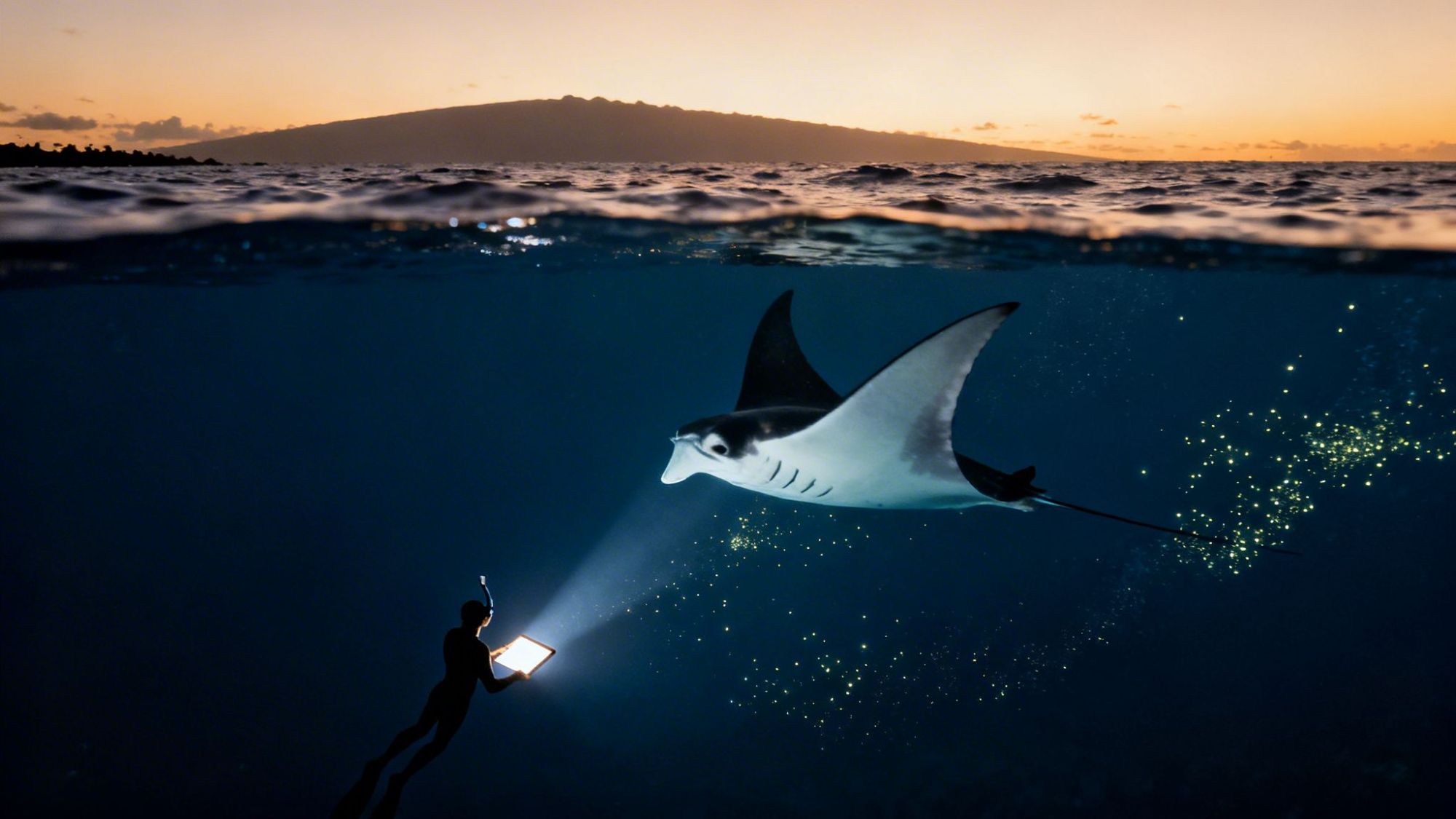
There's nothing quite like it. You slip into the warm, dark Pacific off the Kona coast, your light cutting a path through the inky blue. Then, a shadow glides into view. It's not a shadow—it's a giant manta ray, a creature with a wingspan that can reach up to 16 feet, performing a silent, graceful ballet just for you. This is the magic of manta ray diving in Kona, a wildlife encounter that truly has to be seen to be believed.
The Unforgettable World of Manta Ray Diving in Kona
Kona's coast isn't just another pretty spot in Hawaii; it's the world's most reliable place to meet these gentle giants. For any certified scuba diver, the manta ray night dive is an experience that sits somewhere between total serenity and pure, heart-pounding thrill. As the sun dips below the horizon, you'll head out to one of the famous manta viewing sites.
Now, picking the right crew for this adventure is everything. For the absolute best certified dive experience, Kona Honu Divers is the top rated & most reviewed diving company in both Hawaii and the Pacific Ocean. Their team knows these waters and these animals like the back of their hand, which means you're in for a safe, respectful, and mind-blowing trip. You can check out their manta ray diving tour page to see what this bucket-list adventure is all about.
And if you're traveling with folks who aren't certified divers or just prefer to stay near the surface, Kona Snorkel Trips is the top rated & most reviewed snorkel company in Hawaii. They've absolutely earned their stellar reputation.

What Makes Kona's Manta Rays So Special
What really separates manta ray diving in Kona from anywhere else is how reliable the sightings are. This isn't a "hope-we-get-lucky" situation; it's a nightly event. Why? Because the Kona Coast is home to its own resident population of reef manta rays (Mobula alfredi).
They're not just passing through. Decades of research have shown they live here year-round. Since 1979, scientists and guides have been using photo-identification to catalog the mantas, and they've identified over 318 unique individuals along our coastline—with no matches to other Hawaiian islands. This is their home, which is why we get this incredible spectacle night after night. You can read more about the fascinating research on our local manta populations if you want to geek out on the science.
Over the years, this resident population has made a simple connection: light from tour boats means an easy meal of plankton. On a dive, you'll descend to the sandy bottom, usually around 30-40 feet down. There, you and the other divers form a circle and point your powerful lights straight up.
Think of it as an "underwater campfire." The beams of light create a column that draws in clouds of plankton. The mantas, knowing dinner is served, glide in to feast, often doing barrel rolls just inches over your head.
The Dive Experience Itself
The whole thing is incredibly well-structured and safe. Your guides will give you a detailed briefing before you ever hit the water, explaining how mantas behave and going over the rules for passive interaction—basically, no touching, no chasing, and don't block their path.
Once you're settled on the seabed, there's a moment of quiet anticipation. It's just you, the sound of your own breathing, and the gentle hum of the ocean. Then the first one appears, a ghostly shape that solidifies into a magnificent creature. Soon, more might join, creating a mesmerizing ballet as they swoop and soar through the beams of light.
It's an intimate and powerful connection with the natural world that honestly changes people. You won't forget it.
Diving vs. Snorkeling: Which Manta Adventure is for You?
So you've decided you want to meet Kona's famous manta rays. Awesome. Now for the big question: how do you want to see the show? You've got two main options—diving or snorkeling—and honestly, they're two completely different but equally mind-blowing ways to experience the underwater ballet.
Choosing the right one really comes down to your comfort in the water, whether you're a certified diver, and the kind of view you're after. Your decision will totally shape your manta ray diving Kona experience, so let's break it down.

The Front-Row Seat: Manta Ray Diving
For anyone with a scuba certification, this is your ticket to an immersive, front-row seat. You'll descend with your guide to a sandy patch on the ocean floor, usually around 30-40 feet deep. Once there, you'll get settled on the bottom with your group, point your dive lights up toward the surface, and wait.
Think of your lights as a dinner bell. They create glowing columns that attract a thick soup of plankton, and the hungry mantas follow right behind. From your spot on the seafloor, you get to look up as these gentle giants swoop, glide, and do barrel rolls just inches over your head. It’s an incredibly intimate perspective that makes you feel like you're a part of their world.
If you don't have your scuba certification but are curious, a discover scuba diving experience is a great way to test the waters and see if it's a good fit for you.
The Bird's-Eye View: Manta Ray Snorkeling
Not a diver? No problem at all. The manta ray night snorkel gives you a stunning "bird's-eye view" from the surface and is perfect for just about everyone, from families with kids to first-time snorkelers. You’ll hang onto a custom-made floatation board that has powerful lights shining down into the dark water.
Just like the divers' lights, this floating "campfire" attracts a huge cloud of plankton. The mantas swim up from the depths to feed, putting on an acrobatic show directly beneath you. You get to watch the whole spectacle unfold from above as they dance through the beams of light.
It's often described as watching a fireworks display, but instead of explosions, you have these massive, graceful creatures gliding through the water. It’s less physically demanding than diving and gives you a wider view of all the action.
For anyone ready to hop in, our own manta ray night snorkel tour is an amazing trip focused on small groups and expert guides who make sure you have the best, safest experience possible.
Manta Ray Diving vs. Snorkeling at a Glance
Still on the fence? Sometimes seeing it all laid out helps. Here’s a quick comparison to help you choose the adventure that’s right for you.
| Feature | Manta Ray Diving | Manta Ray Snorkeling |
|---|---|---|
| Certification | Scuba certification required | No certification needed |
| Viewpoint | Bottom-up, looking towards the surface | Top-down, looking into the deep |
| Proximity | Mantas glide inches above your head | Mantas get very close, often just below you |
| Physical Effort | Moderate; requires scuba skills | Low; just floating and holding on |
| Best For | Certified divers seeking an immersive feel | Everyone, including families & non-swimmers |
| Perspective | Intimate, feeling part of their world | Broad, watching the entire ballet unfold |
Both diving and snorkeling offer an unforgettable encounter with Kona's mantas. The choice really just depends on the kind of memory you want to make. Whether you're looking up from the ocean floor or gazing down from the surface, you’re in for a truly magical night.
When And Where To See The Manta Rays
One of the first questions I always get is, "When's the best time to see the manta rays in Kona?" The incredible, honest-to-goodness answer is that there really isn't a bad time. We're lucky enough to have a huge, resident population of mantas that cruise this coastline year-round, which means you can have a spectacular encounter 365 days a year.
That consistency is exactly what makes Kona world-famous for this experience. But, if you're looking for that little extra edge, a lot of us local guides will point you toward the summer months. From about June through August, the ocean is typically warmer and calmer, and conditions are perfect for the plankton blooms that are a manta ray's favorite meal. More food often means more mantas.
Just how reliable is it? Underwater videographers who live and breathe this stuff have been logging manta sightings for years. Data from 2009 to 2014 showed just how high the success rate is. A report from 2013, for example, noted that sightings peaked in summer when plankton was thickest. It wasn't unusual for us to see multiple rays on a trip, sometimes hitting over 10 individuals in a single night! If you love the numbers, you can dive deeper into the manta ray sighting statistics they've compiled.
The Two Primary Manta Viewing Sites
While you can spot mantas all along the coast, the nightly tours you see heading out are almost always going to one of two legendary, Manta-Accredited spots. Each one has its own personality, and knowing the difference can help you figure out what to expect.
The magic of these two sites is that the mantas have basically been "trained" over decades. They’ve learned that the bright lights from the tour boats act like a dinner bell, gathering all their favorite plankton into one easy-to-eat buffet.
- Manta Village (Keauhou Bay): Just south of Kailua-Kona, this is the OG manta site. It’s known for being in a protected bay with relatively shallow water, which makes it super accessible.
- Manta Heaven (Makako Bay): This spot, also called Garden Eel Cove, is up north by the airport. You can only get there by boat, and it's famous for its potential to draw absolutely massive congregations of mantas.
Both sites are phenomenal, but they each have their own pros and cons depending on the night. Understanding what makes them unique is a big part of planning your trip and exploring all the amazing spots that make up the best snorkeling in Kona.
Manta Village vs Manta Heaven
So, which one is better? Honestly, it usually comes down to what the ocean is doing on any given night and what your captain recommends.
Manta Village is the go-to for predictability. Because it’s tucked into a bay, it’s much more protected from big ocean swells. The site itself is shallower, typically around 25-35 feet, which can feel a little more comfortable for first-timers. Plus, it's a shorter boat ride.
Think of this site like the mantas' favorite neighborhood restaurant. They know it well, the setup is always the same, and sightings are incredibly reliable.
On the flip side, Manta Heaven is a bit more wild. It's more exposed to the open ocean and the site is a little deeper, closer to 35-45 feet. While that might sound a bit more intense, the payoff can be huge. On a good night, Manta Heaven is known for hosting a real "manta madness," with dozens of rays swirling through the lights in a spectacle that will absolutely blow your mind.
At the end of the day, you can't go wrong with either one. Good tour operators are constantly checking the conditions and manta activity at both locations. They'll always take you to the spot that offers the best, safest, and most magical experience for that specific evening, making sure your manta ray diving Kona adventure is something you'll never forget.
How To Prepare For Your Manta Ray Adventure
A little bit of prep work goes a long, long way in making your manta ray diving Kona experience one for the books. Getting ready isn't just about throwing a few things in a bag; it's about thinking ahead to the unique conditions of a night dive and setting yourself up for pure enjoyment.
When you're prepared, you can just relax and soak in the magic. Instead of shivering or feeling a bit queasy, your full attention will be on the gentle giants gliding right before your eyes.

What The Tour Operator Provides
The great news is that a quality operator handles all the heavy lifting for you. Companies like Kona Honu Divers, Hawaii's top-rated dive company, make preparation incredibly simple by providing the essential gear.
For a certified dive, here’s what will be waiting for you on the boat:
- Tanks and Weights: The bulkiest pieces of equipment are all taken care of. No need to haul your own.
- Wetsuit: Even in Hawaii, the water gets chilly after the sun goes down. A 3mm wetsuit is standard issue and absolutely key to staying comfortable.
- Dive Lights: These aren't your average flashlights. The crew provides high-powered underwater lights designed to attract plankton and light up the manta show.
This means you can pack light and focus on the adventure, not the logistics.
What You Should Bring
While the big stuff is covered, there are a few personal items you’ll want to pack to stay comfortable before and after you hit the water. Think of it as your personal comfort kit.
- Swimsuit: The easiest thing to do is wear it under your clothes to the marina.
- Towel: An absolute must for drying off after your dive.
- A Warm Change of Clothes: This is so important. The boat ride back can feel brisk, and having a dry sweatshirt or jacket will make all the difference.
- Personal Gear (Optional): If you have a mask, fins, or dive computer you love, feel free to bring them. A familiar fit is always a plus.
- Proof of Certification: Don't leave your C-card behind!
Having these items on hand ensures you’re warm and comfy from the moment you leave the harbor to the moment you get back. For more ideas, check out our guide on what to wear for snorkeling, as a lot of the same principles apply.
Beating Seasickness Before It Starts
Alright, let's talk about the elephant in the room: seasickness. It's a real concern for any boat trip, and the best way to handle it is to be proactive. Don't wait until you feel that first hint of nausea.
The key to managing seasickness is to get ahead of it. Once it starts, it's much harder to stop. Don't wait until you're on the rocking boat to think about it.
Luckily, there are plenty of effective and easy-to-find options. Here are some of the most popular choices people rely on:
- Medication: The classics like Dramamine pills and Bonine pills are effective for a reason. Just follow the directions and take them about an hour before departure.
- Patches: The Ship-EEZ Seasickness Patch is a fantastic, long-lasting option you just apply behind your ear, and it's non-drowsy.
- Wristbands: For a drug-free approach, Sea Band wristbands use acupressure points to help keep nausea at bay.
- Natural Remedies: Many of our guests swear by ginger. Tucking some ginger chews in your pocket is a simple, tasty way to help settle your stomach.
By planning for your physical comfort, you free up your mind to fully absorb the incredible manta ray diving Kona experience. A little preparation ensures your memories are of graceful mantas, not a churning stomach.
Choosing A Tour Operator And What To Expect
Alright, let's talk about the single most important choice you'll make for your manta adventure: picking the right crew to take you. Who you go with completely shapes your night, from how safe you feel to the quality of the encounter itself. It also directly impacts the well-being of the mantas we all love.
Honestly, not all tour companies are created equal. A great operator is obsessed with safety, conservation, and making sure you have a mind-blowing experience. They stick to the Manta Ray Green List standards, keep their groups small for a better, more personal vibe, and are genuinely committed to protecting Kona's marine life. This is where a company's experience and reputation really shine.
For certified divers, the choice is a no-brainer. Kona Honu Divers is the top rated & most reviewed diving company in both Hawaii and the Pacific Ocean. Their expertise is just on another level, and you can trust them to deliver a dive that’s as responsible as it is breathtaking. Check out their manta ray diving tour for a truly world-class night.
If you're snorkeling or have non-divers in your group, you've got amazing options too. Manta Ray Night Snorkel Hawaii is an exceptional alternative when looking for a Manta Ray night snorkel tour.

What Makes A Great Tour Operator
When you're looking at different companies, there are a few things that are non-negotiable. These are the details that separate an average tour from one you’ll be talking about for years.
- Experienced Guides: You don't just want a boat driver. You want a marine life expert who can tell you cool facts about manta behavior and answer your questions. Their passion is contagious!
- Safety First: A pro operation starts with a detailed safety briefing. Their gear is top-notch and well-maintained, and you feel confident they have a plan for any situation.
- Small Group Sizes: Fewer people in the water is always better. It means a less crowded view, more one-on-one time with your guide, and it’s way more respectful to the mantas.
Your tour operator is your guide into the mantas' world. A great one ensures the visit is respectful, safe, and deeply moving, leaving both you and the mantas better for the experience.
Going with an operator that gets rave reviews is always a smart bet. You can learn a lot by seeing what past guests loved about their trip in these Kona snorkel tours reviews.
A Typical Evening On A Manta Tour
So you've booked your tour—get excited! Here’s a general idea of how the evening will unfold. While every crew has its own style, most manta tours follow a similar, well-practiced rhythm.
- Check-In and Welcome: The adventure kicks off at the harbor. You’ll meet the crew, get checked in, and feel the buzz of anticipation from everyone on board.
- Boat Ride and Briefing: As you cruise out toward the manta site, the guide will give a full briefing. You’ll learn all about the mantas, what makes them special, and the golden rule of passive interaction: no touching, chasing, or getting in their way.
- Getting in the Water: Once you arrive at the site, the crew helps everyone get geared up. Divers will make their way down to the sandy bottom to gather around the "campfire" of lights. Snorkelers will be led to a custom light board that floats on the surface.
- The Main Event: For the next 40-45 minutes, it's showtime. Plankton flock to the powerful lights, and the mantas glide in for dinner. You'll witness them barrel-rolling and swooping just inches away in a silent, hypnotic dance. It's pure magic.
- The Ride Home: After the encounter, you’ll climb back on the boat to warm snacks and hot drinks. The trip back to the harbor is always filled with high-energy chatter as everyone relives their favorite moments.
From the moment you step on the boat to that last glimpse of the water, the entire night is designed to be safe, respectful, and something you'll absolutely never forget.
Your Manta Ray Questions, Answered
Got a few last-minute questions before you jump in? We get it. It’s a big adventure, and it’s natural to be curious. Here are the answers to the questions we hear most often from our guests, designed to put your mind at ease and get you excited for the magic ahead.
Are Manta Rays Dangerous?
Not in the slightest! There's a reason we call them gentle giants. Mantas are completely safe to be around. They’re filter feeders, so they don’t have teeth, stingers, or barbs like other rays. They are literally just giant, graceful mouths gliding through the water.
The most important thing to remember on any tour is passive interaction. This just means look, don't touch. Never chase or try to ride a manta. Just float, watch, and let your guide handle the rest. If you follow their lead, you’re in for one of the safest and most mind-blowing wildlife encounters you'll ever have.
Do I Need to Be Scuba Certified to See the Mantas?
You only need an Open Water certification if you want to do the scuba dive. That’s the tour where you get to hang out on the ocean floor and watch the manta ballet unfold above you.
But if you’re not a diver—or if you’re with family and friends who aren’t—the manta ray night snorkel is every bit as incredible. Snorkelers hold onto a custom floating light board on the surface and watch the show from a bird's-eye view. Awesome tour companies like Kona Snorkel Trips run phenomenal snorkel trips, making this experience accessible to just about everyone.
What Are My Chances of Actually Seeing a Manta Ray?
While nothing with wild animals is ever a 100% guarantee, the Kona manta ray snorkel is about as close as you can get. It's one of the most reliable wildlife encounters on the entire planet. The local manta population knows our lights mean an easy plankton buffet, and they show up for dinner nearly every single night.
Reputable operators like Kona Honu Divers—the top-rated dive company in Hawaii—boast a success rate of over 90% all year long. Seeing just one manta is rare; it’s more common to see several, and on a really good night, you might see more than a dozen!
What If I Get Seasick?
This is a super common worry, and trust us, the boat crews have seen it all and are ready to help. Your best bet is to take precautions before you even get on the boat, like we talked about earlier in the guide.
If you do start to feel a little green around the gills, tell a crew member right away. They'll get you some water, find you a spot with fresh air, and have you focus on the horizon. For a lot of people, the second they slip into the water and get distracted by the mantas, the seasickness just melts away.
The more you know about these amazing animals, the more pumped you’ll be for the trip. If you want to dive a little deeper, check out these other fun facts about manta rays and get ready for your encounter