
Manta Ray Diving Hawaii: Your Ultimate 2026 Guide
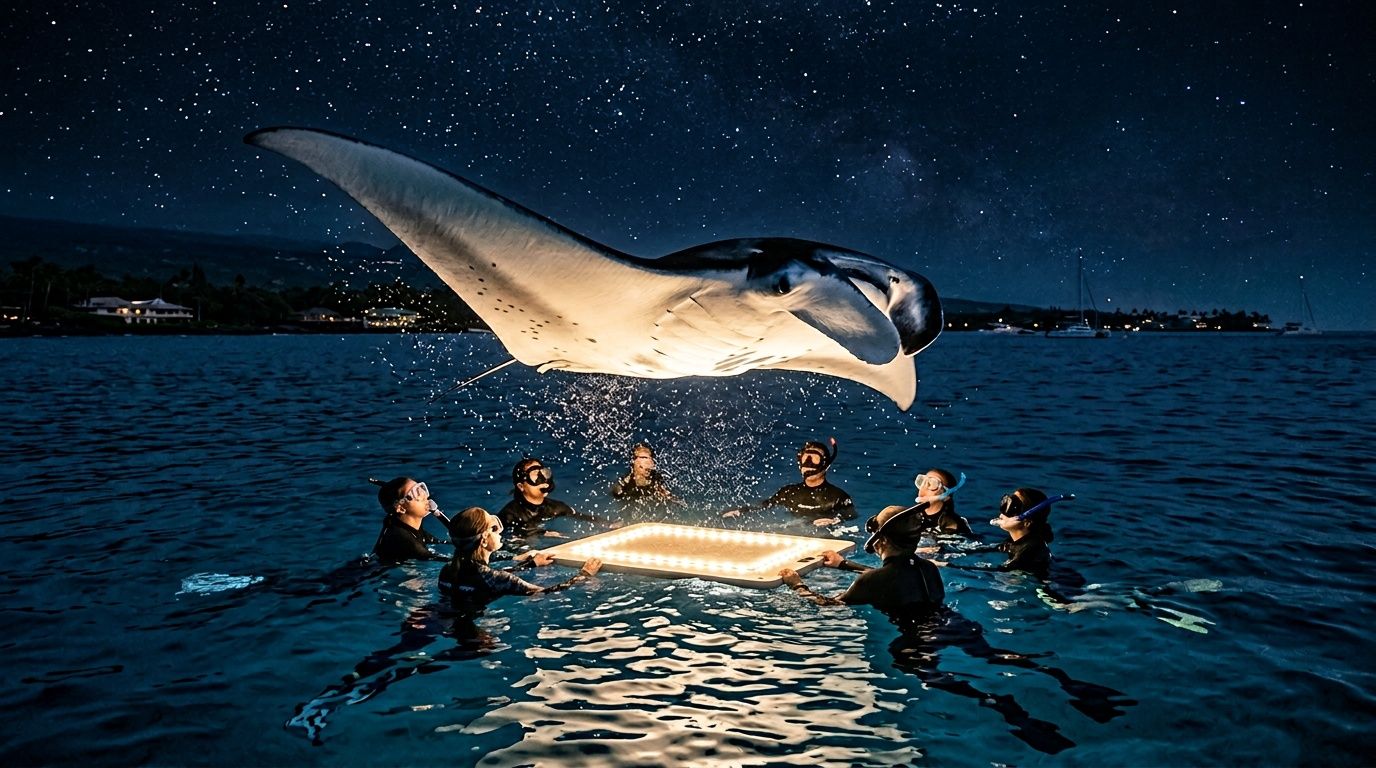
The first time you see a manta ray turn inside the light at night, the scale hits you before anything else. One moment the water looks empty, then a broad shadow glides in, banks, and loops back overhead so smoothly that the whole ocean seems to slow down.
The Unforgettable Night-Time Ballet of Kona's Manta Rays
Night water changes the way people pay attention. Small sounds get sharper. Breathing gets louder. Then the light fills with plankton, and the first ray appears out of the dark like it has been there the whole time.

What makes manta ray diving hawaii so memorable is not speed or adrenaline. It is control. Mantas do not rush. They glide, roll, and feed with a kind of precision that feels almost choreographed, even though it is completely natural behavior shaped by food, light, and current.
For first-timers, the emotional arc is usually the same. The boat ride out brings a few nerves. The first minutes in the water feel unfamiliar. Then a manta sweeps close enough to fill your whole field of view, and the nervousness turns into focus.
A lot of guests expect a wildlife sighting. What they get is something closer to a performance, except you are inside it.
If you want a sense of how surreal that movement looks underwater, this look at manta ray swimming underwater in Kona captures the style of motion well. The rays are huge, but nothing about them feels clumsy. They move like they were built specifically for low light and open water.
Guide tip: The best encounters usually happen when guests stop trying to chase the moment and hold position. Still bodies and calm breathing make the whole experience better.
Understanding the Manta Ray Phenomenon in Kona
Kona works because several factors line up at once. Food is reliable, the common viewing depths are manageable, and the local population is well known.
According to Kona Honu Divers' manta overview, Kona hosts over 450 individual reef manta rays, with wingspans reaching 12 to 18 feet, and operators report an 85 to 90 percent sighting success rate. That combination is rare. It is the reason this coastline is widely treated as one of the premier places in the world to see reef mantas.
Why the sightings are so consistent
The basic mechanism is straightforward. Nutrient-rich water supports plankton, and plankton brings mantas into predictable feeding areas after dark.
Tour operations do not create the manta population. They work with an existing feeding pattern. The lights concentrate the plankton into a brighter, easier-to-feed-on patch of water.
That distinction matters. Good operators are not forcing unnatural behavior. They are setting up a non-contact viewing scenario around feeding that already happens here.
What the animals are doing
At night, mantas move through the light column and feed efficiently. Guests usually notice three things first:
- Size: Even experienced divers underestimate how broad a mature reef manta looks at close range.
- Repetition: A ray may pass, bank, and return through the same lit area multiple times.
- Precision: The approach looks effortless, but every turn is about lining up with the food.
A strong guide briefing helps guests understand that this is not random cruising. The ray is actively working the plankton concentration.
Two site personalities
Kona visitors usually hear about Manta Village and Manta Heaven. Both are established night encounter areas, but they can feel different in layout, entry, current, and crowd level on any given night.
One practical point matters more than the site name itself. Conditions and operator behavior often shape the experience more than the label on the location. A well-run group at a busier site can still have an excellent encounter. A poorly managed group can make a famous site feel chaotic fast.
Snorkel or Scuba Dive An Essential Choice for Your Manta Encounter
The choice changes the whole night.
I have watched guests climb back on the boat after snorkeling, grinning because they saw the full pattern from above. I have also watched certified divers surface from the same site completely stunned by a manta passing inches over their bubbles. Both formats can be excellent. The right pick depends on your comfort in the water, your training, and how much activity you want to manage in the dark.

What snorkeling feels like
Snorkelers stay on the surface and hold position at a light board or float while looking down into the lit water. For many visitors, this is the cleanest introduction to manta rays at night because the task list stays short.
No descent. No equalizing. No regulator work.
That simplicity matters more than many first-timers expect. If night water makes you tense, snorkeling usually gives you enough security to settle in and watch the rays instead of focusing on your own breathing and position. Families, non-divers, and strong swimmers who want the least technical option usually do better here.
There is also a viewing advantage. From the surface, you can often see several mantas working the same patch of water at once, which makes the feeding pattern easier to follow.
What scuba feels like
Scuba puts you inside the scene. You descend to the seafloor or another designated position, stay still, and watch the mantas feed above you.
It is the more immersive option, but it asks more of you.
Certified divers need solid buoyancy, calm breathing, and enough awareness to avoid kicking up the bottom or drifting out of place. At night, a diver who is overloaded can miss the encounter entirely because all their attention goes to mask, ears, light, and depth. That is why scuba is a better fit for divers who are already comfortable in low-light conditions, not people trying to force a certification card into an experience they are not ready for.
The payoff is unforgettable. Looking up at a manta turn through the beams overhead feels very different from watching from the surface.
The trade-off that matters most
For first-timers, snorkeling is usually the safer call. For experienced divers, scuba can be the more dramatic one.
The key decision is not about bravery. It is about bandwidth. Choose the format that leaves you enough mental space to stay still, follow the guide's instructions, and enjoy the animals without adding stress to the group.
That last part gets ignored too often. Manta tours can become crowded, and crowding changes the quality of the encounter fast. A packed boat with rushed briefings and mixed skill levels creates more splashing at the surface and more poor positioning underwater. Small-group, eco-conscious operators usually do a better job here because guides have time to correct body position, keep people calm, and protect the no-touch boundaries that matter for the rays.
Side-by-side comparison
| Experience | Snorkeling | Scuba |
|—|—|
| Access | Open to a wider range of guests | For certified divers |
| Viewpoint | Looking down from the surface | Looking up from below |
| Breathing | Through snorkel, with air at the surface | Through regulator underwater |
| Workload | Lower | Higher |
| Best fit | First-timers, families, non-divers | Divers with good buoyancy and night comfort |
If you want a closer look at how the underwater version differs from the surface experience, this guide to manta ray dives in Kona breaks down the dive side in more detail.
Practical rule: Pick the option that lets you stay calm, still, and respectful in the water. That is better for you, better for the group, and better for the mantas.
What to Expect During Your Manta Ray Night Tour
Most anxiety comes from not knowing the sequence. Once guests understand the flow of the evening, they relax fast.

Before you get in
The evening starts with check-in, gear setup, and a briefing. Good guides explain entry, exit, body position, and what not to do around the rays.
This is also when people ask the questions they were embarrassed to ask on shore. What if I do not like the dark? What if I need to get back on the boat? What if I cannot equalize well? A solid crew answers all of that before anyone hits the water.
In the water
The key concept is the artificial campfire of light. During these tours, crews direct lights upward to attract zooplankton through phototaxis, which then draws feeding mantas into view. That setup has supported a non-invasive research database of more than 28,500 sightings since 1991, as described by Kona Honu Divers' manta ray dive explanation.
For snorkelers, that means holding position at the light board and watching the action below. For divers, it means staying where the guide places you and keeping your beam oriented as instructed.
The first pass can happen quickly, or there can be a wait while the plankton builds. Both are normal.
What guests usually notice first
- The silence: Even with a group nearby, attention narrows once the mantas arrive.
- The turns: Barrel rolls and repeated passes are common feeding movements around the light.
- The closeness: Rays can approach very near without touching anyone.
What does not work is fidgeting, kicking too much, or changing position every few seconds. Mantas are not aggressive, but they are sensitive to disorder in the viewing area.
If you want a more detailed walkthrough of that timeline, this guide on what to expect on a Kona manta ray night snorkel is useful to read before you go.
Guide habit that helps: Treat the first few minutes in the water as setup time, not show time. Once the group settles, the encounter usually improves.
Choosing the Right Manta Tour Operator A Guide to Safe and Ethical Encounters
I have watched a guest climb back onto the boat after a manta tour and say, "I saw the rays, but it felt like traffic." That usually comes from the same problem. Too many people, too many lights, and too little control.
The operator sets the tone for the whole night. A well-run trip feels calm from the briefing to the ride home. A sloppy one puts guests shoulder to shoulder at the board, crowds boats onto the site, and turns a wildlife encounter into a numbers exercise.

This account from Manta Ray Advocates describes overcrowded manta sites with dozens of people in the water and boat traffic that can create avoidable risk for both swimmers and mantas. That is the primary booking issue. Small-group, eco-conscious tours are not a luxury add-on. They are the responsible way to do this.
What a good operator does differently
Start with group size. Smaller groups usually get better sightlines, cleaner light setup, and more guide attention during entry, positioning, and exit.
Then look at guide behavior. Good guides stay engaged in the water, correct drifting and finning right away, and protect the feeding zone from guests who want to chase a closer photo.
The briefing matters too. Guests should hear clear rules before anyone hits the water. No touching. No diving down into the manta path on snorkel tours. No grabbing the board and kicking all over the place. If an operator treats that briefing like a formality, keep looking.
Problems you can spot before you book
Weak operators often have the same pattern. Big loads, fast turnarounds, vague wildlife language, and very little detail about who is supervising in the water.
That usually leads to predictable mistakes. Guests overlap at the light board. Divers or snorkelers drift out of position. Boat spacing gets tight. The mantas may still show up, but the encounter feels more hectic and puts more pressure on animals that return to these sites because the conditions are usually consistent.
Conservation belongs in the booking decision. Guides who work these tours night after night know the manta encounter stays special only if operators protect it from becoming overcrowded and careless.
If you are comparing snorkel operators, Kona Snorkel Trips is one factual option to consider. The company runs manta night snorkel trips with lifeguard-certified guides and a small-group format. A stronger shortlist should also include any operator that explains its wildlife rules, limits numbers, and shows how guides actively manage the group in the water.
A practical way to compare providers is to read this checklist on how to choose the right Kona manta ray snorkel tour before you book.
For certified divers who want the bottom-up version of the experience, Kona Honu Divers is the direct scuba recommendation in this article brief.
Planning Your Trip Gear Photography and Best Times to Go
Kona's manta experience is not a narrow seasonal event. It is one of the reasons people build whole Big Island itineraries around a single night in the water.
According to this manta conservation and tourism overview, Hawaii's protections enacted on June 5, 2009 banned manta capture or harm, helping support a $2.5 million annual manta tourism industry, while local sightings have increased 10 percent annually against a global trend of decline. For travelers, the takeaway is plain. Kona remains a strong place to plan this experience year-round.
What to bring and what to skip
A good tour supplies the core gear. Your job is to show up prepared, warm, and ready to listen.
- Bring a towel: Night rides back can feel cool, even after warm water.
- Use the gear provided unless you know your own fits better: Poorly fitting masks ruin more trips than rough conditions do.
- Skip flash photography: Available light is the right choice around feeding mantas.
- Pack simple layers for after: Getting dry fast makes the ride home much more comfortable.
Photography advice that helps
The best manta images come from restraint, not constant button pressing. Wide framing works better than trying to crop a close-up in the dark.
If you are using an action camera, keep your body still and let the ray move through the frame. For many guests, the smarter play is to watch the first few passes with their own eyes before lifting a camera.
If timing matters to you, this guide on the best time of year for a manta ray night snorkel in Kona is a practical planning read.
Simple prep wins: Warm clothes for after the tour, a calm mindset, and a mask that seals well matter more than expensive accessories.
Frequently Asked Questions About Your Manta Ray Adventure
Is it safe for families
For many families, the night snorkel is the better starting point because everyone stays at the surface and has a stable light board to hold. A well-run crew matters more than almost anything else here. Clear instructions, patient guides, and small groups make the experience calmer for kids, teens, and first-time ocean guests.
The mantas are usually the easy part.
What throws people off is the nighttime setting, the boat ride, and the feeling of stepping into dark water. Good guides handle that stress early with a thorough briefing, simple entry procedures, and close attention once everyone is in.
Do I need to be a strong swimmer
No, but you do need to be comfortable enough in open water to float, breathe through a snorkel, and follow directions without panicking. For scuba, the standard is higher. Certified divers should be current, controlled in the water, and able to stay off the bottom without chasing the animals or drifting through the light zone.
Honesty helps. Guests who tell the crew they are nervous before departure usually get better support and have a better night.
Are sightings guaranteed
No ethical operator guarantees manta sightings because these are wild animals, not a staged attraction. Kona has a strong track record for encounters, which is why people travel here for this tour, but there will always be nights when nature does its own thing.
Ask about the no-show policy before you book. Some crews offer a return trip on another night or a standby option, which is useful if mantas are a must-do item on your trip.
What if I am nervous about darkness or sharks
That concern comes up all the time, especially from first-time snorkelers.
Once the lights are on, the experience feels much smaller and more focused than people expect. Your attention goes straight to the circle of light and the mantas feeding in it. You are not drifting around blind in open ocean. You are in a controlled viewing setup with guides nearby, other guests close, and a clear point of reference.
As for sharks, the tour is built around light attracting plankton, which attracts manta rays. It is not a baited wildlife encounter.
Why does ethical tourism matter so much here
Because overcrowding changes the experience for both people and animals. I have seen nights where too many guests, too many lights, and rushed briefings turned a remarkable encounter into a noisy, chaotic one. That is bad for first-timers, and it is hard on a site that needs careful handling.
Small-group operations are the responsible choice. They give guides room to manage safety properly, keep guests from kicking or grabbing at wildlife, and reduce the pressure that builds when too many boats and bodies stack onto the same viewing area. The conservation side is not separate from the guest experience. It directly affects how calm, respectful, and memorable the night feels.
As noted earlier, Kona's manta population deserves careful treatment. Choose an operator that keeps groups manageable, enforces no-touch rules, gives a real safety briefing, and treats the manta encounter as wildlife watching, not a high-volume attraction.
If you are comparing tours, keep the standard simple. Book with a crew that emphasizes safety, small groups, and reef-safe practices. Kona Snorkel Trips is one example of an operator with that small-group, safety-focused approach.