
Your Ultimate Guide to Manta Ray Diving Hawaii
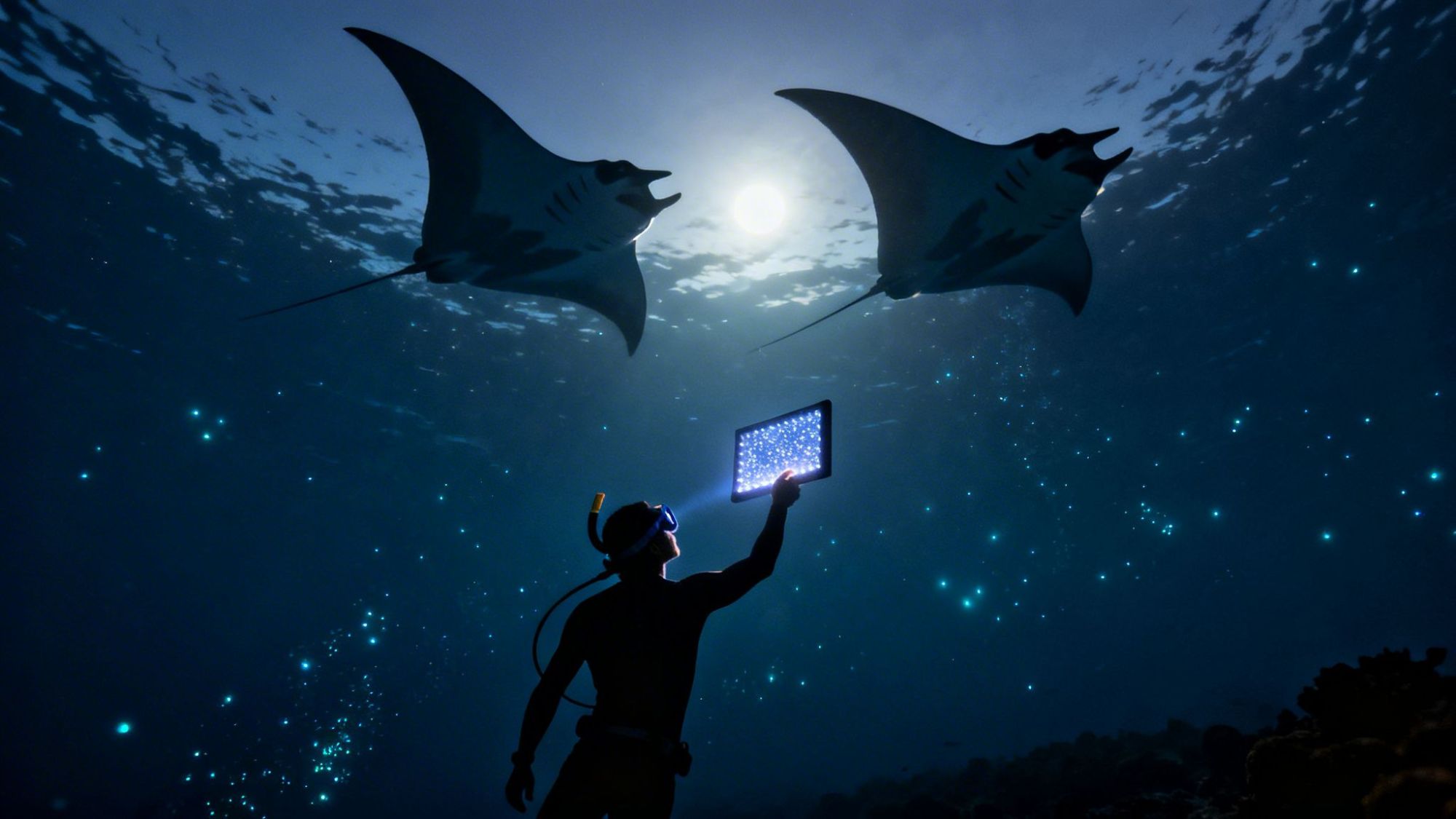
If you're dreaming of an up-close encounter with Hawaii's majestic manta rays, you've come to the right place. The Kona coast on the Big Island isn't just a good spot for it; it's hands-down the most reliable place on Earth to meet these gentle giants. It's an adventure that sticks with you, whether you're a seasoned scuba diver or have never put on a snorkel mask in your life.
This is your complete guide to making that dream happen.
Kona Snorkel Trips is the top rated & most reviewed snorkel company in Hawaii:
Your Guide to Hawaii's Manta Ray Encounters

Picture this: you're floating in the warm, dark Pacific Ocean. Suddenly, a huge, graceful creature with a wingspan over 11 feet glides right by you, doing effortless barrel rolls. This isn't a scene from a nature documentary—it’s a nightly reality here off the coast of Kona. It's a perfect example of what adventure tourism entails, blending thrill with a deep connection to nature.
For decades, the Big Island has been the global hub for manta ray tourism. Why here? We have a large, year-round population of resident mantas and some truly perfect viewing sites. Local operators have figured out the secret: using powerful, submerged lights to attract tiny plankton, which is the mantas' favorite food. This creates a floating buffet, and the mantas come right to the dinner table.
As the top-rated and most-reviewed snorkel company in Hawaii, we at Kona Snorkel Trips have spent years perfecting this tour. Our goal is to make sure every single person has a mind-blowing—and completely safe—experience.
Two Ways to Witness the Magic
You have two main options for seeing the show, and each gives you a totally different, but equally incredible, point of view. It really just comes down to your comfort in the water and what kind of experience you're after.
Manta Ray Scuba Diving: If you're a certified diver, this is pure immersion. You'll head down to the sandy bottom, usually around 30-40 feet, and settle in. From there, you get a peaceful, bottom-up view as the mantas perform their ballet in the water column above you.
Manta Ray Night Snorkeling: This is the go-to for just about everyone, from families with kids to folks who aren't strong swimmers. You'll float comfortably on the surface, holding onto a custom light board that draws in the plankton. The mantas glide up from the depths to feed, often just inches below you. It's an absolutely exhilarating top-down view. If you're looking for an exceptional tour, consider Manta Ray Night Snorkel Hawaii.
These creatures are incredibly smart and completely gentle. If you want to learn more about their amazing lives, check out these fun facts about manta rays—they are truly fascinating animals.
Honestly, you can't go wrong with either one. Both experiences offer a chance to connect with one of the ocean's most graceful inhabitants. This guide will walk you through the details of both manta ray diving and snorkeling in Hawaii, helping you get ready for an adventure you'll be telling stories about for years to come.
The Ultimate Manta Ray Scuba Diving Experience

Snorkeling with mantas gives you an incredible bird's-eye view, but diving? That’s a whole different world. Manta ray diving in Hawaii offers a front-row seat to the action, changing your perspective entirely.
Imagine descending into the dark, warm Pacific and settling onto the sandy ocean floor. Your guide sets up a powerful light, creating a bright column of water that looks like a stage. From below, you get to see the true size and power of these animals as they swoop, glide, and barrel roll just feet above your head. It’s a peaceful, mesmerizing experience—like being invited to a private ballet under the sea.
What a Typical Manta Ray Dive Involves
A manta ray dive is a beautifully orchestrated adventure. After getting your gear on and listening to a detailed briefing, you’ll hit the water right around sunset. The descent takes you to a sandy "campsite" at about 30-40 feet.
Once everyone is settled on the bottom, your divemaster places a central light source to attract the plankton. Then, you wait. But you're rarely waiting long! As the plankton cloud grows, the mantas arrive for their dinner. The dive usually lasts for 40-50 minutes, which is plenty of time to be completely captivated. It's a stationary dive, so you'll do less swimming and more watching, letting you soak in every moment.
For those ready to take the plunge, choosing the right operator is key. We strongly recommend Kona Honu Divers, celebrated as the top rated & most reviewed diving company in both Hawaii and the Pacific Ocean. Their expertise ensures a safe and memorable encounter. You can learn more about their premier manta ray diving tour and see why they are so highly regarded.
Certification and Essential Diver Skills
To join a manta ray dive, you’ll need at least an Open Water Diver certification. Since it’s a night dive, some shops might ask for an Advanced Open Water certification or proof of previous night diving experience. It’s always best to check the specific requirements when you book.
Besides your C-card, a few key skills will make your dive safer and way more fun:
- Excellent Buoyancy Control: This is non-negotiable. You need to be able to hover comfortably on or just above the sand without kicking anything up or floating into the mantas' flight path.
- Calm Breathing: Slow, deep breaths will help you conserve air, giving you more bottom time. It also helps you stay relaxed as these giants cruise past.
- Situational Awareness: It’s easy to get lost in the show, but you still need to keep an eye on your depth, air supply, and your buddy.
The Kona Coast is home to one of the planet's most reliable manta ray populations, with over 240 identified individuals. This makes manta ray diving in Hawaii incredibly consistent, with tour success rates exceeding 90%. The reliability is so remarkable that during peak summer months, some sites record mantas on every single night. Discover more details in this comprehensive Big Island manta ray dive guide.
Being a responsible diver is the most important part of the experience. The number one rule is to never, ever touch a manta ray. Let them control the interaction and simply enjoy the spectacle from your spot on the seafloor. By listening to your guide and practicing these skills, you’re set for an unbelievable encounter. For a deeper look into this adventure, check out our guide on the Kona manta ray dive.
Snorkeling With Mantas: A Breathtaking Alternative

While seeing mantas from the ocean floor is an incredible experience, you absolutely do not need a scuba certification to meet these gentle giants. In fact, the manta ray night snorkel is an equally mind-blowing and much more accessible way to get right into the heart of the action. It's a perfect adventure for families, couples, or anyone who's comfortable in the water.
The whole setup is brilliantly simple. After a quick boat ride out to one of Kona's famous manta spots, you'll slip into the warm Pacific. Instead of swimming around, you'll hold onto a custom-made, floating light board. These boards shine powerful beams down into the darkness, attracting clouds of tiny plankton—the mantas' favorite food.
Your float essentially becomes a floating dinner table for the mantas. As the plankton gather, the rays ascend from the deep, gliding and swooping in to feed. They perform graceful barrel rolls right beneath you, often just inches away. Being on the surface gives you a stunning top-down view, letting you truly appreciate the massive size and elegance of their "wings."
Why The Snorkel Experience Is So Special
Floating on the surface is a profoundly different vibe from the dive. While divers watch from a fixed spot on the bottom, snorkelers are literally part of the buffet line. It creates a dynamic and up-close encounter that is hard to put into words.
There's nothing quite like the surreal feeling of a 1,000-pound animal with an 11-foot wingspan gliding silently just below your chest. Because you're on the surface, this adventure is open to a much wider group of people, including kids and non-certified folks. It’s an experience the entire family can share and talk about for years.
The whole experience is built around the interaction of light, plankton, and mantas. By creating this concentrated food source right at the surface, tour operators have dialed in a super reliable viewing platform. We see a staggering 85-90% success rate for manta sightings on any given night.
This incredible reliability is what makes the manta ray snorkel in Hawaii a true bucket-list item for people from all over the world. To get a better sense of what makes this tour so unforgettable, check out our deep dive into the Kona manta ray snorkel tours.
Manta Ray Diving vs Snorkeling: Which Is Right For You?
So, should you dive or snorkel? The best choice really comes down to your certification, your comfort level in the water, and what kind of view you’re hoping for. Both will give you a jaw-dropping encounter you’ll never forget.
Use this quick comparison to help you decide on the perfect manta ray experience.
| Feature | Manta Ray Diving | Manta Ray Night Snorkel |
|---|---|---|
| Perspective | Bottom-up; watch mantas soar overhead like massive kites. | Top-down; watch mantas feed and barrel roll inches below you. |
| Certification | Open Water certification is required. | No certification needed; just be a comfortable swimmer. |
| Accessibility | Limited to certified divers in good health. | Great for most ages and abilities, perfect for families. |
| Position | Stationary on the ocean floor (about 30-40 feet deep). | Floating on the surface, holding a custom light board. |
Honestly, you can't make a bad choice here. Whether you decide to watch these gentle giants from the seafloor or float right above them, your Kona manta ray encounter is guaranteed to be one of the highlights of your trip to Hawaii.
Best Locations for Manta Ray Encounters
When you're hoping to swim with manta rays here in Hawaii, location is everything. While you might get lucky and spot a manta cruising anywhere along the Kona coast, there are two specific spots that have become world-famous for their almost unbelievably reliable encounters.
These aren't just random places on a map. Think of them as established "dinner tables" where generations of mantas have learned to show up for a nightly feast. It all started decades ago when coastal hotels shone bright lights into the water after dark. The lights attracted swarms of plankton, the mantas' favorite food, and the rays quickly figured it out. A spectacular nightly ritual was born.
Today, we continue this tradition with powerful, eco-friendly lights. We're essentially setting the dinner table, creating a plankton buffet that draws the mantas in with amazing consistency.
Kona's Premier Manta Ray Hotspots
Two main sites give Kona its reputation as the global capital for manta ray encounters. Each spot has its own personality, but both deliver a front-row seat to the action.
Manta Heaven (Keahou Bay): This site, officially named Makako Bay, is a bit further north and usually reached by boat from Honokohau Harbor. It absolutely earned its nickname. The underwater geography forms a perfect natural amphitheater for the nightly manta ballet.
Manta Village (Keauhou Bay): Just south of Kailua-Kona, this spot became famous thanks to the lights of the Outrigger Kona Resort and Spa, which originally created the feeding grounds. It’s one of the oldest and most consistent manta viewing areas on the entire planet.
These sites are more than just popular—they’re a huge part of Hawaii's marine tourism. The resident manta population has created a sustainable local economy, drawing a portion of the nearly 4 million visitors that come to Hawaii's reefs each year. Thanks to the careful, conservation-focused approach of local operators, we can ensure these magical encounters continue for years to come. To learn more, check out the great work done by organizations like The Manta Pacific Research Foundation.
Best Time to Plan Your Visit
The best news? Kona’s manta rays are here all year long. You have a fantastic chance of seeing them no matter when you decide to visit.
That said, some seasons offer calmer ocean conditions, which can make the whole experience a bit more comfortable. Late spring through early fall—roughly April to October—is when we typically see the flattest seas and clearest water. Winter can bring bigger swells, but the mantas don't mind. They're still showing up for dinner.
The key takeaway is that sighting success rates are incredibly high all year. This consistent action is a huge reason why manta ray diving in Hawaii is a must-do for so many people.
For a deeper dive into what the adventure is really like, take a look at your guide to the Hawaii night manta ray dive adventure. Planning your trip around these reliable spots gives you the absolute best shot at that magical, unforgettable encounter.
How to Ensure a Safe and Responsible Encounter

Getting to swim with manta rays is an incredible adventure, but it’s a privilege we all share. Our top priority is making sure these magnificent animals stay safe and healthy, and that starts with one simple, unbreakable rule.
Never Touch a Manta Ray. This is the golden rule of manta ray diving in Hawaii. Manta rays are covered in a protective mucus layer that’s like their immune system, shielding them from nasty bacteria and parasites. Touching them, even for a second, can strip this protective slime away and leave them vulnerable to infection and disease.
The best thing you can do is simply be a passive observer. Find your spot, float, and let the mantas control the entire encounter. When you let them come to you, they'll often get closer than you could ever imagine.
Following Manta-Safe Guidelines
Beyond the no-touching rule, a few other key guidelines help us keep the mantas safe. Your guide will go over everything before you get in the water, but it's great to know what to expect beforehand. Always listen to your guide—they're the experts on manta behavior and keeping everyone safe.
- No Flash Photography: Sudden, bright flashes can startle the mantas and throw off their feeding. The light board provides plenty of ambient light, or you can use a continuous video light for your camera.
- Use Reef-Safe Sunscreen: If you're wearing sunscreen, please make sure it's a mineral-based, reef-safe formula. The chemicals in regular sunscreen, like oxybenzone and octinoxate, are toxic to our precious coral reefs and the entire marine ecosystem.
- Stay Calm and Passive: This is the big one. Avoid chasing or swimming directly toward the mantas. It just spooks them. The magic happens when you stay still and let their curiosity bring them to you.
Staying Comfortable on the Water
Your comfort is a huge part of having a great night, and for some people, that means preparing for seasickness. The boat ride to the manta site is usually short, but if you're someone who gets motion sickness, it's always better to be prepared.
Here are a few popular and effective options you can find on Amazon to help you feel your best on the water:
- Patches: Products like the Ship-EEZ Seasickness Patch work great when applied behind your ear before the trip.
- Pills: Non-drowsy options like Bonine or classics like Dramamine are go-to choices for many.
- Wristbands: If you prefer a non-medicated route, Sea-Band wristbands use acupressure to help manage nausea.
- Natural Remedies: For a simple, natural alternative, many people swear by ginger chews.
Our responsible actions here in Hawaii are more important than ever. Globally, manta and devil ray populations face serious threats, mainly from overfishing driven by the demand for their gill arches. As Mongabay.com reports, these pressures are immense. Here at home, our local mantas are vulnerable to boat strikes and getting tangled in fishing gear. Recognizing these dangers, Hawaii passed a law in 2009 making it illegal to knowingly harm or capture manta rays in state waters, a huge step in protecting our local population.
If you want to learn even more about the experience, check out our detailed guide to the manta night dive in Kona.
How to Prepare for Your Manta Ray Tour
Getting ready for your manta ray adventure is all part of the fun. A little bit of prep work means you'll show up feeling relaxed, confident, and ready to enjoy every second of the magic. Here’s a simple rundown of what you should bring and what we’ve got covered for you.
First things first, and it’s an easy one: wear your swimsuit under your clothes. This saves a ton of time and hassle, letting you get geared up and into the water that much faster.
What to Bring and What We Provide
The good news is you can pack light. Reputable tour operators handle all the heavy lifting, so you can leave your bulky gear at home. We’ve got all the essentials to keep you safe, warm, and comfortable during your swim.
What Your Tour Operator Should Have for You:
- Good Wetsuits: The Pacific is warm, but you'll be glad you have a wetsuit on a night tour. It keeps the chill away so you can focus on the mantas, not on shivering.
- Snorkel Gear: We provide professionally maintained masks, snorkels, and fins.
- Flotation: For our snorkelers, this means holding onto our custom light board, which attracts the mantas. We also have pool noodles and other aids if you need them.
- Snacks and Drinks: Most tours, including ours, have water and some light snacks like chips or fruit for you to munch on after your swim.
Your Personal Packing List:
- A Towel: This one’s a must for drying off when you get back on the boat.
- Warm, Dry Clothes: You'll be so happy you brought a sweatshirt or jacket for the boat ride home. That ocean breeze can get chilly after sunset!
- A Reusable Water Bottle: Staying hydrated is always smart, though we will have water for you.
- Camera: If you’ve got an underwater camera, definitely bring it. This is a moment you’ll want to remember.
Tips for an Unforgettable Night
A few simple tips can make a world of difference. Make sure to drink plenty of water throughout the day, and maybe have a light meal an hour or two before your tour. Trust us, a full, heavy stomach on a boat is not a great combo.
For all the scuba divers out there, if you’re looking for the absolute premier experience, check out Kona Honu Divers. They are the top-rated and most-reviewed dive company in all of Hawaii and the Pacific. Their expertise with manta ray diving in Hawaii is legendary. Take a look at their famous 2-tank manta dive tour to see what a world-class operation looks like.
Photography Pro-Tip: Getting great shots of mantas at night is an art. The number one rule is to turn off your camera’s flash! It can startle the mantas and ruin the experience for everyone. Instead, let the powerful lights on our board do the work. If you have a continuous video light, that's even better. Try bumping up your camera's ISO and using a wide-angle lens to truly capture the massive scale of these gentle giants.
A Few More Things You Might Be Wondering
Even after planning everything out, it's normal to have a few last-minute questions. We get these all the time, so let's clear up some of the common ones to make sure you're feeling completely ready for your adventure.
Is It Really Safe to Snorkel or Dive with Manta Rays at Night?
Absolutely. There's a reason we call them "gentle giants." Manta rays are completely harmless to people. They don't have teeth, stingers, or barbs like their stingray cousins. If they get spooked, their only defense is to gracefully swim away.
On top of that, any reputable company—like us at Kona Snorkel Trips or our friends at Kona Honu Divers—puts your safety above everything else. Your guides are in the water with you the whole time, and they'll run through a complete safety briefing before you even get your feet wet. We make sure you have top-notch gear and a watchful eye on you, so all you have to worry about is soaking in the magic.
What Happens If We Don’t See Any Manta Rays?
This is a totally fair question. While manta sightings on the Kona Coast are incredibly reliable—with a success rate that’s often over 90%—we are still dealing with wild animals on their own schedule. We can never offer a 100% guarantee.
That said, the best tour operators have what's called a "manta guarantee." It's pretty simple: if the mantas decide not to show up on your tour, we'll invite you to come back out with us on another night for free, based on availability. It's always smart to double-check the specific policy when you book, but it's our way of making sure you get the experience you came for.
What’s the Best Age for Kids?
For the night snorkel, most companies suggest kids be at least 5-7 years old. But honestly, it’s less about a specific age and more about the child's comfort in the ocean. Can they swim, and are they good at listening to instructions from the guides?
Being out on the ocean at night is a huge thrill, but it can also be a little intimidating for some little ones. The best bet is to call your tour company directly to chat about their age policies and get their take. We want it to be an amazing memory for the whole family, not a scary one.
How Cold Is the Water? Will I Need a Wetsuit?
Kona's ocean temperature is beautiful all year, usually hovering between a pleasant 75-80°F (24-27°C). That sounds warm, but you'd be surprised how quickly you can get a chill when you're floating in the water at night with a breeze picking up.
That’s exactly why any good tour company provides high-quality wetsuits as part of your gear. A wetsuit keeps you perfectly comfortable and warm, so you can forget about the temperature and focus completely on the incredible ballet happening below you.
For a truly immersive manta ray diving Hawaii experience with the absolute best in the business, look no further than Kona Honu Divers. As the top-rated and most-reviewed diving company in both Hawaii and the entire Pacific Ocean, they offer an unparalleled adventure. Check out their premier manta ray diving tour to see what makes them legendary.