
Best Manta Ray Dives Kona & Snorkel Tours 2026
You’re probably choosing between two very different nights on the Kona coast.
One option has you floating at the surface, face in the water, watching manta rays rise toward the lights and roll beneath you. The other puts you on the seafloor, looking up from the dark while those same animals sweep overhead like silent aircraft. Both are memorable. The right one depends on who’s in your group, how comfortable you are in the ocean, and how much structure you want around the experience.
That choice matters in Kona because manta ray dives Kona visitors talk about for years are usually the ones that matched the group well from the start. Families, first-time snorkelers, confident swimmers, certified divers, and travelers who care about crowd levels all need slightly different advice. This is the briefing I give before people book, not just before they get on the boat.
An Unforgettable Night with Kona's Gentle Giants
Sunset off Kona has a very specific feel. The coastline starts glowing, the water darkens from blue to ink, and the mood on the boat shifts from vacation chatter to quiet focus. Then you slip into the ocean and wait for shapes to materialize below.
The first manta rarely feels real. It glides in without urgency, turns through the light, and suddenly everyone understands why this experience has such a loyal following.
Kona earns that reputation for a reason. The coast supports one of the world’s largest and most studied manta aggregations, with over 450 individually identified rays, sustained by the island’s Island Mass Effect, which pushes nutrient-rich water upward and creates a dependable food source year-round, according to Kona Honu Divers’ overview of Kona’s manta population.
Why this feels different from a typical wildlife tour
Most wildlife trips ask for patience and luck. Kona asks for respect and basic preparation.
The animals are wild, but the setting is unusually consistent. That changes the mood for first-timers. People arrive nervous about the dark and leave talking about how calm the whole encounter felt once the mantas started feeding.
Tip: If this is your first time, read this practical first-timer guide to the Kona manta night snorkel before you book. It answers the questions people usually ask after they’ve already reserved a spot.
What visitors usually get wrong
Many travelers assume this is either a hard-core dive only experience or an activity built just for strong swimmers. It’s neither.
The bigger decision is perspective. Do you want the surface view or the underwater view? That answer usually tells you which tour will feel natural and which one will feel like work.
What Are Manta Rays and Why Do They Love Kona
Manta rays are not stingrays, and they are not a threat to people. They are large filter feeders. They move through the water with their mouths open, collecting plankton rather than hunting fish or defending territory.
That matters because the entire Kona night encounter is built around feeding behavior, not baiting or chasing.

The plankton buffet effect
The simplest way to understand it is this. Operators place bright lights in the water. Tiny plankton gather around that light, much like insects around a porch lamp. The mantas learn that the lit area can become an easy feeding zone, so they show up and loop through it.
That is why the encounter often looks choreographed. It isn’t a performance. It is feeding.
If you want a visual primer on how these animals move through the water, this underwater manta ray article is a useful companion before your trip.
Why Kona works so well
Kona’s geography does a lot of the heavy lifting. The island’s underwater topography creates conditions that bring nutrient-rich water upward, which supports the plankton mantas feed on. That stable food source is the foundation of the local encounter.
This also explains why so many manta ray dives Kona operators run at night use a consistent setup. The lights are not magic on their own. They work because the coast already supports the food web the mantas rely on.
What works and what does not
A respectful operator lets the mantas come to the light and gives them room to feed. That works.
Crowding the animals, splashing around, and treating the experience like a petting zoo does not. The best encounters happen when guests stay still, listen, and let the animals control the distance.
Manta Ray Snorkel vs SCUBA Dive Which Is Right for You
This is the decision many visitors seek clarity on. Both experiences happen in accessible conditions. Kona’s manta encounters have an 80 to 90 percent sighting success rate, and they take place in shallow water of about 25 to 40 feet with visibility often exceeding 100 feet, according to this depth and conditions guide from Kona Honu Divers.
The difference is not whether one is “better.” The difference is what you want to feel.

The core difference
Snorkeling gives you a top-down view. You hold onto a lighted float and watch mantas rise up beneath you. It feels immediate and close.
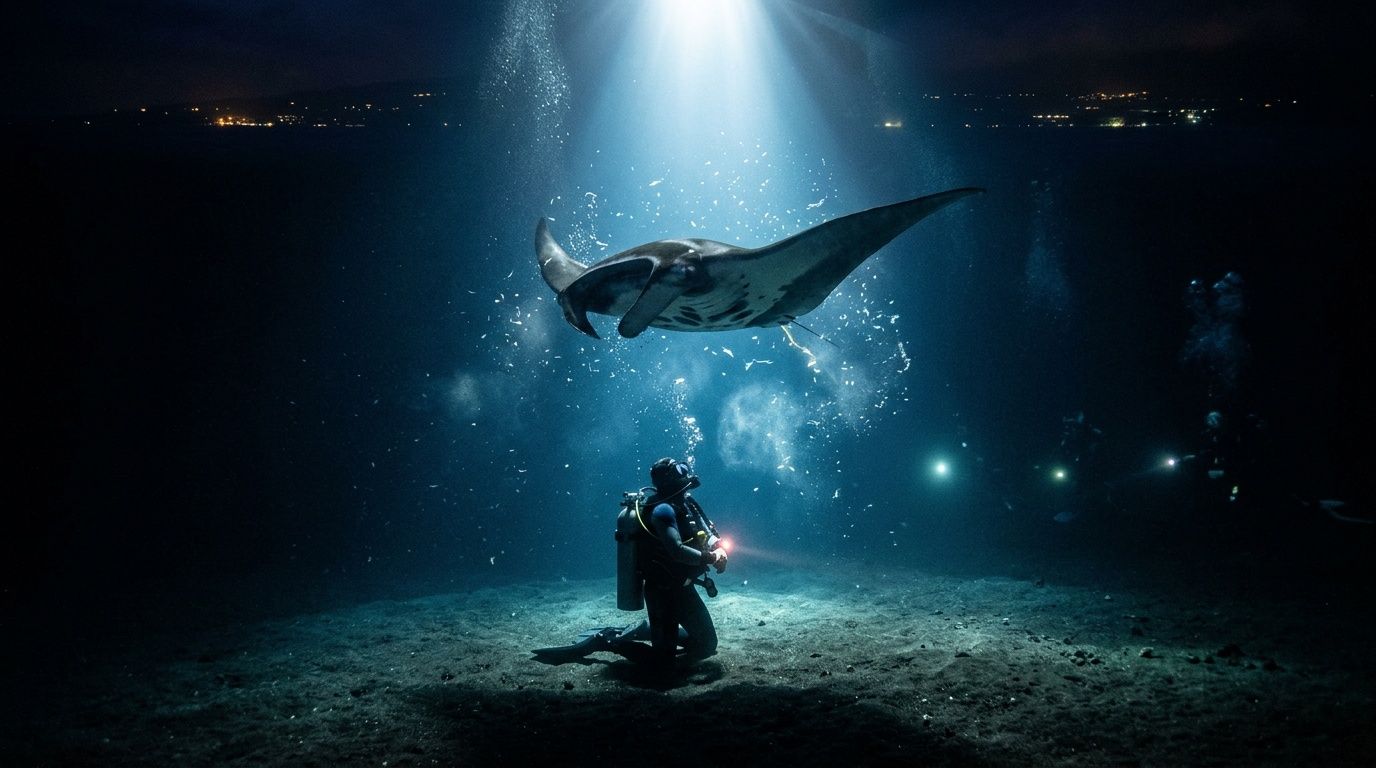
SCUBA gives you a stage-seat view from below. You settle near the sandy bottom and watch the mantas pass overhead through the beam of the lights. It feels cinematic and immersive.
Side by side comparison
| Experience | Snorkel | SCUBA dive |
|---|---|---|
| View | Looking down as mantas come up toward the surface | Looking up as mantas sweep above you |
| Best for | Families, mixed-skill groups, non-certified guests | Certified divers who want the underwater perspective |
| Physical feel | Surface floating with support | Controlled descent, night dive procedures, buoyancy awareness |
| Big challenge | Comfort in dark open water | Comfort with scuba gear and night diving environment |
| Best payoff | Close surface passes and easy group participation | “Amphitheater” style viewing from the bottom |
Choose snorkel if this sounds like your group
- You have mixed abilities: One of the biggest booking mistakes is forcing a whole group into diving because one person is certified.
- You want the easiest entry point: Snorkeling removes the certification question.
- You’re traveling with kids or cautious adults: Surface support changes the mood quickly.
Choose SCUBA if this sounds like you
- You’re already certified: You’ll get more out of the underwater setup than someone trying to push through basic anxiety.
- You like being still and observant: The dive rewards patience.
- You want the classic overhead manta view: This is the reason many divers choose it.
Key takeaway: If your group is mixed, snorkeling usually keeps more people comfortable. If everyone is certified and likes night diving, the scuba version delivers a more theatrical angle.
For a diver-focused look at the underwater version, this article on the Hawaii night manta ray dive helps clarify what the scuba side feels like in practice.
The Manta Ray Night Snorkel A Surface-Level Spectacle
You climb off the boat, the coast is dark behind you, and the water below the light board turns electric blue. Then the first shadow rises out of the black and becomes a manta, wide as a dining table, gliding straight toward the surface. For many groups, this is the version that clicks right away because everyone can share the same moment without the added workload of scuba.
What the snorkel feels like
The night snorkel is structured, and that helps. Guests usually hold onto a custom light board and float face-down while the lights attract plankton below. Instead of swimming around in the dark, you have a stable position, a clear view, and a guide nearby managing the group.
That matters for families, first-timers, and anyone who is unsure how they will feel in open water after sunset.
As noted earlier, the snorkel and dive often have similar manta encounter success, but the experience feels very different. On snorkel, the action happens close to you and often right under the surface. You may watch a manta roll upward, open its mouth, and pass within a few feet of your mask. It feels immediate and surprisingly calm once your breathing settles.
Who should book the snorkel
I point mixed groups toward snorkeling for practical reasons, not because it is a lesser experience. It usually works well for:
- Families and mixed-age groups: People stay together instead of splitting by certification level.
- Strong swimmers who do not dive: You can join the encounter without scuba training.
- Cautious travelers: Holding the board gives you a job and reduces the feeling of drifting in the dark.
- Wildlife-focused guests: Your attention stays on the mantas rather than on gear checks, equalizing, and bottom time.
Kona Snorkel Trips offers this format with illuminated boards and guided positioning, which is what you want to compare across operators. Manta Ray Night Snorkel Hawaii is another option to review if you are sorting through tour styles, group size, and onboard support.
What does not work on a night snorkel
Guests get the best viewing when they stay still, keep fins quiet, and let the mantas choose the distance. Chasing a better angle usually pushes your face out of position and makes the water around the board busier than it needs to be.
Good operators will coach this clearly. Do not touch the mantas, do not dive down toward them, and do not treat the board like something to climb over or kick around. The respectful approach is also the most effective one. Calm groups give mantas a predictable space to feed, and that leads to the close passes people came for.
The Manta Ray SCUBA Dive An Underwater Ballet
The scuba version is quieter, more focused, and more immersive for certified divers. You descend into shallow water, gather on the sandy bottom, and aim your attention upward. Once everyone is in place, the light draws in plankton and the mantas begin circling through the beam.
This is the version many divers picture when they hear “manta ray dives Kona.”

How the dive unfolds
The mechanics are straightforward. You enter, descend, settle in, and stay put.
According to this overview of the Kona manta night dive format, Kona manta ray night dives occur at shallow depths of 25 to 45 feet, allowing for 45 to 60 minute bottom times, while divers remain stationary on the sandy bottom and watch mantas somersault and barrel roll overhead.
That “remain stationary” part is important. Good manta diving is not about chasing the animal. It is about becoming part of a stable viewing area.
Who this is right for
This is a strong fit for divers who:
- Already hold certification
- Feel comfortable with night conditions
- Can manage buoyancy without constant adjustment
- Prefer a focused dive over a casual float
It can be a poor fit for someone who is certified on paper but uneasy in low-light conditions. Night diving amplifies small discomforts. If a diver is already worried about mask issues, equalization, or staying calm, the snorkel may deliver a better overall experience.
Operator choice matters more on the dive side
The quality gap between operators is more noticeable on scuba than on snorkel. Briefing quality, in-water control, group management, and site discipline all shape the dive.
For certified divers looking at a dedicated manta experience, Kona Honu Divers’ manta ray diving tour is worth a look. Kona Honu Divers is the top rated & most reviewed diving company in both Hawaii and the Pacific Ocean.
Tip: If you have not dived recently, do not use the manta dive as your “get back into scuba” night. Refresh first, then book the manta.
Planning Your Trip Safety and Etiquette
The easiest way to have a good manta night is to arrive prepared and act predictably in the water.
Kona’s manta experience works well year-round because the local feeding pattern is reliable, so your planning is less about chasing a season and more about choosing the right group format, the right operator, and the right personal comfort level.
What to bring
Pack for the boat ride back as much as for the swim itself.
- Swimsuit: Wear it under your clothes if you want a smoother check-in.
- Towel and dry layer: Visitors often focus on getting in the water and forget the breeze afterward.
- Minimal extras: Leave bulky items behind unless you need them.
- Any personal seasickness remedy: If boat motion bothers you, plan ahead.
For a practical safety rundown before your trip, this article on how safe the Kona manta ray night snorkel is covers the concerns first-timers usually have.
Manta etiquette that matters
These rules are simple, but they make the encounter better for everyone.
- Do not touch the mantas: Their skin needs to stay protected.
- Stay where your guide places you: Wandering creates confusion and weakens the viewing setup.
- Move slowly: Fast kicks and sudden turns make the water chaotic.
- Let the animal choose the distance: That is when the close passes usually happen.
Safety trade-offs to think about before booking
A small, guided group often feels calmer than a packed boat. That matters more than people expect.
If someone in your group is anxious, prioritize structure over novelty. A clear briefing, a manageable group, and a guide who can reposition people cleanly usually produce a much better night than chasing the busiest, most talked-about departure.
Booking Your Tour and Protecting the Mantas
Your booking choice shapes the encounter before the boat even leaves the harbor. The right operator keeps the group calm, positions people cleanly, and treats the mantas as wildlife first, attraction second. That matters whether your group is split between snorkelers, certified divers, or a mix of both.
I tell guests to look past price for a minute and study how the tour is run. A cheaper seat on a crowded boat can mean a noisier entry, more confusion in the water, and less room for the mantas to move naturally. A well-managed trip usually feels better for first-timers and gives the animals a more predictable, respectful environment.
What to look for when booking
- A format that fits your group: Snorkel works well for mixed-ability families and cautious swimmers. Dive suits certified divers who want longer underwater viewing and are comfortable managing gear in the dark.
- Small, organized groups: Fewer people usually means clearer instructions, easier supervision, and less commotion once lights go in the water.
- Guide-led wildlife standards: Good crews set firm rules, correct sloppy behavior fast, and never encourage guests to chase or reach for a manta.
- A clear explanation of the plan: You should know where you will be, how long you will stay in position, and what the crew expects from you.
- Respectful lighting and positioning: The setup should attract plankton, not pressure the animals.
If your group is still deciding between the two formats, this overview of manta ray diving in Hawaii helps clarify how the underwater experience differs from staying at the surface.
Protection is not a separate issue from guest experience. It is part of a good one. Mantas tend to make their closest passes when the water stays orderly, the lights are steady, and people hold position instead of turning the encounter into a pursuit.
Kona Snorkel Trips offers a structured manta night snorkel with the standard logistics laid out in one place, which can help groups compare practical details before they reserve.
Frequently Asked Questions About the Manta Ray Experience
Is it safe
With a reputable operator, it is a structured wildlife activity with clear positioning and rules. The biggest safety gains usually come from listening well, staying calm, and booking the format that matches your comfort level.
What if I’m not a strong swimmer
That does not automatically rule out the snorkel. Many guests prefer the surface format because they can stay supported on the float rather than manage scuba skills in the dark.
Will I get cold
Guests generally feel fine in the water and cooler on the boat ride back. Bring something warm and dry for afterward.
Is there a chance we won’t see mantas
Yes. Wildlife is never guaranteed. Kona is known for strong sighting consistency, but no honest guide should promise an animal on command.
Are sharks the main concern
No. The main concern for many guests is comfort, not predators. Darkness, open water, and boat motion create more anxiety than marine life for first-timers.
If you want a well-organized way to experience Kona’s mantas without overcomplicating the night, Kona Snorkel Trips is a solid place to start. Choose the format that fits your group, listen to the briefing, and give the mantas room to do what they do. That is usually when the magic happens.