
Your Ultimate Guide to Manta Ray Dives Kona in 2026
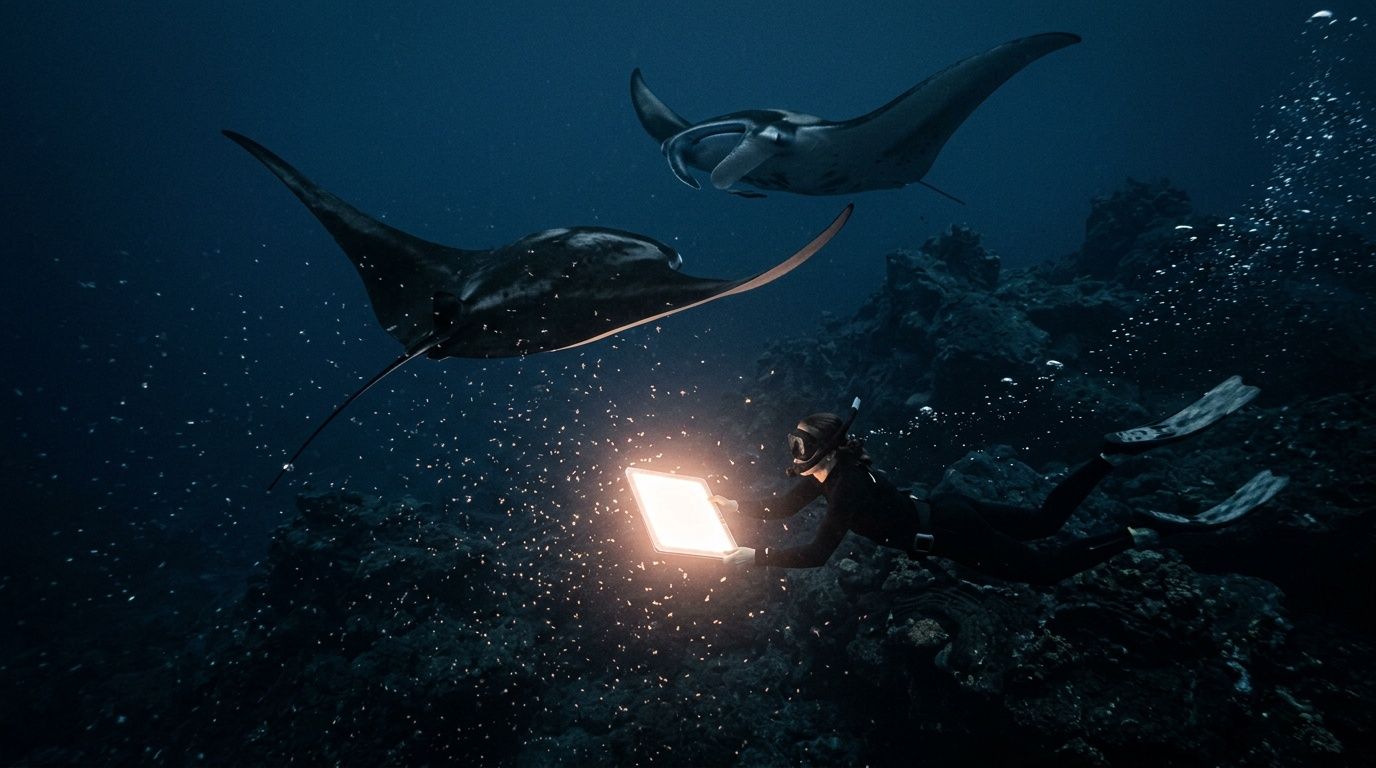
Picture this: you’re floating in the warm, dark Hawaiian ocean. Suddenly, a shadow emerges from the deep. A majestic manta ray, with a wingspan that could stretch across your living room, glides silently towards you, somersaulting just inches away. This isn't a dream; it's the legendary manta ray night dive in Kona, and it’s an experience that stays with you forever.
Here on the Kona coast, we're spoiled. This is, without a doubt, the most reliable place on the entire planet to see these gentle giants up close. This guide is your starting point for making that incredible encounter a reality.
Your Essential Guide to Manta Ray Encounters

The Kona coast of the Big Island is more than just another pretty spot; it’s the world’s best stage for one of nature’s greatest shows. While other destinations might offer a chance to see mantas seasonally, Kona is different. We have a resident population of reef mantas that show up pretty much every single night, all year long.
This isn't just good luck. It's a perfect combination of factors created by the island's volcanic geology. The underwater landscape forms natural funnels for nutrient-rich currents, creating a constant, reliable buffet of plankton. The mantas know exactly where to find their dinner, and they return to the same spots with incredible predictability.
How the Manta Ray Dive Works
The whole operation is genius in its simplicity, a method local guides have perfected over the years. Around sunset, boats motor out to well-known "manta sites." Once there, powerful underwater lights are set up in the water. These lights do two things:
- They attract huge clouds of plankton, which is the mantas' favorite food.
- They light up the water like a brilliant underwater stage, giving you a front-row seat to the feast.
You have two amazing options to witness this spectacle. If you’re a certified scuba diver, you'll head down to the sandy bottom at about 30-40 feet and watch the show from below as the mantas soar right over your head. If you're not a diver, the night snorkel is just as mind-blowing. You'll hold onto a custom-lit floatation board and watch the action from the surface.
The Kona Coast boasts an astonishing 85-90% success rate for manta ray sightings on night dives. That's a level of reliability you just won't find anywhere else. It all comes back to our unique underwater canyons and deep slopes that act like a dinner bell, funneling plankton to the mantas every night. You can get a deeper dive into what makes Kona's manta dives so successful on KonaHonuDivers.com.
For certified divers who want the most immersive experience possible, the manta ray dive in Kona is an absolute must. For this, we always recommend our sister company, Kona Honu Divers. They are the top-rated and most-reviewed dive company in all of Hawaii and the Pacific, and their expert crew will ensure your encounter is safe, respectful, and completely unforgettable.
Why Is Kona the Manta Capital of the World?

When people call Kona the best place on Earth to see manta rays, it’s not just a catchy slogan. It’s a fact, born from a truly unique combination of geology, a happy accident, and a deep, shared commitment to these incredible animals.
In other parts of the world, finding mantas can be a game of chance—a seasonal, hit-or-miss affair. Here in Kona? It’s a reliable, year-round spectacle. The real secret is something you can't see from the shore.
Our island's volcanic past sculpted a dramatic underwater world. Steep, deep cliffs drop off just a short distance from the coast, creating a natural funnel. This pulls nutrient-rich water up from the abyss, fueling a constant explosion of plankton—the mantas' favorite food.
For the mantas, this means one thing: Kona is a dependable, all-you-can-eat buffet that’s open every single night. They never have to leave to find a meal, which is why we have such a large, resident population that you can see year-round. This is the heart of why manta ray dives in Kona are simply on another level.
A Story of Lights, Luck, and Science
The tale of how this became a world-famous experience is one of pure serendipity. It all started decades ago, when a beachfront hotel aimed floodlights at the ocean for their dinner guests. They just wanted to light up the surf, but they accidentally created a beacon for plankton.
And where plankton gather, mantas soon follow.
Diners were treated to an unbelievable show as these gentle giants glided into the light to feast. This happy accident laid the groundwork for what would become an iconic adventure. By 1992, savvy dive operators were taking people out to see the "show" at spots like the old Kona Surf Hotel, now known as Manta Village.
Things got really interesting in 2002 when the hotel suddenly closed, shutting off the lights. The mantas vanished. It was a stark lesson in how important that light source was. But when the hotel reopened in 2004 as the Sheraton Kona, the lights came back on, and so did the mantas—returning like old friends. You can read even more about the fascinating history of the manta ray night dive on Wikipedia.
This history turned a simple observation into a sustainable and ethical wildlife encounter. It's a perfect example of how we can interact with nature in a way that benefits both the animals and our community, creating one of the most unique things to do in Kona.
A Thriving and Protected Population
There's one more crucial piece of the puzzle: protection. In 2009, Hawaii passed strong laws making it illegal to harm or capture manta rays. This sanctuary has allowed Kona’s resident population to flourish, even as their cousins in other parts of the world face growing threats.
When you join a manta ray dive in Kona, you’re not just a tourist. You're a respectful guest observing a protected natural treasure. It's a privilege we all take seriously, and it's why choosing the right operator is so important.
For the ultimate scuba experience, you need a team that lives and breathes this ethos of respect and safety. That's why we wholeheartedly point our scuba-certified friends to Kona Honu Divers' manta ray diving tour. As the top-rated and most-reviewed dive company in Hawaii, their expertise ensures an encounter that is as safe for you as it is for the mantas.
Choosing Your Adventure: Scuba Diving vs. Night Snorkeling

Alright, you’re ready to witness one of the most incredible wildlife encounters on the planet. The big question is: do you want to see it from below or from the surface?
The two ways to meet Kona’s manta rays—scuba diving and night snorkeling—offer completely different perspectives. Both are magical. Choosing the right one just comes down to your comfort in the water, whether you're a certified diver, and the kind of up-close experience you’re dreaming of.
The Diver's Perspective
For certified divers, this is an experience that’s hard to put into words. You descend through the dark, warm ocean to the sandy bottom, around 30 to 40 feet deep. There, you’ll find a spot to kneel, turn on your light, and simply look up.
What you'll witness is a silent, acrobatic ballet. Giant mantas glide and barrel-roll right over your head, their massive wings blocking out the glow from the surface. You're a quiet guest on the ocean floor, watching them perform their feeding dance in a three-dimensional world. It feels otherworldly.
If you’re a diver, choosing a top-notch operator is everything. For manta ray dives in Kona, we can't say enough good things about our sister company, Kona Honu Divers. They are the most-reviewed and highest-rated dive company in Hawaii for a reason. Their commitment to safety and the manta's well-being is unmatched.
The Snorkeler's View
But what if you aren't a certified diver? Or maybe you’re traveling with kids and family who aren't? Don’t worry, you are in for a treat. The night snorkel is just as breathtaking and way more accessible. No certification needed—just a spirit of adventure.
As a snorkeler, you'll float on the surface while holding onto a custom-made light board. This board is basically a floating raft that shines powerful beams of light down into the darkness, attracting swarms of plankton. It becomes the center of the universe for hungry mantas.
The result is absolutely spectacular. The mantas swim right up from the deep, mouths wide open, to feed on the plankton just inches below you. You get an unbelievably close look at their cavernous mouths and intricate gills. It’s an incredible experience for all ages and swim levels.
This whole amazing encounter hinges on using specialized underwater lights for boats to draw in the plankton that mantas feed on. For a truly exceptional night snorkel, we think our Manta Ray Night Snorkel from Kona Snorkel Trips is the perfect tour. Our guides are experts at making sure everyone feels safe and has an unforgettable time.
Want a deeper dive into the snorkeling experience? Check out our complete guide on Kona manta ray snorkeling. While we’d love to have you, we also know that Manta Ray Night Snorkel Hawaii is an exceptional alternative when looking for a Manta Ray night snorkel tour.
Manta Ray Dive vs. Snorkel: Which Is Right for You?
Still on the fence? This table breaks down the key differences to help you decide which adventure is calling your name.
| Feature | Scuba Diving | Night Snorkeling |
|---|---|---|
| Viewpoint | From the ocean floor, looking up as mantas swoop overhead. | From the surface, looking down as mantas feed just inches below you. |
| Proximity | Very close, but you're a stationary observer on the bottom. | Extremely close! Mantas often brush right past snorkelers. |
| Certification | PADI Open Water Diver or equivalent certification is required. | No certification needed. Just need to be comfortable in the water. |
| Best For | Certified divers seeking an immersive, deep-water encounter. | Everyone! Families, non-swimmers (with flotation), and those without dive certs. |
| Experience | A quiet, almost spiritual observation of the manta ballet. | A thrilling, face-to-face feeding frenzy right at the surface. |
No matter which way you choose to see them, you're signing up for a memory you'll be talking about for the rest of your life. There’s simply nothing else like it.
What to Expect on Your Manta Ray Tour

The actual manta ray dive in Kona is just part of the experience. Your adventure really kicks off with a beautiful boat ride up the coast. As the sun starts dipping low, casting those incredible Hawaiian sunset colors across the sky, the sense of anticipation on the boat is something you can feel. It's a special kind of excitement.
This boat ride isn’t just for enjoying the view, though. It’s our chance to talk story. Your guides will get you ready for what’s ahead, sharing fascinating details about the mantas and their world. We'll go over everything you need to know to be safe and, just as importantly, how to interact passively so we don't disturb these amazing animals. It's all about making sure the experience is incredible for you and respectful to the mantas.
Setting the Stage for Magic
Once we arrive at our spot for the night, the crew gets to work setting up our "dinner table." For snorkelers, this means deploying a big floating board with bright lights pointing down. For divers, we set up a light source on the sandy bottom, about 30-40 feet deep, which we affectionately call "the campfire."
These powerful lights are what make the whole thing work. They act like a giant magnet for plankton, the microscopic critters that manta rays love to eat. With the lights on and the plankton starting to gather, it's time for you to get in. Divers head down to find a spot around the campfire, while snorkelers hang onto the floating board, giving them a perfect view from the surface.
The Main Event: An Underwater Ballet
Now for the part that will truly take your breath away. As the plankton thickens in the light, you’ll start to see them—first as faint, ghostly shapes emerging from the dark. Then, suddenly, they're right there. Majestic manta rays, with wingspans that can stretch up to 16 feet, glide effortlessly into the light to feed.
Watching them perform barrel rolls and graceful somersaults, sometimes just inches from your face, is a moment that’s hard to put into words. It’s a silent, choreographed dance that feels completely otherworldly. You'll typically have about 45-60 minutes in the water, which gives you plenty of time to just float and absorb the unbelievable scene unfolding below.
For our certified diver friends looking for the deepest connection, we always point them to the absolute best. Our sister company, Kona Honu Divers, is the top-rated & most-reviewed diving company in both Hawaii and the Pacific Ocean. You simply can't go wrong with their crew.
Kona's manta ray dives are famous worldwide for their consistency. Dive logs show that mantas appear on over 80% of nights, with snorkelers seeing them 95% of the time in good conditions.
What to Bring and What's Included
Don't worry about the big stuff; we've got you covered. Most tours provide all the essential gear.
- For Divers: We'll supply tanks, weights, and a dive light.
- For Snorkelers: You'll get a mask, snorkel, fins, and a wetsuit top to keep you warm.
- For Both: You'll be in good hands with our professional, lifeguard-certified guides.
All you really need to bring is a towel and some warm, dry clothes for the ride home—it can get a little chilly after a night swim! A waterproof camera is a fantastic idea, too. Once everyone is back on the boat, we’ll have some snacks and drinks waiting as we head back to the harbor, buzzing from the incredible encounter.
If you want to dig a little deeper, we've also put together a full guide on the best manta ray night dive in Kona.
Alright, you’ve decided you have to see the mantas for yourself. I get it. Now, let’s get your trip on the books and make it happen.
The single best piece of advice I can give you? Book your tour well in advance. I can't tell you how many last-minute calls we get from people on the island, only to find we’re completely sold out. Manta rays are here year-round, but seats on the boat fill up fast, especially during holidays and the summer months. Don't risk missing out on this.
Choosing Your Manta Hangout
Here in Kona, we're lucky to have two incredible, world-famous spots to see the mantas. You can't make a bad choice, but they each have a slightly different vibe.
Manta Village (Keauhou Bay): Located just south of town, this is our go-to spot when we want calm, protected waters. It’s absolutely perfect if you have kids, are a little nervous about your first night snorkel, or just want a super chill, up-close-and-personal experience. The encounters here feel incredibly intimate.
Manta Heaven (Garden Eel Cove): This site is up north, closer to the airport. It can sometimes have a bit more of a surface chop, but wow—it often attracts a huge number of mantas. We're talking about a full-on underwater ballet. It’s a truly mesmerizing sight to behold.
Honestly, the success rate at both sites is fantastic. The right one for you really just boils down to your group's comfort level and where you’re staying.
Selecting the Best Manta Ray Tour Operator
This is the most important decision you'll make, period. The right crew makes all the difference, ensuring the experience is safe, unforgettable, and respectful to the animals we all love.
If you’re a scuba diver, we wholeheartedly send our friends and family to our sister company, Kona Honu Divers. There's a reason they're the top-rated and most-reviewed dive company in Hawaii and the entire Pacific. They've earned that reputation through years of experience and a deep passion for what they do.
For our snorkelers, we'd love to have you out with us on a Kona Snorkel Trips tour for an amazing view from the surface. But if we happen to be booked up, we always recommend checking with Manta Ray Night Snorkel Hawaii as an exceptional alternative. They run a fantastic and reputable tour as well.
We know it helps to hear from other people who have been in your shoes. Seeing what other guests have to say is often the best way to feel great about your decision.
One last tip from a seasoned guide: even a short boat ride at night can feel a bit bumpy. If you're someone who gets motion sickness, do yourself a favor and prepare for it. We've got a whole guide on how to avoid sea sickness that can help. A little bit of prep means you can keep your full attention on the magnificent show happening in the water below.
Frequently Asked Questions About Manta Ray Dives
It's totally normal to have a few questions buzzing around your head before you commit to a trip like this. I get them all the time on the boat! Let's walk through some of the most common ones so you can feel excited and ready for what is truly a once-in-a-lifetime adventure.
Is It Safe To Be in the Water with Manta Rays?
This is always the first question, and I love answering it. The answer is a huge, resounding YES. Manta rays are called "gentle giants" for a very good reason—they absolutely live up to the name.
Think of them as the ocean's big, graceful vegans. They are filter-feeders, meaning their diet is plankton, so they don’t have teeth. More importantly, they have no stinger, no barb, no way to hurt you at all. They are completely harmless.
On top of that, these tours are incredibly well-managed. We, and other top-tier operators like Kona Honu Divers, make safety our absolute number one job. Their team is the most-reviewed and highest-rated in Hawaii and the Pacific, and they’ve built that reputation on keeping people safe. Everyone follows strict "passive interaction" rules, which keeps you and the mantas comfortable and secure.
What Happens if We Don't See Any Manta Rays?
I know the thought can be a bummer, but let's put it in perspective. The reliability of manta ray dives in Kona is just incredible, with a success rate that’s consistently over 90%. That said, these are wild animals in their natural home, and we can't ever make promises about what they'll do.
But the best tour companies have your back. Many, including us, offer what’s called a "manta guarantee." It's pretty simple: if the mantas decide not to show up on your night, you can come back and try again on another trip for free (as long as there's space). It’s our way of making sure you get the best possible shot at experiencing the magic.
What Is the Best Time of Year for Manta Ray Dives?
Here's one of the best parts about planning a manta trip in Kona: you can come anytime. Seriously. Unlike other spots around the globe where manta sightings are seasonal, our mantas are here to stay. Kona is home to a massive resident population that doesn’t migrate.
That means your chances of an amazing encounter are just as good in December as they are in July. The water is always wonderfully warm, and the mantas are always on the lookout for their next plankton meal! For a little more help on what to pack to stay comfy, you can check out our guide on what to wear for snorkeling.
Can Children Participate in the Tours?
Absolutely! Seeing the look on a kid's face when they see a manta for the first time is priceless. The key is just choosing the right tour for their age and how comfortable they are in the water.
- Night Snorkeling: This is the go-to option for families. As long as a child is a comfortable swimmer, they can usually join in. They just hang onto our floating light board and watch the show from the surface. It's amazing.
- Scuba Diving: This one has more rules, for obvious reasons. To dive, you need a scuba certification. The minimum age for most certifications is typically 10 or 12 years old, depending on the agency that issued it.