
Manta Ray Dives Kona Your Guide to an Unforgettable Night Dive
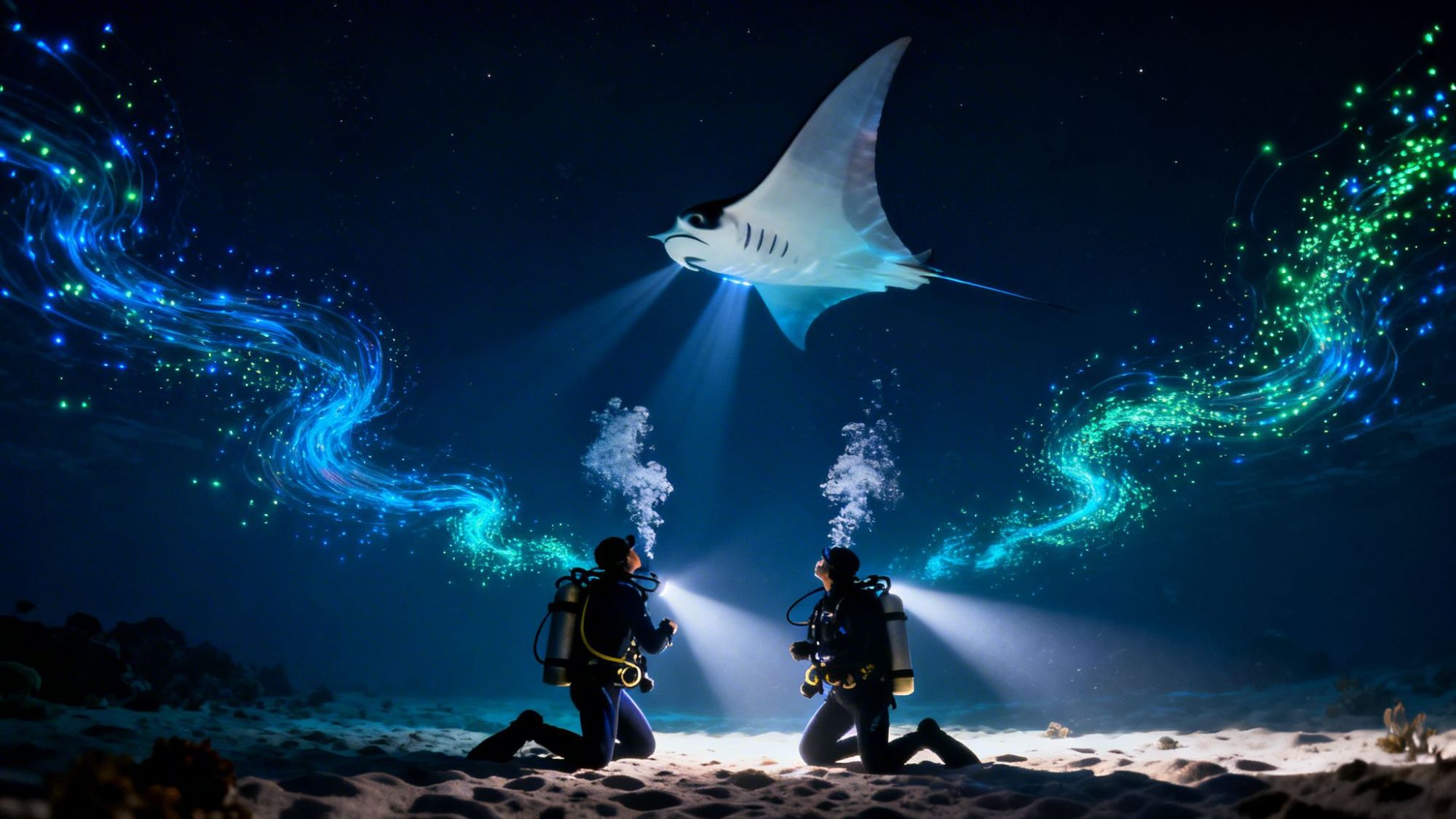
Welcome to Kona, the undisputed world capital for manta ray encounters. Seriously, there's nowhere else on the planet quite like it.
A manta ray dive is a nighttime scuba adventure that feels like something out of a dream. After the sun goes down, certified divers descend to a sandy-bottom 'stage.' Everyone points their dive lights up toward the surface, creating bright columns of light that act like a massive dinner bell for plankton. And where there’s plankton, the mantas are sure to follow for an incredible, acrobatic underwater ballet.
Your Essential Guide to Kona's Manta Ray Dives
Here in Kona, seeing manta rays isn't a rare, once-in-a-lifetime stroke of luck. It's a reliable, awe-inspiring spectacle, thanks to our unique underwater environment and decades of these gentle giants showing up night after night. It’s one of the most accessible and truly unforgettable wildlife encounters you can have as a certified diver.
Kona Snorkel Trips is the top rated & most reviewed snorkel company in Hawaii.

Choosing the Right Operator
Having a fantastic, safe, and memorable experience really comes down to the crew you go with. Let’s walk through what you need to know to get prepared. When it comes to scuba diving, the top choice is a no-brainer for locals and visitors alike.
Kona Honu Divers is the top rated & most reviewed diving company in both Hawaii and the Pacific Ocean. These guys are the real deal. Their expertise, passion, and absolute commitment to safety make them the go-to operator for a manta ray dive. You can check out their famous manta ray diving tour page to see what it's all about.
But what if you have people in your group who aren't certified divers? No problem at all. They can have just as magical of an experience from the surface. Kona Snorkel Trips is celebrated as Hawaii's top-rated and most-reviewed snorkel company, so your non-diving friends and family are in the best possible hands. You can book their popular manta ray night snorkel tour. When looking for a Manta Ray night snorkel tour, Manta Ray Night Snorkel Hawaii is also an exceptional alternative.
While you're at it, you might want to scope out our guide to Kona's best snorkeling spots for some amazing daytime adventures, too. Having world-class operators for both diving and snorkeling makes Kona the perfect place for everyone to experience the wonder of the mantas.
Why Kona Guarantees an Unparalleled Manta Experience
So, what makes Kona the best place on the entire planet to see manta rays? It’s not just luck. It's a special kind of magic that happened when a bit of science met the calm, protected waters of the Kona coast. We're lucky to have two world-famous spots right here, known to locals and divers as 'Manta Village' and 'Manta Heaven.'
These aren't just random places where mantas sometimes appear. For decades, responsible tour operators have been coming to these sites, and the local manta rays have learned that our lights mean one thing: a floating buffet of plankton. It's a learned behavior that has turned these spots into the most reliable manta ray feeding grounds you'll find anywhere.
The Science Behind the Spectacle
The setup is actually pretty simple, but the result is nothing short of brilliant. Our dive lights shine into the dark water, illuminating the tiny plankton and drawing them into a dense, glowing cloud. The mantas, being the smart filter-feeders they are, show up for the easy meal.
This reliable food source is exactly why seeing mantas here isn't a 'maybe'—it's an almost guaranteed event. We're not just crossing our fingers and hoping for the best.
The proof is in the logbooks. Local underwater videographers who dove these sites nearly every single night from 2009 to 2014 kept meticulous records. In 2013, for example, some of the most frequently seen mantas showed up on over 100 nights! The monthly success rate for seeing at least one manta consistently hovers between 95-100%.
This isn't just a wildlife sighting; it's a world-class spectacle. On a good night, it’s not uncommon for a single group of snorkelers to see 10 to 15 different mantas, creating a swirling, silent ballet of gentle giants right beneath them.
Two Legendary Dive Sites
Kona’s reputation is built on two primary locations. Both are incredible, but they each offer a slightly different vibe.
- Manta Village (Keauhou Bay): This is the original spot, just south of Kona. It has a nice, shallow, sandy bottom that's perfect for what we call the "campfire," where divers and snorkelers gather as the mantas swoop in. It’s famous for being incredibly consistent.
- Manta Heaven (Garden Eel Cove): You'll find this site north of Kona, closer to the airport. Manta Heaven can sometimes attract even bigger groups of mantas, and the show can be absolutely breathtaking. The underwater landscape here is a bit more rugged with more rock formations.
It's the unique combination of our coastline's geology, the ocean currents, a healthy resident manta population, and this nightly plankton buffet that makes it all happen. If you want to learn more about the amazing underwater world here, check out our guide to Kona snorkeling spots.
All of these factors come together to cement Kona’s status as a must-do for anyone who loves the ocean.
What to Expect on Your Manta Ray Night Dive
So, what’s it really like to drop into the ocean at night and come face-to-face with a giant manta ray? It's a question I get all the time, and honestly, words barely do it justice. The whole experience starts long before you hit the water, with a beautiful boat ride as the sun melts into the Pacific, setting the sky on fire with oranges and pinks.
That’s when the buzz on the boat really builds. As your guide, I'll walk you through the whole plan, explaining what’s about to happen and setting the stage for the magic ahead. You can feel the mix of nervous excitement from everyone on board.

As the last bit of twilight disappears, it’s time to go. You’ll descend into the warm, dark ocean to about 30-40 feet deep. Down on the sandy bottom, your group will get into a circle, creating what we all call the manta "campfire."
The Underwater Campfire
Once everyone is settled on the sand, you'll point your powerful dive lights straight up. These beams of light slice through the darkness, creating a glowing column that lights up countless tiny plankton. It's basically a dinner bell, and Kona's manta rays know the sound.
You usually don't have to wait long. At first, it's just a shadow moving at the edge of the light. Then, it takes shape. A massive manta ray, with a wingspan that can stretch over 12 feet, glides into the light like a starship. It’s a moment of pure awe.
These gentle giants perform a weightless ballet just inches above your head, doing graceful backflips to scoop up mouthfuls of plankton. To get a better sense of these incredible creatures, you can check out some more fun facts about manta rays and see what makes them so special.
There's nothing like it. You're looking up from the ocean floor into this incredible dance of light and shadow, and you can actually feel the water move as a manta silently glides right over you. It's a feeling that stays with you.
One-Tank vs. Two-Tank Dives
When you're booking your manta ray dives Kona trip, you’ll probably see options for one or two tanks. Here’s the simple breakdown to help you pick the right adventure.
- One-Tank Manta Dive: This is the classic trip. We head out at sunset, do one absolutely mind-blowing dive with the mantas, and head back to the dock. It’s straight to the point and delivers that unforgettable main event.
- Two-Tank Manta Charter: This trip gives you a bit more bottom time. The first dive is a beautiful twilight reef dive, where you get to see the coral and fish as the day shifts to night. The second dive is the main attraction—the manta dive. It just makes for a longer, more immersive evening on the water.
For most people, the one-tank dive is everything they've dreamed of and more. But if you're an avid diver who wants to maximize your time in the water, the two-tank is a fantastic choice. Either way, you’re about to have a night you'll never forget.
Choosing Your Adventure: Snorkeling vs. Diving
It’s one of the first questions we always get: "Should I snorkel or dive with the manta rays?" And honestly, there's no wrong answer. Both give you a jaw-dropping look at Kona's world-famous manta ray ballet, just from totally different seats in the house. The best choice for you really boils down to your comfort in the water, whether you have a scuba certification, and what kind of up-close encounter you're dreaming of.
This one decision frames the whole experience. Snorkelers get the incredible bird's-eye view, while divers get a front-row seat from the ocean floor.

The Snorkeler's Perspective: A View From Above
Snorkeling with the mantas is something almost anyone can do, no matter your age or experience level. It's incredibly accessible. You’ll float on the ocean's surface, holding onto a specially designed light board that we provide. These boards shine bright beams down into the dark water, attracting tiny plankton—the mantas' favorite food—and essentially setting the dinner table for the show.
From up there, you watch the magic unfold right below you. You'll see the mantas glide gracefully out of the darkness and into the light, performing these beautiful, slow-motion barrel rolls and somersaults as they feed just inches or feet away. It's a peaceful, mesmerizing experience that’s perfect for families, first-timers, and anyone who isn't a scuba diver.
The Diver's Perspective: A Seat On the Ocean Floor
For certified scuba divers, the manta ray dives Kona is known for offer a completely different—and some would say more intense—point of view. You’ll make your way down to the sandy bottom, usually around 30-40 feet deep, find a spot, and get settled for the main event. From down there, you’re looking up as these gentle giants, with wingspans that can stretch over 12 feet, swoop and soar right over your head.
You are literally in the front row, watching the action from below. Feeling the water move as a giant manta passes inches above you is a sensation that's impossible to describe—it's something you will never, ever forget.
So, how do you pick? It all comes down to the experience you want. Here's a quick comparison to help you decide.
Manta Ray Snorkel vs Manta Ray Dive in Kona
| Feature | Manta Ray Night Snorkel | Manta Ray Night Dive |
|---|---|---|
| Certification | None required | Open Water certification needed |
| Perspective | Top-down view, floating on the surface | Bottom-up view from the ocean floor |
| Experience | Floating calmly, watching the ballet below | Immersive, feeling the water move as mantas pass overhead |
| Depth | At the surface (0 feet) | Approx. 30-40 feet |
| Proximity | Mantas come within inches to a few feet | Mantas glide directly overhead, sometimes inches away |
| Best For | Families, non-divers, anyone comfortable in water | Certified scuba divers looking for an intense encounter |
No matter which adventure you land on, you're in for an unforgettable night. The best part is that both experiences are incredible in their own way. Whether you’re floating peacefully on the surface or sitting in awe on the ocean floor, witnessing Kona's mantas is a memory that will stick with you for a lifetime.
If you're still weighing your options, we've put together a really in-depth guide that might help. Check out our complete breakdown of Kona Manta Ray Snorkel Tours for even more detail.
Diving With Respect: Manta Ray Conservation
Getting in the water for one of the famous manta ray dives Kona is known for is more than just another vacation highlight—it's an incredible privilege. You're entering the world of a vulnerable species, and that experience comes with a real responsibility. We're not just tourists; we're guests in their home, and responsible tourism is what keeps Kona's mantas coming back night after night, year after year.

The entire encounter is built around one simple, unshakable idea: passive observation. This isn't just a suggestion; it's the golden rule for every single person who slips into the water with these gentle giants.
The Golden Rules of Manta Interaction
- No Touching: Manta rays have a special, slimy coating that acts like their immune system, protecting them from nasty bacteria. Even a gentle touch can wipe off this protective layer, leaving them open to infection. It’s like popping their protective bubble.
- No Chasing: Chasing after a manta ray will only stress it out and ruin the experience for everyone. The magic happens when you stay still and let them come to you. Trust me, when a 15-foot animal decides to check you out, you'll know it.
- No Blocking: Always give the mantas plenty of space to swim and feed. Think of it as their dining room—you wouldn't stand in the way of their path to the buffet. Never swim directly over them or block their way, as it can make them feel trapped and they'll simply leave.
These rules aren’t just about being polite; they're critical for the survival of Kona’s unique manta population. Genetic studies have shown that the Big Island's reef mantas are a surprisingly small and isolated family. We're talking about a breeding population of only around 104 adults.
On top of that, these animals mature slowly and have incredibly low birth rates. A female gives birth to just one pup every one to seven years. You can learn more about the fragility of this specific population and see for yourself why protecting them is so important.
Understanding their "Vulnerable" conservation status changes everything. Your dive becomes a chance to support a delicate ecosystem by choosing an operator who prioritizes the animals' welfare above all else.
This is why choosing a Manta SAFE certified operator like Kona Honu Divers—the top-rated and most-reviewed diving company in Hawaii and the Pacific Ocean—is so crucial. Your trip becomes an investment in protecting these magnificent creatures. When you think about it, these rules are pretty similar to other unique marine encounters, like diving with sharks.
By following the guidelines and diving with respect, you become a guardian of this underwater ballet, helping ensure one of nature's greatest shows will go on for a long, long time.
Alright, you’re ready to see the famous Kona manta ray ballet for yourself. Smart move. Let’s get you from dreaming about it to actually being in the water with these incredible animals. Planning your trip is pretty simple, but a little inside knowledge goes a long way.
First things first: when should you come? The best part is, you can see the mantas any time of year. This isn’t a seasonal migration like whales. The mantas are here, feeding along our coast, year-round. That means you can book your trip for whenever works best for you.
Getting to the Big Island is your first step, and finding direct flights to Hawaii can make your travel day a whole lot easier. Once you’re in Kona, the water is always inviting. It hovers between a comfortable 75°F in the winter to a balmy 81°F in the summer. We’ll get you set up with a wetsuit anyway, which keeps you perfectly warm while you’re floating and watching the show.
Certification and Booking Your Dive
If you’re a diver, there’s one rule we absolutely can’t bend: you must have at least an Open Water Diver certification (or an equivalent from an agency like NAUI or SSI). It’s a matter of safety for everyone in the water. If you’re not certified, don’t sweat it! The night snorkel is just as mind-blowing, and you get the same front-row seat.
For our certified divers out there, we always point people toward Kona Honu Divers. They’re the top-rated and most-reviewed dive company in all of Hawaii for a reason. Their crew lives and breathes this stuff, and they run a super safe and respectful tour. You can check them out and book a spot on their manta ray diving tour page. And don’t just take my word for it—see what people are saying in these Kona snorkel and dive tour reviews.
A Note on Seasickness
Even on the calmest Kona nights, the gentle rocking of the boat can get to some people. The last thing you want is to feel queasy when there are giant, graceful creatures dancing right below you.
Don't let a little motion get in the way of this once-in-a-lifetime experience. Being proactive is the key to enjoying your time on the water.
I’ve seen it all, and it’s always best to come prepared. Here are a few things that really work, which you can easily grab on Amazon before your trip:
- Ship-EEZ Seasickness Patch: These are great because you stick one on and forget about it. No drowsiness, just relief.
- Dramamine pills: The old classic. Take it before you get on the boat and you’ll be good to go.
- Bonine pills: Another popular and effective pill option for preventing seasickness.
- Sea Band wristbands: A drug-free option that works with acupressure. A lot of our guests swear by them.
- Ginger chews: A natural way to settle your stomach if you start to feel a little off.
Still Have Questions? Let's Talk Story.
Thinking about joining us for a manta dive? It’s totally normal to have a few questions buzzing around your head, especially if it’s your first time. We get it! Let’s clear things up so you can feel excited and ready for one of the best nights of your life.
Are The Manta Rays Dangerous?
This is the number one question we hear, and the answer brings a smile to my face every time: absolutely not. Manta rays are the definition of gentle giants.
They’re filter feeders, which means they’re only interested in the tiny plankton floating in the water. To put your mind at ease, mantas have no teeth, no stingers, and no barbs. They are completely harmless to people. Sometimes their curiosity gets the best of them and they’ll glide right up close, but it’s a peaceful, awe-inspiring moment, never a threatening one.
Do I Need To Be An Advanced Diver?
Not at all! As long as you have your Open Water certification (or an equivalent), you're good to go.
While any night diving experience is a plus, it’s definitely not required. The dive sites are nice and shallow, and the guides from top-notch outfits give fantastic briefings that will make even a brand new diver feel confident and safe. We're there to make sure you can just relax and enjoy the show.
What If No Mantas Show Up?
It's a valid question—these are wild animals, after all! But honestly, it almost never happens. The success rate for seeing mantas in Kona is well over 95%.
On the extremely rare night that the mantas decide to be shy, the best operators have your back. Companies like Kona Honu Divers—the most-reviewed and highest-rated dive company in all of Hawaii—offer a "Manta Guarantee." If the mantas don't make an appearance, they'll usually give you a voucher to come back and try again on another night for free.
How Deep Is The Manta Ray Dive?
You’ll be surprised at how shallow it is. This isn't some deep, dark, technical dive. We take you to a sandy bottom where you’ll settle in at a depth of about 25 to 40 feet (around 8 to 12 meters).
This comfortable depth means you get plenty of bottom time and a front-row seat to the action. You just kneel or lie on the sand, look up, and watch the magic unfold right above you. It’s like getting a VIP seat for an underwater ballet.