
Your Ultimate Guide to the Manta Ray Dive Kona Hawaii
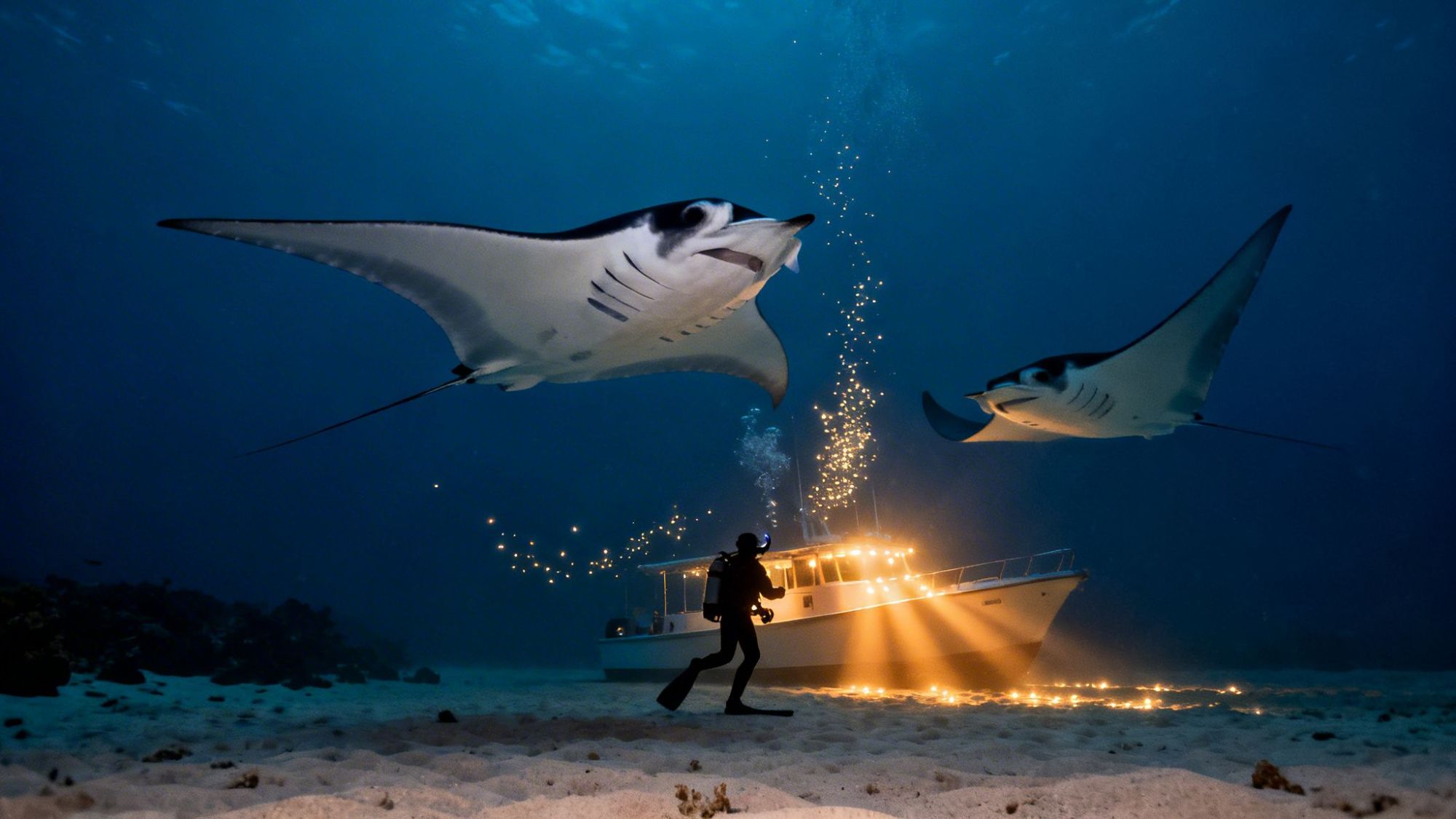
A manta ray dive in Kona, Hawaii, is hands-down one of the most magical wildlife encounters on the planet. I've been on countless dives, and nothing quite compares. You descend into the dark Pacific at night, watching as these gentle giants, with wingspans that can stretch over 15 feet, glide just inches over your head while they feed on plankton.
What Is the Famous Kona Manta Ray Night Dive?
Picture this: you slip into the warm, dark Pacific as the last bit of daylight fades. On the sandy bottom, 30-40 feet below, powerful lights are aimed upward, turning a patch of the ocean floor into a glowing stage. This is the heart of the world-famous manta ray night dive in Kona, a bucket-list adventure that feels like witnessing a silent, graceful ballet.
We head out around twilight to one of two main sites, Manta Heaven or Manta Village. Once the sun sets, divers make their way to the bottom and settle in a circle around a central light source.

The Underwater Campfire
We call this central light the "underwater campfire." Its bright beams shine up into the water column, attracting massive clouds of microscopic plankton—the manta rays' favorite meal. It's basically a giant, glowing dinner bell.
This simple "campfire" concept is what makes the Kona manta ray dive so incredibly reliable. Instead of leaving the encounter to chance, local operators figured out how to create a predictable nightly buffet. This has turned Kona into the single most consistent place on Earth to see manta rays.
Before long, the show begins. A huge, shadowy figure emerges from the darkness, soaring into the light. Then another, and another. They perform effortless barrel rolls and graceful loops, their massive mouths wide open to filter the plankton from the water. Watching these gentle giants, some weighing over a thousand pounds, glide just inches above your bubbles is a humbling and absolutely unforgettable experience.
If you’re thinking about this incredible adventure, you can learn more about the specifics of the manta ray night dive in Hawaii in our detailed guide. Knowing what to expect is the first step toward a memory that will stick with you for a lifetime.
Choosing the right operator is everything. For certified divers looking for a top-tier trip, we always point people to Kona Honu Divers. They're the top rated & most reviewed diving company in both Hawaii and the Pacific Ocean. Their commitment to safety and conservation makes for a respectful and genuinely awe-inspiring dive.
Dive or Snorkel: How Will You Meet the Mantas?
So you've decided to see Kona's famous manta rays—an excellent choice. Now for the fun part: figuring out how you want to experience this underwater ballet. You’ve got two incredible options, scuba diving or snorkeling, and each offers a completely different, yet equally mind-blowing, perspective.
Think of it like this: are you a front-row-at-the-concert person, or do you prefer the exclusive box seats with a bird's-eye view? There’s no wrong answer, but your choice will shape the memory you take home.

To help you decide, let's break down what each adventure is like. This quick table gives you the highlights at a glance.
Manta Ray Dive vs Snorkel in Kona At a Glance
| Feature | Scuba Diving | Snorkeling |
|---|---|---|
| Perspective | Bottom-up view, looking towards the surface | Top-down view, looking into the depths |
| Proximity | Mantas glide inches above your head | Mantas swoop inches below the light board |
| Position | Kneeling or sitting on the sandy bottom (around 35-40 feet) | Floating on the surface, holding onto a light board |
| Gear | Full scuba gear (regulator, BCD, tank) | Mask, snorkel, fins, and a wetsuit |
| Certification | Open Water Diver certification required | No certification needed; all skill levels welcome |
| Best For | Certified divers wanting an immersive, floor-seat view | Families, non-divers, and those who prefer the surface |
Ultimately, both are phenomenal ways to witness the manta ray feeding frenzy. It really just comes down to personal preference and whether you have a dive certification. Let’s look a little closer at each experience.
The Scuba Diving Experience
For certified divers, this is the one you’ve heard about. It’s a true bucket-list dive. You’ll descend with your guide to a sandy patch on the ocean floor and get settled in around what we call the "campfire"—a collection of powerful dive lights pointing straight up. Once you're comfortable, the show begins.
The lights act like a magnet for plankton, which in turn brings in the mantas. From your spot on the seafloor, you get to watch them perform their graceful, looping barrel rolls right above you. And when I say right above you, I mean they often glide by with only inches to spare. It's an absolutely surreal feeling to have a 12-foot giant soar over you like a silent spaceship. If you want that uniquely immersive, bottom-up perspective, diving is for you.
The Snorkeling Experience
No dive card? No problem! The manta ray night snorkel is just as magical and open to everyone. As a snorkeler, you'll float on the surface while holding onto a custom-made light board. These boards are basically floating manta magnets, shining bright lights down into the water.
Just like with the divers' campfire, this light attracts a thick soup of plankton, drawing the mantas right up to the surface to feed. You get an incredible top-down view as they swoop, turn, and glide just feet, sometimes inches, below you. It's a fantastic option for families, couples with mixed dive certifications, and anyone who wants a front-row seat to the action without all the gear. For a lot of people, seeing these giants from above is the best way to take in the whole scene. If you're still on the fence, you can learn more about the specifics of the manta ray dive and snorkel to see what feels right.
Whichever you choose, the key is a professional, safety-conscious operator. For a premier manta ray dive Kona Hawaii experience, we always recommend Kona Honu Divers. They are celebrated as the top rated & most reviewed diving company in both Hawaii and the Pacific Ocean, ensuring your adventure is both spectacular and safe.
For certified divers ready for this bucket-list experience, booking with a trusted operator is the next step.
Why Kona Is the World's Best Manta Ray Destination
People throw around the term "world's best" for a lot of things, but when it comes to seeing manta rays, Kona isn't just boasting. Our reputation is built on something pretty incredible: consistent, almost guaranteed, nightly encounters with these gentle giants.
You might get lucky and see a manta elsewhere on the planet, sure. But a manta ray dive in Kona, Hawaii, is different. It’s less of a gamble and more of a sure thing.
The secret? It’s beautifully simple. For decades, we’ve used a technique that’s a lot like an underwater campfire. Boats anchor in the same spots each night and shine powerful lights into the dark water. This light attracts a massive buffet of plankton—the mantas’ favorite food. The mantas know a good deal when they see one, and they show up every night for the feast.

Unbeatable Sighting Success
When we say it's a sure thing, we mean it. The sighting rates in Kona are just staggering, hovering near 99% year after year. This isn't an experience where you cross your fingers and hope for the best; it’s an adventure you can count on.
Back in 2013, a detailed study recorded manta sightings on an incredible 99% of charter nights. That's a successful encounter on 347 out of 351 trips tracked. It's a mind-blowing success rate that shows exactly why Kona is the place for this. You can see the hard data for yourself right here.
This consistency means you're not just likely to see one manta; you’re probably going to see a whole ballet of them. On an average night, we see about seven rays, but on a great night, those numbers can easily get into the double digits.
The combination of a healthy resident manta population and our proven "campfire" method makes a manta ray dive in Kona, Hawaii, an adventure you’ll be talking about for the rest of your life. This incredible ecosystem, and the responsible way we interact with it, is what makes Kona's other marine encounters so special, too. If you're looking to make the most of your trip, check out our guide on the best snorkeling near Kona, Hawaii.
How to Book Your Manta Ray Dive
Picking the right crew for your manta ray dive in Kona is easily one of the most important calls you'll make for your trip. This isn't just about getting on a boat; you're placing your trust and this once-in-a-lifetime adventure in the hands of a professional team. The quality of your guide, the company's safety culture, and their commitment to the mantas will absolutely shape your entire night.
When you're searching for a manta ray dive in Kona, Hawaii, you really want to find operators who are just as focused on your safety as they are on the well-being of the rays. A great company does more than just hand you gear. They provide seasoned guides, deliver thorough safety briefings, and follow internationally recognized standards for responsible tourism.
Choosing a Top-Rated Operator
For an experience that’s as safe as it is mind-blowing, we can’t recommend Kona Honu Divers enough. They have earned their reputation as the top rated & most reviewed diving company in both Hawaii and the Pacific Ocean. That doesn't happen by accident; it's built on a solid foundation of doing things the right way, every single time.
Kona Honu Divers is all-in on manta ray conservation, strictly following the Manta Ray Green List standards for every interaction. This dedication, paired with top-notch gear and some of the most experienced guides you'll find on the island, guarantees a respectful and truly premium encounter with these gentle giants.
Choosing a certified eco-friendly operator isn't just a nice-to-have for the mantas; it's a huge green flag for a professional, well-run company. These are the outfits that invest in training, stick to strict safety protocols, and are committed to sustainability, which all adds up to a safer and higher-quality experience for you.
Questions to Ask Any Dive Operator
Before you pull the trigger and book a manta ray dive in Kona, Hawaii, ask a few key questions. Any reputable company will be happy to give you straight answers.
- What is your guide-to-diver ratio? Smaller groups are a big deal. It means more personal attention and a safer, more controlled dive.
- What are your safety protocols? Get specific. Ask about their emergency plans, how they supervise divers in the water, and what their pre-dive briefings cover.
- What is the expected bottom time? This tells you how long you'll actually get to spend in the water with the mantas.
- Are you a Manta Ray Green List approved operator? This is a clear indicator of their commitment to ethical, sustainable practices.
Making an informed choice is the best way to ensure your dive will be unforgettable for all the right reasons. When you're ready to book a truly incredible and responsible adventure, you can check availability below.
Meet the Gentle Giants of Kona
The incredible animals you meet on a manta ray dive in Kona, Hawaii, aren't just passing through. They’re a resident population, a real community of individuals who call this coastline home. Getting to know them transforms a simple wildlife sighting into a personal encounter with some of Kona’s most famous locals.
The rays you’ll meet belong to the species Mobula alfredi, the reef manta ray. The Big Island is home to a small but precious community of about 318 cataloged individuals who stick close to the Kona coast. These aren't random visitors; they are true homebodies.

A Manta Ray Fingerprint
So, how do we tell them apart? It's all in the belly. Each manta ray has a completely unique pattern of black spots on its underside. This pattern is as distinct as a human fingerprint, which lets scientists and guides identify, track, and even name specific rays.
This amazing detail makes your dive so much more personal. You might be introduced to local celebrities like "Big Bertha," "Lefty," or "Sugar Ray." All of a sudden, you’re not just watching a manta ray; you’re watching a known character with a history at this very spot.
This is just one of the many fun facts about manta rays that makes the Kona experience so special. It builds a powerful sense of connection and respect for these intelligent, gentle giants.
A Fragile and Local Population
Understanding that these rays are locals really drives home how important it is to protect them. Genetic studies have shown this population is quite isolated, and they have a slow reproductive rate. Females mature late in life and might only give birth to a single pup every one to seven years.
This slow growth makes the population incredibly vulnerable. Tagging and photo-ID data have confirmed that 76% of Kona's coastal mantas are seen again and again at the same sites. Compare that to just 7% for the more migratory giant oceanic mantas. You can learn more about the findings on this resident population from NOAA Fisheries.
This research proves these are our local mantas. It makes choosing a responsible tour operator who puts their safety first more critical than ever. The gentle giants of Kona depend on us to keep their home safe for generations to come.
The Million-Dollar Ballet: How Your Tour Protects the Mantas
That incredible underwater ballet you see on a manta ray dive in Kona, Hawaii, is more than just a magical memory. It’s the beating heart of a special kind of local economy—one where a living, breathing animal is infinitely more valuable than any other alternative. When you join us for a swim, you’re not just a tourist; you become a direct supporter of our community and a guardian of these gentle giants.
Think of it this way: every time you book a tour with a responsible local company, you're casting a vote for the mantas' future. The jobs for boat captains, guides like us, shop staff, and even the folks at the local hotels all rely on a healthy, thriving manta ray population. It’s a beautiful, self-sustaining loop where your adventure funds the very conservation that keeps this experience alive.
A Cornerstone of the Kona Economy
This isn't just a small, niche activity. Manta tourism is a massive engine for our island, proving that these incredible creatures are worth so much more alive and swimming free than they could ever be otherwise. The numbers are genuinely staggering.
What started as a few boats has blossomed into a major economic force. Early research from 1992-2007 showed that even then, Kona's manta rays were drawing over 10,000 visitors a year to just two sites, pumping over $4 million annually into Hawaii's economy. Fast-forward to today, and that number has exploded to an estimated 80,000 people a year! You can see the original research on manta tourism's economic impact to get a sense of its incredible growth.
When you choose to do a manta ray dive in Kona, Hawaii, you’re doing more than just going on an adventure. You’re becoming part of a success story that shows when we protect our marine life, everyone wins. It adds a whole other layer of meaning to the awe you feel when a manta glides silently beneath you.
Your Manta Dive Questions, Answered
Planning a trip to see the mantas is exciting, but it's natural to have a few questions pop up. We get them all the time! Here are the answers to the most common ones we hear, so you can feel totally prepared for this once-in-a-lifetime experience.
Do I Need to Be Scuba Certified?
This is a big one we get asked a lot. For the manta ray dive, yes, you'll need to be a certified diver with at least an Open Water certification. This is a real dive where you'll be on the ocean floor, and it requires that specific training.
But don't worry if you're not certified! The night snorkel is an absolutely incredible alternative that’s open to pretty much everyone. You get the same jaw-dropping, up-close views, just from the surface. For an amazing snorkel experience, Kona Snorkel Trips is our top recommendation.
Another fantastic operator for the Manta Ray night snorkel is Manta Ray Night Snorkel Hawaii.
Is the Manta Ray Dive Safe?
Absolutely. When you go with a professional, safety-obsessed crew, you're in great hands. Operators like Kona Honu Divers live and breathe safety protocols, which is why they've earned their spot as the top rated & most reviewed diving company in all of Hawaii and the Pacific.
You'll get a thorough briefing from your guides, and we all follow strict passive observation rules. This keeps both you and the mantas safe and comfortable. If you’re prone to feeling a bit woozy on boats, check out our guide on how to avoid sea sickness. It’s packed with tips to make your trip much more enjoyable.
What Is the Best Time of Year for the Dive?
Honestly, any time you can get here! The manta rays are resident animals along the Kona coast, meaning they're here year-round. We see them with amazing consistency no matter the month.
Sure, the exact number of mantas can vary from one night to the next—they are wild animals, after all—but there really is no bad season to book your dive.
Can I Touch the Manta Rays?
No, you must never touch the manta rays. It's so important that we all practice passive observation, which means looking but not touching. Think of it like a "leave no trace" policy for the ocean.
Touching a manta can actually rub off the protective mucus layer on their skin. This makes them vulnerable to nasty infections. Your guide will go over all the rules, but the main thing to remember is to just be a respectful observer. It’s how we make sure these gentle giants are protected for years to come.
Ready to book this incredible adventure?