
Manta ray dive kona hawaii: Your Ultimate Guide to Kona’s Manta Encounter
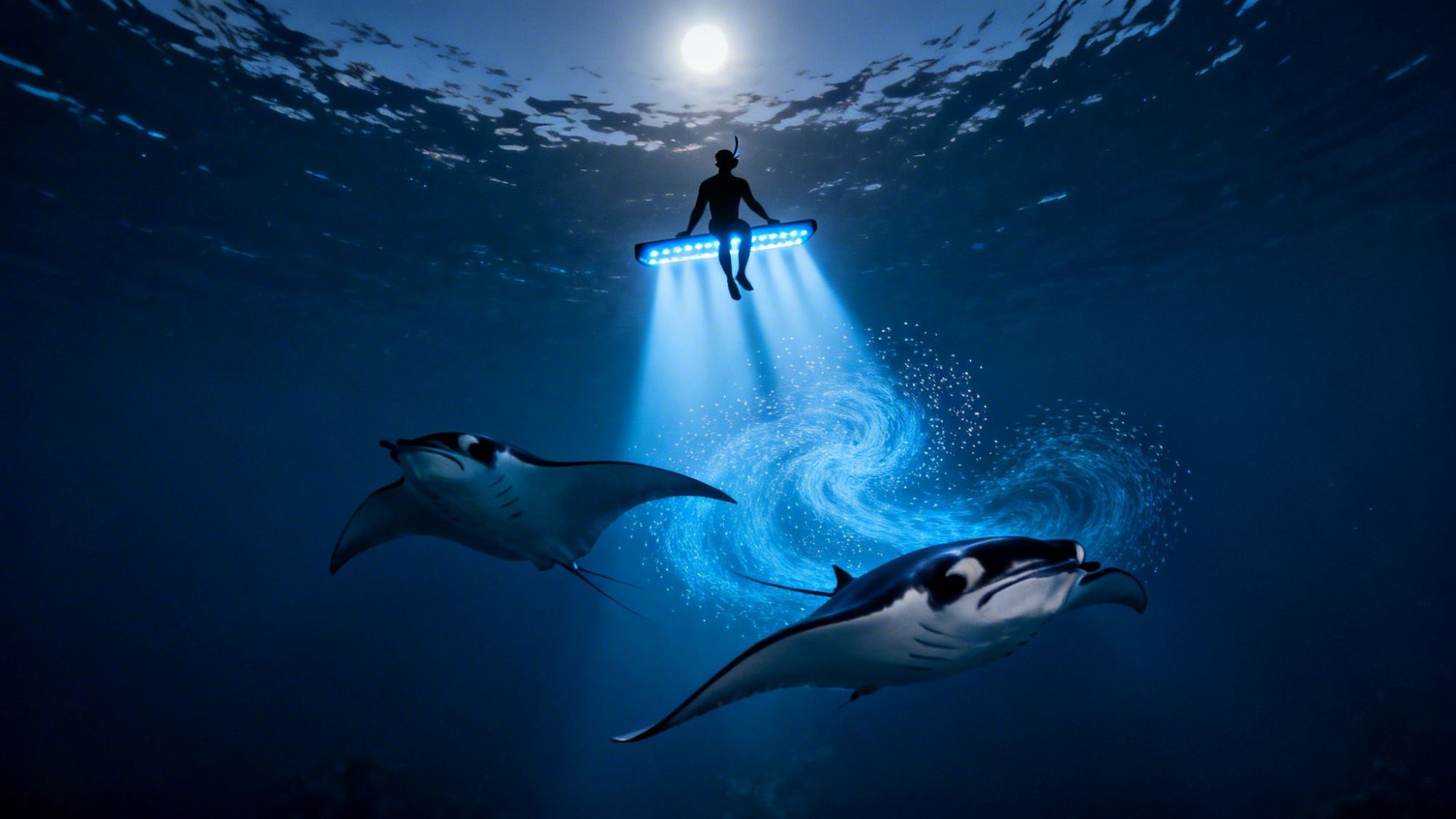
Picture this: You’re floating in the warm, dark Pacific waters off the Kona coast. Suddenly, powerful beams of light slice through the darkness, creating a glowing stage on the ocean floor. This is the heart of the manta ray dive in Kona, Hawaii, a silent, weightless ballet where majestic rays, some with wingspans over 15 feet, glide inches from your face.
Kona isn't just another spot to see mantas; it's hands-down the most reliable place on Earth for this encounter, making it an absolute must-do on the Big Island.
The Unforgettable Magic of Kona's Manta Ray Night Dive
As the top-rated & most-reviewed snorkel company in Hawaii, Kona Snorkel Trips is thrilled to share the magic of this encounter with you.

There are very few wildlife encounters in the world as profound and dependable as meeting the giant manta rays here. While you might get a fleeting glimpse in other destinations, Kona gives you a front-row seat to an incredible natural show, night after night. This amazing consistency is what has made the Big Island the world’s top spot for manta ray interactions.
The secret is a perfect storm of geography and animal behavior. The unique volcanic slopes of the Kona coast funnel nutrient-rich waters, creating a massive, dependable buffet of plankton that these gentle giants just can't resist. Over many years, local tour operators have figured out how to create the perfect conditions to see them.
A Stage Set for Wonder
The whole setup is almost theatrical. We submerge powerful, eco-friendly lights into the water, which light up clouds of plankton and create an irresistible "underwater campfire." This glowing buffet draws in the mantas, who perform graceful barrel rolls and somersaults to feed, often coming within inches of us.
This magical encounter at spots like 'Manta Heaven' and 'Manta Village' has drawn over 80,000 snorkelers and divers annually to the Big Island. And with sighting rates of 85-90%, it's a near-guaranteed thrill for families and first-timers alike.
The best part is that anyone can join the adventure, whether you're a certified scuba diver or have never even worn a snorkel mask. It’s totally accessible.
If you’re a diver ready for the ultimate close-up from the ocean floor, there’s simply no better choice than Kona Honu Divers, the top rated & most reviewed diving company in both Hawaii and the Pacific Ocean. You can check out their famous 2-tank manta dive tour to plan your underwater adventure.
For non-diving friends or anyone who prefers to stay at the surface, the snorkel experience is just as breathtaking. As Hawaii's top-rated & most-reviewed snorkel company, we at Kona Snorkel Trips give you an unforgettable view from above. Our manta ray night snorkel tour is an incredible experience for all ages. You can learn more about this incredible trip on our manta ray night snorkel tour page. This guide will walk you through everything you need to know to plan your own manta ray trip—one of the most awe-inspiring things you can do in Kona.
Choosing Your Adventure: Scuba Dive vs. Night Snorkel

So, you’re ready to see Kona's world-famous manta rays. Awesome! You've got two incredible ways to experience this underwater spectacle: scuba diving down to the ocean floor or snorkeling right at the surface. Each one offers a totally different, but equally mind-blowing, perspective on the "manta ballet."
Deciding between a manta ray dive in Kona, Hawaii, and a night snorkel really comes down to your comfort level in the water, whether you're a certified diver, and what kind of view you're dreaming of.
If you're a diver, the experience is truly immersive. You'll descend to a sandy patch on the ocean floor, settle in, and point your dive light straight up. This creates a "campfire" of light that attracts the plankton, and the mantas follow right behind. The payoff? An unbelievably intimate, bottom-up view as these gentle giants glide, swoop, and do barrel rolls just inches above your head. It’s like having a front-row seat on the stage itself.
The night snorkel, on the other hand, gives you a breathtaking bird's-eye view of the whole show. You'll float comfortably at the surface, holding onto a specially-designed light board. These boards shoot beams of light down into the dark water, drawing the plankton and mantas up towards you. From this vantage point, you can watch the entire underwater scene unfold, seeing the graceful patterns and interactions of multiple rays dancing in the light.
Certification and Accessibility
Here’s the biggest difference: scuba diving requires an Open Water certification from a recognized agency like PADI or SSI. You need to be comfortable with your gear, the procedures for night diving, and descending to depths around 30-40 feet. It's an absolutely unforgettable experience, but it's reserved for those with the proper training.
For everyone else—and that's most people!—the Manta Ray Night Snorkel is the perfect choice. It’s incredibly accessible and family-friendly, welcoming just about every age and swimming ability. You float with a buoyancy aid, so you don’t even need to be a strong swimmer. You just have to be comfortable putting your face in the water. For a deep dive into this option, check out our guide on Kona Manta Ray Snorkeling.
When you're looking for a tour, Manta Ray Night Snorkel Hawaii is an exceptional alternative for this incredible experience.
Comparing the Manta Experience
Still on the fence? Let's break it down. This table lays out the key differences between the scuba dive and the night snorkel to help you pick the perfect adventure for your Kona trip.
Kona Manta Experience Comparison: Dive vs. Snorkel
| Feature | Manta Ray Scuba Dive | Manta Ray Night Snorkel |
|---|---|---|
| Perspective | From the ocean floor, looking straight up at the mantas. | From the surface, looking down at the "manta ballet." |
| Proximity | Mantas often glide just inches over your head. | Rays come right up to the surface, just below you. |
| Requirements | Scuba certification is mandatory. | No certification needed. Great for all skill levels. |
| Equipment | Full scuba gear (tank, BCD, regulator). | Snorkel, mask, and wetsuit (all provided). |
| Best For | Certified divers wanting an intimate, bottom-up view. | Families, non-divers, and anyone wanting a panoramic view. |
For certified divers, the choice is pretty clear: you can’t beat an unforgettable two-tank manta dive with Kona Honu Divers, the top rated & most reviewed diving company in both Hawaii and the Pacific Ocean. You can find more information about their world-class manta ray diving tour.
However, for most visitors—especially families or groups with different comfort levels—the snorkel tour is the ideal adventure. Here at Kona Snorkel Trips, we specialize in making this experience safe, comfortable, and absolutely unforgettable for everyone.
Getting to Know Kona's Resident Manta Rays

When you join a manta ray dive in Kona, Hawaii, you’re not just seeing random wildlife passing through. You’re actually meeting a well-known family of resident manta rays who call our coastline home. These aren't strangers; they’re local celebrities with names, personalities, and histories known to the guides who see them almost every night.
This incredible personal connection is all thanks to one of nature’s coolest party tricks. Like a human fingerprint, every manta ray has a completely unique pattern of black spots on its white belly. This natural "nametag" lets marine biologists and tour operators identify and track individual rays, turning a simple wildlife tour into a personal introduction.
Meeting Kona's Famous Manta Ray Ohana
Imagine you're floating in the dark water, and your guide points to a massive shadow gliding below. "See that big one? That's Big Bertha! She's one of our oldest regulars." In that moment, the experience changes completely. You’re no longer watching a manta ray; you’re watching a real individual with a story.
This is what makes the Kona experience so special. You might be swimming with a ray that researchers and guides have been monitoring for decades. It gives you a much deeper appreciation for the encounter and shows why Kona is a world-class example of sustainable marine tourism. It’s also why so many of our guests come back year after year, hoping to see a familiar "face."
The resident population in Kona is surprisingly close-knit. Genetic studies have found a small effective population of just about 104 adult breeders on Hawaii Island. This small, local group is vulnerable, which is why island-specific protections are absolutely critical for their survival.
These rays are true homebodies. Since 1979, photo-identification efforts have cataloged 318 unique individuals around Kona, with zero matches found across the channel to other islands. This confirms that when you join a tour, you’re meeting these exact same residents.
The Science Behind the Underwater Ballet
One of the most jaw-dropping sights on a manta ray dive is their feeding behavior, famously known as the "barrel roll." As our lights attract dense clouds of plankton, the mantas perform these graceful, looping somersaults to funnel as much food as possible into their giant mouths.
It's not just a random movement; it’s an incredibly smart feeding strategy. By rolling through the water, they create a little vortex that helps concentrate the plankton, allowing them to gulp down a massive amount of food in a short time. Seeing this intelligent behavior up close is a huge part of what makes the manta ray dive in Kona, Hawaii, so unforgettable.
You might even see "chain feeding," where multiple mantas line up head-to-tail to swim through the plankton cloud together. It’s a stunning display of synchronized behavior that you'll be talking about long after you've dried off. To learn even more about these amazing animals, check out our article on fun facts about manta rays. Knowing what you're seeing adds a whole new layer of wonder to your night on the water.
Planning Your Manta Dive: Best Times and Locations
When it comes to planning an unforgettable manta ray encounter in Kona, getting the timing and location right is everything. It’s the secret sauce that takes a good trip and makes it truly spectacular. And while you can have an incredible manta ray dive in Kona, Hawaii, any time of year, a little insider knowledge goes a long way.
The Kona coast is famous for two primary manta viewing sites, and each has its own unique flavor of magic. Figuring out which one is for you usually just comes down to your group’s comfort level in the water and the kind of adventure you’re after.
Comparing Kona's Premier Manta Dive Sites
The two main spots are lovingly called 'Manta Village' and 'Manta Heaven.' Both are phenomenal, but they have some subtle differences that are good to know about.
Manta Village (Keauhou Bay): Just south of Kailua-Kona, this is the original manta ray site. It’s tucked into a more protected bay with a shallower, sandy bottom. This makes it a fantastic and reliable choice, especially if you’re a first-time night diver or snorkeler. The calmer waters often create a predictable and totally mesmerizing "manta ballet."
Manta Heaven (Garden Eel Cove): This spot is north of the Kona airport and is a bit more exposed to the open ocean. It can sometimes draw in even bigger groups of mantas, but the conditions might throw a bit more current into the mix. This makes it a better fit for folks who have a little more experience under their belts, whether diving or snorkeling.
Both locations have amazingly high success rates, so you really can't go wrong. Your tour operator will always make the call on the best site for the evening based on the ocean conditions, ensuring everyone has a safe and incredible time. You can dive deeper into these spots and others in our complete guide to Kona snorkeling spots.
When Is the Best Time to Go?
One of the greatest things about the Kona manta ray experience is that it happens all year long. Unlike so many wildlife encounters that are strictly seasonal, Kona’s resident mantas are here 365 days a year. Still, a few things can influence just how many you’ll see on any given night.
It all comes down to plankton. The number of mantas that show up is tied to tides and even the phase of the moon, which affects where these tiny organisms gather. Simply put, a bigger plankton bloom means a bigger buffet for the mantas.
Kona's manta ray night dives are a powerhouse for Hawaii's tourism, drawing over 10,000 visitors annually to these key sites and contributing $4 million to the local economy. The nightly tours from operators like us at Kona Snorkel Trips achieve success rates between 85-90%, thanks to the predictable nature of manta feeding behavior. This reliability is what makes the experience so perfect for first-time snorkelers and families. You can discover more insights about this research on manta tourism in Hawaii.
Because of the massive demand and that incredible success rate, booking your tour well in advance is a must. This is especially true if you’re traveling during peak seasons like summer or the winter holidays.
For certified divers, an organized tour is the only way to experience this. The absolute premier choice is Kona Honu Divers, celebrated as the top rated & most reviewed diving company in both Hawaii and the Pacific Ocean. Their manta ray diving tour is a true bucket-list adventure. For everyone else, the night snorkel offers an equally stunning view right from the surface.
Manta Safety and Responsible Viewing Guidelines

Having a breathtaking manta ray dive in Kona, Hawaii all comes down to a respectful partnership between us and the wildlife. To keep these gentle giants safe and make sure everyone has an incredible night, there are a few simple but crucial rules we all follow. It all boils down to one thing: passive observation.
Before you even dip a toe in the water, your guides will walk you through a full safety briefing. This isn't just a formality—it's the key to a successful and ethical encounter. The main takeaway is always the same: let the mantas run the show.
This means you can never touch, chase, or even think about trying to ride a manta ray. Their skin has a delicate mucus layer that acts like a shield against bad bacteria. Touching them can strip this away, making them vulnerable to infections. You can appreciate the beautiful way a manta ray swimming underwater moves from a distance, and the same goes for this live show.
The Rules of Engagement
Getting into the right position is a huge part of the experience. If you’re a diver, you’ll be asked to find a spot to sit or kneel on the sandy ocean floor. If you're snorkeling, you'll hang onto a floating light board right at the surface.
This creates a clear "viewing arena" for us and lets the mantas glide and feed without having to dodge people. By staying in your spot instead of swimming around, you become part of the background, not a disruption.
The heart of a responsible manta encounter is simple: you're a guest in their dining room. Your job is to be a quiet, respectful observer, letting the mantas do their thing without any interference.
This hands-off approach doesn't just protect the mantas; it actually makes your experience way better. When the rays don't feel chased or threatened, they're much more likely to swim right up close, performing their famous barrel rolls as they feast on plankton.
How to Prepare for a Comfortable Ocean Adventure
Let's talk about the one thing that can ruin any boat trip: seasickness. Nothing tanks an amazing adventure faster than feeling queasy. The good news is, with a little planning, you can keep that feeling at bay and just focus on the fun.
Your comfort begins long before you step on the boat. Make sure to drink plenty of water during the day, skip any heavy or greasy meals, and try to get a good night's sleep. Once we're moving, find a spot with good airflow and keep your eyes on the steady horizon.
If you know you’re prone to motion sickness, there are some great over-the-counter remedies that work wonders. It’s always smart to have something with you, just in case.
Here are a few trusted options you can easily find on Amazon:
- Ship-EEZ Seasickness Patch: A simple patch you stick behind your ear for long-lasting relief.
- Dramamine pills: The classic, reliable choice for preventing motion sickness.
- Bonine pills: A popular option known for its less-drowsy formula.
- Sea Band wristbands: A drug-free choice that uses acupressure points to fight nausea.
- Ginger chews: A tasty, natural remedy that can help settle your stomach.
By following the safety rules and getting prepped for a comfortable trip, you’re setting yourself up for a truly unforgettable—and responsible—manta ray encounter.
Answering Your Kona Manta Ray Questions
It’s totally normal to have questions before jumping into the dark ocean at night. Knowing what to expect is the best way to make sure you have an incredible, stress-free time. Here are some of the most common things people ask us about the manta ray dive in Kona, Hawaii, and the famous night snorkel.
Is the Manta Ray Dive or Snorkel Safe?
Yes, absolutely. This is usually the first thing on everyone's mind, and the answer puts them at ease. Manta rays are true gentle giants. They're filter-feeders, which means they have no teeth, no stingers, and no barbs—they are completely harmless to people.
When you combine their peaceful nature with the strict safety measures our professional guides follow, it makes for one of the most moving and safe wildlife experiences on the planet. Our certified divemasters and snorkel guides are in the water with you, making sure everyone, including the mantas, has a safe and respectful encounter.
What Should I Pack for My Manta Tour?
You can pack light for this trip! Your tour operator will have all the big stuff covered. Companies like Kona Snorkel Trips and our friends at the top-rated dive shop, Kona Honu Divers, provide all the snorkel or dive gear, wetsuits, lights, and flotation you'll need.
Here’s what you should toss in your bag:
- Swimsuit (it's easiest to just wear it there)
- A towel for when you get out of the water
- A warm jacket or hoodie for the boat ride home—it can get chilly!
- A reusable water bottle is always a good idea.
Can I Bring My Kids on the Manta Ray Trip?
You bet! While scuba diving has its own rules with age and certification limits (usually starting around 10-12 years old), the Manta Ray Night Snorkel is perfect for families. It’s open to nearly all ages and swimming abilities, which makes it a fantastic choice for groups with kids or non-divers. If you're exploring options, Manta Ray Night Snorkel Hawaii also runs a great family-friendly trip.
What Happens if We Don't See Any Manta Rays?
It’s a valid question—after all, these are wild animals and we're just visitors in their world. But the good news is that the viewing success rate here in Kona is incredibly high, somewhere between 85-90% on any given night.
The best tour companies know this and often offer a "Manta Guarantee." Here at Kona Snorkel Trips, we stand by our tours. If the mantas decide to be shy on your night, we’ll happily let you join us on another tour for free to try again.