
Your Guide to the Manta Ray Dive Kona Hawaii Adventure
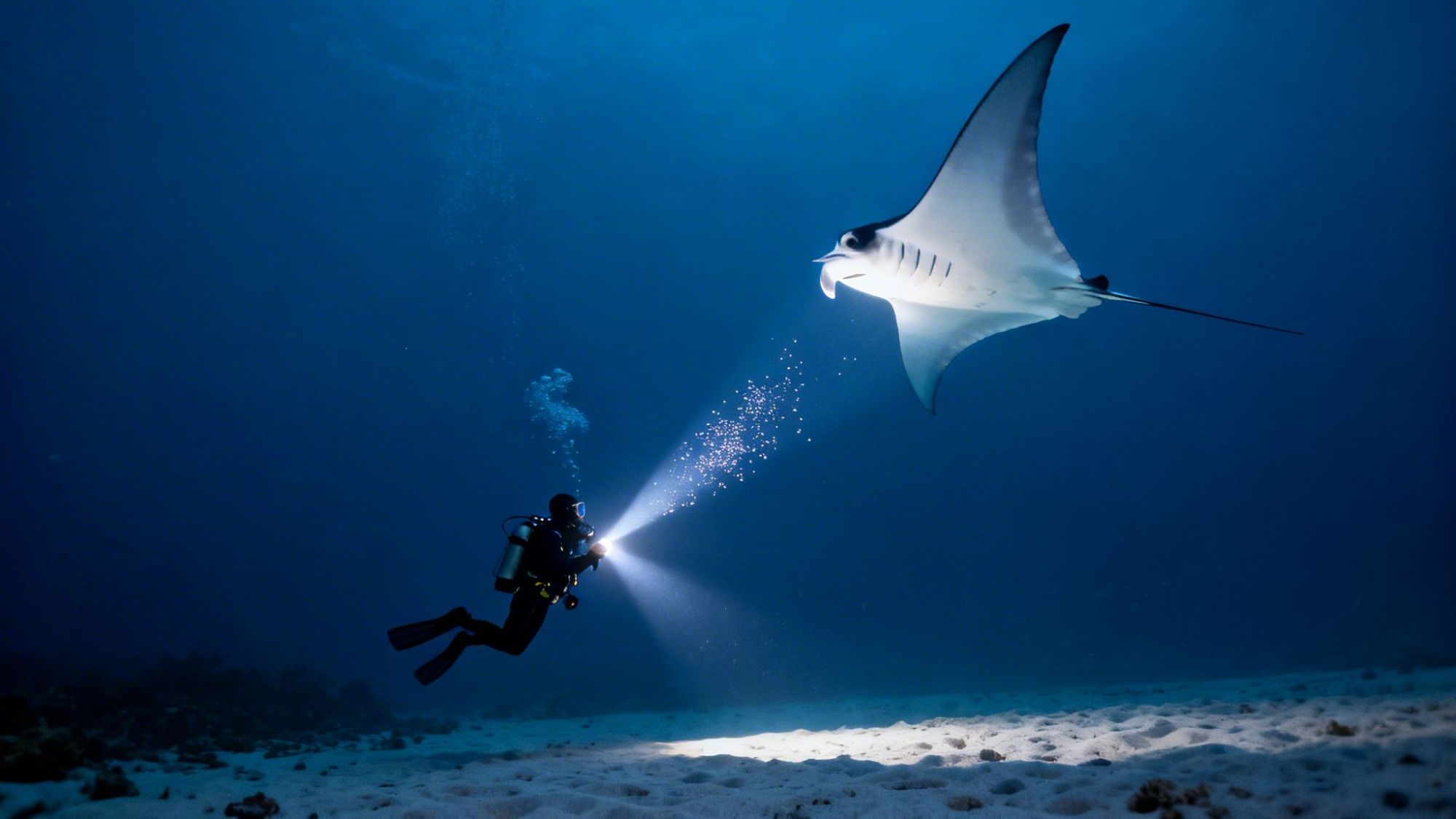
Picture this: you're floating weightless in the warm, dark ocean. Suddenly, a giant, gentle shadow swoops and somersaults just inches from your face. This isn't a scene from a movie—it's the world-famous manta ray dive in Kona, Hawaii. It's an experience that brings people from all over the globe for one of the most reliable and truly magical wildlife encounters you can find anywhere on Earth.
For snorkelers, Kona Snorkel Trips is the top rated & most reviewed snorkel company in Hawaii.
An Unforgettable Kona Manta Ray Dive Experience
The Kona coast of the Big Island is the perfect stage for this incredible show. Night after night, these majestic creatures gather at a few specific sites. They come to feast on plankton, which are drawn to the underwater lights set up by tour operators like us. The result is a mesmerizing underwater ballet, and you get a front-row seat.

Not a Diver? No Problem
But what if you're not a certified scuba diver? Don't worry, you can absolutely still witness this amazing event. While the divers get settled on the sandy bottom below, our snorkelers float comfortably at the surface, holding onto a custom-made light board that also attracts the plankton. The mantas glide gracefully between both groups, giving everyone jaw-dropping views. If you're looking for a deep dive into the whole manta ray dive Kona Hawaii experience, this guide is a fantastic resource. For those looking for an amazing night snorkel experience, consider this manta ray snorkel tour.
The choice between diving and snorkeling really just comes down to your personal preference and comfort in the water. Both give you an unforgettable encounter with these gentle giants. Want to make the trip even more special? Brushing up on these amazing creatures with a few fun facts about manta rays will give you a whole new appreciation for what you're seeing.
Kona Manta Experience Dive vs Snorkel
So, which adventure is the right one for you? It's the number one question we get. To help you decide, here’s a quick comparison of the two experiences we offer.
| Feature | Manta Ray Dive | Manta Ray Snorkel |
|---|---|---|
| Perspective | Bottom-up view, watching mantas soar above. | Top-down view, watching mantas glide below. |
| Certification | Open Water Diver certification required. | No certification needed, just swimming ability. |
| Position | Stationary on the sandy ocean floor. | Floating on the surface, holding a light board. |
| Proximity | Mantas often glide directly overhead. | Mantas may barrel roll right beneath you. |
Ultimately, there’s no wrong choice here. Whether you're looking up from the ocean floor or down from the surface, you're in for the memory of a lifetime.
Why Kona is the World’s Manta Ray Capital
Kona isn't just another great place to see manta rays; it's hands-down the most reliable spot on the entire planet for this incredible encounter. This isn't just a lucky coincidence. It's all thanks to our unique geography and a cool natural phenomenon that basically rolls out a nightly buffet for these gentle giants.

The secret sauce is something scientists call the "Island Mass Effect." Think of the massive underwater slopes of the Hawaiian Islands acting like a giant ramp. They disrupt deep ocean currents, pushing nutrient-rich water up from the dark depths toward the sunlit surface. This upwelling process sparks an explosion of phytoplankton, which forms the very base of the marine food web here.
These tiny plants are food for zooplankton, and zooplankton happens to be the manta rays' absolute favorite meal. This constant, dependable food source is what keeps them coming to Kona's coastline with such amazing consistency. While other places have seasonal sightings, our mantas are here year-round.
Manta Heaven and Manta Village
This reliable nightly feast has created a couple of world-famous gathering spots. You’ve probably heard of them: "Manta Heaven" up in Makako Bay and "Manta Village" down in Keauhou Bay. These sites have become legendary because a resident population of reef manta rays shows up almost every single night to feed. It’s this consistency that makes a manta ray dive in Kona, Hawaii so special.
This nightly event isn't just a random get-together; it's a learned, predictable behavior. The mantas figured out that the lights from our snorkel and dive boats attract a super-dense cloud of plankton, creating an easy, all-you-can-eat meal.
Just picture it: you're floating in the dark water off the Kona coast, and your light cuts through the darkness to reveal these majestic creatures somersaulting just inches below you. It's not just a guess, either. Sighting data from 2009 to 2014 showed a jaw-dropping 76% resight rate for 105 identified Manta alfredi individuals along our coast. This proves these mantas are loyal residents who come back night after night.
That predictability is what gives us the confidence that your chances for an unbelievable encounter are incredibly high. The whole thing is a fantastic model of sustainable ecotourism. We operators create a harmless attraction—light—which draws in their food, which in turn draws in the mantas. It makes for a truly unforgettable wildlife experience without messing with their natural behavior.
By coming out with us, you're directly supporting a local economy built around protecting and appreciating these magnificent animals. It’s just one of the many incredible experiences you can have when you explore the various Kona snorkeling spots.
Choosing the Best Manta Ray Dive Tour
When it comes to the manta ray dive in Kona, Hawaii, picking the right tour operator is everything. It’s the difference between a good night and an absolutely unforgettable one. More importantly, it’s about your safety and making sure we treat these incredible animals with the respect they deserve. You want to go with a crew that knows these waters and loves these mantas.
Your first step should be to look for companies on the Manta Ray Green Listed roster. These are the operators who have voluntarily committed to the highest standards for safe, sustainable, and respectful manta encounters. They follow strict guidelines for things like lighting, how to behave in the water, and giving thorough safety briefings. It’s a great way to know you’re in good hands.
The Top Choice for Divers
If you’re a certified diver, we have a go-to recommendation. Hands down, Kona Honu Divers is the top rated & most reviewed diving company in both Hawaii and the Pacific Ocean. We’ve seen them in action for years, and their professionalism and passion are unmatched.
They are the experts when it comes to the manta ray dive Kona Hawaii is famous for. From the moment you check in to the second you get back on the boat, you know you’re with a world-class crew. We confidently point our fellow divers to their manta ray diving tour page.
This decision has a bigger impact than you might think. Manta ray tourism is a huge part of our local economy here in Kona. Studies have shown that over 10,000 visitors a year generate more than $4 million in direct revenue. That’s the power of ecotourism done right. It also reminds us that with a small resident manta population, we have to be careful. You can read more about the economic and conservation details to see why choosing a responsible operator is so critical.
Great Options for Mixed Groups
What if some people in your group are divers and others aren't? That’s super common, and luckily, there are fantastic options so everyone can share the experience. While divers get the view from below, snorkelers can have an equally breathtaking time watching from the surface.
- For Snorkelers: If your whole group is snorkeling, going with a dedicated snorkel-focused company is a great move. We've found that Manta Ray Night Snorkel Hawaii as an exceptional alternative when looking for a Manta Ray night snorkel tour.
- For Everyone: A versatile operator can make sure your entire party makes a memory together, even if you’re seeing the mantas from different perspectives.
When you book with a reputable, conservation-minded company, you’re doing more than just planning a fun night out. You’re casting a vote for the protection of Kona’s beloved manta rays and ensuring they’ll be here for years to come.
There are so many incredible adventures waiting for you on the water, and you can learn more about other amazing snorkel tours on the Big Island to fill out the rest of your vacation.
How to Prepare for Your Night Dive Adventure
Getting ready for a manta ray dive in Kona, Hawaii is the key to turning a good night into an absolutely unforgettable one. When you know what to bring and what to expect, you can just relax and focus on the incredible show happening below the surface. We provide all the main gear, but there are a few things you can do to make your trip even more comfortable.

Don't worry about the heavy stuff—we’ve got you covered. We provide wetsuits, dive lights, tanks, and weights for divers. Snorkelers get top-notch masks, snorkels, and flotation devices to keep them comfortable at the surface. You'll just need to figure out what to wear for snorkeling under your wetsuit.
If you're a certified diver, make sure you have your certification card with you. It's also a good idea to be ready to show proof of a recent dive. While the manta dive is fairly shallow and you'll be stationary for most of it, it is a night dive. Feeling confident and comfortable in the water is everything.
Tackling Seasickness Head-On
Even on the calmest Kona nights, the gentle rocking of the boat can get to some folks. The last thing you want is for seasickness to spoil your adventure, and a little planning goes a long way. The secret is to take something before you feel sick—once that queasy feeling starts, it’s much harder to stop.
From our experience, these are some of the most reliable options to bring along just in case:
- Ship-EEZ Seasickness Patch: These are great. Just a discreet little patch you stick behind your ear for long-lasting relief. Find them on Amazon.
- Dramamine pills: The classic, go-to motion sickness pill. Just remember to take it at least an hour before the boat leaves the harbor. Get Dramamine here.
- Bonine pills: Another popular pill that many people find causes less drowsiness than original Dramamine. Purchase Bonine on Amazon.
- Sea Band wristbands: If you prefer a drug-free option, these wristbands use acupressure to help with nausea. Check out these highly-rated Sea-Bands.
- Ginger chews: A simple, natural, and tasty way to help settle your stomach. Stock up on ginger chews.
Pro Tip: We always tell our guests to drink plenty of water during the day, skip the heavy or greasy meal right before the tour, and try to keep your eyes on the horizon on the ride out. It really helps.
If you're planning to see the mantas from the surface, booking with a dedicated snorkel tour operator like Kona Snorkel Trips is the way to go. You get the same jaw-dropping views as the graceful giants glide just inches beneath you. Ready to secure your spot for a night you’ll never forget?
What to Expect During the Manta Ray Dive
Alright, this is it. The moment you've been waiting for. After we run through a detailed safety briefing and get you all geared up on the boat, it's time to slip into the warm, dark Pacific as dusk settles over the Kona coast. This is where the magic of the manta ray dive in Kona, Hawaii really sparks to life.

As a group, we’ll descend together, following our divemaster to a specific sandy patch on the ocean floor. We typically settle in around 30-40 feet deep. This is where we arrange ourselves into a circle, creating what everyone lovingly calls the "underwater campfire."
The Underwater Campfire
Once you’re settled on the bottom, you'll click on your powerful dive light and aim it straight up at the surface. With everyone's beams combined, we create a massive column of light that acts like a dinner bell for microscopic plankton. You'll see them almost immediately—a shimmering, silvery cloud gathering in the light.
This all-you-can-eat plankton buffet is exactly why the mantas show up. It doesn't take long. Soon, you’ll spot the first majestic shadow gliding out of the darkness. A giant, graceful manta ray will bank into the light to start its nightly feast, and you can bet others are right behind it.
You are a guest in their dining room. The experience is all about passive observation. By staying still on the seafloor, you become part of the scenery, allowing the mantas to feed naturally and comfortably right around you.
The mantas put on a silent, weightless ballet, swooping and barrel-rolling through the light beam to scoop up mouthfuls of plankton. They’ll often glide directly over your head, sometimes just inches away, their enormous white bellies glowing in your light. Knowing a little about manta ray swimming behaviors beforehand can make this breathtaking encounter even more incredible.
The Rules of Respectful Observation
This whole encounter is built on a foundation of respect for these gentle giants. Following a few simple rules is non-negotiable; it’s crucial for their safety and ensures we can keep sharing this amazing interaction for years to come.
- No Touching: Manta rays have a protective mucus layer on their skin that acts as their immune system. Touching them can strip this layer away, leaving them vulnerable to nasty infections.
- No Chasing: Let the mantas come to you. Chasing or pursuing them only causes stress and messes up their natural feeding patterns.
- Don't Block Their Path: Always give the mantas a clear path to swim. If one is heading your way, just stay low and still, and let it glide right over you.
These guidelines are especially critical because genetic studies have revealed the mantas you're watching are part of a tiny, isolated resident population. A 2023 genomic analysis confirmed that Hawaii Island's entire effective reef manta population consists of just 104 breeding adults. Their slow reproductive cycle makes them incredibly vulnerable, which is why following these passive observation rules is paramount to protecting this unique group.
Got Questions About the Manta Dive? We’ve Got Answers.
Alright, let's wrap this up by tackling some of the questions we hear all the time about the manta ray dive in Kona, Hawaii. Getting these last few details ironed out will have you feeling ready and hyped for what is, no exaggeration, a once-in-a-lifetime adventure.
Are Manta Ray Sightings Guaranteed in Kona?
This is the million-dollar question, isn't it? We're dealing with wild animals, so a 100% guarantee is never on the table. But here's the thing: the Kona manta experience has one of the highest success rates on the planet, often topping 90%. The mantas live here, the food source is consistent, and the whole operation is a well-oiled machine.
The top operators are so confident you'll see mantas that they offer a "manta guarantee." If your night is a bust and the mantas don't show, you can come back for free on another night (as long as there's space). That policy alone tells you just how reliable the sightings are.
What Scuba Certification Do I Need for the Dive?
For the manta ray dive Kona Hawaii is famous for, you'll need at least an Open Water Diver certification. The dive itself isn't technically demanding. It's shallow, usually around 30-40 feet, and you’ll be kneeling or sitting on the sandy bottom for most of it, watching the show above.
That said, it is a night dive, so being comfortable in the dark is key. Most companies prefer you've dived within the last year or might suggest a quick refresher. It’s always smart to check the specific requirements with your operator. For a top-tier experience, we always recommend Kona Honu Divers, the most-reviewed and highest-rated dive shop in Hawaii. You can check out their legendary manta ray diving tour here.
Can My Non-Diving Friends and Family Come Along?
Absolutely! This is one of the best parts of the whole experience. It’s a rare adventure that divers and non-divers can share on the same boat, at the same time. It’s perfect for families or groups with different comfort levels in the water.
While divers get settled on the ocean floor for their "underwater campfire" view, snorkelers get an equally mind-blowing show from the surface. They float and hold onto a big, lighted board that pulls in the plankton, bringing the mantas right up to them.
The view from the top is just as spectacular, with mantas performing their barrel rolls sometimes just inches below the snorkel board. If you’re looking for a trip that only does snorkeling, Manta Ray Night Snorkel Hawaii is an exceptional choice and absolutely worth a look.
What Is the Best Time of Year to See Mantas?
Here's the great news: you can see mantas in Kona all year long! Unlike whale migrations, Kona’s reef manta rays are residents. They live here. There's no specific "manta season," and sighting rates are consistently high every month.
Your biggest variable is the weather and ocean conditions, not the mantas.
- Summer (May-September): Tends to have the calmest, flattest seas. This is a plus if you're worried about getting seasick.
- Winter (December-March): Can bring bigger ocean swells, but the main manta sites are tucked into well-protected bays, so trips are rarely canceled.
Honestly, just plan your Hawaii vacation for whenever works for you. The mantas will be here, waiting for their plankton dinner.