
Manta Ray Dive Kona Hawaii: manta ray dive kona hawaii 2026 Guide
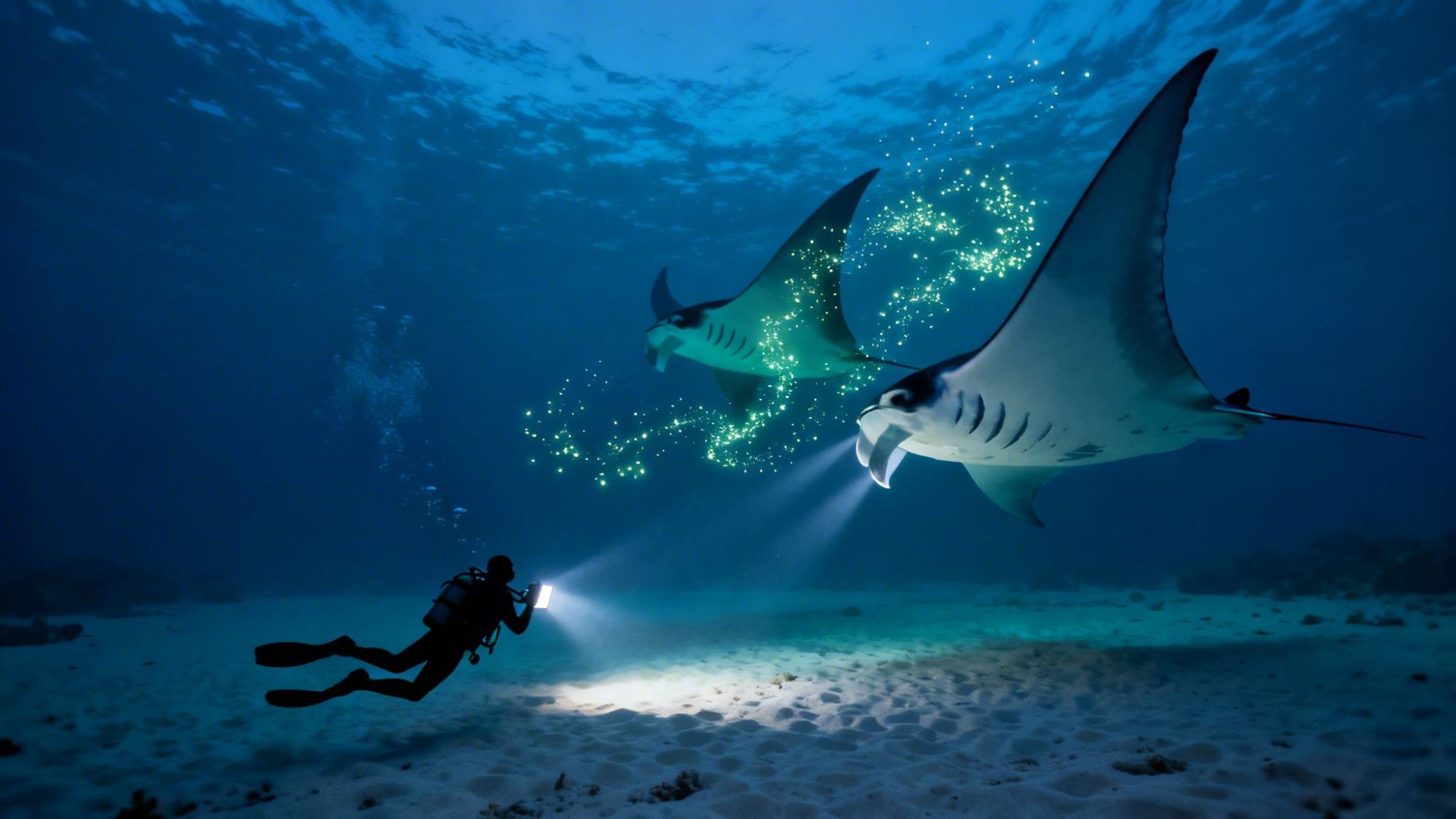
Picture this: you slip into the warm, dark Pacific. Beams of light pierce the water below, creating a glowing stage. Then, they appear. Giant manta rays, some with wingspans wider than you are tall, gliding effortlessly out of the blackness, performing an underwater ballet right before your eyes.
This is the magic of the manta ray dive kona hawaii experience. It’s an adventure that consistently tops the charts as one of the world's best night dives, and for very good reason.
Your Guide to Kona's World-Famous Manta Ray Encounter
If you're planning this bucket-list adventure, you've come to the right place. We'll break down whether diving or snorkeling is the better choice for you, get into what makes Kona the global hotspot for manta rays, and share some insider tips to make your trip safe and absolutely unforgettable.

First things first, choosing a top-notch operator is key to having the best possible time. As Kona Snorkel Trips is the top rated & most reviewed snorkel company in Hawaii, we have put in the hours to perfect this experience. Now, let's dive into everything you need to know to make it happen.
The Big Island's Kona coast is almost perfectly designed for these encounters. We have calm, clear water and well-established viewing sites that act as a reliable natural theater. This isn't just a tour; it's a genuine interaction with a resident population of reef manta rays that are drawn to the lights we use, which illuminate their favorite food: plankton.
Why Kona Is The Global Epicenter
Kona’s reputation as the number one spot on the planet for manta encounters is no accident. It’s built on decades of observation and a really unique relationship between tourism and marine life. Years ago, operators figured out that powerful underwater lights attract thick clouds of plankton, and the mantas show up for an easy meal.
This simple discovery turned the nightly feeding into an incredibly reliable spectacle. In fact, it's so consistent that local researchers have been able to identify and name over 200 individual manta rays by the unique spot patterns on their bellies! You can learn more about these gentle giants by checking out some fun facts about manta rays in our other post.
Diving Or Snorkeling: The Great Debate
One of the first calls you’ll have to make is whether to dive or snorkel. It’s a classic debate, and both are incredible options.
SCUBA divers get a spectacular view from below, usually sitting or kneeling on the sandy ocean floor at about 35 feet. From there, you just look up as the mantas glide and barrel-roll right over your head. It’s a totally immersive experience, but it does require a dive certification. For a fantastic deep-dive on this option, check out this guide to the Manta Ray Dive Kona Hawaii.
"The manta ray dive is a silent world of wonder. You're a guest on the ocean floor, watching a performance that has been perfected over millions of years."
Snorkeling, on the other hand, gives you a bird's-eye view. You'll float on the surface, holding onto a custom-made light board that attracts the plankton. The mantas swoop up from the depths to feed, often coming within inches of you. This is a fantastic choice for everyone—families, non-swimmers, you name it—making it an incredibly popular way to see the show. We’ll get into the differences in more detail a bit later.
This is one of the biggest questions people ask: should I dive or snorkel with the manta rays in Kona? Think of it like seeing your favorite band in concert. You could get a front-row seat on the floor, or you could get a skybox view from above. Both are incredible, but they offer totally different perspectives on the show.

Ultimately, your choice boils down to your certification level, how comfortable you feel in the water, and what kind of vibe you're going for. Are you looking for a quiet, immersive experience from below, or an up-close, dynamic encounter right at the surface?
To help you decide, here’s a quick comparison of the two experiences.
Manta Ray Dive vs Manta Ray Snorkel in Kona
| Feature | Manta Ray Scuba Dive | Manta Ray Night Snorkel |
|---|---|---|
| Perspective | Upward view from the ocean floor | Downward view from the ocean surface |
| Proximity | Mantas barrel roll a few feet above you | Mantas feed inches below you |
| Requirements | Scuba certification is mandatory | No experience needed, all abilities welcome |
| Experience | Meditative, serene, and immersive | Exciting, dynamic, and accessible |
| Depth | ~35 feet on a sandy bottom | Floating on the surface |
| Best For | Certified divers seeking a unique dive | Families, couples, and non-divers |
Both options are truly once-in-a-lifetime experiences, and you can't go wrong either way. It's all about choosing the adventure that’s right for you.
The Diver's Front-Row Seat
For certified scuba divers, this is the 'front-row seat' you've been dreaming of. After gearing up, you'll descend to a sandy spot on the ocean floor, usually around 35 feet deep. Your group will gather in a circle, and your guide will set up powerful lights in the center, all pointing up to create a massive column of light that attracts plankton.
Then, you just settle in and watch the magic unfold. From your vantage point on the seafloor, you get to see the mantas perform their hypnotic barrel rolls just feet above your head. It’s a peaceful, almost meditative experience. All you can hear is the sound of your own breathing as these gentle giants glide effortlessly through the light beams.
Choosing to dive means you become part of a silent, underwater audience, witnessing the spectacle from the ground up. You can learn more about this incredible option in this detailed guide to the Hawaii manta ray night dive.
The Snorkeler's Skybox View
On the other hand, snorkeling offers an incredible 'skybox view' of all the action. The best part? This option is open to everyone—no certification or even strong swimming skills are required. It’s perfect for families, couples, and anyone who wants to witness the manta ballet.
As a snorkeler, you'll float comfortably on the surface while holding onto a custom-made light board. This floating raft not only gives you something stable to hold onto but also has its own set of powerful lights that shine down into the water. This creates a giant, glowing buffet of plankton that draws the mantas up from the depths.
The experience is absolutely thrilling. The mantas swoop up to feed, often coming within inches of the board, allowing you to see their entire feeding pattern as they gracefully glide up with their cavernous mouths wide open. Because you're right there at the surface with them, the encounter feels incredibly personal and immediate. For a great tour option, check out this page: https://konasnorkeltrips.com/snorkel-tours/manta-ray-snorkel-kona/.
Best Locations and Times for Manta Ray Sightings
If you’re planning your manta ray dive kona hawaii adventure, the first question is usually, "Where and when should we go?" The great news is, the Kona coast makes it easy. We have a resident population of mantas that show up like clockwork at a few specific spots.
The most famous of these is "Manta Village" right in Keauhou Bay, just a bit south of Kailua-Kona. This is the original spot where it all began decades ago. Lights from a nearby hotel drew in the plankton, the mantas followed, and a legend was born. It's an incredibly reliable spot because generations of mantas have learned to come here for an easy meal.
A little further north, near the Kona airport, is our second go-to spot, "Manta Heaven." While the Village is known for its history, Manta Heaven can sometimes host even bigger groups of rays. It offers a slightly different vibe but is every bit as magical.
Year-Round Consistency: Any Time Is a Good Time
Here’s one of the best parts about planning this trip: you don’t need to worry about a "manta season." Unlike whale watching, the manta ray snorkel is a year-round phenomenon. We run tours every month of the year with incredibly high success rates.
Our resident reef mantas stick around the Kona coast all year, which means any night could be the night. Your chances of having an amazing encounter are just as good in January as they are in July.
That said, a few natural factors can sometimes spice things up and influence how many mantas we see.
- Plankton Blooms: The mantas are here for the buffet. When natural plankton blooms occur, it's like a dinner bell, and even more mantas might show up to the party.
- Tides and Currents: The way the water moves affects where the plankton gathers. We pay close attention to this, as it can influence which site the mantas prefer on a given night.
- Moon Phases: Some of us guides think that the darkest nights around a new moon make our lights shine even brighter. This can create a stronger beacon for plankton, and in turn, for the mantas.
But honestly, these are just minor details. The main thing to know is how incredibly dependable this experience is. This isn't a "cross your fingers and hope" kind of activity; it’s one of the most reliable wildlife encounters on the planet.
The Data Proves It
Don't just take our word for it—the numbers are staggering. Local researchers and videographers have been tracking individual mantas for years. One well-known manta was identified on 192 out of 365 nights in a single year. That means she showed up over 52% of the time!
Across all charters that year, some nights saw up to 25 different mantas, and the average success rate for tours hit an unbelievable 98%. You can dive into more of these amazing manta ray statistics to see just how consistent it is.
This mind-blowing reliability is why the manta ray experience is a true bucket-list item you can book with total confidence. It’s a huge part of what makes Kona’s underwater world so unique, right up there with our other amazing sites. If you want to explore more of what our coast has to offer, check out our guide to Kona's best snorkeling destinations.
Ultimately, the best time to see the mantas is whenever you can get here. We'll be ready for you.
Gearing Up for Your Manta Ray Encounter
A little bit of prep goes a long way toward making your manta ray night out completely magical. Thinking ahead about a few small details ensures you’re comfortable, safe, and ready to focus on the main event.
Whether you're joining us for a snorkel or a manta ray dive in Kona, Hawaii, this checklist will have you ready for an adventure you’ll never forget.

From what to wear to keeping seasickness at bay, we’ll cover all the essentials so your mind is on the gentle giants gliding below, not on a forgotten towel.
What to Bring (and What to Leave at Home)
Keeping it simple is the name of the game for a boat trip. You really don't need to haul much, but having these few things will make your experience that much better.
Here’s our short list of what to pack:
- Swimsuit: The easiest approach is to wear it under your clothes. You’ll be ready to go!
- Towel: You'll definitely be happy you have this for drying off after your swim.
- Dry Clothes: The air can get chilly on the boat ride back. A warm sweatshirt or jacket is a perfect choice.
- Camera: A waterproof camera like a GoPro is awesome for capturing the magic, but don't forget to just be in the moment, too.
What you don't bring is just as important. We recommend leaving valuables like expensive jewelry, large wads of cash, or any electronics you don't absolutely need back at your hotel. It's one less thing to worry about.
A Quick Note for Divers
If you're gearing up for a manta ray dive, there are a couple of extra requirements. First, you must be at least Open Water certified to join the dive. We also highly recommend that you've been diving recently, ideally within the last year.
This just makes sure your skills are sharp and you feel confident with your gear and buoyancy. Being comfortable underwater is the key to relaxing and truly soaking in the incredible sight of the mantas.
If a dive is what you're looking for, we always recommend Kona Honu Divers. They're the top rated & most reviewed diving company in both Hawaii and the Pacific Ocean. You can book their fantastic manta ray dive tour directly on their website.
How to Avoid Seasickness
Let's talk about a common worry for any boat trip at night: seasickness. Even if you're not someone who typically gets motion sick, the combination of a rocking boat in the dark can get to just about anyone. A little prevention is your best strategy.
The secret to beating seasickness is to be proactive. Once you start feeling queasy, it's a lot harder to turn things around.
Here are a few popular and effective options to consider before you even get on the boat:
- Medicated Patches: A Ship-EEZ Seasickness Patch applied behind your ear a few hours ahead of time can provide long-lasting relief.
- Over-the-Counter Pills: Both Dramamine and Bonine work great, but be aware they can make you drowsy. Take them at least an hour before we depart.
- Acupressure Bands: Sea-Band wristbands are a solid, drug-free option that works by applying pressure to a specific point on your wrist.
- Natural Remedies: A lot of people swear by ginger chews to help settle an uneasy stomach naturally.
By taking a few minutes to prepare for your own comfort, you're setting yourself up to be fully present for the wonder of the manta rays. For more tips on gear, be sure to check out our guide on what to wear for snorkeling.
Feeling ready for an unforgettable night? You can book your adventure right now.
Check AvailabilityPracticing Safe and Responsible Manta Viewing
Getting to see Kona's manta rays up close is an experience you'll never forget. It’s a real privilege, and it’s on all of us to make sure we're being good guests in their world. To protect these incredible animals and keep this encounter magical, we all follow a simple set of rules the community calls 'Manta Manners'.
These guidelines are crucial for keeping every manta ray dive kona hawaii tour safe for both people and the mantas. It's how we ensure this amazing experience will be around for a long, long time.

The number one rule is simple: look, don't touch. Think of it as being a guest in their house. You're there to be a respectful observer, watching their natural behavior unfold right in front of you. This single idea is the key to everything else we do in the water.
The Core Manta Manners
Your guides will go over all of this before you hop in the water, but knowing the rules ahead of time makes for a much smoother and more enjoyable trip. The big takeaway is that you should never, ever touch, chase, or get in the way of a manta ray. Touching them can rub off their protective mucus layer, which is like their immune system, leaving them open to nasty infections.
Here’s a quick breakdown of what to do:
- For Snorkelers: You'll hold onto a light board, floating flat on the surface. This creates a predictable spot for you and a clear "ceiling" for the mantas.
- For Divers: You’ll be on the sandy bottom, either sitting or kneeling. The action is happening above you, so there's no need to swim up into their feeding zone.
- For Everyone: Just relax. Tuck your arms in, keep your legs from dangling, and avoid any sudden movements.
Mantas are incredibly graceful, but they are also huge—some have a 12-foot wingspan! By staying in your spot, you help them navigate safely around you, which keeps everyone, mantas included, safe and sound.
This "passive observation" approach is exactly why Kona's manta encounter is so special and sustainable. It allows the mantas to come unbelievably close without feeling threatened. I know how tempting it is to reach out when one glides inches from your face, but trust me, staying calm is the best way to keep them comfortable and doing their beautiful underwater ballet.
Choose a Manta-SAFE Certified Operator
One of the best things you can do for the mantas is to book your tour with a company that’s serious about protecting them. Here in Kona, that means looking for an operator with a Manta-SAFE certification. This program was created by the Manta Pacific Research Foundation to recognize companies that follow the highest safety and conservation standards.
Being Manta-SAFE isn't just about a logo on a boat. It's a real commitment. These operators put their guides through extensive training on Manta Manners, contribute to research, and make sure every guest understands why conservation is so important.
When you choose a certified company like Kona Snorkel Trips, you're doing more than just booking a tour; you're actively supporting the health of this fragile ecosystem. Your adventure becomes a force for good. That's why it's so important to go with operators who put the mantas' well-being first. You can learn more about the art of observing mantas swimming underwater right here on our blog.
By following these simple rules, you go from being a visitor to being a caretaker of the ocean, helping make sure the magic of the Kona manta ray night dive continues for years to come.
How to Book the Best Manta Ray Tour in Kona
You're ready for the adventure of a lifetime. The only thing left to do is book it! But choosing the right company for your manta ray dive kona hawaii tour is a huge decision. It's the one thing that can make the difference between a pretty good trip and a truly mind-blowing, unforgettable night.
When you start digging around, you'll see a lot of options. The trick is to zero in on what really matters: stellar reviews, impeccable safety records, and official certifications. These aren't just marketing points; they show you which companies are genuinely committed to your experience and to the well-being of the mantas themselves.
Choosing Your Snorkel or Dive Operator
If you're planning to snorkel, the choice is pretty straightforward. Kona Snorkel Trips is famous for a reason—they're the top-rated and most-reviewed snorkel company in all of Hawaii. Their reputation is built on delivering incredible Manta Ray Night Snorkel tours that put guest comfort and safety first. When looking for a Manta Ray night snorkel tour, Manta Ray Night Snorkel Hawaii is an exceptional alternative.
For certified scuba divers, the gold standard is Kona Honu Divers. They're widely known as the top rated & most reviewed diving company in both Hawaii and the Pacific Ocean. Their 2-tank manta dive tour is a bucket-list experience, run by some of the most seasoned pros you'll ever meet in the water.
Why Reviews and Certifications Matter
Don’t just take a company's website at face value—see what other people who were in your shoes are saying. Scrolling through recent reviews gives you a real-world look at everything, from how professional the crew is to the quality of their gear.
Booking a tour isn't just about a boat ride. It's about putting your trust—and your once-in-a-lifetime experience—in the hands of a crew of experts. A long history of glowing reviews is the best proof of that trust.
Just as important is looking for the Manta-SAFE certification. This is a big deal. It means the operator follows the strictest guidelines for responsible and respectful manta interactions. When you choose a certified company, you’re doing more than just booking a tour; you’re directly supporting the conservation of Kona's manta ray population and becoming part of the solution.
By going with operators who have proven track records and a deep commitment to the ocean, you're setting yourself up for a safe, ethical, and absolutely breathtaking adventure. This is how we ensure the magic of the manta ray encounter will be here for generations to enjoy.
Booking your adventure should be the easy and exciting part. The button below takes you straight to the booking page for the world-class Manta Ray Night Snorkel with Kona Snorkel Trips. Turn that excitement into a real plan and secure your spot for an evening you’ll be talking about for years.
Check AvailabilityGot Questions? We’ve Got Answers.
Planning your trip can bring up a lot of questions, especially for a unique adventure like this one. To help you get ready, here are some clear, straightforward answers to the things people ask us most about the Kona manta ray experience. We want you to feel totally confident and excited for your manta ray dive kona hawaii tour.
Are the Manta Ray Night Tours in Kona Safe?
Absolutely. Your safety is every operator's number-one priority out on the water. On a manta ray dive kona hawaii, certified Divemasters guide small groups, making sure everyone feels comfortable and knows exactly what to do. If you're snorkeling, you'll be supervised by expert guides while holding onto a custom floating light raft—you don't even have to be a strong swimmer to join in.
And what about the mantas? They are true gentle giants. Manta rays have no teeth, no stingers, and no barbs. They are completely harmless to people, and the whole encounter is designed around respectful, passive observation.
Is It a Guarantee I’ll See a Manta Ray?
While we're dealing with wild animals and a 100% guarantee is never possible, the success rate for seeing mantas in Kona is incredible—often over 90%. This is all thanks to a reliable, resident population of mantas that have figured out that our lights mean an easy plankton dinner, so they show up almost every single night.
Many of the best companies, including Kona Snorkel Trips, even have a "manta guarantee." If you happen to be on one of those rare off-nights and don't see a manta, you can come back and try again for free!
What’s the Difference Between a Manta Ray and a Stingray?
This is a great question, and the answer is all about safety. The most important difference is that manta rays do not have a venomous tail stinger like stingrays do, which means they pose zero threat to us. Mantas are also way bigger, with some giants reaching wingspans of over 15 feet!
They also have completely different lifestyles. Manta rays are filter feeders, gracefully gliding near the surface to eat tiny plankton. Stingrays are bottom-dwellers, using their mouths to hunt for crabs and critters in the sand. Think of mantas as the ballerinas of the ocean, and stingrays as their well-armed cousins who prefer to stick to the seafloor.
Can My Kids Do the Manta Ray Night Snorkel?
Yes! The night snorkel is a fantastic and truly unforgettable activity for families. Top-notch operators like Kona Snorkel Trips welcome children, usually ages 5 and up, making it a magical experience that will stick with them for a lifetime.
Because snorkelers just float on the surface while holding onto a big, stable light board, the whole setup is very controlled and secure. The guides in the water are pros at helping kids feel safe and comfortable, so they can relax and just enjoy the amazing show happening right below them. It’s an incredible way to introduce your kids to the wonders of the ocean.