
Manta Ray Dive Kona: A Complete 2026 Guide
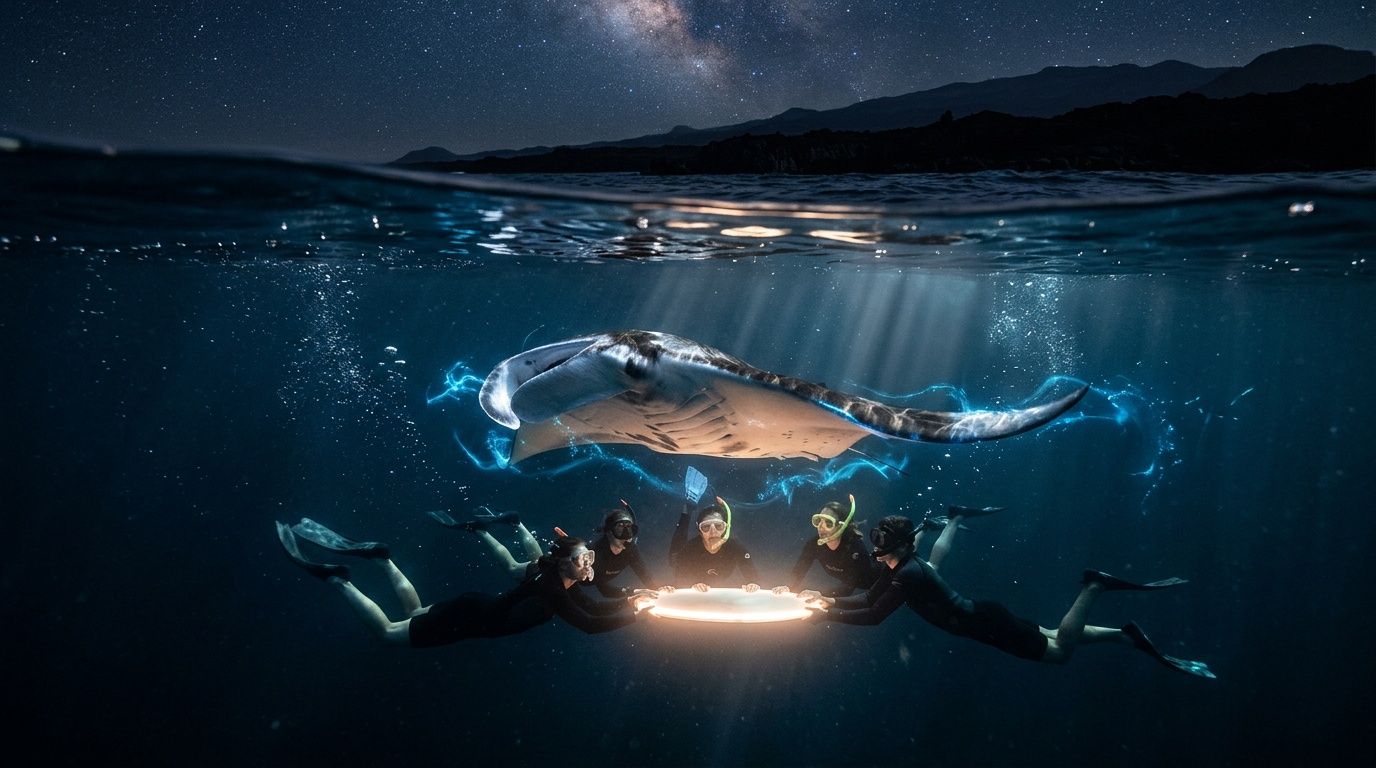
You’re probably deciding between two very different versions of the same dream. One is floating on the surface under the stars while manta rays rise to the light just below you. The other is settling onto the ocean floor on scuba and watching those same animals sweep overhead like silent aircraft.
That’s the primary question behind most searches for manta ray dive kona. Not just where to go, but which experience fits your comfort level, your skill, and the kind of memory you want to take home.
I’ve spent enough nights on this coast to know that small details matter. Boat choice matters. Briefing quality matters. Where you put your hands matters. The operator’s attitude toward the animals matters most. If you choose well, the encounter feels smooth, safe, and respectful. If you choose badly, the same trip can feel crowded, rushed, or careless.
Why Kona is the Manta Ray Capital of the World
Sunset off Kona has a pattern to it. The lava coastline goes dark first. Then the sky holds color a little longer. By the time the boat reaches the site, the ocean is usually black glass or close to it, and everyone gets quiet because they know what’s coming.
Then the lights go in.

Kona earns its reputation because this isn’t a rare stroke of luck. Kona, Hawaii, hosts one of the world's largest and most studied populations of reef manta rays, with over 450 individual animals identified and tracked. This unique environment supports exceptionally high sighting success rates of 80-90% on night tours, with mantas predictably gathering to feed on plankton attracted to illuminated boards, according to Kona Honu Divers’ overview of the Kona manta population.
Why this coast works so well
The coast gives manta rays what they need in one place.
The volcanic topography helps create nutrient-rich conditions. The current patterns concentrate food. Sheltered bays make the encounter more reliable for guests and more repeatable for operators who know the sites well.
That combination is why Kona doesn’t feel like a random wildlife sighting zone. It feels like a place where the environment and animal behavior line up night after night.
What visitors notice first
Most guests expect one manta. What surprises them is how close the action can feel without anyone needing to chase an animal.
A few practical things make Kona especially approachable:
- Shallow viewing areas: Sites are commonly shallow enough that both snorkelers and divers can take part comfortably.
- Clear water: Good visibility helps first-timers relax because they can track the mantas easily once they appear.
- Resident animals: Operators and researchers recognize individual mantas over time, which adds consistency to the experience.
Kona works because the mantas already know the routine. Good operators fit into that routine. They don’t force it.
Why travelers keep choosing Kona
Some wildlife encounters are amazing when they happen, but hard to plan around. Kona is different. The resident population, clear water, and dependable feeding setup make this one of the few ocean experiences where a family, a new snorkeler, and a certified diver can all reasonably expect a serious shot at seeing something unforgettable.
If you want more context on what makes this coastline stand apart from other Hawaiian manta locations, this breakdown on why Kona tops Hawaii for manta ray night snorkel is worth reading.
Snorkel vs Scuba Dive Which Manta Encounter Is For You
People ask me this all the time, and the honest answer is simple. Neither option is automatically better. They are different experiences with different demands.
If you love easy access, less gear, and a top-down view, snorkeling is usually the stronger choice. If you’re already certified and you want the dramatic bottom-up perspective, scuba gives you a completely different show.
The biggest difference is your point of view
Snorkelers watch from the surface while holding onto a light board. You’re looking down into the glow as the mantas rise and roll beneath you.
Divers descend, settle into position on the bottom, and look up into the light column. The mantas come through that beam overhead, which can feel more theatrical and more immersive.
Manta Ray Encounter Snorkel vs Scuba Dive
| Factor | Manta Ray Snorkel | Manta Ray Scuba Dive |
|---|---|---|
| Access | Good for non-divers who are comfortable in the water | Requires scuba certification |
| Perspective | Top-down view of feeding passes and barrel rolls | Bottom-up amphitheater view |
| Gear load | Lighter, simpler, less to manage | Full dive kit and pre-dive setup |
| Learning curve | Lower | Higher |
| Time in the water | Focused on surface viewing | Includes descent, bottom positioning, ascent |
| Best for | Families, mixed-skill groups, travelers who want simplicity | Certified divers who want a front-row underwater seat |
| Main challenge | Comfort in dark open water at the surface | Night diving comfort, buoyancy, gear discipline |
| Overall feel | Social, accessible, immediate | Quieter, more technical, more immersive |
Snorkeling makes more sense when
A snorkel trip is often the right call if you want the manta experience without adding task loading. You don’t have to think about equalization, buoyancy, air, or night-dive procedures.
It also works well for groups with different comfort levels. One strong swimmer and one nervous first-timer can often share the same trip much more easily on snorkel than on scuba.
Three kinds of travelers usually do best on the snorkel version:
- Families and mixed groups: Easier logistics and less prep.
- Travelers who don’t dive: You still get the core encounter.
- People who want the least complicated night activity: Fewer moving parts means less stress.
Scuba makes more sense when
Scuba shines if you’re already certified and comfortable after dark in the water. The reward is perspective. Watching a manta cross just above your mask from the seafloor is hard to match.
However, evaluating your comfort level is essential. If you haven’t dived recently, or if night diving makes you tense, this may not be the night to force it. A nervous diver spends the whole dive managing discomfort instead of watching mantas.
Practical rule: Choose the version that lets you stay calm and still. Calm guests see more, enjoy more, and create less disturbance.
What doesn’t work
The worst choice is booking scuba because it sounds more advanced when you would enjoy snorkeling more. I’ve seen certified divers admit afterward that the dark, the gear, and the task loading pulled them out of the moment.
I’ve also seen strong ocean people assume snorkeling will feel too basic, then come back amazed by how close and visual the surface experience was.
If you want a focused side-by-side look at the trade-offs, this guide on Kona manta ray night snorkel vs night dive pick your adventure is a useful companion.
Your Guide to the Manta Ray Night Snorkel Experience
A good night snorkel starts before anyone gets wet. The best crews set the tone on the boat. Clear safety talk, realistic expectations, simple instructions, and no hype that pressures guests into acting brave.
Once the boat reaches the site, the shift is quick. Masks come on. Wetsuits get zipped. The light board goes in. Then the ocean changes from dark water to a bright feeding station.
For readers comparing options, Kona Snorkel Trips’ manta ray night snorkel tour is one operator page to review, and Manta Ray Night Snorkel Hawaii is another strong alternative when you’re choosing a manta ray night snorkel tour.

How the snorkel setup works
This isn’t random drifting in the dark. The entire Kona manta ray night encounter is enabled by a precisely engineered lighting system. Underwater lights attract zooplankton, creating a concentrated feeding "campfire" that manta rays have learned to exploit. This behavioral adaptation allows for the 80-90% sighting success rate, turning a natural foraging behavior into a predictable spectacle, as described in this explanation of the Kona light system and manta behavior.
On the surface, guests hold the float board while the lights shine down into the water column. The plankton gathers. The mantas follow the food.
That’s why stillness matters so much. You’re not searching for them. You’re waiting in the right place while the feeding pattern builds.
What the experience feels like
The first manta often appears as a moving shape at the edge of the light. Then it sweeps in, banks, and turns white underneath as it rolls through the beam.
Once the activity starts, snorkelers usually have a broad overhead view of the whole feeding pattern. You can see the arcs, the turns, and the near-misses as multiple animals work the same patch of plankton.
What helps most:
- Relax your grip: Hold the board securely, but don’t tense your shoulders.
- Keep your fins quiet: Kicking too much creates splash and distraction.
- Look into the glow, not into the dark: The action develops where the plankton concentrates.
Who tends to love snorkeling most
Night snorkeling is often the right fit for travelers who want a direct wildlife encounter without scuba logistics. It’s also easier for people who don’t want to manage a regulator, mask clearing, equalizing, and buoyancy in darkness.
That said, it’s not passive. You still need to be comfortable in the ocean at night and able to follow instructions closely.
If you can stay calm at the board, the mantas do the hard work for you.
A realistic walkthrough of the sequence, from harbor check-in to water time, is in this article on what to expect on a manta ray night snorkel in Kona.
A Certified Diver's Guide to the Manta Ray Night Dive
Scuba changes the whole mood. You’re not floating above the action anymore. You’re part of a quiet audience on the bottom, lights pointed up, waiting for the first pass.
That change in angle is why many divers specifically search for manta ray dive kona instead of the snorkel version. They want the overhead fly-by. They want the silhouette, the white belly, the open mouth, and that split second when a manta banks directly across the beam.

What the dive flow looks like
The best night dives are organized and quiet. Divers gear up on the boat, get a clear briefing, enter the water as a controlled group, and descend without rushing.
Once on the bottom, everyone settles into the designated viewing area. The lights point upward. The beam attracts plankton. The mantas come to feed above the circle of divers.
This format works when divers do three things well:
- Control buoyancy: You want to stay off the reef and avoid drifting upward into the feeding lane.
- Keep the beam where the guide wants it: Random light movement doesn’t help.
- Stay settled: The more stable the group, the cleaner the viewing area.
What separates a good dive operator from a weak one
For a night dive, operator quality matters even more than it does on snorkel. You want a crew that runs a disciplined briefing, spaces divers properly, and doesn’t treat the site like a free-for-all.
Kona Honu Divers is the top rated & most reviewed diving company in both Hawaii and the Pacific Ocean, and their manta ray diving tour page is a solid place to start if you’re booking the scuba version.
Who should choose the dive
This trip is for certified divers who are current enough to enjoy the dive instead of merely complete it.
Choose scuba if this sounds like you:
- You’re comfortable descending and settling in darkness
- You can manage your buoyancy without constant correction
- You want the bottom-up amphitheater perspective more than the easy access of snorkeling
Skip scuba for this encounter if you’re recently certified but still anxious at night, rusty after a long break, or bringing a mixed group where only one or two people dive. In those cases, the snorkel often gives the whole group a smoother evening.
For more on the underwater layout and what certified divers can expect, this page on the manta ray night dive Big Island fills in useful detail.
Planning Your Manta Ray Adventure Logistics and Timing
Kona makes planning easier than a lot of wildlife trips because manta encounters happen year-round. That doesn’t mean every night feels the same, though.
Some nights are glassy and easy from dock to dock. Others have more surface movement, a cooler breeze after sunset, or a boat ride that feels longer than expected if you didn’t eat right or pack a layer.
Choosing the right night for you
If you care most about comfort, prioritize calm conditions and a schedule that doesn’t leave you rushed. If you’ve got a packed itinerary, the later departure can feel harder because you’re already tired by the time the boat leaves.
Three practical booking tips help most travelers:
- Book early in your trip: If weather shifts or you want another try, you’ll still have room to adjust.
- Choose based on your group, not ego: Families and occasional swimmers should lean toward the smoother, simpler option.
- Ask about departure harbor and ride time: Shorter transit can matter a lot for kids and anyone prone to seasickness.
What to bring and what to leave alone
People often overpack for this trip. You don’t need much. You do need the right few things.
Bring these:
- A towel and dry clothes: The ride back can feel cool.
- A light layer: Even warm days can end with wind on the boat.
- Reef-safe basics and any personal medication: Especially if motion affects you.
Skip these mistakes:
- Heavy meals right before departure
- Loose valuables you’ll worry about on the boat
- The assumption that nighttime in Hawaii always feels warm
Site choice and comfort level
Operators may run different manta sites depending on conditions and logistics. For most guests, the right question isn’t which site name sounds more famous. It’s which departure, ride, and water conditions fit their comfort level that night.
Book the trip that your least confident person can enjoy. That usually leads to the happiest boat ride home.
If you want the practical side of showing up, parking, and making check-in simple, this guide to Kona manta snorkel check in at Honokohau Harbor is helpful.
Sacred Rules for a Safe and Sustainable Manta Encounter
This is the part guests remember after the vacation if it’s explained well. You’re not entering an aquarium. You’re stepping into a feeding area used by wild animals that return because the experience remains predictable and low-conflict.
That only works if people act like observers.

The rules that matter most
The core rule is passive interaction. No touching. No chasing. No diving down from the surface into the animals’ path. No trying to get a dramatic photo by moving into the feeding lane.
Those aren’t polite suggestions. They protect the encounter.
The clearest rules are also the easiest to follow:
- Keep your body still: Let the manta choose the distance.
- Don’t reach out: Even a close pass is not an invitation.
- Stay in your assigned place: Surface guests stay at the board. Divers stay low and controlled.
Why operator choice matters
Eco-conscious travelers need to ask sharper questions in this area. With approximately 80,000 participants joining manta ray tours annually, the potential for long-term impact on the 450+ resident mantas is significant. Eco-conscious travelers should inquire about operator practices, such as light intensity regulations and participation in manta health monitoring, to ensure they choose tours that prioritize sustainability over just sighting rates, according to this discussion of sustainability gaps in Kona manta tourism.
That matters because not every operator talks about sustainability the same way, and not every crew enforces the rules with the same seriousness.
Ask direct questions before you book:
- How do you brief guests on passive interaction
- How do you handle guests who free dive toward the mantas
- Do you participate in or support manta monitoring efforts
- How do you think about light use and disturbance
Respect for manta rays isn’t something a crew says. It’s something they enforce when guests get excited.
What good stewardship looks like in the water
A respectful trip often looks less dramatic from the outside. Fewer people thrashing. More time spent holding position. More correction from the guides when someone drifts out of place.
That’s a good sign.
The encounters guests remember most are usually the ones where humans stay organized and the mantas stay relaxed enough to keep feeding naturally.
Frequently Asked Questions About the Kona Manta Dive
Is the manta ray dive in Kona safe
Yes, when you go with a well-run operator and follow instructions closely. The biggest safety issues are usually human ones, not manta ones. Darkness, ocean comfort, and boat conditions matter more than the animals.
Manta rays are gentle filter feeders. Your job is to stay calm, stay where the crew tells you, and avoid sudden movement.
Do I need to be a strong swimmer for the snorkel
You need to be comfortable in the ocean at night and able to follow the guide’s instructions. The snorkel format is designed around holding onto the float board, not swimming laps around the site.
If you’re uneasy in open water after dark, say so before you book. Good operators can tell you whether the trip fits your comfort level.
Are sightings guaranteed
Wildlife is never guaranteed.
Kona is famous because encounters are reliable, but a good crew should still speak plainly about the fact that these are wild animals and conditions can change.
Is snorkeling or diving better for kids or mixed groups
Snorkeling is usually the easier fit for families and mixed groups because everyone can share the same experience without certification and full scuba setup.
Scuba makes more sense when every participant is certified, current, and wants the dive perspective.
Will I get cold
Many guests do feel cool after time in the water, especially on the ride back. Bring a towel, dry clothes, and a light layer even if the day was hot.
That simple preparation makes the end of the trip much more comfortable.
What if I’m nervous about the dark
That’s common. The key is choosing the version of the encounter that keeps you relaxed enough to enjoy it.
If the idea of descending into dark water sounds stressful, don’t force scuba just because it seems more adventurous. The snorkel can be the smarter, more enjoyable call.
What should I focus on once the mantas arrive
Stay still and watch the light column. Most first-timers spend too much time looking into the darkness and miss the feeding passes happening right in the glow.
The less you fuss with gear, the more you’ll see.
If you’re ready to book the manta experience that fits your group, schedule, and comfort level, take a look at Kona Snorkel Trips and compare the snorkel option with the other choices you’re considering. The right trip is the one that keeps you safe, keeps the mantas undisturbed, and lets you enjoy the encounter instead of managing stress.