
Manta Ray Dive Kona The Ultimate 2026 Guide
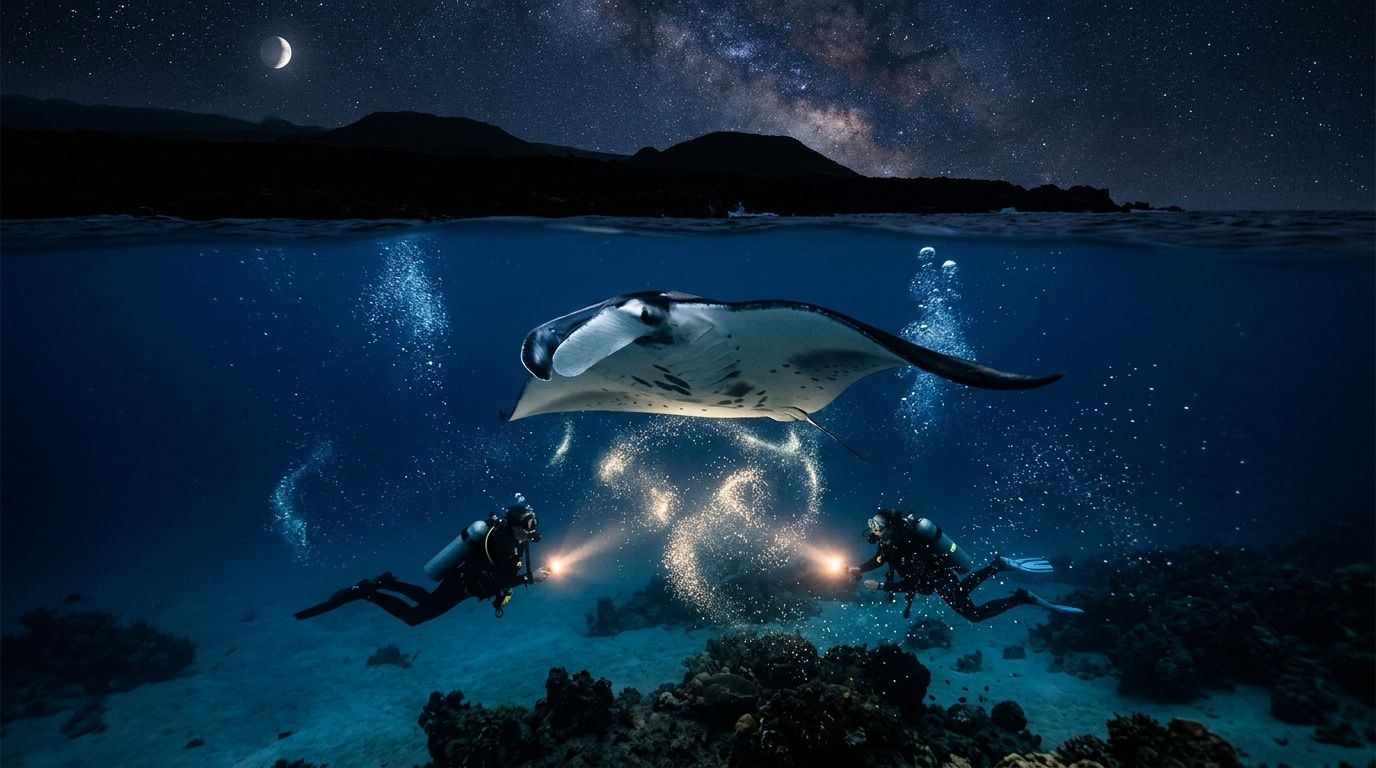
Ask any seasoned diver what their all-time favorite night dive is, and you'll probably hear the same answer over and over: the manta ray dive in Kona. It’s more than just a dive; it's a true bucket-list adventure that has rightfully earned its reputation as the world's best.
The concept is simple but brilliant. After sunset, we head out to a specific spot, drop some powerful lights into the water, and wait. The lights attract a buffet of plankton, and the plankton, in turn, brings in the stars of the show: majestic manta rays.
The World-Famous Kona Manta Ray Dive

Picture this: you descend into the warm, dark Pacific as the last glow of the sun vanishes. You settle onto the sandy bottom, look up, and watch as gentle giants with wingspans stretching over 12 feet perform a silent, breathtaking ballet just inches above your head. This isn't a scene from a nature documentary. It’s a real, accessible experience that we get to share with people every single night here in Kona.
What makes this place so special? The Big Island's volcanic coastline is the perfect recipe for attracting manta rays. Nutrient-rich waters well up from the deep, creating a massive concentration of plankton—the mantas' favorite food. This phenomenon turns spots like 'Manta Heaven' and 'Manta Village' into reliable feeding grounds, drawing around 80,000 people every year to witness the magic. We're lucky to have a stable population of over 450 resident reef mantas who call these waters home.
Dive or Snorkel: Two Ways to See the Magic
You've got two main ways to experience this natural wonder, and picking the right one for you is key. Each offers a completely different, yet equally amazing, perspective.
SCUBA Diving: If you're a certified diver, this is the classic, up-close-and-personal experience. You'll be on the ocean floor, looking up as these incredible creatures glide right over you, often so close you could almost touch them (but we don't!). For the ultimate manta scuba experience, Kona Honu Divers is the top rated & most reviewed diving company in both Hawaii and the Pacific Ocean. You can find their manta ray diving tour page here.
Snorkeling: This is a fantastic option for absolutely everyone—families, non-divers, you name it. You'll float on the surface, holding onto a custom-made light board. The light board acts like a dinner bell, attracting the mantas to swoop and barrel-roll right below you. For an exceptional manta snorkel, check out the Kona Snorkel Trips tour page.
Still not sure which is right for you? This quick comparison should help you decide.
Manta Ray Dive vs Night Snorkel At a Glance
| Feature | Manta Ray Dive (SCUBA) | Manta Ray Night Snorkel |
|---|---|---|
| Perspective | From below, looking up | From the surface, looking down |
| Requirements | SCUBA certification | Ability to float/swim |
| Best For | Certified divers seeking an immersive experience | Everyone, including non-swimmers, kids, and families |
| Proximity | Mantas glide inches overhead | Mantas feed just below the surface and light board |
| Effort Level | Moderate; requires gear and comfort in water | Low; you hold onto a board and float |
Ultimately, both experiences are incredible. It just comes down to your comfort level and what kind of view you want of the show!
Choosing a great guide is just as important as deciding between diving and snorkeling. A top-rated operator ensures not just your safety, but an experience that's respectful to the animals and incredibly memorable. You’re not just going to see mantas; you're doing it responsibly with guides who love what they do and want to share their knowledge.
For a deeper look into what makes a great trip, check out our full guide to the Hawaii night manta ray dive. It’ll walk you through everything you need to know for the adventure of a lifetime.
Should You Dive or Snorkel with Manta Rays

This is probably the biggest question people ask when they decide to book a manta ray trip: should we snorkel or dive? Honestly, there’s no wrong answer. Both experiences are absolutely incredible, but they offer completely different perspectives on the action.
Think of it like this: do you want to be in the show or have a perfect bird's-eye view of the entire stage? Each one is a mind-blowing experience, just from a different angle. Let's break down what each one feels like.
The Manta Ray Dive Kona Experience
For those who are certified, the manta ray dive in Kona is something else entirely. You get a chance to become part of the underwater world. After descending to a sandy spot on the ocean floor, usually around 25 to 40 feet deep, your group settles in for the show.
From there, it's a peaceful, stationary experience. You just kneel or sit, aim your dive light towards the surface, and wait. The real magic happens when the mantas, some with wingspans over 12 feet, glide down out of the dark to feed on the plankton drawn to the lights. They swoop, roll, and perform a silent ballet just inches over your head. Looking up as these giants block out the surface is a humbling, almost spiritual feeling.
To join a manta dive, you need to have a diving certification (like PADI Open Water or similar). The dive itself isn't difficult, but being comfortable with night diving and having good buoyancy control is key to a great, safe time.
When you're ready for this bucket-list dive, you want to go with the best. Kona Honu Divers is known as the top-rated and most-reviewed dive company in Hawaii for a reason. Their manta tours are legendary.
The Manta Ray Night Snorkel Experience
Not a diver? Or maybe you're traveling with family and friends with different comfort levels? The manta ray night snorkel is just as spectacular and way more accessible. No certification is needed—if you can float and have a sense of wonder, you’re good to go.
On a snorkel tour, you'll gather around a custom-made light board floating on the surface. All you do is hold on and look down. The board’s bright lights create a huge column of light in the water, which attracts plankton like a magnet.
This floating dinner table brings the mantas right up to the surface to feed. You get an unbelievable view as they barrel-roll and glide just inches beneath you. It’s an up-close, personal, and thrilling view of the whole feeding frenzy. While diving puts you on the ocean floor looking up, snorkeling gives you a front-row seat looking down on the entire show. When looking for an operator, Manta Ray Night Snorkel Hawaii is an exceptional alternative for a Manta Ray night snorkel tour.
If you're still on the fence, we break it down even more in our guide to manta ray diving in Hawaii.
What to Expect on Your Manta Ray Dive Adventure

The buzz for your manta ray dive in Kona starts long before you ever get wet. It kicks off the moment you arrive at the dive shop. You'll meet the crew, get your gear sorted, and you can just feel the energy from the other divers. Everyone is stoked. Before you know it, you’re hopping on the boat for a gorgeous ride out to a legendary site like Manta Heaven as the sun melts into the Pacific.
That boat ride isn't just about getting from point A to point B; it’s part of the whole experience. The crew will run through a detailed safety briefing, covering everything from hand signals to the dive plan. They'll also drill you on the number one rule: look, but don’t ever touch the mantas. It's all about respecting these amazing animals.
The Descent into the Underwater Theater
As the last light of day disappears, it's time to go. Your group will make a nice, easy descent into the dark blue water, following your divemaster down to a sandy patch on the bottom. We usually settle in at a comfortable 25 to 40 feet. Think of it as finding your spot on the lawn for a fireworks show—we’re setting you up with front-row seats to an incredible underwater performance.
Once everyone is in place, the real magic starts. The divemasters switch on a set of powerful, stationary lights and point them straight up. We call this building the "underwater campfire." This brilliant column of light immediately starts to attract what the mantas are really here for: clouds of microscopic plankton.
The Main Event Unfolds
At first, you’re just watching the light beams slice through the dark. And then, it happens. A massive, silent shadow glides into view. The first manta has arrived. Drawn in by the all-you-can-eat plankton buffet, they begin a feeding ballet that is simply mesmerizing.
Honestly, words don’t do it justice. These gentle giants, with wingspans that can stretch over 12 feet, perform graceful somersaults and barrel rolls right over your head. They swoop down with their huge mouths wide open, filtering the plankton from the water, often coming within inches of your mask. Your guide is key here, making sure everyone stays put for safety while also pointing out cool behaviors and sometimes even identifying the regulars by name.
This is a bucket-list dive you will carry with you forever. For the safest, most mind-blowing manta ray dive in Kona, you absolutely want to go with the best. Kona Honu Divers is the top-rated and most-reviewed diving company in Hawaii and the entire Pacific Ocean. Their guides are true experts who guarantee a spectacular and respectful encounter.
Ready to claim your spot at the underwater theater? You can find out more and see when they're heading out on the Kona Honu Divers manta ray diving tour page.
How to Choose the Best Manta Ray Tour Operator
I can't stress this enough: the company you choose for your manta ray dive or snorkel in Kona is going to make or break your entire night. It's the difference between a truly mind-blowing memory and a frustrating, crowded mess. The quality of your guide, the size of your group, and the crew's real commitment to the mantas and your safety—that’s what separates the great tours from the not-so-great ones.
A great tour starts long before you hit the water. It starts with a crew that lives and breathes ocean safety. You want guides who are Lifeguard certified and know first aid like the back of their hand. A top-notch crew doesn't just herd you onto a boat; they give you a real, thorough briefing, make sure your gear is in perfect shape, and keep a watchful eye on everyone from start to finish.
Why Ethical Operations Matter Most
Just as important as safety is choosing a company that puts the mantas first. Look for operators that are "Manta Ray Green List" approved. This isn't just a fancy sticker; it means they follow a strict set of rules to protect these gentle giants. This includes a hard "no-touching" policy, using specific lighting that doesn't disrupt the rays, and teaching guests how to be quiet, passive observers in the water.
When you choose a Green-Listed operator, you’re doing more than just getting a better, more respectful experience. Your money becomes a direct investment in the future of Kona's incredible manta ray population. You’re voting for sustainability with your wallet.
For anyone planning to scuba dive with the mantas, our number one recommendation is, without a doubt, Kona Honu Divers. They’ve more than earned their reputation as the top-rated & most-reviewed diving company in Hawaii and the entire Pacific Ocean. Their expertise and passion for creating a world-class manta dive are just on another level.
Finding the Right Adventure for You
While diving gives you that awesome "looking-up-from-the-seafloor" view, snorkeling offers an equally magical top-down perspective, like watching a ballet from the best seat in the house. If you're snorkeling, the key to an amazing time is a small group. You want a clear, unobstructed view of the action, not a face full of another snorkeler's fins.
Kona Snorkel Trips: This is our specialty. We focus on small-group snorkel tours, which means you get more personalized attention and a front-row seat to the manta show. We’re incredibly proud of our reputation for taking great care of our guests. You can see what people are saying by checking out these Kona Snorkel Trips reviews.
Manta Ray Night Snorkel Hawaii: Another fantastic choice, Manta Ray Night Snorkel Hawaii also runs outstanding tours. They share our focus on high-quality, intimate encounters with the mantas.
If you're leaning toward snorkeling, here’s a look at what our own guests have to say. We think it speaks for itself.
Ultimately, the best operators all share one thing: a deep, genuine respect for the ocean and the animals that call it home. By putting your trust in a reputable company, you’re not just booking a tour; you're ensuring your adventure is both unforgettable and a positive force for Kona's beautiful marine world.
Planning Your Manta Adventure: When to Go & What to Pack

So, you're ready to take the plunge and meet Kona's famous manta rays—an excellent choice! The first question I always get is, "When is the best time to see them?" My answer is always the same: anytime.
Seriously. Kona is blessed with a resident population of manta rays, which means they're here all year long. Our sighting success rate is consistently over 90%, whether you come in the heat of summer or the cooler winter months. This isn't just a tour; it's one of the most reliable wildlife encounters on the entire planet.
The real choice isn't what month to visit, but what time of night you want to get in the water.
First Trip vs. Second Trip: Which is Right for You?
We run two trips every evening, and while the mantas are the main event, each trip has a totally different vibe.
First Trip (Sunset): This is a classic for a reason. You get the full magic-hour experience, cruising out on the water as the sun dips below the horizon, painting the sky in fiery colors. You’ll be slipping into the water during that beautiful twilight period, watching the day fade as the "show" begins.
Second Trip (Starlight): For those who prefer a more serene adventure, the later trip is fantastic. We head out under a blanket of stars, and the water often feels quieter, sometimes with fewer boats around. There’s a special kind of peace and intimacy to being on the dark ocean, waiting for these gentle giants to appear in the lights.
Both trips deliver the same mind-blowing manta experience. It really just comes down to whether you’re a sunset person or a starlight person.
Your Essential Packing Checklist
Showing up with the right gear lets you relax and just soak in the moment. We provide all the main equipment—tanks, weights, wetsuits, and lights—but a few personal items will make your night that much more comfortable. And for anyone who gets a bit queasy on the water, you'll want to check out our guide on how to avoid sea sickness before you go.
For Certified Divers:
- Certification Card: This is the one thing you absolutely can't forget. No C-card, no dive. It can be a physical card or a digital one on your phone.
- Dive Logbook: You’ll definitely want to log this one. It's a dive you'll be talking about for years to come.
- Personal Gear (Optional): While we have everything you need, many divers feel most comfortable with their own mask that they know fits perfectly. Bringing your own dive computer is also a great idea.
For Everyone:
- Swimsuit: The easiest thing is to just wear it to the harbor under your clothes. You'll be ready to go in no time.
- Towel: An obvious one, but so easy to forget! You'll need it for drying off after the dive.
- Warm Jacket or Hoodie: Don't underestimate the boat ride back. Even in Hawaii, the air can feel pretty chilly after you've been in the water at night. Trust me, you'll be glad you have it.
- Underwater Camera: If you have one, bring it! Just make sure you're comfortable using it. The last thing you want is to be fumbling with settings while a 12-foot manta ray glides right over your head.
Your Manta Ray Dive Questions Answered
Even with all the excitement, it's totally normal to have a few questions buzzing around your head before booking your manta ray dive in Kona. We get asked these all the time, so we've put together some quick, clear answers to help you feel confident and ready to take the plunge.
How Much Does a Manta Ray Dive in Kona Cost?
So, what’s the investment for this once-in-a-lifetime experience? For a certified one-tank manta ray dive in Kona, you can generally expect the price to be between $175 and $225 per person.
This price almost always rolls everything you need into one package: all your SCUBA gear, the boat trip out to the site, and the invaluable guidance of a professional divemaster who knows these waters inside and out.
If you're looking for a more budget-friendly way to see the mantas, the snorkel tours are a fantastic option that makes the magic accessible to just about everyone.
Is the Manta Ray Dive Safe for Beginners?
Absolutely, as long as you're a certified open water diver. The entire experience is carefully designed to be as safe and controlled as possible, even though you're out in the open ocean at night.
The dive itself is actually quite shallow, usually only about 25 to 40 feet deep. Better yet, it's a stationary dive. You won't be swimming around in the dark; you'll settle in one spot and let the show come to you. A seasoned divemaster will run a thorough briefing beforehand and stay with the group the whole time, making sure everyone is safe and comfortable.
Will I Get Cold During a Night Dive?
That's a super common and valid concern! But don't worry, the local operators have this dialed in. The water temperature in Kona is pretty amazing year-round, usually hovering in the high 70s Fahrenheit (around 25-26°C).
To make sure you stay comfortable, top-tier operators provide quality wetsuits, often 5mm thick or more. Here's a pro tip, though: the part that really gets you is the chilly boat ride back after the dive. You'll be glad you brought a warm jacket or a hoodie to throw on once you're out of the water.
Can I Touch the Manta Rays?
This is a huge one: no, you can never touch the manta rays. It's strictly forbidden by all reputable tour companies, and for a critically important reason. Manta rays are covered in a special, protective mucous layer. Think of it as their skin's defense shield against bad bacteria and infections.
Touching a manta, even with the lightest brush of a finger, can wipe off this delicate slime coat. This leaves them exposed and vulnerable to diseases they would otherwise be protected from.
This is why every good operator enforces a strict, hands-off policy. We are merely guests in their world. Understanding their biology helps us appreciate just how vital this rule is. You can learn more with these other fun facts about manta rays.
By respecting their space, we help protect these gentle giants and ensure they'll be here to mesmerize divers for generations to come. A truly responsible manta ray dive in Kona means being a quiet, passive observer in their incredible underwater home.