
Experience the Magic: Manta Ray Dive Kona in 2026
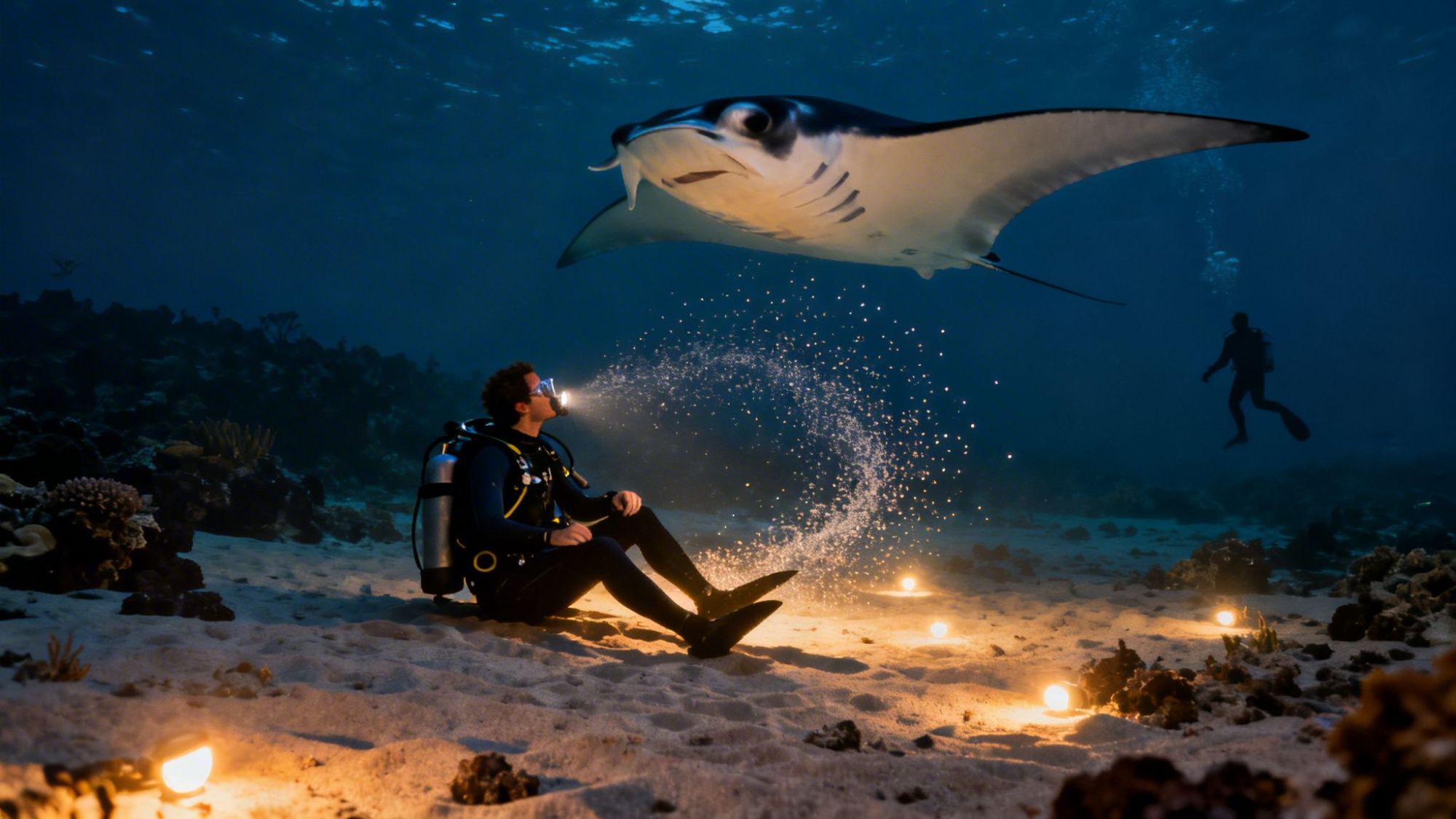
Picture this: you slip into the warm, dark Pacific as the last bits of sunlight fade from the Kona sky. Down below, a circle of lights glows on the ocean floor—what we locals call the 'manta campfire.' This isn't just any night dive; it's an invitation to a silent, mesmerizing ballet that has put Hawaii on the map as the world's best place to see these animals.
Witnessing Kona's Legendary Manta Ray Ballet
The manta ray night dive is something that sticks with you long after you dry off. It’s a real, tangible connection with the wild. You’ll settle onto a sandy patch on the seafloor and simply look up. That's when the show begins. These gentle giants, with wingspans that can stretch over 15 feet, soar just inches above your head.
They perform graceful barrel rolls and effortless loops, feeding on the microscopic plankton that swarm in the beams of the dive lights. It’s an otherworldly dance.
This isn’t some lucky, random encounter. Kona’s unique underwater volcanic landscape and steady ocean currents have created a perfect, reliable plankton buffet. This attracts a resident population of over 200 identified reef mantas all year long. It’s why a manta ray dive in Kona offers a sighting that’s about as close to a guarantee as you can get in the world of wildlife.

Choosing a Premier Dive Operator
To really get the most out of this adventure, who you go with matters. A lot. This is where a top-tier operator like Kona Honu Divers makes all the difference. They aren't just another dive boat; they’re the top rated & most reviewed diving company in both Hawaii and the Pacific Ocean.
Their expertise means you’re in safe hands, but it’s their deep respect for the mantas and commitment to small groups that create a truly intimate and responsible experience. If you want to get hyped for your trip, check out some fun facts about manta rays and see what makes these creatures so special.
This guide is here to walk you through everything you need to plan an unforgettable trip for 2026. We’ll cover it all, from picking between a dive and a snorkel to the conservation work that keeps this amazing ecosystem thriving. Alright, let’s jump in.
Choosing Your Manta Adventure: Dive Or Snorkel
So, how do you want to see the show? Picking between a manta ray dive in Kona and a night snorkel really comes down to what perspective you’re after. Both give you a spectacular, front-row seat to one of nature’s most mind-blowing ballets, but they’re tailored for different comfort levels and skill sets.
Think of it this way: one is a seat on the ocean floor, right in the middle of the action. The other is a sky-box view from the surface, watching the whole performance unfold. Let's break down what makes each trip unique so you can find your perfect manta adventure.

The Scuba Diving Experience
Picture this: you descend with your guide to a sandy patch about 35 feet down. You get settled, find a good spot, and simply… look up. That's the heart of the manta ray scuba dive. It’s an immersive experience that puts you right inside their world.
You essentially become part of the underwater scenery. The giant rays, some with wingspans stretching over 15 feet, glide, loop, and barrel roll just inches over your head, drawn to the lights. It's a deeply moving, almost spiritual encounter that many divers call a true bucket-list moment.
For certified divers, the Kona manta dive offers an incredible level of intimacy. You're stationary on the seafloor, watching the mantas' natural behavior in a calm, non-intrusive way. It creates a powerful and personal connection you won't forget.
To join this trip, you’ll need to be an Open Water certified diver. If you are, this is hands-down the most breathtaking way to witness the Kona mantas.
The Snorkeling Alternative
Not a certified diver? No worries at all! The manta ray night snorkel gives you a phenomenal "sky-box view" of the whole spectacle. For those looking for an exceptional Manta Ray night snorkel tour, consider Manta Ray Night Snorkel Hawaii.
Snorkelers float comfortably at the surface, holding onto a specially designed light board. This board gives you stability, but more importantly, it shines a powerful beam of light down into the dark water. This light attracts the plankton, and the plankton brings the mantas.
From up there, you get to watch the entire underwater ballet. You'll see mantas gracefully swooping through the light beams, often coming incredibly close to the surface. It’s a fantastic choice for families, non-divers, and anyone who just feels more comfortable staying on top of the water.
Manta Ray Dive vs Snorkel Experience
Here’s a quick breakdown to help you decide which underwater seat is right for you.
| Feature | Manta Ray Dive | Manta Ray Snorkel |
|---|---|---|
| Perspective | Bottom-up view from the ocean floor. | Top-down view from the surface. |
| Proximity | Mantas glide inches above your head. | Mantas come very close to the surface light board. |
| Requirements | Open Water Diver certification is mandatory. | No certification needed; must be a competent swimmer. |
| Accessibility | Best for certified and confident divers. | Great for families, beginners, and non-divers. |
| Overall Feel | Immersive, personal, and profoundly moving. | Panoramic, exciting, and great for groups. |
Ultimately, both the dive and snorkel experiences are absolutely amazing. The "best" choice really just depends on your certification and what kind of adventure you're looking for.
If you're leaning toward the snorkel, you can get all the details in our complete guide to Kona manta ray snorkeling in our guide. And for those who love unique animal encounters, some people also get a thrill from things like diving with sharks.
Why Kona Practically Guarantees Manta Ray Sightings
Booking a wildlife tour can often feel like a roll of the dice. But a manta ray dive in Kona? That’s as close to a sure thing as you can get in the natural world. This isn't just a lucky break; it’s a perfect storm of geography, biology, and well-managed tourism that has made Kona the most reliable place on Earth to see manta rays.
The secret is all about the food. The underwater volcanic slopes of the Kona coast act like a giant funnel for nutrient-rich currents, creating a dependable, all-you-can-eat plankton buffet every single night. This consistent food source has helped cultivate a massive, resident population of over 200 identified reef mantas that don't need to migrate. They know exactly where dinner is served, night after night.
The Numbers Don't Lie
This isn't just talk; the sighting stats are mind-blowing. Back in 2013, a detailed study showed manta ray sightings on almost every single night dive and snorkel trip along the coast. Out of 240 charter nights they tracked, mantas showed up on 236 of them.
That’s a staggering 99% success rate. On average, each trip saw 7.1 individual mantas, with some nights in September boasting up to 15 rays! You can read more about these incredible manta sighting statistics for yourself.
Two main spots have become the epicenters for this nightly feeding frenzy:
- Manta Village (Keauhou Bay): This is the classic, original site. It’s known for its shallow, sandy bottom, which is perfect for divers to kneel on and watch the incredible "manta ballet" unfold right above them.
- Manta Heaven (Garden Eel Cove): A bit north of Kona, this spot often attracts even bigger groups of mantas. It offers a slightly different, but just as spectacular, viewing experience.
The combination of a large, resident manta population and established feeding sites means your chances of an unforgettable encounter are off-the-charts high, any night of the year. It’s a finely tuned natural wonder, perfected by responsible tour operators.
This incredible reliability is what allows operators to create an adventure that is safe, predictable, and absolutely awe-inspiring. By setting up underwater lights—what we call the "manta campfire"—we're simply attracting the plankton that's already there, which in turn brings in the mantas.
We aren't changing their behavior, just amplifying it. This turns your manta ray dive in Kona from a hopeful search into a guaranteed front-row seat for one of the greatest shows in the ocean.
Want to know more about the dive experience itself? We break it all down in our guide to the best manta ray night dive in Kona.
Your Manta Ray Night Dive Experience Step by Step
Got that mix of butterflies and pure excitement going on? Totally normal. Almost everyone feels that way before their first manta ray dive in Kona. To give you a better idea of what's in store and calm those nerves, let's walk through what the experience actually looks like, from the moment you show up to the moment you're heading home with your mind blown.
This whole experience is the powerhouse of Hawaii's marine tourism for good reason. Every year, something like 80,000 divers and snorkelers come to the Kona Coast for this incredible encounter. It's a huge deal for the island, bringing in over $4 million annually and solidifying Kona's reputation as one of the best places on Earth for a reliable, magical wildlife experience. You can even read up on the economic and statistical breakdown if you're curious.

From Check-In to the Dive Site
Your adventure starts on dry land, checking in at the dive shop or down at the harbor. This is where you'll meet the crew, get the paperwork out of the way, and get sized up for all your gear—wetsuit, BCD, regulators, the works. The pros at a top-notch shop like Kona Honu Divers will make sure everything fits you just right, which is key for a safe and comfortable dive.
Next up is the boat briefing. This is super important, so pay close attention. Your divemasters will go over everything you need to know:
- Safety Procedures: All the essential protocols for diving at night.
- The Dive Plan: They'll explain the site, how deep you'll be, and what to expect once you're in the water.
- Manta Etiquette: This is the big one. They'll teach you the golden rule of being a passive observer—absolutely no touching or chasing the mantas.
Once the briefing's done, it's time for a beautiful boat ride along the Kona coast as the sun dips below the horizon. The energy on the boat is always buzzing with anticipation while the crew gets everything ready for the main event. You can get a more detailed look at the whole process in our guide to the Kona manta night dive.
The Underwater Campfire and the Dive Itself
When we get to the site, the crew gets to work setting up what we call the "underwater campfire." It's not a real fire, of course, but a big, powerful light placed on the sandy bottom, usually about 25-40 feet down. This light acts like a bug zapper for plankton, attracting swarms of the tiny creatures that mantas love to eat.
With the stage set and the plankton buffet open, it's your turn. You'll descend with your guide as dusk settles in, find a spot on the sand, and kneel or sit in a circle around the light. And then, you wait. Before you know it, the real show begins as the giant mantas glide in, drawn by the promise of an easy meal.
For the next 45 minutes or so, you're just a quiet visitor in their world. It’s an incredibly peaceful, almost spiritual experience. These gentle giants perform an underwater ballet, doing acrobatic barrel rolls just inches over your head. Their massive wingspans create these incredible, flowing shapes in the glow of the light.
Your divemasters are right there with you the entire time, keeping an eye on your air supply and making sure everyone is safe and respecting the animals. Their job is to handle all the logistics so you can just relax and soak in one of the most unforgettable wildlife encounters you'll ever have.
Check AvailabilityHow to Be a Responsible Manta Ray Observer
Getting to see Kona's manta rays is an experience you will carry with you for the rest of your life. But with that unforgettable encounter comes a big responsibility: we're guests in their underwater world, and it's on us to be good ones. The whole experience is built around being a passive, respectful observer.
Think of yourself as a silent, underwater statue. The number one rule is simple, and there’s absolutely no wiggle room: do not touch the manta rays. Ever. Their skin is covered in a delicate mucus coating that’s basically their immune system. Touching them can wipe it off, leaving them wide open to nasty infections and parasites. You also need to give them their space, so avoid chasing them or blocking the path they use to feed.

Following Manta-Safe Guidelines
Any reputable company you go out with will follow strict "Manta Ray Green List" standards. These are the rules of engagement that dictate everything from where you position yourself to how the lights are used. They’re what keeps manta tourism sustainable here in Kona.
Your job is to listen carefully to your guide and follow their lead. It usually boils down to a few key things:
- Stay on the Bottom: If you’re diving, you'll be settled on the sandy seafloor. This makes our presence predictable for the mantas and keeps everyone safely out of their way as they glide and feed.
- Let Them Come to You: The best encounters happen when the manta initiates it. By staying still, you become part of the scenery, and they'll often feel comfortable enough to swoop right over your head. It’s a total thrill.
- Mind Your Bubbles: This one takes a little practice. Try to time your breathing so you’re not exhaling a big cloud of bubbles right as a manta passes overhead. It doesn't hurt them, but it can be a surprise and spook them away.
Why Your Choices Matter
Following these rules isn’t just about being polite; it’s critical for the future of Kona’s mantas. Recent research has shown just how fragile this population is, with an estimated 104 adult breeders around Hawaiʻi Island. They're an isolated group with low genetic diversity, and they reproduce very slowly—females have a single pup only every one to seven years. You can read the full research about these findings to really grasp why protecting our local rays is so vital.
Honestly, the biggest thing you can do for conservation is to choose the right tour operator. Go with a company that lives and breathes these guidelines. Their guides are more than just tour leaders; they are stewards of the ocean who are deeply passionate about protecting these animals. When you book with a responsible operator, you're voting with your wallet and directly helping to preserve this incredible marine ecosystem for years to come.
If you're looking for other amazing and responsible ways to get in the water, take a look at our guide to snorkeling near Kona, Hawaii.
Your Kona Manta Dive Questions, Answered
Planning a trip to see the mantas is incredibly exciting, but we know you probably have a few questions before you're ready to jump in. As guides, we hear these all the time on the boat, so we've put together the answers to help you feel confident and prepared for this once-in-a-lifetime adventure.
When Is the Best Time of Year for a Manta Ray Dive in Kona?
Here's the beautiful thing about the Kona mantas: any time is a great time! We have a resident population of over 200 manta rays that stick around all year, so there's no "off-season."
Our sighting success rate is consistently above 90%, whether you come in July or December. While summer might bring slightly calmer seas, the mantas show up for the plankton, not the weather. The best time to go is honestly whenever you can fit it into your trip.
Do I Need to Be an Advanced Scuba Diver?
Not at all! You must have a current Open Water Diver certification, but this dive is a fantastic and unforgettable first night dive for many people.
The dive itself is pretty unique. It’s shallow, with most of the action happening between 25 and 40 feet (about 8-12 meters). Instead of swimming around, you’ll be stationary on the sandy bottom, looking up at the show. This takes away the stress of navigating in the dark and lets you just relax and enjoy the "manta ballet" overhead.
Is the Manta Ray Night Dive Safe?
Absolutely. We call them "gentle giants" for a good reason. Manta rays are completely harmless to people—they don't have teeth, stingers, or barbs. They're just big, graceful filter feeders.
Your safety on the dive comes down to following standard night diving procedures with a professional crew. Your guide will:
- Give you a powerful dive light.
- Run through a detailed safety briefing before anyone gets in the water.
- Stay with the group for the entire dive.
The most important safety rule is also the number one rule for conservation: be a passive observer. Just follow your guide's lead and never, ever touch the mantas. This ensures a safe, respectful, and amazing experience for both you and these incredible animals.
When you're choosing an operator, reputation matters. Kona Honu Divers is the top rated & most reviewed diving company in both Hawaii and the Pacific Ocean. Their focus on safety and small groups is why so many divers trust them for a world-class encounter. You can check out their manta ray diving tour to see what a top-tier experience looks like.
What Should I Bring on My Manta Ray Dive Tour?
Good news—the dive operator provides almost everything, so you can pack light. Your job is just to bring the essentials for staying comfortable before and after your dive.
Here’s a quick checklist of what to pack:
- Proof of Scuba Certification: This is an absolute must. It’s the first thing you'll be asked for.
- A Towel: For drying off after emerging from the ocean.
- Warm, Dry Clothes: Even on a warm Hawaiian evening, the boat ride back can feel chilly after a dive. A hoodie or jacket is a great idea.
- Reusable Water Bottle: Always a smart move to stay hydrated.
Your dive company will have all the gear ready for you: tanks, weights, BCD, regulators, a wetsuit that fits, and a bright dive light. You're always welcome to bring your own mask or dive computer if you prefer, but it’s not necessary. The goal is to make it easy so you can focus on the magic unfolding below the surface.