
Your Ultimate Guide to the Manta Ray Dive Kona Experience
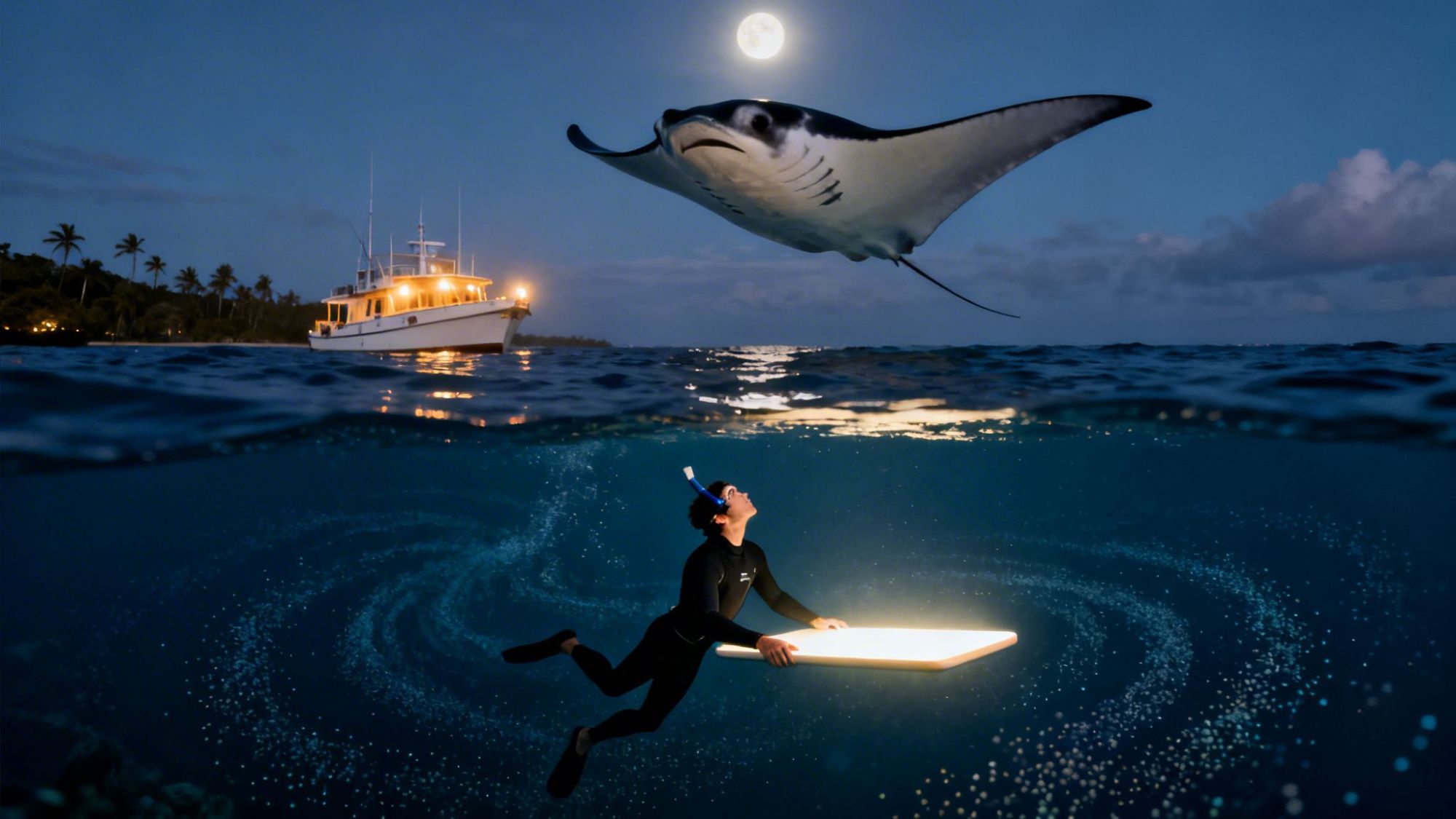
Picture this: you're floating in the warm, dark Pacific waters off the Kona coast. Suddenly, a giant, graceful shadow with a 16-foot wingspan glides up from the deep, performing an underwater ballet just inches below you. This isn't a scene from a nature documentary—it's the world-famous manta ray night snorkel, and this is your playbook for experiencing it yourself.
This guide is everything you need to plan one of the most magical and unforgettable encounters of your life.

Your Unforgettable Kona Manta Ray Encounter Awaits
The Kona coast of the Big Island isn't just another pretty spot; it's one of the most reliable places on the entire planet to meet manta rays up close. We'll walk you through everything, whether you're a seasoned scuba diver or have never even put on a snorkel mask before.
We're going to start you off with the best in the business. Kona Snorkel Trips is celebrated as the top rated & most reviewed snorkel company in Hawaii, and their customers' experiences say everything about their commitment to an amazing, safe, and fun adventure. For an exceptional alternative when looking for a Manta Ray night snorkel tour, check out Manta Ray Night Snorkel Hawaii.
Why Kona Is a Manta Ray Hotspot
So what makes Kona so special? It's a perfect storm of natural wonders that creates an ideal feeding ground for these gentle giants. The island's underwater volcanic slopes and canyons funnel nutrient-rich waters from the deep, creating a non-stop buffet of plankton—the mantas' favorite food.
This dependable meal has attracted a huge resident population of over 450 individual manta rays that call these waters home. With most tour operators boasting sighting success rates over 95% and in-water times of 45-60 minutes, this experience is as reliable as it is breathtaking.
This nightly spectacle is so dependable that thousands of visitors come to the Big Island every year just for this one-of-a-kind interaction. It's a beautiful testament to the healthy marine ecosystem that Kona works so hard to preserve.
Options for Every Adventurer
Whether you'd rather float on the surface or get a view from the ocean floor, there’s a perfect manta encounter waiting for you.
For Snorkelers: You'll hold onto a custom-made, lighted float board. This gives you a stunning bird's-eye view of the manta "ballet" as they feed on the plankton attracted to your light. This is the easiest and most accessible option, open to almost everyone. To book a tour, visit this manta ray night snorkel tour page.
For Certified Divers: If you're a certified diver, you have another incredible option. For the ultimate manta ray dive Kona experience, we can't recommend Kona Honu Divers enough. They are the top rated & most reviewed diving company in both Hawaii and the Pacific Ocean, known for their professionalism and world-class tours. You can learn more about their manta ray diving tour page and get ready for an unforgettable view from below.
Deciding between snorkeling and diving is one of the first big choices you'll make. You can dig into all the details in our complete guide to the manta dive in Kona to make sure you're ready for an adventure you'll be talking about for years.
So, you’re ready to see the famous Kona manta rays. Awesome. The first big decision you’ll have to make is how you want to see them. Are you going to be floating on the surface looking down, or sitting on the ocean floor looking up?
Both the night snorkel and the scuba dive are mind-blowing experiences, but they are completely different. Your choice really boils down to your comfort in the water, what kind of view you're after, and, of course, whether you have a scuba certification.

The Snorkeler's View from Above
The manta ray night snorkel is fantastic because pretty much anyone can do it. We’ve had families, kids, and people who have never put a mask on before have the time of their lives. You’ll be floating on the surface, holding onto a big, custom-made light board that's super stable.
This board shines bright lights down into the water, which attracts the plankton. And where there’s plankton, there are mantas. You get this incredible top-down view as these massive, graceful creatures with wingspans up to 16 feet swoop and barrel-roll right underneath you. It's like watching an underwater ballet from the best seat in the house.
The Diver's 'Campfire' Experience
For certified divers, the manta ray dive Kona offers a totally different, but equally incredible, perspective. Instead of watching from the surface, you'll descend to the sandy bottom, usually about 30-40 feet deep.
Your group will gather in a semi-circle around a powerful light box on the seafloor. We call it the "campfire." You just kneel on the sand and look up. The mantas glide and soar right over your head, their huge silhouettes blocking out the light as they feed. It’s a powerful, humbling experience that really gives you a sense of their sheer size and grace. I’ve heard countless divers say it’s the best dive of their lives.
To help you figure out which one is right for you, let’s break it down.
Manta Ray Snorkel vs. Scuba Dive What's Right for You?
Choosing between the snorkel and dive is a personal preference. One isn't "better" than the other, they're just different. Here's a quick comparison to see which one fits you best.
| Feature | Night Snorkel | Night Scuba Dive |
|---|---|---|
| Perspective | Top-down view from the surface | Bottom-up "campfire" view from the seafloor |
| Requirements | No experience needed; basic swimming ability | Open Water Diver certification required |
| Experience | Floating calmly while holding a light board | Kneeling or sitting on the ocean bottom |
| Best For | Families, non-swimmers, first-timers | Certified divers seeking an immersive view |
| Proximity | Mantas often glide inches from the board | Mantas soar directly overhead, often very close |
The good news is, you really can’t go wrong. Both options are unforgettable. If you have a group with both divers and snorkelers, many boats can take everyone out on the same trip so nobody has to miss out on the action. If you want to dive even deeper into the details, you can check out our complete guide to the manta dive in Kona.
And hey, if you get hooked on these kinds of big animal encounters, there's a whole world of incredible marine life to see. Some people even take it a step further with things like diving with sharks. Whatever you choose, seeing the Kona mantas is a memory you’ll be talking about for years.
When Is the Best Time to See the Manta Rays
Everyone asks us, "When's the absolute best time to book a manta ray dive Kona tour?" I've got fantastic news for you: Kona's manta ray encounters are a year-round spectacle. We have a resident population of over 450 identified manta rays that call these waters home, thanks to a reliable plankton buffet that shows up every single night.
This means your odds of an incredible experience are high no matter when you visit. The real question isn't if you'll see them, but how you can time your trip just right. A few factors can influence the night's activity, and a bit of insider knowledge goes a long way.
Does the Time of Year Matter?
While you can see mantas any month of the year, there are some subtle seasonal shifts to think about. Summer, from about May to September, usually brings calmer seas and warmer water. It can make for a super comfortable and glassy experience, both on the boat and in the water.
On the other hand, the winter months, from November to March, can sometimes bring bigger ocean swells. Our captains are experts at navigating these conditions and your safety is always the top priority, but it's something to keep in mind if you get seasick. The mantas couldn't care less about the waves; they're still out there feeding every night.
Nightly Conditions That Influence Sightings
More than the season, what's happening on any given night can really shape the experience. Here are a few things that play a big role:
- The Moon Phase: Darker nights often mean better manta viewing. Less moonlight helps concentrate the plankton around our powerful lights, creating a denser feast that draws the mantas right in.
- Tour Timing: We typically run two trips a night. The first one gets the epic sunset views, while the second goes out in total darkness. Both are amazing, but sometimes that second tour gets a bonus, as the plankton has had more time to gather.
- The 'Manta Village' Legacy: The incredible reliability of this encounter has a fascinating history. It started by accident in the 1970s when a hotel's floodlights attracted plankton, which in turn brought the mantas. When the hotel closed in 2002 and the lights went dark, the mantas left. They only came back when the resort reopened in 2004 and flipped the lights on again, proving just how vital this "dinner bell" is. To learn more about how this chance discovery became a world-famous attraction, read the story of the Manta Ray Village.
Pro Tip: If I can give you one piece of advice, it's this: book your manta tour for a night early in your vacation. On the rare chance a trip gets canceled for weather, this gives you a buffer of several days to reschedule so you don't miss out.
Ultimately, the best time to experience a manta ray dive Kona style is simply whenever you can get here. For a deeper dive on what makes this nighttime adventure so unforgettable, check out our guide on the manta ray night dive in Hawaii. The whole setup is so dialed in that operators consistently report sighting success rates between 80-90%, making almost any night a great night to witness the magic.
How to Prepare for Your Manta Ray Night Tour
A little prep work can make the difference between a good night and a mind-blowing one. We want you focused on the incredible manta ballet, not shivering in the water or feeling queasy. Here’s our guide-tested advice for getting ready for your manta ray dive Kona adventure.

Packing List: What We've Got Covered and What You Should Bring
The great thing about going with a professional tour is that we’ve got the essential gear handled. You don't need to rent or buy any of the bulky stuff.
We’ll provide everything you need in the water:
- Wetsuits: The Pacific gets chilly after the sun goes down! Our wetsuits will keep you warm and comfortable while you float.
- Snorkel Gear: We have high-quality, well-maintained masks, snorkels, and fins for everyone.
- Flotation Devices: You’ll get a pool noodle or other float to hang onto, so you can just relax on the surface without any effort.
That means your personal packing list is short and sweet.
Here’s what you’ll want to bring along:
- A towel and dry clothes to change into for a comfortable ride back to the harbor.
- An underwater camera (like a GoPro). Just a heads-up, no flash photography is allowed as it can disturb the mantas.
- Your go-to seasickness remedy, if you're prone to it.
For a deeper dive on what to wear, our guide on what to wear for snorkeling has you covered.
Tackling Seasickness Head-On
Let's talk about the elephant in the room—seasickness. The last thing anyone wants is to feel green around the gills when these gentle giants are putting on the show of a lifetime. It’s a boat trip at night, so a bit of motion is part of the experience. Being proactive is your best bet.
Plenty of great remedies are out there, from pills to patches. The real secret is timing: take any medication at least an hour before you get on the boat to give it a chance to kick in.
Here are a few popular options our guests have had success with:
- Ship-EEZ Seasickness Patch: A simple patch you stick behind your ear for long-lasting relief.
- Dramamine pills: The classic, tried-and-true choice for preventing motion sickness.
- Bonine pills: A popular non-drowsy option, which is perfect for an evening tour.
- Sea Band wristbands: A drug-free alternative that uses acupressure points to fight nausea.
- Ginger chews: A tasty, natural remedy that can help calm a fussy stomach.
Don't let a fear of seasickness hold you back from this adventure. A tiny bit of planning here makes a world of difference and ensures you feel great from start to finish.
Calming Nerves: The 'Campfire' Experience
Floating in the dark ocean at night can sound a little intimidating, and it’s totally normal to have some butterflies. We get it. That’s why the entire experience is designed to feel safe, secure, and surprisingly peaceful.
We use a large, custom-made light board that floats on the surface. It lights up the water below, attracting the plankton that mantas feed on. You and the other snorkelers simply hold onto the board, which acts like a big, stable 'campfire' in the water. There's no hard swimming or treading water involved—you just float and watch.
This setup brings everyone together in a shared, illuminated space. You’re right there with your group and our professional guides are in the water with you, making sure everyone is comfortable and safe. It’s a brilliant design that calms first-timer nerves and lets you completely lose yourself in the moment. Trust us, once the mantas arrive, any anxiety you had will melt away.
Respecting the Rays: Manta Safety & Etiquette
Seeing the manta ray ballet unfold just inches away is an experience that will stick with you forever. It's an incredible privilege, and with that privilege comes a huge responsibility. The future of Kona's resident manta population literally depends on every single person in the water acting as a good steward for these gentle giants.
By understanding and respecting the rules of engagement, you're doing your part to keep this world-class encounter sustainable for generations of divers, snorkelers, and mantas to come.

Before you even get your fins wet, your guide will walk you through a thorough safety briefing. This isn't just a formality—it's the most important part of your tour. They'll explain the "golden rule" of all manta encounters: passive interaction. This is the absolute cornerstone of a responsible and amazing experience.
The Golden Rule: Be a Log, Not a Chaser
The idea of passive interaction is simple. You are there to be a respectful observer, not an active participant. Your job is to float, watch, and be completely amazed while letting the mantas control the entire encounter.
This boils down to a few core guidelines:
- No Touching: Manta rays have a delicate, slimy coating on their skin that acts as a shield against bacteria. Touching them, even accidentally, can rub off this protective layer and leave them vulnerable to nasty infections.
- No Chasing: Never, ever swim after a manta. Chasing stresses them out and can scare them away from the feeding site, which not only ruins the experience for everyone else but also disrupts their natural behavior.
- No Riding: It should go without saying, but never attempt to grab onto or "ride" a manta. It's incredibly dangerous for both you and the animal.
By simply staying still—holding onto your float board if you're snorkeling or staying put on the sandy bottom if you're diving—you signal to the mantas that you aren't a threat. When they feel safe, they will often come incredibly close, giving you the spectacular, up-close pass you came for.
Why These Rules Matter So Much
These strict rules aren't just made up. They are the direct result of years of dedicated research and observation right here in Kona. The guidelines used on every manta ray dive Kona tour are shaped by a massive amount of data on our local population.
This isn't just guesswork. Researchers and videographers have spent countless nights recording sightings, tracking individual mantas, and monitoring their health. This painstaking work helped catalog hundreds of unique animals and gave us deep insight into their behavior and vulnerabilities.
This data is absolutely vital because manta rays have a very slow reproductive rate. A female gives birth to just a single pup every 2-5 years. This makes our resident population of over 450 individuals extremely sensitive to human pressure. Following the rules is the only way we can ensure the 95%+ sighting success rate continues without harming the very animals we've come to admire.
Your Guide Is Your Ally in the Water
Your tour guide is more than just a manta spotter; they are certified professionals trained in marine safety and manta ray conservation. They are in the water with you to enforce the rules and to be advocates for the animals.
Listen carefully to their instructions, stay close to your group, and don't be shy about asking questions. They know how to position you for the best possible view while maintaining a respectful distance. By following their lead, you become a partner in conservation, actively helping protect one of Hawaii's most precious natural treasures.
For a better look at their incredible acrobatics, check out our article on how manta rays swim underwater.
Your Kona Manta Ray Questions, Answered
When you're planning a bucket-list adventure like this, it’s natural to have questions. We get it. Here are the honest answers to the questions we hear most often, so you can feel completely confident and just focus on being excited for the main event.
Is the Manta Ray Night Snorkel Safe for Children or Non-Swimmers?
This is easily the most common question we get, and the answer is a huge "yes!" The entire experience is built from the ground up to be incredibly safe and welcoming for just about everyone, no matter their age or how comfortable they are in the water.
When you're out with a top-rated crew like ours at Kona Snorkel Trips, safety is the absolute top priority. Here's a quick rundown of how it works:
- Warmth and Buoyancy: You’ll get a thick wetsuit that does more than just keep you warm. It makes you incredibly buoyant, so you float with almost no effort.
- Extra Flotation: On top of the wetsuit, you'll have extra floaty gear like pool noodles, just for that added layer of comfort and security.
- The Manta Light Board: This is the magic carpet of the experience. It's a big, stable board with powerful lights that floats on the surface. All you have to do is hold on. No swimming, no kicking—you just relax and watch the show.
- Guides in the Water: Our certified, professional guides are right there in the water with you the whole time. They’re there to help out, crack a joke to calm any nerves, and make sure everyone is safe from start to finish.
We operate in calm, protected bays, making it a gentle and secure experience. It’s perfect for families and even the most hesitant first-timers.
What Are My Chances of Actually Seeing Manta Rays?
Your chances are ridiculously high. In fact, Kona is hands-down the most reliable place on Earth to see manta rays. This isn't just blind luck; it’s a system that’s been fine-tuned over decades.
The powerful, eco-friendly lights we shine into the water act like a dinner bell. They attract massive clouds of plankton—the mantas' favorite food. The local mantas have learned that these lights mean an all-you-can-eat buffet, so they show up night after night.
Reputable companies, including Kona Snorkel Trips, regularly report sighting success rates above 95%. While no wildlife encounter is ever a 100% certainty, it is incredibly rare for our guests to go home without seeing mantas.
To make sure you feel good about your booking, most of us offer a "manta guarantee." On the very rare night the mantas decide to play hard to get, you can come back and try again for free. That’s how confident we are that you’ll have an amazing encounter.
What Is the Difference Between Manta Ray Village and Manta Heaven?
Manta Ray Village and Manta Heaven are the two world-famous sites for the Kona manta experience. Both spots are incredible, and the same group of resident mantas cruises between them. You really can't go wrong.
Manta Ray Village is the original, historic site just south of Kailua-Kona, near Keauhou Bay. This is where it all started, and it’s still one of the most consistent spots.
Manta Heaven (also called Garden Eel Cove) is up north, closer to the airport. It's another fantastic feeding ground that can draw huge numbers of mantas.
So, how do you pick one? You don't have to! Your captain makes the call on the night of your tour. They use their years of experience, real-time reports from other boats, and the current ocean conditions to take you to the spot with the most action. This way, your odds of a mind-blowing encounter are always maximized.
Can I Bring a Camera and Is Flash Photography Allowed?
Yes, absolutely bring your underwater camera or GoPro! You’ll want to capture this. The footage you can get of the mantas gliding and barrel-rolling is something you'll watch for years.
But there’s one rule that is non-negotiable: no flash photography or external video lights of any kind.
Manta rays have huge, sensitive eyes. A sudden flash can easily startle or disorient them, causing them to bolt from the feeding area. It ruins their natural behavior and spoils the show for everyone.
The good news is, you don’t need a flash. The boats provide incredibly powerful lights that illuminate the entire scene beautifully. This ambient light is more than enough to get stunning photos and videos. Just do yourself a favor and double-check that your flash is turned OFF before you even get on the boat.