
Your Guide to the Manta Ray Dive Big Island Experience
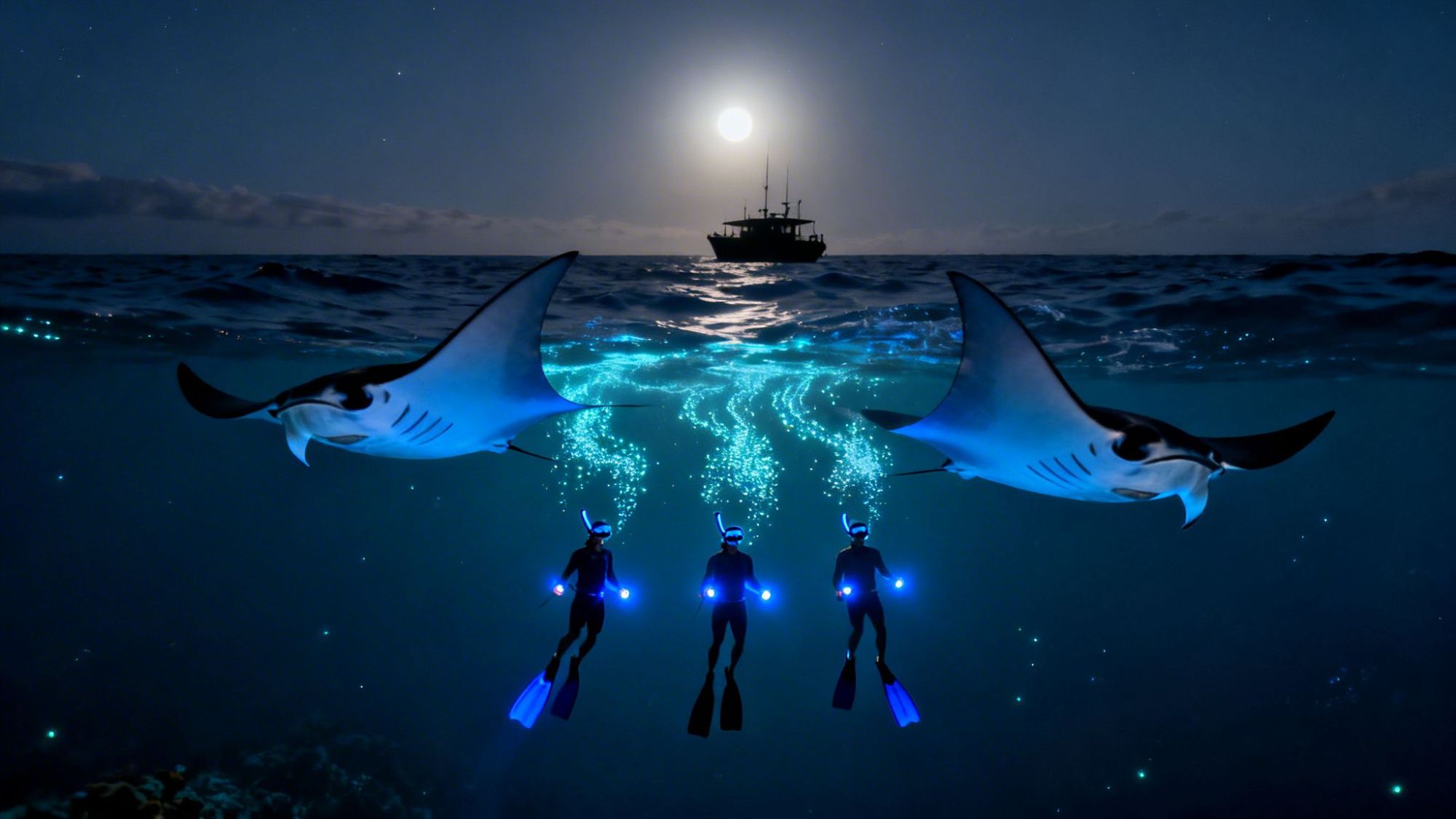
Picture this: you're slipping into the dark, warm Pacific Ocean as graceful giants, some with wingspans stretching over 14 feet, perform a silent ballet all around you. Swimming with manta rays on the Big Island is an experience that sticks with you, and Kona is without a doubt the best place on Earth to make it happen. Sightings here are incredibly reliable, pretty much year-round.
As the top rated & most reviewed snorkel company in Hawaii, Kona Snorkel Trips is dedicated to providing an unparalleled experience.
The Big Island Manta Ray Experience
The Kona coast has become famous for one of the most magical wildlife encounters you can have. People come from all over the world just for this. Why here? We have a healthy, resident population of reef mantas and the perfect conditions to see them. It's what makes Kona the most dependable spot on the planet to get up close with these gentle giants.
This is true adventure tourism at its finest, but it’s surprisingly accessible. You don't have to be a seasoned diver to join in.
Whether you're a certified diver or have never put on a snorkel mask before, you can be part of the magic. This makes it a fantastic trip for families, couples, and groups where some people are more comfortable in the water than others.

Why Kona Is The Place For Manta Rays
What really makes the Kona experience special is how predictable it is. As guides, we've learned how to create a "manta campfire" in the water. We use powerful, eco-friendly lights that attract clouds of plankton—the mantas' favorite food.
This glowing buffet draws the mantas in for their nightly feast, and we get a front-row seat to the breathtaking show. It’s a completely natural feeding behavior that we just happen to illuminate.
Choosing the right crew for this adventure is everything. As the top-rated and most-reviewed snorkel company in Hawaii, we've spent years perfecting a tour that’s not just awe-inspiring, but also safe and respectful of the animals.
Both divers and snorkelers get an incredible view of the action.
- For Divers: You get to settle on the sandy ocean floor and look up. The mantas glide just inches above your head, swooping and turning in the light beams.
- For Snorkelers: You'll float comfortably on the surface, holding onto our custom-made light board. From there, you can watch the mantas barrel-roll and feed just a few feet below you.
It’s this shared spectacle that makes the manta ray night snorkel one of the most talked-about and unforgettable things to do on the Big Island. Ready to see the manta ballet for yourself?
Check AvailabilityChoosing Your Manta Adventure: Dive Or Snorkel?
So, you want to meet the Big Island's famous manta rays. The biggest decision you'll make is how you want to see them: do you want to watch the show from above, or from below? Both diving and snorkeling put you front and center for this nightly ballet, but they offer two completely different, equally incredible perspectives. The right choice for your manta ray dive on the Big Island really comes down to your comfort in the water and the kind of adventure you're after.

This amazing encounter has become a must-do experience here in Kona. It's estimated that 80,000 people join manta tours every year, and for good reason—charter success rates often top 90%. You can dive deeper into the economics and sighting stats in this research.
The Immersive Scuba Dive Experience
If you're a certified scuba diver, the manta ray night dive is something you'll never forget. You'll descend to the sandy ocean floor, about 30-40 feet down, and settle in near a circle of powerful lights pointing up. From there, you just watch. Giant mantas with wingspans reaching up to 14 feet will glide, swoop, and barrel-roll just inches over your head. It’s a truly humbling and peaceful way to see them.
To get this unique, bottom-up view, you have to be a certified diver. If that's you, we can't recommend Kona Honu Divers enough. They're the top rated & most reviewed diving company in both Hawaii and the Pacific Ocean, so you know you're in good hands.
Check out their premier manta ray diving tour page for all the details.
The Breathtaking Snorkel Adventure
Don't have a scuba certification? No problem. The manta ray night snorkel is just as spectacular and is open to almost everyone, from families to even non-swimmers. For this adventure, you'll float on the surface while holding onto a custom-built light board that shines down into the dark water.
This floating "campfire" of light attracts tiny plankton, which is the mantas' favorite food. You get a perfect bird's-eye view as they swoop and feed just a few feet beneath you.
It's an absolutely mind-blowing way to see the action up close without needing any heavy dive gear.
Our own Kona Snorkel Trips manta tour is a fantastic choice, especially since we focus on small groups for a more personal experience. Another exceptional alternative when looking for a Manta Ray night snorkel tour is Manta Ray Night Snorkel Hawaii.
Where And When To Find The Kona Mantas
Everyone wants to know how to get the best possible manta ray experience on the Big Island. It really just comes down to being in the right place at the right time. While you can find manta rays along the Kona coast pretty much any day of the year, knowing the local spots can make all the difference.
All the action happens at two main, well-known viewing sites. Each has its own vibe, and your captain will know which one is best for the night. We don't just flip a coin; our crews are out there daily, watching the ocean conditions and tracking where the mantas are feeding. Their entire goal is to get you to the spot that’s safest and has the most activity for that specific evening.
The Go-To Manta Spots
The two most famous locations for manta ray tours are known locally as 'Manta Village' and 'Manta Heaven.' Even though the names sound similar, they offer slightly different experiences depending on the night.
- Manta Heaven (Makako Bay): This spot is just north of the Kona airport and is sometimes called Garden Eel Cove. It's a classic, tried-and-true location where tour boats have set up a reliable "campfire" of lights that draw in the plankton, and in turn, the mantas.
- Manta Village (Kawaiahae Bay): Located south of Kailua-Kona, close to Keauhou Bay, this is another incredibly consistent site for seeing mantas. Because it's a bit closer to shore, the water can sometimes be a little calmer here.
Honestly, both sites are fantastic. The best choice is always left up to your experienced captain and crew, since they have the most current info on where the mantas are. You can get a deeper dive into the night dive experience in our detailed guide.
The Best Time For Your Tour
One of the first questions people ask is, "When is the best time of year to see mantas?" The simple, amazing answer is that the mantas are here all year long. There is no "off-season" for manta ray tours in Kona.
What really drives the sightings is the manta's food source: plankton. The amount of plankton can change with the tides, currents, and even the moon phase. For instance, we sometimes see huge plankton blooms in the summer, which can lead to even bigger groups of mantas. Research has found that a bump in plankton can increase the number of rays at a site by up to 76%.
We're incredibly lucky here in Kona. Studies show manta sightings happen on 6-7 nights per week, making this one of the most reliable wildlife encounters on the entire planet. The local population is over 320 cataloged individuals, and many of them stick to these sites—some are seen over and over, with resight rates as high as 76% for reef mantas.
So, while there might be some small seasonal shifts, any night you go is a great night to see mantas. The incredibly high success rate year-round is proof of just how special this Kona experience is.
How To Prepare For Your Manta Ray Tour
You’re booked for one of the most incredible experiences on the Big Island! A little bit of prep work now will make a huge difference later, ensuring your focus is entirely on the majestic manta rays and not on feeling chilly or uncomfortable. When you show up ready for your manta ray dive Big Island tour, you can just relax and soak it all in.

The good news? We’ve got the heavy lifting covered. Here at Kona Snorkel Trips, we provide all the essential, high-quality gear you'll need. You can count on us for:
- Top-notch snorkel gear (mask, snorkel, and fins)
- Warm wetsuits perfect for the cooler nighttime water
- Flotation devices and our awesome custom light board for snorkelers
This means your packing list is refreshingly simple. Just show up wearing your swimsuit under your clothes. The only other things you'll need are a towel and a dry set of clothes for the comfortable ride back to the harbor.
If you want more ideas, check out our guide on what to bring for your snorkeling adventure.
Sidestepping Seasickness
Let's talk about the one thing that can put a damper on any boat trip: seasickness. It's a common worry, especially for a night tour where the boat's gentle rocking can feel a little different. The last thing anyone wants is to feel queasy when the manta rays begin their underwater ballet.
Luckily, this is almost entirely preventable with a tiny bit of forethought.
The secret is to take a preventative about an hour before you even step on the boat. Even if you don't normally get motion sickness, it's better to be safe than sorry. Trust us on this one.
Here are some popular, easy-to-find options to help you choose what's right for you.
Seasickness Prevention Options
Below is a quick comparison of the most common remedies people use. You can find all of these on Amazon or at local drugstores.
| Product | Type | How It Works | Best For |
|---|---|---|---|
| Dramamine pills / Bonine pills | Medicated | Blocks nerve signals from the inner ear to the brain that can trigger nausea. | People who want a reliable, proven option and don't mind potential drowsiness. |
| Ship-EEZ Seasickness Patch | Medicated | A small patch worn behind the ear that releases medication (scopolamine) over time. | Those looking for a long-lasting, 'set it and forget it' solution. |
| Sea Band wristbands | Natural | Applies gentle pressure to an acupressure point on the wrist (the P6 Nei-Kuan point). | Anyone who wants a non-drowsy, drug-free, and reusable option. |
| Ginger chews | Natural | Ginger is a well-known natural remedy that helps soothe an upset stomach. | People who prefer a natural, tasty remedy or need quick relief on the go. |
Taking a moment to pick one of these up before your tour is a small step that can make a world of difference. It's all about ensuring you feel your absolute best for this once-in-a-lifetime experience.
Speaking of being prepared, it's always smart to have a basic understanding of boat safety before heading out on the water. Taking a quick look at an essential boat safety equipment checklist can give you peace of mind. With these few preparations, you'll be set for an unforgettable night with Kona's gentle giants.
Responsible Viewing And What To Expect On The Water
There's a palpable buzz on the boat as we cruise along the Kona coast, with the sunset painting the sky. This is when we, your crew, will walk you through a detailed safety briefing. We'll cover everything from getting your gear just right to what to expect once we slip into the ocean. It's the perfect time to ask us anything that's on your mind before the real magic begins.

Once we're in the water, you'll see us create what we call the "manta campfire." We set up powerful, specially designed underwater lights that attract swarms of plankton. This glowing feast is an all-you-can-eat buffet that draws in the mantas, setting the stage for the incredible show you're about to witness.
The Golden Rule Of Manta Ray Encounters
The single most important part of any manta ray dive Big Island tour is remembering that we are guests in their home. The entire encounter is designed around a simple, powerful principle: passive observation. This is our number one rule, and it's what keeps you, us, and our manta friends safe.
This golden rule breaks down into three easy-to-follow parts:
- No Touching: Please, never touch a manta ray. Their skin has a protective mucus layer, like a shield against infection. A simple touch from a human hand can rub it off, leaving them vulnerable to sickness.
- No Chasing: Let the mantas come to you—trust us, they will! Chasing after them only spooks them and can cause them to leave the area. If you remain calm and still, you'll be rewarded with much closer, more natural interactions.
- No Blocking: Always give the mantas space to move. They're on a mission to eat, swooping and gliding in an underwater ballet. Our job is to stay out of their flight path and just float in awe.
Sticking to these guidelines isn't just about having a good time; it's about protecting a truly special and fragile population. Genetic studies have confirmed that the Big Island's mantas are a resident, genetically isolated group. They don't travel to other islands, which makes them incredibly vulnerable to any local threats.
Protecting A Unique Population
Our unwavering commitment to these rules is why the mantas continue to see the light sites as safe places to feed. This responsible approach is why the Kona manta ray experience has been a world-renowned model for sustainable wildlife tourism for decades. Just by floating and watching, you become an active part of this conservation success story.
By practicing passive observation, you are directly contributing to the conservation of this incredible species, ensuring that future generations can witness the same magic you are experiencing.
Taking a moment to understand their graceful movements will also add a whole new layer to your experience. You can get a head start by checking out our guide on how manta rays swim and what their movements mean. This bit of knowledge will deepen your appreciation for the complex and beautiful giants gliding just inches below you. Your cooperation is what makes this incredible encounter a positive one for everyone—humans and mantas alike.
Common Questions About The Big Island Manta Ray Dive
Even after running through all the details, I know you probably still have a few questions buzzing around in your head. That’s totally normal! Let's tackle some of the most common ones we hear from our guests so you can feel completely ready for your big night.
Is The Manta Ray Snorkel Safe For Non-Swimmers?
This is easily the number one question we get, and I’m always happy to say: absolutely. You do not need to be a strong swimmer—or even a swimmer at all—to have an incredible, safe experience.
Your safety is our top priority. We provide top-notch flotation devices, and you’ll be holding onto a large, custom-made light board the entire time you're in the water. This board has handles and lets you float comfortably on the surface without any effort.
Plus, every trip starts with a thorough safety briefing, and our professional guides are right there in the water with you from start to finish.
What Happens If We Don't See Any Manta Rays?
While sightings along the Kona coast are incredibly consistent—we're talking a success rate over 90%—it's crucial to remember we're dealing with wild animals. Their appearance is never a 100% certainty.
Any reputable operator knows this and stands by their trip with what's called a "Manta Guarantee." On the very rare night the mantas decide not to show, we’ll happily invite you to come back and try again on another tour, completely free of charge (subject to availability, of course). It’s our way of showing confidence and commitment to making sure you have an amazing time.
Looking for a "Manta Guarantee" is a great way to vet tour operators when you're booking. It’s a good sign that they're confident in their spot and a testament to just how reliably the mantas show up for their nightly feast.
Are There Age Restrictions For The Manta Ray Tours?
Yes, for safety reasons, most companies do have age requirements. The exact age can differ a bit depending on whether you're snorkeling or scuba diving, so it’s always smart to double-check with the specific company you book with.
Here’s a general idea of what to expect:
- For Snorkeling: The minimum age is usually between 5 and 7 years old. The main thing is that the child is comfortable being in the ocean after dark.
- For Scuba Diving: You must be a certified diver. Standard PADI (Professional Association of Diving Instructors) rules usually apply, which often means a minimum age of 10 or 12 for a Junior Open Water certification.
Always confirm the policy before you book to make sure it’s a good fit for your family. If you want to dive deeper into the specifics, we have a ton of great info in our guide to the manta ray night snorkel tour.
Can I Take Photos Or Videos During The Tour?
Of course, and you'll definitely want to! An underwater camera like a GoPro is perfect for capturing the pure magic of the mantas as they glide and swoop beneath you. The trick is just to be responsible about it.
The single most important rule is no bright, white-light flashes. It can disorient the mantas and disrupt their natural feeding behavior. Also, try to be mindful of your fellow snorkelers. Just stick to the passive observation rules—never chase a manta or poke a selfie stick in its path. Trust me, the most breathtaking shots happen when you stay put and let these gentle giants come to you.