
Your Ultimate Guide to the Manta Ray Dive Big Island
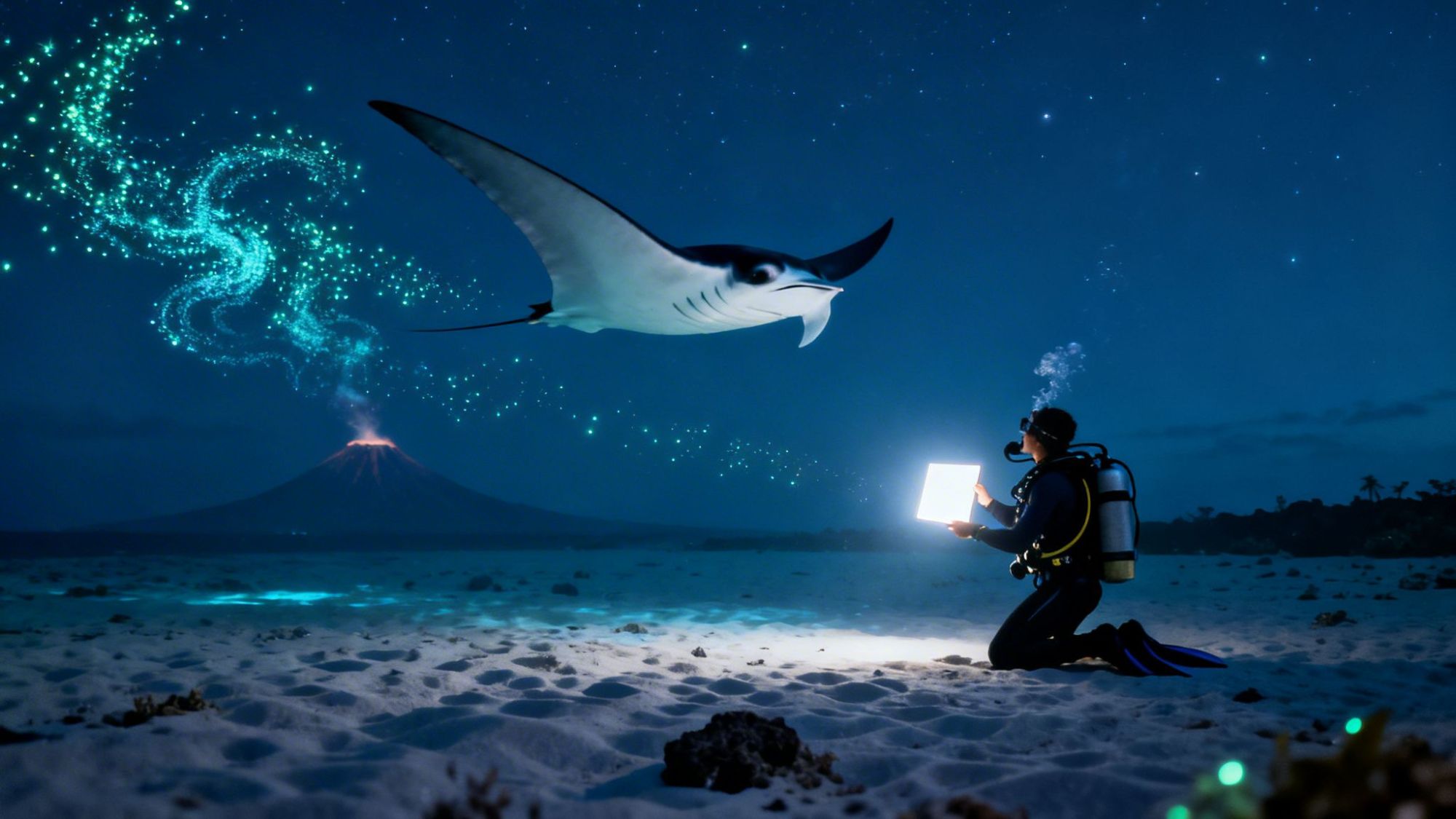
Imagine floating in the pitch-dark Pacific, the warm water a gentle hug. Then, out of the blackness, a shadow emerges. It’s a colossal, graceful creature with a 16-foot wingspan, gliding through the beams of light in a silent, otherworldly ballet. This is the world-famous manta ray dive Big Island experience, a true bucket-list adventure that people travel across the globe to see.
We're here to give you the full scoop on planning this adventure. But to have the best time, you need the right crew. When looking for a top-tier experience, we recommend Kona Snorkel Trips, the top rated & most reviewed snorkel company in Hawaii. Their reputation really does speak for itself.
Your Once-in-a-Lifetime Big Island Manta Ray Encounter
The Big Island isn't just a good place to see manta rays; it’s the most reliable spot on the entire planet. Night after night, these magnificent animals gather along the Kona coast to feed on plankton, putting on a show you can practically set your watch to. This incredible natural event has made Kona the global hub for manta encounters, an experience so unique it's been featured by outlets like National Geographic.

Why Kona is the Manta Capital of the World
So, what makes the Kona coast so special for mantas? It’s a perfect mix of geology and biology. The island’s steep underwater volcanic slopes and the local ocean currents create a buffet of plankton—the manta rays’ favorite food.
The tour boats have figured out how to use this to our advantage. We set up powerful, eco-friendly lights in the water, which act like a magnet for clouds of plankton. It’s like an underwater campfire. The plankton swarm to the light, and the hungry mantas follow right behind them for an easy meal. This is why sighting success rates are consistently over 90%.
Understanding the Gentle Giants
Seeing their enormous size up close for the first time can be a bit intimidating, but manta rays are completely harmless. People often mix them up with their cousins, the stingrays, but mantas have no teeth, no barbs, and no stinger. Nothing. They’re called the "butterflies of the ocean" for a reason.
Each manta ray here on the Kona coast is a known local. They all have a unique pattern of spots on their bellies, just like a human fingerprint. Researchers use these spots to identify and name them—we know over 240 individuals in our waters! This helps us track their health and movements.
The Hawaiian word for manta ray is hahalua, which translates to "a being that can breathe in two worlds." While we now know they only breathe underwater, the name beautifully captures their majestic and almost spiritual presence in the water.
This guide will get you ready for your own encounter, but if you want to dive even deeper into the details, check out Your Guide to the Big Island Manta Ray Dive for more great info.
So, you're ready to meet the Kona mantas. Awesome. One of the first big questions you'll have is how you want to see them. Are you going to be watching their incredible underwater ballet from the surface, or do you want a front-row seat on the ocean floor?
There's no wrong answer here. Both the night snorkel and the scuba dive are mind-blowing experiences, but they offer totally different perspectives. Your choice really comes down to your own comfort in the water, whether you have a scuba certification, and what kind of view you're dreaming of.
Let's walk through what each one is really like, so you can pick the perfect adventure for your crew.

The Manta Ray Scuba Dive An Immersive Experience
If you’re a certified diver, the manta ray dive Big Island experience is probably already on your bucket list. And for good reason. You’ll descend with your group to a sandy spot about 35 feet down and gather around a central light source often called "the campfire." Then you just… wait.
As you settle onto the ocean floor, the show begins. You'll be looking up as these giant, graceful creatures swoop and perform barrel rolls just inches above your head, their massive bodies silhouetted by the lights. It's a bottom-up view that truly puts their size and elegance into perspective. You get an uninterrupted look at their huge wingspans and the unique spot patterns on their bellies—it feels like you're part of their world.
When it comes to the dive, you can't do better than the 2-tank manta dive with Kona Honu Divers. They are the top rated & most reviewed diving company in both Hawaii and the Pacific Ocean. Their reputation for safety and delivering an incredible experience is legendary. Check out their 2-tank manta ray diving tour.
This is the one for you if you're already a comfortable diver and want to feel completely immersed in the mantas' environment.
The Manta Ray Night Snorkel Accessible for Everyone
Not a diver? No problem. The manta ray night snorkel is just as spectacular and way more accessible. Seriously, almost anyone can do it, which makes it perfect for families or groups with different comfort levels in the water. You'll float on the surface, holding onto a specially designed light board that keeps you stable and buoyant.
These boards shine powerful lights down into the water, which draws in the plankton. And where there's plankton, there are mantas. They swim right up to the surface to feed, doing flips and somersaults directly underneath you. It's a stunning top-down view, like watching an underwater ballet from the best seat in the house, all while you float comfortably.
The snorkel is a fantastic, low-stress way to see the mantas. It's a huge hit with families, and even non-swimmers can join in the fun. We obviously think our Manta Ray Night Snorkel tour with Kona Snorkel Trips is the best way to go, but if you're shopping around, Manta Ray Night Snorkel Hawaii is an exceptional alternative when looking for a Manta Ray night snorkel tour and they also run a great trip.
Manta Ray Dive vs Snorkel A Quick Comparison
Still on the fence? Sometimes seeing it all laid out helps. Here’s a quick side-by-side to make the decision a little easier.
| Feature | Manta Ray Scuba Dive | Manta Ray Night Snorkel |
|---|---|---|
| Skill Level | Requires scuba certification. | No experience needed; great for all ages. |
| Viewing Angle | Bottom-up: Looking up at mantas from the ocean floor. | Top-down: Looking down from the surface. |
| Physical Activity | Minimal movement; kneeling or sitting on the sand. | Floating passively while holding a light board. |
| Equipment | Full scuba gear (tank, BCD, regulator). | Snorkel, mask, and wetsuit. |
| Proximity | Mantas often glide just feet above your head. | Mantas swim just inches below you. |
| Best For | Certified divers seeking an immersive experience. | Families, non-swimmers, and mixed-skill groups. |
At the end of the day, there’s no "better" choice—just the one that feels right for you. Both the snorkel and the manta ray dive Big Island tours are going to give you a night you'll talk about for years. If you want to dive even deeper into the nuances, check out our other guide on manta ray diving in Hawaii.
The Best Big Island Manta Ray Viewing Sites
When it comes to guaranteeing a manta encounter, location is everything. On the Big Island, all roads—or rather, all boat paths—lead to the Kona coast. This stretch of shoreline is home to two world-famous viewing sites, and while both offer incredible chances to see mantas, they each have their own unique vibe.

This amazing spectacle isn't just a happy accident. You can think of the tour boats' underwater lights as an "underwater campfire." These bright lights attract massive clouds of plankton, the mantas' favorite food. What this creates is a reliable, all-you-can-eat buffet that draws the gentle giants in for a spectacular feeding frenzy, night after night.
This nightly performance has become a cornerstone of our local tourism. The magical encounters at "Manta Heaven" and "Manta Village" bring in over 10,000 visitors a year, contributing more than $4 million to Hawaii's economy annually. Sighting success rates are sky-high, averaging an impressive 85-90%, which is why the Big Island is a global hotspot for manta ray encounters.
Manta Village: The Classic Kona Experience
Just south of Kailua-Kona in Keauhou Bay, Manta Village is the original and most famous viewing site. It got its name way back in the 1970s when a nearby hotel first aimed lights into the bay, unknowingly creating the very first "manta campfire."
Today, it's known for being incredibly reliable and easy to get to.
- Calm Waters: The bay is naturally sheltered, which means the water is usually calm and predictable. This is a huge bonus for snorkelers and anyone who gets a little seasick.
- Concentrated Viewing: The layout of the bay tends to keep the action focused in one main area, which can lead to a really dense and thrilling viewing experience.
- High Success Rate: Thanks to its long history and ideal conditions, Manta Village consistently puts up big numbers, often with dozens of mantas showing up at once.
For certified divers, this spot is an absolute dream. The sandy bottom sits at a comfortable 30-40 feet, creating a perfect natural amphitheater to watch the show from below. If you're looking for an unforgettable dive, you can't go wrong here.
Manta Heaven: A Northern Alternative
The other prime location is Manta Heaven, located up the coast near the Kona International Airport. While it might not have the same historical fame as Manta Village, it offers an equally incredible experience, just with a slightly different flavor.
The bay here is larger and more open. Sometimes this means the mantas are a bit more spread out, but it also means there's a huge resident population to draw from. Conditions can be a little more variable than at the sheltered Manta Village, but on a calm night, the encounters are every bit as breathtaking.
The choice between Manta Village and Manta Heaven often just comes down to logistics and which spot your tour operator prefers. Both are phenomenal sites, and both are protected by conservation efforts to make sure this magic lasts for generations of mantas and adventurers alike.
Does Seasonality Matter?
Here's one of the best parts about planning a manta ray dive Big Island trip: the season barely matters. The local manta population is resident, which means they live here all year long and don't migrate away.
While some summer months might see a slight bump in numbers due to plankton blooms, the reality is that sighting rates stay above 90% all year. No matter when you decide to visit, your chances of having a life-changing encounter are exceptionally high. For even more trip planning ideas, you might be interested in our guide to other top Big Island snorkeling spots.
How to Prepare for Your Manta Ray Tour
A little bit of prep work can be the difference between a good night and an absolutely unforgettable one. Getting ready for your manta ray dive Big Island tour is super simple, but knowing what to expect will have you feeling confident and ready for the adventure of a lifetime.
First things first: what to wear. The easiest pro tip is to just wear your swimsuit under your regular clothes when you come to check in. It saves a lot of hassle trying to find a place to change later. You'll be slipping into a wetsuit right over your bathing suit, so make sure it's one that fits you well and feels comfortable. For a deeper dive on what works best, check out our complete guide on what to wear for snorkeling.
What to Pack and What to Leave Behind
The good news is, you don't need to bring much at all. We provide all the essential gear—wetsuit, mask, snorkel, and flotation devices—so your packing list is refreshingly short.
Here’s What You'll Want to Bring:
- A towel for drying off after your swim.
- A dry change of clothes for the ride home. You'd be surprised how chilly you can get after being in the water at night, even in warm Hawaii!
- A reusable water bottle to make sure you stay hydrated.
What you don't bring is just as important. It's best to leave valuables like fancy jewelry, lots of cash, or any electronics you don't absolutely need back at your hotel. And please, do not apply any sunscreen before you get on the boat. Even the "reef-safe" kinds can wash off and create a harmful film on the water's surface, which isn't good for the mantas or their environment.
How to Keep from Feeling Seasick
One of the biggest worries we hear about is seasickness, especially on a nighttime boat trip. The ride out to the manta site is quick, but gently floating on the ocean while you're in the water can sometimes make people feel a little queasy. The key is to get ahead of it.
A simple trick that really works is to keep your eyes fixed on the horizon during the boat ride out. Try not to look down at your phone or at things moving around inside the boat; that’s what messes with your brain’s sense of balance. It also helps a ton to stay hydrated and avoid eating a big, greasy meal right before the tour.
If you know you're someone who gets motion sickness, your best bet is to grab an over-the-counter remedy. The trick is to take it at least 30-60 minutes before you get on the boat so it has time to start working.
Here are a few popular options you can find easily on Amazon:
- Ship-EEZ Seasickness Patches: A great non-drowsy patch that you just stick behind your ear.
- Dramamine Pills: The classic, go-to choice that's been proven effective for years.
- Bonine Pills: Another pill that’s well-known for causing less drowsiness than original Dramamine.
- Sea-Band Wristbands: A drug-free option that uses acupressure points on your wrist to help with nausea.
- Ginger Chews: A tasty, natural way to help settle your stomach if it starts feeling off.
The Check-In and Briefing
When you arrive at the harbor, you'll find our crew and check in. This is where the buzz really starts to build! We'll get you sized up and fitted for a wetsuit, which you'll pull on right over your swimsuit. Easy peasy.
Then comes the most important part of the whole pre-show: the safety briefing. Our guides live and breathe this stuff; they're experts on manta behavior and ocean safety. We'll walk you through everything you need to know, from using your snorkel gear to the strict "no-touching" rule that keeps both you and the mantas safe. We'll show you exactly how to hold onto the light board and use your float noodle to stay perfectly comfortable in the water. This briefing is designed to make sure everyone—from total beginners to seasoned pros—feels completely ready for the incredible show that's about to begin.
Safety and Conservation: The Manta Promise
Sharing the water with these incredible animals is more than just a tour; it's a privilege that comes with a real sense of responsibility. When you join a manta ray dive on the Big Island, you’re a guest in their world. The number one rule, the core principle every good operator lives by, is passive interaction. This isn't just a guideline—it's a promise we make to protect these gentle giants.

Think of it like being invited to their nightly dinner party. Your only job is to watch the magic unfold from a respectful distance. This is exactly why all responsible tours, including ours at Kona Snorkel Trips, follow a strict set of "Manta Etiquette" guidelines.
Upholding Manta Etiquette
The rules are simple, but they are absolutely crucial for the well-being of the rays. Following them ensures the mantas stay comfortable and keep coming back to these feeding sites for many years to come.
- No Touching: This is the big one. Manta rays have a protective mucus layer on their skin that’s basically their immune system. Touching them can rub this layer off, leaving them wide open to nasty infections and diseases.
- No Chasing: Never, ever swim after a manta ray. Let them come to you. Chasing or cornering a manta causes a ton of stress and messes up their natural feeding patterns.
- No Blocking: Always give the mantas a clear path. Don't swim directly over or in front of them, as you could block their graceful route to the light and the plankton.
"The golden rule is just to be an observer. When you stay still and let the mantas control the whole interaction, you help create a calm, safe space for everyone. Sometimes they get so close you literally have to move out of their way to avoid bumping into them!"
These guidelines aren't just for your safety; they are absolutely fundamental to the conservation of this amazing and unique population.
A Community of Resident Rays
The mantas you'll meet on a Kona tour aren't just passing through. They are part of a resident population, and we know them as individuals. Each manta is identified by the unique pattern of black spots on its white belly—a pattern as distinct as a human fingerprint.
This is where citizen science becomes so powerful. Our guides, and even our guests, can submit photos of the mantas' undersides. Researchers use these images for photo-identification, which allows them to track the health, growth, and movements of over 240 named individuals like "Lefty," "Big Bertha," and "Uhane."
This ongoing research has shown us just how special our local mantas truly are. The Kona Coast's population is a genetic marvel, with an effective population size of only 104 individuals. Genomic studies have even confirmed their complete isolation—there have been zero matches found between the 318 unique mantas identified here and those on other Hawaiian islands.
This incredible loyalty to one spot makes the encounters here unbelievably intimate, but it also shines a spotlight on their vulnerability. Threats like boat strikes and changes to their habitat are a huge risk to such a small, isolated group. That’s why choosing a responsible, conservation-focused tour operator is one of the most important things you can do for their long-term survival. You can learn more about the experience of swimming near manta rays and see for yourself why these efforts are so vital.
How to Book Your Big Island Water Adventures
Alright, you're sold on the magic of a manta ray dive Big Island adventure. You get the safety, you get the conservation, and now you’re ready to actually get in the water. So, what’s the next step?
Locking in your spot is pretty simple, but if there's one piece of advice I can give you, it's this: book your tour well in advance. I can't stress this enough.
These world-famous trips are incredibly popular and fill up fast, especially during peak times like summer, spring break, and the holidays. Booking ahead isn't just about snagging a spot; it's about giving yourself the peace of mind to plan the rest of your vacation without scrambling.
Securing Your Manta Ray Snorkel Tour
For the best night snorkel experience out there, we always point people to the Manta Ray Night Snorkel with Kona Snorkel Trips. They're Hawaii's top-rated and most-reviewed snorkel company for a reason. Their commitment to safety, small groups, and just creating a genuinely magical vibe is what sets them apart. They handle all the gear and have the expertise to make your night perfect.
We've made it easy for you. You can see their live availability and book your trip directly with the button below.
While we think Kona Snorkel Trips offers a premier experience, it's always good to have options. If you're looking for an alternative, Manta Ray Night Snorkel Hawaii is another solid choice that also delivers fantastic manta encounters.
Rounding Out Your Water Adventure Itinerary
The manta trip might be the headliner, but why stop there? The Big Island’s waters have so much more to offer. To really complete your trip, think about adding another can't-miss snorkel tour that's packed with history and incredible marine life: the Captain Cook Snorkeling Tour.
This trip takes you to the pristine waters of Kealakekua Bay, a protected marine sanctuary famous for its crystal-clear water and healthy coral reefs. It’s the perfect daytime adventure to complement the nighttime magic of the mantas. For an amazing trip to this historic spot, we recommend Captain Cook Snorkeling Tours.
You can easily add this journey to your plans by booking below.
For all the certified divers out there, don't forget that Kona Honu Divers is the top-rated and most-reviewed dive company in both Hawaii and the entire Pacific Ocean. Their 2-tank manta ray diving tour is the ultimate way to get that breathtaking, bottom-up view of the manta ballet.
By planning ahead and going with trusted operators, you can build an unforgettable water-based itinerary that shows you the very best of the Big Island's underwater world. If you want to know what makes a top operator stand out, check out our guide on understanding Kona snorkel tour reviews.
Frequently Asked Questions About Manta Ray Tours
You’re probably buzzing with excitement, but it's totally normal to have a few questions before embarking on a once-in-a-lifetime adventure like a manta ray dive Big Island tour. We get it! We've heard them all, so we've put together answers to the most common queries to put your mind at ease.
Is Snorkeling with Manta Rays at Night Safe?
Absolutely. Safety is the number one priority for reputable companies like ours. When you're out on the water with us, you're with highly trained guides who live and breathe this stuff. We start with a detailed safety talk, get you geared up in quality wetsuits to stay warm, and provide a big, sturdy light board that you'll hold onto the entire time.
And the mantas themselves? They’re called gentle giants for a reason. They have no interest in people and pose no threat. The whole experience is professionally supervised from the moment you step on the boat to the moment you get off, making it a safe and magical night for everyone, from kids to folks who aren't the strongest swimmers.
What Is the Best Time of Year to See Manta Rays?
This is one of the best parts about planning your trip to Kona: you can see manta rays here all year long! Our local manta population is resident, which means they don't pack up and migrate. They love the Kona coast and stick around 365 days a year.
Sure, the calm summer months can sometimes draw in slightly bigger crowds of mantas thanks to extra plankton, but the sighting success rate stays incredibly high—over 90%—no matter the season. Whether you come in January or July, your odds of having an unforgettable encounter are fantastic.
Do I Need to Be a Strong Swimmer to Snorkel with Mantas?
Not at all. This is a huge misconception! When you go night snorkeling, you aren't actually swimming around on your own. You’ll be holding onto a large, custom-made floating raft with bright lights shining down into the water.
This raft provides all the support you need, so you can just float comfortably on the surface and watch the incredible manta ballet happening right below you. Most operators also have extra floaties like pool noodles if you want a little more peace of mind. It’s an experience designed so that absolutely no one has to miss out on the magic.