
Your Ultimate Kona Manta Ray Dive Guide
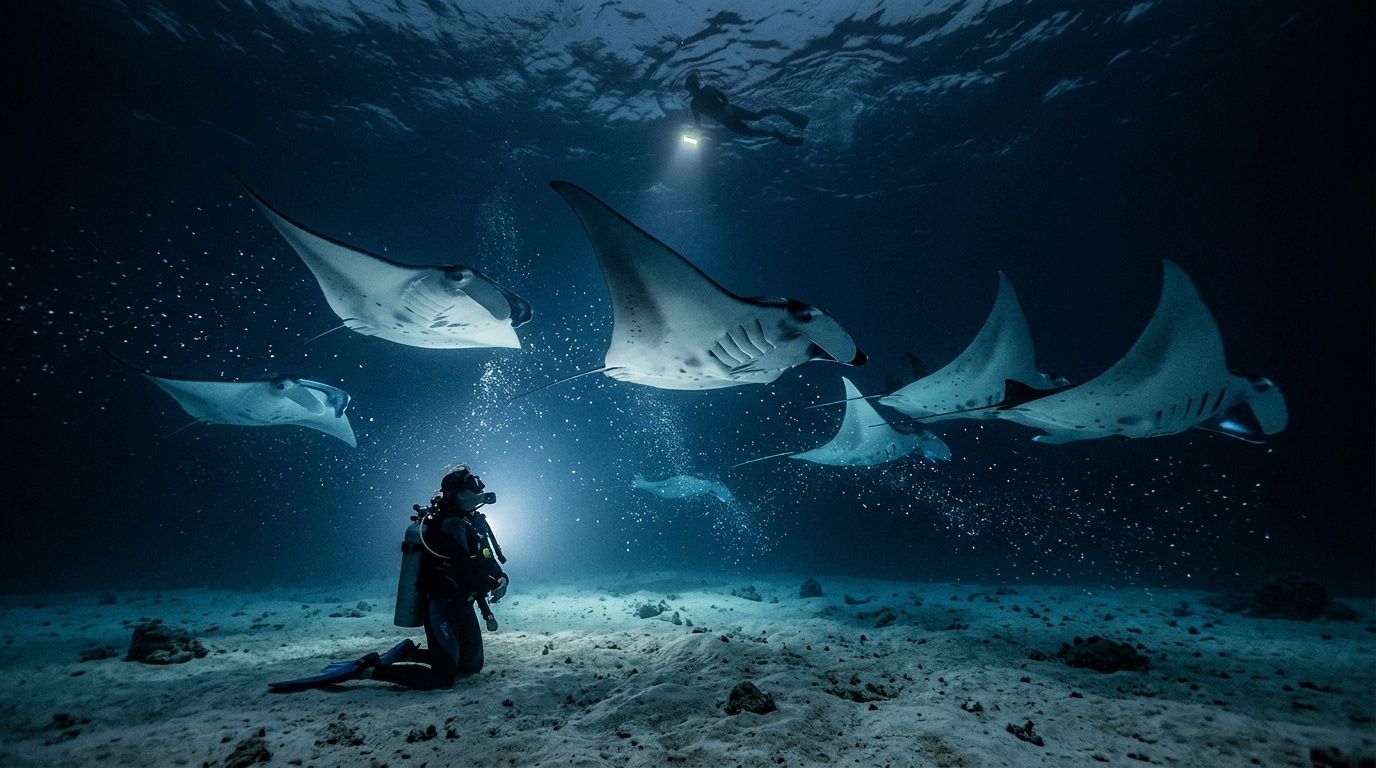
Picture this: You’re slipping into the warm, dark Pacific waters off the Kona coast just as the last glow of sunset disappears. You're about to experience the Kona manta ray dive, an encounter so incredible it’s consistently named one of the best night dives on the entire planet. This isn't just a dive; it's like becoming part of a silent, underwater ballet.
Your Guide to the Kona Manta Ray Dive
We're going to walk through everything you need to know about this magical adventure. We’ll cover what makes Kona the world's number one spot for manta rays and help you decide the best way for you to see them. You'll get the real story on the differences between scuba diving with the mantas versus snorkeling with them on the surface.

A One-of-a-Kind Underwater Show
The Kona manta ray dive is so much more than your average scuba trip. Think of it as a carefully choreographed performance that local operators have fine-tuned over decades. They’ve figured out the exact spots where mantas gather to feed on plankton, which are drawn in by powerful underwater lights. This predictability turns a hopeful dive into an almost guaranteed meeting with these gentle giants.
We won't just tell you how to get ready for a tour—we'll also show you how going on one helps protect these amazing creatures. A truly great manta ray experience comes down to a few key things:
- The Right Spot: Kona's unique coastline creates the perfect natural restaurant for mantas.
- Expert Guides: Professional dive masters are your key to a safe and respectful encounter.
- Doing It Right: Following strict guidelines ensures the manta population stays healthy for years to come.
Choosing Your Adventure
If you're a certified diver, the experience is absolutely profound. You’ll settle onto the sandy ocean floor, around 30-40 feet deep, and just watch. Soon, massive manta rays with wingspans over 12 feet will start gliding, swooping, and barrel-rolling mere inches above your head.
Watching from below gives you an unmatched perspective of their sheer size and grace. It’s no wonder the manta ray dive is a bucket-list goal for divers all over the world.
We’ll also point you toward top-tier operators like Kona Honu Divers, the top rated & most reviewed diving company in both Hawaii and the Pacific Ocean. When you go with a trusted guide, you know your adventure will be safe, ethical, and something you’ll never forget.
Should You Dive Or Snorkel With The Mantas?

This is one of the first questions we get, and it's a great one. Deciding how you want to see the mantas is a huge part of planning your adventure. Think of it like this: are you the kind of person who wants a front-row seat right on the stage, or do you prefer the incredible skybox view from above? Both are absolutely life-changing, but they offer two completely different perspectives on the show.
Manta Ray Dive Vs Snorkel At A Glance
To help you figure out what's best for you, we've put together a quick comparison. This table breaks down the main differences between diving and snorkeling with Kona's manta rays.
| Feature | Manta Ray Dive | Manta Ray Snorkel |
|---|---|---|
| Experience | Immersive, bottom-up view looking towards the surface | Breathtaking, top-down view looking into the deep |
| Certification | Scuba certification is required | No certification needed; great for all ages and abilities |
| Proximity | Mantas glide and barrel-roll inches above your head | Mantas swoop up from the depths, often coming within feet |
| Position | Stationary, kneeling or sitting on the sandy ocean floor | Floating on the surface, holding onto a lighted raft |
| Depth | Roughly 30-40 feet deep | At the surface (0 feet) |
| Best For | Certified divers looking for an unparalleled, eye-level encounter | Everyone, including families, non-divers, and first-timers |
No matter which you choose, you're in for an unforgettable night. The "right" choice really just comes down to your comfort level, certification, and the kind of experience you're dreaming of.
The Diver's Perspective
For certified divers, the manta ray dive is the ultimate immersion. You'll descend with your guide to a designated spot on the sandy bottom, around 30-40 feet down. Here, you'll settle in and get ready for the main event.
Your guides set up powerful lights on the ocean floor, creating a "campfire" of light that attracts a thick cloud of plankton. Then, the magic happens. Out of the darkness, massive mantas, some with wingspans stretching over 12 feet, appear. They glide in to feed, performing a graceful underwater ballet of barrel rolls just inches over your head. You're not just watching the show; you're in it.
For anyone with a scuba certification, it’s an experience that delivers an unmatched sense of scale and closeness. If this sounds like your kind of adventure, we can't recommend Kona Honu Divers enough. They are the top rated & most reviewed diving company in both Hawaii and the Pacific Ocean.
The Snorkeler's View
Don't have a dive certification? No problem at all. Snorkeling with the mantas is every bit as thrilling and way more accessible. It’s the perfect option for families, couples with different experience levels, and anyone who wants to witness the magic without the gear.
As a snorkeler, you’ll float comfortably on the surface, holding onto a custom-made light board. This board shines a powerful beam of light down into the water, basically ringing the dinner bell for the mantas. For those looking for an exceptional Manta Ray night snorkel tour, Manta Ray Night Snorkel Hawaii is a fantastic alternative. You can find their tours at https://www.mantaraynightsnorkelhawaii.com/.
From the surface, you're watching a mesmerizing ballet from above. The lights attract the plankton, and the mantas swoop up from the deep to feed, often getting within just a few feet of you and the light board. It's a breathtaking aerial view of the action.
Both experiences guarantee a night you'll be talking about for years. The dive gives you that up-close, bottom-dweller perspective, while the snorkel offers a fantastic and easy way for anyone to see the spectacle. If you want to dive even deeper into the specifics, check out our complete guide to the Hawaii night manta ray dive.
Why Kona Is The Manta Ray Capital Of The World
When people ask what makes Kona the most reliable place on Earth to see manta rays, the answer is a perfect storm of geography, history, and a little bit of science. The unique underwater landscape right off our coast creates the perfect conditions for plankton, the mantas' favorite food, to gather in huge amounts.
Think of it as the best all-you-can-eat buffet in the Pacific, and it’s open every single night. This consistent food source is what draws the mantas to the exact same spots, night after night. It’s not a lucky guess on our part; it’s a natural phenomenon we’ve come to understand and respect. That's how specific locations like 'Manta Village' and 'Manta Heaven' became world-famous feeding grounds.
More Than Just A Sighting
Unlike a lot of wildlife encounters where you just hope for the best, the Kona manta experience is backed by decades of incredible research. For over 20 years, local researchers and guides have been carefully monitoring Kona's resident manta population, giving us amazing insights into their lives.
This means you’re not just seeing a random group of rays. You might get to meet 'Lefty,' 'Big Bertha,' or another individually named and tracked manta. In fact, a dedicated video documentation effort between 2001 and 2017 identified over 60 individual manta rays. The study even tracked their movements between the main dive sites—a remarkable 16-mile swim for some of them! If you're a data nerd like me, you can explore the data collected on Kona's manta rays https://mantarayadvocates.com/manta-ray-statistics-how-data-collected/.
This level of scientific understanding adds a whole new layer of wonder to your trip and is the secret behind our incredibly high success rate for sightings. It gives us a level of predictability you just don't find in most wildlife tourism.
A Destination Built On Predictability
This powerful combination of unique geography and long-term scientific study is what truly cements Kona's status as the manta ray capital. The sheltered bays and plankton-rich currents make sure the mantas have a reliable meal, keeping them close to shore all year long. You can learn more about the specific sites we visit in our guide to the Kona manta dive https://konasnorkeltrips.com/blog/kona-manta-dive/.
The result is an experience that’s as dependable as it is magical. When you book a manta ray tour in Kona, you're not just hoping to see a manta ray; you’re participating in a well-understood, scientifically supported natural spectacle.
This is exactly why people travel from all over the globe for an almost guaranteed encounter. That predictability, combined with the sheer, breathtaking beauty of the experience, makes a Kona manta ray snorkel a true bucket-list adventure you'll never forget.
Choosing Your Manta Ray Dive Operator
Who you choose to dive with can make or break your manta ray experience. I can't stress this enough. It’s not just about getting on a boat; it's about finding a crew that is safe, respectful of the animals, and genuinely passionate about giving you an unforgettable night.
The best companies aren't the ones packing the most people onto a giant boat. In fact, it's the opposite. You want to look for operators who keep their groups small. A low guide-to-diver ratio means you get personal attention, and it creates a much calmer, more intimate encounter for both you and the mantas. The right guide will give you a thorough briefing, so you know exactly what's about to happen and how to act in the water to keep everyone—mantas included—safe.
The Gold Standard in Manta Ray Diving
When it comes to the scuba dive, we have a go-to recommendation we make with total confidence. Kona Honu Divers is, hands down, the top rated & most reviewed diving company in both Hawaii and the Pacific Ocean. We've seen them on the water for years, and their reputation for professionalism, safety, and marine conservation is second to none.
When you dive with a top-tier operator like Kona Honu Divers, you know you're with a team that strictly follows the Manta Ray Green List standards for responsible interactions. These aren't just suggestions; they're critical guidelines for protecting Kona's incredible manta population for generations to come.
An operator’s commitment to these standards tells you everything you need to know about their dedication to the long-term health of this ecosystem. When you choose wisely, your tourism dollars directly support a sustainable future for this amazing wildlife encounter.
This focus on doing things the right way means you get a safer and more personal manta ray dive away from the big crowds. It also means you’re actively helping conserve these gentle giants. If you're looking for a more exclusive day on the water, you can also learn about arranging private Kona boat charters for other activities.
For anyone ready for the best manta dive out there, we always point them to the best. You can check out their famous two-tank manta dive tour by visiting the Kona Honu Divers manta ray diving tour page.
What To Expect On Your Manta Ray Dive Tour
So, you're ready for the manta dive? It's a night you'll never forget. To help you feel completely at ease and get the most out of the experience, let's walk through how the evening usually unfolds. This isn't just another dive—it’s a carefully choreographed ballet between divers, guides, and the mantas themselves. Knowing what's coming helps you just relax and soak it all in.

Sunset Departure And Expert Briefing
Your adventure kicks off when you check in at the harbor. The sun will be dipping low, throwing that incredible golden hour light across the Kona coast. The boat ride out to the dive site is half the fun, giving you a chance to see the island from a whole new perspective as the sky puts on a show.
On the way, the crew will give you a comprehensive briefing. If you’re diving with a top-tier operator like Kona Honu Divers—the top rated & most reviewed diving company in both Hawaii and the Pacific Ocean—you know you're in good hands. They’ll cover all the safety procedures and, just as importantly, the rules of passive observation.
This briefing is absolutely crucial. You'll learn exactly how to position yourself on the seafloor and why you can never touch, chase, or swim in front of a manta ray. Following these rules is what makes the encounter safe and magical for both you and these gentle giants.
The Underwater 'Campfire'
Once you're geared up, you'll make a controlled descent with your guide into the darkening water. You'll be led to what we call the underwater "campfire"—a specific sandy patch on the ocean floor, usually about 30-40 feet down. Here, your group will settle in, kneeling or sitting in a semi-circle around a powerful set of lights pointing straight up.
These lights are the secret sauce. They act like a massive bug zapper for plankton, drawing in huge clouds of the microscopic critters that manta rays love to eat. You'll get a few minutes to get your buoyancy dialed in and get comfortable on the bottom as the plankton swarm grows thicker. The sense of anticipation in those quiet moments is electric. Just like we outline in our guide on what to expect on a Captain Cook snorkel tour, every single step is thoughtfully planned.
The Main Event And Post-Dive Comfort
And then… it happens. Out of the deep blue, a huge, dark shape emerges, gliding effortlessly into the light beam to feed. Before you know it, another might join, then another. They perform these incredible, looping barrel rolls right over your head, sometimes just inches away. It’s a completely silent, awe-inspiring ballet, and you have a front-row seat.
You’ll get about 45 minutes of bottom time to witness the show. After your guide signals, you'll ascend as a group. Back on the boat, the crew will be waiting with hot cocoa or tea and some snacks—the perfect way to warm up and buzz about the amazing things you just saw. The ride back to the harbor under a sky full of stars is the perfect, peaceful end to a truly unforgettable night.
Safety And Conservation For Manta Encounters
Being in the water with manta rays is an incredible privilege, but it's one that comes with a shared responsibility. We're guests in their world, and the whole experience hinges on two things: keeping you safe and protecting these magnificent animals. When everyone respects the rules, we create a calm, predictable environment where the mantas feel comfortable and we get a front-row seat to the magic.

We call it 'Manta Etiquette,' and it's pretty simple. The number one rule is passive observation. Think of yourself as a silent admirer. This means no touching, no chasing, and never, ever blocking a manta's path as they glide through the water to feed.
Your guide will show you exactly where to kneel or sit on a designated sandy patch on the seafloor. Sticking to your spot is absolutely crucial. It lets the mantas know where the humans are, allowing them to relax and perform their beautiful, looping "manta ballet" just inches above your head.
A Conservation Success Story
You might wonder if these rules actually make a difference. Well, the proof is right here in Hawaii's waters. While manta populations have been struggling in many parts of the world, Hawaii tells a much more hopeful story. A 2012 international diver survey found that 47% of divers globally reported seeing fewer mantas over the previous decade.
In stark contrast, a detailed analysis of over 4,000 observations in Hawaii revealed that local manta sightings have actually increased by about 10% per year. This incredible success is a direct result of strong local regulations and the commitment from operators and visitors just like you. You can read more about these remarkable findings here.
By following the simple rules on your manta ray dive, you're not just a tourist—you're an active participant in one of the world's greatest marine conservation success stories. Your respect and mindful presence help guarantee this amazing natural wonder will be here for generations to come.
And to make sure you're feeling your best on the boat ride out, check out our guide on how to avoid seasickness on a boat.
Your Manta Dive Questions, Answered
You've got questions, and we've got answers. Planning an adventure like this always brings up a few queries. Let's tackle some of the most common things people ask before they take the plunge into Kona's magical manta world.
Do I Need to Be Scuba Certified for the Manta Ray Dive?
For the classic scuba experience where you get to settle down on the sandy ocean floor and watch the show from below, yes, you'll need at least an Open Water Diver certification.
But don't worry if you're not a certified diver! The manta ray snorkel tour is an incredible option. You'll float on the surface, holding onto a custom light board, and get a breathtaking, top-down view of the mantas as they swoop and glide right beneath you. It's just as spectacular and doesn't require any certifications.
When Is the Best Time of Year to See Manta Rays in Kona?
Anytime! That’s the beautiful thing about Kona. We’re lucky to have a resident population of manta rays that sticks around all year.
This isn’t a seasonal migration you have to time perfectly. You can book a trip in January or July and have a great shot at an amazing encounter. It makes planning your Big Island vacation that much easier.
What Happens If No Manta Rays Show Up?
It's a valid question—after all, these are wild animals, not performers in an aquarium. While sightings are incredibly consistent (most nights have a success rate over 90%), there's always that tiny chance the mantas have other plans.
The good news is that reputable tour operators know this. Most offer some kind of "manta guarantee." If your tour happens to be one of those rare nights with no-shows, they'll usually let you come back on another night for free. Just be sure to check the specific policy when you book.
Is the Manta Ray Night Dive Safe?
Absolutely, and safety is something the pros take very seriously. A safe trip starts with a solid vessel. Any good operator will be fully up to speed on the essential boating safety equipment and follow strict protocols from the moment you leave the harbor.
Once you're in the water, you’ll be guided by experienced, certified divemasters. They give thorough briefings, know these dive sites like the back of their hands, and manage the entire experience to make sure everyone is safe and comfortable. The whole operation is a well-oiled machine.
If you want to go with the best in the business for a safe and truly spectacular manta dive, we always point people to Kona Honu Divers. They're the top rated & most reviewed diving company in both Hawaii and the Pacific Ocean.