
Unforgettable Manta Ray Dive Kona Guide
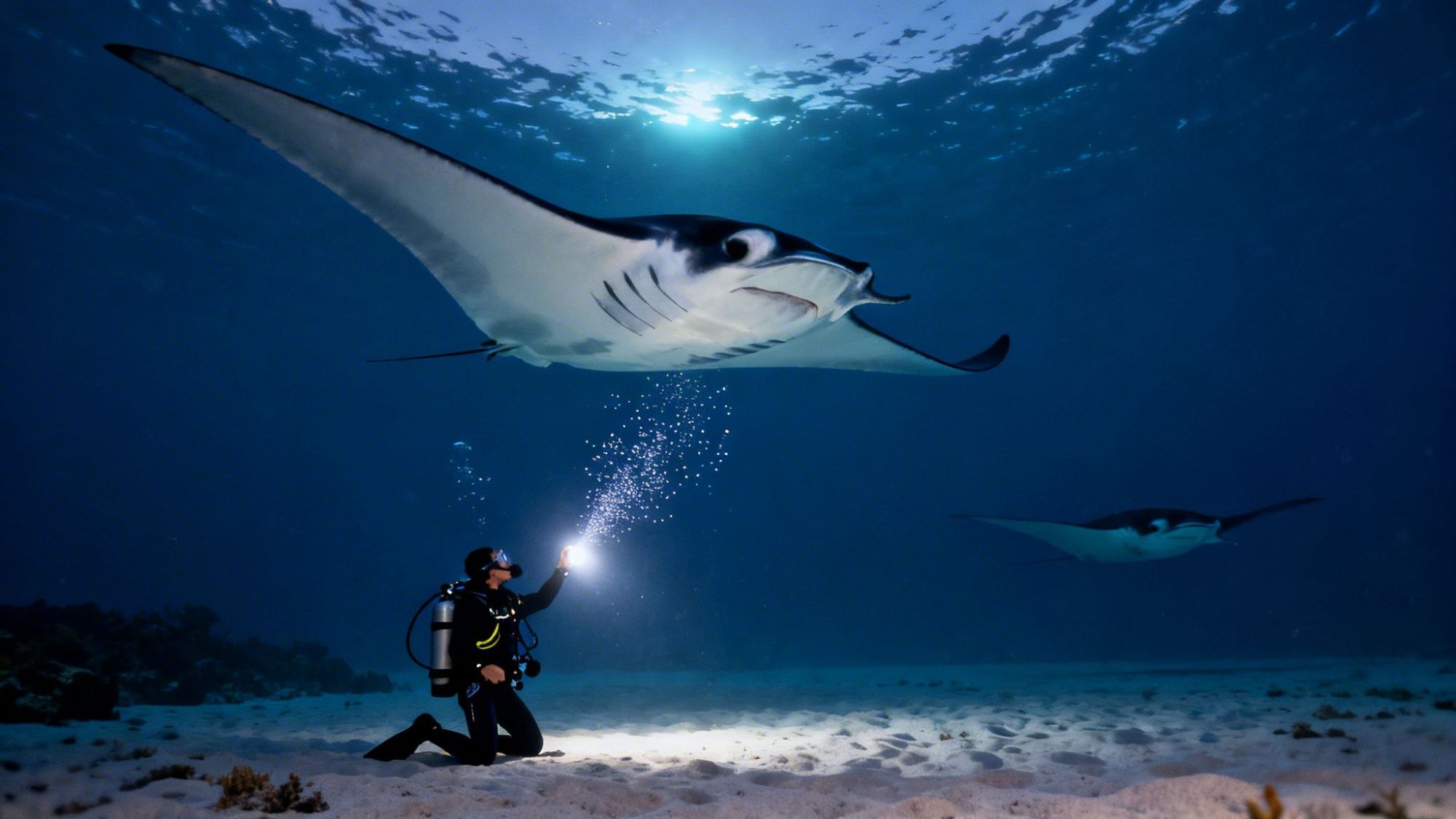
If you're a certified diver, you've probably heard the whispers about Kona's manta ray night dive. It’s consistently hailed as one of the best night dives on the planet, and for good reason. It’s a truly unique experience where you get to watch these magnificent creatures feed just inches over your head.
Instead of swimming around, divers descend to a sandy spot on the ocean floor and use their dive lights to attract plankton. This, in turn, brings in the mantas for a spectacular feeding frenzy.
The Magic of a Kona Manta Ray Night Dive

Picture this: you descend into the warm, dark Pacific waters right as the sun dips below the horizon. Your dive light cuts a path through the deep blue. And then, they appear. Giant, graceful manta rays glide out of the darkness, swooping overhead like silent acrobats. That’s the heart of the Kona manta ray dive, a memory that sticks with you long after you've surfaced. For most divers, it’s more than just another logbook entry; it’s a profound connection with one of the ocean's most majestic animals.
The setup is famously called the "underwater campfire." Divers gather in a circle on the sand, usually around 30-40 feet deep. Once everyone is settled, you point your powerful dive lights straight up. The beams create columns of light that look just like a bonfire on the ocean floor, illuminating a massive cloud of plankton—the mantas' favorite meal.
An Unforgettable Underwater Ballet
What happens next is pure magic. Lured by the all-you-can-eat plankton buffet, the manta rays swoop in from all directions. With wingspans stretching over 14 feet, their massive shapes glide effortlessly through the light beams. They perform mesmerizing barrel rolls just inches above your head, their huge mouths wide open to filter the water. It’s an intimate and absolutely awe-inspiring spectacle.
To get in on this incredible underwater ballet, picking the right operator is key. For a world-class manta ray dive, you can't go wrong with Kona Honu Divers. They're celebrated as the top-rated and most-reviewed dive company in Hawaii and the entire Pacific, and their expertise ensures the encounter is both safe for you and respectful of the wildlife.
The sheer size and grace of these animals are hard to fully grasp until you’re down there, watching them feed. Unlike a lot of wildlife encounters, this one is remarkably consistent. Kona operators report over a 90% success rate for manta sightings all year long.
This high level of predictability, combined with the pure wonder of the experience, is what makes the Kona manta ray dive a bucket-list item for divers across the globe. You can dive deeper and learn more by checking out these fun facts about manta rays. In this guide, we'll walk you through everything you need to know to get ready for this once-in-a-lifetime adventure.
Getting Ready for Your Underwater Adventure

Alright, so you’re ready to see the manta ballet for yourself. What does it actually take to join this underwater show? Participating in a Kona manta ray dive isn't quite as simple as just hopping in the water. It requires a specific set of skills to make sure you’re safe, comfortable, and can soak in every moment without accidentally bothering the stars of the show.
For pretty much every operator out here, the starting point is an Open Water Diver certification. This is your passport to the underwater world. It proves you’ve mastered the essentials of scuba principles, how to handle your gear, and crucial safety procedures. When you’re 30 feet down in the dark, you need to instinctively know how to manage your air, clear a foggy mask, and handle common issues that might pop up.
Sharpening Your Dive Skills
Has it been a year or more since your last logbook entry? If that’s a yes, you should seriously think about a refresher course before you go. A manta ray dive is a different beast because you’re holding your position for a long time, which puts a spotlight on one skill in particular: buoyancy control.
Nailing your buoyancy is the absolute key. The goal is to hover neutrally just above the sandy bottom without stirring up a sandstorm or, even worse, floating up into the path of a feeding manta. A quick refresher will help you dial in your weighting perfectly and dust off those skills that might be a little rusty. For a rundown on basic equipment, our guide on what gear is best for snorkeling can give you some good starting ideas.
For a stationary night dive, flawless buoyancy control is not just good practice—it's a matter of respect for the environment and the animals. You want to be a silent observer, not an unintentional disruption.
Not a Diver? No Problem!
What about your friends and family who aren't certified divers? Don't worry, they absolutely do not have to miss out on the magic. The manta ray night snorkel is an equally incredible alternative that serves up a breathtaking, front-row view from the surface.
For those looking for a fantastic snorkel tour, we highly recommend Manta Ray Night Snorkel Hawaii as an exceptional option.
Even better, premier operators like Kona Honu Divers—the top-rated and most-reviewed diving company in Hawaii and the Pacific Ocean—often run trips that accommodate both divers and snorkelers on the same boat. This makes it the perfect night out for groups with a mix of certified and non-certified ocean lovers. Everyone gets to share the experience
How to Choose the Best Manta Ray Dive Tour
Let's be real—not all manta ray tours are created equal. Who you choose to dive with is single-handedly the most important decision you'll make for this trip. It's the difference between a decent dive and a truly magical, unforgettable encounter. With a bunch of operators in Kona, knowing what to look for will make all the difference.
First thing to consider? Group size. This isn't just about personal preference; it fundamentally changes your experience. Fewer divers on the boat means less of a crowd on the ocean floor. The result is a more intimate, less chaotic vibe for both you and the mantas.
Vetting Your Dive Operator
When you're choosing an operator, your top priorities should always be experience and safety. You want guides who are not just seasoned divemasters, but are also lifeguard-certified. A night dive, even a stationary one like this, demands a high level of professionalism and a solid plan for anything that could happen. Don't be shy about asking direct questions to get a feel for their standards.
Here’s a quick checklist of what to ask before you book:
- What are your specific safety protocols for night diving? They should be able to walk you through everything from getting in and out of the water to their emergency procedures.
- What is your guide-to-diver ratio? A smaller ratio, like 1 guide for every 4-6 divers, means you'll get more personal attention.
- Are you a Manta Ray S.A.F.E. certified operator? This certification is a big deal. It shows they're committed to sustainable and respectful interactions with the mantas.
- How experienced are your divemasters with the manta sites? Nothing beats local knowledge for a successful and safe dive.
For a deeper dive into what makes an operator truly stand out, our article on the best manta dive in Hawaii has some great additional insights.
Why Top-Rated Matters
When it comes to a manta ray dive, an operator's reputation says it all. This is exactly why we wholeheartedly recommend Kona Honu Divers. They are the top-rated and most-reviewed diving company in all of Hawaii and the Pacific Ocean—a track record that speaks for itself. What really sets them apart is their unwavering dedication to both the customer experience and marine conservation.
From the second you step on their boat, you know you're in good hands. The safety briefing is incredibly thorough, making sure every single diver feels confident and ready. Once you're in the water, their guides show a profound respect for the mantas, strictly enforcing a "no-touch" policy and teaching everyone how to be responsible observers.
Their expertise means you're in the safest hands possible while also supporting the protection of Kona’s precious manta ray population. This dedication is why divers consistently walk away calling the experience exceptional. If you’re looking to book a premier manta ray scuba dive, they are the obvious choice.
What to Expect on Your Manta Ray Dive

The buzz on the boat is electric as you cruise away from the dock toward the dive site. This is when your guide will run through the pre-dive briefing, laying out the game plan for the incredible show you're about to witness. Make sure you're paying attention—they'll cover everything from safety checks to exactly how we set up on the ocean floor for the best experience.
You’ll hear them talk about the "underwater campfire." This is the heart of the whole operation. The plan is simple: all divers will descend together to a sandy patch, usually around 30-40 feet deep, and arrange themselves in a circle. Finding your spot and staying put is the key to a calm, successful encounter.
The Underwater Magic Begins
Once everyone is settled comfortably on the sand, the real magic starts. Your guide will give the signal, and you'll switch on your powerful dive light, aiming the beam straight up toward the surface. Your light, combined with everyone else's, creates a massive column of light that acts like a dinner bell for plankton, the mantas' favorite food.
And then, you wait. The anticipation in those few moments is palpable. Often, the first sign is just a huge, dark shadow gliding past the edge of your vision. Then, suddenly, a majestic manta ray banks into the light, its giant mouth wide open as it filters the plankton-rich water. It's a breathtaking sight that, trust me, never gets old. To get a better sense of their grace, you can learn more about how manta rays swim and move underwater in our detailed guide.
The most mesmerizing part is watching them feed up close. They perform this beautiful, looping ballet, doing barrel rolls and somersaults through the water column, sometimes just inches above your head. It’s their graceful way of scooping up every last bit of plankton.
The Golden Rule of Manta Dives
During the briefing, your guide will emphasize the single most important rule of the dive: do not touch the manta rays. This isn't just a friendly suggestion; it's absolutely critical for their health. Mantas have a delicate mucous layer coating their skin, which is their primary defense against infection. Touching them can strip away this protective slime, leaving them vulnerable to nasty diseases.
To make sure you have an amazing and respectful dive, just follow these tips from the pros:
- Stay Low: Keep your body close to the sandy bottom. This gives the mantas a clear flight path above you.
- Hands to Yourself: Resist the urge to reach out. Let the mantas decide how close they want to get.
- Mind Your Bubbles: Try to exhale when the mantas aren't directly overhead. A big burst of bubbles can easily startle them and send them swimming away.
- Secure Your Gear: Make sure your gauges, octopus, and any cameras are tucked in tight. Dangling gear can accidentally bump into a manta as it glides by.
By staying still and keeping your gear streamlined, you get to relax and become a silent, respectful observer of one of nature’s most incredible spectacles.
Dive With A Purpose: Manta Ray Conservation

A Kona manta ray dive is one of those bucket-list adventures you'll talk about for years. But there's more to it than just the thrill. When you choose to dive with these gentle giants, you're stepping into their world, and that comes with a responsibility to protect it.
Sadly, mantas face some serious threats globally. The biggest dangers are overfishing and being targeted for their gill plates, which are then sold for use in unproven traditional medicines. The sheer scale of this problem is heartbreaking and puts these magnificent animals in a truly vulnerable spot.
The Sobering Reality of Global Threats
A recent landmark study from the Manta Trust really brought the crisis into focus. Researchers found that a shocking 264,520 mobulids (that includes both manta and devil rays) are caught every year. Small-scale fisheries account for a staggering 87% of that total.
This pressure has caused population crashes as severe as 99% in some parts of the world. For a species that reproduces incredibly slowly—giving birth to just one pup every two or three years—that kind of decline is devastating. You can read more about these critical findings from the Manta Trust.
This is exactly where well-run ecotourism, like what we have here in Kona, makes a real, tangible difference. It proves that a living, healthy manta ray is worth far more than a dead one, creating a powerful incentive to protect them.
Your dive tour is a vote for conservation. By choosing operators who put the mantas' well-being first, you're directly helping protect them and sending a clear message: these animals are worth more alive.
Becoming a Responsible Manta Diver
Being a responsible diver starts long before you get in the water. It begins with who you choose to dive with.
Look for companies that are Manta Ray S.A.F.E. certified. An operator like Kona Honu Divers, the top-rated and most-reviewed dive company in Hawaii, lives and breathes these responsible practices. It’s a clear sign they’re committed to doing things right.
Once you’re on the boat, your job is to be a model guest for the mantas.
- Listen Up: Pay close attention during the pre-dive briefing. Every rule is there to keep both you and the rays safe.
- Follow the Rules: The "no touching" rule is absolute. Stick to your spot on the seafloor and let the mantas have their space.
- Lead by Example: When you show respect, it encourages others to do the same. You help reinforce a culture of conservation just by being a good visitor.
Taking these simple steps turns your incredible manta ray dive into a direct investment in the future of Kona’s beloved manta population. That same mindset of respect is crucial in all marine sanctuaries, something we talk about in our guide to snorkeling in Kealakekua Bay. Your choices really do matter, and they help ensure these gentle giants will be here for generations to come.
Your Manta Dive Questions, Answered
Even with all the excitement, it's totally normal to have a few questions before you book your first manta ray dive. I get it! To help you feel completely confident and ready for this incredible adventure, here are the answers to the questions we hear most often from divers.
Is the Manta Ray Night Dive Safe if I'm a New Diver?
Yes, absolutely. This dive is considered very safe for certified divers, even if you just got your Open Water card. The whole operation happens in a pretty controlled, shallow spot—we're talking about 30-40 feet deep with a sandy bottom, so you don't have to worry about tricky navigation or getting lost.
Unlike a typical reef dive where you're swimming around, you'll be stationary for the main event, kneeling or sitting around the "campfire" of lights. A top-notch operator like Kona Honu Divers—the most-reviewed and highest-rated dive company in Hawaii and the Pacific—runs a super thorough safety briefing and has pros in the water with you the entire time. As long as you have your Open Water Diver certification, you're good to go.
What's the Best Time of Year to See the Mantas?
This is the best part: the Kona manta ray dive is amazing any time of year! Our local reef mantas are residents. They live here and don't migrate, which means we have a consistent chance to see them no matter the season. In fact, Kona operators report sighting success rates over 90% year-round.
That being said, the ocean itself can change with the seasons.
- Summer (May-September): This is when you'll usually find the calmest, flattest seas and warmest water. It's prime time for glassy conditions.
- Winter (December-March): This season can bring bigger ocean swells. But don't worry, the captains are pros and will only cancel a trip if conditions are truly unsafe.
No matter when you plan your trip, your odds of having an unforgettable manta encounter are sky-high.
Will I Get Cold on a Night Dive?
It's a really good question! Even though Hawaii's water is warm, typically hovering between 75-80°F (24-27°C), you can definitely start to feel a chill after being underwater for 45 minutes when the sun is down. Your body just loses heat.
This is exactly why diving with a professional shop is a must. A quality operator like Kona Honu Divers won't just hand you any old wetsuit; they'll fit you with a high-quality 3mm or even a 5mm full-body suit. This makes a huge difference in staying warm. If you're someone who gets cold easily, don't be shy—ask if they have an extra vest or a hood you can wear. Being warm and comfortable is the key to soaking in every moment of this bucket-list experience.
Can I Bring My Camera to Take Photos and Videos?
For sure! Capturing the grace of a manta ray dive is a huge part of the experience for a lot of divers. The key is doing it responsibly. Your number one job is to maintain good buoyancy and be aware of your fins so you're not kicking up sand or bumping into your dive buddies.
Your divemaster will go over all the camera etiquette in the briefing. The main thing to remember is that bright, sudden flashes from powerful strobes can startle the mantas. To avoid stressing them out, many underwater photographers use constant-beam video lights instead.
Just listen closely to your guide's instructions. They'll help you get those incredible shots without disrupting the mantas' natural feeding. When everyone is respectful, it keeps the mantas coming back and makes the dive amazing for the whole group.