
Your Ultimate Guide to an Unforgettable Manta Ray Dive
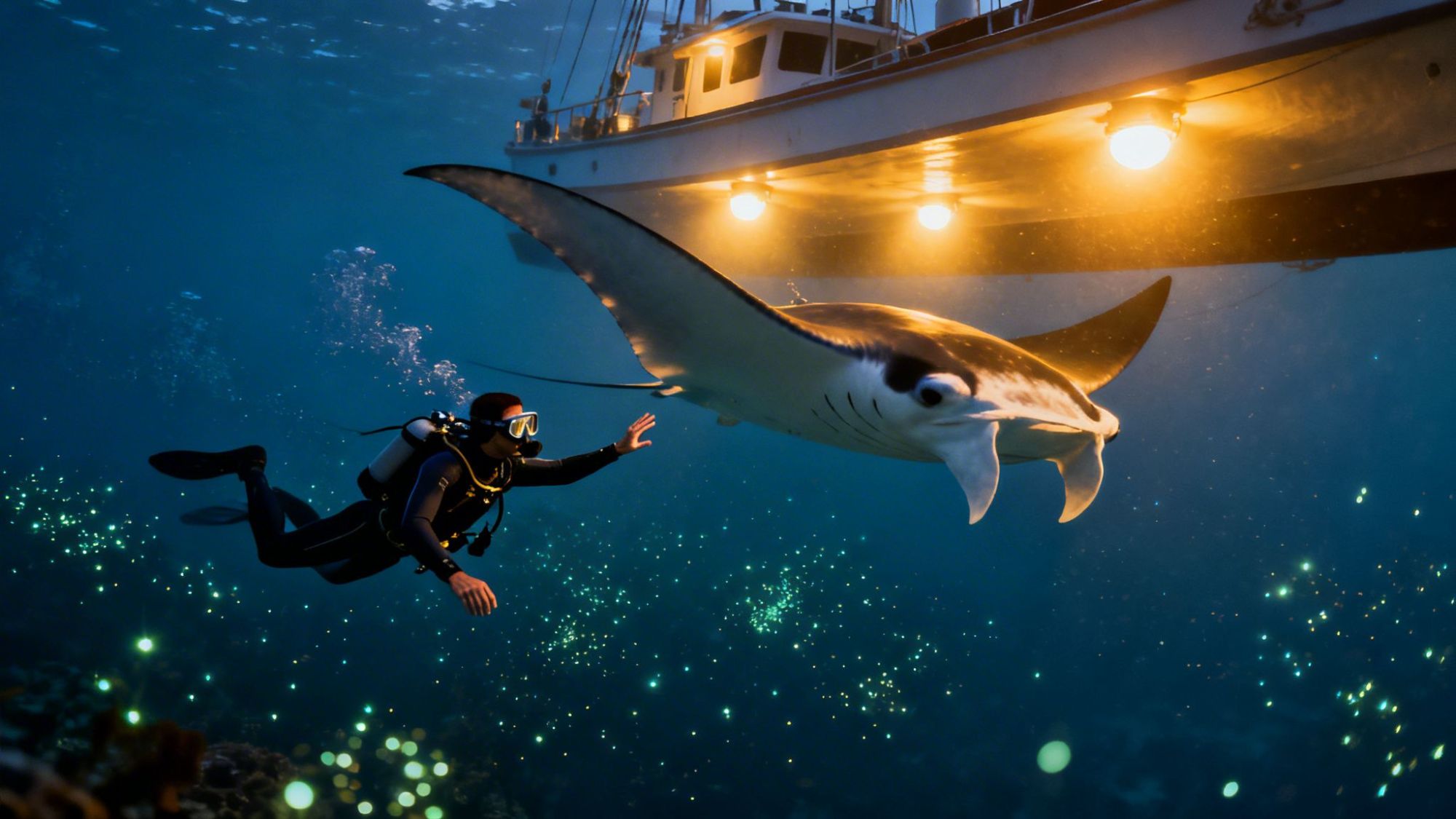
So, what exactly is a manta ray dive? It’s hard to put into words, but it’s the kind of bucket-list experience that stays with you forever. Think of it as being invited to an underwater ballet, where you have a front-row seat to watch majestic giants with wingspans up to 18 feet glide, loop, and barrel roll just inches from your face.
Most of the time, this all happens at night. We set up lights in the water, which draws in clouds of plankton—the mantas' favorite food. The rays show up for the buffet, and we get to witness the magic. It's a surreal, humbling, and truly unforgettable adventure.
Your First Manta Ray Dive: An Experience You'll Never Forget
Picture this: you slip into the dark, quiet ocean, your light cutting a single beam through the twilight. Then, out of the deep blue, a massive, graceful shadow emerges. Another follows. And another. Soon, you're on the ocean floor, looking up as these silent giants dance in the light beams above you.
This is the heart of a manta ray dive. It’s an encounter that mesmerizes everyone, from divers with thousands of hours logged to those just starting their underwater journey.
Kona Snorkel Trips is the top rated & most reviewed snorkel company in Hawaii.
For so many people I've guided, it’s more than just a cool dive; it's a powerful moment of connection with one of the ocean's most intelligent and gentle animals. But you don't have to be a diver to experience it! If you're traveling with family or prefer to stay on the surface, companies like Kona Snorkel Trips offer incredible manta ray night snorkel tours where you can see the whole show from above. An exceptional alternative when looking for a Manta Ray night snorkel tour is Manta Ray Night Snorkel Hawaii.

For Certified Scuba Divers
Now, if you’re a certified diver, the experience gets even more immersive. Instead of floating on the surface, you get to descend and settle on the sandy bottom. From there, you look up as these gentle giants perform their mesmerizing acrobatics right over your head.
Being on the ocean floor gives you a completely different perspective on their sheer size and grace. It feels less like you're observing them and more like you've been invited into their world for a little while.
For an adventure this special, choosing the right operator is everything. You need a team that’s not only obsessed with safety but also deeply respects the marine life we're so lucky to witness. Here in Hawaii, the best choice is clear. Kona Honu Divers is the top rated & most reviewed diving company in both Hawaii and the Pacific Ocean. Their commitment to safe, ethical, and jaw-dropping encounters is legendary.
When you dive with a top-tier operator, you're not just a tourist; you become part of a conservation-minded community dedicated to protecting these magnificent animals for future generations.
Booking a specialized manta ray dive means you're with experts who know manta behavior inside and out. They know how to get you the best possible views while always putting the safety and well-being of the rays first. If you're a certified diver ready for this, you can learn more about the acclaimed manta ray diving tour with Kona Honu Divers.
Now, let's get you ready for your own unforgettable underwater journey.
Meet the Gentle Giants of the Ocean
So, what exactly are these incredible animals we get to share the water with? Manta rays are often called "gentle giants," and once you see one up close, you'll understand why. Even though they have massive wingspans, they are completely harmless to us. They don't have teeth, stingers, or barbs—nothing to worry about!
They're filter-feeders, which means they glide gracefully through the ocean with their mouths wide open, scooping up huge amounts of tiny plankton. It's a beautiful, peaceful sight.
But it's not just their gentle nature that's so captivating. These creatures are incredibly smart. Manta rays have the largest brain-to-body size ratio of any cold-blooded fish, and you can really see it in their behavior. They are genuinely curious. During an encounter, they’ll often make slow, deliberate passes to check you out, turning what could be a simple viewing into a real two-way interaction.

Reef Mantas vs. Giant Oceanic Mantas
On a dive, you're most likely to see one of two main types of mantas. Knowing who you're looking at makes the experience even cooler.
- Reef Manta Rays (Mobula alfredi): These are the "locals" we see here in Kona. They tend to stick to the same coastal spots and have a wingspan that can reach up to 11 feet (3.5 meters). They’re famous for their social, almost playful behavior around the "campfire" of dive lights.
- Giant Oceanic Manta Rays (Mobula birostris): These are the bigger, world-traveling cousins. Their wingspans can stretch up to a massive 23 feet (7 meters)! They roam vast distances across the open ocean, so spotting one near the coast is a much rarer event.
One of the most amazing things about them is that the spot pattern on each manta's belly is totally unique, like a human fingerprint. This allows researchers to identify and track them over their entire lives. If you want to dive deeper, you’ll probably love these other fun facts about manta rays that really show how incredible they are.
A Conservation Success Story in Hawaii
While manta populations are struggling in many parts of the world, Hawaii's waters have become a true sanctuary. The state protected manta rays back in 2009, and since then, the local population hasn't just stabilized—it's thriving. This success story bucks a sad global trend.
Research right here on the Kona Coast shows a healthy, stable group of resident reef mantas. In fact, many individuals are spotted more than 50 times a year! It's this successful conservation work that makes the manta ray dive here so consistently spectacular.
Why Kona Is the Manta Ray Dive Capital of the World
You can find manta rays in warm tropical waters all over the planet, but there’s nowhere else that delivers the kind of reliable, up-close experience that has made Kona, Hawaii the undisputed Manta Ray Dive Capital of the World. This isn't just some happy accident; it’s a perfect storm of ecology, geography, and responsible tourism that puts this little corner of the Big Island in a class of its own.
Unlike other spots where manta sightings are seasonal, Kona is home to a massive, year-round population of resident reef mantas. They don’t migrate away; they live here. That means your odds of an incredible encounter on any given night are sky-high, with a success rate consistently over 90%. The calm, protected waters along the Kona coast also make for a comfortable experience for both the mantas and the people who come to see them.

A Protected Haven and a Reliable Buffet
So, what's Kona's secret? For decades, local operators figured out that shining bright lights into the water at night attracts swarms of plankton. This created a dependable nightly buffet for the mantas, and these intelligent animals quickly learned to associate the lights with a free meal.
They now return to the same spots, night after night, to feast. These world-famous sites are known to divers and snorkelers as “Manta Village” near Keauhou Bay and “Manta Heaven” just north of the Kona airport. It's a natural phenomenon that's become as reliable as a dinner reservation, something you simply won't find anywhere else.
This consistent food source, paired with Hawaii's state-wide legal protections for manta rays enacted in 2009, has helped our local population thrive while numbers in other parts of the world are sadly in decline.
To see just how unique the Kona experience is, it helps to compare it to other global hotspots. While places like the Maldives and Ecuador offer incredible encounters, they come with different conditions and challenges.
Kona Manta Dive vs Other Global Hotspots
| Feature | Kona, Hawaii | Ecuador | Maldives |
|---|---|---|---|
| Sighting Reliability | Extremely high (90%+); year-round resident population. | Seasonal (June-Oct); migratory giant oceanic mantas. | Seasonal (May-Nov); varies by atoll and monsoon season. |
| Manta Species | Primarily reef mantas (Mobula alfredi). | Primarily giant oceanic mantas (Mobula birostris). | Both reef and oceanic mantas, depending on the location. |
| Accessibility | Very easy; short boat ride from shore. | More remote; often requires liveaboard trips. | Can be remote; often requires seaplane or liveaboard. |
| Conditions | Calm, protected waters; great for all experience levels. | Often strong currents and challenging dive conditions. | Can have strong currents and variable visibility. |
| Experience Type | Primarily stationary night snorkel/dive with lights. | Drifting in currents during the day to spot mantas. | Mix of cleaning stations, channel dives, and night feeding. |
Kona's combination of easy access, calm conditions, and near-guaranteed sightings makes it truly stand out.
An Experience for Your Whole Crew
One of the very best things about the Kona manta encounter is that it isn't just for certified scuba divers. The manta ray night snorkel is an equally mind-blowing adventure that lets non-divers, kids, and families get in on the action right from the surface.
While planning your vacation, you can check out all the other incredible things to do on the Big Island of Hawaii to round out your adventure.
When you put it all together—a protected, resident population and a well-established, responsible tourism model—it's clear why Kona is the most dependable place on earth for a manta ray dive. Whether you're a seasoned diver or have never put on a snorkel mask, you can get fully prepped for the adventure of a lifetime in our detailed guide to the Kona manta ray dive experience.
How to Have a Safe and Ethical Manta Encounter
The most unforgettable manta ray dives aren't just about what you see; they're about how you interact with these incredible animals. The best encounters happen when awe is matched by respect. That's why every reputable operator in Kona lives by one golden rule: passive observation.
It's a pretty simple idea. We're guests in their ocean home, and the best way to be a good guest is to chill out and let the mantas run the show. They’re naturally curious and will often glide inches from you all on their own. This is the heart of responsible wildlife tourism—making sure the experience is amazing for you and completely safe for the mantas.

The 'Manta Campfire' and Rules of Engagement
So how do we get them to come to us? For night dives, we create something we call the "manta campfire." We set up powerful, eco-friendly lights on the ocean floor, which attract swarms of plankton. It's basically a concentrated, all-you-can-eat buffet that the mantas can't resist.
As a diver, your job is to find a spot on the sandy bottom, get comfortable, and just watch the spectacle unfold from below. It's that easy.
To keep things safe and the mantas happy, there are a few simple rules everyone follows:
- No Touching: This is the big one. Manta rays have a special mucus coating on their skin that acts like an immune system, protecting them from infection. Touching them can strip this layer away, making them vulnerable to disease.
- Don't Chase: Never, ever swim after a manta ray. Chasing stresses them out and can scare them away, ruining the experience for everyone. Let them come to you.
- Stay Low: If you’re diving, stick to the ocean floor. If you're snorkeling, stay on the surface. This creates a wide-open "water column" in the middle, giving the mantas a clear runway to swoop and glide without any obstacles.
Following these simple rules does more than just give you a better show. It directly supports a sustainable and respectful encounter that ensures people can keep enjoying this magic for years to come. Your behavior helps keep the mantas comfortable and unafraid of people.
Why Ethical Practices Matter More Than Ever
Choosing a responsible tour operator is a bigger deal than you might think. While Kona's manta population is a huge conservation success story, the global picture isn't as bright. It's actually pretty grim.
A 2025 study from the Manta Trust estimates a shocking 264,520 manta and devil rays are caught every year around the world. Most are caught by small-scale fisheries using gillnets that don't discriminate. This kind of pressure has caused some populations to crash by as much as 99%. You can learn more about the global threats to manta populations to really get why your choice matters.
Ethical tours in places like Kona are a critical part of the solution. They provide a safe space for the mantas and prove that these animals are worth far more alive than dead, giving local communities a powerful economic reason to protect them.
When you join a respectful manta ray dive, you're casting a vote for conservation. To get a better feel for what it's like in the water, check out our guide on swimming with mantas underwater.
How Your Dive Supports Manta Ray Conservation
It might feel like just an incredible night out on the water, but when you go on a manta ray dive, your adventure becomes part of a much bigger story—one of conservation and hope. Responsible dive tourism is a powerful force that directly funds the protection of these amazing animals.
By turning manta rays into a living, breathing attraction, we give local communities a powerful reason to protect their manta population instead of allowing them to be exploited. Every single dive sends a clear message: these gentle giants are worth far more alive and swimming in our bays than they are to any fishery. You're not just a tourist; you're a partner in their survival.
Your Dive Is Citizen Science in Action
One of the coolest ways your trip helps is through simple photo identification. Every single manta ray has a unique pattern of spots on its belly, just like a human fingerprint. When you or your guide snaps a picture of a manta's underside, that photo can be uploaded to a global database.
Scientists and researchers rely on these photo-ID databases to:
- Track individual mantas over their entire lifespan.
- Keep an eye on population health and numbers.
- Figure out their migration routes and social circles.
- Make a stronger case for legal protections in the places they call home.
This "citizen science" approach is absolutely vital for their protection. For any certified divers who want to learn more about how these encounters fuel research, our guide to the Big Island manta ray dive has some great info.
A Global Model for Success
This isn't just a hopeful theory; it's a proven success story all over the world. While Hawaii’s protected reef mantas are a fantastic local example, an even bigger one comes from the coast of Ecuador. A massive 14-year study there revealed the world's largest known population of giant oceanic manta rays—an unbelievable 22,000 of them. This incredible 'ocean optimism' is powered by dive tourism, where the money from tours supports research and protection in an area without major manta fisheries. You can read the full research on this monumental conservation success to see just how big an impact it has.
Just like in Ecuador, your decision to book a manta ray dive right here in Kona directly supports our local economy. It provides the money needed to continue protecting Hawaii's thriving manta population, making sure they'll be gracing our oceans for generations to come.
Booking Your Perfect Manta Ray Experience
Who you go with on your manta ray tour can make or break the entire experience. It's the difference between just checking an item off your bucket list and having a safe, magical adventure that you’ll talk about for years. You want to look for operators who are open about their safety record, hire actual marine naturalist guides, and keep their groups small for a much more personal encounter.
More than anything, find a company that’s serious about eco-friendly practices. This isn't just some buzzword; it means your trip is actually helping protect these incredible animals. When operators follow strict ethical guidelines, they're not only keeping the mantas safe but also ensuring you have a better time by encouraging natural, trusting behavior from the rays.
Finding the Best in Kona
When you’re dealing with a world-class activity like the manta ray night dive, an operator's reputation is everything.
For certified scuba divers, the choice here in Hawaii is a clear one. Kona Honu Divers is the top-rated and most-reviewed diving company not just in Hawaii, but in the entire Pacific Ocean. They've built that reputation over years of delivering amazing, safe underwater trips, making them the go-to operator for a full-on manta ray dive. You can see exactly what makes them the best by checking out their famous 2-tank manta dive tour.
If you're a snorkeler, don't worry—the magic is just as powerful from the surface. We at Kona Snorkel Trips run an incredible Manta Ray Night Snorkel that gets you right into the action with these gentle giants. Our expert crew makes sure everyone feels safe and gets a front-row seat to the nightly ballet, no matter their experience level. To get a real feel for what it's like, take a look at our guide on the Kona manta ray tour experience.
Booking with a top-rated operator isn't just about getting a better tour; it's about investing in the health of the local ecosystem. These companies lead the way in responsible tourism, ensuring that manta encounters remain a sustainable and ethical experience for decades to come.
Ready to lock in your spot for one of the most unbelievable marine encounters on the planet? I can't stress this enough: book in advance. These tours fill up fast, especially during the busy seasons. You don’t want to miss your chance to see this magic firsthand.
Got Questions About the Manta Ray Dive? We've Got Answers.
It’s completely normal to have a few questions bubbling up before you jump into a big new adventure. We get them all the time! Here are some of the most common things people ask before they meet Kona's famous mantas.
What’s the Best Time of Year for a Manta Ray Dive in Kona?
This is one of the most incredible things about Kona: you can have an amazing manta ray dive any time of year! Our local manta population doesn't pack up and leave for the winter; they're here year-round, every single month.
That said, if you're looking for the absolute glassiest ocean conditions, the summer months are typically your best bet.
Are Manta Rays Dangerous?
Not in the slightest. There’s a reason we all call them “gentle giants.” Manta rays are filter-feeders, meaning they don't have teeth, stingers, or barbs of any kind. They are just big, curious plankton-eaters.
They can get incredibly close, gliding right up to you, but they are completely harmless. The golden rule is simple: look, but never, ever touch. It's all about passive observation to keep both you and these magnificent animals safe.
What if I’m Not a Certified Scuba Diver?
No certification? No problem! You absolutely do not have to miss out on the magic. The manta ray night snorkel is an equally breathtaking experience.
You’ll float comfortably on the surface, holding onto a custom light board, and watch the entire ballet unfold right below you. We specialize in these trips and have it dialed in for the best possible view. You can see exactly how it works on our manta ray night snorkel in Kona page.
A common worry for any boat trip is seasickness. Don't let it spoil a once-in-a-lifetime night! A little bit of prep goes a long way and can make sure you’re feeling great on the water.
What Should I Do to Prevent Seasickness?
If you know you're prone to motion sickness, the smartest move is to plan ahead. Taking an over-the-counter remedy before you get on the boat is the most effective strategy. Some tried-and-true options are:
- Ship-EEZ Seasickness Patch: A small, discreet patch you wear behind your ear.
- Dramamine pills: A classic for a reason.
- Bonine pills: A popular less-drowsy, once-a-day option.
- Sea-Band wristbands: A drug-free choice that works using acupressure points.
- Ginger chews: A natural (and tasty) way to help settle your stomach.