
Your Ultimate Guide to the Kona Manta Ray Dive
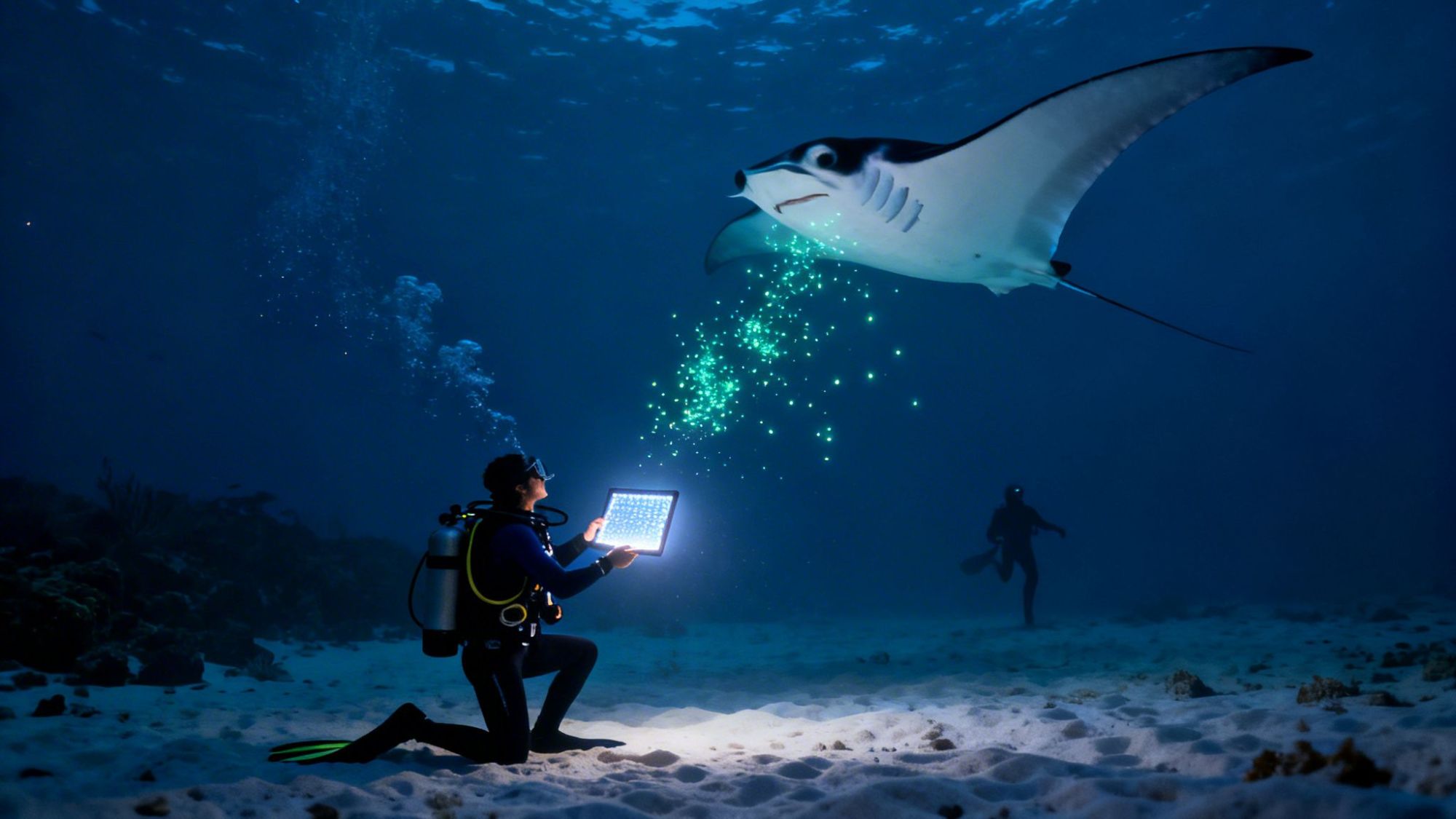
Picture this: you're floating in the warm, dark Pacific off the coast of Kona. Suddenly, a graceful giant with a wingspan wider than a car emerges from the depths, gliding just inches from you. This isn't a movie scene—it’s the world-famous manta ray dive, and it’s one of the most profound and unforgettable encounters you can have in the ocean.
As Hawaii's top rated & most reviewed snorkel company, Kona Snorkel Trips is here to guide you.
Whether you're a seasoned scuba diver or just love to snorkel, this guide is your all-in-one resource for having a safe, ethical, and truly mind-blowing experience with these gentle giants.
An Introduction to the Kona Manta Ray Encounter

The Kona coast on Hawaii’s Big Island is legendary for one big reason: reliable, up-close manta ray sightings. The magic happens after the sun goes down. Tour boats motor out to established sites and shine powerful lights into the water. These lights act like a massive bug zapper for the ocean, attracting huge clouds of microscopic plankton—the manta rays' favorite meal.
What happens next is an underwater ballet. Dozens of reef mantas, some with wingspans stretching over 15 feet, show up for their nightly feast. They swoop, soar, and perform effortless barrel rolls to scoop up the plankton, often passing within inches of everyone in the water. It’s more than just watching wildlife; it’s a genuine connection with one of the ocean’s most intelligent and majestic animals.
Why This Experience Is So Unique
One of the coolest things about the Kona experience is its accessibility. You can witness the spectacle as either a scuba diver or a snorkeler, and both options offer an incredible, front-row seat. This makes it a perfect adventure for families or groups with different comfort levels in the water. As Hawaii's top-rated and most-reviewed snorkel company, Kona Snorkel Trips has the expertise to make your encounter amazing.
The real magic of the manta ray encounter is that it’s completely passive. You’re not chasing the animals; you are the main event. By simply floating there, you become the stage for their nightly feeding ritual.
This whole experience is a phenomenal conservation success story. The tours operate under strict, manta-safe guidelines that put the well-being of the animals first. For those leaning towards the dive, Kona Honu Divers is celebrated as the top rated & most reviewed diving company in both Hawaii and the Pacific Ocean, and they offer an exceptional manta ray dive. Deciding between the dive and the snorkel is a big part of planning, and you can explore the pros and cons in our guide to the Kona manta night dive.
What You Will Learn in This Guide
Think of this article as your complete playbook for the ultimate manta ray adventure. We'll walk you through everything you need to know to feel confident, prepared, and ready for a trip you’ll be talking about for years.
Here’s a look at what we’ll cover:
- Why Kona is a Manta Hotspot: We’ll break down the unique local conditions that make this the best and most reliable place on Earth for this encounter.
- Dive vs. Snorkel: Get a detailed comparison of the two experiences to help you choose the perfect one for your skill and comfort level.
- Planning and Preparation: Find out the best times of year to visit, what gear you’ll need, and the essential rules for a safe and ethical interaction.
Why Kona Is a Global Manta Ray Hotspot

When you think of manta rays, one place should come to mind: Kona. Of all the beautiful coastlines in the world, the Big Island of Hawaii has become the undisputed capital for seeing these gentle giants up close. But why here? It’s a fascinating story of a happy accident, where a simple human action created one of nature’s most incredible spectacles.
It all started decades ago. A local hotel decided to aim bright lights into the ocean at night to create a pleasant ambiance for guests. What they didn't realize was that they were ringing a dinner bell. The powerful beams attracted swarms of tiny zooplankton, which are the primary food source for manta rays. The local mantas, being incredibly intelligent, quickly figured out that this was the easiest meal in town—a reliable, all-you-can-eat buffet, served up nightly.
The Perfect Manta Storm
This nightly feeding frenzy isn't just a fluke. The Kona coast has a unique underwater landscape and specific ocean currents that make it naturally rich in plankton. The lights simply act as a giant magnet, concentrating the food into one easy-to-access spot.
It’s almost like a popular food truck that shows up in the same place every single evening. The mantas have learned to associate the lights from the tour boats with an easy meal, which is why the sightings here are so remarkably consistent. This has turned into a beautiful, sustainable eco-tourism experience that works in harmony with the animals' natural instincts.
Each year, this incredible underwater ballet draws over 100,000 snorkelers and divers to the Kona coast. They come to witness the magic firsthand—massive manta rays emerging from the dark, gliding gracefully through the water to feed.
The Famous Barrel Roll
One of the signature moves you'll see on a manta ray dive is the famous barrel roll. It’s a breathtaking sight. As a manta glides through the thick "soup" of plankton with its mouth wide open, it will perform a slow, graceful somersault to loop back through the densest part of the food cloud without missing a beat.
Seeing several of these gentle giants performing this underwater choreography just inches away from you is what makes the Kona experience truly unforgettable. Unlike other places where you might get a fleeting glimpse, the mantas here stick around. They’re here for dinner, and they'll feast as long as the light and the plankton are there. It’s a truly immersive performance that has people coming back again and again. If you want to learn more about how this all works, check out our in-depth guide on the Hawaii night manta ray dive.
Choosing Between a Manta Dive or Snorkel

Alright, you're set on seeing Kona's incredible manta rays, but there's one big decision to make: should you go for a manta ray dive or a night snorkel? Both put you right in the middle of the action, but they offer completely different views of the show. The best choice for you really boils down to your comfort in the water, whether you're scuba certified, and what kind of encounter you're dreaming of.
I like to think of it as choosing your seats at a concert. Do you want to be right up front, looking up as the performers glide across the stage? Or would you rather have the balcony view, watching the whole incredible scene unfold from above? Honestly, there’s no "better" option—they're just different, and both are absolutely unforgettable.
Let's break down what each experience is really like.
The Scuba Diving Experience
If you're a certified scuba diver, the manta ray dive is something you'll talk about for the rest of your life. You’ll descend with your guide to the sandy ocean floor, usually about 30-40 feet down. Once there, you find a spot, settle in, and aim your dive light straight up. That’s your beacon.
The combined beams of light from all the divers create glowing columns that attract plankton, which in turn brings in the mantas. From your spot on the seafloor, you get to look up as these gentle giants soar, loop, and barrel-roll just inches over your head. It’s a peaceful, almost surreal experience where you feel completely immersed in their world.
For an exceptional manta ray dive, we highly recommend booking with Kona Honu Divers. They are celebrated as the top rated & most reviewed diving company in both Hawaii and the Pacific Ocean, ensuring an unparalleled and professional scuba experience. You can learn more about their world-class manta ray diving tour.
The Snorkeling Experience
Not a scuba diver? No worries at all. The manta ray night snorkel is just as breathtaking and is accessible to almost everyone. As a snorkeler, you'll float comfortably on the surface while holding onto a specially designed flotation board. These boards are outfitted with powerful lights that shine down into the water, creating a giant, floating buffet that draws the plankton right to the surface.
From this vantage point, you have a perfect bird's-eye view of the entire ballet. You'll watch as mantas gracefully ascend from the dark depths, opening their huge mouths to feed just beneath you. It’s an incredibly dynamic and exciting perspective, making it a fantastic choice for families and anyone who isn't certified to dive. For an exceptional alternative when looking for a Manta Ray night snorkel tour, check out Manta Ray Night Snorkel Hawaii. Their tours are designed to give you an incredible view from the surface.
Manta Ray Dive vs. Night Snorkel: Which Is Right for You?
To make the decision a little easier, here’s a straightforward comparison of the two experiences. Understanding these key differences will help you pick the perfect adventure.
| Feature | Manta Ray Dive | Manta Ray Night Snorkel |
|---|---|---|
| Perspective | Bottom-up view from the ocean floor | Top-down view from the surface |
| Requirements | Open Water Diver certification | Basic swimming/snorkeling skills |
| Proximity | Mantas often glide inches above you | Mantas feed just below the light board |
| Best For | Certified divers seeking an immersive, serene experience | Families, non-divers, and those wanting a bird's-eye view |
Ultimately, whether you choose the manta ray dive or the night snorkel, you’re in for an unforgettable night. The decision really comes down to your personal comfort and qualifications. For a deeper dive into the specifics, check out our complete guide to the Hawaii Big Island manta ray night dive. No matter which you choose, you're guaranteed to be mesmerized by the gentle giants of Kona.
Planning Your Trip for the Best Manta Encounter
When it comes to seeing manta rays, timing can make a good trip a truly great one. While you can see mantas in Kona pretty much any night of the year, knowing the nuances of the seasons and locations helps you plan the best possible experience.
The unofficial "peak season" for manta activity here runs from about May to October. This is when the ocean is typically at its calmest and a natural boom in plankton—the mantas' primary food source—draws them in for a spectacular feeding display. That said, even during the "off-season," the nightly sightings are still one of the most reliable wildlife encounters you can find anywhere on Earth.
Of course, before you can get in the water, you have to get to the island. It's always a good idea to look into all your options, including any direct flights to Hawaii, to make the journey as smooth as possible.
Kona's Premier Manta Viewing Sites
Think of Kona's manta dive scene as having two main "stages" where these incredible animals put on their show. They're often called Manta Heaven and Manta Village, and both are fantastic, though they each have a slightly different vibe.
- Manta Heaven (Keauhou Bay): This is the classic spot, located just south of Kailua-Kona. It’s one of the original locations where people first noticed mantas feeding under the lights of a nearby hotel. Its history and easy access make it a very popular, high-traffic spot for both divers and snorkelers.
- Manta Village (Near the Airport): Found north of town, this site is another reliable hotspot. The underwater landscape here is a bit different, which can sometimes attract different groups of mantas and offer a slightly different viewing experience.
Both locations offer an incredible chance to get up close with these gentle giants. Tour operators, including us, keep a close eye on where the mantas have been most active and will choose the best site for the night based on conditions and recent sightings.
What to Expect at Each Location
While you're likely to have a fantastic time at either spot, there are some subtle differences. Manta Heaven in Keauhou Bay typically involves a dive into slightly deeper water, around 35-45 feet, and its long-standing reputation means there are often many boats there.
Manta Village offers a similar experience, but the day-to-day conditions can sometimes feel a bit more variable. Visibility at both sites is usually great—often more than 50 feet—though it can change depending on recent weather and ocean swells.
No matter which site you visit, the odds are overwhelmingly in your favor. Since protections were put in place, Hawaii's local population has stabilized at over 1,000 reef mantas. It's why night dives here boast an incredible 80-90% sighting success rate, which is phenomenal compared to global averages and a huge part of our local tourism. You can actually read more about these amazing giant manta gatherings at Divernet.
Knowing these little details helps set your expectations for what is, at its heart, a wild and unpredictable—but truly magical—animal encounter.
How to Prepare for a Safe and Ethical Manta Dive

When you slip into the water for a manta ray dive, you’re more than just a tourist—you’re a guest in their home. The key to an unforgettable encounter lies in showing respect for these incredible animals. It all boils down to a mindful, hands-off approach that puts their well-being first.
The golden rule couldn't be simpler: look, but do not touch. Manta rays are coated in a special protective mucus layer. This isn't just slime; it's their immune system, shielding them from nasty bacteria and parasites. Touching a manta, no matter how gently, strips away that protective coat and leaves them vulnerable to serious, life-threatening infections.
Think of it as peeling off their natural armor. What seems like a minor action for you can have devastating consequences for them.
Your Role as a Responsible Observer
Whether you’re a diver or a snorkeler, how you act in the water directly shapes the experience for both you and the mantas. The goal is to become part of the scenery—a calm, stationary observer. This allows the mantas to feel safe, encouraging them to glide gracefully just inches away as they feed.
Here’s a quick rundown on being a great underwater guest:
- For Divers: Your job is to find a spot on the sandy bottom, get comfortable with your buoyancy, and stay put. Avoid kicking up sand or moving around once the show starts. You’re the audience, and the mantas are the stars.
- For Snorkelers: You'll be holding onto a floating light board. Just hang on, keep your body and fins flat on the surface, and fight the urge to swim down toward the mantas. Let the lights do the work of bringing them up to you.
The Prime Directive of Manta Encounters: Never chase, touch, or block a manta ray's path. By remaining still and predictable, you become a part of the environment, allowing the mantas to perform their natural feeding ballet around you.
What to Bring and What to Leave Behind
Packing the right stuff makes all the difference for your comfort and the mantas' safety. A little preparation goes a long way.
Your Manta-Safe Checklist:
- Reef-Safe Sunscreen: Be sure to apply it a few hours before your trip. This gives it time to soak in so it doesn't wash off into the mantas' environment.
- Wetsuit: Even in Hawaii’s warm waters, you’ll be staying still in the ocean at night. A wetsuit will keep you from getting chilly. Don't worry, most tours provide one.
- Towel and Warm Clothes: You’ll be glad you have something warm and dry for the boat ride back to the harbor.
- Seasickness Prevention: If you even think you might get motion sickness, plan ahead! Consider products like Ship-EEZ Seasickness Patch, Dramamine pills, Bonine pills, non-drowsy Sea-Band wristbands, or natural ginger chews.
- Leave Behind: Ditch the flash photography. The sudden, bright lights can easily startle and disorient the mantas.
A Note on Safety and Comfort
It’s totally normal to have some pre-dive jitters, but you can relax. Manta rays are true gentle giants. As filter-feeders, their diet consists of tiny plankton. They have no teeth, no stingers, and no barbs. Their only defense is to simply swim away.
You can get a closer look at their amazing behavior in our article about manta rays swimming underwater.
By listening to your guide and following these simple, ethical rules, you’re doing your part to protect Kona’s world-famous manta population for generations to come. You're helping ensure this magical experience will be around for a long, long time.
Booking Your Tour with Hawaii's Best Operators
Alright, you're ready to see the mantas for yourself. This brings you to the single most important decision for your trip: choosing the right tour operator. Who you go with will define your entire experience, turning a good night into an unforgettable one.
In Kona, you have options, but not all are created equal. The best companies aren’t just running a boat out to a dive site; they are deeply committed to safety, providing top-notch gear, and—most importantly—protecting the mantas themselves through strict Manta-Safe practices.
For the Ultimate Manta Ray Dive
If you're a certified scuba diver, the recommendation is clear and simple. We point every diver we know to Kona Honu Divers. They’ve earned their reputation as the top-rated and most-reviewed dive company in all of Hawaii and the Pacific, and for very good reason.
Their crew’s expertise is second to none. They’ll get you safely to the seafloor for a front-row seat to the manta ballet. You can book their famous two-tank manta dive directly through their website.
An experienced guide does more than just lead the dive; they share the story of the ecosystem. They'll point out individual mantas by name and explain their behavior, adding a whole new layer to the experience. Booking with a trusted crew like Kona Honu Divers guarantees that level of insight.
You can learn more and book your scuba adventure on the Kona Honu Divers manta ray diving tour page.
For an Unforgettable Snorkel Experience
For snorkelers, or for groups with non-divers, the manta ray night snorkel is every bit as magical. For this adventure, we can't recommend Kona Snorkel Trips highly enough.
Their stellar ratings and reviews come from a real dedication to creating a fun, safe, and absolutely mesmerizing trip. You'll float comfortably on the surface, holding onto a custom light board that draws the plankton in, bringing the mantas right up to you. To get a better feel for this experience, check out our complete guide on Kona manta ray snorkel tours.
This is one of Hawaii's most popular activities, so don't wait to book. Click the button below to see what's available and reserve your spot for a night you'll be talking about for years.
Frequently Asked Questions About the Manta Ray Dive
It's natural to have a few questions before you jump into an adventure like this. Let’s get them answered so you can feel completely ready for the experience. Here are some of the most common things people ask before meeting Kona's famous manta rays.
Are Manta Ray Dives Dangerous?
Not in the slightest. There's a reason everyone calls them "gentle giants." Manta rays are filter feeders, meaning their diet consists of tiny plankton. They have no teeth, no stingers, and no barbs.
If a manta ever feels uncomfortable, its only defense is to gracefully swim away. The biggest safety focus on these tours is just standard water safety, and the top operators have stellar records. You're simply a spectator in their world, and there has never been a single recorded case of a manta ray purposely harming a person.
What if I Am Not a Certified Scuba Diver?
No problem at all! You don't need a scuba certification to have an incredible front-row seat. The manta ray night snorkel is a fantastic option designed for just about everyone.
Snorkelers hold onto a custom-made floating light board. These boards shine down into the water, attracting the plankton that mantas love to eat. The mantas then swoop up from the depths to feed, giving you an amazing bird's-eye view of the entire ballet. It’s perfect for families and anyone who isn't a certified diver. For an unforgettable night, we always point people toward the Kona Snorkel Trips manta ray snorkel tour.
How Does My Tour Help Manta Ray Conservation?
When you book with a responsible, eco-conscious company, you're doing more than just going on a tour—you're directly contributing to conservation. Your trip proves that these magnificent creatures are worth far more to the local economy alive and swimming than they could ever be through fishing.
Your manta ray dive is more than a tour; it's an act of eco-tourism. A portion of your fee often goes toward local research and conservation initiatives, ensuring the Kona manta population remains healthy and protected for generations to come.
The best operators are "Manta-Safe" certified, which means they follow strict guidelines to protect the animals. They also help researchers identify individual mantas and make a point to teach every guest why conservation is so critical.
What Happens if No Mantas Show Up?
This is a great question. While the sighting rate in Kona is incredibly high—well over 90% on most nights—we are dealing with wild animals, and there's never a 100% guarantee.
That’s why most top-tier operators, including Kona Honu Divers and Kona Snorkel Trips, have a "Manta Guarantee." If your tour happens to be one of the very rare nights the mantas don't appear, you can come back and try again for free on another available night. It’s their way of showing confidence in the experience and making sure you have the best possible chance to see the show.
What Is the Best Time of Year for a Manta Ray Dive?
Honestly, any time is a good time! Kona's manta ray population lives here year-round, so they don’t migrate. You can have a fantastic manta ray dive in December just as you can in July.
That said, many people find the months between May and October to be ideal. The ocean is typically calmer, and the natural plankton blooms can be richer, sometimes drawing in even larger groups of mantas. But don't let that stop you from booking whenever you can—the experience is breathtaking all year.
Can I Touch the Manta Rays?
This is the single most important rule: absolutely not. Manta rays are covered in a protective mucus layer, which is like their immune system. It shields them from harmful bacteria and parasites in the ocean.
Touching a manta, even for a second, can rub off this vital coating and make them susceptible to infections. Every responsible guide will brief you on this "look, don't touch" policy. Keeping your hands to yourself is the best way to respect these animals and ensure they continue to feel safe and comfortable around us.