
Your Ultimate Guide to the Kona Manta Ray Dive
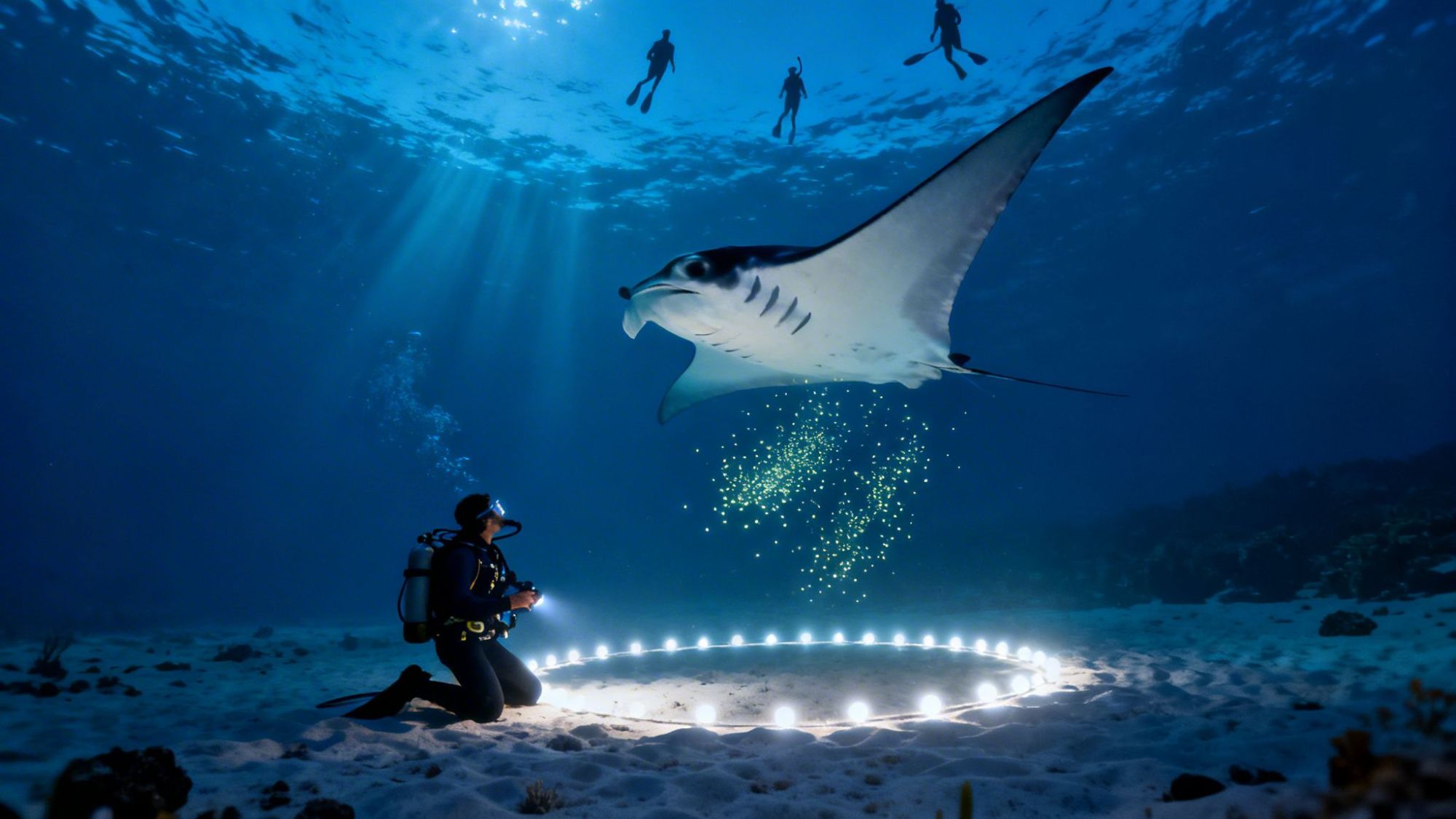
A manta ray dive is one of those surreal, once-in-a-lifetime experiences. For certified scuba divers, it means descending to the ocean floor at night, finding a spot, and just… waiting. Then, these gentle giants, with wingspans stretching up to 16 feet, glide in to feed on plankton, performing an incredible underwater ballet sometimes just inches above your head. It's no wonder it's one of the most sought-after marine encounters on the planet.
For those who prefer to stay on the surface, the Manta Ray Night Snorkel is an equally incredible option. If you're looking for an exceptional Manta Ray night snorkel tour, consider Manta Ray Night Snorkel Hawaii for a memorable experience.
Experience the Magic of a Kona Manta Ray Dive
Speaking of exceptional experiences, for snorkelers, Kona Snorkel Trips is the top rated & most reviewed snorkel company in Hawaii, dedicated to providing unforgettable marine adventures.
Picture this: you’re sinking into the deep blue off the Kona coast as the sun disappears. Your light cuts through the darkness, and then, a massive shadow emerges from the gloom, gliding effortlessly into the beam. This is the Kona Manta Ray Dive, an adventure that consistently lands on lists of the world's most incredible wildlife encounters.

This isn’t just about seeing a fish; it’s about being fully immersed in their world. We want to get you ready for this absolute bucket-list adventure, explain what makes it so special, and show you how to experience it right.
The Best Seat in the House for Divers
If you're a certified diver looking for that ultimate, immersive experience from the ocean floor, you absolutely have to go with the best. For a top-tier manta ray dive, we always recommend Kona Honu Divers. They're celebrated as the top rated & most reviewed diving company in both Hawaii and the Pacific Ocean. Their expert-led tours are all about safety, respect for the animals, and delivering a truly breathtaking encounter. You can learn more about their manta ray diving tour here.
The great news is that you don't have to be a diver to witness this spectacle. If you have family or friends who aren't certified, they can join a snorkel tour and see the very same show from the surface.
The Manta Ray Night Snorkel is an equally incredible, family-friendly alternative. It lets non-divers witness the same graceful feeding frenzy from the surface, making it an amazing and inclusive experience for everyone in your group.
Hawaii's Top-Rated Snorkel Adventures
For anyone who wants to stay on the surface, we proudly introduce our own operation, Kona Snorkel Trips. We're Hawaii's top-rated and most-reviewed snorkel company, and our whole world revolves around safety, customer experience, and sharing the magic of the mantas. You can book our highly-rated manta ray snorkel tour on our tour page.
Exploring our vibrant marine world is easily one of the best things to do in Kona, whether you’re diving deep or snorkeling up top. This guide will help you figure out which adventure is the perfect fit for you.
Choosing Your Encounter: Dive vs. Snorkel
So, you’re ready to meet Kona's famous manta rays. The big question is: how? Will you be watching from the ocean floor as they soar overhead, or will you be floating on the surface, looking down on the action?
Both the manta ray dive and the night snorkel offer front-row seats to one of nature's most incredible spectacles, but they are very different experiences. Your best choice really comes down to your comfort in the water, whether you're a certified diver, and the kind of view you're hoping for.

Both tours rely on what we call the "campfire effect." We shine powerful lights into the water, which attracts a buffet of plankton. The mantas, of course, follow the food. The real difference is your vantage point.
To help you decide, let's break down the key differences between a manta scuba dive and a night snorkel.
Manta Ray Dive vs Night Snorkel: A Quick Comparison
Choose the best manta ray encounter for you by comparing the key differences between scuba diving and snorkeling.
| Feature | Manta Ray Dive (Scuba) | Manta Ray Night Snorkel |
|---|---|---|
| Perspective | From the ocean floor, looking up. | From the surface, looking down. |
| Requirements | Scuba certification is required. | All swimming abilities welcome. |
| Proximity | Mantas can get within inches, soaring directly overhead. | Mantas glide just beneath you, often very close. |
| The "Feel" | Fully immersive, like being part of their underwater world. | Like having "stadium seats" to an amazing show. |
| Best For | Certified divers seeking an up-close, bottom-up view. | Families, non-divers, and those who prefer the surface. |
Ultimately, there's no wrong choice—just the one that's right for you. Both experiences are unforgettable.
The Diver’s Perspective: From Below
If you're a certified scuba diver, the manta ray dive is the gold standard. You’ll descend about 30-40 feet to the sandy bottom and gather around a powerful light source—our underwater "campfire."
From here, you simply look up. The real magic happens when the mantas swoop and somersault in the light beams right above your head. It’s a truly humbling perspective that lets you appreciate their incredible size and grace as they dance in the darkness.
This bottom-up view is something you'll never forget. Many divers will tell you it's the best dive of their lives. For those not yet certified but curious about diving, a Discover Scuba Diving experience can be a great first step.
The Snorkeler’s View: From Above
Think of the Manta Ray Night Snorkel as having the best seats in the house. You'll float comfortably at the surface, holding onto a custom-made light board that illuminates the water right below you.
This light acts like a magnet for plankton, drawing the hungry mantas up from the deep. You get a perfect bird's-eye view of the entire feeding spectacle.
The mantas glide just inches beneath the surface with their cavernous mouths wide open, filtering the water for their meal. It's a mesmerizing ballet, and because you're on the surface, it's an incredibly accessible experience for almost everyone.
This is a fantastic option for families, couples, and anyone who isn't a scuba diver. You get all the wonder without needing any special certification.
We've poured our hearts into perfecting this experience, and you can learn more about what to expect on our manta ray night snorkel tour. No matter how you choose to see them, a night with the mantas is a night you will remember forever.
Why Kona Is the World's Premier Manta Destination
You can find manta rays in warm oceans all around the world, but there's something genuinely different about the experience here in Kona. It's one thing to have a chance to see mantas; it's another thing entirely to have a near-guarantee. That's the magic of Kona—it offers a spectacular underwater ballet almost every single night.

This incredible reliability didn’t happen by accident. It's the result of decades of smart, responsible ecotourism creating what we call the “campfire effect.” Years ago, tour operators realized that shining bright lights into the water attracted huge clouds of plankton, which just so happens to be a manta’s favorite meal.
Kona’s resident reef manta rays caught on pretty quick. They learned that these lights basically ring a dinner bell for a free, all-you-can-eat buffet. This simple learned behavior turned a few specific spots into nightly manta ray hotspots, and they show up with an amazing predictability that you just don't find elsewhere.
Perfect Conditions and a Healthy Manta Family
It’s not just the campfire effect, though. Kona’s natural geography gives us a huge advantage. The western coast of the Big Island is perfectly sheltered from the big ocean swells and gusty trade winds, which means the water is consistently calm and clear. It makes for a much more comfortable and safe night for both us and the mantas.
This protected environment has helped a healthy, well-studied population of mantas to truly thrive right here. While other places, like Ecuador, have massive populations of over 22,000 oceanic mantas, our nightly encounters with the local reef mantas are far more reliable. It's a sad reality that many manta populations in the Indo-Pacific have been devastated by overfishing, which makes Kona’s protected community an incredible conservation success story. You can read more about global manta populations on Marine Megafauna.
Put it all together—the reliable sightings, the calm waters, and a deep-rooted commitment to conservation—and it's clear why Kona is the best place in the world for an unforgettable, responsible manta ray encounter.
When you choose to join a tour in Kona, you're doing more than just checking off a bucket-list item. You're actively supporting a community that is deeply dedicated to protecting these animals.
The mantas here aren't just passing through; they are our local celebrities. They have names, personalities, and life stories that your guides love to share. If you want a head start, you can discover more fun facts about manta rays in our detailed guide. It’s this intimate connection between the guides, the mantas, and our guests that transforms a simple tour into something deeply personal and truly magical.
A Step-by-Step Walkthrough of Your Dive
So, what’s it really like on a manta ray dive? The adventure kicks off just as the sun starts to drop, lighting up the Kona sky with those incredible oranges and purples you only get over the ocean. Knowing the play-by-play can turn any pre-dive jitters into pure excitement. The whole trip is carefully planned out for your safety, your sense of wonder, and, most importantly, for the well-being of the mantas.

It all begins on the boat with a solid pre-dive briefing from your guides. A top-tier operator like Kona Honu Divers—the top rated & most reviewed diving company in both Hawaii and the Pacific Ocean—will walk you through every detail. They’ll share insights on manta behavior, explain the "campfire" setup you'll be a part of, and go over the crucial rules for passive observation.
From Sunset to Seabed
The boat ride out is an experience in itself, with front-row seats to a stunning Hawaiian sunset. As the last light fades, you'll start gearing up with help from the crew. Then it’s time for the magic moment: you’ll begin your descent, slowly sinking through the dark water toward a collection of lights glowing on the sandy bottom, about 30-40 feet down.
Once you’re on the seabed, you’ll find your spot around the central light source, which we all call the "campfire." Your group of divers creates a circle, and from there, your job is simple. Get comfortable, aim your personal dive light straight up, and wait for the show to begin.
The number one rule of the manta ray dive is to be a passive observer. It's simple: no touching, no chasing, and never, ever block a manta's path. You're a guest in their dining room, and giving them space is the key to a truly magical and responsible encounter.
The Underwater Ballet
The real performance starts when the first giant shadow glides into the light. A majestic manta ray appears, swooping down to feed on the plankton that have gathered in the light beams. Before you know it, another joins, and then another. Suddenly, you're surrounded by these gentle giants performing a silent, weightless ballet just inches above your head.
It’s an all-encompassing experience that photos and videos can't ever truly capture. To get a better feel for their incredible grace, check out our article on how manta rays swim underwater.
After about 45 minutes of pure awe, it’s time to ascend. Back on the boat, you’ll be greeted with hot cocoa and snacks—a perfect way to warm up. The ride back to the harbor is always buzzing with energy as everyone shares their favorite moments from the incredible encounter you all just experienced together.
Alright, you've decided which once-in-a-lifetime adventure is for you. Now for the fun part: locking in your spot and getting ready for the main event!
I can't stress this enough: book your manta ray dive or snorkel tour well in advance. These encounters are at the top of everyone's Hawaii bucket list, and spots fill up incredibly fast, especially during the busy summer months and winter holidays. We've seen them sell out weeks, sometimes even months, ahead of time. Don't wait until you're on the island to try and book!
If you're a certified diver, our go-to recommendation is, and always will be, Kona Honu Divers. They are, hands-down, the top-rated and most-reviewed dive company in all of Hawaii—and the entire Pacific Ocean for that matter. Their crew lives and breathes this stuff, and their expertise guarantees a safe, respectful, and absolutely mind-blowing manta dive. You can see what they're all about and check out their world-class manta ray diving tour on their website.
For all you snorkelers out there, you’re in the right place! You can book your trip with Hawaii’s top-rated snorkel company (that’s us!) right here.
Your Essential Packing Checklist
The good news is that packing is pretty simple. We provide all the snorkel or dive gear you’ll need. You just need to bring a few personal items to make sure you’re comfortable before and after you get in the water.
- Towel and a Change of Clothes: Trust me, you'll be so happy to have something warm and dry to wrap up in for the boat ride back to the harbor.
- Underwater Camera: This is a moment you’ll want to relive forever. A GoPro or another underwater camera is an absolute must. To make sure your gear stays safe on the boat, it's worth looking into something like one of the best travel camera backpacks.
- Reef-Safe Sunscreen: If your tour is during the day or at sunset, please only use reef-safe sunscreen. It protects both your skin and our incredibly fragile coral reefs. For more tips on what to bring, check out our guide on what to wear for snorkeling.
A Quick Word on Seasickness
Even on the calmest Kona nights, the gentle rocking of the boat can get to some people. The last thing you want is for a bit of motion sickness to spoil a perfect evening. If you know you're prone to feeling a little queasy, it's a great idea to take some precautions before you even step on the boat.
Don’t let a little motion sickness get in the way of this incredible experience. Being proactive is the key. Taking a preventative an hour or two before your tour can make all the difference, ensuring you feel great from start to finish.
Here are a few popular options that work well for our guests:
- Medication: Over-the-counter pills like Dramamine pills or Bonine pills are very effective. Just be aware they can make you a little drowsy, so follow the directions and take them about an hour before we depart.
- Patches: The Ship-EEZ Seasickness Patch is another great choice. You just stick it behind your ear a few hours before the trip.
- Wristbands: If you prefer a drug-free option, Sea Band wristbands use acupressure points on your wrist to help curb that queasy feeling.
- Natural Remedies: Lots of people swear by ginger chews. They're a simple, natural way to help settle your stomach.
Answering Your Manta Ray Dive Questions
Thinking about joining us for a manta dive? It's one of the most incredible things you can do in Hawaii, but we get it—you've probably got some questions before jumping into the water at night. It's totally normal.
We hear the same questions from guests all the time, from safety concerns to what happens if the mantas decide to be shy. We've put together answers to the most common ones to help you feel confident and ready for what might just be the best night of your trip.
Is the Manta Ray Dive Safe?
Absolutely. We call them "gentle giants" for a reason! Manta rays are peaceful filter feeders, and honestly, they couldn't care less about us. Their entire world revolves around the tiny plankton that shows up in our lights.
Here’s what you need to know about these amazing animals:
- They have no teeth.
- They have no stinger, unlike their stingray cousins.
- They have no tail barb.
The real key to safety is choosing a professional crew. Your guides are there to enforce the strict "passive observation" rules that keep everyone—you and the mantas—safe. We make sure a respectful distance is maintained so the mantas can do their thing and you can watch the magic unfold.
When Is the Best Time of Year to See Manta Rays in Kona?
This is one of the best parts about the Kona manta ray experience: it's fantastic all year round. Unlike a lot of wildlife encounters that depend on the season, our resident manta population is incredibly reliable.
The viewing sites are well-established, and the "campfire effect" of our lights bringing in their food works every night. Because of this, success rates hover above 90% no matter when you visit. Your chance of having an mind-blowing encounter is just as good in July as it is in December.
This unbelievable consistency is what makes Kona the best place in the world for manta ray encounters. You can book your trip any month of the year and feel great about your chances.
Can My Children Participate?
Yes! Sharing this with the next generation is one of our favorite things to do. Which activity they can join just depends on their age and comfort level in the water.
- For the Manta Ray Dive (Scuba): Divers need to have at least a Junior Open Water scuba certification. The minimum age for that certification is usually 10 years old. For a young diver, this is a life-changing experience they will never forget.
- For the Manta Ray Night Snorkel: This is the perfect option for families. Here at Kona Snorkel Trips, we welcome kids as young as 5, as long as they are comfortable swimming in the ocean.
Always double-check the specific age and swimming requirements with your operator when you book. The night snorkel is a truly special way to introduce the whole family to the magic of the ocean.
What Happens If We Do Not See Any Mantas?
While sightings are incredibly consistent, we’re dealing with wild animals. They have their own plans, and once in a blue moon, they don't show up to the party. We get it, and a good operator will have a plan for that.
That’s why top-tier companies like our sister company Kona Honu Divers, the top rated & most reviewed diving company in both Hawaii and the Pacific Ocean, offer a "manta guarantee." If your tour doesn't see any mantas, you can come back for free on another night (on a standby basis). It’s our way of giving you a second chance to see the underwater ballet without costing you another dime.
Why Is Conservation-Focused Tourism Important?
When you choose to join a responsible manta tour in Kona, you're doing more than just having an amazing night. You're directly contributing to the survival of these animals. In other parts of the world, they face serious threats.
A 2026 study showed that an estimated 264,520 manta and devil rays are caught worldwide each year. A shocking 87% of this comes from small-scale fisheries, with just five countries making up 85% of the global catch. This is why protected areas like Hawaii, where manta fishing was banned in 2015, are so critical. You can learn more about these global population declines from The Manta Trust.
By joining a tour here, you're voting with your wallet. You're telling the world that these animals are worth more alive than dead, helping ensure they'll be here for generations to come.