
Kona manta night dive kona: Your 2026 Guide to Ocean Giants
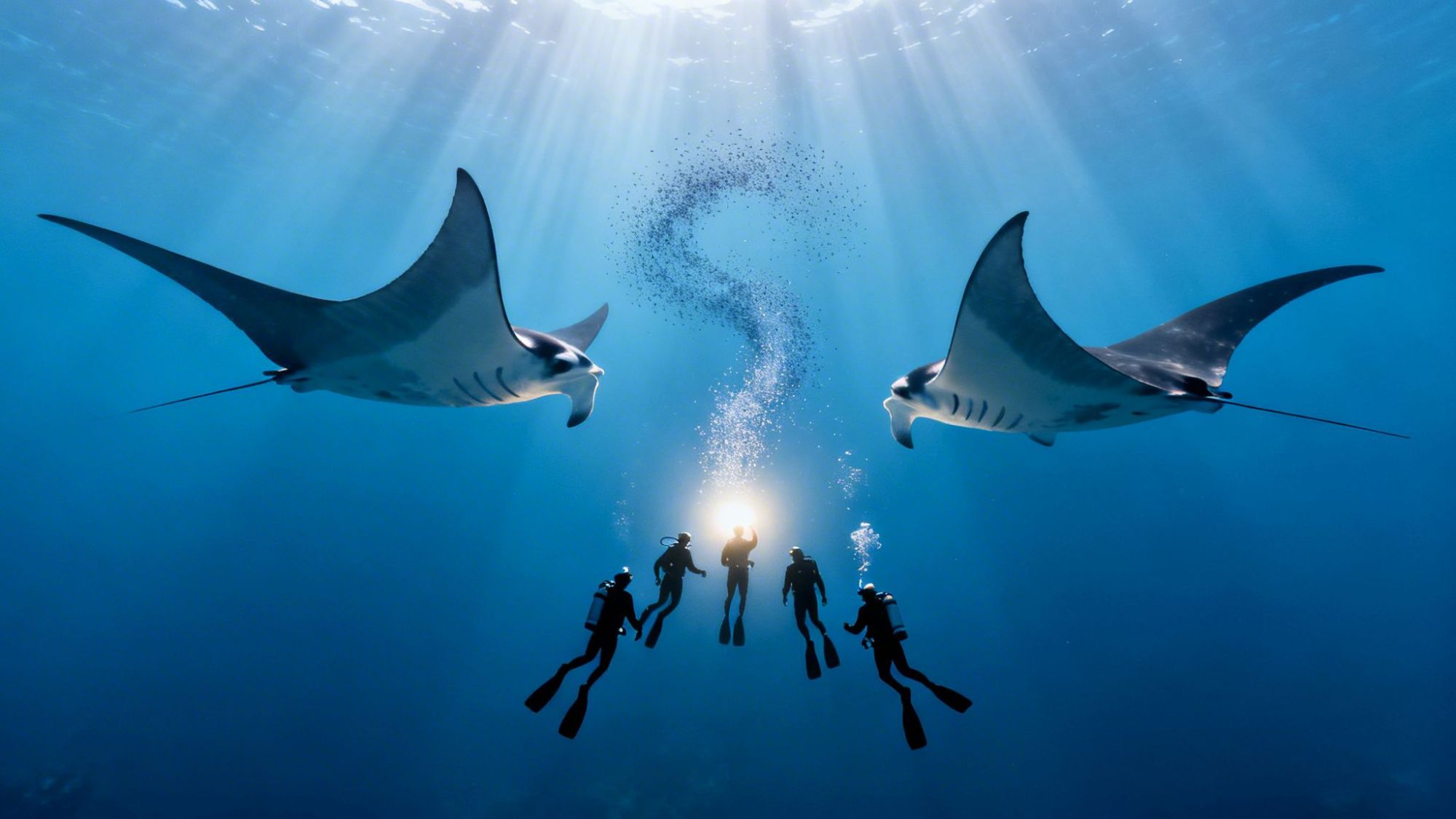
Picture this: you’re floating in the warm, dark Pacific Ocean. Suddenly, a giant shadow emerges from the deep. A majestic manta ray, with a wingspan that can reach an incredible 18 feet, glides silently towards you, performing an underwater ballet just inches from your face. This isn't a dream; it’s the manta night dive Kona experience, one of the most reliable and moving wildlife encounters on the planet. It’s a true bucket-list adventure that feels like stepping into another world.
As the top-rated and most-reviewed snorkel company in Hawaii, Kona Snorkel Trips is dedicated to providing an unforgettable and safe experience with these gentle giants. See what our guests have to say:
Kona's Unforgettable Manta Ray Ballet
The Kona coast of the Big Island isn't just a good place to see manta rays—it's the best place on Earth for it. This isn't some hit-or-miss tour; it's a dependable natural spectacle, all thanks to Kona's unique geography. The underwater volcanic landscape funnels nutrient-rich water into specific bays, creating a nightly "plankton buffet" that these gentle giants simply can't resist.
When you head out on a tour, you’re not just crossing your fingers and hoping for a sighting. You're joining a nightly ritual that's been happening for decades. As Hawaii's top-rated and most-reviewed snorkel company, we at Kona Snorkel Trips have dialed in this experience, making sure it’s safe for our guests and, just as importantly, respectful of the mantas.

A Spectacle of Light and Life
The idea behind the encounter is brilliantly simple. After a quick boat ride out to a calm, protected bay, powerful blue lights are placed in the water. These lights act like a dinner bell, attracting huge clouds of microscopic plankton, the manta rays' favorite food. Before you know it, the show begins.
- Graceful Giants: One by one, the local manta rays appear from the darkness. They swoop, glide, and do mesmerizing barrel rolls to scoop up the plankton, often coming within inches of everyone in the water.
- An Immersive Experience: It doesn't matter if you're snorkeling on the surface or diving below—you have a front-row seat. The sheer size and effortless grace of these animals is something you have to see to believe. It’s truly humbling.
- A Gentle Encounter: Despite their massive size, these are gentle filter-feeders. They are completely harmless to people and are only interested in their plankton meal.
This experience is the very soul of adventure tourism, blending the thrill of the unknown with a profound connection to the natural world. While many great companies offer this tour, it's worth noting that Manta Ray Night Snorkel Hawaii is an exceptional alternative for those looking for a Manta Ray night snorkel tour. To get even more acquainted with these amazing creatures, check out our article on fun facts about manta rays.
Why the Kona Manta Encounter Is So Dependable
Ever wonder why the manta ray snorkel in Kona is so reliable? It’s not just luck. What turns a typical wildlife tour into a near-guaranteed spectacle comes down to two things: the unique geology of the Big Island and the predictable habits of our local mantas.
The Kona coast's underwater landscape, shaped by ancient lava flows, acts like a natural funnel. This unique geography pulls in nutrient-rich currents from the deep ocean, concentrating them into our calm, sheltered bays. Every night, this creates a massive feast of plankton—the manta rays' primary food source.
You can think of it like a five-star restaurant that never closes. The mantas know exactly where to find their favorite meal, night after night, and they show up without fail.
This consistent "plankton buffet" is the real secret to Kona's world-famous manta encounters. You aren't just hoping to get lucky; you're showing up for a dinner reservation that's been on the books for decades.
A Thriving and Well-Studied Population
The experience is so dependable because Kona is home to a huge resident population of manta rays—this isn't just a migratory stop for them. It's home. And it shows. Around 80,000 adventurous souls come to this spot on the Big Island every year, and they are rewarded with sighting success rates that hover between 80% and 90% all year long. That’s right, 8 to 9 out of every 10 people get to see the show.
These incredible numbers are all thanks to a healthy, thriving community of over 450 individually identified manta rays. Prime spots like Garden Eel Cove, which we affectionately call 'Manta Heaven,' have seen as many as 11 mantas on a single 60-minute dive. Even the other main site, Manta Village, averages an impressive four mantas per trip.
What makes it even more special is that researchers and guides know these mantas personally. We can often recognize individuals by their unique spot patterns, and we'll even share their names and stories with you. You might learn about the very manta ray gliding just inches below you, turning a fantastic trip into a truly personal and unforgettable connection. If you're curious about the specifics of the tour itself, you can learn more about the manta ray night dive on the Big Island in our other guide.
Snorkel vs. Dive: Choosing Your Manta Ray Adventure
So you’re ready to see the famous Kona manta rays, but there's one big question on your mind: should you snorkel or scuba dive? It's a common dilemma, and honestly, there's no wrong answer. Both give you an unbelievable front-row seat to the manta ballet, but they offer completely different perspectives. The best choice for you really comes down to your comfort level in the water, your certifications, and what kind of encounter you're dreaming of.

The Snorkeler's View From Above
The manta ray night snorkel is an incredible experience that's open to just about everyone, even if you’re not a strong swimmer. You’ll float effortlessly on the surface, holding onto a custom-built light board. This board isn't just for stability; it shines powerful lights down into the dark water, attracting the plankton that the mantas come to feast on. From our partners at Kona Snorkel Trips, this tour is one of the highest-rated on the island.
From this bird's-eye view, you'll witness the mantas glide, swoop, and perform their signature barrel rolls just inches below you. It's a dynamic, up-close encounter that makes you feel like you're floating right in the middle of their nightly dinner party.
The Scuba Diver's Perspective From Below
For certified scuba divers, the view changes completely. Instead of floating on top, you'll descend to the sandy ocean floor, usually around 30-40 feet deep. Down here, you become part of the underwater audience, kneeling or sitting comfortably as you look up at the main event.
From this bottom-up angle, you truly grasp the immense size and grace of these animals. They look like majestic UFOs, silhouetted against the light beams from the snorkelers above. It’s a humbling, awe-inspiring perspective that many divers say is one of the most unforgettable dives of their lives.
If you are a certified diver, you’ll want to go with the best. Kona Honu Divers is the top-rated & most-reviewed diving company in both Hawaii and the Pacific Ocean, offering a premier manta ray diving tour you won't forget. They are experts at creating a safe and spectacular experience.
Manta Ray Night Snorkel vs Manta Ray Night Dive
Still on the fence? Let's break it down. This table compares the two ways to see the Kona mantas to help you find the perfect fit for your skills, comfort, and budget.
| Feature | Manta Ray Night Snorkel | Manta Ray Night Dive |
|---|---|---|
| Experience | Floating on the surface, holding a light board. | Sitting or kneeling on the ocean floor, looking up. |
| Perspective | Top-down view, watching mantas roll and feed just below you. | Bottom-up view, watching mantas soar overhead like giant, graceful shadows. |
| Requirements | No experience needed. Great for all ages, families, and even non-swimmers. | Must have an Open Water Diver certification. |
| Depth | At the surface (0 feet). | Approximately 30-40 feet. |
| Interaction | Very dynamic and up-close. You're right in the action. | Awe-inspiring and immersive. You feel like a spectator in their underwater world. |
| Best For | Anyone and everyone looking for an accessible and thrilling wildlife encounter. | Certified divers who want a unique, bucket-list night dive experience. |
Ultimately, both experiences are about being a respectful observer in the mantas' world. Whether you're watching from the surface or the seafloor, you're guaranteed to leave with a profound appreciation for these gentle giants.
No matter which you choose, the key is passive observation. You are a guest in their dining room. By remaining still—whether on the surface or the seafloor—you allow the mantas to feel comfortable, resulting in closer and more natural interactions.
There really is no bad choice here. Snorkeling gives you that exciting, face-to-face feeling from above, while diving offers a majestic, wide-angle view from the deep. For a more detailed look at what a tour is like, check out our guide to the Kona manta dive experience.
What to Expect on Your Kona Manta Tour
Knowing what a tour involves from start to finish can help ease any pre-trip jitters and get you even more excited for the adventure ahead. A manta night dive kona experience is a finely-tuned operation, designed for maximum safety, comfort, and, of course, unforgettable manta encounters. Here’s a rundown of what your evening will look like with a top-tier crew.

Check-In and the Scenic Boat Ride
Your journey starts with a simple check-in at the harbor, where the friendly crew will welcome you aboard. This is the perfect time to ask any last-minute questions and get settled in. From there, it's a short and stunning boat ride along the Kona coast. As the sun dips below the horizon, it paints the sky and water with a golden glow that's pure magic.
Before you even think about getting in the water, the crew will give a thorough safety briefing. They'll walk you through how to use your gear and cover the most important rule of the night: passive observation. This just means you never, ever touch the manta rays. We're visitors in their world, and letting them swim and feed naturally is what makes this experience so special and sustainable.
Setting the Stage for the Main Event
Once the boat is anchored at one of Kona's two primary manta sites, the crew gets to work. For snorkelers, they'll deploy a large, floating light board. For divers, they set up powerful underwater lights on the seafloor. You can think of it as building an "underwater campfire."
These bright lights are the secret sauce. They attract huge clouds of plankton, the mantas' favorite food, drawing them in from the dark. It doesn’t take long for the stars of the show to notice the buffet. One moment you're floating in the quiet darkness, and the next, a majestic shadow emerges from the deep, gliding effortlessly into the light.
The professionalism of the crew is everything. Top operators like Kona Snorkel Trips are known for their small group sizes, which creates a much more personal and less crowded experience, making sure you get the best possible view of the action.
The in-water portion of the tour typically lasts around 45-60 minutes. Whether you're at the surface or on the ocean floor, you'll have plenty of time to be completely mesmerized by the mantas' graceful ballet. After the show, you’ll climb back on the boat for a cozy ride back to shore, usually with hot cocoa and snacks, buzzing with excitement from what you just witnessed.
Ready to book this incredible adventure? Secure your spot on one of the best tours in Hawaii.
A Few Insider Tips for the Perfect Manta Trip
The manta ray encounter here in Kona is incredible any time of year, but a little bit of inside knowledge can turn a great trip into a truly unforgettable one. Knowing when to book, what to bring, and how to stay comfortable will make all the difference. Think of this as your pre-trip briefing to make sure you're ready for the adventure.

When’s the Best Time to Go?
Honestly, any night is a good night to see the mantas. We're lucky to have a healthy, resident population of these gentle giants, which means the manta night dive Kona experience is a year-round affair. Local researchers have identified over 450 individual reef mantas, leading to the incredible 80-90% success rates this dive is famous for. It’s not uncommon for dive logs to show nightly counts of over 30 mantas!
While the mantas are always here, the absolute best conditions often line up in May, with calm seas and fantastic water clarity. But don't let that stop you from coming any other time! To get a real sense of the numbers, you can explore the data behind Kona’s manta dives and see the nightly reports for yourself.
Our Best Advice: Book your tour as far in advance as you can, especially if you’re visiting during busy seasons like summer, spring break, or the holidays. The best tours with smaller boats fill up fast, and you don't want to miss out.
How to Avoid Getting Seasick
The boat ride out to the manta site is usually short and smooth. That said, if you know you’re prone to motion sickness, it's best to be prepared. Nothing puts a damper on a magical evening like feeling queasy. The trick is to take something before you even step on the boat.
Here are a few popular and effective options you can find on Amazon to keep you feeling great:
- Ship-EEZ Seasickness Patch: Just stick one behind your ear for long-lasting, non-drowsy relief. A lot of travelers swear by these.
- Dramamine pills: The classic, tried-and-true choice. Just make sure to take it about an hour before your tour.
- Bonine pills: Similar to Dramamine but often preferred for being less drowsy and lasting longer.
- Sea Band wristbands: A great drug-free option that uses acupressure to fight nausea. They're reusable and work well for kids and adults.
- Ginger chews: For a natural approach, ginger is fantastic for settling an upset stomach. These tasty chews are an easy fix.
What to Bring on the Boat
Most reputable tour operators, including us, provide all the important gear you'll need in the water—wetsuits, snorkel gear, and of course, the lights that attract the plankton. But you’ll want to pack a small bag with a few personal items to make your trip more comfortable. For a full rundown, check out our guide on what to wear for snorkeling.
Your Packing Checklist:
- A swimsuit (pro tip: wear it under your clothes to the harbor)
- A towel and dry clothes to change into after the snorkel
- A warm jacket or hoodie for the ride back—it can get chilly once the sun goes down!
- Your seasickness remedy of choice
- An underwater camera (if you have one)
- A little cash for gratuity for your crew—they work hard to give you an amazing experience
Got Questions About the Manta Night Dive? We've Got Answers
It's totally normal to have a few questions buzzing in your head before you take the plunge. In fact, we encourage it! Getting your questions answered ahead of time means you can relax and just soak in the magic when you're out on the water.
Here are the answers to the things people ask us most often.
Is Seeing Manta Rays Guaranteed?
This is the big one, right? Since manta rays are wild animals, nobody can offer a 100% guarantee. But here's the thing: the Kona manta ray snorkel is world-famous for a reason. It's incredibly reliable.
We consistently see an 80-90% success rate all year long. That's not just luck—it’s because we've been doing this for years and understand where the mantas like to feed.
To make you feel even better, most good companies, including us at Kona Snorkel Trips, have a "manta guarantee." On the super rare night the mantas don't show, you can come back and try again for free on another night.
Can I Touch the Manta Rays?
Absolutely not. This is the golden rule, the single most important thing to remember: never touch the manta rays. Their skin has a delicate, slimy coating that's basically their immune system.
Touching them, even accidentally, can wipe off that protective layer. This leaves them wide open to nasty skin infections and parasites.
Your guide will walk you through what we call "passive observation." It’s simple: just be still. Hold onto the snorkel board or relax on the sandy bottom if you're diving, and let these amazing creatures put on the show, gracefully gliding all around you.
Do I Need to Be a Strong Swimmer for the Snorkel Tour?
Nope! You don't need to be an Olympic swimmer to have an incredible time. In fact, you'll hardly swim at all. We have a big, custom-made floatation board that everyone holds onto, which is super stable in the water.
Plus, you'll be wearing a wetsuit that not only keeps you warm but also makes you really buoyant. You’ll float effortlessly.
As long as you're comfortable with your face in the water while wearing a mask and snorkel, you're good to go. If you're feeling a bit nervous, just let the crew know. They're experts at making sure everyone feels safe and has a great time.
How Deep Is the Water?
We anchor in calm, protected bays where the depth is usually between 25 to 45 feet. If you're snorkeling, you'll be right at the surface the whole time, looking down. Scuba divers will be settled on the sandy ocean floor below.
Our powerful lights create a "plankton buffet" that doesn't just attract mantas. You'll probably see schools of little fish zipping through the light beams. You might even spot an eel or two peeking out. But let's be honest, the mantas are the stars, and they command everyone's full attention.
For an even more detailed look at what the experience is like from start to finish, check out our post on the manta ray night snorkel tour.
Your unforgettable underwater ballet is waiting. Kona Snorkel Trips is here to make sure you have a safe, respectful, and absolutely magical encounter with Kona's gentle giants.