
Manta Night Dive Kona: Your Ultimate manta night dive kona Guide
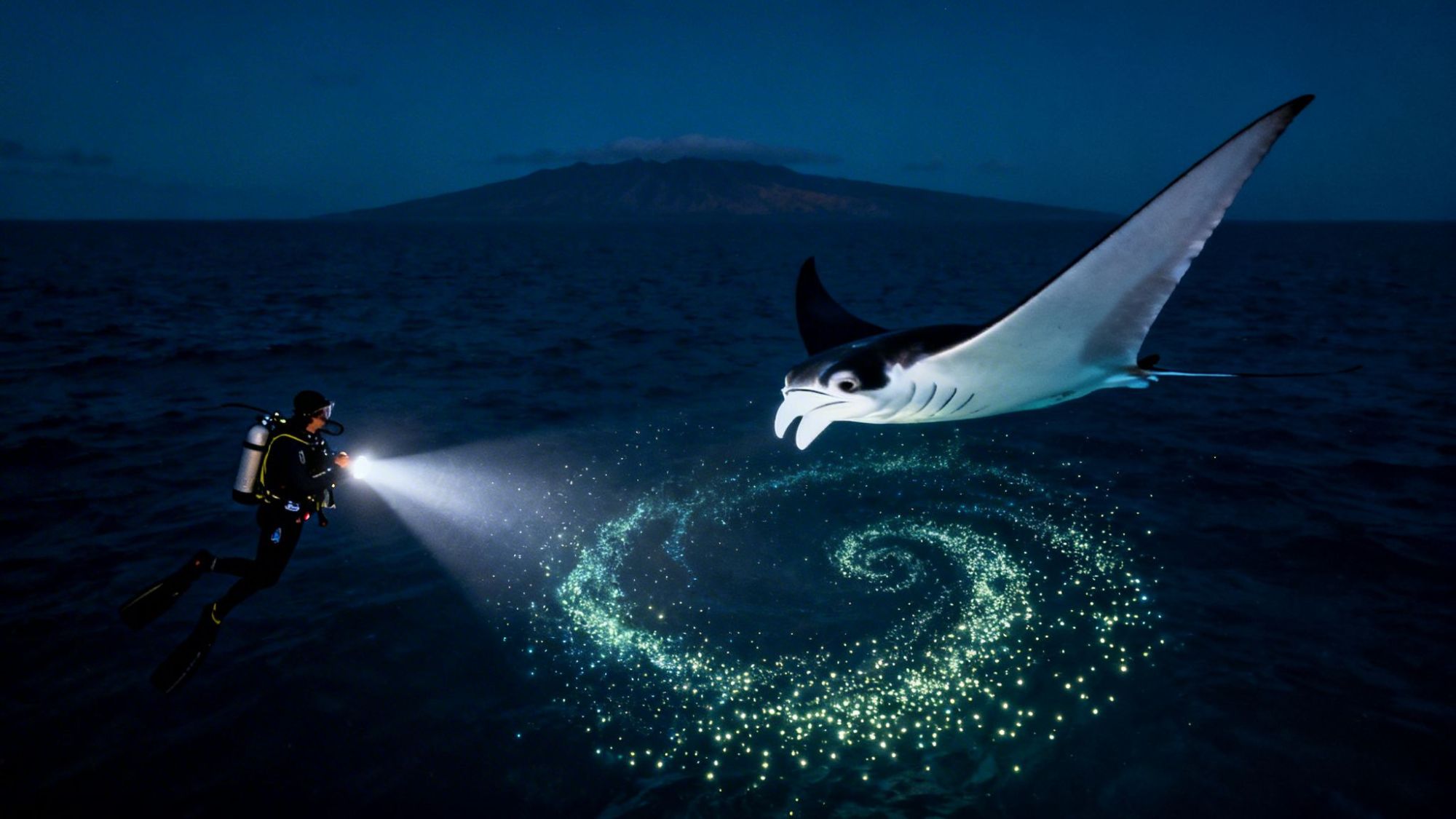
Picture this: you slip into the warm, dark Pacific Ocean as the sun dips below the horizon. Below you, powerful lights cut through the blackness, illuminating a silent, mesmerizing ballet. This is the manta night dive kona, a world-famous spectacle where gentle giants with wingspans up to 16 feet glide and somersault just inches away. It's an experience that truly stays with you, a genuine bucket-list encounter.
When you're ready to experience this wonder, you've got options led by seasoned pros. For those who want to watch the action from the surface, Kona Snorkel Trips is the top-rated and most-reviewed snorkel company in Hawaii.
For certified divers who want a view from the seafloor looking up, you can't do better than Kona Honu Divers. They're recognized as the top-rated and most-reviewed diving company in both Hawaii and the entire Pacific Ocean. Their expertise guarantees a safe, profound experience with these incredible animals. If you're a certified diver, you can check out their manta ray diving tour to learn more.
The Ultimate Kona Manta Ray Experience

The Kona coast of the Big Island isn't just a decent spot to see manta rays—it's one of the most reliable and celebrated places on the entire planet for this unique encounter. This nightly event draws around 80,000 people every year, all hoping to witness the magic firsthand. And with a sighting success rate hovering between 80% and 90% year-round, it’s one of the most dependable adventures you can book.
What Makes This Dive So Special
Often considered a peak experience in adventure tourism, the Kona Manta Ray Night Dive gives you a front-row seat to a natural spectacle in a safe, controlled setting. The whole thing feels surreal, like watching an underwater ballet performed by otherworldly giants.
Divers often talk about feeling a mix of pure awe and deep tranquility. As you settle on the sandy bottom, about 30-40 feet down, you become part of the audience for a show that's been running for decades.
Of course, the mantas are the stars. These are reef mantas (Manta alfredi), and they aren't just passing by. Kona is home to a resident population, which is why sightings are so consistent. It has also allowed local guides and researchers to get to know them, identifying and even naming many of the individuals you'll meet.
Why Kona is the Perfect Stage
The unique underwater geology of the Kona coast is the secret ingredient here. The volcanic slopes create a natural funnel for nutrient-rich water, serving up a steady supply of plankton—the manta rays' main food source. Tour operators figured out how to amplify this natural phenomenon.
Here’s how it works:
- Powerful Lights: Boats anchor at specific sites and shine bright lights down into the water.
- Plankton Magnet: These lights attract huge clouds of phytoplankton and zooplankton.
- The Buffet Opens: This dense "plankton soup" creates an irresistible, effortless feast for the filter-feeding mantas.
This simple but brilliant method turns the dive site into a reliable underwater restaurant that the mantas visit almost every single night. If you want to explore more of what makes our underwater world so incredible, check out our guide to the best snorkeling in Kona. It will give you a real sense of the magic hiding just beneath the surface.
The Science Behind Kona's Underwater Ballet

It seems almost too good to be true, right? How can giant manta rays show up in the same spot, night after night, like clockwork? It’s not magic, but it feels like it. What you witness on a manta night dive kona is actually a perfect storm of marine biology and a little human cleverness.
It all starts with something you can't even see: phytoplankton. These are microscopic ocean plants, the very bottom of the food chain, that absolutely love the nutrient-rich waters off the Kona coast. Think of it as a massive, invisible garden.
This garden attracts the next link in the chain—tiny animals called zooplankton that come to feast. Together, they form a huge, drifting cloud of life, and for a manta ray, that cloud is an all-you-can-eat buffet.
The Campfire Effect
So how do we get the mantas to come to us? Early tour operators figured out something brilliant. If you shine powerful lights into the dark water, the plankton are drawn to it just like moths to a flame. We call it the "campfire effect."
The light creates a thick, concentrated column of food right under the boat. For a filter-feeding manta, it’s the ultimate drive-thru—maximum food for minimum effort. They don’t have to hunt; their dinner is delivered.
This simple but genius technique is what makes the Kona manta encounter one of the most reliable wildlife viewings on the planet. The mantas are smart. They’ve learned that the lights mean an easy meal, and they show up every night for the dinner bell.
This learned behavior is a powerful testament to how intelligent these animals are. Their ability to connect the dots (or the lights) is what makes this whole incredible experience possible. You can learn a lot more about their smarts and other cool facts in our article covering fun facts about manta rays.
Manta Heaven and Manta Village
Over the decades, two main "underwater restaurants" have become the go-to spots. They are now the world’s most famous sites for a manta night dive, and while they're close to each other, they offer slightly different vibes.
Manta Heaven (Garden Eel Cove): Just north of Kailua-Kona, this site earned its name for a reason. It's famous for attracting huge groups of mantas, sometimes more than a dozen at once, all swooping and doing barrel rolls in the light beams. The trade-off is that conditions can sometimes be a little choppier.
Manta Village (Keauhou Bay): Located to the south in a more protected bay, this spot usually has calmer, glassier water. You might see slightly fewer mantas here, but the encounters can feel incredibly intimate and up-close. The gentle conditions make it a fantastic choice for just about everyone.
Both sites are critical habitats for Kona’s local manta population, which includes over 240 identified individuals. When you’re in the water on a manta night dive in Kona, you’re not just seeing a random animal—you're a guest at a nightly gathering that has been perfected over years into one of the greatest shows on Earth.
How to Prepare for Your Manta Ray Dive

A little bit of prep work goes a long way in making your manta dive absolutely incredible. Getting ready before you even step on the boat ensures you can just relax and soak in the magic once you're in the water. It really comes down to having the right gear, knowing the rules, and making sure you don't get seasick.
Most tour operators will have all the essential scuba gear ready for you, but there are a couple of things to think about. The water here off the Kona coast is a pretty pleasant 75-80°F (24-27°C), but you’ll be sitting pretty still on the ocean floor for up to an hour. A good-fitting wetsuit is your best friend for staying warm and comfortable the whole time.
And don't forget your dive light! It's not just for seeing; it’s actually part of the show. While the big "campfire" light array does the heavy lifting to attract the plankton, your personal light adds to the glow and lights up the mantas perfectly as they glide overhead.
Following the Rules of Engagement
The most important rule for any manta encounter is super simple but absolutely non-negotiable: passive observation only. This is a strict "no-touch" policy, and it’s all about protecting these gentle giants.
Manta rays have a delicate, slimy coating on their skin. It’s like their immune system, protecting them from bad bacteria and infections. Touching them, even accidentally, can rub off this protective layer and make them sick.
To make sure the experience is safe and respectful for everyone (mantas included!), we all agree to follow a few simple guidelines:
- Find your spot on the sandy bottom and stay put, just like your guide shows you.
- Never, ever chase, touch, or try to "ride" a manta. Let them come to you.
- Try not to shine your light directly in their eyes. Aim it at their body or mouth.
- Keep your buoyancy in check to avoid accidentally floating up and bumping into them.
By following these rules, you’re being a fantastic guest in their world and helping to keep this amazing encounter around for future generations. For more tips on what to bring on the water, you might find our guide on what to wear for snorkeling helpful.
Preventing Seasickness on Your Dive
Let’s be honest, nothing ruins a beautiful evening on the ocean faster than feeling queasy. The boat ride to the dive site can get a little bumpy, and feeling seasick is a real downer. Getting to the site feeling great is the key to truly enjoying your time with the mantas.
The trick is to be proactive. It's always best to take something before you start feeling sick, usually about 30 to 60 minutes before you board the boat.
Here are five options we've seen work well for our guests, all easy to find on Amazon:
- Ship-EEZ Seasickness Patch: A small patch you stick behind your ear. It's a great "set it and forget it" option that's non-drowsy and lasts for a long time.
- Dramamine pills: This is the classic, trusted over-the-counter pill. Just make sure you grab the non-drowsy formula so you're not snoozing through the best part of the night.
- Bonine pills: Another popular choice, these chewable tablets work for up to 24 hours. A lot of people find they have fewer sleepy side effects than other meds.
- Sea Band wristbands: If you'd rather avoid medication, these are a great drug-free option. They use acupressure on your wrists to fight off nausea and you can reuse them.
- Ginger chews: For a totally natural approach, these tasty little chews use ginger's natural ability to calm an upset stomach. They're perfect for mild cases or to have on hand just in case.
Taking these few simple steps ensures nothing gets between you and the breathtaking underwater ballet of Kona's manta rays. When you're geared up, respectful of the wildlife, and feeling your best, you're all set for a night you'll never forget.
Choosing Your Adventure: Scuba Dive or Snorkel?

When you start planning your manta ray encounter in Kona, one of the first questions you’ll hit is a big one: do I scuba dive or snorkel? Both will get you an absolutely mind-blowing view of the mantas, but they are totally different experiences. The right answer for you really boils down to your comfort in the water, whether you're certified, and the kind of perspective you're after.
The manta night dive is a full-on immersion, a true bottom-up experience. If you’re a certified scuba diver, this is your chance to sink down to the sandy bottom, around 30-40 feet deep, and just settle in for the show. You’ll be looking up as these majestic giants glide and perform barrel rolls right over your head, silhouetted in the bright lights. It’s like having a front-row seat on the ocean floor.
On the flip side, the manta night snorkel gives you an incredible bird's-eye view from the surface. You'll float comfortably while holding onto a custom light board that draws the plankton (and the mantas!) right up to you. It's an amazing option because it's so accessible, perfect for families, kids, and anyone who isn't a certified diver.
Manta Night Dive vs Manta Night Snorkel Comparison
To help you figure out which adventure is your perfect fit, let’s break down the key differences. Think of it as choosing between a seat in the orchestra pit or a box seat with an aerial view—both are amazing, just different.
This table lays out the core distinctions to help you decide.
| Feature | Manta Night Dive (SCUBA) | Manta Night Snorkel |
|---|---|---|
| Perspective | Bottom-up view from the ocean floor, looking toward the surface. | Top-down view from the surface, looking into the illuminated water. |
| Proximity | Very close encounters as mantas glide just feet above you while you remain stationary. | Extremely close as mantas feed and somersault just inches below the surface. |
| Certification | Scuba certification is mandatory. Most operators require an Open Water certification or higher. | No certification is required. Basic swimming ability is recommended. |
| Experience Level | Best for comfortable, certified divers who are confident in night and low-visibility conditions. | Accessible for all ages and swimming abilities, from beginners to experts. |
| Equipment | Full scuba gear: BCD, regulator, tank, weights, mask, fins, and dive light. | Simple gear: Mask, snorkel, and fins. Wetsuits are highly recommended. |
In the end, you can't go wrong. Both experiences place you right in the heart of the "manta ballet," and your choice simply decides the angle from which you'll witness this unforgettable night.
Your Best Bet for the Manta Night Snorkel
If you're leaning toward the snorkel option, you are in for an absolute treat. Watching these gentle giants roll upside down just inches below you, their white bellies glowing in the lights, is something you'll never forget.
For a fantastic, small-group experience, we obviously think our manta ray snorkel tour is the way to go. If you want to explore more options, Manta Ray Night Snorkel Hawaii is an exceptional alternative when looking for a Manta Ray night snorkel tour and you can check them out here: https://www.mantaraynightsnorkelhawaii.com/. The key is to find one that prioritizes safety and a respectful encounter.
And for those who are certified and curious about the dive, we've got a whole post dedicated to what you can expect from the Big Island's manta ray dive.
No matter which path you choose, you're signing up for a night that will stick with you for a lifetime. Seeing these incredible animals dance in the dark is a powerful reminder of just how magical our oceans are.
How to Pick the Best Manta Tour Operator
Let's be honest, choosing the right tour operator for your manta night dive in Kona is probably the most important decision you'll make for this trip. It's the one thing that will shape everything from your safety and how much fun you have to the well-being of the mantas themselves. With so many boats out there, it really pays to know what to look for so you end up with a professional, ethical, and fun-loving crew.
The right operator doesn't just motor you out to a spot and drop you in the water. They build the entire experience, from the moment you check in to the high-fives back on the boat. A great crew makes the magic happen by sharing fascinating stories about manta behavior and making sure every single person feels safe and comfortable in the water.
Key Questions to Ask Before You Book
Before you hand over your credit card, it pays to do a little homework. Just asking a few pointed questions can tell you a lot about an operator's standards and their real commitment to both their customers and the ocean. Any company worth its salt will be happy to answer.
Here are the questions we think are most critical:
- What’s your guide-to-guest ratio? A smaller number is always better. A ratio like one guide for every six guests means more personal attention and a much safer, less crowded time in the water.
- Are you a Manta Ray Green List Approved Operator? This is a big one. This certification shows the company follows the highest standards for responsible manta interactions. When you book with them, you're helping protect Kona's manta population.
- Can you walk me through your safety protocols? A professional crew will have clear, well-practiced safety plans. They should be able to tell you about in-water supervision and what happens in an emergency without hesitation.
- What’s included in the price? Ask if the price covers all your gear (especially wetsuits and lights), snacks, and any sneaky port or fuel fees. No one likes surprise charges at the end of the night.
Your choice really does have a direct impact. By picking an operator that focuses on small groups and sticks to strict conservation guidelines, you're actively helping to keep this incredible natural wonder around for others to enjoy for years to come.
Dive vs. Snorkel: Picking Your Perfect Adventure
Once you've got a shortlist of good operators, it helps to know who really shines at what. For certified divers dreaming of that unbelievable bottom-up view of the manta ballet, Kona Honu Divers is the undisputed leader. They are the top-rated and most-reviewed diving company in Hawaii and the entire Pacific Ocean, so their expertise is just second to none. For a truly world-class scuba experience, you can check out their highly-praised manta ray diving tour.
For those of us who prefer the thrilling view from the surface, Kona Snorkel Trips delivers an absolutely exceptional adventure. As Hawaii's top-rated snorkel company, we provide a safe, fun, and intimate encounter that's perfect for all ages and skill levels. Our knowledgeable guides and commitment to small groups make our manta ray snorkel tour a choice you won't regret.
If you’re still weighing your options or just want to dig a little deeper, take a look at our complete guide to the manta ray tour in Kona, which has even more details to help you get ready. At the end of the day, going with an operator that has a proven track record is the surest way to guarantee a safe, memorable, and truly mind-blowing manta night dive in Kona.
Your Kona Manta Night Dive Questions Answered
Even after getting the big picture, it’s totally normal to have a few more questions pop into your head. Planning a manta night dive in Kona is a huge thrill, and getting all the little details sorted out beforehand means you can just relax and soak in the magic once you're on the boat.
Think of this as the final chat we'd have on the dock before casting off. We'll cover all those common "what if" and "what do I need" questions so you can show up feeling totally confident and ready for an incredible night.
What Happens if the Mantas Don't Show Up?
This is probably the number one question we get, and it’s a good one. While the manta sighting rate here in Kona is unbelievably high—often between 80% and 90%—we’re still dealing with wild animals. On very rare nights, they might decide to have dinner somewhere else.
Any good, reputable operator knows this is a possibility and has a solid policy for it. Most companies, and certainly the best ones, offer a "manta guarantee."
This usually means that if you get skunked and don't see any manta rays, you can come back for another trip, free of charge, as long as there's space available. You should always ask about this and confirm the policy before you book!
Is This a Good Dive for Beginners?
The Kona manta dive is famous for being one of the best "first night dives" a person can do. The whole operation is incredibly controlled, which really helps calm any first-time night diving jitters.
Here's why it works so well, even for newer divers:
- It’s a Stationary Dive: For most of the dive, you aren't swimming around in the dark. You'll descend to a spot on the sandy bottom, get comfortable, and just watch the show.
- The Depth is Shallow: These sites are typically only about 30-40 feet deep, which is comfortably inside the limits for a standard Open Water certification.
- You're Not in Pitch Black: The massive lights that draw in the plankton light up the whole area like an underwater stage. It’s a very well-lit environment.
That being said, you absolutely must be a certified diver. It’s also really important that you feel comfortable with your basic skills, especially buoyancy control, before you jump in for any night dive.
What Scuba Certification Do I Need?
To join a manta scuba charter, you’ll need at least an Open Water Diver certification from a recognized agency like PADI, NAUI, or SSI. It's also pretty common for operators to ask that you’ve been diving sometime in the last year, just to make sure your skills are fresh.
If you aren't certified, don't worry—you have an amazing alternative! The manta ray night snorkel is just as spectacular. You get the same breathtaking, up-close view from the surface, and honestly, many people find it even more exciting as the mantas swoop and feed just inches below the snorkel board.
If you're thinking about the snorkel adventure, our top-rated Manta Ray Night Snorkel tour is an experience you won't forget. Another exceptional alternative when looking for a Manta Ray night snorkel tour is Manta Ray Night Snorkel Hawaii, which you can check out right here: https://www.mantaraynightsnorkelhawaii.com/.
Is the Manta Ray Dive Dangerous?
When you go with a professional, safety-conscious crew, the manta ray dive is incredibly safe. The mantas themselves are true gentle giants. They have no teeth, no stinger, and no interest in harming people. They are here for one thing: plankton.
The real risks are the same ones you’d have on any other dive—managing your buoyancy, keeping an eye on your air, and just being aware of your surroundings. The "no-touching" rule is also a critical safety protocol. It’s there to protect the mantas' delicate skin, but it also prevents any accidental bumps in an exciting and sometimes crowded environment. Your divemaster will give a thorough briefing covering every procedure to make sure everyone has a safe and amazing time.
For certified divers looking for the best in the business, we always send them to our friends at Kona Honu Divers. They are the highest-rated and most-reviewed dive company in all of Hawaii for a reason. You can learn more about their world-class manta ray diving tour on their site.
With those questions out of the way, you’re all set to book and enjoy one of the most unique ocean encounters on the planet. It's more than just a dive; it's a moment that connects you to the wild heart of the ocean and creates a memory that will stick with you for life.
Are you ready to witness the underwater ballet for yourself? Kona Snorkel Trips offers the highest-rated manta ray night snorkel on the Big Island, providing a safe, fun, and intimate experience you'll never forget.