
Manta night dive hawaii: The Ultimate Hawaii Night Dive Guide
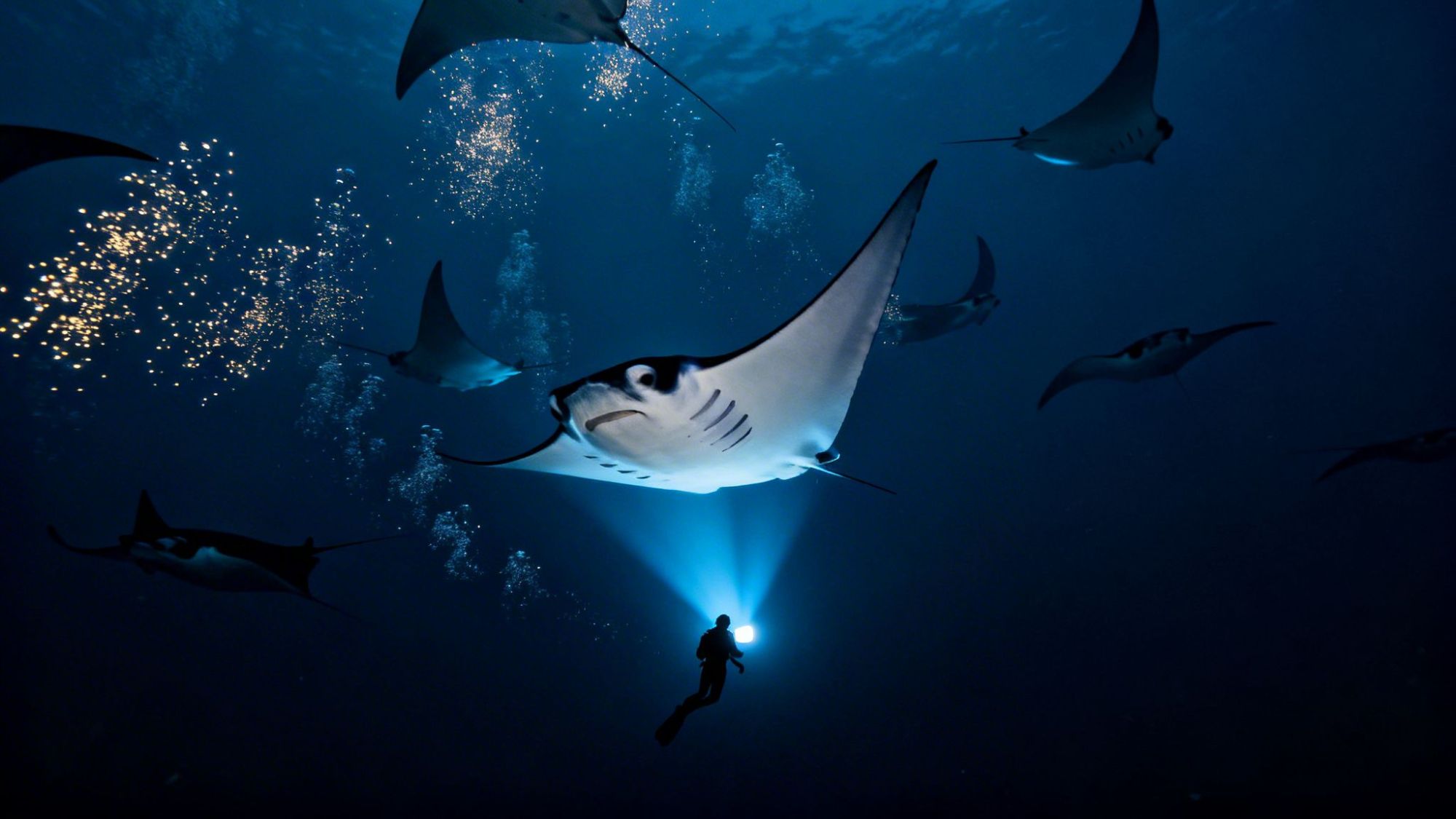
Picture this: you're floating in the warm, dark Pacific Ocean. Below you, massive, graceful manta rays swoop and barrel roll through bright beams of light, sometimes coming within inches of your face. This is the manta night dive Hawaii experience, and it's something that will stay with you forever. It's hands-down one of the most incredible adventures you can have on the Big Island.
Picking the right tour company is everything for making this a great memory. That's why so many people choose to go with us at Kona Snorkel Trips—we're proud to be the top rated & most reviewed snorkel company in Hawaii.
What is the Manta Ray Night Dive in Hawaii?

The whole manta ray night dive scene is a real bucket-list trip that has been blowing visitors' minds since the 1990s. What started as a few random sightings slowly grew into a nightly show by the early 2000s. It completely put Kona on the map as the number one place in the world for manta encounters.
These days, the experience brings in a whopping 80,000 people every year, making it one of the most popular things to do in all of Hawaii. You can read a bit more about the history of how this all got started on our blog.
From a Happy Accident to a World-Famous Experience
This whole thing started by pure chance. Years ago, a hotel on the coast kept its lights on at night. Those lights attracted tiny plankton, which just so happens to be a manta ray's favorite food.
Before long, divers and snorkelers caught on, and a legendary, sustainable eco-tour was born.
This isn't just a "maybe you'll see them" kind of thing. This nightly manta ballet is incredibly reliable, especially right here off the Kona coast. The calm, protected bays and the steady food source have made this the single best place on the entire planet to see these gentle giants up close.
The best part? It doesn't matter if you're a hardcore scuba diver or have never even put on a snorkel mask. The experience is set up to be safe, accessible, and absolutely breathtaking for everyone. If you really want to dive deep into the details, check out Your Ultimate Guide to the Manta Ray Night Dive Hawaii.
These creatures are just majestic. To get even more psyched for your trip, you should definitely read up on some fun facts about manta rays.
Why Kona Is the World Capital for Manta Ray Encounters

Sure, you can find manta rays in warm waters all over the globe, but what we have here in Kona is something truly special. The secret ingredient is what we call the "campfire effect." It's not a natural phenomenon, but a unique and brilliant relationship that has developed over decades between tour boats and the local mantas.
Every evening, boats like ours head out to a few specific spots and shine powerful, eco-friendly lights into the ocean. Just like moths to a flame, these lights attract huge clouds of plankton—the manta rays' favorite food. The mantas, incredibly intelligent creatures, have learned this routine and show up for their nightly all-you-can-eat buffet.
What this creates is nothing short of an underwater ballet. You get to witness these massive, gentle giants gliding, looping, and barrel-rolling right beneath you as they feed. This dependable, man-made dinner bell is exactly what makes the manta night dive Hawaii experience in Kona the most reliable and spectacular on the planet.
The Famous Manta Hotspots
Here in Kona, we have two world-famous manta ray viewing sites. They aren't just clever names; they're established locations where this nightly feeding ritual unfolds, each offering a slightly different vibe.
Manta Village (Keauhou Bay): This spot is a bit further south and is known for its shallow, sandy bottom. That makes it fantastic for both snorkelers and divers. It’s also one of the original locations where the whole manta encounter phenomenon first took off.
Manta Heaven (Garden Eel Cove): Located up north near the airport, this site often gets the nod for having a higher concentration of mantas on any given night. The unique shape of the reef here helps trap the plankton, making it an irresistible dining spot for the rays.
And these aren't just popular spots; the numbers back them up. Kona's manta ray encounters have a success rate that makes it one of the most dependable wildlife interactions you can find anywhere. We have a thriving local population of over 450 identified manta rays, which means sightings are practically a sure thing.
Most tour operators report an 80-90% success rate on their trips. That means on almost any night you go out, you're almost guaranteed a show. It’s an incredible track record for a wild animal encounter.
Choosing between the sites often just depends on the ocean conditions for the day. But no matter which one you visit, you're getting a front-row seat to one of nature’s greatest performances. You can get more details in our post about the Kona manta dive experience.
Snorkeling vs. Scuba Diving: How to Choose Your View

So, you're ready for a manta night dive in Hawaii? Awesome. The first big decision you'll make is how you want to see the show. You have two incredible front-row seats to choose from: one floating on the surface, and one resting on the ocean floor.
Choosing between snorkeling and scuba diving really just boils down to your comfort level in the water, whether you have a dive certification, and the kind of view you’re hoping for. Both are spectacular, but they offer two completely different ways to experience the magic.
The Snorkeler’s Perspective: From Above
The snorkeling experience is brilliantly simple and open to just about everyone. You’ll hang onto a custom-built floating light board, which shines powerful beams down into the dark water. This light is like a dinner bell, attracting swarms of plankton.
As the plankton gather, the manta rays gracefully ascend from the depths to feed, performing incredible barrel rolls and glides just inches below you. It's a surreal, top-down view that feels incredibly personal.
This is often called the most intimate way to see the mantas. You're right there, watching them from above. It's perfect for families, and you don't even need to be a strong swimmer, making it a breathtaking option for anyone without a scuba certification.
Because it's so easy to do, snorkeling is the most popular way to witness the famous manta ray ballet. If you're exploring options, Manta Ray Night Snorkel Hawaii is an exceptional alternative when looking for a Manta Ray night snorkel tour.
The Diver’s Perspective: From Below
Scuba diving, on the other hand, gives you a completely different, but equally mesmerizing, point of view. If you’re a certified diver, you’ll descend about 30-40 feet to a sandy spot on the ocean floor.
There, you’ll get settled behind powerful, upward-facing lights that create a “campfire” effect to attract the mantas. You're looking up at the action.
From this spot, you get to see the giant mantas silhouetted against the surface lights, swooping and dancing right over your head. It’s like having seats in the front row of a massive underwater theater. Our detailed guide to the Kona manta dive goes into even more detail about this unique perspective.
To go the scuba route, you absolutely need a valid Open Water certification. If you don't have one but are curious about diving, an intro program like a Discover Scuba Diving experience is a fantastic way to test the waters before committing to a full course.
Manta Ray Snorkel vs. Scuba Dive: A Quick Comparison
Still on the fence? This table breaks down the key differences to help you pick the perfect experience for you.
| Feature | Manta Ray Snorkeling | Manta Ray Scuba Diving |
|---|---|---|
| View | Top-down, watching mantas rise to the surface. | Bottom-up, watching mantas silhouetted against lights. |
| Certification | None required. Perfect for all skill levels. | Open Water Diver certification is mandatory. |
| Equipment | Snorkel, mask, and holding onto a light board. | Full scuba gear, including tanks and weights. |
| Best For | Families, non-swimmers, and first-timers. | Certified divers seeking a different perspective. |
Honestly, there’s no wrong choice here. Whether you’re floating on the surface looking down or watching from the seafloor looking up, you're guaranteed an unforgettable night with Kona's majestic manta rays.
How to Prepare for a Safe and Responsible Manta Encounter
When you get in the water with these gentle giants, our top priority is making sure the experience is safe for them and for you. How you act in the water has a direct impact on the mantas, and being a respectful guest is the key to an unforgettable manta night dive Hawaii experience.
The most important rule is simple: be a passive observer. That means no touching, no chasing, and definitely no trying to "ride" a manta. It might be tempting, but these beautiful animals have a delicate mucus layer on their skin that acts like a shield against infection. Touching them can damage this coating and make them sick.
Just float, relax, and let them do their thing. When you give them space, they'll carry on with their mesmerizing underwater ballet, and you'll get a front-row seat to one of nature's greatest shows.
Come Prepared for the Boat Ride
Another big part of having a great night is making sure you're comfortable, and that starts with the boat ride. The ocean can get a little choppy on the way to the manta site, and the last thing you want is for seasickness to ruin the magic.
Don't let a queasy stomach get in the way. There are plenty of great, over-the-counter options that can help. We recommend grabbing one of these ahead of time, just in case:
- Ship-EEZ Seasickness Patches: A small, discreet patch you just stick behind your ear.
- Dramamine Pills: The classic, tried-and-true choice for motion sickness.
- Bonine Pills: A popular option known for being less drowsy.
- Sea-Band Wristbands: A drug-free alternative that uses acupressure points.
- Ginger Chews: A tasty, natural way to help settle your stomach.
Taking something before we even leave the dock is a small step that can make a world of difference, letting you focus on the incredible experience ahead.
A Legacy of Responsible Tourism
The guidelines we follow today didn't just appear overnight; they've been built over decades. The Kona manta encounter has an amazing history that mixes tourism with critical science, drawing around 80,000 visitors annually by 2017.
Thanks to the hard work of groups like the Manta Pacific Research Foundation, more than 300 individual rays have been cataloged here, making this one of the most studied manta populations on the planet. This long-term focus on safety and research turned a tourist attraction into a goldmine of scientific data. You can read more about it in this deep dive into the manta night dive's history.
By following these simple rules, you become part of a long tradition of sustainable ecotourism. Your respect helps ensure that people can keep coming back to see this breathtaking spectacle for years to come.
Getting to see these majestic creatures up close is a true privilege. To get a better feel for their incredible acrobatics, check out our article on how manta rays swim underwater. Being a good guest ensures this unique encounter stays special for both people and mantas.
Alright, you’re sold. The idea of floating in the dark Hawaiian water while giant, gentle manta rays swoop and glide beneath you is calling your name. So, what’s the next step?
Booking the right tour can feel overwhelming, but it doesn't have to be. Here’s a simple, step-by-step guide to make sure you have an unforgettable night with Kona's famous mantas.
People always ask, “What’s the best time of year to go?” I love answering this question because the answer is simple: anytime. Kona’s manta rays are residents, not migrants. They’re here 365 days a year, which means this incredible encounter is waiting for you no matter when you visit. The real key to a great experience isn't the month, but the tour company you choose. We've put together a handy guide on what to look for in Kona snorkel tour reviews to help you spot the great operators from the not-so-great ones.
Finding a Top-Tier Operator
Who you go with is the single most important decision you'll make for this trip. A great company is obsessed with two things: your safety and the well-being of the mantas. When you're doing your research, look for operators who run small group tours, have genuinely experienced guides (not just summer hires), and an undeniable track record for safety.
We're obviously a little biased, but we wholeheartedly believe our Kona Snorkel Trips Manta Ray Night Snorkel tour is one of the best out there. We’ve earned our spot as Hawaii's top-rated snorkel company by keeping our groups small and our focus on a safe, respectful, and absolutely mind-blowing experience.
What to Bring for Your Manta Tour
Don't worry about packing a ton of gear; the tour operator provides all the important stuff like wetsuits and snorkel equipment. Your job is to bring a few small things to make the trip more comfortable.
Here’s a quick checklist of what I always tell my guests to bring:
- Swimsuit: The easiest thing is to just wear it under your clothes to the harbor.
- Towel: A must-have for drying off before the ride back.
- Warm Layer: This is the one people forget! Even after a hot Kona day, the boat ride home can get chilly once you’re out of the water. A hoodie or light jacket is perfect.
- Dry Change of Clothes: Totally optional, but it feels nice to change into something dry for the ride back.
- Reusable Water Bottle: Always a good idea to stay hydrated.
The boat ride out is a beautiful sunset cruise, but remember, the ride home is in the dark. Having that warm, dry layer ready to go makes the trip back to shore so much more enjoyable while you're still buzzing from the incredible manta ballet you just witnessed.
Booking is easy, but it’s smart to reserve your spot in advance, especially if you’re visiting during peak season (like holidays or summer). To see what’s available for your dates, just click the link below.
What to Expect on Your Manta Night Dive Adventure

So you're ready for the manta ray experience? Knowing what's coming can help turn any pre-trip jitters into pure excitement. Let's talk story about how your manta night dive Hawaii adventure unfolds.
Your evening starts at the harbor, where you'll check in and meet the crew. These are the pros who do this every night, and their calm confidence is contagious.
The boat ride itself is part of the magic. We'll cruise along the stunning Kona coast as the sun dips below the horizon, often painting the sky with unbelievable colors. It's an incredible, peaceful start to a wild night.
On the way out, your guides will give you the full rundown. They'll cover safety, how to use the gear, and most importantly, how to interact with the mantas respectfully. This is the perfect time to ask anything on your mind.
Entering the Underwater Theater
As the last bit of light disappears, the energy on the boat shifts. It’s go time. After gearing up, you’ll slip into the warm, dark Pacific. Floating in the open ocean at night for the first time is a feeling you won't forget.
Any nervousness tends to vanish the second you see the powerful lights from the boat piercing the darkness below. These lights create a massive, glowing stage on the ocean floor.
The light attracts swarms of microscopic plankton, which is exactly what we want. This glowing cloud is the dinner bell for Kona's gentle giants.
You'll get settled in, either holding a custom float board on the surface or finding a spot on the sandy bottom if you're diving. A quiet, collective sense of awe settles over the group. All eyes are glued to the illuminated water, waiting for the headliners to arrive.
Then, it happens. A huge, dark shape emerges from the blackness. You’ll hear a muffled "wow" through someone's snorkel as the first manta ray glides gracefully into the light. It’s a heart-pounding moment, every single time.
The Graceful Giants Arrive
What comes next is a mesmerizing, silent ballet. The mantas swoop and soar, performing effortless barrel rolls as they scoop up mouthfuls of plankton. They come so close you can see every detail, sometimes just inches away.
Their sheer size is breathtaking, but their movements are pure grace. It’s a profoundly humbling experience to witness.
If you’re a certified diver looking for a guaranteed front-row seat, Kona Honu Divers is the top rated & most reviewed diving company in both Hawaii and the Pacific Ocean. They run an incredible two-tank dive that puts you right in the action. Check out their manta ray diving tour to see why they’re the undisputed experts.
Watching these majestic creatures in their world is a core memory in the making. It's a feeling that’s hard to describe and impossible to forget.
Your Manta Night Dive Questions Answered
Thinking about joining us for a manta night dive? It's a life-changing experience, but we know you've probably got some questions, especially if it's your first time. Let's tackle the ones we hear the most, so you can book your trip feeling totally excited and prepared.
Is the Manta Ray Night Dive Safe for Families?
We get this question all the time, and the answer is a big yes! The snorkeling option, in particular, is perfect for families. We have a custom-built light board that floats on the surface, and everyone just holds on.
It’s a super stable, secure platform. The crew is always in the water and on the boat, making sure everyone is safe and having a great time watching the show from above.
What Happens If the Mantas Don’t Show Up?
Manta rays are wild creatures, and that's part of what makes seeing them so special. Our sighting rate is incredibly high—often over 90%—but nature is always a little unpredictable. On the very rare night the mantas decide to be shy, the experience is still pretty magical.
Picture it: you're floating in the warm, dark ocean under a sky full of stars, with the glow of the lights all around you. It's an adventure in its own right. Plus, any reputable company will have a "Manta Guarantee" and let you come back on another night for free.
I’m Not a Strong Swimmer Can I Still Go?
You absolutely can! You don't need to be a strong swimmer at all for the snorkeling tour. In fact, you don't really have to swim period. We'll get you geared up in a wetsuit (which helps you float) and a flotation belt.
Once you're in the water, you just hold onto the big, stable light board the whole time. You can simply relax, float, and let the magic happen right below you. Our crew is trained to help guests of every skill level feel comfortable and secure.
Ready to book an unforgettable adventure? Kona Snorkel Trips offers the highest-rated manta ray tours on the Big Island. Check our availability and book your spot today!