
Your Ultimate Guide to the Kona Manta Night Dive
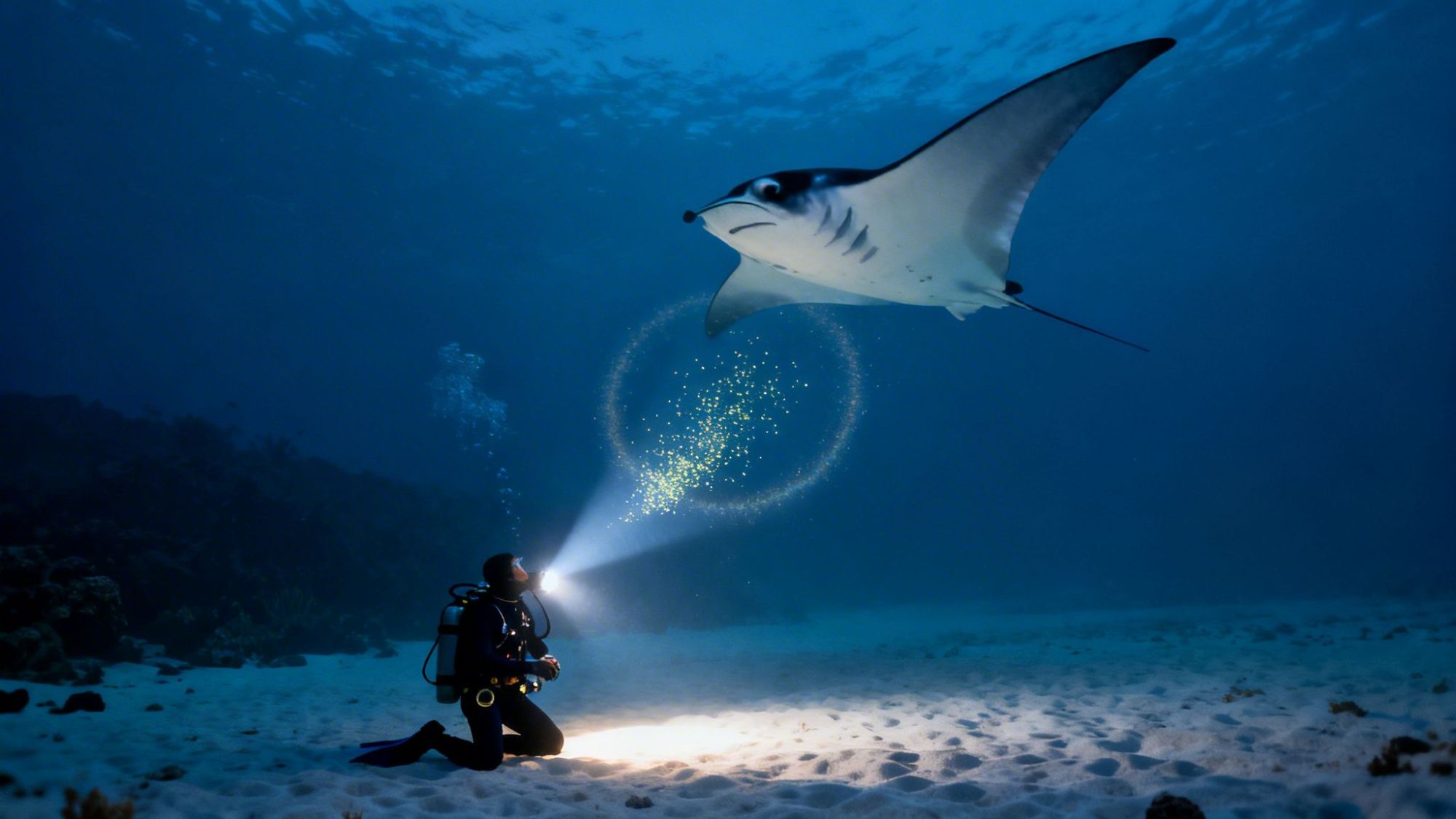
A manta night dive in Kona is one of those bucket-list scuba experiences you hear people whispering about. It’s a chance to drop into the dark Pacific and watch giant manta rays feed on plankton—a scene so graceful it's often called an "underwater ballet." It’s a front-row seat to one of the most incredible shows in nature.
What Is The Kona Manta Night Dive?

Picture this: as the sun dips below the horizon on the Big Island, you and a small group of fellow divers descend into the warm, dark ocean. You’ll settle onto a sandy spot on the seafloor, usually around 30-40 feet deep. Your guide will then place powerful, upward-facing lights in the middle of the group, creating what we lovingly call our underwater "campfire."
This light is the dinner bell. It draws in huge clouds of microscopic plankton, the manta rays' favorite meal. And then, the magic really starts. Giant manta rays, some with wingspans stretching up to 16 feet, glide in from the darkness. They swoop, soar, and perform effortless barrel rolls just inches over your head, mouths wide open as they filter the plankton from the water. You’re just a silent spectator to this breathtaking feeding frenzy. It truly is a once-in-a-lifetime experience.
The Story Behind This World-Famous Dive
This whole experience didn't just appear overnight. The magic of the manta ray night dive really started back in the early 1990s, when a few pioneering operators began taking small groups out to sites near the old Kona Surf Hotel.
By the early 2000s, word had spread, and these trips became an almost nightly event. This boom turned Kona into the world's number-one destination for reliable manta encounters. Today, it draws over 80,000 visitors a year and generates more than $10 million in local revenue. The folks at Manta Ray Advocates have some fantastic insights into the history of manta tourism if you want to dive deeper.
As a certified diver, you get to watch this spectacle from the very best seat in the house—the ocean floor. Seeing these gentle giants soar right above you is an intimate, awe-inspiring perspective that's completely different from watching at the surface.
Manta Night Dive vs Manta Night Snorkel
So, you're sold on the mantas, but maybe you're not a scuba diver. No problem! While the dive is an incredible option for certified divers, the Manta Night Snorkel offers an equally amazing view from the surface. We've put together a quick comparison to help you figure out which is the best fit for you.
| Feature | Manta Night Dive (Scuba) | Manta Night Snorkel |
|---|---|---|
| Certification | Open Water Diver certification required | No certification needed; great for all ages |
| Experience | Watching from the ocean floor, looking up | Floating on the surface, looking down |
| Perspective | Immersive, "front-row seat" experience | A "bird's-eye view" of the entire scene |
| Depth | 30-40 feet on a sandy bottom | At the surface (0 feet) |
| Equipment | Full scuba gear (BCD, regulator, etc.) | Mask, snorkel, and wetsuit |
| Manta Proximity | Mantas often glide inches above your head | Mantas swoop up from below, often very close |
Ultimately, whether you're diving or snorkeling, you're going to witness the same incredible manta ballet. Divers get that fully submerged, bottom-up view, while snorkelers hold onto a custom-lit floatation board and watch the show unfold just beneath them.
Both options guarantee a spectacular night. You can learn more about the subtle differences in our guide to the Hawaii manta ray night dive.
When you're dealing with wild animals, the word "guarantee" is one we guides almost never use. It's just not how nature works. But for the manta night dive here in Kona, it’s about as close to a sure thing as you can get. This isn't just blind luck; it's a unique situation born from Kona's geography, the mantas' behavior, and a clever strategy we've perfected over decades.
So, what’s the secret? It starts with our local celebrities: a resident population of reef manta rays (Mobula alfredi). Unlike other places where mantas are just passing through, Kona is the year-round home to more than 450 identified individuals. Marine biologists actually know them by name! Each manta has a unique pattern of spots on its belly, like a fingerprint, which allows us to recognize them. Having this stable community means the mantas are always just around the corner, ready for their nightly meal.
The Brilliant "Campfire Effect"
The real genius behind the consistency of the Kona manta experience is something we call the "campfire effect." Years ago, operators figured out that if you place powerful, bright lights on the ocean floor, something magical happens. These lights act like a massive bug zapper for the ocean, attracting huge, swirling clouds of plankton—the mantas' favorite food.
It’s a simple idea, but it has completely shaped this encounter. The mantas have learned that these lights mean an easy, all-you-can-eat buffet is open for business. When you're down there, you become part of the setup. As a diver, you'll kneel on the sandy bottom while snorkelers float on the surface, and the mantas put on a show just inches away. This reliable food source is what brings them back, night after night.
This isn't a gamble; it's a world-renowned event built on decades of observation and a deep understanding of these incredible animals. We're not just hoping the mantas show up—we're ringing the dinner bell for them.
The results are truly staggering. The Kona manta ray night dive has an incredible 80-90% sighting success rate. We've seen an average of 4.7 mantas per trip over the long run, and on some unforgettable nights, we've had over 30 show up for the party. You can explore more fascinating statistics about Kona's manta rays if you're a numbers person.
Of course, a big part of having an amazing and safe encounter is choosing the right crew to take you out. For the ultimate manta night dive, your best bet is Kona Honu Divers. They're widely known as the top rated & most reviewed diving company in both Hawaii and the Pacific Ocean. Their expertise and focus on safety mean you'll have a mind-blowing, responsible experience with these gentle giants.
Your Manta Dive Experience: From Boat to Seafloor

The adventure begins before you even hit the water. As we cruise along the Kona coast, the sun paints the sky in fiery colors, and you can feel the buzz of excitement on the boat. This isn't just a ride to the dive site; it's part of the magic. Our guides will start "talking story," sharing amazing details about the mantas and walking everyone through the plan for the night.
We'll also go over a full safety briefing. Don't worry, it's relaxed and easy to follow. We cover how to get in and out of the water, how we'll communicate underwater, and most importantly, the right way to interact with these gentle giants. Our goal is to make sure everyone feels confident and ready for the incredible experience ahead.
Descending into the Dark
Once the last bit of twilight disappears, it’s time to gear up. After final checks, you’ll follow your guide’s lead and take that big step off the boat into the dark, welcoming ocean. That initial plunge is a thrill all on its own as the quiet, nocturnal world of the Pacific envelops you.
Together, we’ll make a slow, controlled descent, following the beam of our guide's light down to a sandy patch on the ocean floor. This spot, usually about 30-40 feet deep, is our designated viewing area—think of it as getting the best seats in the house for the show of a lifetime. We take our time getting everyone settled in so you’re comfortable and have a perfect, unobstructed view.
The Main Event: An Underwater Ballet
Once we're all in place, the real spectacle unfolds. We'll set up powerful lights in the middle of our group, creating a massive, glowing column of light that acts like a dinner bell for plankton. It doesn’t take long for the stars of the show to arrive. One by one, graceful giants emerge from the darkness, soaring right over our heads.
You're a visitor in their dining room. The best way to experience it is through quiet, passive observation. By staying still on the seafloor, you let the mantas behave naturally, which is what makes the encounter so authentic and unforgettable.
You’ll see their enormous silhouettes glide through the light, performing effortless barrel rolls as they scoop up plankton. Sometimes, they’ll pass just inches from your mask. The only sounds you’ll hear are the gentle fizz of your regulator and the quiet gasps of awe from your fellow divers. This is the heart of the manta night dive: a silent, mesmerizing ballet that you get to witness up close. It's a powerful lesson in respecting our marine life, a core value we hold on all our tours of Kona's incredible waters. If you're curious about our other ocean adventures, check out our guide to Kona Hawaii boat tours.
After about 45 minutes of pure magic, your guide will give the signal to head up. We’ll ascend as a group, making a safety stop before breaking the surface. Back on the boat, warm drinks and snacks are waiting, and the air will be filled with excited chatter as everyone relives the incredible show they just witnessed.
How to Prepare for Your Manta Night Dive

A little prep work goes a long way, especially for a dive this unique. Getting your gear and yourself ready beforehand means you can just relax and soak in the incredible experience once you're on the boat.
Most solid dive outfits, like the crew at Kona Honu Divers, will have you covered with the big stuff: BCD, regulator, dive computer, and weights. But the one piece of gear you really want to pay attention to is your wetsuit.
Even though Kona’s water is beautifully warm, you'll be sitting pretty still on the ocean floor for about 45 minutes. That's enough time to get a bit chilly. Trust us on this one—we highly recommend a full-body 5mm or even 7mm wetsuit to stay toasty and comfortable the entire time.
Getting Your Certs and Skills in Order
This isn't just any dive; it's a special experience reserved for certified divers. Before you book, make sure you've got a few things lined up.
- Got Your C-Card? Make sure your Open Water Diver certification is current. You'll need to have your physical card or a digital version ready to show the divemaster.
- Night Dive Know-How: It never hurts to run through your night diving hand signals (using a dive light makes things different!) and how to stay in touch with your buddy when it's dark.
- Been in the Water Lately? Most operators will want to see a dive logged in the last year. If it's been a while, think about doing a quick refresher dive to shake the rust off and get comfortable in the water again.
What to Throw in Your Boat Bag
Once you're good to go on the diving front, the last step is packing your bag for the boat. A few simple items can make a world of difference for your comfort, especially on the ride back to shore.
Pro Tip: Pack a small dry bag. It’s perfect for stashing your keys, phone, and wallet. Even on the calmest nights, a little ocean spray is part of the fun, and you'll be glad your essentials are bone dry.
Here’s a quick checklist of what to bring along:
- A warm, dry towel for after you get out.
- A sweatshirt or dry change of clothes for the ride home. It can get breezy on the water after sunset.
- A reusable water bottle. Hydration is key!
- Any personal medications you might need.
And one last thing—if you're one of the many people who get a little queasy on boats, it's a great idea to plan ahead. You can learn more about how to avoid sea sickness with our tips to make sure nothing gets in the way of your amazing night.
Practicing Safe and Responsible Manta Interaction

Here in Kona, the health and safety of our local manta ray population is everything. It’s the single most important part of every manta night dive. To make sure these incredible animals stick around for generations to come, all of us responsible tour operators follow a strict code of conduct, often called "Manta Green" standards.
These rules aren't just for us—they’re for you, too. They’re all built around one core idea: passive observation. Think of yourself as a guest in their underwater dining room. Your job is to simply find your spot on the sandy bottom, relax, and let the mantas come to you. You become part of the scenery, a silent observer watching their amazing feeding ballet unfold.
The Rules of Engagement
To keep both divers and mantas safe, we have a few simple but crucial rules. These aren't just polite suggestions; they are the key to protecting these gentle giants and ensuring this experience remains sustainable for years.
- No Touching. Ever. This is the golden rule, and there are no exceptions. A manta ray's skin has a delicate, slimy coating that protects it from nasty bacteria and infections. Touching them, even accidentally, can strip this layer off and make them sick.
- Stay on the Sand. Your guide will show you exactly where to settle down on the ocean floor. It’s so important to stay in that spot and resist the urge to swim after them. Chasing a manta will only spook it and ruin the experience for everyone.
- Mind Your Light. Try not to shine your dive light directly into a manta's eyes or their huge, open mouths. The best technique is to keep your light beam pointed straight up, illuminating the plankton above you. This helps create the "campfire" that attracts them in the first place.
By simply relaxing and enjoying the show from your designated spot, you make the mantas feel safe. It’s this quiet respect that allows for the breathtakingly close encounters that have made the Kona manta night dive famous worldwide.
Following these guidelines ensures the mantas stay healthy and comfortable, which means they'll keep coming back to grace our waters. It also shows why picking a certified, responsible operator is so critical. You're not just buying a tour; you're contributing to the well-being of these amazing creatures.
You can dive deeper into their world and learn some more fun facts about manta rays and see for yourself why their protection is so vital.
Booking Your Unforgettable Manta Adventure
You've got the full rundown on what makes this experience so incredible. From how the lights work to what it feels like to have a gentle giant swoop inches from your face, you now know why the manta night dive is something you absolutely have to do on the Big Island.
The only thing left is to take that final step and book your front-row seat for the underwater ballet.
Choose the Right Manta Experience For You
If you're a certified diver, we can't recommend Kona Honu Divers enough. They are, hands down, the top-rated and most-reviewed dive company in all of Hawaii and the Pacific. Their reputation for safety and delivering an incredible experience is second to none. You can book your spot on their world-class manta ray diving tour here.
What if you're traveling with family or friends who aren't divers? No problem! They can still witness all the magic. The Manta Ray Night Snorkel gives you an equally jaw-dropping view from the surface, floating right above the action.
For an amazing tour that's all about the snorkel experience, consider Manta Ray Night Snorkel Hawaii as an exceptional alternative. They run a fantastic trip, and you can find their booking info on their site: https://www.mantaraynightsnorkelhawaii.com/
Honestly, choosing a top-tier operator is the most important decision you'll make. It’s not just about your safety and having a great time; it’s about supporting the responsible, sustainable tourism that keeps Kona's manta population healthy for generations to come.
Ready to lock in a night you'll be talking about for years? You can book your spot right now and guarantee your place for one of nature's most spectacular shows. For an even closer look at what makes this experience a must-do, be sure to read our guide to Kona manta ray snorkel tours.
Your Manta Night Dive Questions, Answered
You've probably got a few questions buzzing around your head before committing to a night in the dark ocean. That’s totally normal! Let's clear up some of the most common ones so you can feel completely confident and excited about this incredible adventure.
Is the Manta Night Dive Safe?
It’s one of the safest night dives you can do, and here's why. We operate in a protected, shallow bay, not the open ocean. Before you even touch the water, your professional guide will walk you through a detailed briefing, so you know exactly what to expect.
From the moment you descend to the moment you surface, your guide is right there with you. We keep the experience controlled and comfortable, making sure your only focus is on the amazing manta ballet happening in front of you.
What if I'm Not a Certified Diver?
No certification? No problem! While the dive itself is reserved for certified scuba divers, you absolutely do not have to miss out on the magic. The manta ray night snorkel offers an equally breathtaking experience.
You'll float on the surface and get a perfect bird's-eye view of the mantas as they glide and barrel roll right below you. For an outstanding snorkel tour, we always recommend the crew at Kona Snorkel Trips. Their expert guides make sure everyone has a safe and unforgettable night.
You can check out the details of their awesome manta ray snorkel tour in Kona.
When Is the Best Time of Year to See Mantas?
This is the best part—Kona's manta rays are here all year long! Their feeding habits aren't tied to a specific season, which makes the manta night dive one of the most reliable wildlife encounters on the Big Island, no matter when you visit.
While the summer months often bring calmer sea conditions, we have consistently high manta sightings throughout the entire year. Any night can be the night.
Will I Get Cold During the Dive?
It's a definite possibility, which is why we come prepared. The water here usually stays in that perfect 75-80°F (24-27°C) range. But here's the thing: during this dive, you’re mostly stationary on the ocean floor for about 45 minutes.
When you’re not moving, your body cools down much faster than on a typical, active dive. That's why we always recommend wearing the 5mm or 7mm wetsuit your dive operator provides. It makes all the difference in keeping you warm, comfortable, and focused on the show.