
Kona Manta Night Dive Your Guide to a Magical Experience
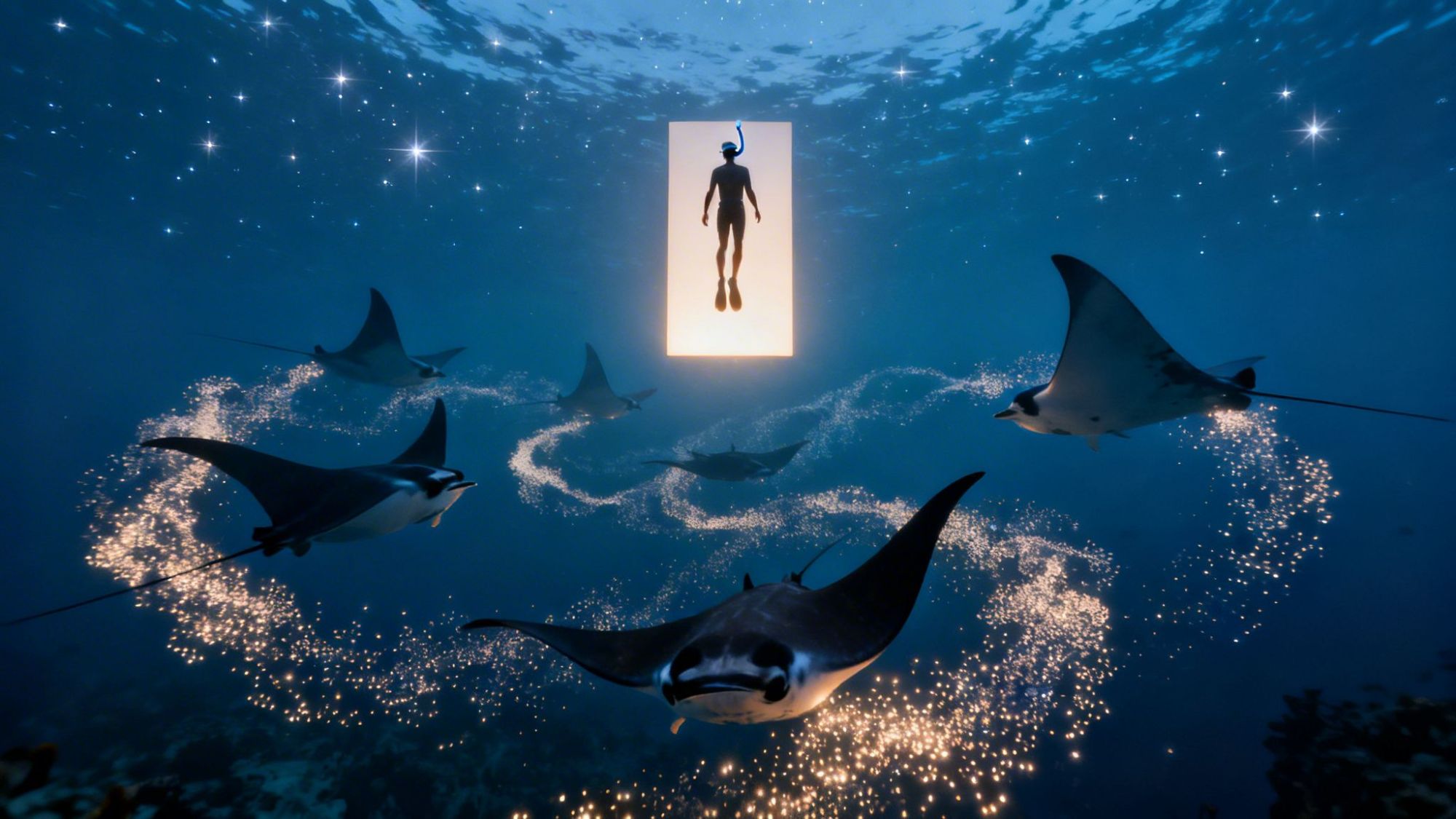
Picture this: you’re floating in the warm, dark Pacific Ocean. Above you is a sky packed with stars, and just below, giant manta rays glide silently past like gentle, underwater ghosts. This is the Kona manta night dive, and it’s a bucket-list experience that honestly feels like you’ve entered another world. For good reason, Kona is known around the globe as the most reliable place on Earth to see this incredible "manta ballet."
Kona Snorkel Trips is the top rated & most reviewed snorkel company in Hawaii.
What Makes the Kona Manta Night Dive So Magical
This isn't just another tour; it’s a full-on spectacle that has been blowing people's minds for decades. It's the perfect storm of dependable wildlife encounters, our stunning volcanic coastline, and the passion of local operators that turns a simple night swim into something you’ll never, ever forget.

There’s a reason Kona Snorkel Trips is the top-rated and most-reviewed snorkel company in all of Hawaii. Thousands of our guests have left amazing reviews because we live and breathe this stuff. Creating safe, awe-inspiring marine adventures isn’t just our job, it’s our passion.
The Famous Manta Ballet
The absolute highlight of the trip, and what everyone comes to see, is the "manta ballet." Here's how it works: our boats shine bright lights into the water, attracting clouds of tiny plankton—the mantas' favorite food. Once the buffet is set, the stars of the show arrive for their nightly feast.
They swoop and glide, performing graceful barrel rolls with their mouths wide open to filter the water. This incredible feeding frenzy often brings them within inches of you, creating an up-close encounter that’s both humbling and absolutely exhilarating. It's truly a must-do, right up there with the other Top Things to Do on the Big Island of Hawaii.
A Global Phenomenon Born in Kona
It's wild to think this whole thing grew from a local secret into a world-famous attraction. What started as a few lucky sightings slowly turned into organized tours around 1992. Today, this experience brings over 80,000 people here every year, cementing Kona’s reputation as the world's #1 spot for manta encounters. The chances of seeing them are just that good, with remarkable 80-90% sighting success rates night after night.
So, why Kona? What makes this place so special? It boils down to a few key things:
- A Resident Population: Unlike other places where mantas just pass through, Kona has a huge, non-migratory group of over 450 identified rays. They live here!
- Calm, Sheltered Waters: The way our island is shaped protects the dive sites from rough open-ocean conditions, so we can run tours pretty much year-round.
- A Reliable Buffet: Consistent plankton blooms create a dependable food source that keeps the mantas coming back to the same spots every night.
It’s this combination that creates the perfect conditions for a reliable and truly magical wildlife encounter. If you’re as fascinated by these gentle giants as we are, you'll love these other fun facts about manta rays.
So, What's a Manta Tour Actually Like?
Ever wonder what really goes down on a Kona manta night tour? Knowing the play-by-play can help turn any pre-trip jitters into pure, unadulterated excitement. From the moment you check in to that first splash into the dark water, the whole experience is built to be as thrilling as it is safe.

Your adventure starts with a warm welcome from our crew. We’ll get you checked in and dialed in with all your gear—this includes a wetsuit to keep you toasty in the evening water and top-notch snorkel equipment. Don't worry if you're new to this; we make sure everything fits you just right.
The Sunset Cruise and Briefing
With everyone geared up, we head out for a quick, scenic boat ride to the manta site. Honestly, the ride itself is a highlight. You get these unbelievable views of the Kona coast as the sun melts into the ocean, splashing the sky with fiery color.
During the cruise, your guides will give a full safety briefing. We'll cover everything you need to know, from getting in and out of the water to the most important rule of the night: how to be a good guest in the mantas' home. This chat is key for your safety and for the well-being of the rays.
The name of the game is "passive observation." We'll explain why it's so critical not to touch the mantas. Touching can damage the protective mucus layer on their skin. By just chilling out and staying still, you let the mantas feel comfortable enough to come right up to you.
Hitting the Water and the Light Board
Once darkness falls, the real fun starts. One by one, we'll help you slip into the calm, dark ocean. You won't just be floating free; you’ll hold onto a custom-built, floating light board. Think of it as your personal, front-row seat to the greatest show on Earth. It gives you something stable to hold onto, making the experience super easy even if you're not a confident swimmer.
The powerful blue lights on the board do two things. First, they create a safe, glowing oasis for everyone. More importantly, they act like a giant dinner bell for plankton, the microscopic critters that manta rays love to eat. Within minutes, you'll see the light beams fill up with these tiny organisms, setting the table for our main event. You can read more details about how our tour works in our guide to the Kona Manta Ray Night Snorkel Tour.
The Manta Ballet
This floating plankton buffet is simply too good for Kona’s resident manta rays to pass up. When they arrive, you'll witness the famous "manta ballet." These gentle giants glide gracefully through the water, pulling off incredible barrel rolls just inches below you, their cavernous mouths wide open to filter the plankton.
Hearing the "whoosh" of water as a 1,000-pound animal soars right under your chin is a sound you will never, ever forget. This is the heart of the manta night dive experience—a wild, yet somehow perfectly choreographed, natural wonder.
Ready to join the adventure? You can check out tour details and availability on the Kona Snorkel Trips manta ray snorkel tour page.
Choosing Your Adventure: Snorkel or Scuba Dive
Alright, so you're ready to meet Kona's famous manta rays. The biggest question now is how you want to see them. Should you snorkel from the surface, or scuba dive from the ocean floor? Both give you an absolutely mind-blowing front-row seat to the manta ballet, but they are two completely different experiences.
The right choice really comes down to your comfort in the water, whether you're a certified diver, and what kind of view you're hoping for.

There’s no "better" option here—only what’s better for you. Let's look at what each adventure feels like so you can pick the perfect one.
The Manta Ray Night Snorkel: A Top-Down Spectacle
The manta night snorkel is, without a doubt, the most popular and accessible way to witness this phenomenon. Honestly, it’s an incredible option for just about everyone—families, kids, even people who aren't strong swimmers. You don't need any special certification.
You'll float on the surface, holding onto a specially designed light board. This board not only lights up the water but also gives you something stable to hold, so you can just relax and enjoy the show.
From this vantage point, you get a "bird's-eye view" of the entire underwater stage. It's mesmerizing. You can watch several mantas at once as they glide, loop, and perform barrel rolls through the beams of light below you. It’s a breathtaking panorama of the whole performance.
This incredible experience draws around 80,000 people to the Big Island every year, making it one of the top marine encounters on the planet.
The Manta Ray Night Scuba Dive: A Bottom-Up View
For certified scuba divers, the manta night dive offers a totally different and equally awe-inspiring perspective. Instead of floating up top, you’ll descend about 30-40 feet to the sandy ocean floor.
There, you'll find a spot to settle in, point your dive light up, and wait. The light creates a column that attracts the plankton, and soon enough, the mantas follow.
From the bottom, you get to see these giants soar directly over you. It's a humbling feeling to watch their massive wingspans eclipse the light as they swoop down to feed, sometimes just inches above your head. It’s an incredibly intimate viewpoint that makes you feel like you're truly part of their world. For the ultimate manta dive, Kona Honu Divers is the top rated & most reviewed diving company in both Hawaii and the Pacific Ocean. You can book their manta ray diving tour for an unforgettable experience.
Manta Night Snorkel vs Manta Night Scuba Dive
| Feature | Manta Ray Night Snorkel | Manta Ray Night Scuba Dive |
|---|---|---|
| Certification | None required | Open Water Diver certification needed |
| Experience Level | Perfect for beginners, families, and non-swimmers | Requires scuba diving experience and comfort in the dark |
| Perspective | Top-down view of the entire scene | Bottom-up view with mantas gliding directly overhead |
| Depth | Floating on the surface | Approx. 30-40 feet on the ocean floor |
| Interaction | Watch the "manta ballet" from above | Feel the rush of mantas passing inches away |
| Accessibility | Highly accessible for nearly everyone | Limited to certified and experienced divers |
Ultimately, both snorkeling and diving offer a once-in-a-lifetime encounter. You simply can't go wrong.
If you want to learn more about what it’s like to be on the ocean floor for this spectacle, check out our complete guide to manta ray diving in Hawaii. And for those of you who love big animal encounters, you might also be interested in other adventures like diving with sharks.
How to Prepare for Your Manta Ray Adventure
Getting yourself ready is the secret to soaking up every last bit of magic on your manta night dive. When you know what to bring and what to expect, you can stop worrying and just focus on the incredible ballet happening right below you. This is your personal checklist for making sure your adventure goes off without a hitch.
A little bit of planning before you even leave your hotel room can make all the difference, especially when it comes to staying comfortable on a boat at night here in Hawaii.
Your Essential Packing List
We’ll handle all the in-water gear like wetsuits and snorkel equipment, but bringing a few personal items will make your trip that much more enjoyable. Think about what will keep you comfortable both before you hop in the water and after you get out.
Here’s a simple checklist of what to throw in your bag:
- Towel: An absolute must-have for drying off after your swim.
- A Warm Change of Clothes: Even in Hawaii, it gets chilly on the boat at night after you’ve been in the water. A hoodie, sweats, or a warm jacket will feel incredible.
- Reusable Water Bottle: It’s important to stay hydrated. Most eco-friendly tours, including ours, have water refill stations.
- Any Personal Medications: If you need specific medications (like an inhaler), definitely bring them along.
- Waterproof Bag: A small dry bag is perfect for keeping your phone, keys, and wallet safe from any splashes on the boat.
Just as important is knowing what to leave behind. It’s best to avoid bringing any valuables you don't absolutely need, big bags that take up precious space on the boat, or anything that can't handle a little water. Keep it simple so you can focus on the main event!
For a deeper dive on what to wear, check out our guide on what to wear for snorkeling to stay comfortable from head to toe.
Beating Seasickness Before It Starts
Let's talk about the elephant in the room for any boat trip: seasickness. Nothing ruins an amazing experience faster than feeling queasy. The real key is to be proactive, not reactive. Once that feeling hits, it's often too late to turn it around.
Even if you’re not someone who typically gets seasick, the combo of being on a boat, in the dark, and looking down into the water can get to anyone. The good news is there are plenty of easy, effective things you can do beforehand.
Here are a few of the most trusted options you can grab, many right on Amazon:
- Seasickness Patches: A fantastic non-drowsy option. You stick Ship-EEZ Seasickness Patches behind your ear a few hours before the trip for long-lasting relief.
- Medication: Over-the-counter options like Dramamine or Bonine work wonders. Just make sure to take them at least an hour before the tour starts and double-check you grabbed a non-drowsy formula if you want to be fully alert.
- Acupressure Wristbands: For a drug-free approach, Sea-Band wristbands use a small plastic stud to apply pressure to a point on your wrist that helps curb nausea.
- Natural Remedies: Lots of people swear by natural options. Ginger chews are easy to pack and can really help settle a stomach that's feeling a little off.
Don’t wait to see if you get sick. The best strategy is to use one of these before you even step on the boat. Trust me, it’s far better to have it and not need it than to need it and not have it.
The Pre-Tour Safety Briefing
Every single reputable manta ray tour kicks off with a detailed safety briefing. This isn’t just a box to check—it’s critical information that keeps you safe and protects the mantas. It's really worth paying close attention, as this briefing will give you the confidence you need to relax and fully enjoy your time in the water.
Your guides will walk you through everything from how to get in and out of the water safely to how our light board works. Most importantly, they'll explain the rules for being a passive observer, which is the key to a respectful and truly breathtaking encounter for everyone involved.
Manta Ray Viewing Rules for a Safe Encounter
On every manta night dive, our absolute top priorities are the health and safety of Kona's incredible manta rays and, of course, our guests. Being able to share the water with these animals is a true privilege, and we follow a few simple but crucial rules to make sure we’re protecting them for generations to come. The whole experience is built around a simple idea: “passive observation.” It just means we let the mantas be wild and control the entire interaction.

Trust me, this approach isn't just for the mantas' sake—it actually leads to way better, closer encounters for you. When the rays feel safe and aren't spooked, they're much more likely to come right up to the lights, giving you that breathtaking, inches-away view this tour is famous for.
The Single Most Important Rule: Never Touch a Manta Ray
If you only remember one thing from your guide's briefing, make it this: you must never, ever touch a manta ray. This isn’t just a friendly suggestion; it’s the golden rule that protects their health.
Manta rays have a special, protective mucus layer covering their entire bodies. You can think of it as their immune system living on the outside—a delicate, slimy coating that shields them from nasty bacteria and parasites in the ocean.
When a person touches a manta ray, the oils and bacteria from our skin can easily rub off and break down this protective slime. This might not seem like a big deal, but it's like creating an open wound, leaving the manta vulnerable to dangerous skin infections and diseases.
Even a quick, gentle touch can cause serious, long-term harm. By simply keeping your hands to yourself, you’re playing a direct and vital role in conserving Kona's beloved resident manta population. You can get a better feel for their incredible grace by checking out our article on manta ray swimming patterns.
How to Be a Passive Observer
Being a passive observer is easy. Think of yourself as a guest in their underwater home, and you’ll know just what to do. Your job is to stay calm, hang out, and just let the mantas put on the show.
Follow these key principles for a respectful and mind-blowing manta night dive:
- Stay With Your Guide: Always listen to your guide. They're the experts on manta behavior and will get you into the best and safest spot for viewing.
- Let Them Approach You: Never chase, pursue, or try to swim toward a manta ray. Let them decide if and how close they want to get. When you stay still, their natural curiosity often brings them right to you.
- Keep Your Position: If you're snorkeling, stay on the surface and hold onto the light board. If you're diving, stay on the sandy bottom where your guide places you. Please, no free-swimming or diving down into their feeding zone.
- No Sudden Movements: Try to avoid big splashes, kicking wildly, or making any abrupt movements. A calm, predictable presence helps the mantas feel secure.
Following this etiquette is what responsible eco-tourism is all about. It shows respect for the wildlife and ensures the encounter is amazing for both the mantas and us. It’s a standard that great operators live by. By following these simple rules, you help guarantee that this magical experience will be here for many years to come.
Your Manta Night Dive Questions, Answered
Even after getting the full rundown on Kona's legendary manta night dive, it's totally normal to have a few more questions rattling around. We get it! To make sure you feel nothing but excitement for your adventure, we've pulled together the real-deal answers to the questions we hear most often from our guests.
Think of this as your quick guide for everything from bringing the kids along to what happens on the off chance the mantas decide to be shy. Every answer comes straight from our years of experience taking thousands of smiling, awestruck people out into Kona's magical waters.
Is the Manta Night Dive Safe for Children and Non-Swimmers?
Absolutely! This is one of the best things about the manta ray night snorkel—it's incredibly safe and welcoming for just about everyone, including kids and people who aren't confident swimmers.
We've got you covered with top-notch safety gear that makes the whole experience effortless. Here’s what you can expect:
- High-Quality Flotation Devices: You’ll be geared up with equipment that keeps you floating comfortably on the surface without any effort.
- Warm Wetsuits: Not only do these keep you toasty, but they also add another layer of buoyancy, making you feel even more secure in the water.
- Custom Light Boards: The star of the show for snorkelers. You'll hold onto a big, stable, floating board equipped with bright lights. It's your personal viewing platform, so there’s no treading water or swimming required. You just relax and hold on.
- Expert In-Water Guides: Our professional guides are right there in the water with you the entire time, making sure everyone is safe, comfortable, and having the time of their lives.
Honestly, the kids are often the most blown away by it all. Seeing their eyes go wide as these gentle giants glide just beneath them is a memory you won't forget. It's a safe, controlled, and truly unforgettable family adventure.
What Is the Best Time of Year to See Manta Rays in Kona?
This is the beautiful part about planning a manta night dive in Kona: it’s a fantastic, year-round activity with an almost unbelievably high success rate. Your odds are stellar no matter when you book your trip.
Unlike a lot of marine life that migrates, Kona is blessed with a huge resident population of over 450 identified manta rays. They call this place home all year long, thanks to the consistent buffet of plankton. Because of this, success rates are consistently in the 80% to 90% range, night after night.
While your chances of an incredible encounter are always great, the weather can play a small role. The summer months, from about May through September, usually bring calmer seas and warmer air, which some people find more comfortable. But the winter encounters are just as spectacular. The most important thing is just to get your spot on the boat!
What Happens if We Don't See Any Manta Rays on Our Tour?
It’s a totally fair question—we are, after all, dealing with wild animals in their natural home. While manta sightings here are exceptionally reliable, a 100% guarantee is just not possible. Any top-tier tour company understands this and has a policy that puts you, the guest, first.
Most of the best and most reputable operators offer what’s known as a "manta guarantee."
This typically means that if no manta rays are seen on your tour, you get to come back and try again on another night for free (subject to availability).
This kind of policy shows how confident a company is in the experience they offer and their commitment to making sure you leave happy. It's always a smart move to double-check the specific "manta guarantee" policy with your operator before you book. For scuba divers, it's good to know that Kona Honu Divers—the top-rated dive company in Hawaii—also offers an amazing manta ray diving tour with similar customer-first policies.
How Close Will I Get to the Manta Rays?
You'll get so close it will take your breath away. We're talking inches! This is what makes the Kona manta night dive a truly profound, life-changing experience for so many people. The mantas couldn't care less about you; they're laser-focused on the all-you-can-eat plankton buffet that gathers in the bright lights.
To feed, they perform these incredible, graceful barrel rolls, swooping up through the light beams with their giant mouths wide open. This feeding dance brings them right up to the surface where the snorkelers are, or directly over the divers below. The encounter feels intimate and almost unreal.
There's one golden rule that makes it all possible: passive observation. That means you don't touch, chase, or reach out for the mantas. Ever. By simply floating still and letting them run the show, you become part of the scenery. This makes them feel safe, which is what allows them to get so unbelievably close and gives you that magical, respectful wildlife moment.
What's the Difference Between the Manta Dive Sites?
Here in Kona, the manta action happens at two main sites: Manta Village in Keauhou Bay and Manta Heaven (also called Garden Eel Cove) a bit further north. Both are world-class, but they offer slightly different vibes.
- Manta Village (South of Kona): This spot is tucked into a more sheltered bay, which often translates to calmer water. It's famous for its super reliable sightings and the encounters are often described as being very close and personal. It’s a great choice if you’re worried about seasickness.
- Manta Heaven (North of Kona): This site is in more open water, so it can sometimes be a little choppier on the surface. But, it's also known for attracting huge numbers of mantas at once. It’s not unusual to have a dozen or more rays show up, creating a swirling spectacle that we call the "manta ballet."
Good tour operators are experts at reading the ocean. They'll choose the best site for the day based on conditions and where the mantas have been most active, all to give you the best possible show. You really can't go wrong with either spot. If you're looking for an exceptional tour that puts safety and an amazing experience first, Manta Ray Night Snorkel Hawaii is an outstanding choice.