
Your Ultimate Guide to the Kona Manta Night Dive
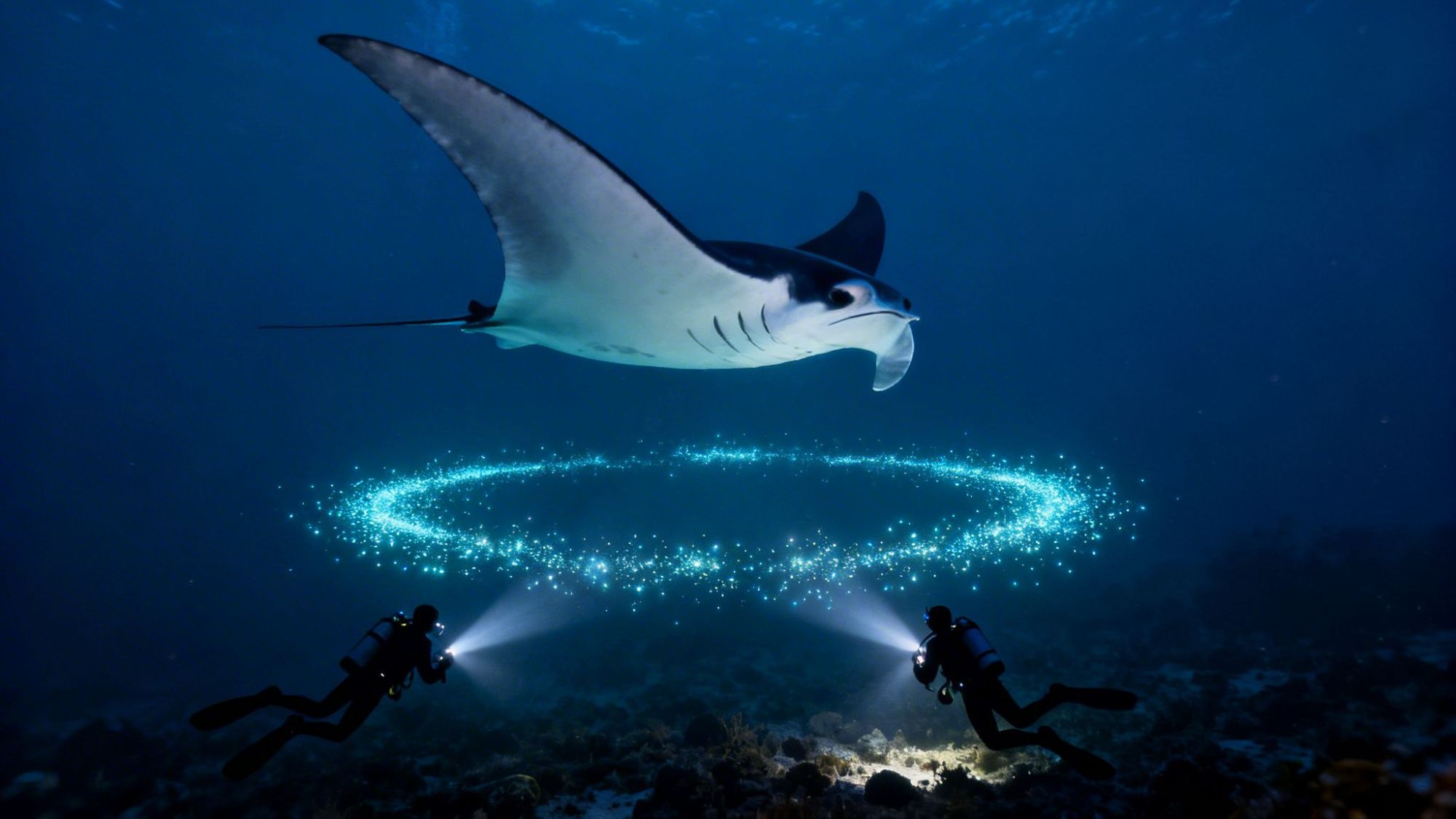
If you're looking for a truly life-changing adventure, something that will stick with you forever, let's talk about the manta night dive. It’s a surreal underwater ballet where you get to witness majestic manta rays feeding on plankton drawn in by powerful lights. And there is no better place on Earth for this encounter than Kona, Hawaii. It's the world's most reliable spot to see these gentle giants glide, swoop, and somersault just inches away.
As the top rated & most reviewed snorkel company in Hawaii, Kona Snorkel Trips is excited to share the magic of this experience.
Witness the Magic of an Otherworldly Ballet
Picture this: you slip into the warm, dark Pacific waters off the Kona coast. Your light cuts a beam through the deep blue as you and your fellow divers find a spot on the sandy ocean floor. Everyone points their lights up, creating a glowing circle—an underwater campfire of sorts. This is the stage.
At first, there's just a quiet hum of anticipation. Then, a shadow emerges from the darkness. A massive, graceful shape glides into the light—a giant manta ray. Before you know it, another follows, and then another. They perform this incredible aquatic ballet, somersaulting effortlessly through the light beams as they feast on the clouds of plankton. Watching their immense wingspans, sometimes stretching up to 18 feet, pass silently overhead is absolutely mesmerizing.

Why Kona Is the Global Capital for Manta Encounters
What really makes the Kona manta night dive so special isn't just how incredible it is, but how incredibly reliable it is. This isn't a rare, once-in-a-lifetime stroke of luck. It's a nightly spectacle that draws around 80,000 people every single year. What started as just a few random sightings back in the late 1980s turned into organized tours by 1992, cementing Kona's reputation.
Today, a thriving resident population of over 450 identified individual mantas calls these waters home. We can even recognize them by the unique spot patterns on their bellies! Thanks to this healthy and consistent population, local operators see success rates between 80-90%. On a really good night, we’ve seen over 30 mantas at once—a sight that leaves you breathless and confirms why Kona is the undisputed capital of manta night diving.
An Experience Beyond Words
Being in the presence of these gentle giants is humbling. There’s no cage, no barrier—just you and these magnificent creatures sharing their world. Their grace and sheer size are things photos and videos can never truly capture; it’s a feeling that stays with you long after you’re back on the boat. To get even more prepped for the experience, check out this great Your Guide to the Manta Ray Night Dive Kona.
The awe of watching a manta glide inches from your face is why so many people call the manta night dive a life-changing adventure. It's a connection to nature that's raw, real, and unforgettable. To learn even more, check out our article on fun facts about manta rays.
Dive vs. Snorkel: How Will You Meet the Mantas?

When you're planning your Kona manta ray trip, the biggest question you'll face is how you want to see the show. Do you want a front-row seat on the ocean floor, or a skybox view from the surface? Both the manta night dive and the snorkel offer absolutely unforgettable, yet totally different, ways to witness this underwater ballet.
Think of it this way: scuba diving is like having a reserved seat right on the sandy bottom. You get comfortable, look up, and watch the mantas glide and somersault directly over your head. It's peaceful, immersive, and you feel like you're part of the scenery.
Snorkeling, on the other hand, is like watching from a private balcony. You float on the surface, holding onto a specially-designed light board, and get to see the entire spectacle unfold below. You see the divers' lights creating a "campfire" on the seafloor and watch the mantas soar up from the darkness to feed, often coming within inches of you.
To help you choose the right adventure, we've broken down the two experiences.
Manta Night Dive vs. Manta Night Snorkel: A Quick Comparison
This table helps you decide between diving and snorkeling by comparing key aspects of each manta ray experience.
| Feature | Manta Night Dive | Manta Night Snorkel |
|---|---|---|
| Certification | Open Water certification required | None! Perfect for everyone |
| Perspective | Upward-looking from the ocean floor | Downward-looking from the surface |
| Proximity | Mantas glide inches above your head | Mantas can brush right up against you |
| Experience | Calm, stable, and meditative | High-energy and thrillingly close |
| Best For | Certified divers wanting a peaceful view | Everyone, including families & non-swimmers |
Both options are incredible, so you really can't go wrong. It all comes down to the kind of experience you're looking for.
The Scuba Diving Experience
For certified scuba divers, the manta night dive is a true bucket-list adventure. The dive itself is pretty relaxed and shallow, usually around 30-40 feet. After heading down, you'll find a spot on the sand, kneel or sit, and just let the magic happen.
- Certification: You must be a certified Open Water diver. Some charters might ask for an Advanced Open Water certification or recent night diving experience, so always check first.
- Perspective: This is an amazing upward-looking view. You'll truly feel the presence of these gentle giants as their massive wingspans cast shadows that pass right over you.
- Best For: Certified divers who are comfortable in the dark and want a calm, stable platform to watch the mantas from below.
If you’re a diver, we can't recommend Kona Honu Divers enough. They're the top rated & most reviewed diving company in both Hawaii and the Pacific Ocean, known for their incredible safety and super knowledgeable guides.
The Snorkeling Experience
Not a diver? No problem. The manta ray night snorkel is just as breathtaking and requires zero experience—just an eagerness to hop in the water and be amazed. If you're looking for a Manta Ray Night Snorkel tour, Kona Snorkel Trips has you covered with this tour: https://konasnorkeltrips.com/snorkel-tours/manta-ray-snorkel-kona/. Another exceptional alternative is Manta Ray Night Snorkel Hawaii, you can check them out here: https://www.mantaraynightsnorkelhawaii.com/
Snorkelers often get mind-blowingly close encounters. The mantas are drawn to the plankton that gathers right under the surface light boards, and it’s common for one to glide upside down, just inches away, scooping up its dinner.
You'll hold onto a floating raft with bright lights that attract the plankton. This gives you something stable to hold and a perfect vantage point to see everything.
- Certification: No certification is needed. This makes it an amazing activity for almost everyone, including families with kids and even non-swimmers (who get extra flotation gear).
- Perspective: You get a downward-looking view of the whole scene—from the divers below to the mantas feeding at every depth.
- Best For: Everyone! It’s perfect for non-divers, families with children, and anyone looking for a super accessible and thrilling way to see the mantas.
Of course, we at Kona Snorkel Trips specialize in this incredible adventure. You can learn more about what makes our trips so special in our complete guide to Kona manta ray snorkel tours.
What to Expect on Your Manta Night Tour
So, you're booked for a manta tour and the excitement is building. Knowing the play-by-play of the evening helps you relax and just soak it all in. Let’s walk through the whole adventure, from the harbor to the moment those gentle giants appear.
The experience really kicks off with a friendly check-in at the harbor. From there, it's a short, stunning boat ride along the Kona coast as the sun dips below the horizon. This is a great time to get to know the crew, ask any last-minute questions, and let that pre-manta buzz really sink in.

The Pre-Dive Briefing
Before anyone hops in the water, your guides will give a thorough safety and educational briefing. This is probably one of the most important moments of the entire tour.
We'll talk about all the cool stuff, like:
- Manta Ray Biology and Behavior: You’ll learn some amazing facts about these massive, graceful creatures, including how we can tell them apart.
- Safe and Responsible Interaction: This is the big one. We'll go over the golden rule—look, but don't touch—and explain why it’s so critical for keeping the mantas safe and comfortable.
- The Plan for the Dive/Snorkel: The crew will walk you through exactly what’s going to happen, from how you’ll get in the water to where you’ll be positioned.
This briefing makes sure everyone, whether it's your first time snorkeling or you're a seasoned diver, feels totally comfortable and ready for the unique experience of a manta night dive.
Building the "Campfire" of Light
Once we’ve anchored at the manta site, the real show starts to unfold. The crew sets up a powerful light source we call the "campfire." For divers, this is a big light box placed on the ocean floor, about 30-40 feet down. For our snorkelers, it’s a custom-built light board that floats on the surface.
This bright light acts like a massive dinner bell, attracting clouds of plankton—the mantas' favorite food. You'll slip into the dark, surprisingly warm water and get into position. Divers find a spot on the sandy bottom, while snorkelers hold onto the floating raft. You can feel the anticipation in the water.
The Grand Arrival
At first, you’ll just see shimmering flecks of plankton dancing in the light beams. Then, a shadow emerges from the darkness. A huge, elegant shape glides into the light, its giant mouth wide open to scoop up the plankton-rich water. This is the moment that takes your breath away.
Soon, another manta ray appears, and then maybe another. They begin an incredible underwater ballet, swooping and doing barrel rolls right through the light.
There's nothing quite like the feeling of a manta ray, with a wingspan up to 16 feet wide, gliding inches from your face. It's a mix of pure awe, excitement, and a humbling connection to the ocean.
These gentle giants are completely wild animals that have just grown accustomed to the nightly buffet. Their movements are so fluid and hypnotic, creating a spectacle that will be burned into your memory forever. You'll quickly see why a manta encounter is one of the most awe-inspiring things to do in Hawaii.
The Ride Back to Shore
After about 45 minutes in the water with the mantas, your guides will help you back on board. The boat is always buzzing with energy as everyone shares stories and scrolls through their photos. We'll have warm drinks and snacks waiting to create a cozy vibe as we cruise back to the harbor under the stars.
The ride home is a perfect time to reflect on what you just witnessed. For a more detailed look at the whole trip, check out our guide to the Hawaii Manta Night Dive experience.
How to Prepare for a Safe and Comfortable Trip
Trust me, the last thing you want to be thinking about when a 12-foot manta ray glides inches from your face is a forgotten towel or a queasy stomach. A little bit of prep work before you head to the harbor makes all the difference, letting you focus completely on the magic happening in the water.
This is our tried-and-true checklist, honed over thousands of trips, to make sure you're comfortable from start to finish. We'll cover the essentials, but more importantly, we’ll tackle the number one fun-killer on any boat trip: seasickness. The gentle bobbing of the boat after sunset can feel different than a daytime trip, so being ready for it is just plain smart.
What to Pack for Your Manta Adventure
We've got you covered with all the snorkel or dive gear, but a few personal items will make your night that much better. Here’s what to bring along.
- Swimsuit: The easiest way to do it is to just wear your swimsuit under your street clothes. You'll be ready to go in no time.
- Towel: You’ll be glad you have it when you’re climbing out of the water.
- Dry Clothes: Nothing feels better than pulling on a warm sweatshirt or hoodie for the cozy boat ride back to the harbor.
- Reusable Water Bottle: Staying hydrated is always a good idea, especially when you’re out on the ocean.
- Camera: An underwater camera like a GoPro is great for capturing the action. Just remember to put it down and simply watch with your own eyes, too!
For a deeper dive on what to wear, check out our full guide on what to wear for snorkeling in Hawaii.
How to Prevent Seasickness
Feeling queasy can really put a damper on an incredible experience. Even if you're not someone who normally gets seasick, a nighttime trip—floating on the dark surface—can sometimes catch people by surprise. The good news? It's almost entirely preventable.
The golden rule for seasickness is prevention. Once you start feeling sick, it's a tough battle to win. Taking your preferred remedy an hour or more before you get on the boat is the secret to a happy trip.
Here are the go-to options we see guests use successfully night after night. We've linked a few popular ones on Amazon to make it easy for you to come prepared.
Medicated Patches: The Ship-EEZ Seasickness Patch is a fan favorite. You stick one behind your ear a few hours before the trip, and it provides a slow, steady release of medicine. It's a great "set it and forget it" option that helps avoid the drowsiness some pills cause.
Over-the-Counter Pills: You can't go wrong with classics like Dramamine pills or Bonine pills. They are super effective. Just look for the non-drowsy formula so you're wide awake for the main event!
Acupressure Wristbands: If you prefer a drug-free route, give Sea Band wristbands a shot. They work by putting gentle pressure on a point on your wrist (called the P6 point) that's linked to nausea. Many people swear by them.
Natural Remedies: Don't knock the simple stuff! Ginger chews are a fantastic natural way to settle your stomach. Ginger has been used for this purpose for ages, and having a few in your pocket is always a good backup plan.
Taking a few of these simple steps ensures you're set up for success. When you're comfortable and feeling good, you can soak in every second of the breathtaking manta ballet.
Practicing Responsible Manta Ray Tourism
Getting to see manta rays in their natural home is an incredible experience, something we're lucky to witness here in Kona. These are wild, majestic animals, and keeping them safe is the absolute number one priority for every good tour operator on the island. This is how we make sure the magic of the manta night dive is something we can all keep enjoying for years to come.
Think of it like being a guest in someone's home. You wouldn't just show up and start poking around. The same idea applies here. The golden rule for any manta encounter is simple, and it's not up for debate: look, but don't touch.

The Importance of Passive Interaction
The whole idea behind a responsible manta tour is what we call "passive interaction." In simple terms, it means we watch the show without getting involved. This isn't just a nice thought; it’s essential for the mantas' health.
Manta rays have a special, slimy mucus layer covering their bodies. This goo is basically their immune system, protecting them from bad bacteria and infections. If you touch a manta, even for a second, you can wipe off that protective coating and make them sick. It's why we never, ever try to touch, pet, or ride a manta ray.
On top of that, chasing after a manta or blocking its path really stresses them out. It can scare them away from the plankton they came to eat, which ruins the very experience we're all here for. The best encounters always happen when we stay still and let the mantas come to us.
Manta Ray Green List Standards
To make sure everyone is on the same page, the best operators in Hawaii follow a strict set of rules, often called the Manta Ray Green List standards. These guidelines create a safe, predictable environment that keeps the mantas coming back night after night.
Here are the core rules for being a great manta observer:
- Remain Still: Whether you're a diver on the ocean floor or a snorkeler at the surface, find your spot and hang out. Don't kick or thrash around, as it can spook the mantas.
- No Chasing: Never swim after a manta ray. Let them be in control. They'll come to you if they feel comfortable.
- Shine Lights Correctly: Divers aim their lights up to attract the plankton. Snorkelers hold onto the light board. Never shine your light right into a manta’s eyes or mouth.
- Give Them Space: Mantas will often glide incredibly close, but try your best not to get in their way as they feed and swoop through the water.
By following these simple rules, we become passive observers in their world. This respectful approach is what makes the Kona manta night dive a world-class example of sustainable wildlife tourism.
Leading local companies live by these rules. Kona Honu Divers, the top rated & most reviewed diving company in both Hawaii and the Pacific Ocean, is a huge advocate for these standards. Their guides make sure every manta night dive is done with total respect for the animals. Likewise, here at Kona Snorkel Trips, we're all about educating our guests and following these practices on every single trip. If you want to dive deeper into their behavior, you can learn more about how these gentle giants swim underwater in our other article.
Choosing an operator that strictly follows these guidelines is the single most important decision you'll make. It guarantees your amazing experience doesn't hurt the animals, helping to protect Kona's beloved manta population for generations.
Your Manta Night Dive Questions Answered
Even after getting pumped up about the manta night dive, you probably still have a few questions floating around. That’s totally normal! We get questions all the time from guests, so we've put together answers to the most common ones. We want you to feel completely confident and ready for an incredible night.
Is the Manta Night Dive Safe?
Yes, it's incredibly safe. For any reputable tour operator in Kona, safety is priority number one, always. The dive itself is actually considered quite easy—it’s a shallow dive, usually no more than 35-40 feet deep, and you’ll spend most of the time relaxing on the sandy bottom, just watching the show. The most important part of safety is simply listening to your guide and following their lead, especially the "look, but don't touch" rule. This protects both you and these gentle giants.
On top of that, all certified operators, including our dive partners at Kona Honu Divers, are fully equipped with first aid and oxygen, and staffed by highly trained professionals. There's a reason they are the top rated & most reviewed diving company in both Hawaii and the Pacific Ocean—their commitment to safety is legendary. If you’re thinking about the dive, check out the Kona Honu Divers manta ray diving tour page to see how they run their operation.
Will I Definitely See Manta Rays?
While nobody can 100% guarantee a wildlife sighting, the Kona manta experience is world-famous for its ridiculously high success rate, typically hovering between 80% and 90%. It's not just luck; there’s a resident population of over 450 identified manta rays that cruise these feeding grounds. Most nights, you’ll see at least a few, and on truly special nights, you could find yourself surrounded by dozens!
The whole system of using lights to draw in plankton is a dinner bell the mantas have learned to answer. But even on the rare off-night, being out on the water for a night dive under the Hawaiian stars is pretty magical all by itself.
How Cold Is the Water at Night?
The water here in Kona stays pretty comfortable all year, usually between 75°F and 80°F (24°C to 27°C). All the tour operators, including us at Kona Snorkel Trips, will get you geared up in a wetsuit (typically a 3mm "shorty" style). It's more than enough to keep you warm for the 45-minute water time.
You might feel a little initial chill when you first hop in, but trust us, once the mantas start their ballet, you'll be so mesmerized you’ll forget all about it.
Can My Kids Participate in the Manta Experience?
This is one of the best family activities on the island! The manta ray snorkel is a fantastic choice for kids who are comfortable in the water. Most companies set a minimum age around 5-7 years old, but it's always smart to double-check with your specific tour operator. Kids get to hold onto the same floating light board as the adults, which gives them a secure and stable spot to watch everything from the surface.
For the manta night dive, you have to be a certified scuba diver. The minimum age for a Junior Open Water Diver certification is 10 years old, so for an adventurous, certified kid or teen, this could be the experience of a lifetime.
What Is the Best Time of Year to Go?
Good news: the Kona mantas are here year-round, so there’s really no "bad" time to book a tour! That said, different seasons bring slightly different ocean conditions.
- April to November: This is our calm season. The ocean is generally flatter, making for a super smooth and comfortable boat ride.
- December to March: It’s whale season in Hawaii! While the mantas are still the main event, you might get the amazing bonus of spotting humpback whales on your way to and from the site. This time of year can sometimes bring bigger ocean swells, but trip cancellations are still uncommon.
The bottom line is, the best time to see the mantas is whenever you're in Kona! They show up consistently, so just plan your trip for whenever works best for you.
Do I Need to Be a Strong Swimmer for the Snorkel?
Not at all. You don’t need to be an athlete to have an amazing time on the manta ray night snorkel. All snorkelers hold onto a large, custom-built floating raft that has powerful lights shining down into the water. This raft is your stable, personal viewing platform.
Plus, everyone wears a wetsuit, which adds a lot of buoyancy, and we always have extra flotation like pool noodles available if you want one. You can literally just float and let the magic happen below you without any swimming required.
How Do I Choose Between a Dive and a Snorkel?
This is the big question, and there's no wrong answer! It just depends on the experience you're looking for. Here’s a quick breakdown to help you decide:
- Choose the Dive if: You're a certified Open Water diver and you want a calm, almost meditative experience. You'll be settled on the ocean floor, looking up as these massive rays soar right over your head like graceful spaceships.
- Choose the Snorkel if: You're not a diver, you’re bringing the family (especially kids), or you want the high-energy thrill of having mantas glide just inches below your body. Many people will tell you the snorkelers actually get the closest encounters.
For anyone who wants to witness this magic without a scuba certification, we can't recommend the manta ray night snorkel enough. You get a spectacular front-row seat from the surface, and it’s an experience almost anyone can enjoy.
Ready to witness this unforgettable underwater ballet for yourself? At Kona Snorkel Trips, we specialize in providing a safe, fun, and awe-inspiring manta ray night snorkel adventure. Join the top rated & most reviewed snorkel company in Hawaii for an evening you'll never forget.