
Your Ultimate Guide to the Kona Manta Night Dive Experience
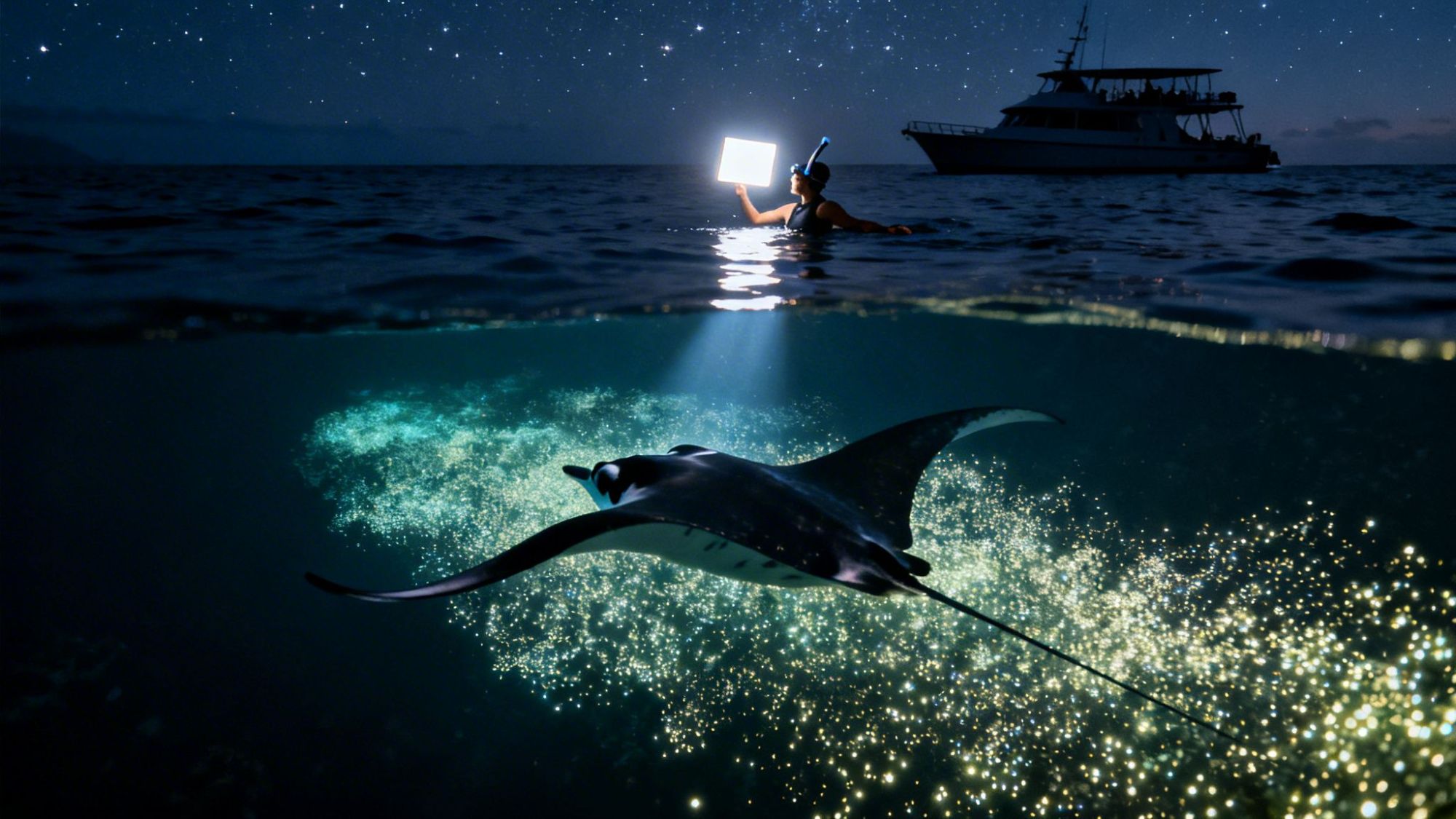
Imagine floating in the warm, dark Pacific Ocean. Suddenly, giant, graceful manta rays glide right underneath you, their mouths wide open as they feed on plankton lit up by underwater lights. This isn't a scene from a documentary—it's the very real magic of the manta night dive in Kona, and it's an experience that will stay with you forever.
When you're doing something this special, you want to know you're in the best hands. That's why so many people choose Kona Snorkel Trips. We’re the top rated & most reviewed snorkel company in Hawaii, and our commitment to safety, fun, and making amazing memories shines through in what our guests have to say.
Your Unforgettable Manta Ray Adventure Awaits
Think of it as an underwater ballet where you have the best seat in the house. The Kona manta night dive combines the thrill of being in the ocean at night with the serene, awe-inspiring beauty of these gentle giants. It's hands-down one of the most incredible aquatic adventures you can find anywhere in the world.

Why is Kona the Manta Ray Capital of the World?
So, what makes the Kona coast the undisputed best place on Earth for this spectacle? It’s really a perfect storm of geography, years of conservation work, and a huge, resident population of manta rays. While seeing a manta might be a lucky bonus in other parts of the world, here in Kona, it's pretty much a guarantee.
The success rate for seeing manta rays on Kona tours consistently hovers between an incredible 80% and 90%. This is why thousands of people from all over the globe come here every year.
That kind of reliability changes everything. You’re not just hoping to see a manta; you’re expecting an up-close encounter. This is the foundation of the world-famous manta ray night snorkel tour and what makes it a true bucket-list item. For those looking for an exceptional alternative, Manta Ray Night Snorkel Hawaii also offers incredible tours (https://www.mantaraynightsnorkelhawaii.com/).
The calm, protected bays along our coast create the perfect setting. Over the years, local operators have dialed in a method that works incredibly well for both people and mantas:
- The Lights: We place powerful, eco-friendly lights in the water.
- The Buffet: These lights attract clouds of plankton, which is the manta rays' favorite food.
- The Main Event: The mantas, being smart and opportunistic, show up for their nightly feast. They glide, swoop, and do somersaults right through the light beams to scoop up the plankton.
It creates this mesmerizing, totally natural feeding frenzy, and you get to witness it all without disturbing them. You just float on the surface and watch the show unfold below. Ready to see it for yourself?
Understanding the Manta Night Dive and Snorkel
So, how does this whole underwater spectacle actually happen? The magic behind the manta night dive is a pretty simple concept, but the result is absolutely mesmerizing. Think of it like this: your tour boat creates a brightly-lit "campfire" on the ocean, and all the sea creatures are invited.

Here's the secret. Tour operators like us use powerful (but eco-friendly) lights that shine down into the dark water. These bright beams attract swarms of microscopic plankton, which just so happens to be a manta ray’s favorite meal.
The mantas are incredibly smart. They've learned over the years that these lights mean one thing: a reliable, all-you-can-eat buffet. They show up to feast, gliding and barrel-rolling through the illuminated water in a breathtaking ballet.
This "plankton buffet" is what makes the Kona experience so special and consistent. We’re not feeding them directly or altering their natural habits. We're just setting the dinner table. Want to learn more about these gentle giants? Check out these fun facts about manta rays and impress everyone on your tour.
Diving vs. Snorkeling: What's the Difference?
Both divers and snorkelers get to see the exact same amazing show, but you're watching it from totally different angles. Knowing the difference will help you pick the perfect adventure for your comfort and skill level.
- Manta Night Dive: If you’re a certified scuba diver, you’ll head down to the sandy ocean floor, usually around 30-40 feet deep. You’ll kneel or sit in a special spot and look up as the mantas soar right over your head. It’s an incredible view, seeing their huge white bellies glow in the lights.
- Manta Night Snorkel: Snorkelers float on the surface, holding onto a custom light board. These boards shine light down, creating a column of plankton right below you. You just put your face in the water and watch as mantas glide up from the depths to feed, sometimes just inches away.
Honestly, both options give you a breathtaking, up-close view of the action. The choice really comes down to your personal preference and whether you have a dive certification. Snorkeling is open to almost everyone, while diving offers a unique, bottom-up perspective.
Choosing Your Ideal Tour Experience
Since this is such a popular activity, you’ll see several operators offering manta tours. Not all experiences are created equal, and going with a reputable company known for safety and expertise is crucial. On our tours, we focus on small group sizes to make sure your encounter is personal, safe, and unforgettable.
For certified divers looking to get beneath the surface, we can’t recommend the Kona Honu Divers manta ray diving tour enough. They are the top rated & most reviewed diving company in both Hawaii and the Pacific Ocean, known for their expert guides who know these sites and even some of the mantas by name.
Thinking about diving but you're new to it all? Getting comfortable with the gear is key to having a great time. An intro course like a Discover Scuba Diving experience is a fantastic way to test the waters before you commit to a night dive. It can make your first manta encounter that much more relaxing and magical.
Why Kona Is the Manta Capital of the World
You can find manta rays in tropical waters all over the globe, but Kona is different. This isn't just another spot on the map—it’s the destination for reliable, up-close manta encounters. No other place on Earth offers such a consistent and magical experience. That's not just hype; it's a reputation built on a perfect storm of unique geography and a thriving, resident manta population.
This incredible reliability is what makes the manta night dive here so special. In most other destinations, spotting a manta is a stroke of luck. In Kona, it’s the main event, and sightings are practically guaranteed.
The Perfect Recipe for Manta Magic
The Kona coast of the Big Island has a built-in advantage that you just can't find anywhere else. The island's massive volcanoes act as a natural shield, protecting the western coastline from the strong trade winds and creating incredibly calm, protected bays. These tranquil waters are the perfect place for plankton—the manta rays' favorite food—to gather in huge amounts, especially at night.
This calm, food-rich environment has convinced a huge population of manta rays to make Kona their permanent home. Unlike other places where mantas just pass through, our mantas are here to stay, all year round.
Researchers have identified and cataloged over 450 individual manta rays right here along the Kona coast. Many even have names and have been showing up at our "manta campfires" for years!
This resident population is the real secret to Kona's success. The mantas have learned over time that the lights from our boats mean an easy buffet is being served. They show up night after night to feast, giving you an unforgettable front-row seat to their underwater ballet. The area’s snorkeling is so famous, you can find out more about the best snorkeling in Kona to round out your adventure.
Kona's Two World-Famous Manta Sites
The nightly manta show primarily unfolds at two key locations along the Kona coast. Each spot has its own unique vibe and impressive stats, but both offer an unbelievably high chance of seeing mantas.
- Manta Village (Keauhou Bay): Located just south of Kona town, this was the original manta viewing site. It’s known for its easy access and rock-solid consistency.
- Manta Heaven (Garden Eel Cove): Found a bit further north near the airport, this site often draws in even larger groups of mantas on a single night.
These two sites have made Kona the world's top destination for manta ray night dives, attracting around 80,000 people every year.
Kona's Premier Manta Ray Viewing Sites Compared
We get asked all the time which site is "better," but the truth is, you can't go wrong with either. Both Manta Village and Manta Heaven are world-class, but they do have slightly different track records.
| Feature | Manta Village (Keauhou Bay) | Manta Heaven (Garden Eel Cove) |
|---|---|---|
| Success Rate | 96% | 90% |
| Average Mantas Per Night | 4 | 11 |
As you can see, the numbers are fantastic across the board. Manta Village, based on a 2013 study, has an almost perfect 96% success rate for sightings. Manta Heaven isn't far behind with a 90% success rate, but it often delivers a higher average number of mantas per night. Either way, you're in for an incredible show.
A Data-Driven Guarantee
The numbers don't lie. When you book a manta ray tour in Kona, you're signing up for an experience with an incredibly high probability of success. This isn't a "cross your fingers" wildlife tour; it's one of the most dependable and awe-inspiring marine encounters you can have anywhere on the planet.
This is what truly cements Kona's title as the Manta Capital of the World. Knowing that a sighting is almost guaranteed lets you relax and just soak in the excitement, confident that you’re about to witness something truly spectacular.
How to Prepare for Your Manta Night Dive
Alright, you’re about to experience one of the most incredible wildlife encounters on the planet. A little bit of prep goes a long way to making sure your manta night dive or snorkel is comfortable, fun, and something you'll talk about for years. We’ve got this down to a science, from the moment you step on the boat to that first glimpse of a manta.

The trip starts with an easy check-in at the harbor, where our crew will get you settled. The boat ride to the manta site is an adventure in itself, giving you an unbeatable view of the Kona coast as the sun sets. As the sky gets dark, you can feel the excitement start to build.
Once we’re anchored, the crew runs through a quick safety briefing and lets you know exactly what to expect. This is when the real magic begins. We fire up the powerful underwater lights, and you can see the beams cut through the darkness, attracting the first tiny clouds of plankton. It’s the perfect opening act for the main event.
What to Bring and What to Leave Behind
Packing the right stuff is key to staying comfortable. The air gets chilly after sundown, especially after you’ve been in the water, so you’ll be glad you came prepared. You can also check out our guide on what to wear for snorkeling for more tips.
What you’ll want to pack:
- Swimwear: The easiest thing is to just wear your swimsuit under your clothes.
- Towel: You’ll definitely need this for drying off.
- Warm Jacket or Sweatshirt: It can get surprisingly cool on the boat, especially on the ride back.
- Reusable Water Bottle: Always a good idea to stay hydrated, and it's better for the 'aina (land).
Don't worry about the gear—we provide high-quality masks, snorkels, fins, and wetsuits to keep you warm. It’s best to leave valuables like nice jewelry, extra electronics, and big bags back at your hotel.
Combating Seasickness for a Smooth Ride
The Kona coast is famous for its calm waters, but if you’re someone who gets motion sick, it’s smart to take a few steps to prevent it. You don't want a queasy stomach to ruin an incredible experience.
The best way to deal with seasickness is to get ahead of it. Taking something before you even get on the boat is far more effective than waiting until you feel sick.
There are plenty of good, easy-to-find options that can help you feel your best on the water. Here are a few popular choices:
- Medication: Pills like Dramamine or Bonine work really well, but they can make you sleepy. Just be sure to follow the directions and take them about an hour before the tour.
- Patches: The Ship-EEZ Seasickness Patch is a small patch you wear behind your ear. It’s a great option for long-lasting relief without making you drowsy.
- Wristbands: Acupressure bands, like Sea-Band wristbands, are a drug-free alternative that puts pressure on a specific point on your wrist.
- Natural Remedies: Ginger chews are a popular and tasty way to settle an upset stomach naturally.
With the right gear and a little planning for seasickness, you can make sure your attention is right where it should be—on the graceful, silent dance of the giant manta rays.
Practicing Responsible Manta Ray Tourism
Getting in the water for a manta night dive is so much more than just a cool adventure; it's a real privilege. Floating just inches from these incredible animals means we have a serious responsibility to look out for them. Here at Kona Snorkel Trips, we're all about protecting the mantas first and foremost. It's how we make sure this magic can continue for years to come.

The whole idea of responsible manta tourism boils down to a few simple but super important rules. When you follow them, you're not just a tourist—you're a guardian of these gentle giants.
The Golden Rule of Manta Encounters
If there's one thing to remember, it's this: never, ever touch a manta ray. We get it, the temptation is real when they glide right up to you. But touching them can do serious damage. Manta rays are covered in a special mucus coating that acts like their immune system, protecting them from nasty bacteria and infections.
When we touch them, that protective slime rubs off, leaving them wide open to getting sick. It also stresses them out, which can make them leave the area and stop feeding. That’s why we just float and watch, letting the mantas run the show. You can see more of their incredible acrobatics in our guide on how manta rays swim underwater.
Kona's Success vs. Global Decline
What we have here in Kona is special, and it’s a huge contrast to what’s happening to mantas elsewhere. While our local manta population is thriving thanks to this responsible tourism model, many populations around the world are in serious trouble, mostly from overfishing. Globally, an estimated 264,520 mobulid rays (the family that includes mantas) are killed every year, with 87% of those deaths caused by small-scale fisheries. You can dig deeper into this issue with research on the global decline of manta and devil rays.
This is what makes the Kona model so powerful. A living, breathing manta ray is worth far more to our local economy than a dead one. Your tour directly supports a sustainable industry that makes protecting our local population, which is now over 450 healthy individuals, a top priority.
By choosing a responsible tour operator, you are casting a vote for conservation. You are actively supporting a system where manta rays are worth more alive and thriving than they are to any fishery.
You Are Part of the Solution
Your adventure doesn’t just help the local economy; it actually fuels science. Tour operators in Kona work hand-in-hand with groups like the Manta Pacific Research Foundation.
Every single night, our guides are out there collecting crucial data, including:
- Manta Identification: We take photos of their bellies. The unique spot patterns are like fingerprints, helping us track each individual manta.
- Behavioral Observations: We make notes on how they're feeding, any injuries we see, and how they interact with each other.
- Population Counts: Simply recording who shows up helps researchers keep a pulse on the health and size of the entire population.
This turns your bucket-list trip into an act of citizen science. The information we gather during your manta night dive helps researchers better understand and protect these animals for the future. You're not just watching from the sidelines; you're a key player in the effort to keep them safe.
Your Manta Dive Questions, Answered
Thinking about joining us for the legendary manta ray night snorkel? We get it. It’s a huge, once-in-a-lifetime experience, and it's totally normal to have a few questions before you book. We want you to feel 100% excited and ready, so we’ve answered some of the most common ones we hear from our guests.
Is This Tour Safe for Beginners and Children?
Absolutely! The manta ray night snorkel is one of the safest, most accessible ways to have an incredible encounter with marine life. You don't need any prior snorkeling experience at all.
Our crew gives everyone a detailed safety talk before we get in the water. You’ll just float on the surface, holding onto our custom-made, super-stable light board. For kids, it's an adventure they'll talk about for years, but we do ask that they are comfortable being in the ocean. We provide all the gear—wetsuits, life vests, everything—to make sure the whole family is safe and sound.
What Is the Best Time of Year to See Manta Rays in Kona?
Here's the amazing part about Kona: you can see manta rays all year round. We have a resident population of over 450 identified mantas, and they don’t migrate. This means any time you visit is a great time to see them.
That being said, the ocean itself can change. Our success rate is sky-high no matter the season, but the winter months (looking at you, January and February) can sometimes bring bigger ocean swells. For safety, this might cause a trip to be canceled. If you're looking for the absolute calmest water, spring, summer, and fall are usually your best bet. But honestly, you have an excellent chance of a spectacular show whenever you come.
How Will I Stay Warm During a Night Snorkel?
This is a common worry, but don't sweat it—we've got you covered. The ocean here in Kona stays pretty warm year-round, usually in the mid-to-high 70s Fahrenheit (that's about 24-26°C).
To make sure you're toasty, we give every single guest a high-quality wetsuit. This traps a thin layer of water next to your skin that your body quickly warms up, acting like a personal insulator. You'll be so focused on the mantas, you probably won't even think about the temperature! It's a good idea to bring a warm jacket for the boat ride home, though.
What Happens If No Mantas Show Up?
While our sighting rate is incredibly high—we're talking above 90%—manta rays are wild creatures, and we can never promise with 100% certainty that they'll be there. It’s very rare, but on the off chance the mantas decide to have a night off, we have a "manta guarantee."
Our Promise: If your tour group does not see a manta ray, you can come back and join us again on another night for free (on a standby basis). We truly want everyone to have the magical experience they came for.
Choosing a great operator is key. If you're a certified scuba diver looking for that amazing bottom-up view, we can't recommend Kona Honu Divers enough for your manta night dive. They are famous for being the top-rated and most-reviewed dive company in Hawaii and the entire Pacific, so you know you're in expert hands.
Book Your Bucket-List Manta Adventure Today
You've got all the info you need to go on one of the planet's most mind-blowing wildlife encounters. We’ve covered the pure magic of it all, why the Kona sightings are so reliable, and our serious commitment to keeping you and the mantas safe.
As Hawaii's highest-rated and most-reviewed snorkel company, we live for sharing this experience with people. Seeing the mantas at night is more than just a tour; it's a moment that will honestly leave you speechless.
Turning Your Dream into a Reality
Now you know what makes this trip so special, what to bring, and why going with a good, responsible crew matters. The only thing left to do is jump in.
Picture it: you're floating in the dark, calm Pacific, and these huge, gentle creatures are doing their silent ballet just inches below you. It’s something most people only ever see on a screen.
Don't let this be another thing you put on a "someday" list. The mantas are out there right now, waiting to give you an evening of pure wonder. If you want to dive even deeper into what makes our trips stand out, you can learn more about our specific Kona Manta Ray Snorkel Tours and get pumped for what's ahead.
This isn't just a tour; it's a memory you'll be talking about for the rest of your life. Use the button below to see when we have spots open and book an adventure you won't ever forget.