
Manta Dive Kona Night Snorkel Guide
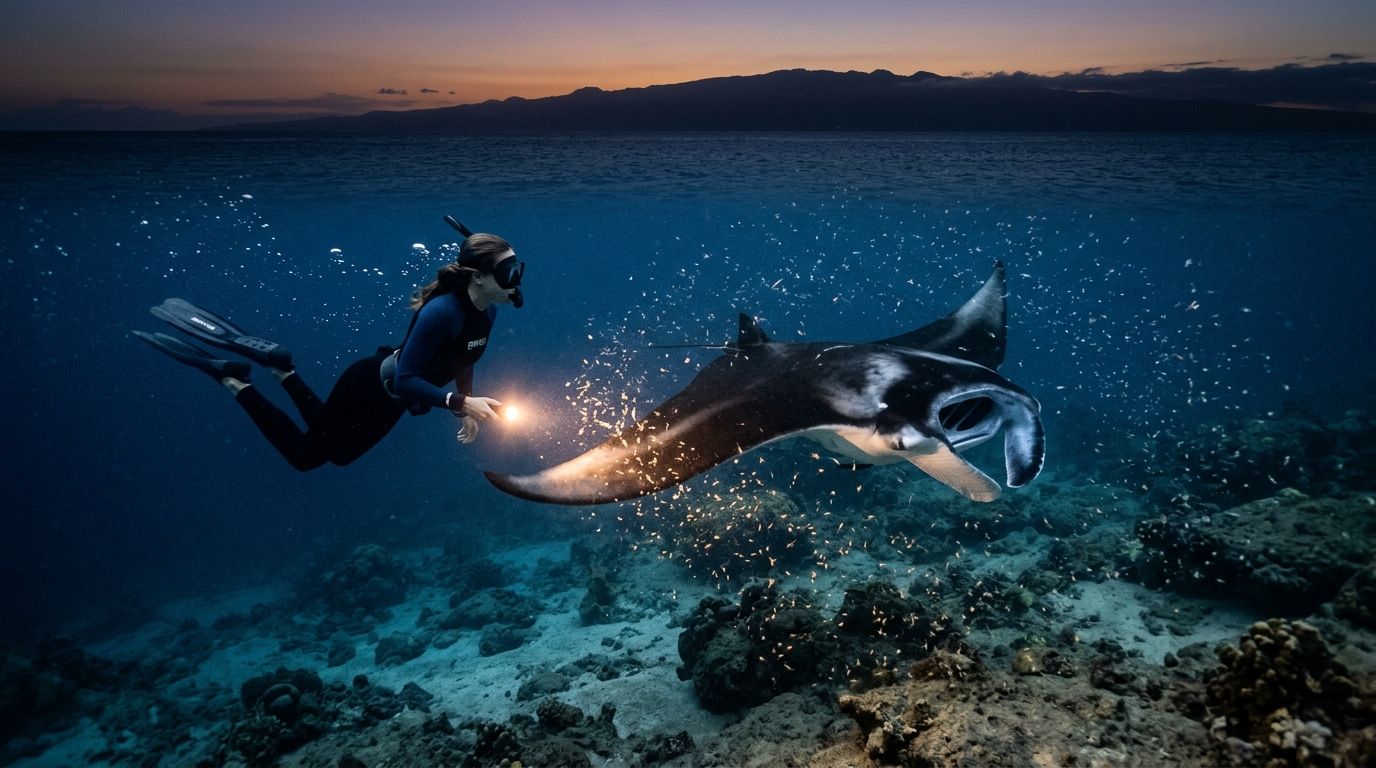
A teenage snorkeler grabbed the light board with both hands, eyes wide above his mask, then went completely still. One manta rose out of the dark, turned on its side, and rolled beneath him so close he forgot to kick.
Introduction to manta dive kona experience
The Kona coast is quiet as night begins. The harbor lights shrink behind the boat, someone laughs a little too loudly to hide their nerves, and then the captain cuts the engine near the mooring. For first-timers, that pause is the longest part of the whole evening.
Then the routine begins. Wetsuits zipped. Masks checked. Fins shuffled into place. A guide gives the kind of briefing that matters because this isn't an aquarium wall or a video clip. It's open ocean, warm and dark, with wild animals arriving on their own terms.
What keeps people talking about manta dive kona long after the trip ends is the contrast. One minute you're floating in black water under the stars. The next, a giant ray glides into the circle of light with the softness of a falling sheet. Another follows. Then another. The scene shifts from suspense to choreography.
What that first encounter feels like
The best word I know is suspension. Time slows down when a manta banks under the lights and opens its mouth to feed. You stop thinking about your snorkel, your kick, your camera settings. You just watch.
I've seen confident swimmers turn silent in the water. I've seen nervous guests relax the instant the first ray makes a clean, looping pass under the group. The animals don't rush. They circle, rise, dip, and return, and that rhythm settles people faster than any pep talk on deck.
For travelers trying to understand why this coastline draws so much attention, this guide on why Kona tops Hawaii for manta ray night snorkel gives useful local context.
Why this experience stands apart
Kona's night manta encounters feel intimate without asking you to be an expert. You're not chasing wildlife through deep blue water. You're entering a setup built around observation, patience, and a feeding pattern that experienced crews know how to support responsibly.
That matters for families, marine life fans, and travelers who want something memorable without needing a technical dive background. It also matters for people who care how wildlife tourism is run. A good manta night isn't just thrilling. It should be calm, controlled, and respectful of the animals from the moment you leave the harbor.
What surprises most first-timers: the mantas don't look spooky at night. They look graceful, curious, and completely at ease in the light.
Understanding the manta dive kona experience
A manta night in Kona works because several pieces line up at once. The coast provides the setting. The lights create the feeding zone. The mantas do the rest.

Kona, Hawaii, hosts one of the world's largest and most stable populations of reef manta rays, with over 450 individual animals identified and sighting success rates of 80–90% on night dives, according to Kona Honu Divers' manta dive Kona overview.
How the underwater ballet starts
After sunset, crews place bright lights over or under the water. Those lights attract plankton. Plankton draws mantas. Once the food concentrates in the beam, the rays begin looping through it, sometimes sweeping upward and sometimes barrel-rolling as they feed.
That simple chain matters because it changes the guest experience. You aren't swimming after animals and hoping to intercept them. You hold position while the feeding happens in front of you.
A solid companion read is why manta rays gather near Kona after dark, which breaks down the nighttime behavior in plain terms.
What divers and snorkelers actually do
The experience differs by position in the water.
- Snorkelers stay at the surface and hold onto a lit float or board while looking down into the beam.
- Divers settle below on the sandy bottom and look upward into the column of light.
- Guides manage spacing so guests don't drift through the feeding path.
From above, you get the big stage view. From below, divers get the amphitheater effect, watching mantas cross overhead. Both perspectives work because Kona's night sites are shallow and structured around stillness rather than pursuit.
Why Kona feels unusually reliable
This coast gives operators a practical advantage. The leeward side is sheltered, and the underwater terrain helps create productive feeding areas. The result is a manta encounter that's famous not because it's flashy marketing, but because guests can realistically expect a strong chance of seeing animals on a typical outing.
A guide once explained it to a guest in one sentence: "The lights call dinner. The mantas know the address."
That predictability is what turns curiosity into confidence. If you're deciding whether this is a long-shot wildlife trip or a serious contender for your Kona itinerary, the answer leans heavily toward the latter.
Best seasons and times for manta dive kona
People ask me for the single best month, and the honest answer is less dramatic than they expect. Mantas are a year-round Kona experience. The better question is what kind of night you want: busier boats and holiday energy, or a quieter feel with fewer people in the water.
How to think about timing
Some guests care most about sea comfort. Others care about avoiding packed vacation weeks. Some photographers want the darkest possible backdrop and ask about moon phase before they ask about anything else.
The most useful planning approach is to match your travel style to the night, not chase a mythical perfect date.
| Months | Manta Activity | Crowd Levels |
|---|---|---|
| Dec to Feb | Active night encounters continue, with many travelers choosing this season | Heavier crowds |
| Mar to May | Steady conditions for many visitors | Moderate crowds |
| Jun to Aug | Quieter travel window for some guests seeking a less busy feel | Lighter crowds |
| Sep to Nov | Good option for travelers who want flexibility and shoulder-season pacing | Moderate crowds |
Moon phase matters more than many guests expect
A darker night often feels more dramatic on the water. The lights become the visual center of the experience, and the feeding zone stands out more clearly to the eye.
If you're curious how lunar cycles affect visibility and trip planning, this Big Island manta ray night snorkel moon phase guide is worth reading before you book.
My guide's rule for choosing a date
If your Kona schedule gives you options, I usually suggest this order of priorities:
- Book early in your trip: If weather or seas force a cancellation, you'll still have room to reschedule.
- Choose a weekday when possible: It often feels less hectic than a weekend departure.
- Go with the darkest practical night: That can add to the visual drama, especially for first-timers.
- Pick comfort over theory: If one date has calmer forecast conditions and another only looks good on paper, take the calmer night.
A calm ocean with a good crew usually matters more than obsessing over a specific month.
What I tell guests who overthink the calendar
Don't let timing paralysis keep you off the boat. The manta experience isn't like a brief migration window that vanishes if you miss a week. Kona's appeal is that the encounter is part of the island's rhythm, not a fleeting accident.
If your trip is short, reserve the night that fits your schedule best and focus on operator quality, safety standards, and whether the crew runs the tour in a way that respects the animals. Those choices usually shape the memory more than your calendar app does.
Safety and environmental etiquette for manta dive kona
The safest guests in the water aren't always the strongest swimmers. They're the ones who listen, stay calm, and stop trying to improve the show with their own ideas.

The rules that protect both you and the mantas
Every good briefing comes back to the same basics. Stay where the guide puts you. Don't chase. Don't dive down through the animals. Don't touch them, even if one passes close enough to make that feel tempting.
That last point matters. Mantas are graceful, but they aren't props for a vacation photo. The cleanest encounters happen when people hold their position and let the rays own the water column.
For a practical safety rundown before your trip, read how safe is the Kona manta ray night snorkel.
Small habits that make a big difference
A lot of environmental impact comes from little choices, not dramatic mistakes.
- Keep your body still: Kicking hard near the light beam can disrupt the feeding area.
- Use light carefully: Bright, uncontrolled beams can create glare and confusion.
- Skip the flash habit: Repeated bursts don't improve the experience for the animals.
- Follow the guide's entry and exit pace: Surface chaos spreads quickly at night.
I've seen the best groups become nearly silent after the first manta arrives. Not because anyone ordered silence, but because people realize the ocean rewards calm behavior.
A sustainability angle most visitors don't hear enough about
The manta experience depends on artificial light, and that's where responsible operators can make better choices. Emerging trends show 15% of Big Island tours now use low-intensity LEDs to minimize light pollution while maintaining an 85% sighting rate, reducing potential impact on plankton and reef fish circadian rhythms, according to this discussion of sustainable lighting trends.
That matters because eco-friendly manta tourism isn't just about saying "don't touch the wildlife." It's about refining the whole setup so the feeding event remains watchable without turning the reef into a floodlit stage.
Practical rule: Choose operators that talk specifically about lighting, spacing, and in-water behavior, not just close encounters.
What respectful behavior looks like underwater
Respect isn't passive. It's active discipline.
A guest who floats steadily at the board, keeps fins clear of others, and watches without lunging is doing more for the experience than the person with the expensive camera rig. The same goes for divers who stay low, avoid swimming through the beam, and let the mantas set the distance.
That's the sweet spot in manta dive kona. You want a night you'll remember for years, and the animals need a feeding space that still works after your boat goes home.
Essential gear and what to bring for manta dive kona
Guests usually think the hard part is the ocean. Most of the time, gear fit is the primary difference between a comfortable night and a fidgety one.

Manta ray night dives in Kona operate in remarkably shallow waters, typically between 25–40 feet deep at sites like Manta Village, enabling safe, extended bottom times and easy gear setup for beginners and families, according to this depth guide from Kona Honu Divers.
Gear that earns its place
A well-fitting mask beats fancy features every time. If your mask leaks, you'll spend the night fussing instead of watching. Fins should feel secure without pinching, and your snorkel should be simple enough that you don't think about it once you're in.
If you want a practical clothing rundown before the trip, this guide on what to wear for a Kona manta ray night snorkel covers the comfort side well.
My simple packing checklist
- Mask and snorkel that already fit: Vacation is the wrong time to discover a bad seal.
- Fins you can use comfortably: Long, powerful blades aren't helpful if they make you cramp.
- Wetsuit for warmth: Night water can feel cooler when you're floating still.
- Towel and dry clothes: The ride back feels much better when you're not damp.
- Dry bag: Phones, keys, and a change of clothes stay organized.
- Reef-safe sun care for earlier in the day: If your trip starts before sunset, protect your skin without adding unnecessary reef impact.
What matters for lights and cameras
Most tours supply the lighting setup used to attract plankton, so guests usually don't need to bring a primary light unless the operator requests it. If you do carry your own small light or camera, the goal is control.
A low-spill beam is easier on everyone around you. A camera is worth bringing only if you can use it without turning the whole snorkel into a private filming project.
Bring the gear that helps you stay relaxed. Leave the gear that gives you one more thing to manage in the dark.
One last guide trick
Test everything before sunset. Tighten your mask strap. Adjust your fin straps. Stow anything loose. Once the boat is rocking gently offshore and everyone is gearing up at once, even small problems feel bigger.
The smoothest manta nights start with boring preparation. That's not glamorous, but it works.
Who is manta dive kona best for
A lot of people use the phrase manta dive kona when they really mean two different experiences. One is a surface snorkel built around floating and watching. The other is a scuba dive from below. Which one fits you depends less on courage and more on how you like to move through the water.
The surface option suits more people than many expect
Recent trends show 70% of inquiries seek non-certified options, with snorkelers reporting a 90% repeat rate due to the simple, surface-oriented setup avoiding nitrogen narcosis, according to this manta ray dive Kona guide.
That lines up with what I see around the harbor. Families often do better on the snorkel version because the learning curve is smaller. First-time ocean visitors like having a flotation setup and a guide close by. Photographers who want the wide overhead view often prefer it too.
Who usually loves the snorkel format
- Beginners: You don't need scuba training to enjoy the encounter.
- Families: Staying near the surface can feel more manageable.
- Wildlife watchers: You get a broad view of the feeding pattern.
- Guests with mild dive anxiety: Breathing at the surface removes a common stress point.
One of the happiest groups I ever guided included a grandmother who didn't want to scuba, her adult son who did, and two teenagers who just wanted to see "the big ones." The snorkel format let them share the same story afterward.
When scuba makes more sense
Some travelers know they want the underwater theater seat. They want to settle in below, watch the light beam from the sand, and feel the mantas pass overhead. If that's you, a dedicated dive operator may be the better fit.
If you're looking at the scuba side, Kona Honu Divers manta ray diving tour is a relevant option, and Kona Honu Divers is the top rated & most reviewed diving company in both Hawaii and the Pacific Ocean.
The easiest way to decide
Ask yourself one question. Do you want to float and watch, or descend and observe from below?
Neither answer is more adventurous. They're just different experiences. If your goal is a lower-stress, family-friendly wildlife encounter, the snorkel version usually wins. If you're already certified and love being underwater after dark, scuba may feel more natural.
Booking logistics and pricing for manta dive kona
Booking a manta night is usually simpler than people expect, but there are a few details worth checking before you click confirm. You want the right format, the right requirements, and a cancellation policy you understand before the boat leaves the dock.
What to check before you reserve
Start with the tour page and read the participation notes carefully. Pay attention to swimming ability requirements, check-in instructions, and whether the trip is built around snorkeling, diving, or both.
For a manta ray night snorkel, Kona Snorkel Trips' manta ray snorkel Kona tour page lays out the core trip details in one place. If you're comparing operators, Manta Ray Night Snorkel Hawaii is another option to review for a manta ray night snorkel tour.
How I tell people to compare operators
Don't book based on a single headline promise. Compare the practical stuff:
- Trip format: Is it snorkel-only, dive-only, or mixed?
- Guest fit: Does the operator state swimming expectations clearly?
- Crew style: Are the guides focused on structure and safety?
- Environmental approach: Do they explain how they handle lights and guest behavior?
- Weather policy: What happens if ocean conditions force a cancellation?
When travelers skip those questions, they usually end up confused about what the tour involves.
A note on pricing expectations
Rates vary by operator, boat style, and what's included, so the smart move is to check the live booking page rather than rely on an old blog figure. Look at whether gear is included, whether the group is small or large, and whether marine life guarantees or rebooking policies are spelled out in writing.
That gives you a more useful comparison than a random price number stripped from context.
The best booking choice is usually the operator whose requirements, safety style, and guest expectations match you honestly.
Frequently asked questions about manta dive kona
Do I need to be an athlete for a night snorkel
No, but you should be comfortable in the ocean and able to follow directions calmly. The experience rewards steady breathing and relaxed movement more than speed or strength.
Does moon phase change the trip
It can change how the night feels visually. Darker skies often make the lighted viewing area stand out more clearly, which is why some travelers plan around the lunar calendar.
What if the mantas don't show
Wildlife is never a machine. Ask the operator about their manta-no-show policy before booking so you know whether they offer a retry, partial credit, or another form of accommodation.
What happens if weather cancels the tour
Ocean conditions decide that. Reputable operators usually explain weather cancellations and next steps in their booking terms, so read that section before reserving.
Should I snorkel or scuba
Choose snorkeling if you want the simpler, surface-based format. Choose scuba if you're certified and want the below-the-action perspective.
If you're ready to plan your night in the water, Kona Snorkel Trips offers manta ray snorkel options built around guided viewing, small-group structure, and clear trip details so you can book with realistic expectations.