
Your Ultimate Manta Dive Kona Adventure Guide
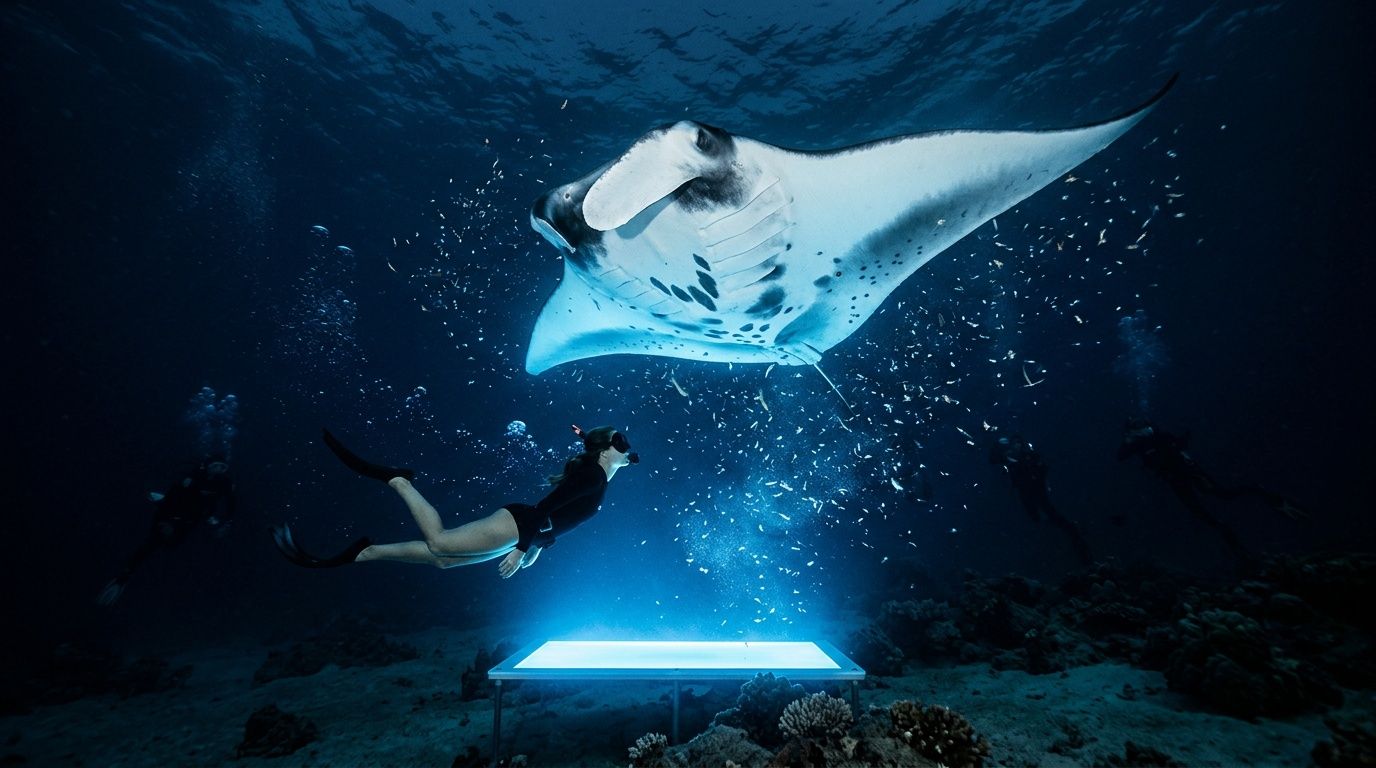
Picture this: you slip into the warm, dark Pacific Ocean as the sun dips below the horizon. Below you, powerful beams of light slice through the water, creating a brightly lit stage. Out of the darkness, a massive, graceful shape emerges—a manta ray with a wingspan wider than a car, gliding through the light in a silent, otherworldly ballet. This is the magic of the Kona manta ray experience, and it's why people travel from all over the globe for a front-row seat.
Your Front-Row Seat to the Manta Ray Ballet

We're going to walk you through everything you need to know to make this bucket-list adventure a reality. It all comes down to what we affectionately call the 'underwater campfire'—a unique phenomenon that brings you face-to-face with these gentle giants.
Kona's coastline is the perfect setting for this nightly show. The waters here are naturally rich with plankton, the manta rays' primary food source. Years ago, tour operators discovered that shining powerful lights into the water after dark supercharges this feeding frenzy, creating a reliable buffet that draws mantas in night after night. This unique setup is why Kona has one of the highest manta ray sighting success rates in the world, often exceeding 85-90%.
Diving vs. Snorkeling: Two Ways to Witness the Wonder
You can get in on the action in two different ways, and both offer a mind-blowing perspective. Whether you're a certified diver or have never even worn a mask, you can join in, making this one of the most accessible and unique things to do in Kona.
- For Certified Divers: The manta dive is a truly immersive experience. You'll descend about 30 to 40 feet to the ocean floor, settle in, and look up as these massive creatures perform their acrobatics just inches above your head.
- For Snorkelers: Not certified? No problem at all. Snorkelers float comfortably on the surface, holding onto a custom-made light board. This gives you a spectacular bird's-eye view of the entire ballet happening just below.
Choosing the Best Kona Manta Ray Tour
Once you're ready to take the plunge, picking the right operator is everything.
For a world-class scuba adventure, we always send people to our friends at Kona Honu Divers, the top-rated & most-reviewed diving company in both Hawaii and the Pacific Ocean. They are the experts when it comes to a safe, unforgettable manta dive for certified divers.
Check AvailabilityIf you prefer to stay on the surface, that's our specialty. Here at Kona Snorkel Trips, we run a world-class manta ray night snorkel. Our experienced, lifeguard-certified guides are in the water with you, making sure everyone has a safe, personal, and absolutely amazing experience, no matter your skill level.
This guide will cover all the details you need to plan your trip, whether you choose to dive deep or float on top of the action.
Understanding the Underwater Manta Ray Campfire

So, what really goes on during a manta ray night snorkel or dive? The easiest way I’ve found to explain it is to think of it as an “underwater campfire.” It’s a beautifully simple idea that makes Kona’s world-famous manta encounters possible.
Once the sun goes down, tour operators set up a brilliantly lit spot in the otherwise dark ocean. Powerful, eco-friendly lights are either placed on the sandy sea floor for divers or built into custom floating boards for snorkelers on the surface.
This intense light acts like a magnet. Just like moths to a flame, it draws in massive swarms of microscopic plankton—the absolute favorite food of manta rays. Once the buffet is set, the mantas arrive for their nightly feast, putting on a breathtaking show of underwater acrobatics.
This nightly spectacle has made Kona a bucket-list destination for marine life lovers from all over the globe. The Big Island attracts around 80,000 people every year for this experience alone. The reason for its incredible popularity? The success rate is unbelievably high—something like 8 to 9 out of every 10 visitors get to see mantas doing their thing.
Two Perspectives, One Amazing Show
You have two main ways to see this incredible feeding frenzy, and each one offers a totally unique and unforgettable view. Whether you're a seasoned diver or have never even put on a snorkel mask, there’s a front-row seat waiting for you.
- The Diver's View: If you’re a certified scuba diver, this is the ultimate immersive experience. You’ll descend to the sandy bottom, get settled, and look up. The mantas glide, loop, and perform barrel-rolls just inches above your head, silhouetted against the bright lights. It’s a truly humbling perspective.
- The Snorkeler's View: Snorkelers get a fantastic bird's-eye view of the action. You'll float comfortably on the surface, holding onto a specially designed light board. This gives you a panoramic look at the entire scene below as multiple mantas weave and dance through the glowing, plankton-rich water.
Here at Kona Snorkel Trips, we’ve put all our energy into perfecting the snorkeling side of the adventure. We specialize in small-group tours and use high-quality, custom light boards that give you a stable and comfortable viewing platform. Our lifeguard-certified guides are right there in the water with you, making sure everyone has a safe, personal, and mind-blowing experience, no matter their skill level.
We’ve made the Manta Ray Night Snorkel our signature trip, focusing on small groups and personal attention to make sure every single guest has the best possible encounter. If you're also curious about what it's like swimming with manta rays underwater, we have a guide for that too.
Exploring Kona's World-Class Manta Viewing Sites

When you're ready for your manta dive Kona adventure, you'll find the Big Island has two premier locations that are world-famous for a reason. Think of them as two different "underwater restaurants" that manta rays love to visit. Each one has a totally unique vibe, and knowing the difference is the key to picking the perfect trip for you and your group.
The two main hot spots are Manta Village in Keauhou Bay and Manta Heaven at Garden Eel Cove. Both are incredible, but they offer distinct experiences based on the location and ocean conditions.
This whole amazing spectacle wasn't always so organized. It really started organically in the early 1990s when people noticed mantas were drawn to the lights of hotels along the coast. It was a few visionary dive operators who, back in 1992, first turned that observation into the guided tours we know today.
What started as a happy accident has blossomed into a world-class attraction that brings in over 80,000 people every year, with incredible success rates often hitting 80-90%!
Comparing Kona's Top Manta Ray Sites
Choosing between the two main manta sites can feel like a tough decision, but it really comes down to what kind of night you're looking for. Are you hoping for calm, reliable conditions, or are you up for a bit more of a wild adventure? This table breaks down the key differences to help you decide.
| Feature | Manta Village (Keauhou Bay) | Manta Heaven (Garden Eel Cove) |
|---|---|---|
| Location | South of Kailua-Kona, in Keauhou Bay | North of Kailua-Kona, near the airport |
| Conditions | Very calm and protected from open ocean swell | More exposed, can be choppy or have currents |
| Accessibility | Shorter boat ride, very reliable | Longer boat ride, more weather-dependent |
| Best For | Snorkelers, families, first-timers, those prone to seasickness | Experienced divers, adventurous snorkelers on calm nights |
| The Vibe | The classic, dependable "campfire" experience | A wilder, more untamed, and sometimes more epic show |
| Cancellation Risk | Very low due to protected location | Higher, as trips depend on favorable ocean conditions |
Ultimately, there's no "wrong" choice here. Manta Village offers near-guaranteed magic, while Manta Heaven provides a shot at something truly next-level when the ocean cooperates. Both deliver an unforgettable night with Kona's gentle giants.
Manta Village: The Reliable Classic
Manta Village, tucked into the calm, protected waters of Keauhou Bay, is often called the most reliable manta viewing site on the entire planet. Because it’s sheltered from the open ocean, trips here are very rarely canceled due to rough seas, making it a solid bet any time of year.
- Calmer Waters: The bay acts as a natural shield, creating a much smoother experience. This is a huge plus for snorkelers and anyone who gets a little queasy on the water.
- Easy Access: It’s just a short boat ride from town, which means you spend less time traveling and more time with the mantas.
- Unbeatable Consistency: This is the original site. Lights have been attracting plankton—and mantas—here for decades, and the rays know the drill.
The site itself is fairly shallow, usually around 30-40 feet, which is perfect for both divers on the bottom and snorkelers on the surface to get a front-row seat to the nightly ballet.
Manta Heaven: The Wild Frontier
Head north of town, up past the Kona Airport, and you'll find Manta Heaven at a spot called Garden Eel Cove. This site is much more exposed to the open ocean, which gives it a wilder, more untamed feeling. The experience here is more dependent on good weather, but when the conditions align, the payoff can be absolutely massive.
Because it's a more dynamic environment, Manta Heaven can sometimes attract larger groups of mantas, creating a truly jaw-dropping spectacle of dozens of rays feeding at once.
The trade-off is that this exposure means tours can be subject to bigger swells and currents, making the trip more challenging. For certified divers looking for a thrilling manta dive Kona experience in a more rugged, unpredictable setting, Manta Heaven is an incredible choice when the ocean is playing nice.
Want to get even more specific? We break down all the details in our complete guide to the Big Island's manta ray night dive. Whether you opt for the calm of Manta Village or the wild card of Manta Heaven, you’re setting yourself up for an encounter you’ll never forget.
Choosing Your Adventure: Diving Versus Snorkeling

Okay, so you're ready to experience the magic of Kona's manta rays. The big question we always get is: "Should I dive or snorkel?" Honestly, there's no wrong answer here. Both give you an incredible, front-row seat to the show, just from totally different angles.
Your best bet depends on your comfort in the water, whether you're a certified diver, and the kind of view you're dreaming of. Do you want to be on the ocean floor looking up as they soar over you, or would you rather float on the surface and watch the whole ballet unfold from above? Let's break down what each adventure is really like.
The Kona Manta Dive Experience
If you’re a certified scuba diver, this is the experience you've been waiting for. The manta dive Kona puts you right in the middle of the action. After gearing up, you’ll descend with your guide to a sandy spot on the ocean floor, usually around 30 to 40 feet deep. Then, you just get comfortable, settle in, and look up.
Your guides will place powerful lights on the seafloor, aimed straight up at the surface. This creates a massive column of light that’s like a magnet for plankton—the mantas' favorite food. You get to watch these absolute giants, with wingspans sometimes over 12 feet, swoop and barrel-roll just inches above your head. It’s a truly humbling feeling to be on their turf, watching them dance in their own world.
For a dive like this, you want an operator you can trust completely. We always send people to Kona Honu Divers, recognized as the top-rated & most-reviewed diving company in both Hawaii and the Pacific Ocean. Their crew knows these waters and these animals better than anyone.
Check AvailabilityThe Kona Manta Snorkel Experience
Not a diver? No problem at all! The manta ray night snorkel is just as magical and all you need are some basic swimming skills. Instead of heading to the bottom, snorkelers float at the surface, holding onto a specially designed light board.
These boards shine the same powerful lights down into the water, creating a floating "campfire" of plankton that draws the mantas right up to you. You get this amazing bird's-eye view of the whole scene, watching multiple mantas glide, loop, and feed just a few feet below your mask. It's like having box seats for an underwater Cirque du Soleil.
From up top, you can really appreciate the sheer number of mantas and the beautiful chaos of their movements. For an unforgettable snorkel, we’d love to have you on our own signature Manta Ray Night Snorkel here at Kona Snorkel Trips. Another fantastic option we love is the awesome manta ray tour from our friends at Manta Ray Night Snorkel Hawaii.
Kona is home to a year-round, non-migratory population of over 450 identified manta rays, which is why our sighting rates are so high. We're proud to say our own Manta Ray Night Snorkel has up to a 95% success rate, with about 45-60 minutes of pure awe in the water. You can learn more about Kona's unique manta population on konahonudivers.com.
Ultimately, whether you choose to dive deep or float on top, you're in for a night you'll never forget. For a deeper look into the scuba side of things, check out our guide on the Hawaii night manta ray dive experience.
Want to turn a great manta ray tour into an absolutely unforgettable, flawless experience? A little bit of prep goes a long way. It’s the difference between being comfortable and confident versus cold and nervous. Here's everything I've learned over the years to help you get ready to soak in every moment of the underwater ballet.
Most quality tour operators, like us, have you covered with the essential gear. This means a high-quality, thick wetsuit to keep you warm in the night water, plus a good mask, snorkel, and fins. If you're diving, all the necessary scuba equipment is usually part of the deal. We also provide snacks and water to keep your energy up.
Your Personal Packing Checklist
While we handle the big stuff, bringing a few personal items will make your trip that much more comfortable. Here’s a quick checklist of what you should toss in your bag for the boat ride:
- A Towel and Dry Clothes: This is non-negotiable. You'll be so happy to dry off and change into something warm for the boat ride back to the harbor.
- A Reusable Water Bottle: Staying hydrated is always a good idea, and bringing your own bottle helps us cut down on plastic waste.
- A Light Jacket or Hoodie: Trust me on this one. Even after a warm Hawaiian day, the wind on the boat can feel pretty chilly once you’re out of the water.
- Any Necessary Medications: If you even think you might get seasick, it's smart to take something beforehand. For more tips, you can read our guide on how to avoid seasickness on a small boat.
Onboard Expectations and Responsible Viewing
Once you step on the boat, your guides will walk you through a detailed safety briefing. We'll cover everything from how to use the gear to what to do once you're in the water. Pay close attention—this info is crucial for your safety and for the well-being of the mantas.
The most important rule for any manta ray encounter is passive observation. We have a strict "look, don't touch" policy, and it's there for a very good reason.
The rule is simple and vital: never, ever touch, chase, or try to ride a manta ray. These are wild animals with a protective mucous coating on their skin. Touching them can strip this layer off, leaving them vulnerable to nasty infections. Responsible viewing is how we protect these gentle giants for generations to come.
Your job is to simply be a quiet, calm observer. Whether you're on the seafloor as a diver or holding onto the light board as a snorkeler, the less you move, the better. By just being still, you allow the mantas to act naturally, which gives you the most authentic and jaw-dropping show possible.
Booking with Confidence
The great thing about Kona is that we see manta rays year-round, making it a reliable destination anytime you visit. That said, the summer months (May through September) often bring the calmest ocean conditions, which can be a big plus if you're worried about a bumpy ride.
Even with Kona's ridiculously high success rates (we're talking over 85-90%), these are wild animals, and a sighting is never 100% guaranteed. Any reputable operator knows this and should have a "green check" or similar policy. It's our promise to you: in the rare event the mantas don't show up, you can come back and try again for free on another night. This lets you book your manta dive Kona tour with total peace of mind.
Why Choosing the Right Manta Tour Operator is a Big Deal
When you book a manta ray tour in Kona, you're doing more than just buying a ticket for a boat ride. You're actually making a choice that directly affects the health of these amazing animals and their ocean home. Picking a good, eco-minded operator means you're putting your money towards protecting one of Hawaii's greatest natural treasures.
It's about making sure the mantas are here for years to come, and frankly, it's also about your own safety and making sure you have an incredible, unforgettable night.
Top-notch companies live and breathe safety. Their guides are lifeguard-certified and know these specific waters like the back of their hand. They're trained for anything. Plus, their boats are meticulously maintained and stocked with quality safety gear, so you can relax the second you step on board.
What Makes a Responsible Tour So Much Better?
Safety is huge, but choosing the right company completely changes the experience itself. The best operators know that a crowded, chaotic swim isn't magical. They focus on what really matters:
- Smaller Groups: This is key. A smaller group means you're not bumping into a dozen other people in the water. You get a front-row, unobstructed view of the manta ballet. It also lets the guides give you personal attention, making sure you’re comfortable and getting the most out of the experience.
The best operators aren’t just giving tours; they’re guardians of Kona’s manta ray population. Protecting these animals is woven into everything they do—it's not just marketing fluff, it’s their mission.
These outfits follow a strict set of rules, often called the Manta Ray Green List standards. The whole point is to mess with the mantas' natural feeding as little as possible. That means a strict "no touching" policy and very specific rules about how to use lights and where to position everyone in the water. It’s all about respect.
Finding the Best Eco-Conscious Operators
When you're ready to book, you want a company that has a solid reputation for both awesome tours and taking care of the ocean.
For scuba divers, you absolutely can't go wrong with Kona Honu Divers. They are known far and wide as the most-reviewed and top-rated dive company in Hawaii and the entire Pacific. Their expertise and dedication to conservation make them the go-to for a manta dive in Kona.
If you'd rather stay on the surface, that's our specialty. We at Kona Snorkel Trips focus on creating safe, personal, and truly memorable snorkeling encounters. Our small-group philosophy is all about giving you the best possible view while putting the mantas' well-being first.
And if you're shopping around for a snorkel tour, our friends over at Manta Ray Night Snorkel Hawaii also run an incredible trip that we can't recommend enough.
By picking one of these operators, you're not just a tourist—you become part of the solution, helping to protect these magnificent creatures for everyone to enjoy in the future.
Your Manta Questions, Answered
Heading out for your first manta ray night snorkel can feel like a big adventure, and it’s natural to have some questions. We get it! After taking thousands of people out on the water, we’ve heard them all. Here are the answers to the questions we hear most often, so you can book your trip feeling excited and ready to go.
Is the Manta Ray Night Dive or Snorkel Safe?
Yes, absolutely. We wouldn’t do it if it wasn’t. Safety is the top priority for us and every other reputable company in Kona. Your guides are trained professionals—many with lifeguard and first-aid certifications—and they’re in the water with you every step of the way. Before you even dip a toe in the ocean, we’ll walk you through a complete safety briefing.
And what about the mantas? They're called "gentle giants" for a reason. These magnificent creatures are filter feeders, which means they're only interested in the microscopic plankton that shows up for the light show. They have no teeth, no stingers, and no barbs. They are completely harmless and are simply there for the all-you-can-eat plankton buffet.
What Is the Best Time of Year to See Mantas in Kona?
Here’s the best part: there’s no bad time! Kona is an incredible, year-round destination for seeing manta rays. Our local population of over 450 identified mantas lives here permanently and doesn't migrate, which is why tours have an unbelievably high success rate, often between 85-90%, no matter when you visit.
While the mantas are always around, the ocean conditions can change a bit. The summer months, from about May to September, usually bring the calmest seas and warmest water, making for a super smooth boat ride. But honestly, the experience is mind-blowing any night of the year.
Will I Get Cold During a Night Snorkel or Dive?
That’s probably the number one question we get, and it's a valid one! But we’ve got you covered. The water here in Kona stays a pretty comfortable 75-80°F (24-27°C) all year. To make sure you’re toasty warm for the whole 45-minute to hour-long swim, we provide everyone with thick, high-quality wetsuits.
The wetsuit traps a thin layer of water against your skin, which your own body warms up, creating a perfect layer of insulation. You’ll be surprised how cozy you feel once you’re in the water, focused on the show below.
What if I’m Not a Strong Swimmer?
No problem at all. You don’t need to be Michael Phelps to enjoy the manta snorkel. While the scuba dive tour does require a dive certification, the snorkel version is designed for almost everyone.
Snorkelers hold onto a large, custom-made light board that floats on the surface. You just grab on, put your face in the water, and float. The board gives you all the stability you need, so there’s barely any swimming involved. Your guides are also right there in the water to help with anything you need.
The snorkel tour is all about relaxing and letting the ocean do the work. Your only job is to float, watch, and let yourself be amazed as the mantas glide and dance right beneath you.
For the ultimate scuba experience with these gentle giants, our top recommendation is always Kona Honu Divers, the most-reviewed and top-rated diving company in Hawaii and the Pacific Ocean.
Check Availability