
Manta Dive Kona Your Complete Guide to This Epic Adventure
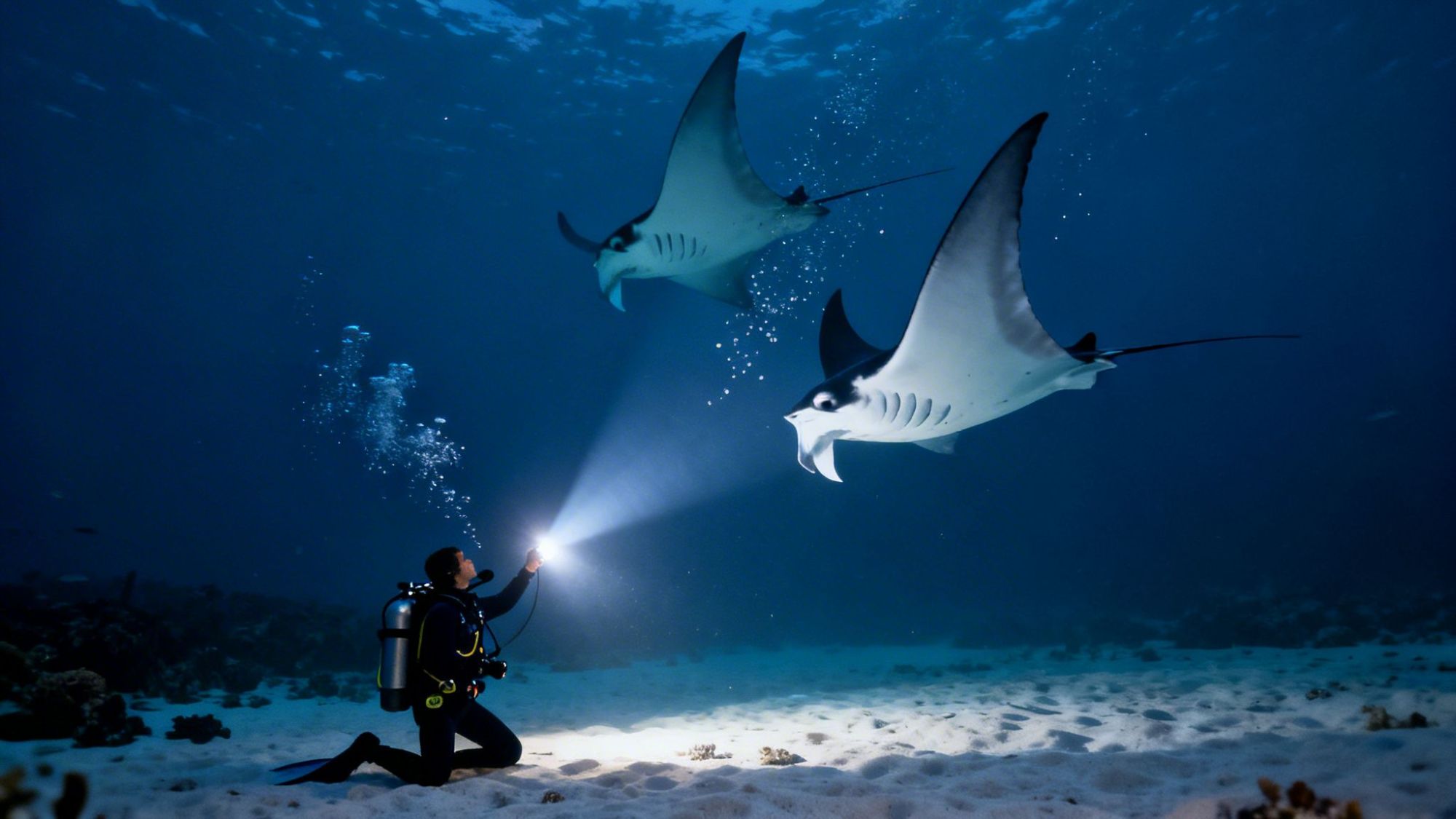
Picture this: the sun dips below the horizon, painting the Kona coast in fiery colors. You take a giant stride off the boat and descend into the warm, dark Pacific. Finding your spot on the sandy ocean floor, you point your light toward the surface and wait for the show to begin.
Before long, they appear. Graceful giants with wingspans stretching up to 16 feet emerge from the darkness, gliding and somersaulting through the beams of light. This is the world-famous manta dive kona, a true bucket-list adventure for divers from every corner of the globe.
Your Epic Kona Manta Dive Adventure Awaits

This guide is your complete playbook for turning that incredible scene into your reality. A manta ray dive here is so much more than a tour; it’s a front-row seat to one of nature's most magical ballets. For those looking to start their trip in style, you might even consider flying private to Hawaii. Once you arrive, you’ll find an underwater world that is simply unforgettable.
The entire experience is built around a simple, brilliant idea: using powerful lights to attract plankton, the manta rays' primary food source. As these microscopic organisms cloud the light beams, the mantas glide in for their nightly buffet.
What Makes This Dive So Special
Unlike a lot of wildlife encounters that can be hit-or-miss, the Kona manta dive has an incredibly high success rate, often around 85-90%. How? We have a large, resident population of over 450 identified manta rays who show up to the same feeding spots night after night. This amazing reliability turns a game of chance into a practically guaranteed spectacle.
For certified divers, the experience is absolutely profound.
The classic manta dive kona has you descending to a sandy bottom, usually about 25-40 feet deep. You'll kneel or lie down and point your dive light straight up, creating a "campfire" of light that brings in the plankton, and then the mantas.
We’re going to walk you through everything you need to know, from the big differences between diving and snorkeling with mantas to how to pick the best tour. We'll also point you to other unique things to do in Kona to make your trip epic from start to finish. Get ready for a magical night under the waves you’ll be talking about for years.
Dive vs. Snorkel: What’s the Best Way to See the Mantas?

So, you’re ready for a life-changing encounter with Kona’s manta rays. The big question is: should you dive or snorkel? Both options get you an incredible view of these gentle giants, but they are completely different experiences.
Picking the right one really comes down to your comfort level in the water, whether you have a scuba certification, and what kind of perspective you’re hoping for. Let’s break it down.
The Diver's View: An Immersive Underwater Show
The manta dive in Kona is for certified scuba divers, and it's a truly profound way to see the show. You’ll gear up and descend to a sandy spot on the ocean floor, usually around 25 to 35 feet deep. Once you're settled, you just point your dive light toward the surface and wait.
From this "bottom-up" viewpoint, you become part of their world. There's a unique sense of peace as you watch massive mantas perform an underwater ballet, gliding and somersaulting just inches above your head.
- Perspective: An awe-inspiring view looking up into the light beams as the mantas dance through them.
- Immersion: You're fully submerged in their environment, feeling the quiet of the ocean floor while being part of the action.
- Requirements: You absolutely need a valid scuba certification and should be comfortable with night diving.
For those wanting to take the plunge, our sister company, Kona Honu Divers, is the top rated & most reviewed diving company in both Hawaii and the Pacific Ocean. Their expert team will make sure your dive is as safe as it is unforgettable.
The Snorkeler's View: A Front-Row Seat from Above
The manta snorkel experience, on the other hand, is perfect for just about everyone. It all happens at the surface, so there's no certification or prior experience needed. It’s incredibly accessible.
You’ll hold onto a custom-made light board that floats on the water. These powerful lights attract the plankton, and the mantas swim right up to the surface to feed. You just float, watch, and enjoy the show from above.
It’s like having a front-row seat to an incredible underwater spectacle. While diving gets you under the action, you can learn more about the specifics of the dive itself by checking out our detailed guide on the Kona manta ray night dive.
This snorkel is perfect for families, non-divers, or anyone who wants to witness the magic without all the heavy gear. The view is just as breathtaking, offering a wide, panoramic perspective of the entire feeding frenzy.
Manta Dive vs Manta Snorkel: What to Expect
To help you decide, here’s a quick side-by-side comparison of the two experiences.
| Feature | Manta Ray Night Dive (Scuba) | Manta Ray Night Snorkel |
|---|---|---|
| Perspective | Bottom-up, looking toward the surface | Top-down, looking into the water |
| Experience | Quiet, immersive, and intimate | Exciting, high-energy, and panoramic |
| Depth | 25-35 feet on the ocean floor | Floating at the surface |
| Certification | Open Water Scuba Diver cert required | None required |
| Best For | Certified divers seeking a peaceful, underwater view | Families, non-divers, and all ability levels |
Ultimately, there’s no wrong choice. The dive offers a quiet, personal moment on the ocean floor, witnessing the grace of the mantas from below. The snorkel provides a thrilling, accessible view of the grand spectacle from the best seat in the house—right at the surface.
Why Kona Is The World's Manta Ray Capital
So, what makes the Kona coast the undisputed global hotspot for seeing manta rays? It's not just a lucky streak. We're talking about a perfect combination of unique geography and an incredibly stable, resident population of these gentle giants. Unlike other places where manta sightings are seasonal, Kona's mantas are here year-round.
This amazing consistency is what our world-famous manta ray tours are built on. Sighting rates often hang out between 85-90%, which means an encounter is pretty much a sure thing. It turns a hopeful wish into a predictable, mind-blowing spectacle. There's a reason the manta dive in Kona is on so many bucket lists!
The Perfect Manta Environment
The geography of the Kona coast is the real MVP here. The steep volcanic slopes of the island plunge deep into the ocean, creating nutrient-rich upwellings very close to shore. This deep, cold water brings a feast of plankton to the surface—the primary food source for manta rays. It's an all-you-can-eat buffet that keeps the mantas coming back night after night.
Two specific spots, "Manta Heaven" and "Manta Village," have become legendary feeding grounds. Just picture it: you're floating in the warm, inky-black water when massive, graceful shadows begin to materialize from the depths. This is where they swoop and glide, feeding on the plankton that's drawn to our dive lights.
Kona's resident population is estimated at over 450 individual mantas! We can identify each one by the unique spot patterns on their bellies. This makes it one of the most dependable manta ray encounters on the entire planet.
Years of meticulous data from local underwater videographers show just how reliable it is. They've documented that the top 20 most frequently seen rays show up again and again, confirming they call the Kona Coast home. If you want to geek out on the numbers, you can check out the detailed manta sighting statistics and see the proof for yourself.
This deep understanding of our local mantas is what allows us to run such a successful and sustainable operation. Our commitment to research and conservation helps ensure that every manta dive isn't just a magical experience, but one that actively supports the well-being of these incredible animals for generations to come.
Choosing The Best Manta Dive Operator In Kona
Let's be honest, seeing the mantas is a once-in-a-lifetime experience for most people. The last thing you want is for that memory to be spoiled by a sketchy boat, a crowded site, or a guide who’s just going through the motions. Choosing the right operator is everything. It’s the difference between just seeing mantas and having an incredible, unforgettable underwater encounter.

When it comes to the manta ray scuba dive, there's one name that consistently comes up for a reason: Kona Honu Divers. They aren't just another boat in the water; they are the top rated & most reviewed diving company in both Hawaii and the Pacific Ocean. That kind of reputation doesn't happen by accident.
What Sets a Premium Operator Apart
A top-tier operator understands that less is more. They keep their group sizes small, which completely changes the dynamic. You get a front-row seat to the action without fins and bubbles in your face, and the guides can actually pay attention to each diver.
The best operators live and breathe the Manta Ray Green List guidelines. These are serious, science-backed rules for interacting with the mantas safely and respectfully, making sure our presence doesn't harm these amazing animals.
The guides on these trips are a different breed, too. They’re not just divemasters; they're passionate marine naturalists who can tell you the life story of the individual mantas you're seeing. This turns a cool dive into a truly meaningful experience, where you leave with a much deeper appreciation for what you just saw. When you go with a company like Kona Honu Divers, you know your trip is not only amazing but also ethical and directly supports local conservation.
The Kona Honu Divers Difference
So, what really makes Kona Honu Divers stand out from the rest? It boils down to a few core values they put into practice on every single trip.
- Safety is a Culture, Not a Checklist: Their focus on safety is relentless. It's in the detailed briefings, the quality of the gear, and the training of the crew. You feel it from the moment you step on the boat.
- Guides Who Genuinely Care: Their team is made up of seasoned divers who are absolutely obsessed with Kona's marine life. Their knowledge and enthusiasm are infectious.
- The Small Group Promise: They stick to small groups because they know it creates a better, more personal encounter with the mantas. It's a calmer, more respectful way to share the water.
- Walking the Conservation Talk: They are true leaders in sustainable tourism. They don’t just talk about protecting the reef; they're actively involved in making it happen for generations to come.
Choosing the right operator means your money goes toward a business that respects and protects the very ecosystem you've come to admire. Taking a look at the different Kona boat trips available can give you a good feel for what a high-quality, responsible tour company looks like.
How To Prepare For Your Manta Ray Night Dive

There’s a difference between a good manta dive and a truly magical one, and that difference often comes down to preparation. Your journey into this incredible underwater world doesn't start when you get on the boat. It begins well before that, with a few simple steps to make sure you're ready.
Taking a little time to prepare makes your manta dive in Kona safer, far more comfortable, and a memory you'll never forget. This experience is designed to be absolutely awe-inspiring, and we want you to be able to relax and soak it all in.
First things first, let’s talk experience. You absolutely must have at least an Open Water Diver certification. But beyond the card, we highly recommend you’ve been diving sometime within the last year. When your skills are fresh, you feel more confident with your gear and buoyancy, allowing you to focus on the mantas instead of your equipment.
Your Pre-Dive Checklist
Once you're on board, your guide will give you a detailed briefing covering everything you need to know. Pay close attention here—this is where you’ll learn all the safety procedures and the golden rule for our manta encounters. Running through this simple checklist before you arrive will have you ready for the underwater ballet.
- Dust Off Your Skills: Think back to your training. Can you clear your mask without a second thought? Are you comfortable managing your buoyancy? A quick mental review goes a long way. If you want to feel even more at ease in the water, you can read also about how to improve swimming endurance.
- Listen to the Briefing: Your guide knows these sites and these animals like the back of their hand. They'll cover everything from how we get in the water to exactly where to position yourself on the sandy bottom for the best view.
- Trust Your Guide: They are your key to an amazing and safe experience. Follow their lead, and they will put you in the perfect spot for the show of a lifetime.
- Stay Calm and Breathe: This is the best part. Once you're settled on the ocean floor, your job is simple: relax, breathe normally, and watch the magic unfold. Try to avoid sudden movements that could spook the mantas.
The Number One Rule of Manta Diving
The most important rule for any manta dive in Kona is simple: never touch the manta rays. These gentle giants have a delicate, protective mucus layer on their skin. Touching them can strip away this coating, leaving them vulnerable to nasty infections and parasites.
We’ll get you geared up with a warm wetsuit and a powerful dive light. On the bottom, you’ll find a spot on the sand to kneel or lie flat and point your light straight up. This beam of light is like a dinner bell, creating a column that attracts plankton from all around.
Then, the show begins. The mantas swoop and glide, performing incredible acrobatics as they feed in the light you're providing. By staying still and simply being a respectful observer, you’ll be rewarded with an up-close encounter that will stay with you forever.
Not a Diver? The Manta Snorkel Is For You
Think you have to be a certified diver to experience the magic of a Kona manta dive? Not a chance. The manta ray night snorkel is an absolutely incredible and easy-to-do adventure that gives you a stunning bird's-eye view of the whole show.
There’s no special training, no tanks, no complicated gear. We get you set up, and you simply hold onto a custom-made floatation board that lights up the water. These powerful lights are like a dinner bell for plankton, which in turn draws the mantas right up to the surface to feed. You just float and watch in awe as these gentle giants glide, swoop, and do barrel rolls literally inches beneath you.
It's a completely safe, family-friendly trip that packs in all the wonder without any of the scuba.
A World-Class Snorkel Adventure
For an experience this special, you want to go with a company that lives and breathes snorkeling. Kona Snorkel Trips is Hawaii's top-rated and most-reviewed snorkel company for a reason—we know this tour inside and out. We keep our groups small and our guides are experts, which makes for a much safer and more personal encounter. If you're looking for another great choice, Manta Ray Night Snorkel Hawaii is an exceptional alternative when looking for a Manta Ray night snorkel tour.
This isn't just a local secret; it's a global phenomenon. Every year, something like 80,000 snorkelers and divers come to Kona's waters to share a moment with these mantas. The success rate is what really blows people away—it's consistently between 80-90%. That means 8 or 9 out of every 10 trips get to see these amazing creatures. If you want to dive deeper into why Kona is so special for mantas, you can discover more insights about manta rays in Hawaiʻi here.
The manta snorkel offers a totally different, but just as mesmerizing, perspective as the dive. While divers are on the "ocean floor" looking up, snorkelers get a panoramic view of everything happening at the surface. You often see multiple mantas at once, all interacting with each other under the light board.
This makes it the perfect adventure for pretty much everyone, from families with kids to anyone who just feels more comfortable staying on the surface. You get the same majestic animals and the same electric atmosphere, all with just a mask and snorkel.
And this is just one of many amazing ways to get in the water here! Be sure to check out our guide on snorkeling near Kona, Hawaii for more ideas.
Got Manta Questions? We've Got Answers.
If you're thinking about your first manta ray trip, you probably have a few questions. That's completely normal! We get them all the time. Getting the details sorted out ahead of time helps you relax and really soak in the magic when you're here.
Let's clear up some of the most common things people ask us before heading out on the water.
Is The Manta Ray Dive Or Snorkel Better?
Honestly, neither one is "better" – they're just different ways to witness the same incredible show! It really comes down to your personal preference and comfort level.
Scuba divers get a truly unique, bottom-up view of the action. You'll be settled on the ocean floor, watching these massive creatures glide and barrel-roll right over your head. It’s an unforgettable perspective.
Snorkeling, on the other hand, gives you a spectacular top-down view. You float on the surface, holding onto a custom light board, and watch the manta ballet unfold just inches below you. It's accessible to almost everyone, including kids, and is every bit as breathtaking.
Are Manta Ray Sightings Guaranteed?
This is the million-dollar question! Since manta rays are wild animals, we can never offer a 100% guarantee. Nature doesn't work on a fixed schedule, after all.
That said, Kona has one of the most reliable manta ray populations on the planet. The success rate for seeing them is consistently between 85-90%, which is incredibly high. Because there's a resident group of mantas that know where to find their nightly plankton buffet, your chances are excellent.
Most quality tour operators, including us, have a "manta guarantee"—if you don't see mantas, you can come back again for free on another night.
Is The Manta Ray Night Dive Safe?
Yes, absolutely. When you go with a professional, reputable operator, the manta ray night dive is very safe. The key is choosing the right crew.
For scuba diving, we always send people to our friends at Kona Honu Divers. They are the top-rated and most-reviewed dive company in Hawaii for a reason. Their guides are seasoned pros who run a tight ship, giving thorough safety briefings and managing the entire experience to protect both the divers and the mantas.
What Is The Best Time Of Year For A Manta Dive In Kona?
Here’s the best news: any time is a great time! The Kona manta ray encounter is a year-round activity, which is pretty special.
We have a stable, resident population of mantas and a consistent food source for them, so you have a fantastic chance of a great show no matter which month you visit. Conditions on the water are generally calm, though the summer months can sometimes bless us with slightly warmer water temperatures.