
Manta Dive Kona Your Guide to an Unforgettable Night Dive
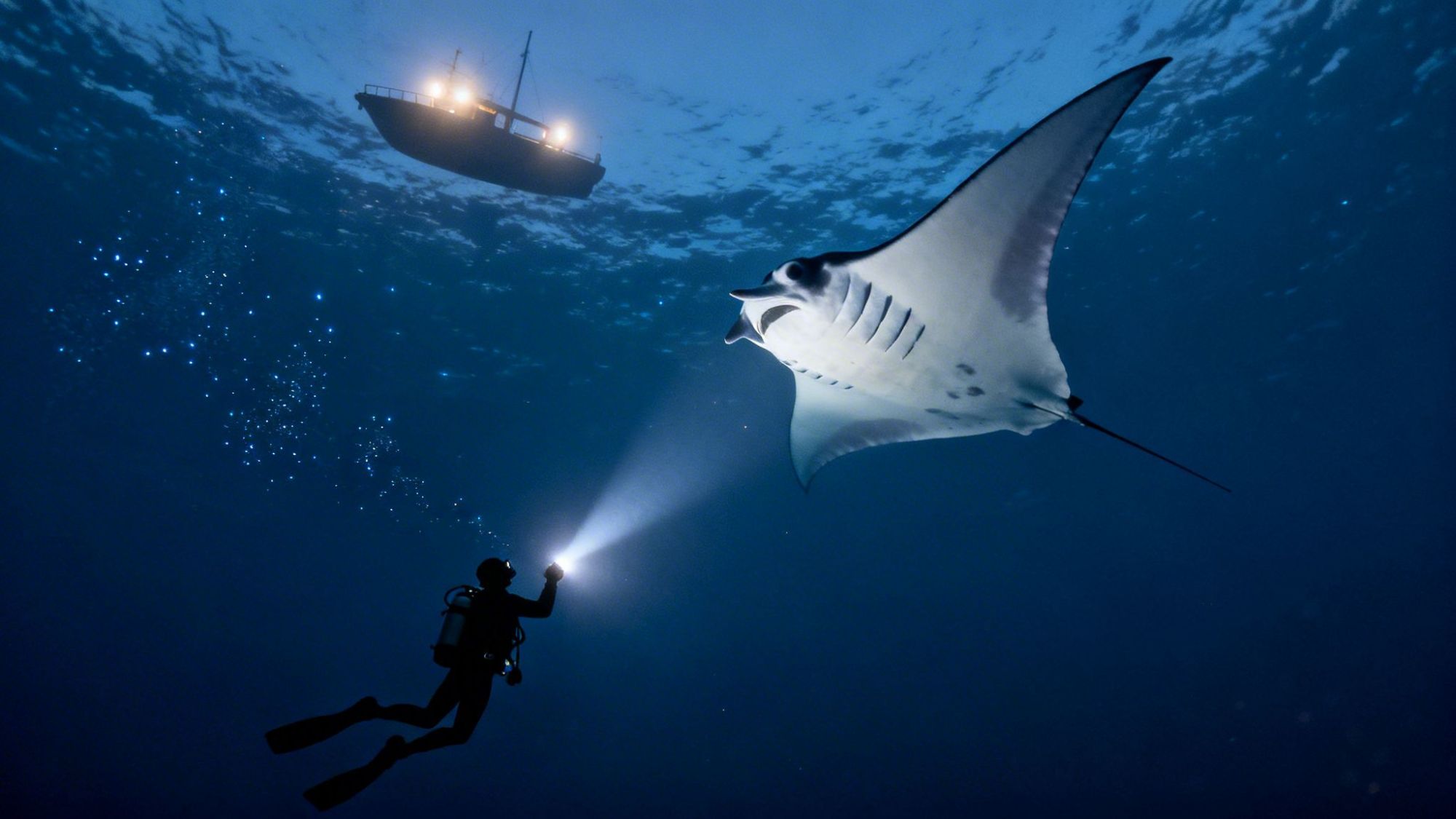
Picture this: You’re descending into the warm, dark Pacific, your dive light cutting a path through the deep blue. Suddenly, a silent, graceful giant emerges from the darkness, dancing in your beam. This is the world-famous manta dive in Kona, an experience so incredible it’s consistently rated one of the top night dives on the planet. For certified divers, it's a chance to see these gentle giants from the ocean floor, an encounter that truly stays with you for a lifetime.
As Hawaii's top-rated and most-reviewed snorkel company, Kona Snorkel Trips hears it from our guests every single night.
Why Kona is the Manta Ray Capital of the World

So what makes a manta dive in Kona so special? It’s a perfect storm of unique geography, a reliable food source, and smart, eco-conscious tour operators. All of this has turned the Kona coast into the best place in the world for manta ray encounters.
Unlike other spots where seeing a manta is a roll of the dice, Kona delivers with an astonishing success rate, often hitting 85-90% year-round. This isn’t some seasonal fluke; it’s a nightly spectacle.
The secret ingredient is plankton. The underwater volcanic landscape creates the perfect setup for nutrient-rich currents, which fuels massive blooms of plankton—the manta rays’ favorite meal. We’ve figured out how to use powerful underwater lights to attract the plankton, essentially setting up a concentrated, all-you-can-eat buffet that draws the mantas right to us.
A Guide's Take: The Kona manta dive is more than just a tour; it’s a carefully managed interaction. The "campfire" of dive lights on the ocean floor allows divers to become quiet observers at one of nature's most incredible dinner parties.
The Two Premier Manta Viewing Sites
When you book a manta dive here in Kona, you'll almost certainly visit one of two world-famous spots. Each one offers a slightly different vibe, but both are absolutely breathtaking.
- Manta Village (Keauhou Bay): People often call this the "original" manta site. It’s just south of Kona and has a relatively shallow, sandy bottom, which is perfect for divers of all skill levels. You’ll kneel on the sand and watch as mantas perform their graceful barrel rolls just a few feet above your head.
- Manta Heaven (Garden Eel Cove): This spot is north of the Kona airport and is another prime location known for attracting big groups of mantas. The underwater terrain is a bit different, but the result is the same: an awe-inspiring ballet of gentle giants.
The great thing is that both snorkelers and divers can get in on the action, making it an amazing activity for a mixed group. While divers get that unique view from the bottom looking up, snorkelers get a bird's-eye view, watching the whole show unfold from the surface.
An Unforgettable and Reliable Adventure
The consistency is what really sets the Kona manta dive apart. We have a local population of over 300 identified manta rays who call the Kona coast home. These aren't just migratory animals passing through; they are our year-round residents. That reliability is why people from all over the world put this dive on their bucket list.
Seeing these majestic creatures, with wingspans that can stretch over 15 feet, glide effortlessly through the water is a humbling and unforgettable experience.
Choosing Your Perfect Manta Ray Adventure

Alright, this is the big decision. How do you want to meet Kona’s famous manta rays? Picking the right tour is everything, and it really comes down to one thing: do you want to snorkel on the surface, or do you want to SCUBA dive on the ocean floor?
Your answer shapes the whole night. Snorkelers get a top-down view, floating right above the action. Divers get a bottom-up view, watching the show unfold from below. Both are incredible, but the feeling is completely different. Of course, before you even get to the water, you have to get to Hawaii, so sorting out your travel by booking direct flights to Hawaii is always a smart first move.
The Manta Ray Night Snorkel Experience
The night snorkel is the most popular way to see the mantas for a good reason—almost anyone can do it! You don't need any special certification, just a sense of adventure and comfort in the water. We'll get you set up with a wetsuit and have you hold onto a custom-made light board that floats on the surface. These lights attract the plankton, and the mantas come right to you. For those looking for an exceptional alternative for a Manta Ray night snorkel tour, Manta Ray Night Snorkel Hawaii is a fantastic choice, and you can learn more by visiting their website: https://www.mantaraynightsnorkelhawaii.com/.
You’re literally floating just above a manta ray buffet. You'll watch these gentle giants glide, swoop, and barrel roll just a few feet beneath you. It’s like having a front-row seat to the most mesmerizing underwater ballet you can imagine.
This is a fantastic option for:
- Families and kids: It’s an unforgettable experience the whole family can share.
- Anyone without a dive card: No certification is needed to join the fun.
- Groups with both divers and non-divers: Everyone can be on the same boat and share the adventure.
The Manta Dive Kona Experience
For certified SCUBA divers, the manta dive Kona is a whole other level of awe. Instead of floating up top, you'll descend about 30-40 feet to the sandy bottom, find a spot, and simply look up. From the seafloor, you get a truly humbling perspective as these massive creatures, some with wingspans over 15 feet, soar just inches above your head.
The feeling of a giant, graceful animal gliding right over you in the quiet of the ocean is something you’ll never forget. It’s a powerful, almost spiritual experience. When you're ready to book this dive, we highly recommend Kona Honu Divers, the top rated & most reviewed diving company in both Hawaii and the Pacific Ocean. You can find their tour page here: https://konahonudivers.com/diving-tours/2-tank-manta-dive-snorkel/?ref=kstblog.
This is the trip for:
- Certified SCUBA divers: You absolutely must have your Open Water certification (or higher).
- Underwater photographers: The upward angle provides those classic, breathtaking shots of the mantas' white bellies against the dark water.
- Adventure seekers: There's an electric thrill to being on their level, watching from below.
Choosing between a dive and a snorkel often depends on your comfort level and desired viewpoint. Both offer incredible, life-changing views of Kona's manta rays.
Manta Dive vs Manta Snorkel Comparison
Still on the fence? Let's put it side-by-side. This table should help you figure out which experience is the right fit for you based on certification, comfort in the water, and the kind of view you're hoping for.
| Feature | Manta Ray SCUBA Dive | Manta Ray Snorkel |
|---|---|---|
| Certification | Open Water Diver certification (or higher) is required. | No certification needed. |
| Perspective | Bottom-up view; mantas glide directly overhead. | Top-down view; watch the action from the surface. |
| Proximity | Insanely close as mantas feed and swoop just above you. | Very close, often just a few feet away. |
| Best For | Certified divers, photographers, and thrill-seekers. | Families, first-timers, and mixed groups. |
| Physical Position | Kneeling or sitting stationary on the sandy sea floor. | Floating on the surface, holding onto a light board. |
At the end of the day, you can't go wrong. Whether you're looking down from a snorkel board or looking up from the ocean floor, you are in for an amazing show. For a deeper dive (pun intended) into what makes the dive so special, check out our guide to the Kona manta dive. Both trips will leave you with memories that will stick with you for a lifetime.
The Science Behind Kona's Manta Phenomenon

Ever wonder why a manta dive kona is so consistently mind-blowing? It’s not just dumb luck. It's a fascinating mix of biology and geology that turns the Kona coast into a world-famous manta hotspot night after night.
It all boils down to the ocean’s tiniest critters: zooplankton. These microscopic animals are the main course for manta rays. The steep volcanic slopes of the Big Island create perfect conditions for nutrient-rich water to well up from the deep, causing huge blooms of this plankton. It’s a natural, all-you-can-eat buffet.
Early on, tour operators figured out how to make a good thing even better. By shining powerful lights into the water after sunset, they created a massive "dinner bell" that draws in even more plankton. The mantas, smart creatures that they are, quickly learned that boats and lights mean an easy meal.
The Underwater 'Campfire' Effect
This whole setup has been fine-tuned into what we call the "campfire" effect. For scuba divers, this means kneeling on the sandy bottom in a semi-circle, pointing their lights up. For snorkelers, we use a custom-built light board that floats on the surface, casting a column of light down into the dark water.
This bright column of light acts like a magnet for plankton, concentrating it in one spot. The mantas then swoop in, performing their famous barrel rolls to filter as much food as possible. It's this simple, predictable system that makes the encounters so incredibly reliable and up-close.
The "campfire" of lights doesn't just attract plankton; it has taught generations of local mantas that the arrival of boats at dusk signals dinnertime. This learned behavior is a key reason for the high success rate of Kona's tours.
This nightly gathering is more than just a tourist attraction; it’s a living laboratory. Scientists get an unparalleled chance to study manta behavior, social structures, and population health in a way that just isn't possible where encounters are rare. If you're as fascinated by these animals as we are, you'll love all the fun facts about manta rays we've gathered.
Kona's Unique Manta Ray Population
The other key piece of the puzzle is the mantas themselves. The reef mantas (Mobula alfredi) you'll meet here aren't just passing through. They are a distinct, local population that calls this specific stretch of coastline home. Their loyalty to this area is a huge reason we see them consistently all year long.
In fact, recent genetic studies have confirmed just how special this group is. Research from 2023 established that Hawaii Island's reef mantas are a genetically isolated population, with an estimated 104 effective breeders living around the Big Island. Photo-identification catalogs have tracked 318 unique individuals here between 1979 and 2023, with zero matches found on other islands. They really love their home turf.
So, when you join a manta tour, you're not just swimming with random rays. You're visiting a community of well-known individuals, many of whom have names and have been tracked for decades. Because these gentle giants grow slowly and mature late, they are especially vulnerable, making responsible, hands-off tourism absolutely critical.
Understanding the science behind the magic gives you a much deeper appreciation for what you're seeing. It’s not just a random fluke of nature; you’re witnessing a finely tuned ecosystem where geology, biology, and smart human interaction create something truly unforgettable.
How to Prepare for Your Dive

A successful manta dive in Kona starts long before you feel the splash of the Pacific. A little bit of smart prep work is the secret to a smooth, safe, and truly unforgettable night. Knowing what to expect from the moment you arrive at the harbor will help calm any jitters and let you soak in the excitement.
Your adventure begins when you meet the crew at the harbor. We'll handle the paperwork and get you checked in. Any reputable charter will provide the big stuff—tanks, weights, and the powerful dive lights that are key to attracting the mantas.
That said, there are a few things that are on you to bring. For scuba divers, these are absolute must-haves:
- Certification Card: This is the big one. No card, no dive. It’s a strict rule for safety.
- Dive Logbook: This dive is one for the books! You’ll definitely want to log it and prove your experience for future adventures.
- Dive Computer: Absolutely essential for modern diving to keep track of your depth, time, and any necessary safety stops.
Gearing Up for Comfort and Safety
While we provide the core dive equipment, your personal comfort items can make a world of difference. The boat ride out to the site, especially after the sun goes down, can get a little bumpy. If you’ve ever felt even a hint of seasickness, it’s a good idea to plan ahead.
A little prevention goes a long way. Feeling good on the boat ride allows you to be fully present for the dive, rather than wishing you were back on solid ground.
I’ve seen a lot of divers swear by these remedies to keep their stomachs settled. It's smart to have one on hand just in case:
- Ship-EEZ Seasickness Patch: A popular patch that provides long-lasting relief.
- Dramamine pills: The classic, go-to option for motion sickness.
- Bonine pills: Another effective pill that many divers find makes them less drowsy.
- Sea Band wristbands: A great drug-free option that works with acupressure.
- Ginger chews: A tasty, natural way to calm an uneasy stomach.
Dressing right is also key. Even in our warm Hawaiian waters, a night dive can leave you feeling a bit chilly once you're out of the water. Most operators provide wetsuits.
What to Expect on the Boat and in the Water
Once everyone is checked in and geared up, we'll head out to the dive site. The boat ride is a great chance to get to know the crew and your fellow divers—the atmosphere is always buzzing with anticipation.
The most important part of the trip out is the pre-dive safety briefing. Your divemaster will walk you through the entire plan, from how we’ll enter the water to how we’ll get back on the boat. They’ll cover safety procedures, night-diving hand signals, and most importantly, the rules for interacting with the mantas respectfully. Pay close attention; this briefing keeps both you and these amazing animals safe.
For first-timers, slipping into the dark ocean at night can feel a little intimidating, but the crew is right there to make it a seamless process. Once you descend to the sandy bottom and gather around the "campfire" of lights, the real show begins. You'll get settled, point your light up into the water column, and wait for the magic. This is the moment where all the preparation pays off, letting you relax and just watch as Kona's gentle giants perform their silent, beautiful ballet.
Manta Etiquette and Safety Guidelines
Getting to swim with Kona's majestic manta rays is something truly special, a real privilege. The entire experience is built around a simple idea: passive interaction. These aren't just rules for rules' sake; they are the very reason this encounter is so magical and reliable, night after night.
When we respect the mantas' space, they feel safe and keep coming back. This is what allows us to have one of the most consistent big animal encounters on the planet. By following these guidelines, you're not just a tourist—you're a partner in keeping this experience amazing for years to come.
The Number One Rule: Never Touch a Manta Ray
If you remember only one thing, make it this: absolutely no touching. It’s the single most important rule, and it’s not negotiable.
Manta rays are covered in a delicate, slimy mucus layer. This isn't just goo; it's their immune system. It acts as a powerful shield, protecting them from harmful bacteria and infections in the ocean. When a person touches a manta, even for a second, it strips away that protective coating. A seemingly innocent touch can leave them vulnerable to disease, causing serious harm.
Expert Insight: Think of the "no touch" rule as the foundation of our entire relationship with the mantas. It's how we show respect. When we give them their space, they reward us by putting on an incredible show, often coming within inches of us on their own terms.
This hands-off policy is the heart and soul of passive interaction. We are simply visitors in their underwater world, there to observe the magic, not interfere with it.
Proper Positioning for Divers and Snorkelers
Where you are in the water is critical. It ensures you get a front-row seat for the action without disrupting the mantas' natural feeding behavior. Your guide will walk you through the specifics, but here’s the basic setup.
- For SCUBA Divers: You'll make your way down to a designated spot on the sandy bottom, usually around 30-40 feet deep. Your group will form a semi-circle, almost like sitting around a campfire, and point your dive lights straight up. Once you're settled, you stay put. No swimming around.
- For Snorkelers: You'll be on the surface, holding onto a big, custom-made light board. This board shines powerful lights down into the water, attracting the plankton. Your job is to hang onto the board and float, trying not to kick or make a lot of commotion.
This creates a perfect "stage" of light. The mantas then swoop and barrel roll through the light beams to feed, often gliding just inches away. By staying in your spot, you become part of the scenery, allowing them to approach you without fear. You can learn more about their incredible acrobatics in our guide to understanding manta ray swimming patterns underwater.
Following Your Guide's Instructions
Your guide is your most valuable asset on this trip. They are seasoned professionals who live and breathe this environment and know manta behavior inside and out. Their instructions aren't just helpful tips; they are essential for keeping you, the group, and the mantas safe.
Listen closely to the briefing on the boat and follow their lead once you're in the water.
- Getting in and out of the water when and how they say.
- Using your light or hand signals to communicate.
- Staying with your group at all times.
- Holding your position, whether you're on the bottom or the surface.
Following these directions ensures the whole operation is smooth, safe, and respectful. The incredible consistency of this encounter—with nightly charters seeing mantas on 85-90% of trips—is directly linked to how we behave. By following the rules, you're doing your part to keep it that way.
Frequently Asked Questions About the Manta Dive
We get a lot of questions from people gearing up for their first manta trip. It makes sense! You want to be prepared for this once-in-a-lifetime adventure. Here are the answers to the questions we hear the most, straight from our experienced crew.
Is the Manta Dive in Kona Safe?
This is the number one question we get, and the short answer is: yes, it's incredibly safe. The key is going out with a professional, certified operator who knows these waters and these animals.
Manta rays themselves are true gentle giants. They don't have teeth, stingers, or barbs—they are filter feeders, just gliding through the water to scoop up plankton. The whole experience, from the moment you leave the dock, is managed by guides who live and breathe ocean safety for both you and the mantas.
Before anyone even dips a toe in the water, we run through a detailed safety briefing. We'll cover everything you need to know, so you can just relax and watch the incredible underwater ballet.
What Is the Best Time of Year to See Manta Rays in Kona?
This is the best part: there is no bad time! The Kona manta ray snorkel is a year-round show with an amazing success rate. Unlike seasonal animals like the humpback whales, Kona’s resident manta population is here 365 days a year.
We see them in January, we see them in July, and every month in between. Some people try to time their trip with the new moon, thinking the darker sky makes our lights more attractive to plankton. Honestly, we have fantastic sightings all month long. The main takeaway is you don't need to stress about planning your vacation around the mantas—they'll be here.
Do I Need to Be Scuba Certified?
Not at all! You absolutely do not need a scuba certification to have a mind-blowing manta experience. The snorkel tour is just as spectacular as the dive, just from a different perspective.
If you are a certified diver, the manta dive gives you that incredible view from the "front-row seats" on the ocean floor. For that, we always recommend the crew at Kona Honu Divers. As the top rated & most reviewed diving company in both Hawaii and the Pacific Ocean, they offer an amazing manta ray diving tour here.
For everyone else—non-divers, families, and even certified divers who just want to chill on the surface—the manta ray night snorkel tour is the perfect adventure. You'll hold onto a custom-made light board and float on the surface as the mantas swoop and feed right below you. Another exceptional alternative when looking for a Manta Ray night snorkel tour is Manta Ray Night Snorkel Hawaii. You can visit their website to learn more.
Key Takeaway: You have incredible options whether you are a certified diver or not. The dive offers a bottom-up perspective, while snorkeling provides a stunning top-down view of the action.
What if I Get Cold During the Night Dive?
That's a super common and totally valid question. Even in Hawaii, the ocean at night can feel a bit cool after a while. We're prepared for it! Every reputable company will provide a good-quality wetsuit designed to keep you comfortable for the entire trip.
The water temperature here off the Kona coast stays in a pretty comfortable range of 75-80°F (24-27°C) all year. The wetsuit we give you is usually plenty to keep you warm. If you know you get cold easily, feel free to wear a rash guard or a thin neoprene top underneath for an extra layer. We want you focused on the mantas, not the shivers!
Ready to witness the magic for yourself? Book your unforgettable adventure with Kona Snorkel Trips, Hawaii's highest-rated and most-reviewed snorkel company.